







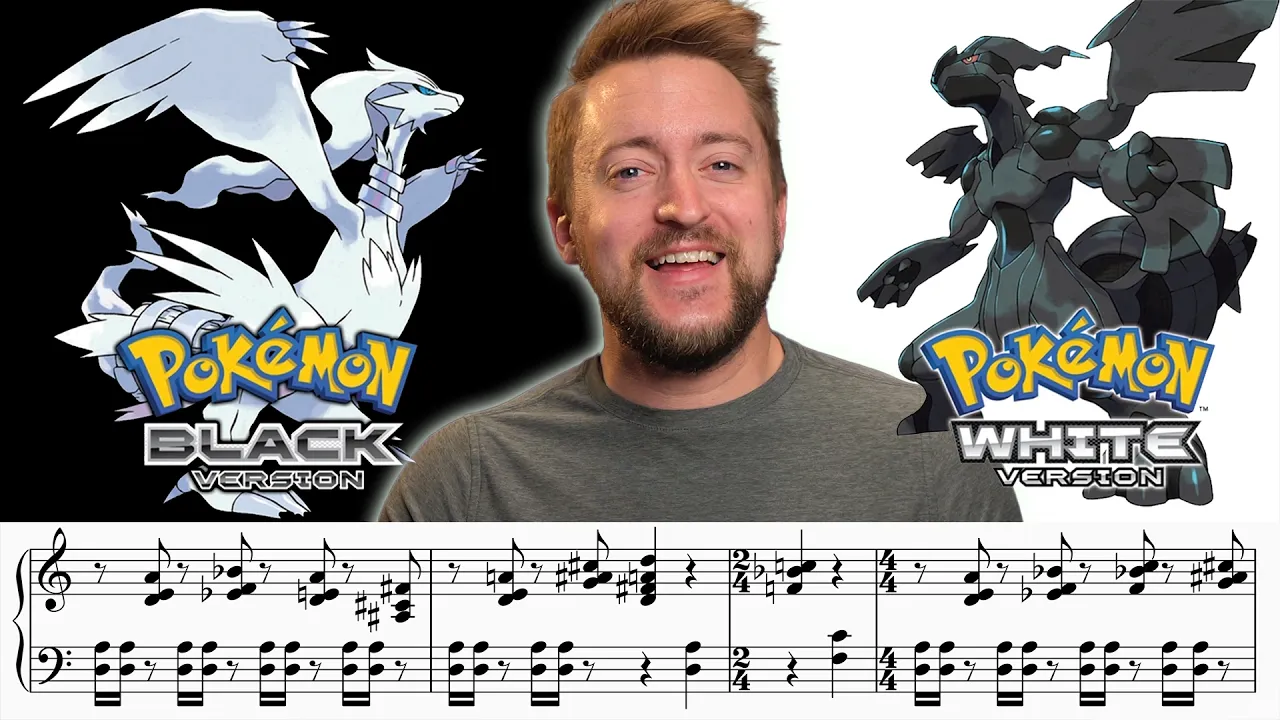

![6 Beautiful Chord Progressions with Lament Bass / Andalusian Cadence [harmony & songwriting tips]](https://i.ytimg.com/vi/hw4vqyOTYVo/maxresdefault.jpg)





![[Nhạc lý] Năm bước để chuyển hợp âm thường thành màu sắc hơn bằng nhạc lý](https://i.ytimg.com/vi/Mr85Voj3ArQ/maxresdefault.jpg)
The Andalusian Cadence is a widely-used minor key chord progression that follows the 1-7-6-5 pattern (e.g., A minor - G major - F major - E major), creating a distinctive descending scale effect. While traditionally defined with a major V chord (E major in A minor), the progression can also appear with a minor V chord or power chords, and its harmonic rhythm (how often chords change) significantly affects its musical feel. This progression is deeply associated with flamenco music from the Andalusia region of Spain and has been used by numerous artists including Taylor Swift, Ray Charles, Muse, and Queen.
Andalusian Cadence: Songs & Music Theory Analysis
Added:Understanding major and minor triads and how basic chord formulas are constructed.
Familiarity with Roman Numeral Analysis to identify chord functions and degrees within a key.
Knowledge of the Natural Minor and Harmonic Minor scales, as the cadence utilizes chords from both.
The basic concept of a cadence in music theory and its role in establishing musical tension and resolution.
Exploring the Phrygian mode and the Phrygian Dominant scale, which heavily characterize the Andalusian sound.
Applying voice leading principles to achieve smooth chord transitions (specifically the descending chromatic or diatonic bassline) on instruments.
Analyzing historical ground bass progressions related to the Andalusian cadence, such as the Lament Bass, Passamezzo Antico, and Folia.
Practical songwriting and composition techniques, such as modulating to and from the Andalusian cadence in different musical sections.
Using modal interchange and secondary dominants to introduce harmonic variations to the standard i-VII-VI-V progression.
430.1K views9.1Klikes14:44Original Release: 2025-01-15
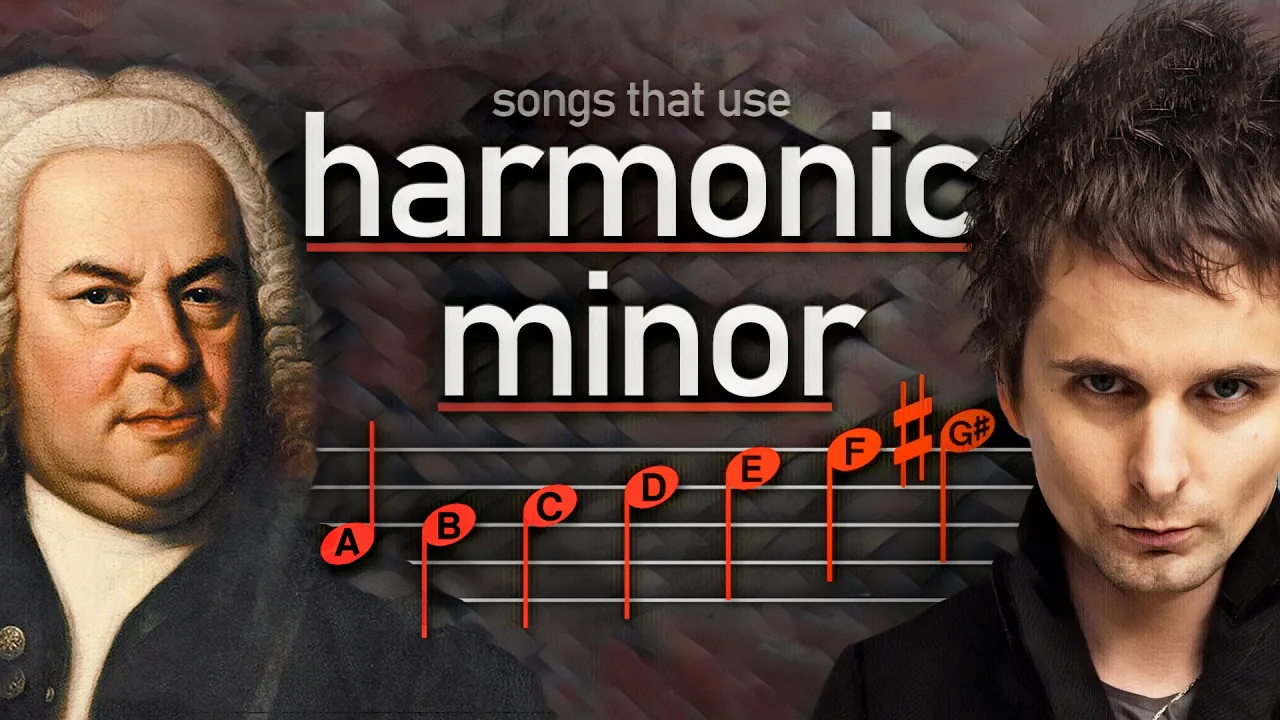
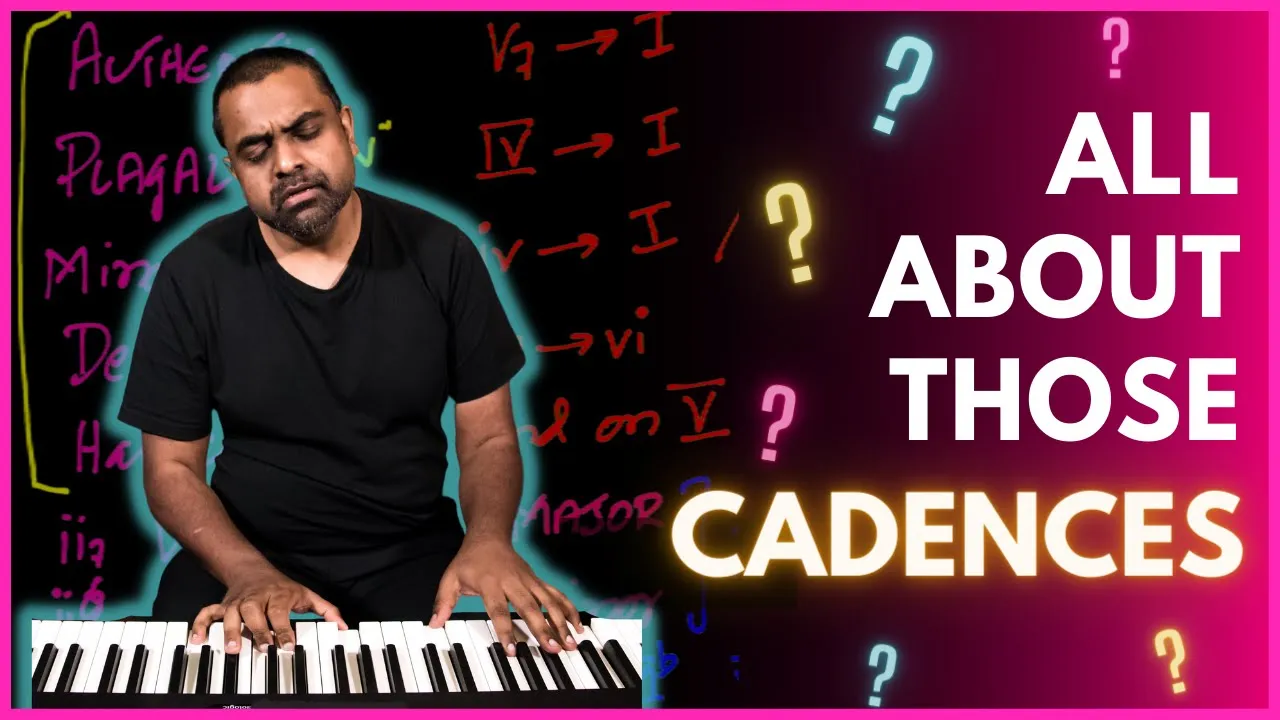
this video was sponsored by HD piano this is the andalucian Cadence a minor key core progression that goes One 7 6 5 so from those numbers alone but also the sound you can hear that it's sort of counting down the scale with that very clear sense of direction and there are loads and loads of famous songs that you'll recognize that use this exact chord [Music] progression there are all the gods who wears the street wise Hercules F the rising eyes and as I still walk out I think of we run together all our hearts we young well don't you know that no one alive can always be an angel but when things go wrong I seem to be mad I love the colorful clothes she wear and the way that sunlight plays upon her head [Applause] [Applause] [Music] [Applause] [Music] I should call you up and you say you belong to me and is my mind imagine how the world could be so very fine so happy together so as you can see from all of those examples the andalucian Cadence comes in all shapes and sizes and one of the main things that can actually change how this or any cord progression comes across is what we call the harmonic rhythm the harmonic rhythm is how often per bar we're changing to the next chord so for example in look what you made me do by Taylor Swift We have the analan Cadence here but we're changing chord once every two [Music] bars Che compare that to hit the road Jack by Ray Charles which is also using the same cord progression but changing chords twice per bar so it has a much faster harmonic [Music] Rhythm it gives the same core progression a different sense of timing and movement you could even have an inconsistent harmonic rhythm where we spend longer on one cord than another for example in D Strait Sant of Swing we have the andalucian Cadence but we're effectively rushing through the first three chords of the progression to then rest and wait around on the five chord on the final chord of the progression you get a shiver in the dark it's raining in the park but meantime so of the river you stop and you hold everything now the most typical definition of the andalucian Cadence has a major version of the five chord here even though in the minor key you don't usually diatonically at least have a major chord on the five chord you usually have a minor cord here now we'll talk more about why this is later on but you can find examples effectively of the andalu Cadence but with the minor 5 cord although whether you would actually call them the andalucian Cadence is up for debate and some songs will use both for example Hazy Shade of Winter by Simon and gar funkle in the verse we initially get the antalan Cadence but with a minor five chord here see what become of me while I look around for my possibility however later in the song we then get a proper andalucian Cadence played with the major five cord [Music] instead and Sh a similar thing happens in Genie in a Bottle by Christina agilera in the chorus the core progression is effectively the andalucian Cadence but the first time round we get the minor chord the minor five chord and the second time round we get the major five chord and the raised seventh note that makes that chord A major five is actually here in the vocal Melody as [Music] [Applause] [Music] well so strictly speaking we need to have this major five chord here for it to be an andalucian Cadence but what if we're not using major or minor chords what if we're using power chords for example citizen erised by Muse start with this guitar riff and it's following the andalucian Cadence sequence of climbing down the minor scale however at this moment we only have power chords really we don't have any major or minor thirds in the cord so although it's tracking through the Contour of the andalucian Cadence it's not strictly an andalucian Cadence yet [Music] [Music] it's only when the vocal comes in for the verse and Matt Bellamy is singing some of the thirds from the chords introducing the quality to the chords and giving us a true andalucian [Music] Cadence another Muse song to use the andalucian Cadence is the globalist and interestingly Muse have actually described the globalist as a sequel to Citizen AR rased so I think the fact that they've used the same core progression here in the same key is them linking these two songs together [Music] [Applause] [Music] [Music] now another time that Muse have used the andalucian Cadence is actually on their cover of the man with a harmonica the film score by anyo moricone from the film Once Upon a Time in the West [Music] [Music] [Music] MW have often used this piece of music in their live show to introduce their track Knights of Sidonia [Music] first one of the best ways to get familiar with a chord progression like the andalucian Cadence is to learn a song that uses that progression and a great way that you can learn many of the songs that we've looked at in this video is with HD piano HD piano is a super easy way to learn songs at the piano you don't need to understand any notation all of the songs are presented in really easy to understand tutorials and I have personally made a playlist available on HD piano right now of various songs that use the andalucian Cadence so do check that out by following the links down below to check out HD piano today [Music] now we can't talk about this core progression without mentioning flamco music after all the reason we're calling it The andalucian Cadence is because of its close association with the Andalucia region of Spain where flamco music comes from this core progression is really commonly found in flamco music but what's really interesting is the way that it's conceptualized can change sometimes it is conceptualized like we have been doing in this video where we consider the a minor chord the one chord the tonic and then we therefore have a step it down through to the five chord 1 7 6 5 but sometimes in flco music this same sequence of chords is considered a bit differently with the final chord here being the tonic chord the E which would place it into what we call the frian mode so we can have the same chord progression but approached or at least conceptualized from two different angles Les a great flamco inspired use of the antalan Cadence can be seen in inuendo by queen during the middle section we're traveling down the andalucian Cadence whilst Steve how of the band Yes performs a fantastic flamco inspired guitar [Music] solo something I should address now is the use of Roman numerals to descri describe this core progression when describing the andalucian Cadence or any minor key core progression for that matter there's a couple of ways you can use ran numerals if it's really clear that we're talking about the minor scale then you can simply do what I've done in this video where you've just used the Roman numerals to refer to the different degrees of the minor scale but sometimes if you might not be talking about the minor scale you might be talking about the major scale it's not completely clear you can use flat symbols in front of some of the scale degrees effectively referring to the major scale even though the cord progression is in the minor key now this is one of those annoying things in music theory where there's two systems so depending on which system you're used to sometimes it can be a bit jarring when somebody uses the other system and to add to the complication when we were then talking about how the andalucian Cadence can work in the Fran scale instead you once again can have that choice to effectively let the R numerals map onto that scale that you've mentioned I.E the frian scale or to also use flat symbols to reference it back to the major scale it gets confusing but typically the rule is if it's clear what scale you're talking about what key this piece of musics in then you don't necessarily have to use the flat symbols now I mentioned earlier in the video that it's a bit weird that we have this major chord here on the E if we're in the minor key because diatonically in the key of A minor you wouldn't have an E major chord you'd have an E minor chord but it's very common to swap in the major version of that five chord because it gives us that really strong and satisfying resolution back to the tonic cord and this is kind of how the minor key works unlike the major key where we have this very clean cut set of notes that are and are not in the scale in the minor key we of have a variety of different modifications we make to the key to accommodate what we want to happen in that moment so here when we're on the G natural chord we're using the natural minor scale the dionic minor scale but then when we get down to the E major chord here we want not g natural but G sharp in our chord so we swap temporarily to using the harmonic minor scale instead which is the same as the natural minor scale but with a raised 7th degree and this sort of practice of swapping in andout notes to the scale also happens in flamco music as well at different points during the song they will be using the G natural or the G sharp so that's the andalucian Cadence and the last thing I need to mention really with this is that streetly speaking the analan Cadence isn't really a Cadence it's more of a cord progression a Cadence is more like a short bit of musical punctuation that resolves an ending of a passage if you want to learn more about what a Cadence is I actually made a video a few weeks ago about just that so do check that out using the link down below [Music]
Up Next
23:15
Andalusian Cadence: Composition Techniques in 5 Styles
@SignalsMusicStudio
555.9K views•2022-01-03

10:20
Mozart's Musical Dice Game Explained: History, Rules, & Fun
@webpianoacademy
5K views•2023-03-13

23:43
Negative Harmony Explained: Music Theory Guide
@DavidBennettPiano
96.2K views•2025-09-25
10:49
Understanding John Coltrane's Giant Steps: A Music Theory Analysis
@Vox
10.4M views•2018-11-12
Related Study Plans & Knowledge Roadmaps
Structured learning paths in Music Theory
music-theory
Composing Galant Music: Partimento & Schemata
01Foundations of Figured Bass and Keyboard Harmony
02The Rule of the Octave (Regola dell'Ottava)
03Galant Schemata: The Building Blocks of Form
+ 2 more learning modules
30h5 modules
Explore Roadmap
music-theory
Decoding Overtone Series: Tuning & Drone Music
01Acoustic Foundations: The Physics of the Overtone Series
02Tuning Systems: Equal Temperament vs. Just Intonation
03Microtonality and Spectralism: Beyond Standard Pitches
+ 2 more learning modules
24h5 modules
Explore Roadmap
music-theory
Impressionist Harmony: Scales, Planing & RPGs
01Foundational Music Theory: Keys, Intervals, and Seventh Chords
02Impressionist Color: Chord Planing and Parallel Harmony
03Whimsical Textures: Pentatonic Cascades and Whole-Tone Scales
+ 1 more learning modules
14h4 modules
Explore Roadmap
music-theory
Negative Harmony: Axis Reflection in Indie Pop
01Music Theory Foundations: Scales, Intervals, and Triads
02Functional Harmony and the Circle of Fifths
03Demystifying the Negative Harmony Axis Reflection
+ 2 more learning modules
16h5 modules
Explore Roadmap