









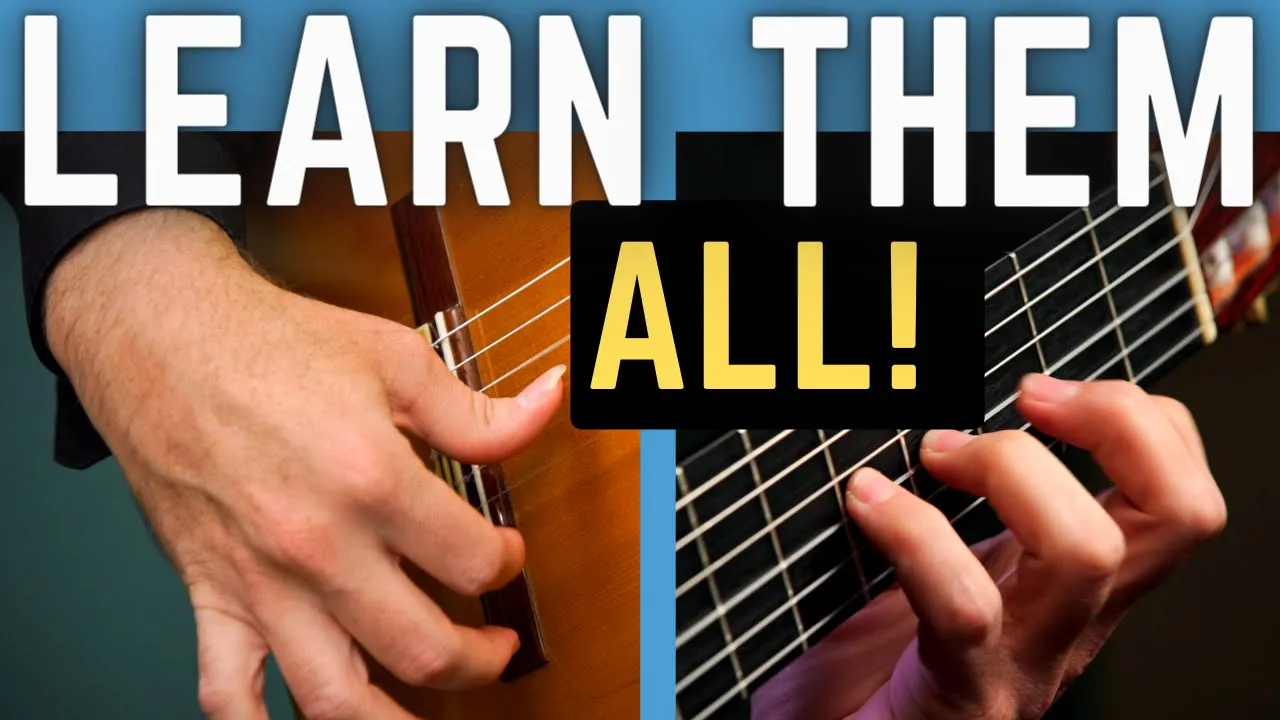


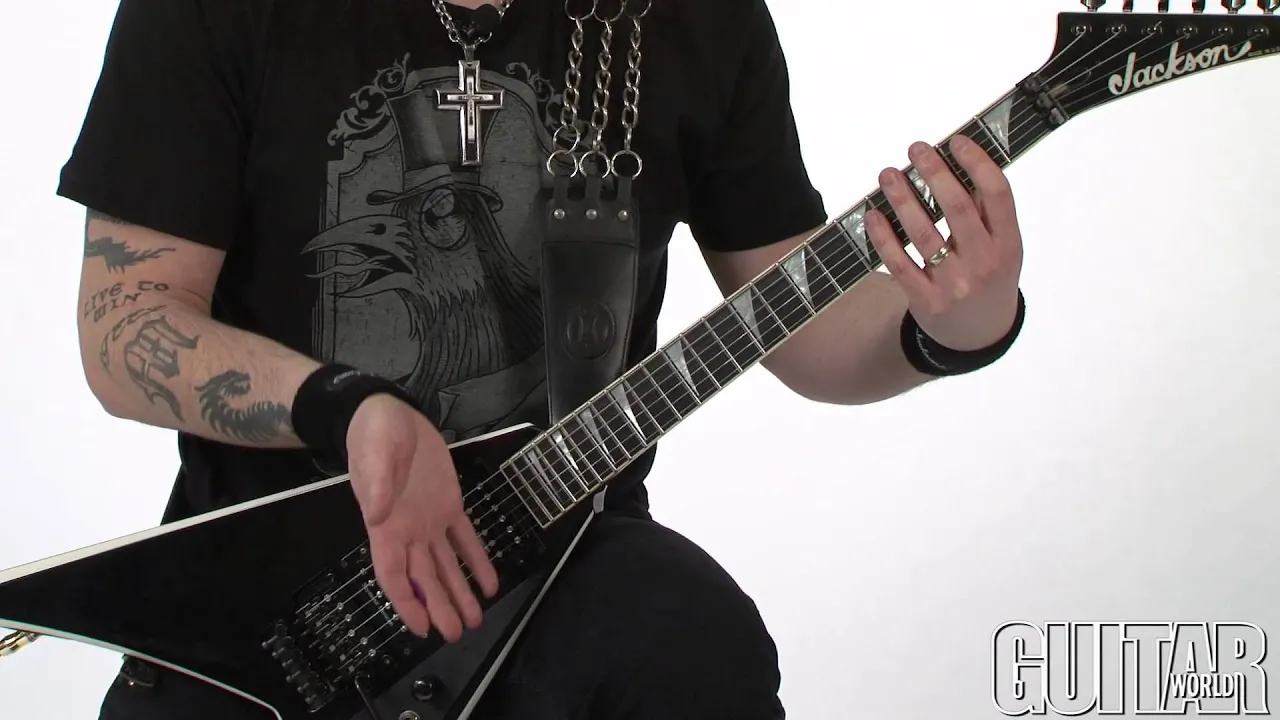




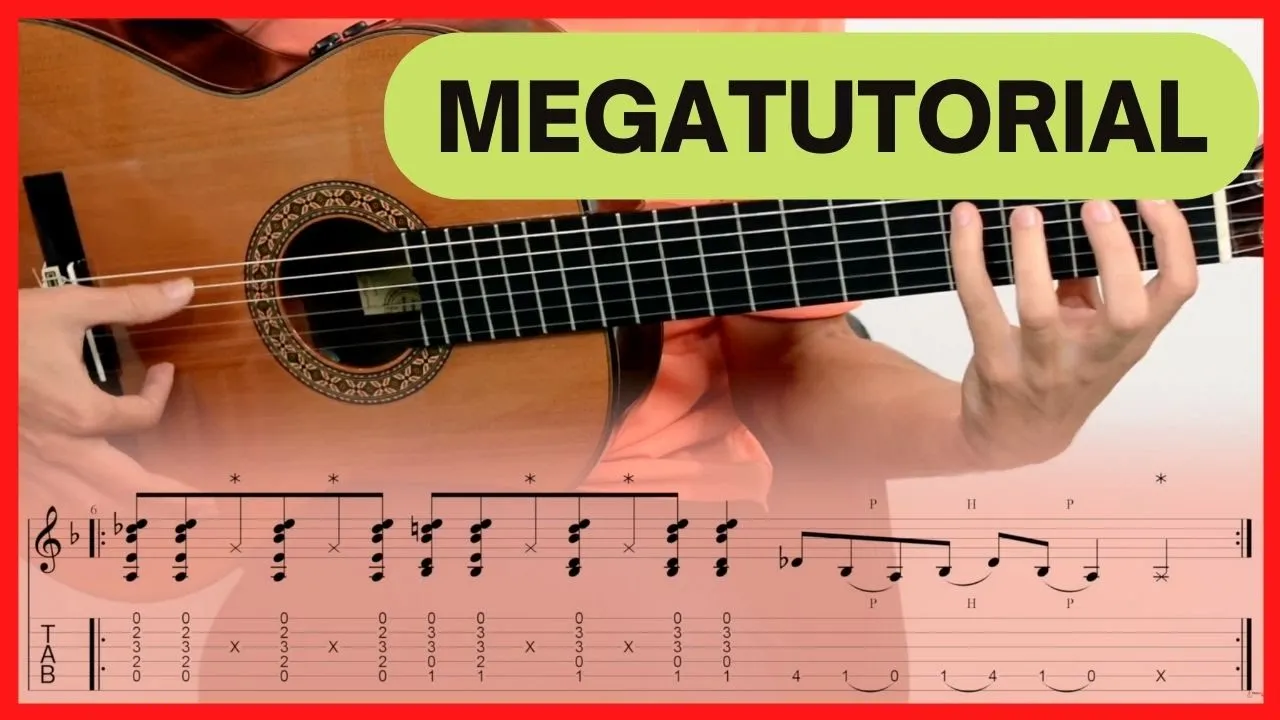
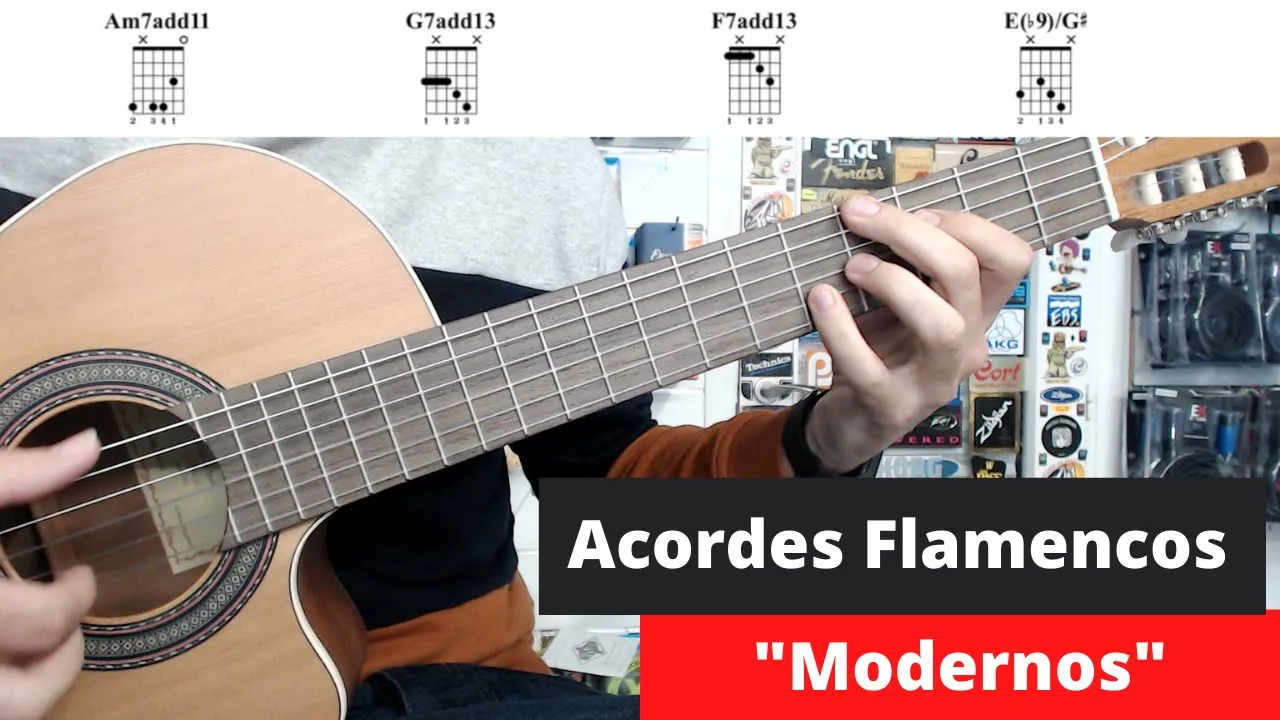


This video demonstrates how to transform ordinary chord progressions into authentic flamenco sounds by making specific chord modifications: replacing major chords with dominant seventh chords (like G7), using open string variations of bar chords (like F major with lifted bar), and incorporating flat ninth chords (like E flat 9 and B flat 9) that create tension and unsettled consonance, which are essential characteristics of flamenco harmony.
Essential Spanish Guitar Chords: Flamenco Harmony Techniques
Added:Proficiency with basic open and barre chord shapes on the guitar, particularly A minor, G, F, E, and D minor.
Fundamental right-hand fingerstyle technique, ensuring basic finger independence and control over individual strings.
A basic understanding of diatonic harmony and chord construction, particularly how 7th and 9th chords are built.
Familiarity with the concept of the Andalusian Cadence (i.e., a i-VII-VI-V progression) as a foundational harmonic sequence.
Traditional flamenco right-hand rhythmic techniques, including various 'rasgueado' (strumming) patterns and 'alzapúa' (thumb technique).
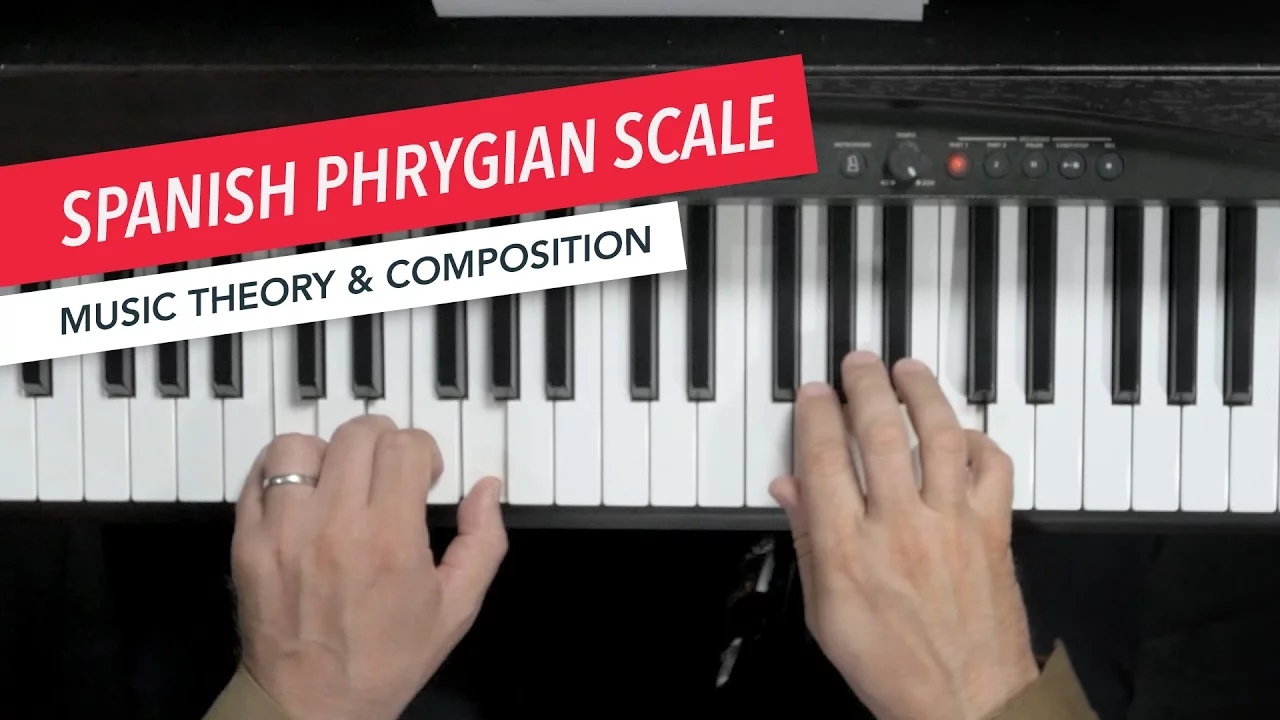
How to improvise and compose melodies over these progressions using the Phrygian dominant scale (or Spanish Gypsy scale).
Application of these chords within traditional flamenco forms ('palos') such as Soleá, Bulerías, and Tangos.
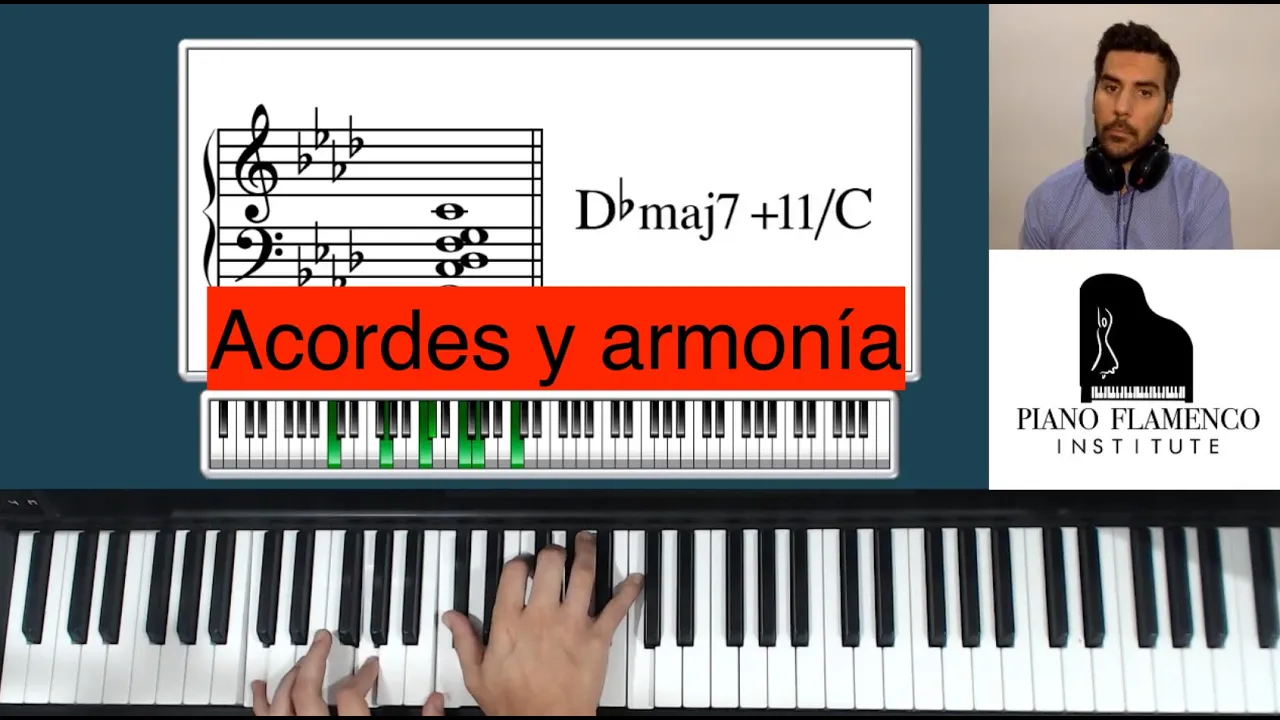
Advanced modern flamenco harmony, including the integration of jazz-influenced voicings, diminished scales, and altered extensions.
2.2M views23.6Klikes5:32Original Release: 2012-04-23
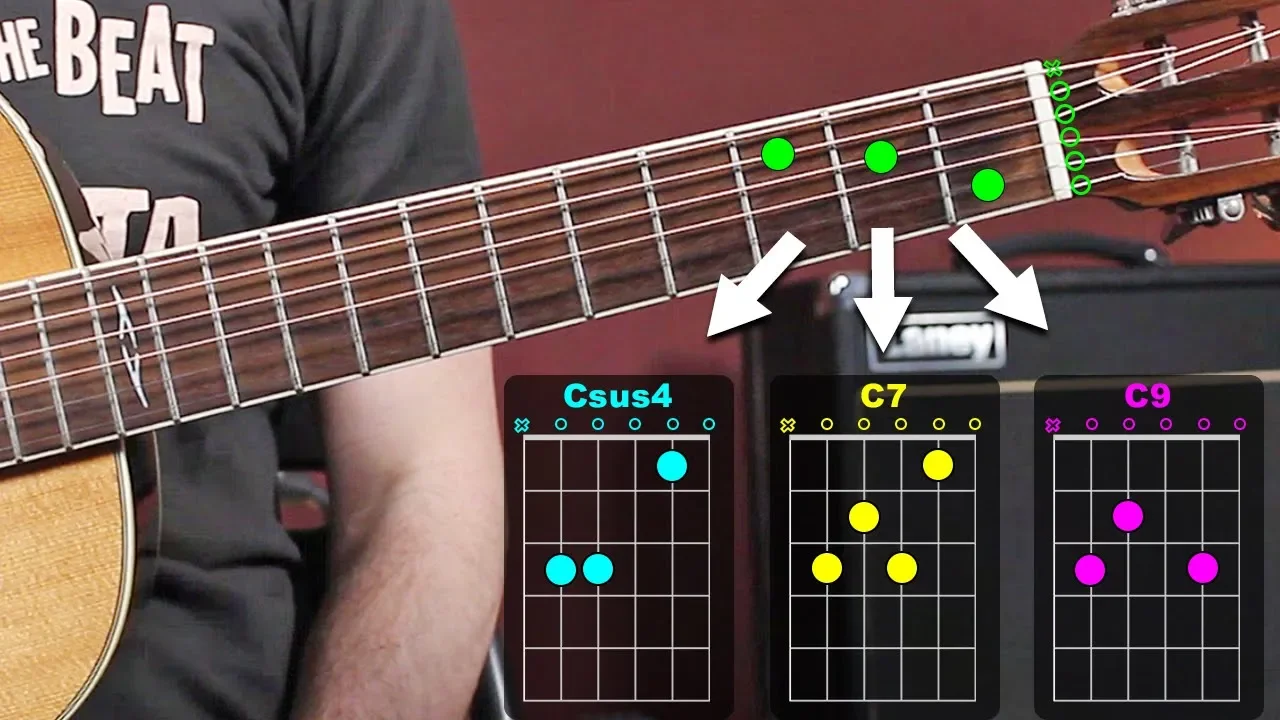
in this video I'm going to show you just how easy it can be to get some really authentic Spanish guitar or Flamenco sounds coming out of your guitar so in the first part we're going to have a look at chords and we'll go to a closeup and I'll show you exactly what you need to do with your chords in order to get some really nice flamco sounds coming out straight away let's begin by taking some chords we already know into a progression so we're going to start off with just an A minor chord going to a g going to an F or if you want to hold your F in this easier way that's okay as well and then we have an e so we already have quite a flamco sounding progression there with just those basic chords [Music] alone but we can enhance the strength of that flamco flavor quite a lot just by making some small adjustments to those chords so we're going to keep our a minor as it is for now but for G we're going to go instead to a G7 and that's where you have your first finger here on the first fret first string from there we're going to go to this mysterious F all I've done there is I've kept my bar chord shape where you have your bar with E major in front but I simply lift up the bar so now my first finger is only holding down the first fret on the sixth string and that leaves the second string and the first string to ring open and when those two strings ring open against that F you get a really strong flamco [Music] flavor and from there we're going to go to another very strongly flavored Flamingo chord which is E flat 9 so you're going to leave your fourth finger where it is and your second finger is going to come up here on the fifth string second fret and your first finger goes here on the first fret of the third string and that gives us an E flat 9 you can hear the flat n tonality upsetting the consonant of the chord so now let's put the progression together again a minor G7 f [Music] you see how we instantly get a much stronger Spanish guitar [Music] flavor for this next progression we're going to apply an even stronger Flamingo flavor to the chords so the basic progression would be going from a D Minor down to C into a B flat or you could hold your B flat this way and then into an A so once again D Minor C B flat and [Music] a now in order to really give that um a stronger flamco tonality we're going to change the chord shapes and our D Minor is now going to be just the open F string with three and three on the third string and the second string and the first string is just going to be left open so we have from the fourth string down that's going to be our D Minor shape from there for the C you're just going to place your second finger on the third fret of the fifth string it's going to be the C for B flat you take away your second finger and put your first finger here on the first fret again on the fifth string so so far can you see how we've kept fingers three and four as an anchor Point throughout the [Music] progression and now finally we go to a flat 9 so here you're going to leave your third finger as the connector and you're going to place your second finger here sorry your first finger on the second fret of the fourth string and your second finger here on the second fret of the second string and so you get a mysterious flat kn n that tonality coming through so in the progression it sounds like the final chord should be a place of [Music] rest but it's not because the flat nine is upsetting the consonant of the chord so you can still hear that there's tension or energy inside that cord that has a desire to be resolved and this is how a lot of flamco Harmony works [Music]
Up Next
11:35
Understanding Flamenco Compás: Pulsation, Cycles & Rhythm
@FlamencoMAPS
14.5K views•2021-05-06

12:54
Triumph of Orthodoxy Icon: Byzantine Art & History Explained
@BenCallan
2.1K views•2024-08-06

9:49
FastAPI vs Flask vs Django: Choosing the Right Python Web Framework
@TechWithTim
302.5K views•2024-05-26

1:42
Game of Thrones Opening Credits: A Cinematic Analysis
@gameofthrones
46.3M views•2011-04-18
Related Study Plans & Knowledge Roadmaps
Structured learning paths in General & Interdisciplinary Studies
general-studies
Elevator Engineering: History, Physics & Cities
01From Hoists to Safety Brakes: The Dawn of Vertical Lift
02Hydraulic vs. Traction: The Engineering Physics of Elevators
03Modern Speed, Safety, and Algorithms
+ 2 more learning modules
12h5 modules
Explore Roadmap
general-studies
Rubber: Material Science, History & Geopolitics
01Origins of Natural Rubber & Mesoamerican History
02The Chemistry of Natural Rubber & Vulcanization
03The Geopolitics of the Rubber Boom & Colonization
+ 2 more learning modules
12h5 modules
Explore Roadmap
general-studies
Containerization: Evolution, Logistics & Trade
01Ancient Trade & Bulk Cargo: Amphorae to Barrels
02The Industrial Revolution & Cardboard Packaging
03The Containerization Revolution: Malcom McLean
+ 2 more learning modules
12h5 modules
Explore Roadmap
general-studies
Textile Tech: Evolution, Labor & Global Impact
01Pre-Industrial Textiles: Handloom & Cottage Industry
02Mechanization: The Spinning Jenny to the Power Loom
03The Factory System & Global Labor Transformation
+ 2 more learning modules
10h5 modules
Explore Roadmap