














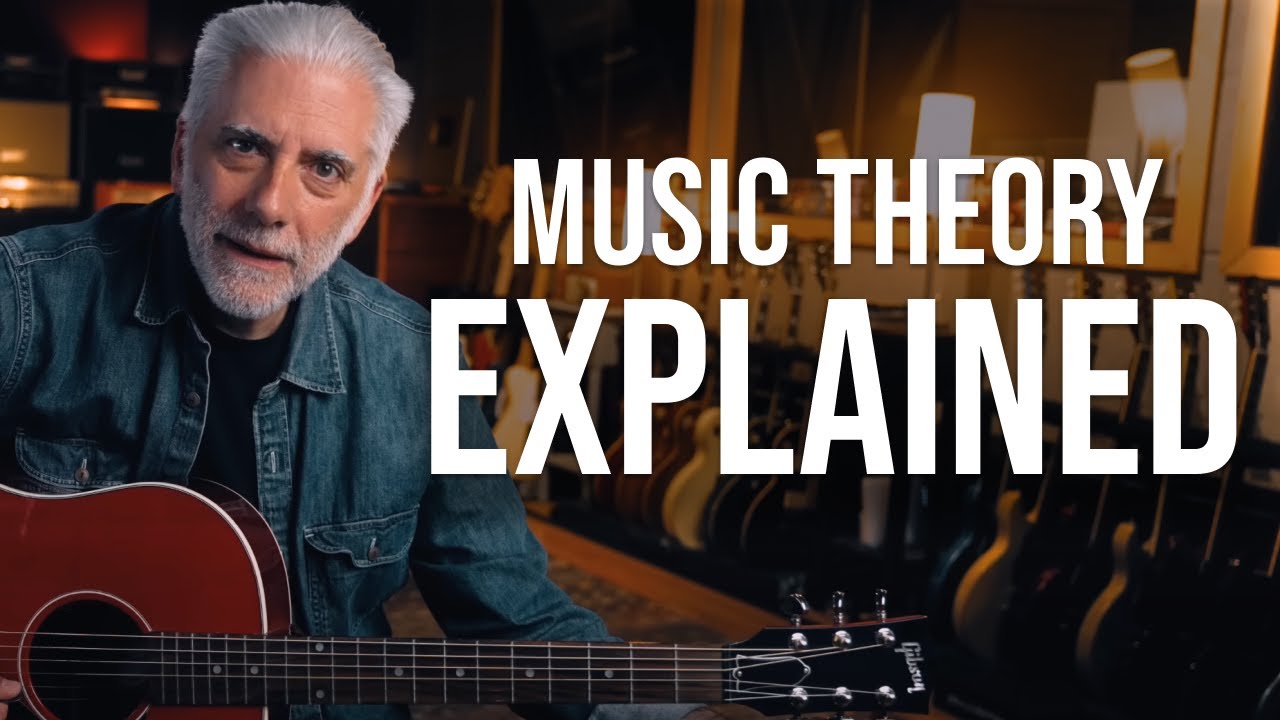






This video teaches seven essential guitar music theory concepts: (1) Understanding fretboard note spacing where all notes are two frets apart except E-F and B-C; (2) Recognizing the major scale formula as the foundation of Western music; (3) Building diatonic chords from major scales using the I-IV-V pattern; (4) Mastering common major progressions like 1-4-5-1 and 1-4-1; (5) Learning the minor scale structure and its relationship to relative majors; (6) Understanding minor chord construction including the minor seven flat five chord; and (7) Practicing standard minor progressions such as the Andalusian cadence and 1-6-2-5 pattern. By mastering these fundamentals, guitarists can adapt to any key and build a strong foundation for more advanced musical exploration.
Music Theory Essentials: 7 Core Concepts Every Guitarist Needs
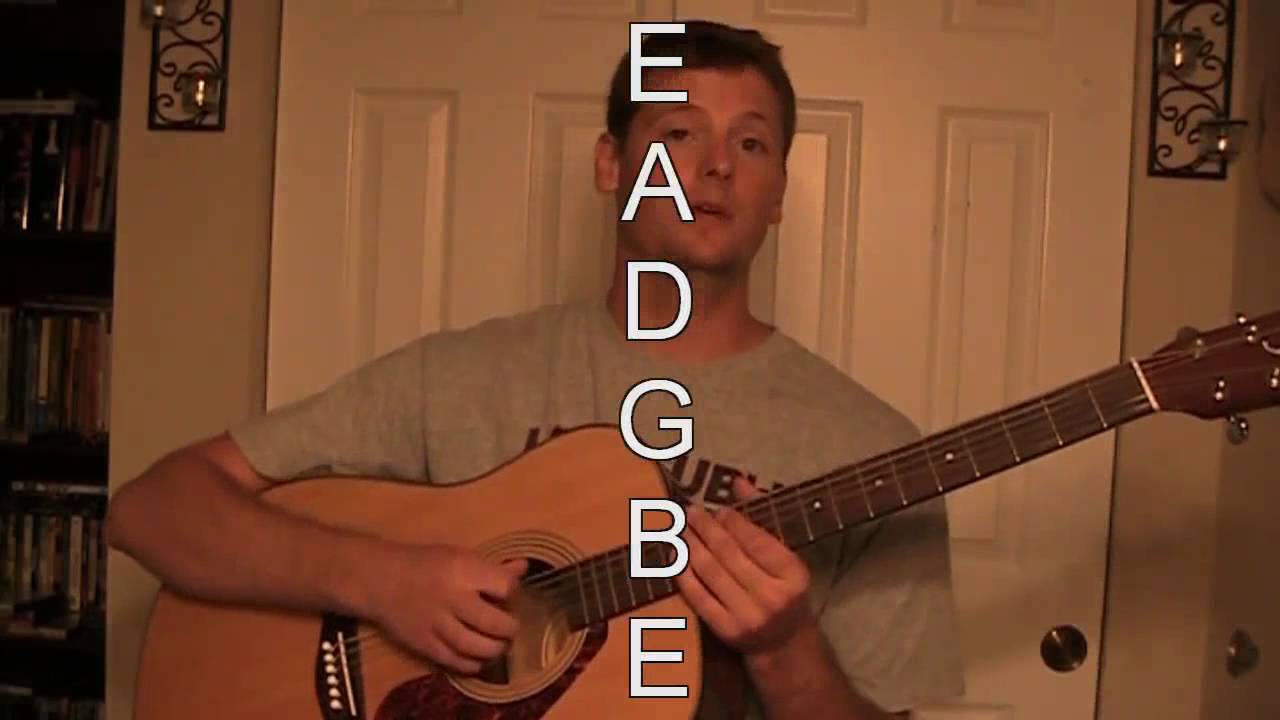
Added:[Music] thank you hey I'm Eric Haugen check the description box below for information about exactly what sound tools I'm using and all the links to my website and stuff like that music theory review day because we're going to be doing some more advanced stuff starting next month I'm going to be doing Jazz for rockers so I want to make sure that we are cool with these seven things if we know these seven things we're ready to add to it if we're not strong on these seven things let's take some time to really chip away at this here we go thing number one notes on the fretboard this rule let's just make sure we're cool with this all the notes are two Frets apart except for E and F and B and C which are right next to each other right next to each other so yeah you really gotta sit around e f g a b C's right there d e same thing over here a B think it through c d e f g and then a and of course yes do that to all the strings and a couple of things about that the first thing is notice I say to not bother you know memorizing e f f sharp G G sharp a because our brain doesn't do as well if there's no landmarks so the notes aren't equivalent like as a guitarist you're a lot more likely to be playing Millions more G's in your life than you're going to play F Sharps so I think it's more important to memorize this the natural notes and then using logic know where the sharps and flats are by either nudging it one way or the other way and let's make sure we're best we are the bestest at the low E and the a because that's going to be the root of any Triad arpeggio chord scale whatever it is it tends to be rooted down here and built up that way so that's thing one just let's just make sure we got that that way we got that Dead on don't get lost on the fretboard next thing let's make sure we just accept that this is our major scale formula yeah we can go into whole whole half and this that the other thing and why that is but it's actually faster and takes up less space in our mind if we're just like dude that's what it looks like so let's hear that it's a G Major scale here it is [Music] okay so now we know the notes on our fretboard and we've accepted that that is what a major scale looks like which is the root of western music which is mostly what I'm assuming we are all you know watching videos on YouTube about ultimately one way or the other now that means we know the notes that are in that key boom there's the notes there in the key of G major you can see g a b c d e f sharp G let's talk about that F sharp for a minute you can't have because sometimes people go g a b c d e Eric is that a g flat or an F sharp and G it's an F sharp because we can't have two G's of different varieties in the same scale g-a-b-c-d-e F sharp G okay that's pretty cool we understand the notes in the key of G but let's pull pull back for a second that means theoretically we know the notes in any key without having to do the circle of physical and I've talked about this in my where to start with Music Theory series so I'm basically recondensing that into a quick one so that we could then do jazz for rockers next month so that means I could go up to like E flat [Music] and just looking down my fretboard you know taking some time be like E flat F G a flat B flat C D E flat oh now I know the notes in the key of E flat and therefore you know if you pull out or extrapolate further that means you have the notes for any key just by doing it this way you know it's not the most you know uh music theory school appropriate way but it is definitely the dum-dum rock guitar player who can kind of make his way through just about anything way of doing things so that also means you're not done with this after you've mastered G get some scrap paper out and and be like okay be flat do I know where my B flat major scale is okay let me play it now let me lose sit down and write down the notes in B flat you got to do that because if you want to be able to on the Fly adapt you have to have done you have to have prepared yourself to adapt you can't expect that of yourself that that you'll just know when you're in that situation that's a lot of practices like that you you have to prepare yourself for a lot of situations and then you know hopefully when they happen you're good now if we know that we know that those are the notes the next thing that I you know again there's there's reasons for all this but ultimately if I think about the way my brain works I don't think about the reasons anymore I did it you know in high school when I took music theory and then I just memorized yo that's how the chords work in a major key one four and five or major two three six or minor seven is the scary but it's not really that scary it's a diminished Triad but diminished Triads are hard to play on the instruments so we add one more note and it becomes minor seven flat five Philip Seymour Hoffman minor seven flat five we can remember his name we can remember that minor seven flat fives exist they're beautiful chords we're not going to play them all the time but sometimes they show up and we don't want to just have our brain just do the like the buffering Spinning Wheel thing that your computer does or it's like yeah I don't know that oh I'm stuck that's what it looks like it's like an A minor chord with an F sharp on the bottom check it [Music] let's go to B7 [Music] now let's hear those chords in the key of G okay let's get my pick out major two is minor three is minor four is Major five is Major six is my iron yep here's Philip Seymour Hoffman [Music] and that's true for every major key so that now means in theory that you can go and find not only the major scale and the notes for any key but then the chords for that key so writers that's very useful as a writer um that you can do that you don't have to be stuck in the two keys that you know very well you can nudge yourself around and end up in some new places now the next thing about writing and Analysis is like if we want to know how to make up cool stuff we need to know what came before what's the standard stuff that we can then know that people expect to hear because that's just the way our ears work and then how can we subvert that or mess with that so let's look at some of these standard progressions and again some of these are Church cadences 1451 is the perfect authentic Cadence you know that's just folk music that's church hymns you know g c d g yeah that's a perfect authentic Cadence you know nah by now right it's fine but yeah we tend to avoid that the the second one on the list there plagel and this gets used all the time is it's not even really a Cadence there's just one going up to a four back down to one up to a four you know so much Velvet Underground yeah [Music] oh David Bowie Heroes yep [Music] I guess it does hit a five yeah I mean so many songs are one to four for a verse this is a great way to get a lift off of that one chord without going you know you're looking for another major chord but you don't want to go all the way to five so so many times they'll just go to a four one that I like to do a lot if I'm like trying out that bump to the mic if I'm trying out uh chords or things is the dead flower progression which is actually one five four one just that simple reversal of the order does does make a difference here's the five now this there's the four somehow reversing that is like nicer foreign let's visit some of the minor ones I purposely by the way ignored the one five six four I'm sick of the Axis of Awesome the Let It Be progression the Jason Mraz I'm Yours the Don't Stop Believin I'm sick of it it's nice actually but it's just played out let's go to the one that used to be popular before that one was popular one six two five oh man all the old Jazz and swing you know this this thing dominated until like Elvis Presley this progression was the progression let's see so in G that's a one a six two and a five fast you know it's that I got rhythm I got my girl um if you slow it down though it's also doo-wop We're Not Gonna worry about those little slightly colorful chords I put in we're going to be talking about those next month in the Jazz for rockers we've actually all been listening to Jazz it shows up in everything really if we think if we realize that the jazz is just old pop music you start to realize oh the influence is everywhere we if you listen to David Bowie you've actually been listening to like jazz fusion last one one three four one The Band The Weight I want some that use some of the other minor chords you know let's see so in G that'll be [Music] how's that turn classic so what I suggest to do is obviously be good at those but again with your scrap paper and you're writing stuff down can you do a one three four one in B flat can you do a one six two five in E can you do a one five four one in a stuff is going to happen as you sit around and do this you'll end up writing new songs once we force ourselves to get out of you know the ruts that we know nothing nothing wrong with the ruts that we know but you're watching videos on YouTube because you want some more information and so I'm here to try and make it simple so really that's the first that's the first four things which is like that's huge right there because that's a lot of keys it's actually a lot of solid stuff that you can add to because that's always my concern is making sure that we have a really sturdy foundation so that when we reach for something new we know where to put it that it makes sense it's not an island I call them cognitive islands where you're like I saw a thing on YouTube about modes of melodic minor cool I mean I don't even use modes of melodic minor I don't really like them but you know I mean that you have because if you reach for something far and then you get confused so anyway that's my concern is that that make sure our foundation is really strong because it's not actually music theory makes sense it all makes sense but as you can see there's just not a quick explanation for it it does require patience and scrap paper and like trying things out and moving them around so now the the second half of this which is just basically going to be doing the same thing but with minor because minor is the Yan wait the Yang to the Ying the dark to the light the you know hot cold etc etc dichotomy is everywhere throughout music and so yeah if you got happy you got sad I'll even think of it as sad though anymore it just feels human uh anyway here's E minor which just accept that that's the deal that's what a minor scale looks like notice it opens there because I wanted to keep it relative minor to G but I'm not going to go into relative minors I don't think they're actually terribly useful that tells us the notes for a minor scale and that's the minor form so let's let's think about that yeah as its own thing we're not thinking about this as key of G because that would be disrespectful to the tonal Center of e you know that's not itchy you know and remember that the music is all about fundamental frequencies and then other frequencies interacting with that fundamental frequency so I know that the Nashville number system likes to make everything major that's cool for that you know if that works for you that's great I don't like it I think it's I like having miners be minors here's our notes in the key of E minor but yep notice yeah they're the same as G but again tonal Center is e e f sharp g a b c d e that means also then we can extrapolate out and get the chords as they relate to that so again you can use this to stick a minor scale wherever you want and then generate the chords like Okay so let's back out once one so we know we got that right [Music] move it up to F sharp you know F sharp G sharp A B C sharp D E F sharp there's my notes in the key of F sharp minor which yeah that's a big you know Tom Petty Refugee Led Zeppelin Immigrant Song [Music] oh I see it yeah F sharp minor is a great Rock key but anyway yeah you can use that concept to find all your minor key stuff you know just like you did and notice yeah I'm like miners are one thing majors are one another thing so I like to keep it that way quarterly though let's look again now one is E minor because tonal Center resonant frequency fundamental resonating pitch is e so we're calling that one because it is 2 is now the minor seven flat five Philip Seymour Hoffman three is a flat three because that is its distance relative to that fundamental frequency is a flat third again I'm not going into intervals they are important they are a thing but just accept that that just yeah it's just a flat third this is a flat three that's just how it be is because listen to that sound oh is that uh Depeche Mode [Music] that's a minor third away 4 is now an A Minor five is now a B minor six is now again a flat six away from the root a c natural oh I dropped my pick [Music] I have another pick candy yeah I do okay and then D is the flat seven you know again distance to that fundamental pitch [Music] same thing cool we understand miners we understand that they're their own thing because of resonant frequencies and fundamentals there's some standard minor key progressions that are cool to try out let's check out because again this is for the purpose of knowing what came before you knowing what kind of standard things is so that you could either a just use them or tweak them and make them your own but yeah it's the you know it's like learning phrases of a language it's one thing to know how the words the vocabulary is but let's learn some phrases one four one five in E Minor hmm what will that sound like [Music] I love that progression [Music] classic another one that is just used so much it's kind of a minor Trope is the Andalusian Cadence one and it's just going to go down the scale one where am I one flat seven flat six 5 is now notice capitalized because yeah and minor a lot of times we can go into it but just know that sometimes they're going to make that five major it makes it more dramatic pushes it into harmonic minor but we'll stop there again I have a whole series of Music Theory uh on my channel I think there's a way to put a link on here go over there and check it out and I've talked about this before super cool thing to do let's hear how that sounds in E Minor the Andalusian Cadence [Music] foreign [Music] very dramatic Cadence with that major five this one I did include this is kind of the minor version of the one five six four One Flat six flat three flat seven notes for looking there it is cranberry zombie I call it the minor Axis of Awesome this is the one that's kind of it shows up a lot so let's see that being there's our flat six [Music] yeah I put an F sharp in the bottom you can do that [Music] something like that the last one we'll do for today because this shows up a lot in in Latin stuff also Tom Waits stuff two where am I two five is now dominance seven I we tweak it even one further and then finally the one interesting [Music] let's see let's give it a [Music] foreign [Music] super cool right super spooky there it is if you got that stuff and then our and then you know every so often are taken out of scrap paper and like moving it to other keys and like really seeing that you got it good job because yeah it's going to be so much easier to add to layers rather than you go for something and you're like oh actually I'm already I'm I'm in the deep end now I'm out of my depth this is the like the best way I know like if you got this you can add to it and and that's that's it like this is yeah just distilled music theory into about 20 minutes is what I try to do I try to to keep it tight um all this stuff I'm gonna go scan in and put on my patreon page for free along with that that Bob Dylan backing track which is that's a track off a street legal I kind of am utilizing to kind of give us a Vibe here today fun thing to play over um thanks so much to everybody who supports me in all the ways that you do let's run it down like subscribe share is actually a new one I'm noticing is actually pretty significant to my bottom line if you like these videos and you're like yo Reddit yo Facebook or whatever else you pop it out over there I actually see a huge jump in numbers which means traffic which is that's how I make my living by the traffic getting generated and then people going to my website to either book one-on-one music lessons with me which a lot of times it's kind of Consulting it's almost like life coach music Consulting I tend to do a lot of these days which is super fun for me I have courses that I make in partnership with the people at truefire the Caged one if you haven't taken that that's the best seller I think I I must have done something right I've really distilled you know the best I could and how the all all the shapes work again to lay a foundation upon which everything else can lay and then with patreon you have discount codes for my website as well as a monthly live stream that patrons at a certain level get access to ask me questions and kind of kind of little private lessons I do on there also that's how I do this as Bill and Ted would say be excellent to each other that includes yourself happy Friday eat pizza [Music] thank you
Up Next
Spanish Phrygian Scale: Music Theory & Composition Tips
@Berklee_Online
143K views•2017-04-25

Simon Rattle on Early 20th-Century Music: Tonality's Decline
@theclandestinum
18.3K views•2012-06-16
Music Theory: Secondary Dominants Explained – Guide
@EricHaugenGuitar
23.4K views•2021-09-24
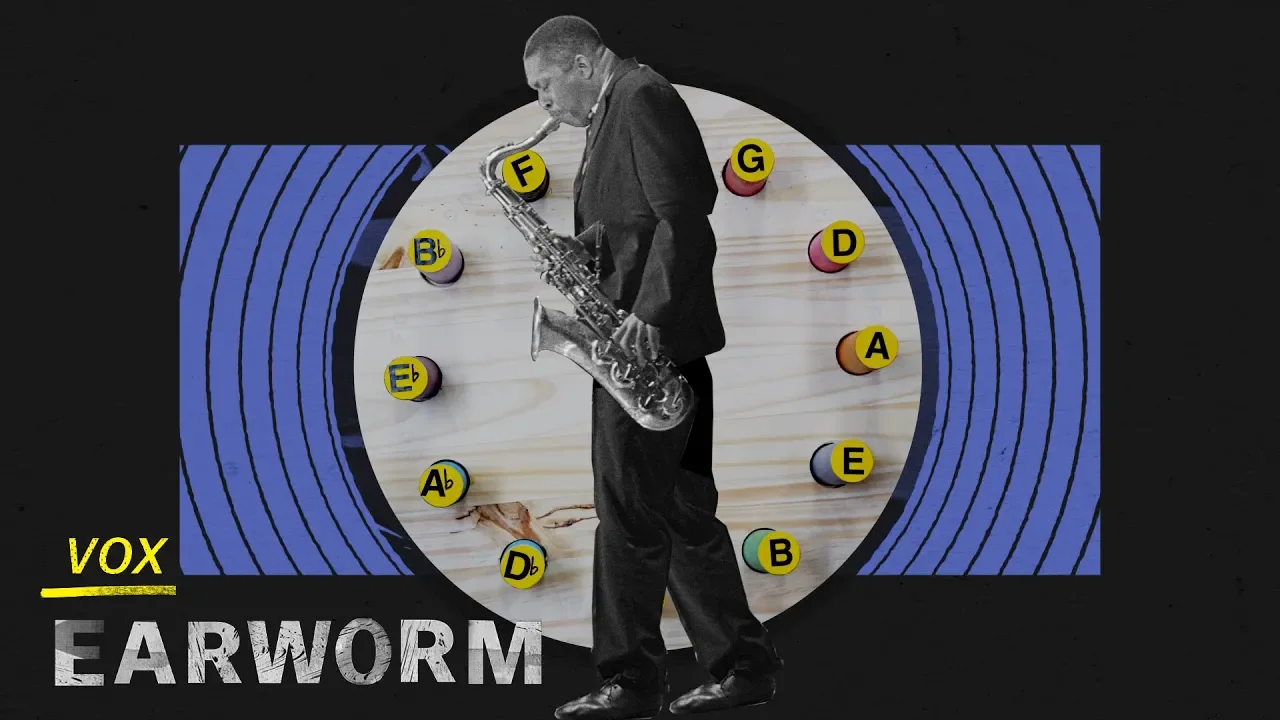
Understanding John Coltrane's Giant Steps: A Music Theory Analysis
@Vox
10.4M views•2018-11-12
Related Study Plans & Knowledge Roadmaps
Structured learning paths in Music Theory