






![[Piano] Mò Hợp Âm 1 Bài Hát Như Thế Nào ?](https://i.ytimg.com/vi_webp/SsDljXHayA0/maxresdefault.webp)


![How To Arrange Chords into BEAUTIFUL 4-PART HARMONIES [Music Theory - Voice Leading]](https://i.ytimg.com/vi/UkatcvIuF4U/maxresdefault.jpg)


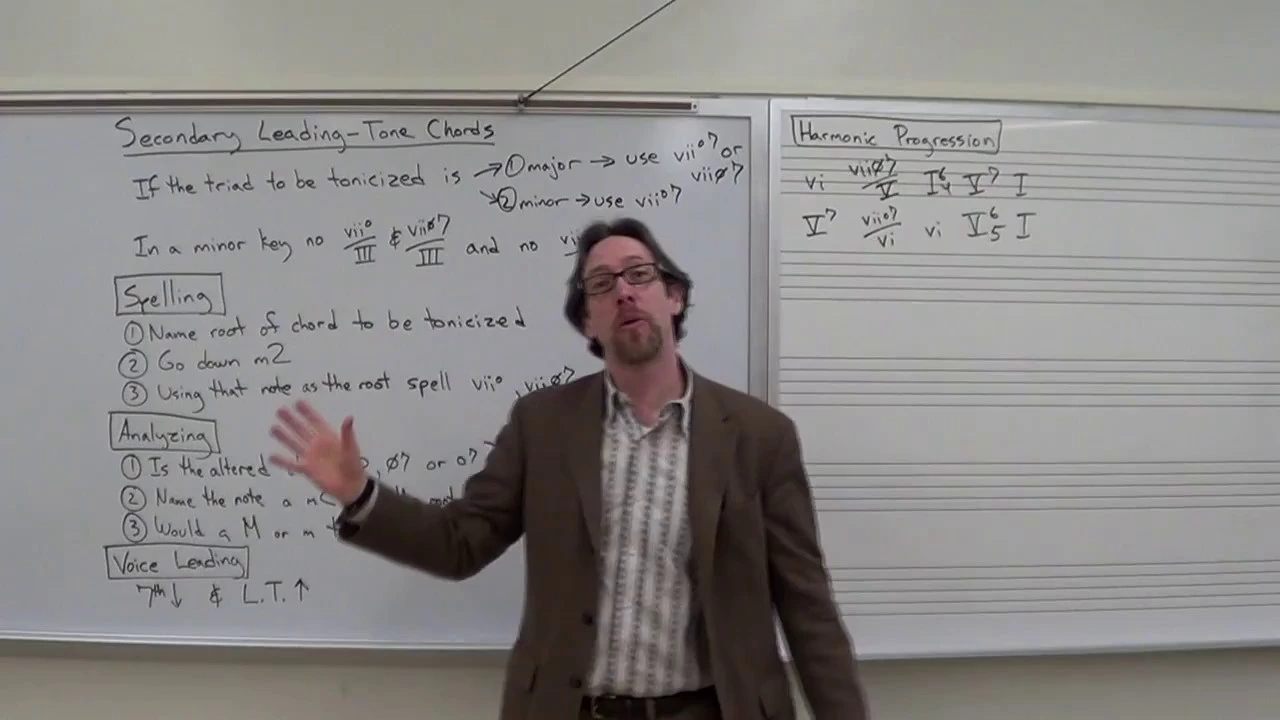
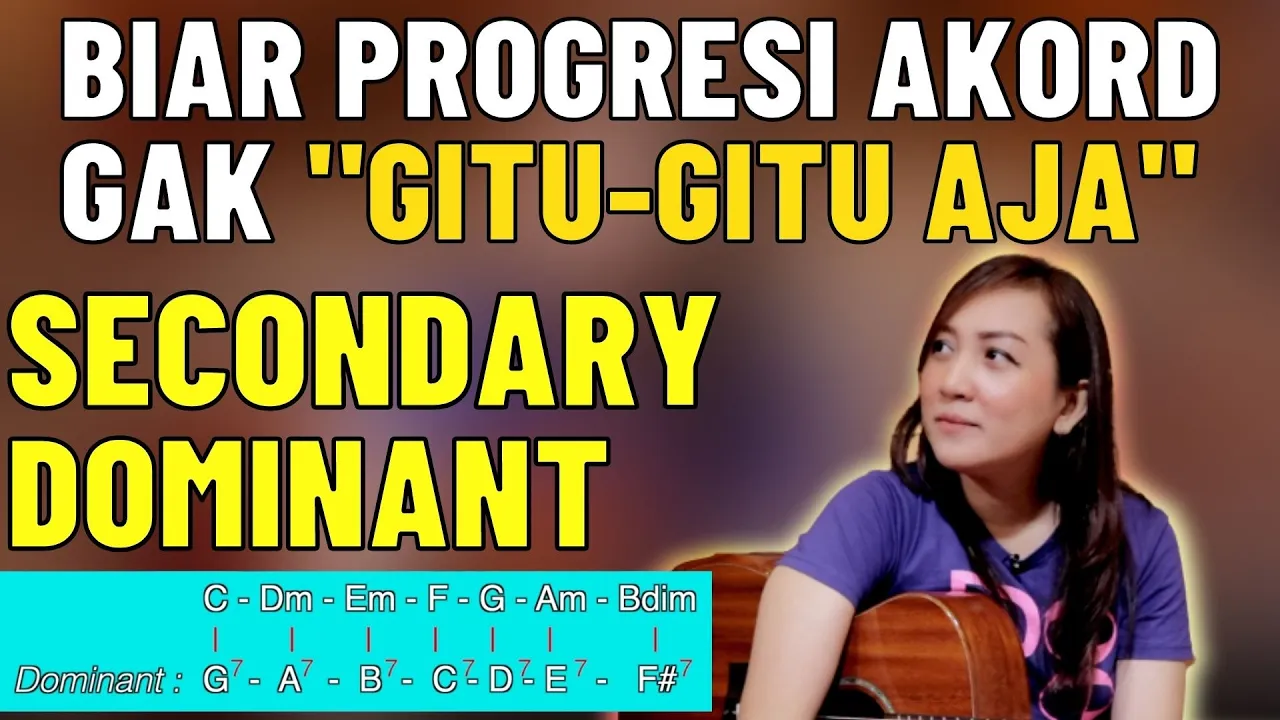


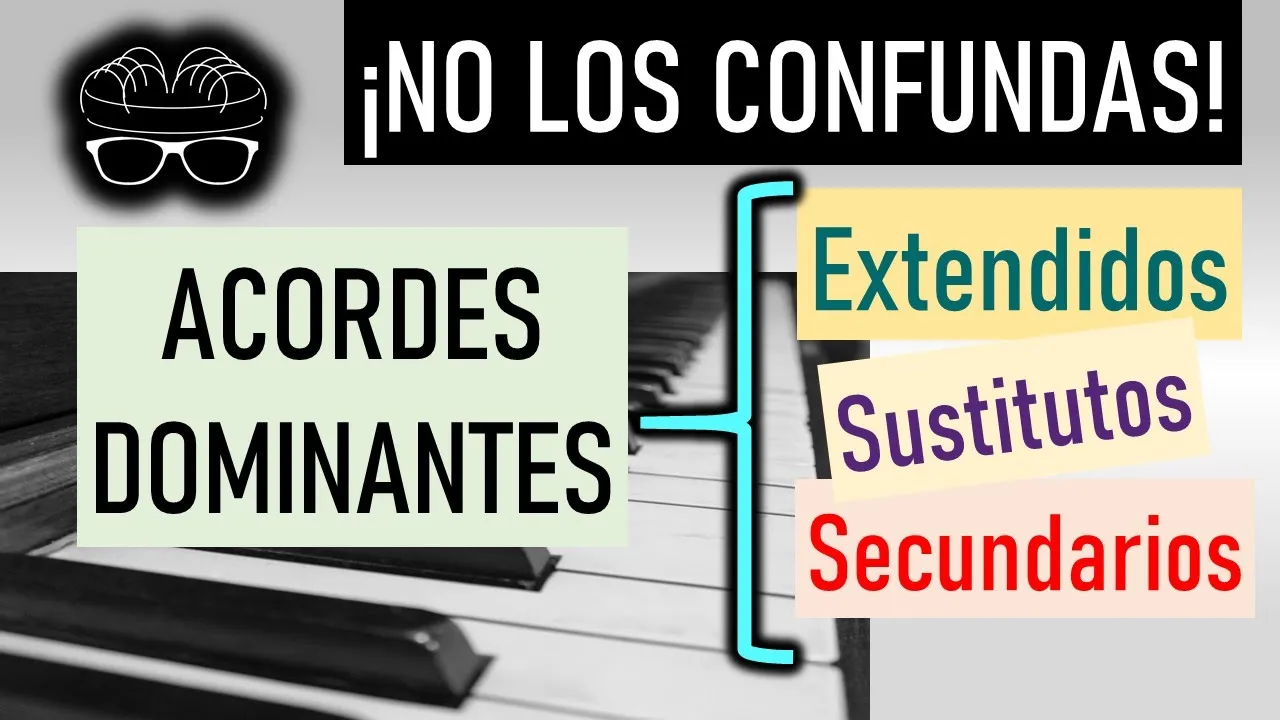
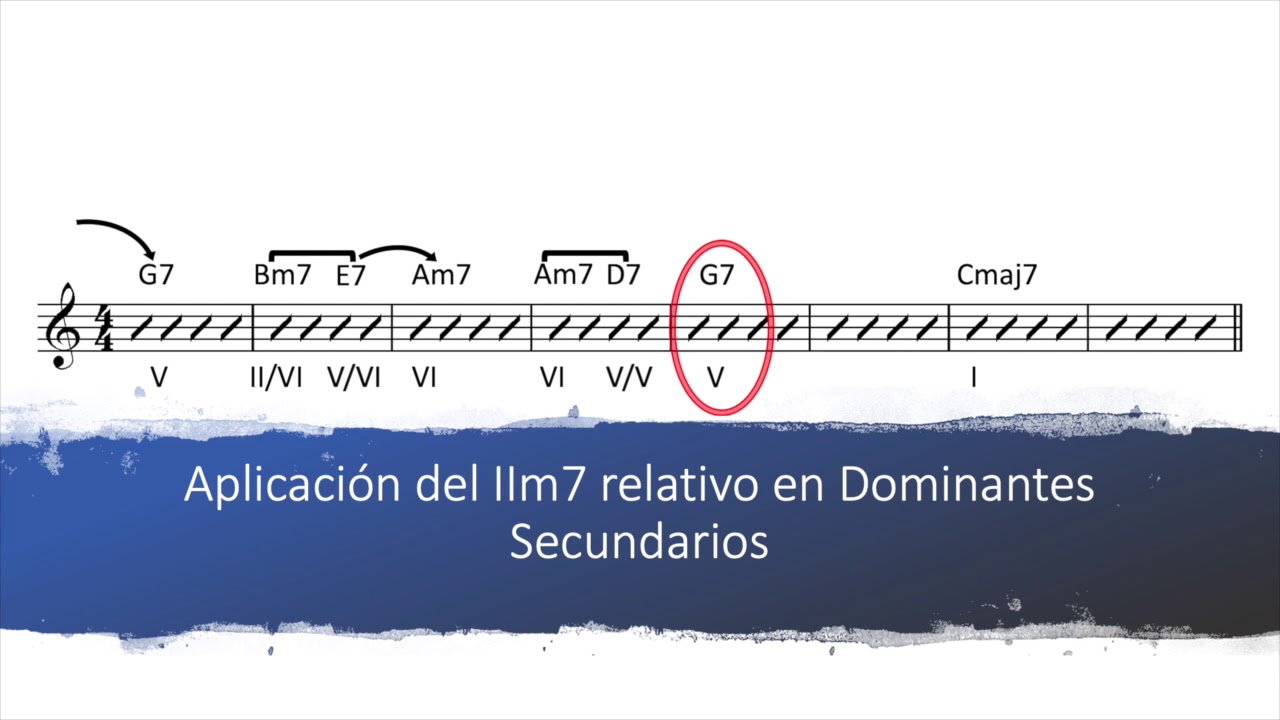
![Dominants can go...anywhere?!? [lesson excerpt]](https://i.ytimg.com/vi/9LYnZWTecC4/maxresdefault.jpg)


![6 Canciones con DOMINANTES SECUNDARIOS [Beatles/Fito/Queen/Radiohead]](https://i.ytimg.com/vi_webp/0Jxv8iKNdwE/maxresdefault.webp)




A secondary dominant chord is a dominant seventh chord that temporarily establishes a new key center to emphasize and announce the presence of a target chord in a progression; it functions as an 'approach chord' that creates tension and anticipation before resolving to its target chord, commonly used in popular music to connect otherwise disconnected chord progressions.
Music Theory: Secondary Dominants Explained – Guide
Added:Understanding of major and minor scales, key signatures, and diatonic scale degrees.
Familiarity with Roman numeral analysis for labeling chords within a key.
Knowledge of chord construction, specifically diatonic triads and dominant seventh (V7) chords.
Understanding of the standard dominant-to-tonic (V-I or V7-I) resolution and the pull of the leading tone.
Exploring secondary leading-tone chords (such as vii°7 of V) as alternative chromatic approach chords.
Applying secondary dominants to facilitate smooth modulation (changing keys) within a musical composition.
Studying extended dominants, where chains of dominant seventh chords resolve sequentially (e.g., III7 - VI7 - II7 - V7 - I).
Analyzing deceptive resolutions of secondary dominants in classical, jazz, and popular music.
Practicing voice-leading rules for resolving chromatic alterations in four-part writing (chorale style).
23.4K views1.2Klikes17:24Original Release: 2021-09-24
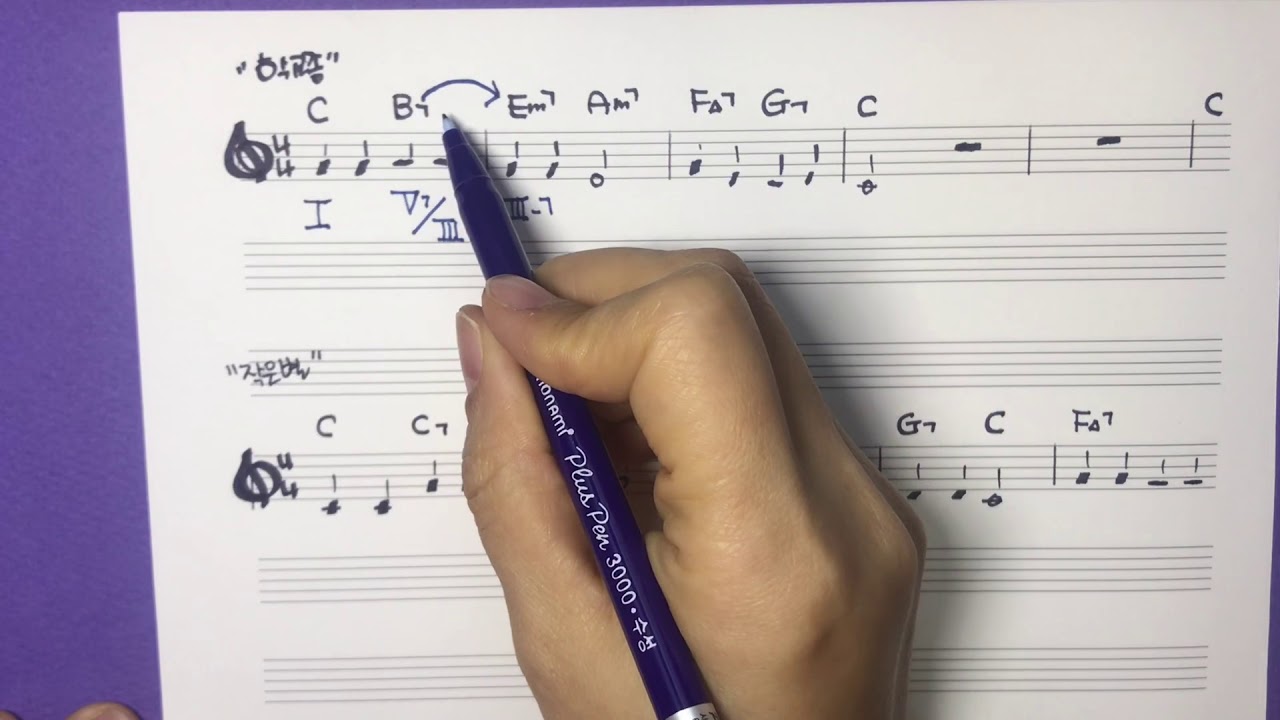
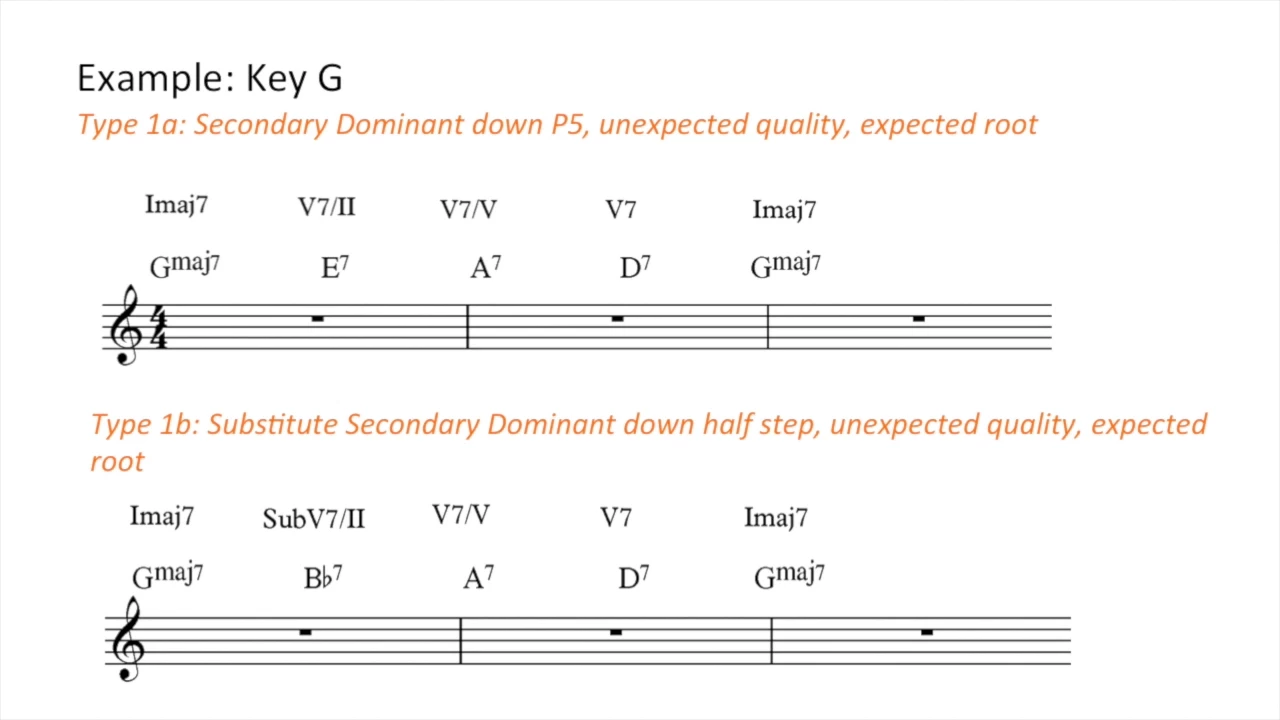
[Music] hey i'm eric haugen there's my website my patreon my instagram my spotify artist page go ahead and like my videos and subscribe to my channel if this content helps you out it helps me neat secondary dominance okay out of the gate i don't really like that nomenclature it does feel kind of jargony to me secondary dominant sounds pretty academic here's the deal say i had a chord progression in the key of c going down to a minor that's a one chord to a six chord the concept of secondary dominant is that of what i call an approach chord that you could look down at that chord progression be like that's nice but boy golly i wish there was something that i could put in this song that would make it make that a minor pop more that would set it up that would announce its presence and that is what a secondary dominant is what you have to do is you look at the chord that you're going to and you have to think about that key okay key of a minor what is the five chord in the key of a minor well it's usually e minor but if i wanted to make that dominant seventh chord that would be e7 let's listen again here comes the a minor i like that okay in context feel that see how it set it up let's listen again let's play it again without the secondary dominant with a secondary dominant so the way i think of it is that a secondary dominant exists in a chord progression as a way to set up a chord over here and so this is an interesting thing we would like to think that chord progressions start here and you go linearly down a path however just like in film and novels sometimes these things are not composed front to back that that they can go out of order that you could have a couple of chords over here and then a couple of chords over here and be like crud how do i connect these two things and this is one of the handful of tricks you could use i call these approach chords diminished uh seventh chords work this way um as well as augmented chords can work as approach chords as well as sub five so there's a couple of tricks for it anyway so a secondary dominant gets analyzed as let's go back to that original progression you have c that's a one chord going to uh six that's an a minor so you would call this just you know if you had to write it down on a chart to an analysis you would call that e7 you would call it five seven slash of six because for that momentary piece of the music you are in the key of a minor even though you were already in the key of c let's look at some other examples um this for example i was that opening by the way that was the band's ophelia i love the band again look at me duh [Music] that classic sequence of secondary dominance you have a c okay a7 is actually the five chord of d minor but then they mess with you because they make it a d7 because d7 is the five of g so that you'll see often we'll do another example so again one chord this a7 is trying to get to d minor the two chord you would call that five seven of two but then what jerk it doesn't actually get to two because now d7 is this you know i'm gonna slow down d7 let's think about for a second d7 in the key of g is the five chord of g so now we have a five seven of five one more time one five seven of two five seven of five finally to the five chord back to one and that's rhythm changes again though [Music] so in general yes secondary dominance are very cool but they will to my ear have a very old timey kind of uh sound to them let me just add another example of one of those really long sequences of secondary dominance let's see if this tone setting is how i want it i like the tremolo on [Music] yeah let's do a half time version of you know [Music] fun so that's sweet georgia brown that is an e7 a7 d7 finally to a g that's actually the key that's actually the key of this so that is you know e7 is five seven of two same thing happens though instead of going to the the proper two you're like you jerk that's five seven of five now there's the five chord the d7 finally back to g so those are examples of like a lot of them in a row but usually for you as a songwriter or riff writer or progression writer or loop maker let's just use the word creative without being too specific because i think y'all may have noticed by now that i'm really leaning heavily into encouraging you all to be creative that let's not worry so much about playing exactly um a passage or somebody else's thing even even one of my arrangements um yeah work on stuff for sure never not work on stuff but you know always blur those edges uh leave yourself open to make up stuff because you might you will if you're playing an instrument it's it it wants you to make up stuff all right let's look at okay yeah let's look at okay this is fun honky tonk woman has one secondary dominant in it it's coming up here now i know that that is not how to play honky tonk woman properly i don't have a telecaster an open g tuning i don't have overdrive on my amp i know i'm working with the the flappy farty pleasant tone setting i have here so that actually is nice kind of like a laid back you know i won't say pop staples because you know i'm here compared to pop staples but that's a little bit what i'm thinking of i mean the master of groovy chill uh tremolo guitar parts is pop staples staple singers [Music] i bet my buddy adrian has some pop staples lessons adrian anyone can play guitar.uk anyway g that's a one to the c that's a four little keith richards thing that he does it's really f over c back to c g a [Music] and yes one of your subscribers asked about this i guess in i don't remember what lesson but like what's the deal with that a that's the five let's think about it if we were in the key of d if we were in the key of d what's the five chord in the key of d the five chord in the key of d is a and so sometimes that points to a thing that in rock and indie rock they won't make it a seventh they'll just make it a major but so you'll see that one you could call it a two [Music] but you know really it's a five seven of five [Music] another example all right i'll turn off the tremolo finally in the key of c yeah it's nice to stay in the keepsake um simon and garfunkel the only living boy in new york here comes an a7 and half of the time we're gone but we don't know where we so again that's a c that's one up to four but then there's that in that after that i think the second chorus big a7 there which again why are you there a7 why why are you there well because paul simon wants to set up that d minor chord which is the two so again the only living boy in new york four chord and then you could feel it bam so there there's a that's a really big one and then two to the five and the one to the fourth which is also aha a take on me talking away i don't care what they say it's also rocky raccoon anyway everything is everything else it really is man i am you you are me i am the walrus cuckoo tube you are the eggman i don't even know anymore okay so just to review okay some homework assignments for you before i provide a minor key example would be yeah take okay let's just say what if i want to go c to e minor 1 2 e minor is to three so again which actually what a nice progression no that's ground control to major tom is it yeah ground control to major tom yep david bowie i referenced him last week why not because he's great so if i want to set up e minor the thing with secondary dominance is you have to think of two keys at once you have to pause and be like okay so if i wanted to set up this e minor that means i need to think about e minor what's the v chord in the key of e minor [Music] it's b7 [Music] so that would give you ground control ground control to major town okay that doesn't work you know they just not sing [Music] did you hear [Music] that that now i gotta just replace that potentiometer it's always crackly and while i throw an e minor seven in there okay hold on let's combine concepts b7 e minor e sus4 e minor e minor 9 [Music] i like this sus4 again that gets back to my thing of subtlety little little subtle things to make progressions interesting rather than big what if i did c and then like a b-flat b-flat seven sharp eleven darn it every time i say something weird to prove how it doesn't work it sounds kind of cool damn it uh anyway yeah usually i say not to try super weird things but i keep on finding them to sound good uh other observation i had is this doesn't show up nearly as much in minor keys as it does in major keys okay okay just making sure i thought my camera paused um you sometimes will see that too yeah so say i was in a minor [Music] [Applause] that's an old tally a zx song chris brokaw [Music] so that's a minor up to b7 [Music] and so that b7 is really the five of e but this that song never actually hits it [Music] i think that's all i really need to talk about the main thing yeah with the secondary dominance is is that you know if you're you know these work probably exceptionally well between sections of songs but sometimes you'll have a chord progression where you got a couple of chords here and a couple of chords over there and not sure this is one of the ways to to connect things my main advice would be to go through key of g key of c those to me are like the two you know most guitary keys that there are and um yeah c about sneaking in a secondary dominant to a progression all you got to do is you gotta always just remember to think about where you're going and and yes that you focus on that you're in a main key but then wherever chord you're going is actually um micro key is that a yeah i think that makes sense uh thanks so much to everybody who supports me in all the ways that you do even if it's just clicking like and subscribe because that stuff helps with the algorithm relevancy because i stubbornly refuse to put ads on my channel because they're just annoying um and so i make my living actually by people deciding that they like me and deciding that i seem like a nice person and they will go to my website they will either book lessons with me and yet by the way this this is the same guy this is the same guy that you take lessons with i'm the same always transparency honesty and kindness are kind of my core values uh so yeah you know if you book a lesson with me it's the same dude it's just i'm just i'll just be in that room over there supporting me on patreon is super helpful also purchasing the downloads that accompany my arrangements is cool too some people even just donate money that's really generous and i appreciate all of it as bill and ted would say be excellent to each other that includes yourself i'll see you next week happy friday eat pizza [Music] [Applause] [Music] you
Up Next
16:22
Understanding Tritone Substitution in Music Theory
@MusicMattersGB
81.2K views•2021-10-18

10:20
Mozart's Musical Dice Game Explained: History, Rules, & Fun
@webpianoacademy
5K views•2023-03-13

24:10
Music Theory Essentials: 7 Core Concepts Every Guitarist Needs
@EricHaugenGuitar
309.3K views•2023-03-31
10:49
Understanding John Coltrane's Giant Steps: A Music Theory Analysis
@Vox
10.4M views•2018-11-12
Related Study Plans & Knowledge Roadmaps
Structured learning paths in Music Theory
music-theory
Composing Galant Music: Partimento & Schemata
01Foundations of Figured Bass and Keyboard Harmony
02The Rule of the Octave (Regola dell'Ottava)
03Galant Schemata: The Building Blocks of Form
+ 2 more learning modules
30h5 modules
Explore Roadmap
music-theory
Decoding Overtone Series: Tuning & Drone Music
01Acoustic Foundations: The Physics of the Overtone Series
02Tuning Systems: Equal Temperament vs. Just Intonation
03Microtonality and Spectralism: Beyond Standard Pitches
+ 2 more learning modules
24h5 modules
Explore Roadmap
music-theory
Impressionist Harmony: Scales, Planing & RPGs
01Foundational Music Theory: Keys, Intervals, and Seventh Chords
02Impressionist Color: Chord Planing and Parallel Harmony
03Whimsical Textures: Pentatonic Cascades and Whole-Tone Scales
+ 1 more learning modules
14h4 modules
Explore Roadmap
music-theory
Negative Harmony: Axis Reflection in Indie Pop
01Music Theory Foundations: Scales, Intervals, and Triads
02Functional Harmony and the Circle of Fifths
03Demystifying the Negative Harmony Axis Reflection
+ 2 more learning modules
16h5 modules
Explore Roadmap