






![18/04/2025 - [10h] - ICM - Seminário de Grupo de Louvor e Instrumentistas - Tocar com entendimento](https://i.ytimg.com/vi_webp/CAxbpi-oL_Y/maxresdefault.webp)


Voice leading is the practice of arranging chord progressions by tracking individual note movements between chords, using principles like neighbor tones, leading tones, and various motion types (parallel, contrary, and oblique) to create smooth, musical transitions; this technique transforms basic chord progressions into rich, professional-sounding arrangements by giving each voice independent melodic motion while maintaining harmonic integrity.
Music Theory: Chord Voicing and Voice Leading for Four-Part Harmonies
Added:Interval identification: A solid understanding of melodic and harmonic intervals (seconds, thirds, fifths, octaves) to recognize spatial relationships between voices.
Chord construction and spelling: Mastery of building major, minor, augmented, and diminished triads, as well as basic seventh chords.
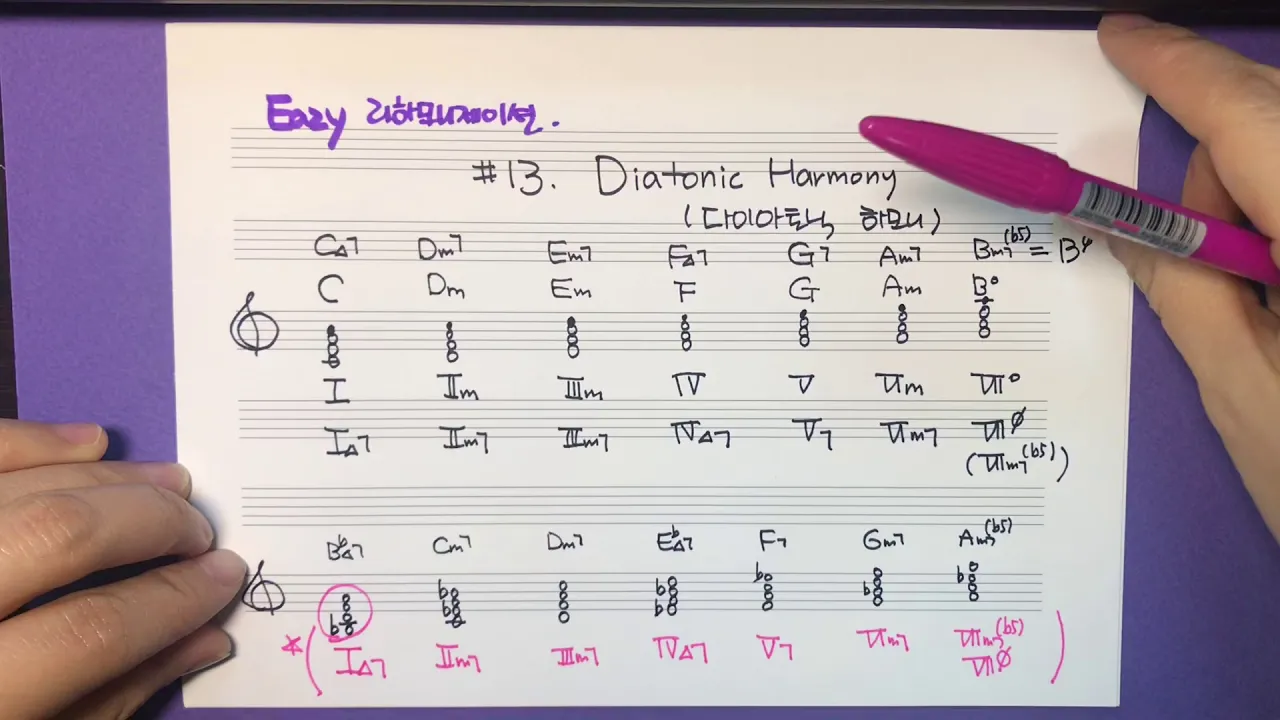
Diatonic harmony and Roman numeral analysis: Familiarity with scale degrees, key signatures, and how chords function within a major or minor key.
SATB Chorale Harmonization: Applying voice leading rules to write four-part harmonies in the traditional style of J.S. Bach.
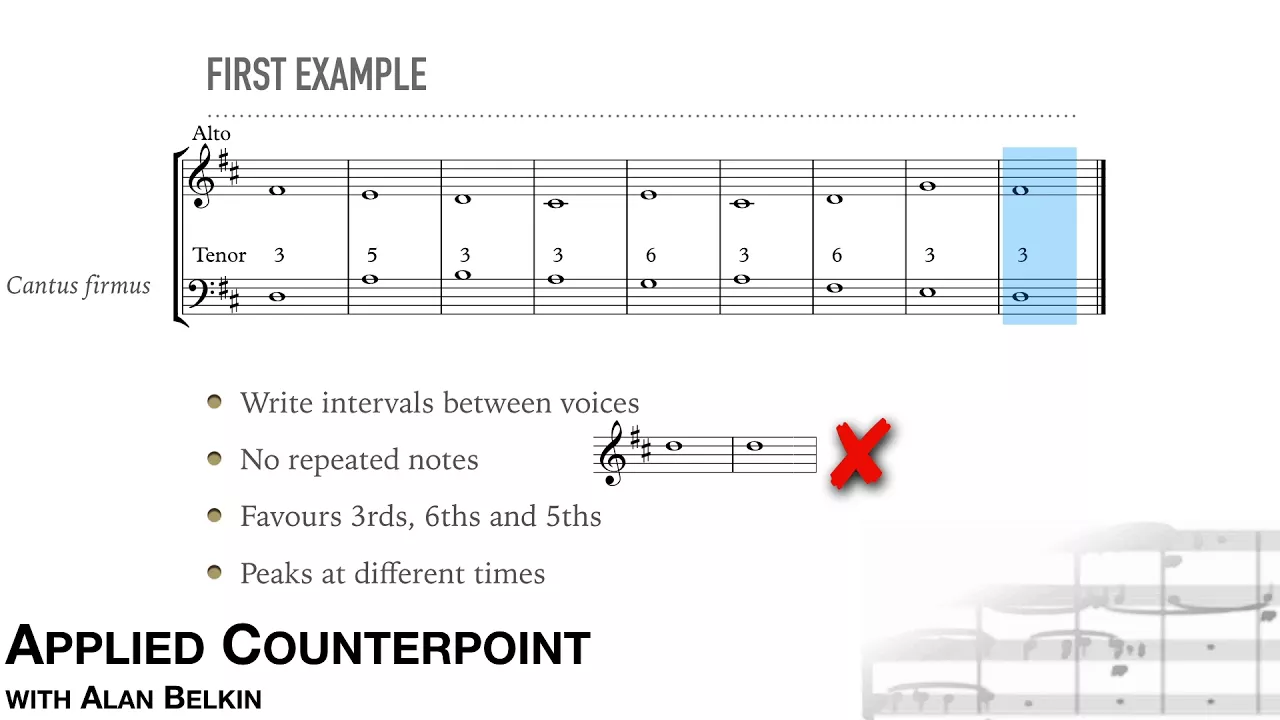
Species Counterpoint: Studying the relationship between independent melodic lines using strict traditional rules.
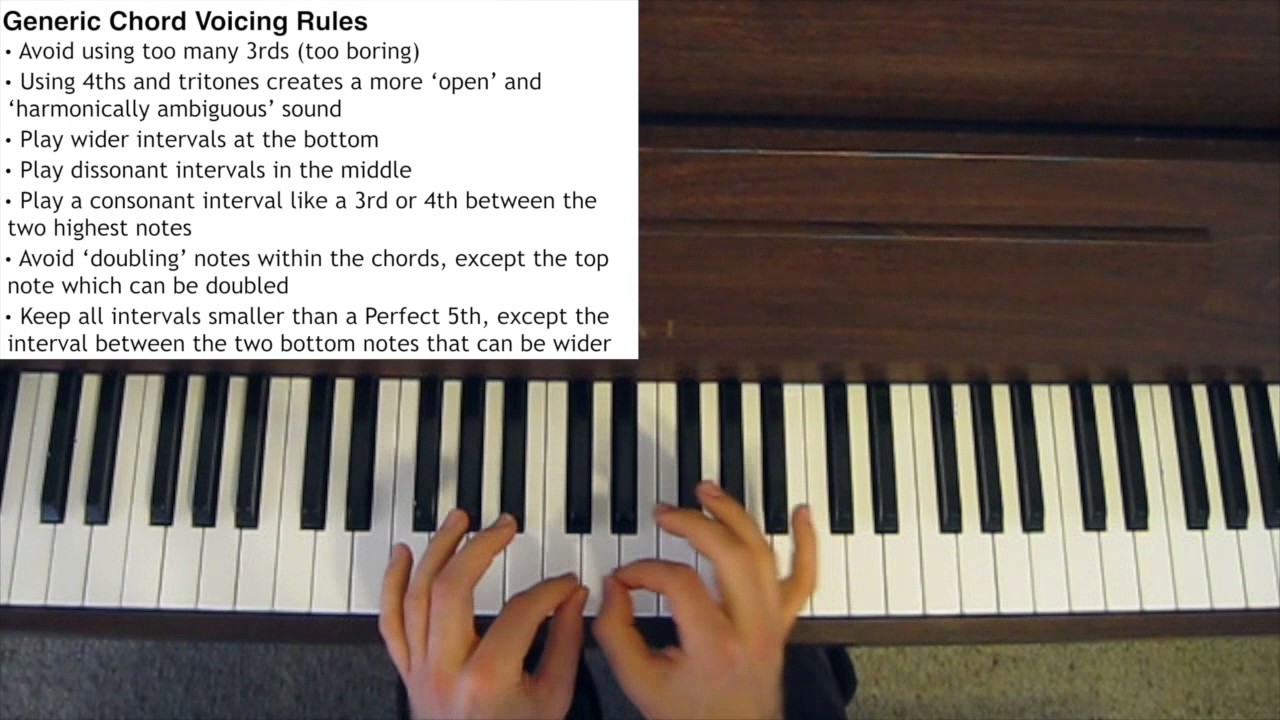
Jazz Chord Voicings: Transitioning to advanced jazz harmony, including rootless voicings, drop voicings (drop-2, drop-3), and extended chords (9ths, 11ths, 13ths).
Arranging for Instrumental Ensembles: Translating four-part vocal concepts to physical instruments (like string quartets or brass sections), accounting for specific instrument ranges and timbres.
1.4M views57.3Klikes22:06Original Release: 2022-02-14
if you give this chord progression to a dozen guitarists there's a really good chance that half of them will play it the exact same way that's because guitar players often just memorize chord shapes instead of learning how to build the chord or arrange the chord they instead just look up the name of the chord and then they play that shape now if I ask those same guitarists to arrange this chord progression for a bunch of violin players there's a really good chance they would just take every note on their guitar and then put it onto the music page and then hand that to some violin players which would sound and look like this now that sounds fine there's nothing wrong with it but it's kind of clumsy if I handed this to real musicians I'd need six different violin players just to play these two chords but I only need five violin players to play this chord so my sixth player is just sitting out on that last chord or that sixth player needs to double up on one of these notes so it's a little awkward but that's not the big problem the problem is when you compose this way you're completely ignoring the rich world of Harmony that exists within voice leading voice leading simply refers to the motion of the notes that are within the chords themselves and following that motion throughout a chord progression the chord progression can be thought of as composite voices and each of those voices has its own independent movement its own independent action and this is a huge Topic in music theory there are entire college degrees that are based on just this there are hundreds of formalized rules on when and how you're supposed to perform this but in this lesson I don't want to give you all those rules I want to teach you the very basic concepts and give you the tools to explore this concept all on your own without having to worry about formalized rules and passing tests so this is a very basic primer into the topic but by the end of this lesson you will be able to arrange a chord progression for something like horns strings choir or even just a midi piano roll on your computer so let's get started I'd like to begin by arranging a chord progression but before I do that we really need to go over some very basic concepts regarding Harmon Melody and voice leading I'm going to race through these Concepts because I think they're pretty intuitive once we start to talk about them first off motion exists as long as you have notes that are next to each other they can have motion they could go up they could go down they could go all around so let's just experience what it sounds like to take a note and ascending it in half steps what that does to us as a listener it makes us expect more ascending stuff it's pulling us upwards there's an attractor up there that this is slowly going towards and we could play a trick on you you know we could break the expectation by all of a sudden playing low notes and that's a trick we can use as a composer we've set up an expectation and then we've broken it we can also do this in res in Reverse by moving down these notes we are expecting more low stuff we're getting pulled downward this doesn't just work with half steps you could do this with whole steps right any kind of smooth motion upward will pull us upward and any sort of smooth motion downward will pull us downward bigger intervals do work like minor thirds and major thirds but at a certain point the motion doesn't become smooth anymore if I do fifths for example watch if I just play a bunch of fifths that's ascending yeah but it doesn't feel smooth it feels like this rocket ship geyser you know spring off into space so we've kind of lost track of my motion I can't track that motion as much as these smaller intervals so small little movements up and down sound great you know what else sounds great back and forth take a note you move it back and then you return it to where it was or you take a not and you move it up and return it to where it was don't even worry about the interval just that concept take a note move it back and return it take a note move it up and return it even with half steps it's a simple motion that we'll be able to easily identify within a chord progression which takes me to my next concept which is neighbor tones let's say we have a C major chord that's just the notes c e g the neighbor tones are the notes that are right next door to all of these notes so what's right next door to up my note c will I have b and d flat so those notes you can kind of feel even though they're dissonant they still sound fine right next to my C major Triad my C major chord is like this big stable pillar and what I'm doing is I'm kind of knocking it off balance a little bit by playing a neighbor tone and then it's kind of Shifting back onto balance right it's kind of find regaining its Center of balance there so neighbor tones are great little things to get us to a chord tone to get us to a note in the chord this also works on the other notes of the C chord the notes neighboring e are F and E flat and you can hear those notes sound pretty good in relation to my C and they could easily pull me to that note and also the fifth G you could turn it into a G sharp or a g flat and you can still hear that same pulling effect back to C major and the most important neighbor tone of all is our leading tone in a C major scale c d e f g a b c the leading tone is always the seventh note of any scale so the seventh note here was B and if I just work my way up to that b it leaves me hanging it leaves me wanting more it leaves me wanting to resolve to C so it's the most important neighbor tone that note that's right under my tonic to help me pull to a chord and the last concept I want you to keep in mind while we do all of our Arrangement is the idea of removing fifths when we play a chord we're allowed to remove the fifth it doesn't always need to be there because it still presents the chord pretty well I told you that the c major chord is c e and G well let's just tack another C to it and let's get rid of the G completely so all we're left with is c e and C this sounds pretty nice and this sounds like a C major to me if you ask most musicians what chord are you hearing they'll probably say C major even though it's not including that that extra fifth that g so yes the fifth is part of the chord but often arrangers will completely remove it and you might see why as we go throughout the rest of this lesson sometimes we don't need it sometimes we would rather have a different note played there like a seventh or a third or a doubled note so that's it for the conceptual stuff it's time to start putting it to use and we're going to try arranging that same chord progression we saw earlier F to G to C the first thing you really need to know is the notes of each of these chords F has an fa G has a gbd and C has a ceg now I'd like to arrange this for three different voices and the first thing I'm going to do is just figure out the bass voicing and I'm going to make this as simple as possible nothing fancy my Bas line is literally just going to play the root notes of the chord so I'll have my bass just play f g c that'll be one of the voices now what I'm going to do for my next voice is I'm going to pick another note of my F chord I'm going to pick the note a and then for the G chord I'm going to go up a whole step to play this note B and then that voice can lead up a half step to take me to the note C so I have this leading tone here B to C to resolve me to C so this voice is going to go a b c that hits a chord tone all along the way and it has this nice ascending motion and if I add that voice to my Baseline what I have is which sounds pretty nice that's a nice abbreviated version of an F to a g to a c chord but I still want to add one more voice for my F chord I'll add a c on top of it and then for my G chord I'll add a d on top of it and then that D can resolve upward an e to e so once again I've got ascending Motion in this voice so putting it all together would sound like this and I think that sounds really nice that's a nice thre part arrangement for a simple chord progression and notice that that c chord is missing a fifth there's no G note present there it really isn't needed there was no voice leading to it and if I get that note in there it's not like it gives us that much more joy right it sounds just fine as it was f g c and every voice has its own little job to do here now just for a moment ignore that Basse movement and take a look at what these top two voices are doing they're both moving up together we call that parallel motion they're both moving up in the same interval types they're moving in groupings of second either a major second or a minor second and they just move up together in parallel that's parallel motion that's one of the very important kinds of motion that we want to include within our voice leading we want to try to find areas to include that parallel motion because it sounds so good and we'll see other kinds of motion to try to implement throughout this process but for now let's just take the same chord progression and show you that there's many ways to arrange it this isn't the only solution to the puzzle here what I can do is instead of playing f g c what if I play the f and g an octave lower f g c that makes me a little space up higher to place some other voices and change how I'm doing things so now what I'll do I've got my simple Baseline again fgc and I'll write my next voicing this voice will go from the note a and then it'll go down to the note G and then it'll go down to the note E so we have this descending line of a g e that'll be my second voice and if I put that together with my Baseline what I have [Music] is now to add in my third voice voice I'll just go up and find other chord tones here is the note C which could resolve down to the note B and then it could pop right back up to the note C so we've got a little back and forth motion and adding in that voice gives [Music] me and I think that sounds really pretty it sounds far different than what it would sound like if you gave the average guitar player who's just going to play like I said that sounds good but this is a whole different ballpark here and this is the kind of thing that you are ready to ship off to violin players you can hand this to a a violin Trio a string uh Trio or a horn Trio and they're ready to play it and you've arranged it two different ways so we can actually start turning this into like actual music we could play our chord progression one way that's arranged and then we could do it the other way that we arranged it and hopefully you hear this sounds pretty nice this is an interesting way to present three basic boring chords that we've heard a billion times before there's a lot of Rich interesting stuff going on within those voices now here's where things get really juicy instead of just playing a G major chord here let's allow ourselves to voice out a G7 chord instead that has the notes g b d and F and remember we don't have to play all the notes of the chord but we're going to try to include this new note F to see what happens I'm going to arrange my chord progression like this once again I'll just have my bass do f g to C I'll have my highest voice play the note F and then stay on the Note f for G7 and then finally that can drop down a half step to resolve on the note E in part of my C chord and for my middle voice what I'll have it do is start on the Note a and then move up a whole step to the note B and then move up a half step to C so it's this simple ascending motion and it gets to hit that leading tone B to resolve us to C and if I put those three voices together it sounds like [Music] this now let's really slow down here on this G7 here's the F here's the G7 and let's look at those top two notes the top two notes are F and b f and B is a trone and trones sound terrible they're really dissonant they're really ugly this is alarm clock material this is the nightmare material this is where you want to turn off the video right so this is in my G7 chord and it sounds horrible but it sounds so good when you resolve it that's the reason there's so much tension in a G7 chord is there's a trone literally embedded into it and look at how this trone resolves to c major look at the motion that's going on between these voices f is resolving down to e at the exact same time that b is solving up to C so we don't have parallel motion they're not moving together they're moving in opposite directions this is contrary motion and it's another kind of motion that we really want to try to include in our voice leading because it sounds great it's interesting we can feel it we can hear it we can get detect these voices diverging and converging in on each other in that little G7 to C change right there and this is really the reason why the five chord is always made a seventh chord yes it's tense yes it pulls us to the one chord but the formal reason is cuz it it has this leading tone parall or contrary motion resolution back to artonic cord so I think that's enough music theory right now what I'd like to do is just start making music what I've done is written a very simple chord progression this is just bread andb butter chords from C major I've got C G major a minor E major that chord is out of key it's a secondary dominant and then I go to F to G to C and that's how most guitar players would play it those are the standard shapes for those chords and that sounds fine but I really think we can do better keeping all of these Concepts in mind so here's what I'm going to do I'm going to take that same chord progression and I'm going to arrange it for four voices the first thing that happens is I'm literally just going to take the bass notes and put them in on their own voice so from C to G to a to e to F to G to C now I want four voices in here and it's going to be really easy for these voices to get too cluttered if too close together so I'm going to move way up maybe two octaves maybe an octave and a half and I'm going to start writing my top voice there and then I can fill in all the stuff in between for this top voice it can really be anything it just needs to be the notes of the chords but I do want to try to avoid doubling my bass note all the time you know the goal here is to present the chord and if you end up playing only you know Roots the entire time it's really not going to present that chord so as I'm picking out these notes I'm trying to pick new chord tones chord tones I haven't seen before so for example here on this first c chord I'm having my very highest note play a note e as opposed to just playing the note C and once I started there I was able to find some simple motion to connect the rest of the chords it goes from the note E to F and then back to e to d c and then D and then back to C that's a very simple melodic path to follow all the way through next I added in another voice and this voice once again my goal was try to make sure sure it includes a chord tone but this time let's try to if we can include some interesting motion let's try to move parallel to one of our voices or move contrary to one of our voices or another type of motion is oblique motion where one of those notes changes while the other voice stays the same this is very common between chord changes and you can see as I put in these different voices you'll see the examples of oblique motion occurring between voices you'll also see different examples of contrary motion and parallel motion and doing all that work transformed the chord progression into something that sounds like this and that to me sounds musical it's ready to ship to some violin players but there's some really easy improvements we could make to it that top voice that top Melody line is going to be the easiest one that we can mess with and tweak without things kind of falling apart on us so what I'm going to do is I'm going to look at that Top Line and see if I can just you know spice it up a little bit maybe had some more scale motions staying within the c major scale trying to create simple melodic paths that just improve upon what's already there but I'm not thinking chords I'm not thinking really anything Theory wise I'm thinking more shapewise how can I make this Top Line more interesting well I could make it faster by you know splitting this note in half and doubling it so just trying to improve that and here's what it sounds like with those small little modifications and in my opinion the hard work is over you've written something cool it sounds good it's well arranged the fun part is what do we want to do with it now do we want to have this you know arranged for voice it's very simple just write some lyrics and sing each voice independently record them all individually and mix them together if you like this song please click like And subscribe now I admit that's not the greatest performance but hopefully you know my opinion on Pitch correction let's slap some melodine on there and see what that sounds like like please click like and subcribe another thing we could do is take this Arrangement and put it back to our guitar the whole point was to get off of our instrument get into Arrangement but once we've done this work let's teleport it back onto this instrument and see what happens and you'll see it's a pretty nice arrangement of chord shapes that you might not have encountered before especially this version of E7 this is not the version of E7 you're going to see in the chord dictionaries but this is the only way to voice what we're hearing here there's no other way to get those four voices played at the same time than this this is the only way you're going to be able to do it on your guitar and this is not the chord shape you're going to see when you look up E7 in the chord dictionary so that's the value of doing stuff like this it also gets you used to learning new chord shapes that might become very practical as a guitar [Music] [Applause] player or how about this let's make it less classical in more blue grass and folky we'll just swing it we'll add a shuffle Rhythm to it and I'll Travis pick it so every single voice the first the low voices will just be played with my thumb like this and that that might end up being a root and a fifth it might be whatever but my thumb will just alternate between those two I'll also syncopate the melody and it gives me this little [Music] riff and I love the way that sounds this is sounding like real music to me so I couldn't resist just adding in like an upright base a fake upright base and a little bit of percussion [Music] let's stay on the guitar but switch to Electric I'll play each part individually and then mix them all [Applause] [Music] [Applause] together and lastly a fun thing to do that you can only do on the computer is randomly assign these four voices to completely random instruments and just see what [Music] happens that's that's literally the first set of instruments that I picked and that sounds like some awesome RPG video game music and you know the fact is that because we spent so much time arranging this note fornote we can hear all four of those little instruments doing their own little job right there now if you found this topic interesting I have great news this is one of the most well researched and exhaustive aspects of all of Music Theory the music Majors that I've worked with they're all way better at this stuff than I am I am not a music major but most people that go to school for composition and specifically they know every rule that could possibly be associated with this and I'm telling you there are lots of rules There are rules on when to double the root note or when to double the third or when to omit the fifth and when should you include an inversion keep in mind all of the chord progressions I showed you today to keep it simple I kept them all in root position but if we include inversions like I taught in my video on chord inversions that completely opens up brand new possibilities for our voice leading but there are formal formal rules of when should you double the these notes and when should you how should you arrange them and do keep in mind that these rules I'm talking about are only rules because they help describe the music from the common practice period so let's put it this way if you want to become a master of CounterPoint you are probably going to want to learn all of those rules but it's very funny that music such you know such inspiring music can be so rule based we want to think of music as being so uh as being more inspired from the soul and from the music mus Muse but no sometimes it's paint by numbers sometimes it literally is solving the puzzle and it feels very mechanical a good composer will find a way to in include and Infuse some real emotion and soul into that chord progression but the truth is a lot of composing is like engineering it's like problem solving and a lot of composers don't want to hear that a lot of composers want to think it's all just magic and the inspiration gets beamed into your head that's not always the case absolutely I I you know that's a real thing in any kind of art but you can't turn that on and off like a switch so having skills like voice leading very very very helpful to have as a professional composer to immediately be able to arrange your chords in a brand new way so I hope you enjoyed this video and I hope you learned something if you like this lesson you might want to check out my website I sell a music theory course there and I also have a name your own price Rhythm studies course but if you'd like to just consider supporting this channel you can check out my patreon there's links Below in the description for that so thanks for watching and I'll see you next time [Music]
Up Next
17:10
Counterpoint in Pop Music: From Bach to Radiohead
@DavidBennettPiano
985.7K views•2022-04-05

10:20
Mozart's Musical Dice Game Explained: History, Rules, & Fun
@webpianoacademy
5K views•2023-03-13
9:57
Phrygian Mode Explained: Third Mode of Major Scale Theory
@SignalsMusicStudio
625.9K views•2018-10-03
10:49
Understanding John Coltrane's Giant Steps: A Music Theory Analysis
@Vox
10.4M views•2018-11-12
Related Study Plans & Knowledge Roadmaps
Structured learning paths in Music Theory
music-theory
Composing Galant Music: Partimento & Schemata
01Foundations of Figured Bass and Keyboard Harmony
02The Rule of the Octave (Regola dell'Ottava)
03Galant Schemata: The Building Blocks of Form
+ 2 more learning modules
30h5 modules
Explore Roadmap
music-theory
Decoding Overtone Series: Tuning & Drone Music
01Acoustic Foundations: The Physics of the Overtone Series
02Tuning Systems: Equal Temperament vs. Just Intonation
03Microtonality and Spectralism: Beyond Standard Pitches
+ 2 more learning modules
24h5 modules
Explore Roadmap
music-theory
Impressionist Harmony: Scales, Planing & RPGs
01Foundational Music Theory: Keys, Intervals, and Seventh Chords
02Impressionist Color: Chord Planing and Parallel Harmony
03Whimsical Textures: Pentatonic Cascades and Whole-Tone Scales
+ 1 more learning modules
14h4 modules
Explore Roadmap
music-theory
Negative Harmony: Axis Reflection in Indie Pop
01Music Theory Foundations: Scales, Intervals, and Triads
02Functional Harmony and the Circle of Fifths
03Demystifying the Negative Harmony Axis Reflection
+ 2 more learning modules
16h5 modules
Explore Roadmap