















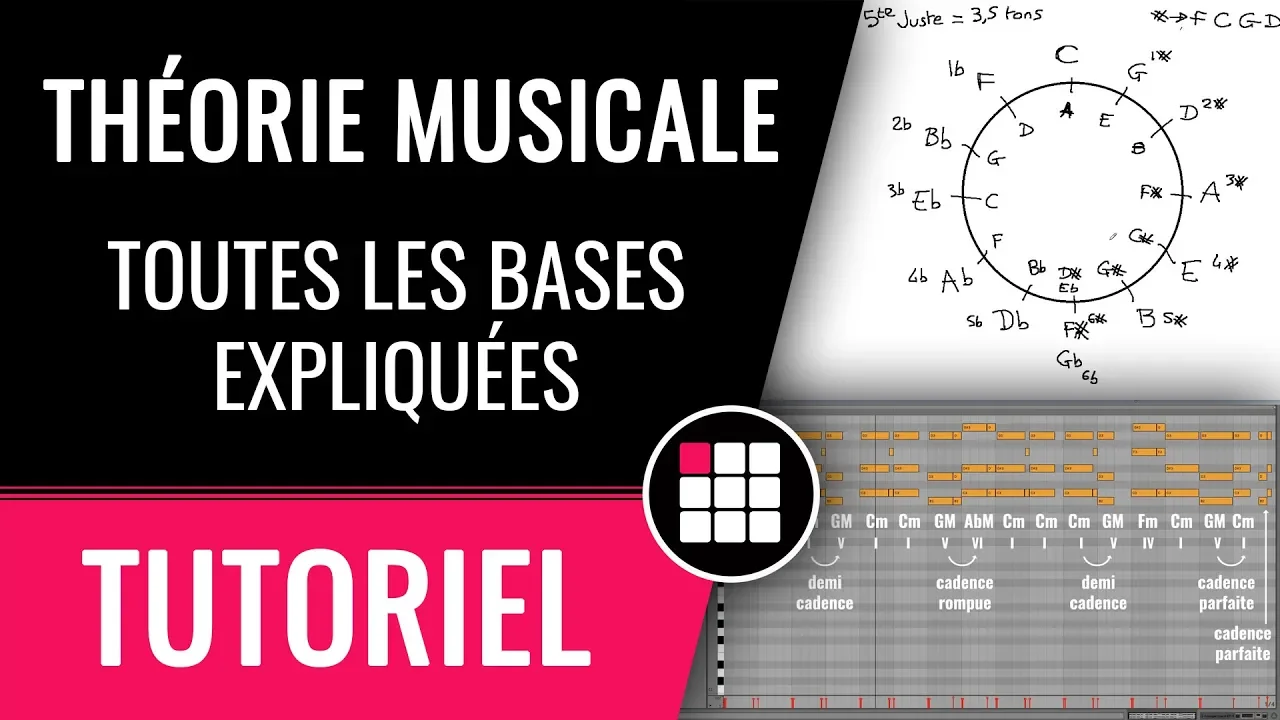
Music theory begins with the musical alphabet (A through G), which contains 7 notes and restarts at A to form an octave; there are 12 total notes including sharps and flats (accidentals), with B-C and E-F being the only adjacent notes without a sharp or flat between them; a half step is moving up or down one key, while a whole step is two half steps; on the treble clef, E on the first line serves as a reference point for counting steps to identify other notes.
Music Theory Basics for Beginners: Notes, Steps, and the Staff
Added:Understanding the basic concept of pitch (the difference between high and low sounds).
Familiarity with the standard English alphabet from letters A through G.
A general awareness of how musical instruments produce sound and distinct notes.
The basic concept of written notation, realizing that music can be read and written much like language.
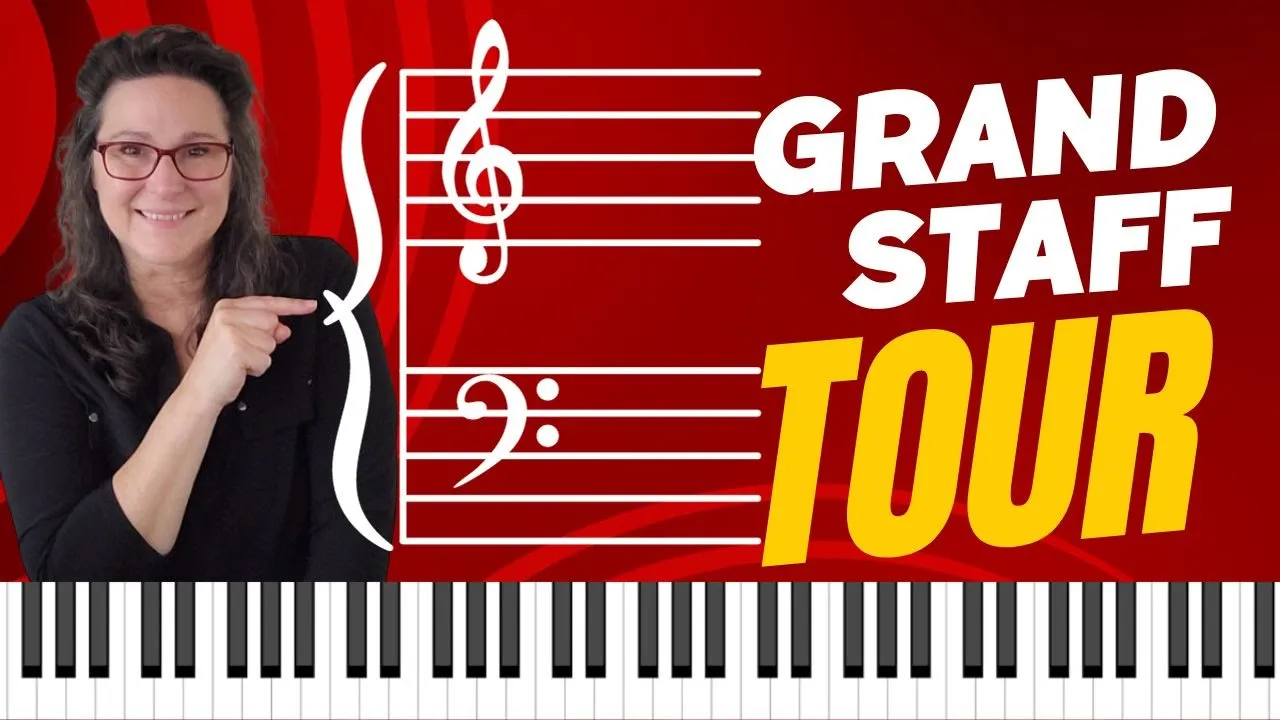
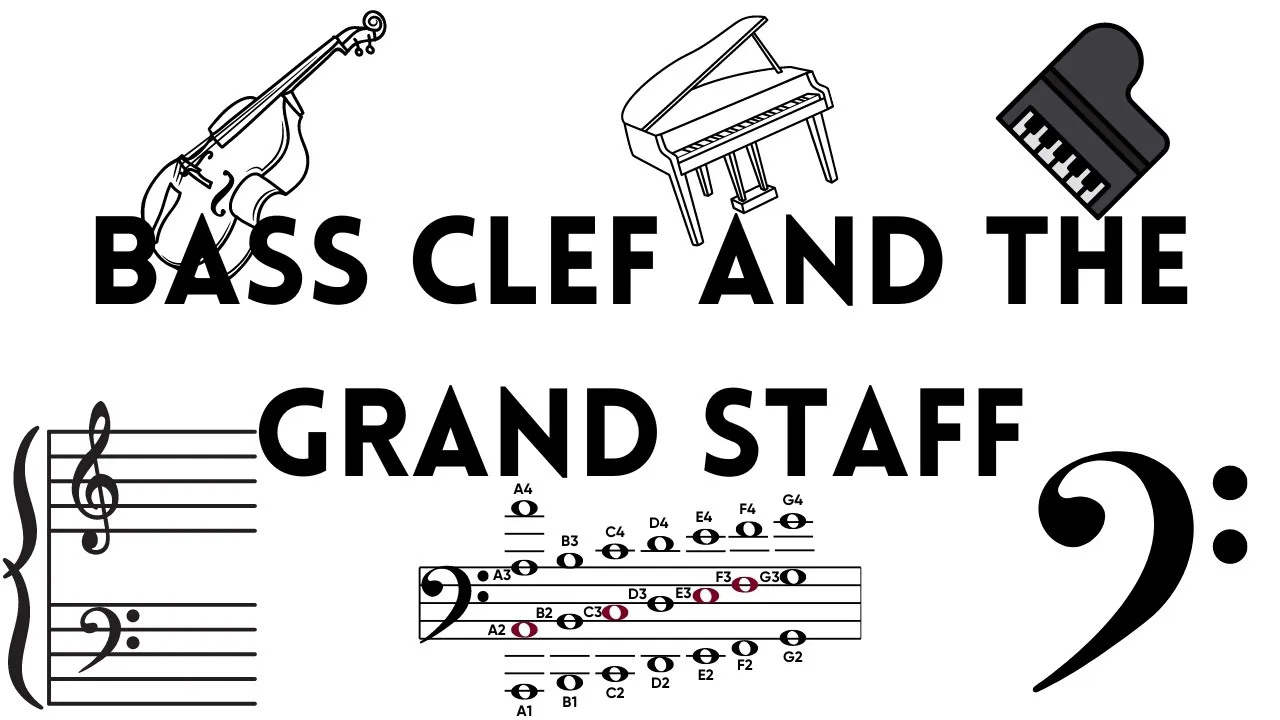
Learning the bass clef and how it combines with the treble clef to form the Grand Staff.
Understanding basic rhythm, note values (whole, half, quarter notes), and time signatures.
Constructing major and minor scales using the learned patterns of whole and half steps.
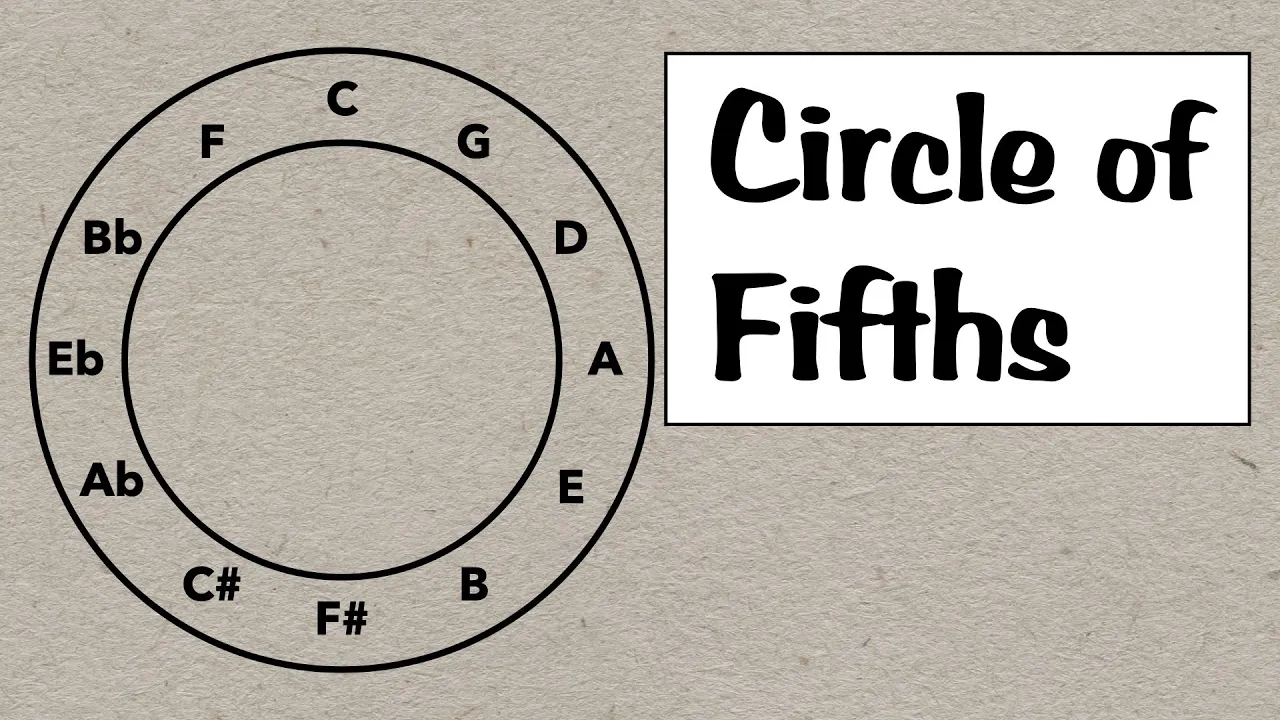
Exploring key signatures and the basics of the Circle of Fifths.
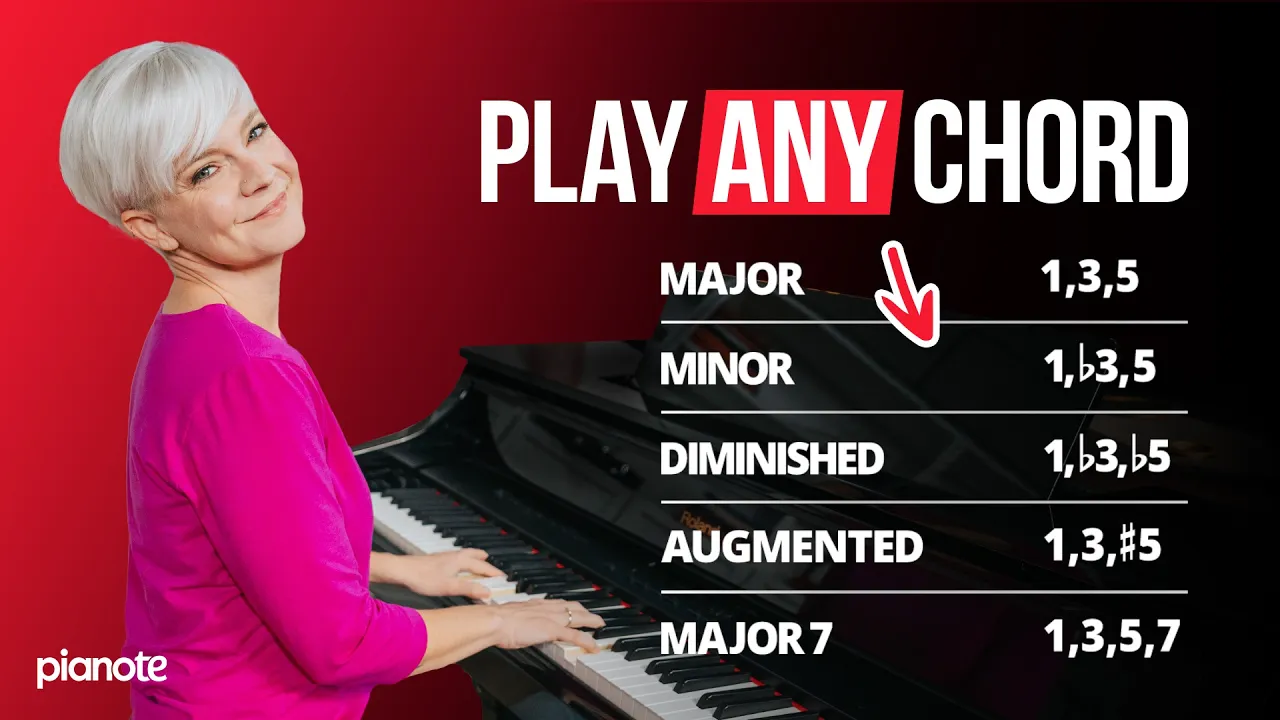
Introduction to building basic chords (triads) using scale degrees.
476 views38likes5:47Original Release: 2023-02-22
music theory day one welcome to your very first music theory course so what you see on the Whiteboard is exactly what you need for the very first day and it's very very easy I'm going to make this as easily digestible as possible okay and I promise you you will be fine music is based off of the alphabet that we know that we grew up with as in a through z okay except we start at a and we stop at G and then it restarts as you can see on the very top here a G a g those are called octaves it's the same note going up or down higher or lower there are 12 notes in the musical alphabet but a through G is only seven notes that's because we have something called accidentals or Sharps and flats you'd probably recognize on the piano there are things called The Black Keys those are your Sharps and your Flats Sharps and flats are in between most notes let me explain that real quick these are Sharps and our flats and as you can see I have written them in between the letters if you go up higher you get a sharp if you go back one lower you get a flat that is called a half step we're going to talk about that in a little bit but if you're still with me check this out if I'm on the Note a and I go up one half step or up one key to the next Black key that would mean that I would be on the notes a sharp if I were to go on the note D and I would go back one half step I would be on the note D flat so C sharp and d flat are the exact same note only two notes that do not have a sharp or a flat in between is b and c and e and NF that is because when you look at your piano and you see The Black Keys are in a group of two and then in a group of three there's a little space here between E and F and then of B and C where there is no black key that is exactly what this means if you're wondering why that is the case that has to do with a little bit of mathematics with the whole step half step method with scales but I will talk about that in the second day video for music theory so we've got a through G the musical alphabet right we've got our whole steps in half steps which is in between all notes except for b and c and e and f and we know that 12 notes is the total amount of notes without the sharps and the flats we have seven which as I said was a through G and then it resets that is what an octave is called okay as you can see right here this is an octave C all the way up to the next C a whole step is going up two half steps remember that a whole step is going up two half steps so if we're at the letter c go up two half steps C sharp to D that's a whole step if we go up one half step from C it would be just a C sharp or if we go back one half step from C it would be B right this over here which is the treble clef which you probably recognize from when you were in grade school so you might remember somebody telling you something like Every Good Boy Does Fine for the lines and then f-a-c-e for the spaces almost all the best musicians who sight read do not use Every Good Boy Does Fine in f-a-ce all they use is something called a reference point so on the treble clef usually our reference points is where the note E is on the first line e is going to be your new reference point so if e is our reference point okay and we go from E to f check this out up here e to F is right here and E to F is right here if we go up e to G we're going up e to G it's basically telling you how many steps are you above from your reference point okay you use this as your reference point and you just count it's that simple it's as simple as it can possibly get so to recap up here you have a through G regular alphabet we stop at G and then it resets b and c and e and f are together they do not have a sharp or a flat in between if you go forward a half step which a half step is up one key so C to C sharp D to D sharp E to F if you go up you're gonna have a sharp which is this little symbol right here looks like a hashtag if you go back this way it's going to be a flat which looks like this so that would mean theoretically a sharp in B flat are the exact same notes okay on the keyboard it tells you a whole step would be up a key right up two half steps one half step is just up one key okay so if we were at G up a half step would be G sharp okay going from G to a would be up a whole stop okay that's going to come into play a lot in the next lesson in a nutshell this is all you need all you need to know is the music off but you need to know the half steps in the whole steps you need to know which sharps or flats do not have them in between b and c and e and f look at the keyboard it's a really good way to visualize the whole steps in the half steps and then apply it to the treble cloth the next lesson is going to tell us how to put it all together with scales key signatures chords you don't understand this leave a comment I will be there to help you and in the next lesson we will put this together
Up Next
23:15
Andalusian Cadence: Composition Techniques in 5 Styles
@SignalsMusicStudio
555.9K views•2022-01-03

10:20
Mozart's Musical Dice Game Explained: History, Rules, & Fun
@webpianoacademy
5K views•2023-03-13

47:36
Understanding Diatonic 7th Chords in Major Keys | Music Theory Tutorial
@GracieTerzian
54.7K views•2022-03-02
10:49
Understanding John Coltrane's Giant Steps: A Music Theory Analysis
@Vox
10.4M views•2018-11-12
Related Study Plans & Knowledge Roadmaps
Structured learning paths in Music Theory
music-theory
Composing Galant Music: Partimento & Schemata
01Foundations of Figured Bass and Keyboard Harmony
02The Rule of the Octave (Regola dell'Ottava)
03Galant Schemata: The Building Blocks of Form
+ 2 more learning modules
30h5 modules
Explore Roadmap
music-theory
Decoding Overtone Series: Tuning & Drone Music
01Acoustic Foundations: The Physics of the Overtone Series
02Tuning Systems: Equal Temperament vs. Just Intonation
03Microtonality and Spectralism: Beyond Standard Pitches
+ 2 more learning modules
24h5 modules
Explore Roadmap
music-theory
Impressionist Harmony: Scales, Planing & RPGs
01Foundational Music Theory: Keys, Intervals, and Seventh Chords
02Impressionist Color: Chord Planing and Parallel Harmony
03Whimsical Textures: Pentatonic Cascades and Whole-Tone Scales
+ 1 more learning modules
14h4 modules
Explore Roadmap
music-theory
Negative Harmony: Axis Reflection in Indie Pop
01Music Theory Foundations: Scales, Intervals, and Triads
02Functional Harmony and the Circle of Fifths
03Demystifying the Negative Harmony Axis Reflection
+ 2 more learning modules
16h5 modules
Explore Roadmap