















Trademark infringement is determined by analyzing the likelihood of confusion from the consumer's perspective, using factors including mark strength, proximity of goods, similarity of marks, evidence of actual confusion, marketing channels, and purchaser care; courts apply this multi-factor test to decide whether one party's mark infringes upon another's registered trademark.
Trademark Infringement Explained: Likelihood of Confusion
Added:Definition and purpose of a trademark as a source identifier in the marketplace.
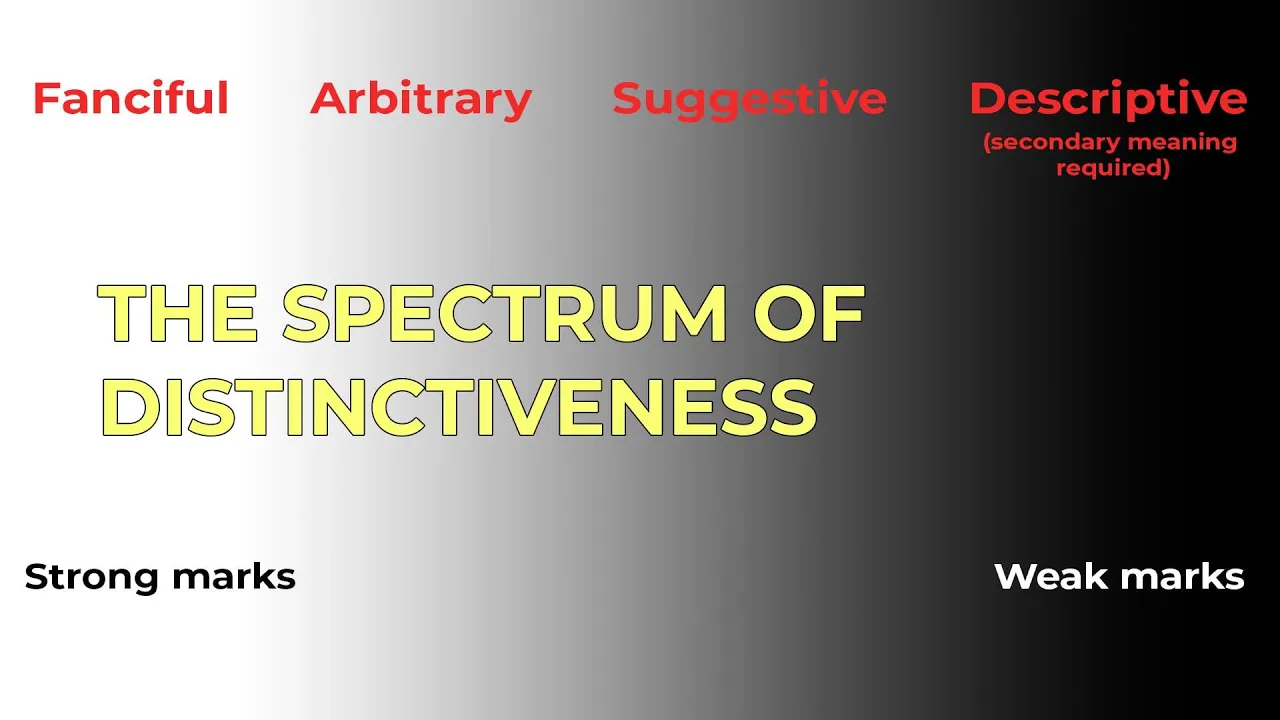
The spectrum of trademark distinctiveness, ranging from generic to fanciful marks.
The basic distinction between trademarks, copyrights, and patents.
The concept of 'use in commerce' and how trademark rights are established and maintained.
In-depth analysis of specific judicial multi-factor tests, such as the Polaroid or DuPont factors.
Defenses to trademark infringement, including descriptive fair use, nominative fair use, and parody.
The doctrine of trademark dilution (blurring and tarnishment) for famous marks.
Legal remedies for infringement, such as injunctions, actual damages, and treble damages.
225 views1likes6:02Original Release: 2011-03-01
now this is actually one of my favorite parts of the presentation which is trademarks infringement which is a horrible subject but the example that I use is pretty enjoyable I think you'll enjoy it as well all right so we we're out of the range of getting a trademark you know and how you go through that process we're now saying okay you have a Mark that you're using in Commerce how do you know if your mark infringes someone else's trademark registration right how do you know if someone else is infringing upon your trademark registration this is what you have to do you have to go through this analysis the biggest part of this analysis is likelihood of confusion remember the standard for trademark right word phrase thing of that nature that identifies and distinguishes the source of goods of one party from another okay it's from the perspective of the consumer this standard is also from the perspective of the consumer whether a consumer is likely to be confused by one Mark versus another okay so then this's a number of the factors these are the most important factors that courts look at to determine whether there has been some level of trademark infringement but I think it's actually easier to describe it by giving you this small clip here this is from one of my favorite movies coming to America he all recognizes it immediately and in this scene you have uh Prince aim who comes to the United States to get his spouse he wants to find this woman he wants to marry that's her that's his love interest and he's in the audience and he wants to impress upon her his ability so he goes and ends up working for her uh father who is Mr McDow okay I'll run the scene and then we can talk about it after thank you she is wonderful a you can see Lisa Mr mcdal and mcdal restaurant 857 Queens Boulevard 857 Queens Boulevard FS all right fellis now your first job every morning will be to sweep this walkway then I want you to wash all the windows real good too and don't leave no streaks hey hey what are you doing get the hell out of here before I bust that camera look me and the McDonald's people we got this little misunderstanding see they're McDonald's I'm mcdows huh they got the Golden Archers mine is the golden arcs I see they got the Big Mac I got the big Mick we both got two all beef patties Special Sauce lettuce cheese pickles and onions but they use a sesame seed bun okay brother abely hilarious to me I'm sorry uh but let's go through this in in detail okay we're going to use this as an example of showing trademark infringement at its finest okay so here you have mcdow's golden arcs versus McDonald's golden arches right I mean clearly just looking at it you can see the similarity um and here there we go all all right this is a this is just a a structure I use to kind of give you an idea of the analysis that might go through with a likelihood of conf confusion standard as you see on the far left uh column are all the factors that we had talked about earlier and then we can just kind of run through these as you can see the strength of the mark you look at the strength of the federal trademark registration versus what the accused infringer is doing and in here you know the golden arches is a very strong Mark okay and it it would that leads to an interpretation that there is trademark infringement if you have anything that is similar to that very strong Mark such as the golden arcs right proximity of the goods is exactly the same similarity of the marks here we go again right with the strength tied in with the strength of the mark actually act evidence of actual confusion is very interesting when they were taping Coming to America a local McDonald's owner threatened defile suit okay because he really thought it was a real restaurant and so that I mean you can't find better evidence than that of actual confusion okay um marketing channels are the same degree of care exercised by purchaser might actually push in the direction of the golden arcs a little um now Mr McDow with his this is just a little misunderstanding um is not going to hold up okay I'm sorry you know just not going to get away with that there's no mistake here that he is is intending to make his business look like a McDonald's and So based upon this analysis this this is a pretty easy case Okay so if you are in a position where you are dealing with trademarket infringement again shelf selfless uh self-promotion here but I do feel like you need to hire an intellectual property attorney this is not a very simple area this is something you would want to make sure that you uh have Council on in in all of these areas okay
Up Next

6:00
Understanding Trademarks: Animated Guide to Brand Registration
@wipo
58.4K views•2013-08-29

4:27
US Secondary Sanctions Impact on EU Businesses and Blocking Legislation
@Bureauvandijk
1.6K views•2019-03-20

5:27
Forensic Phonetics: Speaker Identification in Legal Cases
@nptel-nociitm9240
539 views•2025-03-19

24:42
Police Interrogation Tactics: False Confessions & Legal Reform
@LastWeekTonight
7M views•2022-04-18
Related Study Plans & Knowledge Roadmaps
Structured learning paths in Law
law
Self-Defense Law: Imminence & Castle Doctrine
01Foundations of Self-Defense Law
02Imminent Threat & Reasonable Belief
03The Principle of Proportionality
+ 3 more learning modules
12h6 modules
Explore Roadmap
law
Defamation Law: First Amendment & Actual Malice
01Introduction to civil torts and the First Amendment
02Elements of Defamation: Libel and Slander
03Public Figures vs. Private Individuals
+ 2 more learning modules
8h5 modules
Explore Roadmap
law
Hearsay Rule: Trial Evidence & Exceptions
01Introduction to Trial Evidence & Courtroom Basics
02Demystifying Hearsay: The Core Definition
03Non-Hearsay: Exclusions Under FRE 801(d)
+ 3 more learning modules
14h6 modules
Explore Roadmap
law
Medical Malpractice: Law, Liability & Care
01Foundations of Tort Law and Civil Liability
02The Four Elements of Medical Malpractice
03Defining and Proving the Standard of Care
+ 2 more learning modules
12h5 modules
Explore Roadmap