




![The IMPACT of Aging Populations, Explained [AP Human Geography Review—Unit 2 Topic 9]](https://i.ytimg.com/vi/szYuBa4cStk/maxresdefault.jpg)
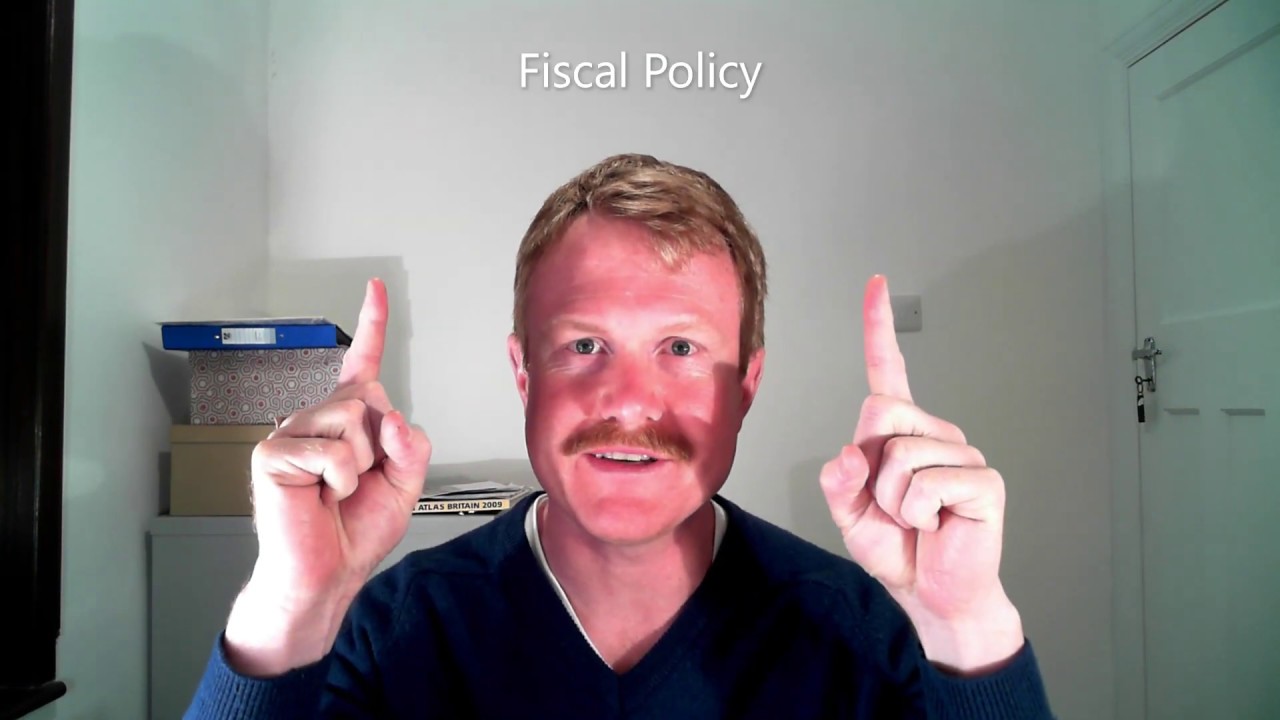



















The UK welfare system exhibits significant generational inequity, where the state pension (the largest welfare budget component at £200 billion of £406 billion by 2030) benefits older generations through the triple lock policy, while younger generations face rising housing costs (now 7 times average earnings versus 3 times in the 1990s), frozen student loan thresholds, and reduced council housing, creating a breakdown of the social contract where older generations are no longer 'planting trees for future generations to sit in their shade.'
Generational Warfare in the UK: Examining the Economic Divide and Policy Implications
Added:Basic principles of the UK welfare state, including how state pensions (such as the 'triple lock' mechanism) and the National Health Service (NHS) are funded.
The concept of demographic shift, specifically the implications of an aging population and changing dependency ratios.
Fundamentals of fiscal policy, including government taxation, public spending allocation, and national debt dynamics.
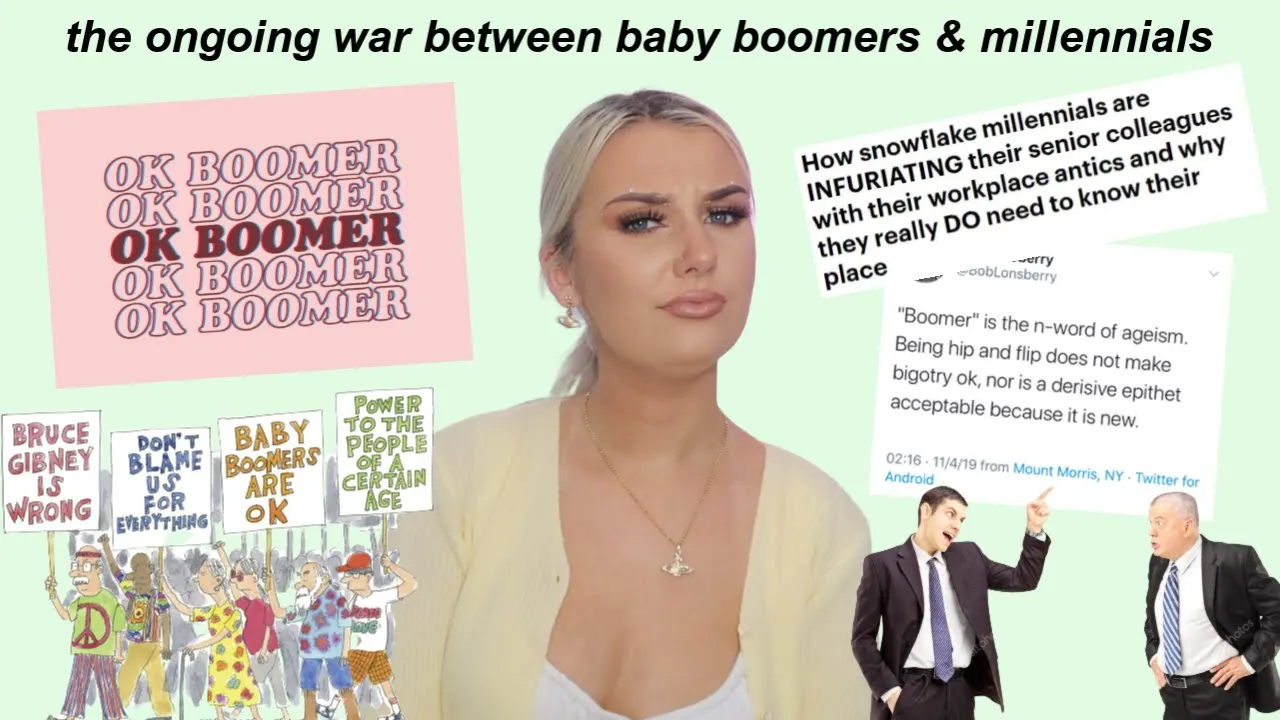
An understanding of generational cohorts (such as Baby Boomers, Millennials, and Gen Z) and their historically distinct economic starting points.
Analysis of specific policy reforms aimed at addressing intergenerational inequality, such as housing market deregulation and wealth taxation.
The political economy of voting behavior, focusing on how age has emerged as a primary cleavage in modern British elections.
Philosophical frameworks of intergenerational justice, evaluating the moral obligations of current generations to future ones.
Comparative policy analysis, examining how other advanced economies (such as Japan or Germany) manage aging demographics and welfare sustainability.
27.7K views1.1Klikes17:12Original Release: 2025-11-28
The welfare bill is ballooning. This is something that we keep hearing in the wake of the November budget that finally ditched the two child cap on universal credit. But it's not universal credit that's causing the welfare bill to balloon. It's not even the rise in PIP claimments that the press insist is unsustainable that's causing the ballooning of the welfare bill. It's not immigrants claiming housing benefit or the motability mafia as the right-wing claim. In fact, if you added all these things together, they would still not be seeing the same rise in spending or indeed the same overall percentage of the ballooning welfare bill as the reality of what is actually increasing the most. The reality is that the biggest outlay in the welfare budget is the state pension. And given the current government's commitment to the triple lock, it will also be the part of the welfare budget set to rise the most by 2030. The welfare budget is expected to reach 406 billion by 2030 in projections and almost 200 billion of that is pensioner spending. That's a projected rise of 44 billion compared to a rise of just 41 billion for universal credit, disability benefits, and child benefit all put together. This is the legacy of the triple lock on the state pension which guarantees that the state pension will either rise by inflation, the rise in average earnings or 2 and a half% whichever is highest. It was introduced in the first budget of the coalition government by then Chancellor George Osborne of the Conservative Party. The same budget that froze public sector pay, froze child benefit, and capped housing benefit. That budget perfectly encapsulates the state of the economy for the last 30 years, especially since the financial crisis, cuts for working age people, but increased money being given to the retired. In budget yesterday, Rachel Reeves froze tax thresholds for working people again, reduced ISIS, but only for people who are under the age of 65, and taxed private pension contributions for working age people as salary sacrifice schemes, but did not touch the triple lock. Whilst working age people were struggling with the cost of living crisis as inflation outpaced wages, the state pension was pegged to inflation.
So rose at the same time, meaning that for the retired, it wasn't really as much of a cost of living crisis when they see their incomes rise at the same time as prices. Not that much of a crisis. Now, it's not just the welfare spend that's lopsided in this country.
One huge inequity in our society is housing. House prices have risen stratospherically in the last 30 years.
Meaning that those who bought their house in the '90s have seen their relatively modest investment become a giant asset out of nowhere. This means that in terms of how much people earn on average, it's much harder to buy a house now than it was in the 1990s. With house prices now over seven times average earnings as opposed to just three times average earnings in the '90s. That's before you even talk about the fact that these are the generations more likely to have access to right to buy. Meaning that not only did they have access to a low purchase price, but it means young people of today can't get a council house. And if you can't get a council house and you can't afford to buy, it means being thrust into the private rental sector. And you'll never guess who you're going to be paying rent to.
The average age of a landlord in the UK is 58 and 35% of UK landlords are retired. So that's yet another transfer of wealth from the young to the old and from the asset poor to the asset rich.
Yet another failure in the reductions of council housing, the easy access to berlet mortgages in the 2000s, failure to build new requisite housing because of nimism and poor planning, and the treating of houses as an investment vehicle rather than as a home to live in. What a thought. Another thing we commodified was education. Tuition fees were introduced by new labor and then trebled by the coalition government.
Student loan repayments had already led to a marginal tax rate of over 70% for some working age people. And in the last budget, the repayment thresholds were frozen on student loans from April until 2027 until April 20. Sorry, start going to start that one again. And in the budget, the repayment for thresholds on student loans was frozen from April 2027 until 2030. Meaning some people on just over the minimum wage will now start making student loan repayments in that period. Yet older generations who went to university for free who got final salary pensions and a triple locked state pension are having a meltdown over a means testing of a 300 winter fuel payment. Something I disagree with but nevertheless there is a yawning gap between the generations that is stark when you look at polling. The Green Party and Labor are first and second respectively with the entire under 50 cohort. Yet for the over 50s, it's reform and the Tories. And the gaps between the left and right in each cohort are pretty big, too. ironically for the pensions to vote for anti-immigration and anti-welfare policies when the pension bill relies on migrant labor and the next generation of workers to fund it. Yet, they're happy to accelerate an aging population with low birth rates and low immigration, meaning future generations will have to pay even more as the working age population decreases. What we're seeing really is a total breakdown of a social contract, right? older Tory voting generations are no longer planting trees so that future generations can sit in their shade. I would ask if it's become a generational war, but in truth, it already is one. It's just only being fought in one direction. There's a very strong argument that parties of the left who are unlikely to win over older generations anyway should lean heavily into the side of working people and young people to redress the balance and what has become something of a gerontocracy. But I don't think personally that that zero sum divisive politics is something that we should be encouraging even if I think it probably would be pretty politically effective.
So how do we fix this? First of all, young people have to start voting and voting in the numbers that older generations do. The older generations have been pandered to by government after government after government because they turn out to elections.
They're reliable voters. And if the young refuse to participate, at least not at the same level, they'll not be targeted by policy makers. Secondly, we need to rebalance our economy. We need to end the triple lock by pegging pensions to wages so that pensioners and workers have the same policy incentives, i.e. both pensioners and workers want wages to increase rather than just asset prices. We should abolish landlordism to stop the transfer of wealth from the young and asset poor to the older and the asset rich and build a new generation of council houses to give working people cheap and stable living arrangements to have families today that will sustain the pensioners of tomorrow.
Dalia, how do we fix these problems? I mean, it's a it's a difficult question because, as you say, it's it feels as though our political class is trying to entrench that divide uh rather than than bridge it because they benefit from it.
They make the calculation that uh older people are more likely to turn out to elections and therefore they want to uh attach a polit particular political identity to that generation in order to sell it to them. Um but it is true as you say that the generational war is already here. I mean election after election we are seeing that more than any other factor in many ways um other than maybe uh education level uh your age is the most reliable determiner of who you will vote for. Now it's of course not true across the board. I actually tend to find that um you know there's yeah I it's not true across the board. There are lots of people who have become including you know members of my own family who as they've gotten older have actually gotten more leftwing. But this the the data suggests that the overall trend is older people are much more likely to vote very differently than than younger people. Now it has long been the case that younger people are more tend to vote more left than older people. So that in itself is not new. But I think that there are a couple of things. There are actually three things I think that mean that the moment that we're in now means that that divide is a wider and more difficult to bridge and b is likely to have a different uh trajectory than that divide has historically had. I think the the the three courses I think they are um uh about the extent they're economic, they're political and they're geographic. I think the first thing is the extent of economic polarization between the young and the old is more stark than ever before. Millennials were the first generation to be worse off than their parents in by almost every economic marker since the 1800s. So that is new in recent history that younger people are more likely to be poor at every stage of their life than the generation before them. So that's an economic polarization that has an intensity that we've not seen in the past 200 years. The second is geography.
So because of the financialization of our economy, we are seeing young people being sucked into cities. And so that means that when you have a constituencybased electoral system like the one that we have, um, young people's voices are going to be disproportionately under reppresented because they're basically only being represented in a few major cities.
Whereas older people uh who maybe built their wealth, bought their assets before the full force of the financialization of the economy took place, their voices are more evenly distributed across the country. So the geography of our political system means that they are going to have an over represented voice.
And that's of course on top of the fact that older people are more likely to vote anyway because young people don't feel like any of the parties have anything to offer them. And I think the third thing is the nature of the political concerns. You know, one of the most one of the biggest priorities uh amongst young people not just in this country but across Europe is climate and that is something that young people are disproportionately and more uniquely vulnerable to than older people. you know it's at least in this country um of course around the world the impacts of climate breakdown are being very acutely felt but in Britain at least climate breakdown is much more on the radar of young people because they are looking at their future and they are think they are aware that climate breakdown is going to have a knock-on effect on so many parts of their lives and so those three things basically mean that not only is this generational divide more acute and intense than it has been historically.
But also, I think what's interesting is that the things that uh cuz you know, normally people tend to get more conservative as they get older. What's interesting is that the material shifts that normally result in people shifting to the right as they get older are not likely to pan out. Uh first of all, you know, those those assets are unlikely to be passed down to the younger generation. I think for a lot of those older people who own assets such as their home, there is a very high chance that those homes are going to have to be reorggaged, sold to a property developer in order to pay for their care costs, which are astronomical. So, we're not going to see that transfer of wealth um when the older generation pass away. And also because of the forecast that millennials and the generations below them are not going to meet the economic milestones that generations before us have reached. Secondly, the question of geography. You know, there's no reason to believe that our economy is going to become less urbanized over the coming decades. And thirdly, climate is not going anywhere. Um, now does that mean that necessarily the way that young people in the in the future are going to politically respond to the climate crisis is going to stay the same? No.
There are um very scary right-wing responses to climate breakdown. But the three main things that I think explain the intensity of this generational divide are not going to to shift in the same way that they have historically that have resulted in young people getting more conservative as they get older. Now, what I the caveat that I would add to that is that whilst yes, young people are more likely to vote green um or you know vote for I mean I don't know if I can call the Labour party a center left party any at the moment anymore but that the young people are are are yes more likely to to hold leftist opinions. I would say that there is still also a polarization, a political polarization happening amongst young people where we are seeing yes, young people being pulled towards radical left-wing critiques, but we are also seeing young people and it's a smaller number of young people, but they are there nonetheless who are getting pulled into way further right than the older generation are. And that is a response to that breakdown of the social contract. It's a result of young people seeing that the status quo is not serving them. They're looking at their future and they're seeing that they're going to be worse off than their parents and they are saying the system as it is is not working for me and they are going to fall on either side of that polarized spectrum. And so at the moment it looks kind of more favorable because it looks like generally people are shifting towards that kind of more redistributive progressive uh political identity. But that's not necessarily going to hold.
And that's where uh I become a bit I become very concerned actually about how the refusal to tackle the fact that that status quo is not working is going to not necessarily have the political output that you and I Helena would want.
And I think, you know, it's really easy as as a young person, which I think I can still count as, you know, I'm 30, knocking on the door of 33, but I'm definitely in the generation that have been screwed by this. Um, it's really easy to feel this very acute resentment of older people because of this sense of older people not being aware that the reason that they are better off than than us is not because they were smarter or harder workers, but because they grew up in an economy that had these incredible guard rails that meant that they were able to actually make something of their lives. You know, they had a decent welfare state. They had a housing market that was under control.
They had strong unions. They had uh good welfare. They had uh jobs that that paid that you know you could work a normal job and live a decent life. And they they don't attach their success to those structural guard rails that have been removed from us. And so it can be very difficult to very easy to feel that resentment of why are you voting to take away from us the things that you had and the things that are why you were able to build a good a decent life. But there's no reason why, you know, political coalitions cannot be rebridged between older people and younger people because after all, the younger people who are facing, you know, staring down the barrel of a climate crisis, of a broken economy, of all of these problems, they are the children and grandchildren of those older people. And I'm sure those older people, if you sat down and asked them, you know, do you care? are you are you concerned that you know your children and your grandchildren are not going to be able to live decent dignified lives? They would agree with that. They would say yes, I do care. And so it's about really showing that the vision for the world that young people are currently fighting for is in fact the same vision of the world that older people also want. It's just that our political class has benefited from a divide and rule approach. uh which is kind of screwing all of us over because I don't think the older people are looking at the futures that are being laid out for young people and are happy about that. So really I think yes, you know, the Green Party should really lean into mobilizing and activating groups of people who are politically disillusioned, many of whom are young.
But there is no reason why that cannot be done in a way that shows that our concerns are actually much closer to one another. When you scratch the surface, they are much closer to one another than they are divided.
Up Next

11:32
Exxon Lobbyist Exposed: Climate Denial on Tape
@briantylercohen
278.3K views•2021-07-05

24:30
BRICS Pay and de-dollarization: A New Financial Order Emerges? | 55 chars
@DannyHaiphongYT
164.6K views•2024-10-22
7:33
Government Surveillance Methods: 10 Ways You May Be Watched
@BeAmazed
1.6M views•2017-04-09

10:19
Explaining the Saudi-Iranian Proxy Conflict in the Middle East
@Vox
18.2M views•2017-07-17
Related Study Plans & Knowledge Roadmaps
Structured learning paths in Political Science
political-science
Economic Statecraft: Sanctions & Chokepoints
01Foundations of Geoeconomics and Economic Statecraft
02The Mechanics of Weaponized Interdependence
03International Sanctions: Types, Implementation, and Efficacy
+ 2 more learning modules
12h5 modules
Explore Roadmap
political-science
Central Bank Independence: Politics & Policy
01Foundations of Central Banking and Monetary Policy
02The Time Inconsistency Problem & Inflation Bias
03The Delegation Model and Designing Independence
+ 2 more learning modules
12h5 modules
Explore Roadmap
political-science
Consociationalism: Power-Sharing & Stability
01Democratic Dilemmas in Divided Societies
02Introduction to Consociational Democracy
03The Four Pillars of Consociational Design
+ 2 more learning modules
12h5 modules
Explore Roadmap
political-science
Rebel Governance: Legitimacy, Economy & State
01Foundations of Rebel Governance and Statehood
02Establishing Political Legitimacy and the Rebel Social Contract
03Wartime Economies and Rebel Resource Management
+ 2 more learning modules
14h5 modules
Explore Roadmap