Semiotics is the scientific theory of signs and meaning-making, which analyzes how films communicate through visual and auditory signs to create meaning for audiences.
Film Semiotics: Metz and Wollen | Gilbert Harman
Added:Deep Dive
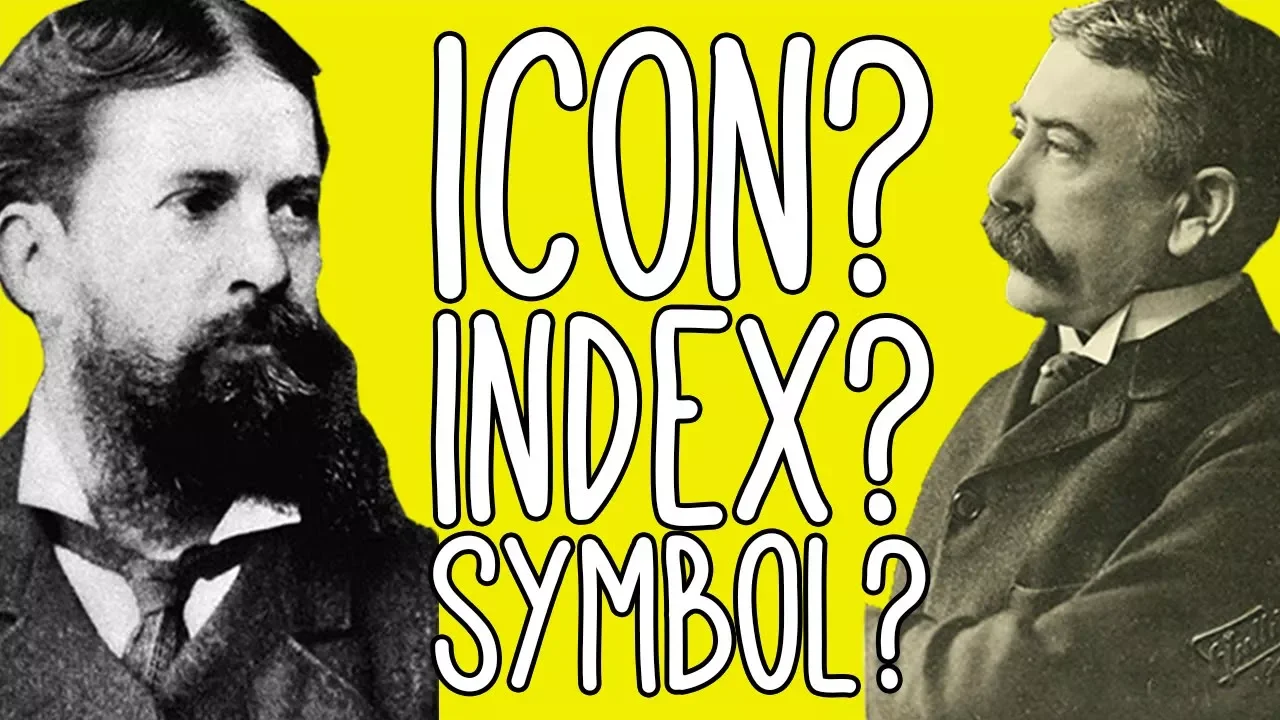
Introduction to Semiotics: Fundamental concepts of sign systems, specifically Ferdinand de Saussure's dyadic model (signifier/signified) and Charles Sanders Peirce's triadic model (icon, index, symbol).
SEMIÓTICA BÁSICA: o que é, como funciona e exemplos
28.1K
Semiotics is the scientific study of how signs and symbols create meaning across different contexts, encompassing visual, verbal, olfactory, and tactile representations; it analyzes how various elements like drawings, words, tastes, and textures function as signifiers that connect to underlying concepts, enabling us to understand and produce meaning in communication, whether in advertising, art, politics, or daily life.
Click to watch →

¿Qué es la SEMIÓTICA?
134.7K
Semiotics is the discipline that studies signs, symbols, and meanings in human communication, examining how signs are created, used, and how meaning is attributed to them; while semiotics and semiology are often used interchangeably with no official difference in their object of study (both refer to the study of signs in human communication), they differ in academic tradition—with semiology linked to the European tradition founded by Ferdinand de Saussure and semiotics linked to the Anglo-Saxon tradition founded by Charles Sanders Peirce—key authors include Saussure (who emphasized the arbitrary nature of signs established by social convention), Peirce (who developed the triadic model of signs consisting of the sign, object, and interpretant), Roland Barthes (who analyzed signs as culturally constructed systems), and Umberto Eco (who examined signs as complex interacting systems); studying semiotics helps understand how various forms of communication work beyond verbal language, including gestures, colors, sounds, and objects, making it valuable for analyzing advertising, art, and understanding cultural meanings across societies.
Click to watch →
Гуманитарные технологии. Часть 3. Сборник | Смешарики Пинкод. Обучающие мультфильмы
1.9M
Semiotics is the scientific study of signs and symbols, derived from the Greek word 'semeion' meaning 'sign.' Signs are arbitrary representations that convey meaning through human agreement rather than natural connection. The most extensive class of signs includes symbols whose meanings result from group consensus—for example, different languages use different signs for the same object (cat in English, chat in French, gato in Spanish). Signs and symbols are essentially conventional marks without inherent meaning, requiring cultural context to be understood. This foundational concept explains how humans communicate abstract ideas through shared symbolic systems.
Click to watch →

A Caminhada de Nikolas Ferreira É Maior Do Que Você Imagina
28.9K
Semiotics is the study of how meaning is constructed from images, gestures, and objects in context. A sign can be anything that stands in place of something else. The key principle is that meaning comes from what something represents to a person, not what the thing actually is. Context is crucial for interpretation. The human brain does not wait for rational analysis before interpreting symbols; subconscious interpretation typically reacts first in an emotional, automatic, and archetypal manner, with rationalization following afterward. Colors and sounds have inherent effects on human emotions, operating through both organic brain mechanisms and subconscious influences.
Click to watch →
Semiotics: WTF? Introduction to Saussure, the Signifier and Signified
350.5K
Semiotics is the study of signs—things that stand in for something else—and Ferdinand de Saussure's foundational theory distinguishes between the signifier (the form or representation, such as the word 'dog') and the signified (the concept or meaning being communicated, such as the idea of a dog), demonstrating that there is no inherent natural link between these two elements but rather a socially constructed relationship that varies across cultures and contexts.
Click to watch →
Deep Dive
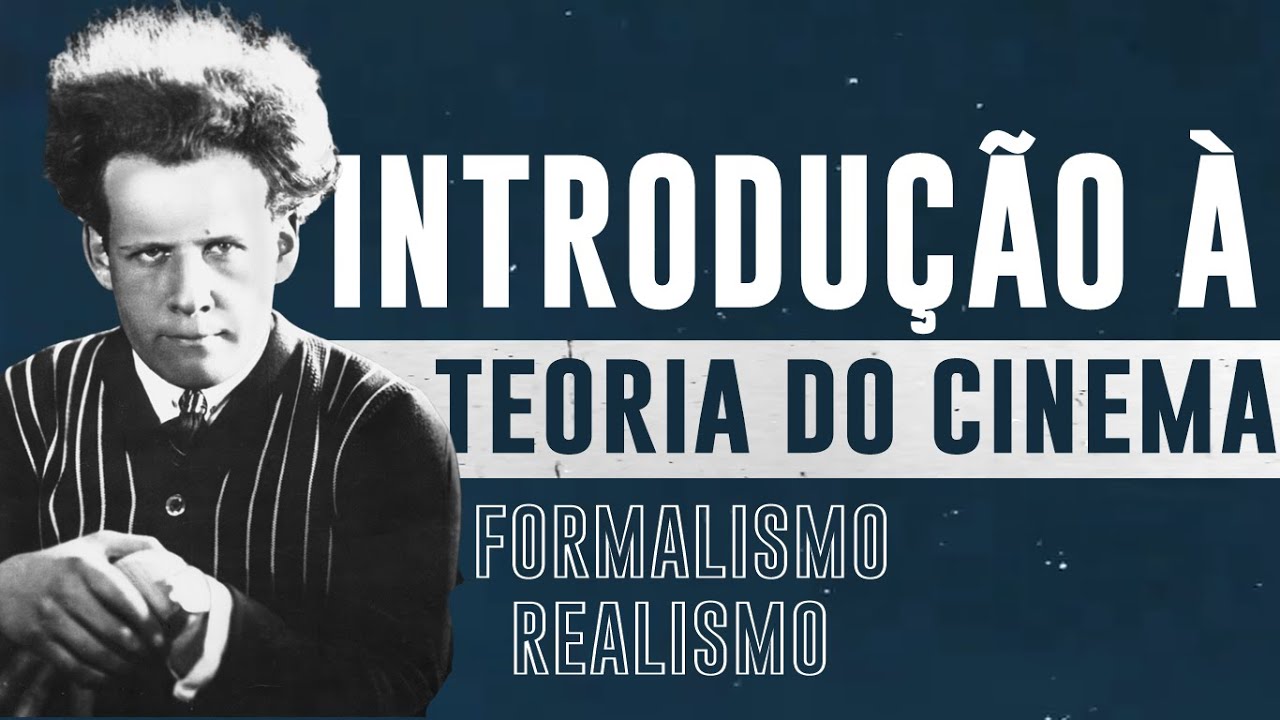
Early Film Theory and Formalism: Familiarity with how cinema constructs meaning through editing (montage) and mise-en-scène, as established by early theorists like Sergei Eisenstein.
Introdução à Teoria do Cinema | Teorias Clássicas: Formalistas e Realistas
3.5K
Formalist theories (modernist/constructionist) emerged in the 1920s-1930s during silent cinema's golden age. These theories value manipulating cinematic perception through the apparatus of cinema. For formalists, cinema's artistic value lies in its ability to break from mechanical reproduction and create anti-mimesis—representations that do not resemble the real world. Key techniques include montage and close-up. Formalists seek to invent new forms rather than reproduce reality, using cinematic apparatus to create something that does not exist in reality. Key authors include Hugo Münsterberg, Béla Balázs, Rudolf Arnheim, and Sergei Eisenstein.
Click to watch →

What is "Film Theory," Really?
22.9K
Classical film theory emerged even before formal texts existed, evident in early cinema company names and viewer experiences. Edison's kinetoscope, Lumière's cinematograph (giving us 'cinema'), and Vitagraph/Biograph all contain theoretical propositions about the medium's uniqueness—terms emphasizing movement and life. In 1896, Maxim Gorky described viewing Lumière films as entering 'the kingdom of shadows,' a gray world without sound or color that felt almost real yet remained clearly an image. Gorky articulated two ways of experiencing cinema: as a photograph with added movement, or as a world lacking sensory richness. He captured cinema's uncanny nature—images feeling lifelike while remaining clearly artifice. A single film like 'Baby's Breakfast' contains multiple description levels: basic narrative, detailed actions, moments revealing artifice, and unplanned contingencies like moving leaves. These early encounters reveal how cinema's uniqueness lies in creating perceptual experiences that transcend simple categorization.
Click to watch →
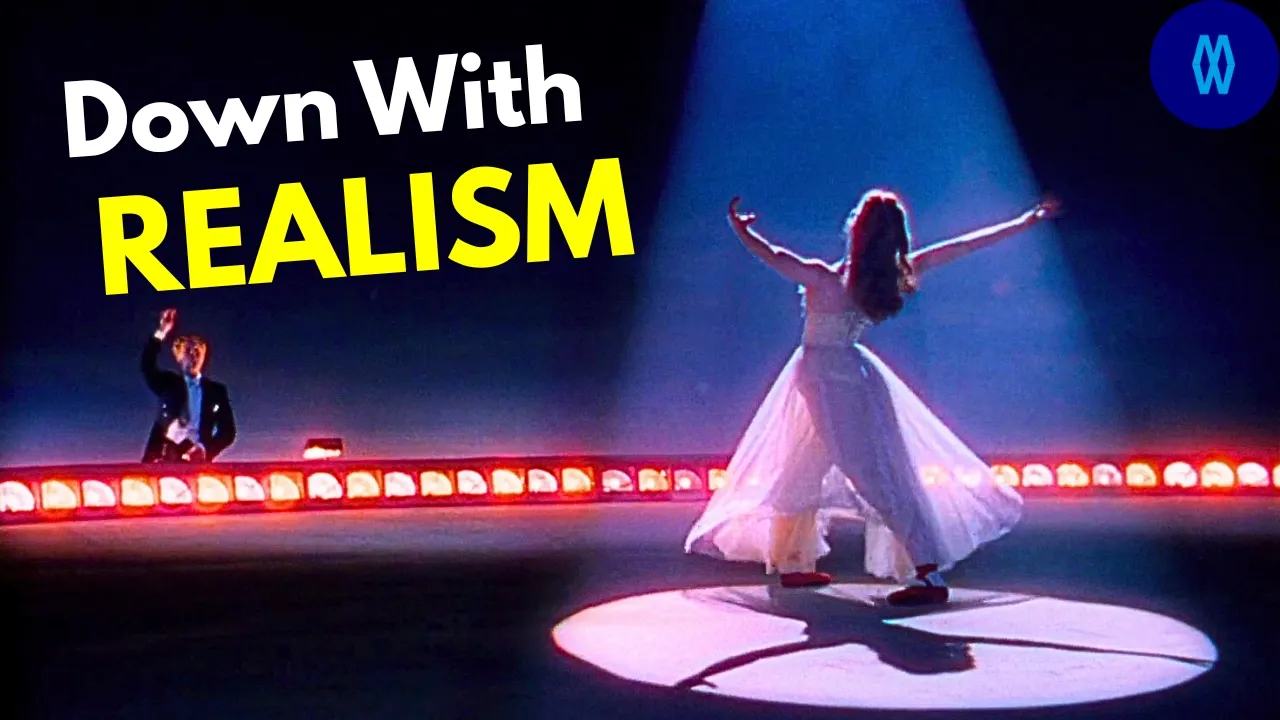
The Movies That Dared Go Full Movie
24.9K
Formalism in cinema is an approach that elevates filmmaking tools—production design, lighting, costumes, and editing—to create an artificial, stylized reality rather than recreating our own world, existing on a spectrum between realism and classicism; it emerged from early filmmakers like Georges Méliès and German Expressionists who embraced artificiality, and reached its peak in genres like musicals (Minnelli, Powell & Pressburger) and directors like Eisenstein, Greenaway, and von Trier, who made their form and artifice deliberately visible to audiences.
Click to watch →
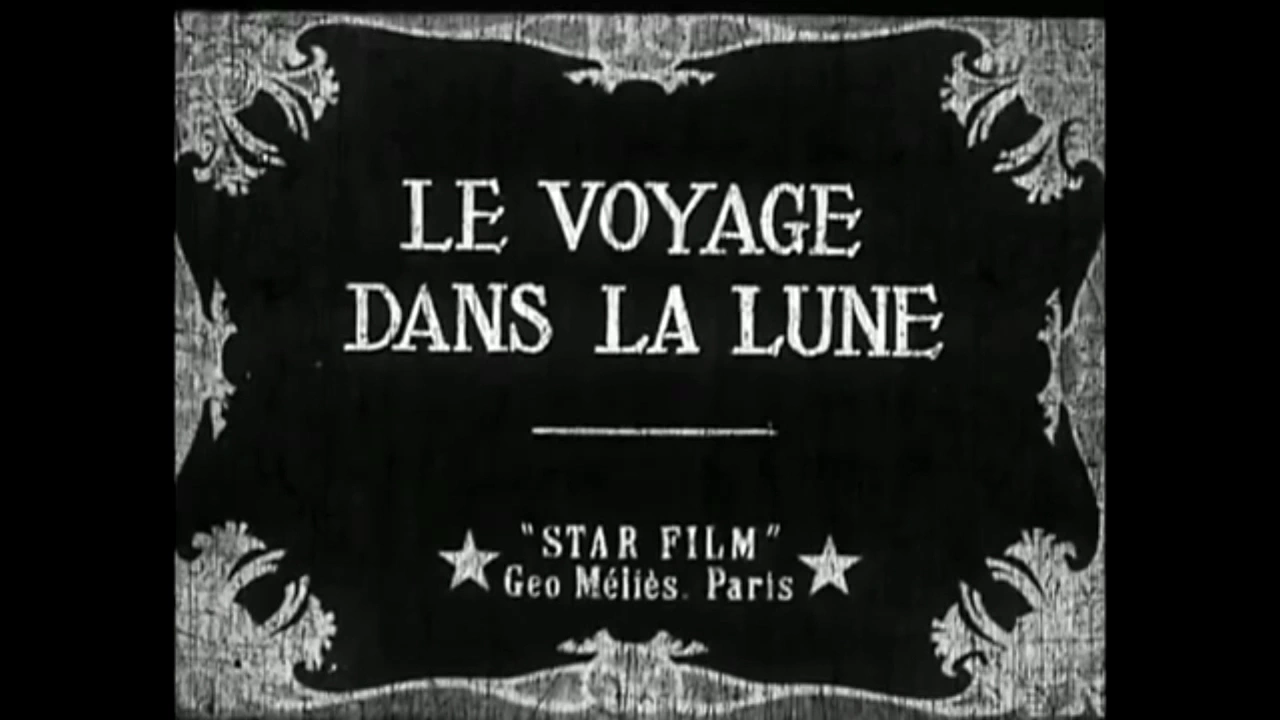
Formalist Film Theory
3K
Formalist film theory is an analytical framework that examines how films are constructed through technical elements such as color, sound, set design, and editing, which began with early filmmakers like the Lumière brothers in the 1910s-1920s and continues to influence modern directors like Wes Anderson and Woody Allen; this approach forces audiences to focus on visual and auditory details rather than narrative, making technical mastery essential to effective storytelling.
Click to watch →

Rudolf Arnheim's Formalist Film Theory
21.6K
Film theory divides into two opposing camps: formalism and realism. Realist theorists (André Bazin, Siegfried Kracauer) focus on film's capacity to reproduce physical reality, arguing filmmakers should harness this natural ability through aesthetic conventions. Formalists (Arnheim) believe film transforms reality rather than merely reproducing it. This binary applies to filmmakers: Lumière brothers represent realism through naturalistic documentation, while Georges Méliès represents formalism through special effects. Movements similarly align—Italian neorealism with realism, Soviet montage with formalism. Arnheim's project addresses whether film can be art by examining what makes cinema distinct from both other arts and human perception. He argues that film's limitations—being flat, having rectangular boundaries, lacking color and three-dimensional depth—actually constitute its artistic potential. This leads to the concept of 'partial illusion,' where film is always simultaneously a flat picture and a scene of living action, possessing enough representational power while maintaining formal qualities that qualify it as art.
Click to watch →
Deep Dive
The Concept of Cinema as Language: The foundational debate regarding whether film possesses a formal grammar and syntax comparable to spoken languages.

The Cinematic Anti-Canon | Nobody's Favourite Movie #1
1.3K
Alexander Astruc's concept of 'caméra-stylo' (camera-pen) proposed that cinema is becoming a language—a form in which artists can express abstract thoughts and translate obsessions exactly as writers do with essays or novels. This concept challenged the notion that film should simply be a visual translation of pre-existing literary texts. Astruc argued cinema could tackle any subject including philosophy, psychology, metaphysics, and ideas, and that contemporary life philosophies could only be properly expressed through cinema.
Click to watch →
ПОНЯТЬ ТАРКОВСКОГО и КАК УСТРОЕНО СЛОЖНОЕ КИНО?
67.4K
Cinema has certain expressive means such as montage, camera angle, camera movement, and shot size. These are technical means, but it has been understood for over 100 years that these means are connected and form a system rather than just a list of actions. The crucial point is that when these elements are connected, they have the ability to generate meanings. This ability to generate meaning is what makes this collection of expressive means a language, and cinema itself is this language.
Click to watch →

Robert Bresson: El presente como misterio del cinematógrafo
229
Cinema functions as a language and as writing with moving images and sounds. This conceptualization positions film as a textual medium that records, preserves, and communicates experiences. The cinematographer functions as a writer who captures moments in a format that allows them to be revisited and re-experienced indefinitely.
Click to watch →

¿Qué es el cine? (Seba De Caro) - VODCASTERS #01
104.7K
The combination of Kuleshov's montage theory, Griffith's parallel editing and off-screen space, and the concept of shot progression created cinema as a language. These techniques allowed filmmakers to construct meaning through the arrangement of shots rather than just recording reality. This established the foundation for silent cinema and all subsequent film genres.
Click to watch →

Amar el cine 05 El lenguaje cinematográfico
60.2K
Cinema communicates emotions, facts, dreams, realities, and fantasies through images and sounds. It is a language of images with its own vocabulary, syntax, and grammar. The director uses this language to communicate with the audience.
Click to watch →
Deep Dive
The Intellectual Context of Structuralism: A basic understanding of structuralism as a 20th-century intellectual movement that sought to analyze cultural phenomena through systematic frameworks.
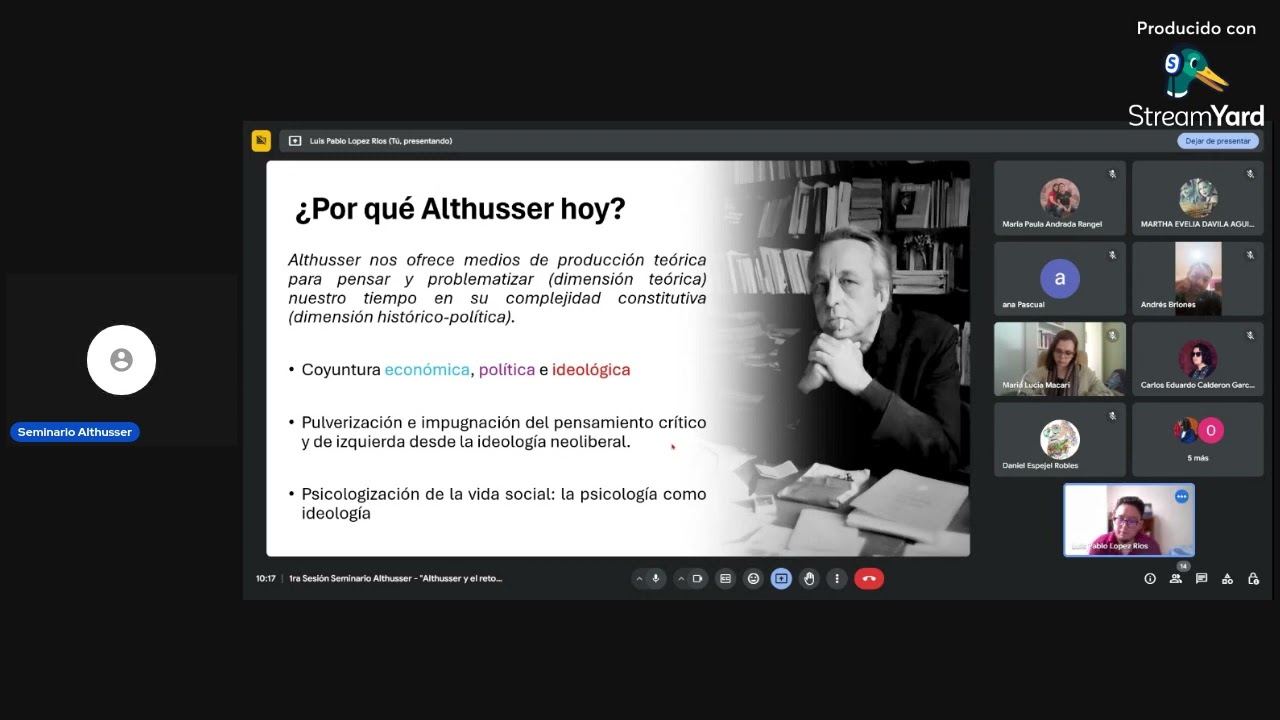
Sesión 1: Seminario Althusser
237
Althusser's theoretical enterprise occurred in a precise moment of French intellectual history: the French structuralism movement, which marked a before-and-after in the history of French intelligence. According to Balibar, structuralism was a particular moment in French intellectual history where critical consciousness was awakened. It was a research program that sought to formalize human facts according to the signalization of Jean-Claude Milner, or more generally, an atmosphere where converging domains and objects, though dissimilar, possessed common points and points of intersection.
Click to watch →

صالون علمانيون (180) _ فلسفات ما بعد الحداثة _العدمية , البنيوية , التفكيكية
4K
This section provides historical context for structuralism as a French intellectual movement. The section traces structuralism's emergence from the crisis of French intellectual life following World War II, when traditional philosophical approaches had failed to address fundamental questions of meaning and certainty. The section distinguishes between linguistic structuralism (focused on language and literary criticism) and social science structuralism (focused on human societies and cultures). The section emphasizes that structuralism cannot be understood without understanding the specific historical and cultural conditions of France in the early 20th century.
Click to watch →

"Libros recomendados: ojo con el arte. 195. Baudrillard. Introducción"
1.3K
Jean Baudrillard (1927-2007) developed a distinctive intellectual project distinct from Marxist radicalization. His trajectory includes: doctoral thesis (1966) → 'The System of Objects' (1968) → 'The Society of Consumption' (1970) → 'Critique of the Political Economy of the Sign' (1978). This progression shows his increasing focus on consumption as primary lens for social analysis. Structuralism emerged from Saussure's linguistics, which established language as scientific object distinct from historical philology. Structure is defined as complex whole where parts modify each other based on their relationship to the whole. This framework enabled interdisciplinary applications: semiotics to anthropology (Lévi-Strauss), psychoanalysis (Lacan), literary criticism (Barthes, Kristeva), and political science. A key feature is dissolution of subject within structural frameworks, treating social processes as autonomous systems where meaning emerges from relationships rather than subjective intentionality.
Click to watch →

Маргинал про русский структурализм
12.8K
Structuralism emerged from Saussure's linguistic theories and became a dominant intellectual paradigm across multiple disciplines. The movement began with Saussure's 'Course in General Linguistics,' compiled by his students, which established linguistics as an academic science. Structuralism then extrapolated these ideas to philosophy, anthropology, literary criticism, and sociology. This intellectual tradition gave rise to Russian Formalism, American New Criticism, and Postmodernism, all sharing the core principle that human phenomena are determined by underlying structures rather than individual agency or biological factors. The convergence of these schools reflects their shared foundation in structuralist methodology applied across different academic domains.
Click to watch →

Levi-Strauss and Structuralism
120.4K
Structuralism emerged as a major 20th-century French intellectual movement founded by thinkers like Levi-Strauss, Piaget, and structuralist linguists. Rooted in Cartesian and Platonic rationalist traditions, it sought to apply mathematical and logical rigor to understanding human behavior. Unlike positivism and empiricism which were unpopular in French culture, structuralism offered a logically rigorous method tracing back to Descartes and Plato. The core ambition was to find underlying regularities—mathematical or logical rules—that govern human behavior beneath surface appearances. This approach was inspired by structuralist mathematics developed by mathematicians under the pseudonym Nicolas Bourbaki, which was then applied to diverse fields including linguistics, kinship systems, and mythology. The fundamental assumption was that there exists some universal 'ur-stuff' of human thinking that remains constant across all cultures and historical periods. Both Freud and Marx can be understood as structuralist thinkers who sought underlying structures beneath surface manifestations, with Freud analyzing the unconscious and Marx examining ideological transformations.
Click to watch →
Prerequisite Knowledge
- Concept 01Introduction to Semiotics: Fundamental concepts of sign systems, specifically Ferdinand de Saussure's dyadic model (signifier/signified) and Charles Sanders Peirce's triadic model (icon, index, symbol).
- Concept 02Early Film Theory and Formalism: Familiarity with how cinema constructs meaning through editing (montage) and mise-en-scène, as established by early theorists like Sergei Eisenstein.
- Concept 03The Concept of Cinema as Language: The foundational debate regarding whether film possesses a formal grammar and syntax comparable to spoken languages.
- Concept 04The Intellectual Context of Structuralism: A basic understanding of structuralism as a 20th-century intellectual movement that sought to analyze cultural phenomena through systematic frameworks.
Subsequent Learning
- Step 01Psychoanalytic Film Theory: Examining Christian Metz's transition from structural semiotics to Lacanian psychoanalysis, particularly in 'The Imaginary Signifier'.
- Step 02Cognitive Film Theory: Exploring the cognitive and post-theory responses (such as those by David Bordwell and Noël Carroll) that rejected semiotics in favor of empirical and psychological models of spectatorship.
- Step 03Feminist Semiotics and Representation: Investigating how film semiotics paved the way for feminist film theorists like Laura Mulvey to deconstruct the 'male gaze' as a coded cinematic signifier.
- Step 04Applied Cinematic Analysis: Practicing the application of Wollen's indexical, iconic, and symbolic categories to deconstruct contemporary films and digital media texts.
Semiotics Defined
Core Concepts
Sign Systems
Applied Analysis
Theoretical Limits
Practical Tools
Case Studies
Final Synthesis
Semiotics Defined
0:31Playing Section
- 1
Semiotics is the theory of science, not just signs.
- 2
Core focus is on meaning-making through systematic analysis.
Cognitive Film Theory
Cognitive film theory, pioneered by scholars like David Bordwell and Noël Carroll, emerged as a direct rejection of the semiotic and psychoanalytic models proposed by Christian Metz and Peter Wollen. While film semiotics posits that cinema operates like a language system with codes that spectators must decode, cognitivists argue that film comprehension is rooted in real-world cognitive psychology. Instead of relying on abstract linguistic structures, viewers use active mental schemas, hypothesis-testing, and ecological perception to make sense of moving images. Cognitivism criticizes semiotics for over-relying on arbitrary linguistic analogies and neglecting the conscious, evolutionary, and psychological mechanisms that drive the spectator's experience.
Deep Dive
Psychoanalytic Film Theory: Examining Christian Metz's transition from structural semiotics to Lacanian psychoanalysis, particularly in 'The Imaginary Signifier'.
Crítica 'La mujer en la ventana' ('The Woman in the Window') (Netflix)
40.8K
The film employs the color palette of the 'yellow sign' (yalo) - pink, blue, violet, and red tones - to create a specific atmospheric effect. This references Mario Bava's 'The Three Faces of Fear' (1974), which similarly uses exaggerated colors to create psychological tension. The color choices demonstrate how cinematographic technique can serve psychological and thematic purposes in horror and suspense films.
Click to watch →

हिंदी सिनेमा और उसका अध्ययन B.A Program Semester 6th Hindi Cinema aur uska adhyan Important Question
162.7K
Psychoanalytic Cinema Theory (Manovishleshanatmak Siddhant) is influenced by Sigmund Freud's psychoanalytic approach. Films following this theory focus on depicting human mental states, emotions, and consciousness. They explore the psychological aspects of human behavior, creating films that resonate with audiences' inner emotional experiences.
Click to watch →

É SAUDÁVEL COMEÇAR UM NOVO RELACIONAMENTO LOGO DEPOIS DE UM TÉRMINO? | Pergunte ao Nápoli
13.9K
This section covers advanced psychoanalytic concepts: (1) Students pursuing analysis for technical training often avoid confronting their own psychological issues; (2) Free association means speaking whatever comes to mind, including seemingly insignificant details, as these express the unconscious; (3) Psychoanalysis helps understand why people cannot maintain consistency in achieving goals by revealing unconscious conflicts between egoic desires and true unconscious desires; (4) The unconscious is structured like a language, with signifiers (material elements like words) and signifieds (concepts) having an arbitrary relationship; (5) Signifiers can attach to meanings other than their original signified, as in dreams where 'garrafa' might represent one's mother; (6) This autonomy of the signifier leads to Lacan's thesis that the unconscious is structured like a language.
Click to watch →

Introdução à Psicanálise | Rubia Zecchin e Claúdia Martins
105.3K
Beginning in 1902, Freud held weekly gatherings known as the Wednesday Psychological Society, bringing together physicians, musicians, and others interested in psychoanalysis. The International Psychoanalytic Association (IPA) was established in 1910, formalizing the movement with structures for training and research. The Third International Congress in Weimar, Germany in 1911 brought together key figures including Freud, Jung, Ferenczi, and Lou Salomé. This institutionalization marked psychoanalysis as a recognized scientific movement. Psychoanalysis transcends national boundaries and disciplinary confines, applying to human experience universally. Projects transmitting psychoanalysis to diverse cultures like Mozambique demonstrate its cross-cultural applicability. Beyond clinical practice, psychoanalytic perspectives illuminate literature, art, cinema, and social phenomena, offering critical frameworks for understanding human behavior across diverse contexts. Freud's extensive correspondence with Wilhelm Fliess reveals his personal struggles and intellectual doubts, demonstrating that even the founder required analysis.
Click to watch →

#474 Общение с духом Зигмунда Фрейда: взгляд на психологию из Духовного мира. Истинная свобода духа.
54.5K
Psychoanalytic theory evolves through personal experience and spiritual growth. The founder of psychoanalysis initially focused on helping people reduce psychological suffering but later realized that the most important aspect was providing patients with a path to understanding the meaning of life. This deeper understanding includes recognizing oneself as an immortal being awaiting greater transformation after death.
Click to watch →
Deep Dive
Cognitive Film Theory: Exploring the cognitive and post-theory responses (such as those by David Bordwell and Noël Carroll) that rejected semiotics in favor of empirical and psychological models of spectatorship.

Film Theory
718
Film theorists analyze films using specific elements: shot types (extreme close-ups, medium, long shots), camera angles, lighting, color, sound (diegetic/non-diegetic), editing, and mise-en-scène. Major theoretical approaches span diverse perspectives: Formalist theory focuses on technical elements creating viewer impact; Structuralist theory examines patterns within and between films within larger contexts; Apparatus theory argues cinema is inherently ideological—its mechanics of representation (point of view, what gets filmed/cut) are part of its nature, not imposed externally. Marxist theory analyzes power dynamics and realism; Feminist theory critiques the male gaze and women's objectification; Queer theory examines heterosexual norm construction and marginalization; Auteur theory (from French 'author') holds directors as primary authors with distinctive styles marking their work despite collaborative production processes. Neoformalism rejects overemphasis on symbolism, focusing instead on cognitive effects and directing viewer attention to narrative importance. Cognitive film theory examines how human intellect processes films, enhancing significance through intellectual engagement. Cinema reproduces reality through acting, cinematography, lighting, sound, and editing, making viewers believe stories are real. The viewer's position is ideological—they choose seats for optimal viewing experience, demonstrating cinema's power to shape perception. Every viewer imposes different meanings based on personal interpretation of these mechanical elements.
Click to watch →

Conversations with History: Ken Jacobs
13.6K
Film represents a distinct cognitive medium that operates differently from painting. While painting presents timeless single images, film engages with temporal flow through scenes and connections. Both ultimately become single mental images that transcend clock time, serving as forms of thinking that shape consciousness. The artist's approach involves mining existing film to reveal what gets missed at normal speed, exploring frame-by-frame relationships to create experiences that disorient viewers and activate their minds toward deeper engagement with reality.
Click to watch →
Film Theories - Film Language 1.
4.6K
Focalization complements narration as the visual counterpart, tracking whose perspective viewers follow—typically a central character whose vision shapes the narrative flow. Diegesis encompasses the entire narrative world including plot, mise-en-scène, characters, and editing. The distinction between plot (sujay)—what appears on screen—and fabula (story)—the viewer's mental restructuring—reveals how audiences process complex narratives. Films like Magnolia use sophisticated structures requiring viewers to mentally reorganize fragmented information into coherent understandings, demonstrating the cognitive work involved in film comprehension beyond passive viewing.
Click to watch →

desinquieto16 - O papel do espectador.
147
In film theory, the spectator is not a passive recipient but an active participant who constructs meaning through cognitive processes; according to Bordwell's framework, the spectator builds a 'fabula' (the story in their mind) from the 'syuzhet' (narrative fragments) presented in the film, with four narrative modes ranging from classical storytelling to experimental and parametric approaches that challenge the viewer's perceptual schemas.
Click to watch →
5 Things Film Editors Literally Do - According To Science
169.7K
Film editors literally perform five distinct cognitive actions: (1) watching material with trained attention to capture immediate emotional responses, (2) sorting material by tagging and categorizing it to create knowledge structures, (3) remembering by using external materials as part of their extended mind to trigger memories and feelings, (4) selecting shots based on their potential to work together, and (5) composing by arranging selected shots in a timeline and shaping them in relation to each other; this five-step process demonstrates how editing is an instance of the 'extended mind' theory where thinking extends beyond the brain into the physical materials themselves.
Click to watch →
Deep Dive
Feminist Semiotics and Representation: Investigating how film semiotics paved the way for feminist film theorists like Laura Mulvey to deconstruct the 'male gaze' as a coded cinematic signifier.
![[기호학 TV] 13. 페미니즘의 기호학](https://i.ytimg.com/vi/VG8Xc_BAvQQ/maxresdefault.jpg)
[기호학 TV] 13. 페미니즘의 기호학
220
Feminism is described as a system composed of imagination and language, making it analyzable through semiotics. In contrast, women's rights (여권) is based on facts, making it difficult to analyze semiotically. Semiotics is defined as the study of analyzing lies, which is why feminism can be analyzed while women's rights cannot.
Click to watch →

ISMMS Author Talk with Jasmine Hazel Shadrack
433
Butler states that feminism seeking wider representation for a self-constructed subject risks failure by refusing to account for the constitutive powers of its own representational claims. By conforming to representational politics, feminism articulates a stable subject and opens itself to charges of misrepresentation. Susan McClary explains that since the 17th century, composers developed musical semiotics of gender—conventions for constructing masculinity or femininity. Music serves as a public forum where models of gender organization are asserted, adopted, contested, and negotiated. In Denigrata, Monae re-encodes gender essentialism by using the witch representation to reclaim power, while the researcher performs a masculine role, experiencing different negativity than Monae.
Click to watch →

Semiótica, nomadismo e cinema | Entrevista com Marina Fuser
414
Feminist semiotics challenges how women's bodies are represented in media by opening codes that fragment or stereotype women, moving beyond fixed identity categories to embrace multiplicity. Nomadic cinema, exemplified by Trinh T. Minh-ha's work, uses intervals and strategic displacement to create spaces of resistance and fluidity, allowing marginalized subjects to cross borders both physically and conceptually. This approach connects to new materialism's rejection of the nature-culture binary, enabling more complex relationships between species and human subjects without requiring human mediation. The goal is to return agency to women, particularly women of color, LGBTQ+ individuals, and other marginalized groups, by challenging the fixed positions imposed by dominant cultural codes.
Click to watch →
![[서구파시즘] “페미니스트의 언어는 도발, 앙탈, 스펙터클” (M. Zancarini-Fournel)](https://i.ytimg.com/vi/uESQaYEI1Z8/maxresdefault.jpg)
[서구파시즘] “페미니스트의 언어는 도발, 앙탈, 스펙터클” (M. Zancarini-Fournel)
4.7K
Feminists' only weapon is provocation—they act out, create spectacle, and use media to get attention because they won't listen otherwise. This began because they wanted something too outrageous. In semiotics, calling someone 'aunt' in a restaurant (symbolic expression) refers to the meaning of a restaurant lady. Korean feminism is 100% imported with no cultural foundation—just words going back and forth between expressions and meanings. All feminism is trying to justify, express, and disguise meaning in one's heart. One can only listen with one ear and let it go out the other.
Click to watch →
Gender, Image and representation
336
In representation, women are often used as symbols for meanings men want to convey, objectified as devices of representation and specific models of artistic significance in a world created by men. A sign is any item which can produce meaning, with meaning determined by its relationship to other signs in the signifying system. Women have meaning not because they refer to some real pre-given entity but because they are different from another sign (man). This reveals gender as a semiotic system based on difference between men and women, revealing hegemony and asymmetry of power between genders.
Click to watch →
Deep Dive
Applied Cinematic Analysis: Practicing the application of Wollen's indexical, iconic, and symbolic categories to deconstruct contemporary films and digital media texts.

Curso de análisis cinematográfico - Parte 2 - El análisis cinematográfico
3.2K
Cinematic analysis is an academic discipline that emerged in the 1860s in France and the United States as a derivative of literary studies, focusing on the aesthetic experience of the spectator; it differs fundamentally from film criticism by studying the components that distinguish cinema from other cultural manifestations—such as image, sound, staging, narrative structure, generic conventions, style, intertextuality, ideology, and ending—without evaluating the film's value, instead describing these components in detail and considering the spectator's horizon of experience and expectations.
Click to watch →
Кино и психоанализ
618
Applied analysis in cinema involves using psychological knowledge to interpret film works and uncover hidden meanings. A fundamental distinction exists between cinema researchers and regular viewers, with researchers possessing methodological tools for systematic examination. The 'death of the author' concept suggests original creator intentions are irrelevant, making the viewer the primary authority in determining meaning. Film interpretation has evolved from simple narratives to complex works inviting multiple interpretations, with modern cinema creating morally ambiguous characters that challenge traditional boundaries.
Click to watch →
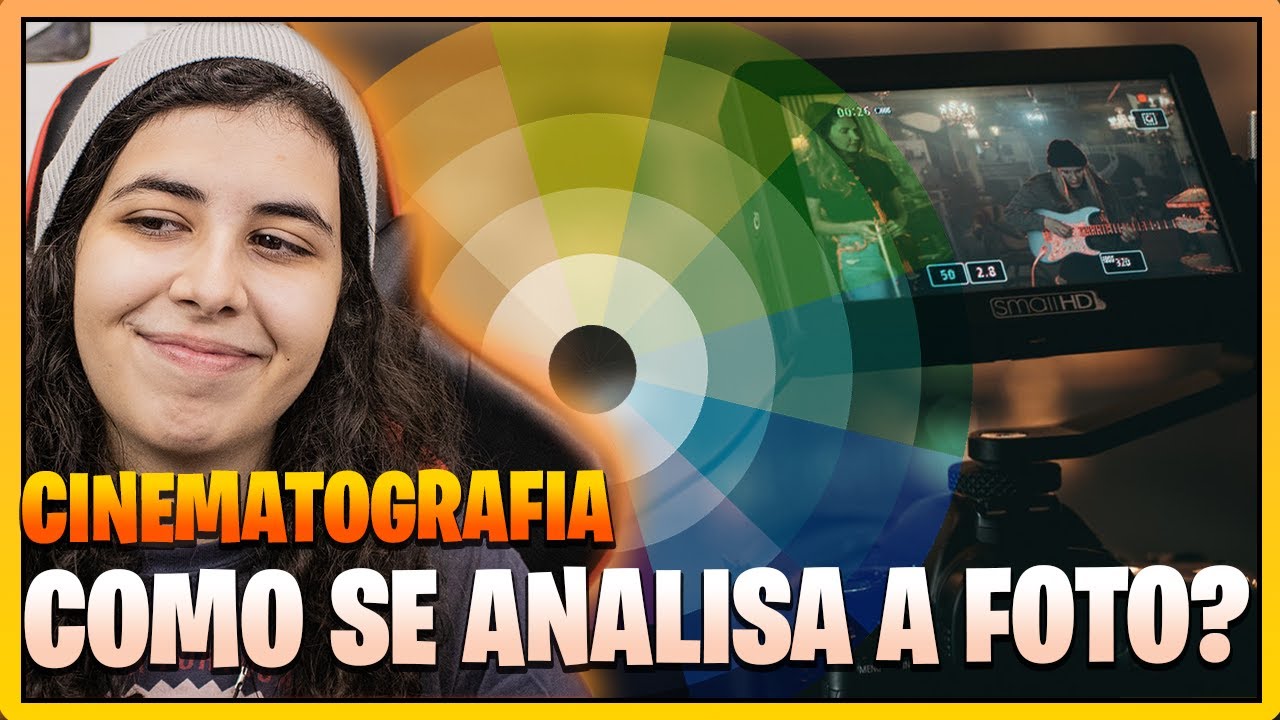
COMO SE ANALISA A FOTOGRAFIA DE UM FILME? | CINEMEI #29
3.8K
Cinematographic analysis involves examining seven key elements: framing/plans (such as establishing shots, close-ups, and medium shots), camera angles (normal, high, low, and bird's eye views), camera movement (travelling, tilting, circular, and trucking), contrast and brightness (which affect mood and perception), color agreements (where red, blue, and yellow carry different symbolic meanings), geometric shapes (circles, lines, and rectangles that convey meaning), and focus positioning (which indicates character importance and power dynamics). These elements work together to create psychological effects on the audience and reveal narrative information.
Click to watch →
![[Ciné] Candyman 1992 / 2021 ft. Le Cinématographeur](https://i.ytimg.com/vi/k-vw5C6_ZVc/maxresdefault.jpg)
[Ciné] Candyman 1992 / 2021 ft. Le Cinématographeur
660
The host presents his approach to film analysis, treating cinema like literary analysis in French literature courses. He examines what specific cinematic techniques mean: when a director makes a cut, positions the camera at different heights, performs a pan, or uses color on characters, what does that signify? This method treats film analysis as an intellectual discipline, applying it to Hollywood blockbusters by James Cameron, Spielberg, and Guillermo del Toro to demonstrate that even commercially successful films contain artistic depth. The approach is both pedagogical and engaging, making complex film analysis accessible to general audiences.
Click to watch →
É TUDO SOBRE O PASSADO! ANÁLISE DO SNEAK PEAK | STRANGER THINGS
98.7K
Cinematic analysis is a professional skill in the audio-visual field that involves examining technical elements such as photography, direction, and art design to understand and interpret media content. This analytical approach allows professionals to develop deeper interpretations of visual storytelling techniques and narrative construction.
Click to watch →
Semiotics Defined
Core Concepts
Sign Systems
Applied Analysis
Theoretical Limits
Practical Tools
Case Studies
Final Synthesis
Semiotics Defined
0:31- 1
Semiotics is the theory of science, not just signs.
- 2
Core focus is on meaning-making through systematic analysis.
Cognitive Film Theory
Cognitive film theory, pioneered by scholars like David Bordwell and Noël Carroll, emerged as a direct rejection of the semiotic and psychoanalytic models proposed by Christian Metz and Peter Wollen. While film semiotics posits that cinema operates like a language system with codes that spectators must decode, cognitivists argue that film comprehension is rooted in real-world cognitive psychology. Instead of relying on abstract linguistic structures, viewers use active mental schemas, hypothesis-testing, and ecological perception to make sense of moving images. Cognitivism criticizes semiotics for over-relying on arbitrary linguistic analogies and neglecting the conscious, evolutionary, and psychological mechanisms that drive the spectator's experience.
Introduction to Semiotics: Fundamental concepts of sign systems, specifically Ferdinand de Saussure's dyadic model (signifier/signified) and Charles Sanders Peirce's triadic model (icon, index, symbol).
Early Film Theory and Formalism: Familiarity with how cinema constructs meaning through editing (montage) and mise-en-scène, as established by early theorists like Sergei Eisenstein.
The Concept of Cinema as Language: The foundational debate regarding whether film possesses a formal grammar and syntax comparable to spoken languages.
The Intellectual Context of Structuralism: A basic understanding of structuralism as a 20th-century intellectual movement that sought to analyze cultural phenomena through systematic frameworks.
Psychoanalytic Film Theory: Examining Christian Metz's transition from structural semiotics to Lacanian psychoanalysis, particularly in 'The Imaginary Signifier'.
Cognitive Film Theory: Exploring the cognitive and post-theory responses (such as those by David Bordwell and Noël Carroll) that rejected semiotics in favor of empirical and psychological models of spectatorship.
Feminist Semiotics and Representation: Investigating how film semiotics paved the way for feminist film theorists like Laura Mulvey to deconstruct the 'male gaze' as a coded cinematic signifier.
Applied Cinematic Analysis: Practicing the application of Wollen's indexical, iconic, and symbolic categories to deconstruct contemporary films and digital media texts.
2.6K views57likes9:47@LearnwithAadhiOriginal Release: 2023-02-10
hi welcome back to my channel learn with Adi videos foreign the term semiotics means theory of science semiotics is concentrated um foreign foreign foreign foreign foreign foreign foreign foreign foreign foreign foreign foreign foreign foreign foreign clear Allah um foreign
Up Next
49:52
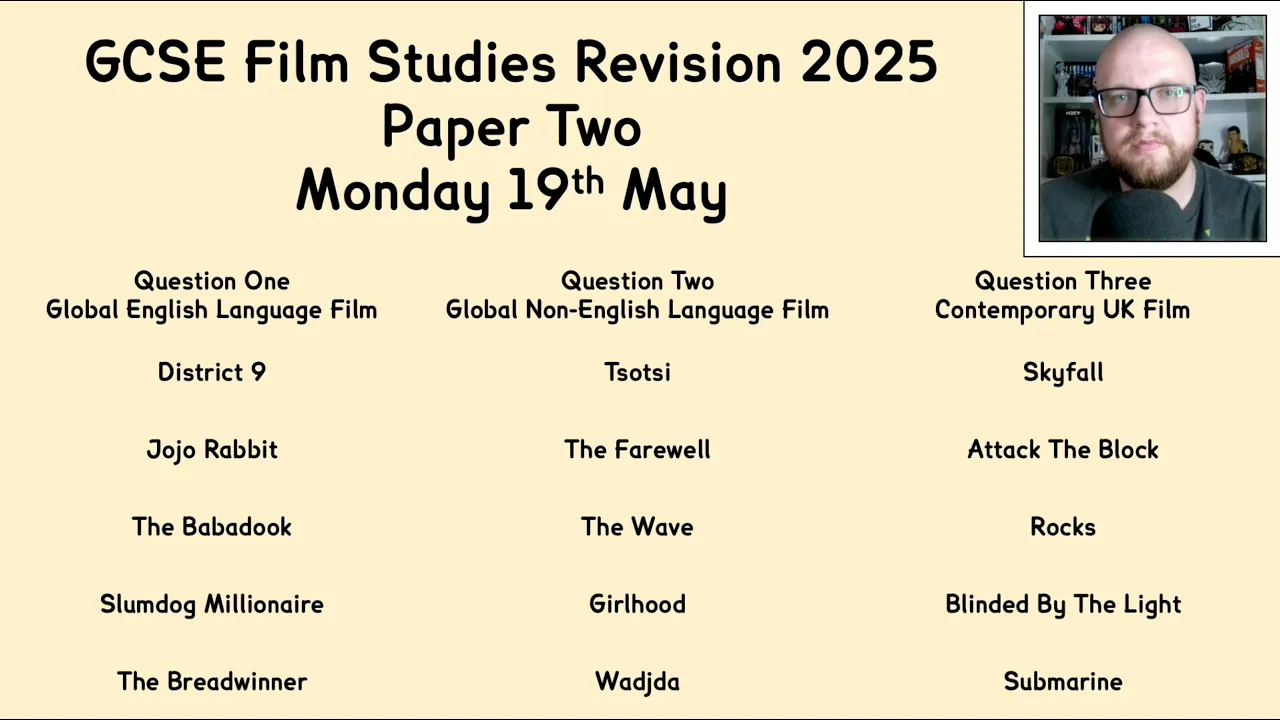
GCSE Film Studies Paper Two Revision Guide 2025
@FarrandOnFilm
2.5K views•2025-05-11

23:14
Visual Analysis Essay: How to Analyze Graphic Novels in College Writing
@nataliepleimann5941
1K views•2020-10-14
4:55
Film Blocking Techniques for Directors: Space, Shapes, Lines
@StudioBinder
1.9M views•2018-07-23

4:00
Evolution of Darth Vader: Anakin Skywalker's Animated Journey Across Star Wars Films
@TellItAnimated
13.4M views•2019-03-30
Related Study Plans & Knowledge Roadmaps
Structured learning paths in Film Analysis
film-analysis
Sensory Cinema: Foley, Haptic Sound & Texture
01Introduction to Film Sound and Foley Artistry
02Micro-Sounds, Textures, and Extreme Amplification
03Haptic Audition and Film Phenomenology
+ 1 more learning modules
12h4 modules
Explore Roadmap
film-analysis
Breaking the Fourth Wall: Mockumentary & Satire
01The Invisible Wall: Basics of Cinematic Illusion
02Looking at the Lens: Direct Address & Character Glances
03The Mockumentary: Satire, Realism, and Complicity
+ 2 more learning modules
12h5 modules
Explore Roadmap
film-analysis
Analyzing the Long Take: Cinema, Space & Ethics
01Foundations of Film Grammar: Montage vs. The Long Take
02Choreography and Mechanics of the Simulated One-Shot
03Phenomenology of Film: Real-Time Spatial Continuity
+ 1 more learning modules
14h4 modules
Explore Roadmap
film-analysis
Anachronistic Music: Period Drama & Subversion
01Foundations of Film Sound and the 'Needle Drop'
02Traditional Authenticity vs. Revisionist History
03The Rise of the Anachronistic Soundtrack
+ 2 more learning modules
12h5 modules
Explore Roadmap