












![Session 4: Prof. (Dr.) Thomas Ulen, "The Coase Theorem" [Day 2:13th September 2022]](https://i.ytimg.com/vi/C_XFu9nolK4/maxresdefault.jpg)







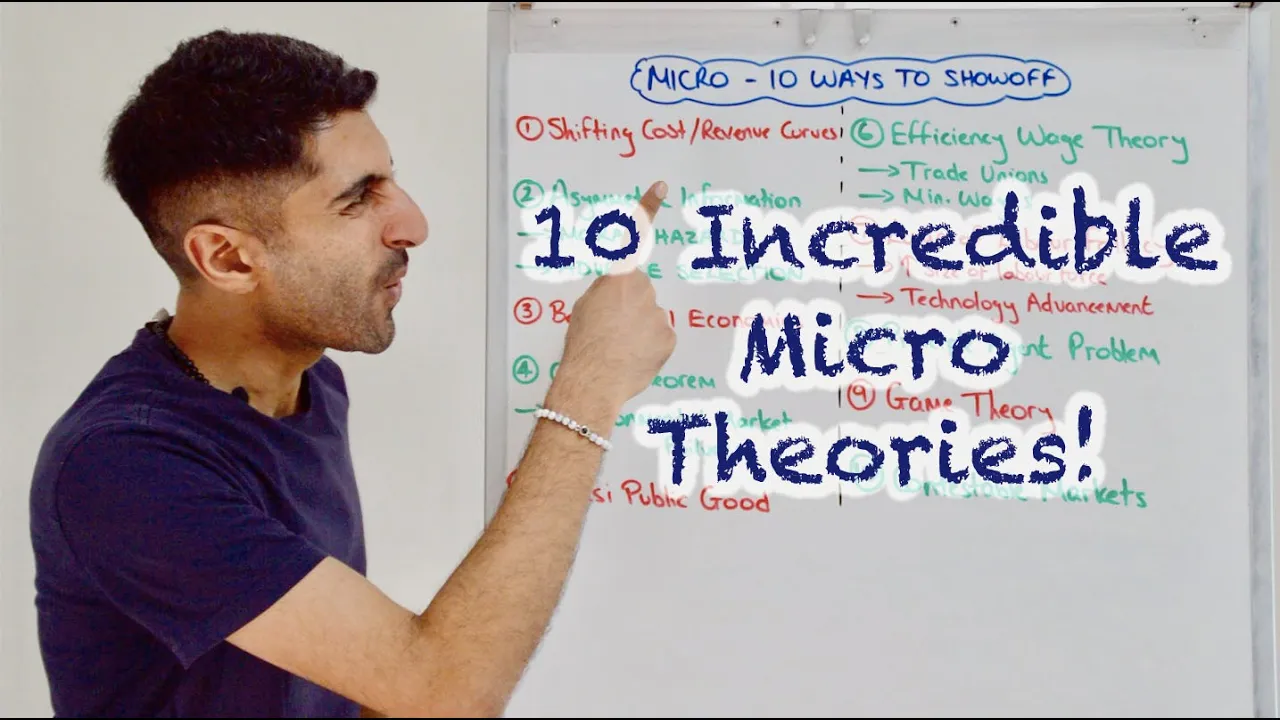







Asymmetric information occurs when one party in a transaction possesses more relevant information than the other, creating two distinct problems: adverse selection happens before the transaction where parties with worse outcomes are more likely to seek participation (e.g., risky borrowers seeking loans), while moral hazard occurs after the transaction where one party changes their behavior to take greater risks knowing they are protected (e.g., insured drivers driving less carefully).
Asymmetric Information in Finance: Adverse Selection & Moral Hazard
Added:The basic functions of financial markets and intermediaries, including how capital flows from savers to borrowers.
The concept of economic rationality and how self-interested behavior drives market transactions.
An introductory understanding of risk, uncertainty, and how expected value is calculated in financial decision-making.
The fundamental definition of transaction costs and their impact on market efficiency.
Signaling and screening theories, focusing on how market participants use credentials, credit scores, and collateral to reduce information asymmetry.
The Principal-Agent Problem and its applications to corporate governance, debt contracts, and executive compensation.
The Pecking Order Theory of capital structure, which explains why firms prefer internal financing over issuing debt or equity.
The design of financial regulation, disclosure requirements, and the role of credit rating agencies in mitigating systemic market failures.
13.4K views138likes6:57Original Release: 2019-04-05
hello and welcome to our second class in our online course on financial institutions and in this class we are going to talk about a symmetric information and specifically we're going to talk about two types of a symmetric information adverse selection and moral hazard so let's get to it first of all I think many of you guys will agree with me that in the modern world information and knowledge is power and key in the modern world information is key so finding out about the best deals in many different areas of our life be that your business or personal life I think you would also agree with me that not everyone has the same amount of information on a myriad of topics some of us might have an advantage in the amount of information we have for some topics and we might be at a disadvantage in relation to other topics especially if the topics are relatively complex the difference between the amount of information people have about a given topic or about a given issue it is very common in finance and be that in finance or in any other area this situation is called asymmetric information a symmetric information is basically a situation when some part is to an interaction with that business interaction or any personal life interaction have different amount of information about the topic of the interaction and it doesn't necessarily have anything to do with whether the participants in the interaction are smart or dumb for example if you are buying a second-hand car if you are not a mechanic you would not know as much about buying a particular second-hand car as the seller in this situation you the buyer and the seller of the car are participants in one interaction and one of the parties to these participants namely the seller has much more information about the topic of the interaction namely the second-hand car and again this is not because the buyer is dumber than the seller is just because simply the seller has more information about the topic as he had a chance to own that car for a while before the buyer this example also shows that this situation is normal when the topic of the interaction is relatively complex such as a car if instead you are buying an apple or a banana most likely you as the buyer and the seller of that Apple would know equal amount of information about the topic of your interaction namely the Apple for another very illustrative and hopefully entertaining example of an a symmetric information and the problem that it creates see another video which will also be attached to this second class and the video called asymmetric information for now though in this video we continue with different types of a symmetric information there are actually many different types of this situation we are going to talk about two of those adverse selection and moral hazard let's describe these two starting with the adverse selection adverse selection is a situation that actually happens before the transaction before the interaction and let's have a look at an example in finance so that it is a little bit easier to describe and understand what is adverse selection it's a situation where one of the parties to the transaction has better information than the other and the third feature of adverse selection is that on example of finance specifically an example of borrowing bad borrowers which are usually associated with adverse outcome here's the clue in the name adverse selection and adverse outcomes bad borrowers are more likely to be selected again a clue in the name bad borrowers are more likely to be selected because they will probably apply more efforts in seeking an approval for a loan compared to good borrowers who probably don't need the loan as much so to recap adverse selection is a situation when the counterparty that you don't want to choose is actually more likely to be chosen for your interaction hence of course it all happens before the actual interaction or transaction now about the moral hazard it happens after the transaction it is a situation when one party to the transaction has an incentive to change the behavior as opposed to the promised one after the transaction actually takes place and there is danger or hazard again a clue in the name that borrowers would engage in undesirable or immoral again a clue in the name immoral behavior that will make repayment of the loan less likely for an example for moral hazard let's have a look at a purchase of an insurance for a car and this picture this illustration is not really about that but basically moral hazard is title related to a situation when promises are broken after the transaction has taken place after the transaction when driver has got the insurance for the car the driver might be incentivized to drive a little bit less carefully after all the vehicle is already insured and presumably when negotiating for the insurance the driver might have promised to drive very carefully in an attempt to get better rates for the insurance and again for a more illustrative and hopefully entertaining example of adverse selection and moral hazard see another video also attached to this class which is called adverse selection and moral hazard
Up Next
48:22
Market Failures II: Informational Asymmetry | MIT 14.01
@mitocw
59.2K views•2020-07-16
5:07
Impact of Yuan in Indo-Russian Trade Amid Sanctions
@WION
261.9K views•2022-07-01
10:33
Behavioral Economics Explained: Rationality, Nudges, and Risk
@crashcourse
1.1M views•2016-03-12

113:18
The Age of Easy Money: Fed & Inflation | Full Documentary
@frontline
21.2M views•2023-03-15
Related Study Plans & Knowledge Roadmaps
Structured learning paths in Economics
economics
Sovereign Debt: Defaults, IMF & Restructuring
01Introduction to Sovereign Debt & Government Bonds
02Debt Sustainability & Credit Ratings
03Anatomy and History of Debt Crises
+ 2 more learning modules
12h5 modules
Explore Roadmap
economics
Market Design: Matching Theory & Gale-Shapley
01Introduction to Market Design and Price-Free Markets
02Two-Sided Matching & The Gale-Shapley Algorithm
03School Choice Systems and Mechanism Design
+ 2 more learning modules
10h5 modules
Explore Roadmap
economics
Impossible Trinity: Forex, Capital & Policy
01Introduction to Monetary Policy and Central Banking
02Exchange Rates and International Capital Flows
03The Mundell-Fleming Model
+ 2 more learning modules
8h5 modules
Explore Roadmap
economics
Healthcare Economics: Market Failures & Systems
01Introduction to Healthcare Markets and Market Failure
02Asymmetric Information and Adverse Selection
03Moral Hazard and Insurance Design
+ 2 more learning modules
12h5 modules
Explore Roadmap