




![Economía institucional y Políticas públicas [Sesión I: Fallas de mercado] | Martín Krause](https://i.ytimg.com/vi/Q5mNwkQt6hA/hqdefault.jpg?sqp=-oaymwEmCOADEOgC8quKqQMa8AEB-AHeA4AC6AKKAgwIABABGGUgZShlMA8=&rs=AOn4CLAUN4XtFzNxHPl2oCYafZAGnzfdew)









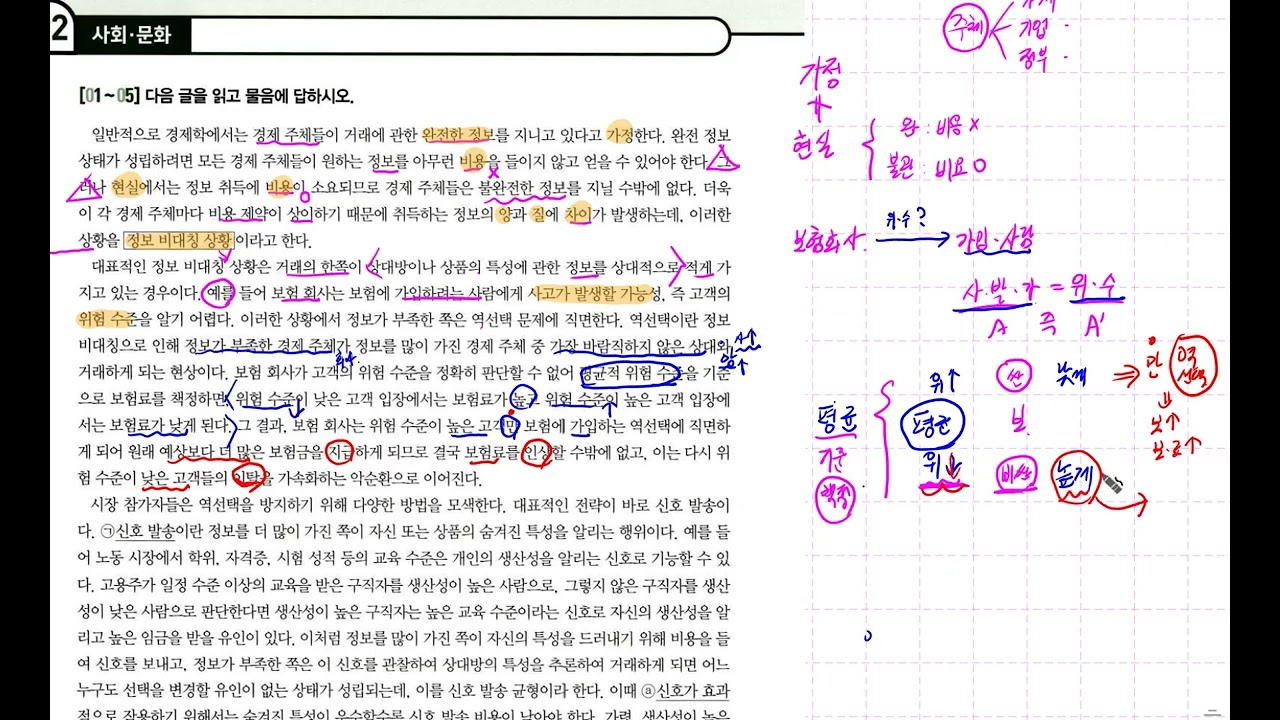





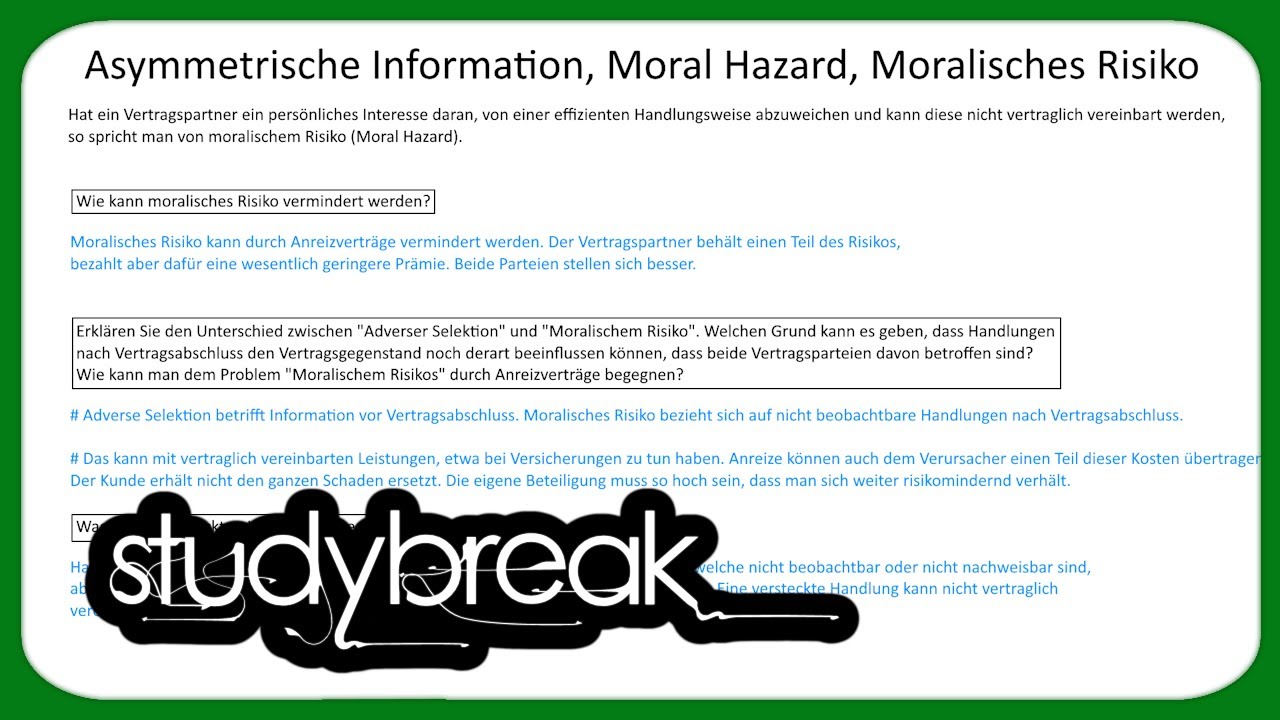





Informational asymmetry—the difference in information available to buyers and sellers—causes market failures in insurance markets through adverse selection, where only high-risk individuals purchase insurance, driving up premiums and potentially eliminating the market; government solutions include subsidization, mandates, and direct provision of social insurance programs, though these create trade-offs with moral hazard, which reduces individual incentives to avoid risks and lowers overall economic efficiency.
Market Failures II: Informational Asymmetry | MIT 14.01
Added:Fundamental concepts of market equilibrium, consumer surplus, and producer surplus under perfect competition.
The concept of market efficiency (Pareto efficiency) and how competitive markets theoretically maximize social welfare.
An introduction to basic market failures, such as externalities and public goods, representing deviations from perfect competition.
Basic probability concepts and decision-making under uncertainty, including expected value and the concept of risk aversion.
Signaling and Screening theories, specifically how high-quality economic agents signal their type (e.g., education in job markets) and how buyers screen sellers.
The Principal-Agent Problem and contract theory, analyzing how incentives are structured when actions cannot be fully observed (moral hazard).
Mechanism Design theory, which studies how to design rules and institutions to achieve social goals when players have private information.
Real-world policy evaluation of social insurance programs, including the economic rationale behind mandates in healthcare (e.g., the Affordable Care Act) and unemployment insurance.
59.2K views994likes48:22Original Release: 2020-07-16
so today we're gonna talk about social insurance so why do we have this thing called social insurance let's first talk about what social insurance is and then ask why we have it okay so basically social insurance is government provided insurance programs this is the largest single category of government expenditure in the u.s. today is government provided insurance programs now why do we have these well you might say well we know I have these we learned about uncertainty we already talked about how people dislike uncertainty and about how as a result insurance is big business in America private insurance for health for auto for life for property and casualty adds up to about 1.5 trillion dollars every year okay so we already have big business of private insurance so why is the government need to get involved I mean after all people want insurance if they're risk-averse we talked about insurance markets can work and as always at economics the question is what's wrong with the private market what is the market failure that might generate interest in government being involved and the market failure in the context of insurance is a different kind of market rather we've talked about we've talked about market failures like imperfect competition as a market failure we talked about externalities as a market failure the new kind of market oh you want to talk about today is what we call information asymmetry information asymmetry okay basically which is the difference in the information available to sellers and to buyers in a given market so far in this course we sort of assumed full information we've assumed everybody knows everything we weaken that assumption a little bit with uncertainty and saying that people don't know whether they're gonna be sick or healthy but they still knew the probabilities now really get it further by saying he now knows the information imperfect but different parties in a transaction might have different levels of information and that's going to turn out to cause market failure that information asymmetry will cause market failure now the math here is quite hard harder than we do in this class so we'll just sort of do this by an example or two and the best example to start with is the so-called lemons problem that was laid out by the Nobel prize-winning economist George Akerlof in 1970 Nobel Prize of economists and a husband of former Fed Chairman Janet Yellen quite a power couple and um here's what acryl off laid out he said let's look at the market for used cars so this tomorrow for used cars as of 1970 there was no CARFAX there was none as information ok 97 when to buy a used car just sort of went and kicked the tires and decide if you're gonna buy it ok so this is a classic case of an information asymmetry in that someone selling a car knows what's wrong with it where's the person buying the car doesn't okay I'll go illegally would sort of kick the tires and hope for the best okay we don't so basically um and in particular sellers of cars might be selling them because they're not good after all why sell a car maybe because it's what's called a lemon a lemon is something which is a poorly performing product in this case a car that's got something wrong with it so when you go to buy a car you're worried you want to buy a car in the used car market but you're worried why is someone selling this car you should be why is someone selling this car if it's really in good shape why would they be selling it therefore as a result Akerlof argued there might be a collapse of the entire used car market there might not be transactions that happen they can make both parties better off remember a market failure is whenever the private market fails to maximize welfare what that means is a market failure arises whatever the private market does not deliver all transactions that make buyer and seller better off okay and here and so let's look an example this suppose that I have a ten-year-old car and I keep it in pristine shape hint that's not true for me I'm terrible of course but imagine I was someone who wasn't I kept my ten-year-old car in pristine shape and let's say that a ten-year-old car in pristine shape is um and let's say I'm trying to sell this car and let's say that I would happily take $5,000 for this ten-year-old car that's in pristine shape so I would be willing to sell at 5k and let's say that you let's say Patricia needs that used car and she is willing to buy a car that's in good shape for 6k so my willingness to willingness to provide willingness to supply is 5k her willingness to pay is 6 K so that is a transaction that should happen given the quality of my car given this in good shape she is willing to pay a thousand dollars more than I'm willing to sell it for such transaction should happen it'll be welfare maximizing but let's say that most ten-year-old cars are not in good shape most ten-year-old cars in fact are in kind of crappy shape and in fact the for the typical ten-year-old car to get it up and running well you'd have to throw $2,000 in once you bought it and Patricia knows this she knows that for the typical ten-year-old car she would have to put two thousand dollars in so her willingness to pay is not 6 K its Forte for an average ten-year-old car now I see the Patricia well that's an average ten-year-old car but I have a perfect ten-year-old car you don't need to put 2 K into it it's good to go so why don't we split the difference will play 55 K and she says no way you're a damn liar I have no way of knowing your car is better than average all I know is the average ten-year-old car needs $2,000 of work so I'm not gonna pay more than 4 thousand dollars for your car as the result Patricia doesn't buy my car and a transaction that would have made both parties better off does not happen a transaction where if there was full information like we have much more of today where you can get the entire record of the car all the crash that's been in how much carrots taken care of that problem would go away should go away because now pictures you could look at my car fax and note this is this in fact is a pristine car and she's more willing to pay the six thousand for it but the bottom line is in this world of 1970 this was a market failure because they transaction that made both parties better off did not happen because of imperfect information okay the buyer was perfectly happy to buy Patricia is perfectly happy to buy my car but because I had information than she didn't and she was suspicious that I was lying as a result that transaction didn't happen now questions about that people understand it's a market failure okay now we come to insurance the story is flipped now it's not the seller that has the information it's the buyer that has the information in particular when you buy insurance you know how healthy you are you know your genetic history you know whether you're a risk taker you know whether you're around a lot of snotty kids who might get you sick you know a lot of stuff about yourself that the insurer doesn't know as a result the information asymmetry is flipped with insurance the insurer is worried that when you come looking for insurance they're worried looking for insurance because you're sick now you might be looking for sure it's cuz you're risk-averse and that's great for insurers we talked about insurance how there's essentially a gain I'm willing to pay a risk premium so insurers can make money by selling to me but what if I'm not coming to you I'm risk averse whatever I'm coming because I'm a huge skydiving fan okay and you don't know that you might be afraid to sell me insurance because you might lose money on me okay so let's work out another example to show this imagine you graduate and you decide a great business model is to offer health insurance to recent MIT grads you say look we're a bunch of kind of careful nerds we're like not going to go skydiving we're like just gonna sit our desks and work maybe there'll be carpal tunnel risk but other than that we're pretty safe bunch so I'm going out for health insurance a recent MIT grads because they're a healthy group and let's say suppose that of every hundred MIT grads 90 are healthy and 10 are sickly let's just suppose you know those facts you know those facts you've collected the data to know that on average of every hovering hundred grads nine you're healthy ten or sickly you don't know which are which but you know the proportions and let's say that with a healthy person over the next year there's a 10% chance that they will need that they will encourage that they will incur a $10,000 charge and a 90% chance that they will 90% chance that they'll have zero costs okay so there's a 10% chance fall of a ten thousand dollar costs knives a chisel of a zero cost okay so your expected cost for assuring this person is one thousand dollars you expect someone like that will cost you $1,000 now suppose for the sickly guy there's a 50% chance 50% chance that they'll cost you 10 K and a 50% chance that they'll cost you zero so you expected costs for them or the expected cost for this person is $5000 okay do people understand the setup there's two types I know these facts but I don't know who's who I just know these facts okay because I'm good at math I've done all the actuarial calculations okay if everyone buys and now I'm gonna set my price well I'm gonna do the price I'm going to say look if everyone by is health insurance then I've got my expected cost is 0.9 times a thousand plus 0.1 times 5000 my expected cost is 1,400 so I expect to have to spend fourteen hundred a year in fact on average I'll spend fourteen hundred a year okay with large enough samples I can predict that with certainty that if everyone buys insurance I'll spend fourteen hundred dollars a year so let's say you're risk neutral because you're rich and so for 200 you know this is sort of risk neutral for you so you say look I'll just charge I'll set a premium of 1500 and I'll make a hundred dollars per person if a hundred will buy that's $10,000 profit that's pretty good okay there are thousand kids in a graduating class it's a thousand kids buy and I make hundreds profit it's at the hundred thousand that's pretty good money for a year okay now what is wrong with this calculation what in fact will happen if you sell insurance for fifteen hundred dollars yeah well let's go step by step what about sick people if you sell fifteen hundred dollars what will they do yes so if you set up fifty hundred dollars you are certainly going to sell to all the sick okay so if you sell for fifteen hundred dollars you'll certainly sell to all the sick what about the healthy what will determine whether or not they buy yeah not quite not quite there's another piece too don't forget what else what else what else is not just expected cost what else version remember there's a risk premium that they'll pay so whether that's healthy person will buy or not you just expected cost then they wouldn't buy it's a thousand dollars expected cost while the 1500 but some might be risk-averse and buy so let's say let's just say half the guys are risk averse and they they're willing to pay 1500 for $1,000 expected cost and a half arm so let's say you end up selling to all the sick and half the healthy okay so how much money do you make well you make you sell with 60 people at $1,500 each so your revenues are $75,000 right you sell 250 healthy intense ik7 $5,000 Remy's what are your costs your costs are you have 10 people that are cost you five thousand so it's 50 thousand plus 50 people are going to cost you a thousand plus another 50 thousand equals one hundred thousand dollars and you've lost money you priced at above the expected total and lost money why did you lose money you lost money because of the problem of adverse selection the problem of we call adverse selection adverse selection is the problem that due to information asymmetries only the worst risks will participate in the market and that will cost people selling in the market to lose money or likewise here the concern is that only the only the worst cars will put his fate in the market and so the people buy cars will be worse off yeah we can make know you sell to you sell 1500 each and you sell to uh yes you're right you'd make ninety thousand my bad yes fifteen hundred each time sixty people's ninety thousand he still lose money but not as much right okay now there's no you might say look you're not losing that much easy solution just raise the price right what if he said fine let's just raise the price and let's charge two thousand dollars a person then that would cover right because two thousand dollars a person six who will make one hundred and twenty thousand the costs are a hundred thousand you'd be golden right yeah who would you lose not the sick the sick are delighted by ten thousand but once you raise the price more healthy people drop out because it's higher than the risk premium so what happens is by raising the price you necessarily make money it depends on how many healthy people drop out so for example imagine that you raise it to two thousand dollars but now the number of healthy people that buys drops to 20 from fifty then you lose money again so the point is you can actually solve this problem just by raising the price because there's this what we call death spiral does this term of call a death spiral which is as you raise the price you chase out the healthier people which means you have to raise the price more which shakes out even healthier even more healthy people and you end up in this death spiral okay so that is the problem of that is the problem of adverse selection and that leads you to say you know what I'm not going to offer this product I can't make money on it because what if I set the price um whatever price I said I'm gonna lose money so I'm not gonna offer the product therefore the market has failed a market that might have existed on average this was a market that made people better off but the market that might have existed doesn't does it exist yeah right so if you leave this alone that's an excellent point watch what should the new equilibrium be the price brow should continue to you've chased all the healthy people out and then you price but you'd have to price it then at what five thousand plus something so as long as sickly people or risk-averse you could still make money you can still make money if you sold say fifty five hundred with even modest risk aversion why is that still a market failure well because there's there's all these healthy people who now can't get health insurance okay so yes it doesn't mean the market collapses market failures in this looming market collapse it means a reduction in welfare because transactions that might make some people better off on happening here you might be able to offer insurance for healthy will that makes them better off but you're not you're only offering insurance for the sick so it's a market failure because healthy people who might want the insurance end up being kept out of the market by ever selection okay questions about that and that is the fundamental market failure we face an insurance market that's why we think private insurance markets will not function well because private insurers in some sense the fundamental problem is that you're setting one price one price for multiple products the great case of average selection is going to buy fruit at the beginning versus the end of the day what's the difference buy fruit to begin the end of the day yeah I don't buy a lot of fruit but try to think about it yeah what's left is left because you'll check one price you didn't say good apples a dollar at eighty shitty apples a dollar forty you said apples one seventy so people come and they buy apples they they go and they feel it you know and they feel around they find the good ones the ones that left or crack okay and that is the adverse selection problem now with apples the markets exist why because they charge so much they can live with a few bad apples being at the bottom so to speak a few bad apples being at the bottom with health insurance if I get one bad risk someone say who's really really sick and cost a million dollars I go out of business so adverse selection may not destroy markets that doesn't destroy the apple market but it can destroy or significantly impede insurance markets okay questions about that yeah we'll talk about that next lecture we talk about health care so that's separate about the cost of health care this is a reason why insurance companies make you felt a lot of forms before you go in so it's for this reason insurance companies are not powerless against this problem they could try to collect as much information about you as they can as I get more and more information can learn more and more who's healthy who's sick then I can solve this problem [Music] yeah yeah yeah so is it possible so this is a great point it's for next time I'll talk about it now which is in some sense we are eventually moving to a point with OB no adverse selection now you might say in the one hand that's because último menteur born right well no your genes well no it's good now we won't know if you're a skydiver but well no no probably no genes to determine risk taking and we'll charge more for people like taking risks so the doubt the good news is that then I can I can make the market work the bad news is in that world how would I set my insurance prices I would charge because what I would do is I'd say your genes say you're healthy so I want 1,100 bucks from you your genes say you're sick so I want six thousand dollars from you so essentially insurance wouldn't exist anymore there'd be no insurance what is insurance insurance is pooling people with different probabilities of adverse events and letting us all benefit for the fact that if it happens to us at least we're protected well if you charge me my expected cost I'm no longer protected so here's the example that makes it perfectly clear one of the most famous examples Ken arrow is one of the great economists the 20th century died recently he had his famous Islands example ken arrows Islands examples the following a measures to island somewhere in the South Pacific that are very small that's got one farmer on each and the farmers know a hurricane is coming and it's gonna wipe out one of their islands but they don't know which there's no one's gonna get wiped out what will they naturally do they'll naturally get together and say look I'll just get it wiped out but let's ensure each other if I get wiped out you give me a bunch of your crop if you get why are you into my crop that will improve both our welfare right because getting wiped out is going to zero you die that's a terrible outcome so that will improve our welfare if we insure each other now let's say a weather service comes along and provides information and tells you that farmer aids island is getting wiped out in farmer B's islands gonna be fine what has happened to welfare it's gotten worse why because farmer a goes far beats it turns out a new wipeout farm B says welp see ya I'm just gonna keep consuming my high level farmer B is somewhat better off farmer a is dead okay total social welfare has fallen because the concavity because of diminishing marginal 'ti more information has made us worse we say is more is better in economics once you get topics like this you realize more is not always better more is worse more information has destroyed the insurance market that might function so in fact this issue I'm talking about is becoming paramount as we move more and more towards perfect information environment okay so the kind of government Paul sim talk about next become critical as you move towards that environment but first I wanna make sure we lunched into the front why the private markets failed why it's a failure okay now what can the government do about this what are some potential government solutions and we've tried all these in the US and around the world let's talk about three categories of government solutions the first is subsidization the government could subsidize the purchase of health insurance so for example what if the US government said to all the MIT grads I am gonna give you a $400 tax credit that you can have if or 500 credit if you buy health insurance well if there's a $5 verified by health insurance then what's and I charge $1,500 then what's the effective priced out of the healthy guy a thousand so he buys even if he's risk neutrally by its long as he's a tiny bit risk-averse so I do sell to everyone and I make my money so one way to solve this problem is to basically pay to help people to get into the market they can seek the help money to help you give it to everyone because you can't tell it was healthy but if you give everyone a tax credit then we can bring everyone into the market and solve this problem well in fact we do this in America it's actually perhaps the largest hidden government expenditure in our country which is the tax subsidy to employer sponsored insurance employer health insurance attack subs employer health insurance what I mean by that what a means of following when MIT pays me in wages I am taxed on that like the taxation we talked about a couple lectures ago when MIT pays me and health insurance I am not taxed on that so what does that mean so if MIT comes to me they say would you like $1,000 race or $1,000 orthodontia benefits for your daughter I say well thousand all the Rays of today's tax rates I'm gonna take home about 550 if you add up all the taxes I'll pay and I'll take them about 550 okay thousand I also don't understand benefits my daughter I get the whole thousand so why not so I got these cool braces they spin and change color and every two weeks she's in four different kind of braces it's great cuz it's free okay so we do subsidize health insurance in America and this amounts to this program that I just talked about amounts to almost 300 billion dollars per year we spent almost 300 billion dollars per year giving a tax break to people to buy health insurance okay so that's one tactic we take to try to solve this problem to get health people into the market that's approach one a second approach one can use to try to get people into the market is a mandate suppose I just pass a law that says everyone has to buy health insurance well then I've solved the problem right I know what my expected costs are if everyone has to buy I know my expected costs are 1,400 so I know I can make money at 1500 well that's easier one level well they don't have to I don't have to spend I don't just spend three billion dollars a lot of money this cost me zero it's harder another level why what's the problem with that solution yeah well it may not may not have it that's right what else yeah people are gonna be pissed they're like look if I had chosen not you're gonna basically the mandate only has an effect if it changes people's behavior but chases the behavior you mean you're making them do something I didn't want to do beforehand so the problem with that the problem with this is you spend a lot of money problem of this you piss off healthy people okay the third approach we could do okay and there's lots of examples of the mandate obviously we know about the health insurance mandate that was originally part of Obamacare but that's not the biggest example the biggest example in the u.s. is what's called workers comp insurance which is insurance that you have for on-the-job injuries if you get hurt at work your employer pays money so that you get reimbursed when you when your it pays your medical bills when you hurt working gives you partial replacement of your wages that is mandated insurance on all employers in America except in Texas Texas they can choose every other state it's mandated mandated insures that we employ in America they have to buy workers comp so we have examples of that and that's at eighty billion dollar a year program that's a big deal finally we could just provide the insurance that's actually the most common thing we do in America Social Security is our program that provides insurance for the elderly for therefore the costs for survival after retirement Medicare is insurance for the elderly we provide unemployment insurance is that sure as we ride against losing your job disability insurance is insurance we provide against having a career-ending disability so this is actually the most common thing indeed provision of social insurance in America costs almost costs more than private insurance so we spent about a trillion and a half on private insurance in America social insurance is probably one point seven to two trillion depending how you measure it so actually this is the biggest thing we do is we just provide insurance okay and that is um and that's a very large that that's a very large solution now once again what's the problem with this well you don't make that B help people unhappy because everyone you just give it to them the problem is you have to spend money on this this is one point seven trillion dollars in taxes we've got to raise every year that's that's non-trivial okay so basically each of these solutions has potential problems so the adverse selection problem will cause a private market to fail there are potential government solutions but each have limitations this one's pretty expensive this one's super expensive this one pisses off healthy people okay now you'll note the middle one the pissed off fella feels kind of subtle you don't see a lot of health people railing against mandated version of workers comp like bid against the health insurance mandate because people don't know okay so it's up says this one's a little bit subtle okay because people have to know that you're you know basically it's sort of crazy that I'm paying taxes every I'm never getting hurt at work am I gonna have one I gonna like slip in my desk or something never gonna hurt at work but I pay taxes all the time just in case someone else at MIT gets hurt you know so when the janitorial staff has a fit as a risk of being hurt I'm paying taxes in case the janitor gets hurt I should be upset about that but I'm not and in subsets it's about kind of what people know what they don't okay so that is the basic argument for social insurance but would provide social insurance despite all these problems we enter into a fundamental trade-off which is let's decide we've determined some optimal government policy let's decide that the markets failed so we're gonna do one of these things and so if some kind of she's in solve the problem the problem is that when you insure people for risks you create a new problem called moral hazard moral hazard moral hazard is basically the adverse behavior that is encouraged by insurance when you insure people you encourage adverse behavior so the classic example this is if I have health insurance I ride my bike less carefully I guess by getting a crash no I'm not crazy I still don't get in a crash but I'm a little bit less careful because I know I'm insured in case I get in a crash if I have fire insurance I don't buy a fire extinguisher for my house because it burns down I just could get the money back anyway or if workers have insurance against losing a job that pays them without a work they might search less hard for a new job right basically if I lose my job and I got nothing I'm gonna work my ass off to get a new job if I lose my job and the government says well for twenty six weeks we'll give you half your salary while you look for a job I'll be a little bit less rushed okay the problem and there's lots of evidence that moral hazards the problem it comes of two types of evidence the first type of evidence is fun anecdotes so the greatest best data to a workers compensation let's take that workers compensation it's a program clothes needed lot of people get hurt at work I don't but lots of people do get hurt at work and so it's a sensible social insurance program the promise has a huge moral hazard component and there's fun examples of this like the the prison guard in Massachusetts who claimed he got hurt on the job collecting eighty-two thousand dollars in benefits while the whole time running a karate school and teaching students karate and finally someone noticed online this guy who couldn't work was running in karate school and doing karate kicks and stuff online so there's all sorts of fun examples about that but more convincing for economists is statistical evidence and the statistical evidence is clear that moral hazards a big problem for example if you raise the benefits people get under workers comp suddenly they become injured more often and stay at work longer there's no reason injuries should be because you got hurt okay so how can it be that suddenly when a state raises its benefits suddenly as more injuries well the answer is moral hazard when states raise their unemployment insurance benefits more people leave their jobs and they stay unemployed longer moral hazard so the moral has a problem is real it's that inherent trade-off actually not just the public insurance private insurance - anytime you insure people against something bad happens you're providing less than incentive for them to try themselves to avoid that bad thing happening okay so moral hazard is a real problem and it's essentially the trade-off on the one hand we talked about why people like insurance weed locked about why people like private insurance because of risk aversion we talked about why government intervention insurance markets is necessary but that comes with a trade-off which is the more insurance you provide the less people will take care of themselves and that's the trade-off okay now why do we care let's just sit back say okay that's like an interesting Kannamma concept but why do I care why don't I care if someone stays out of work longer or fakes an injury or whatever why don't I care about this why is this a problem well it's a problem for two reasons well there's two costs to moral hazard the first costume all hazard the first costume all hazard is lower efficiency and the best way to see this is just to think about the economics of the consumption leisure trade-off okay think about how I make my decision of how hard to work okay basically if there's no insurance no social insurance no workers comp no employee in sure ins how do I choose how hard to work how do I choose how hard to work how do I do that what's a trade-off I consider in deciding how hard to work yeah assumption versus leisure in particular I will mix trade them off until the marginal value of the next hour of leisure large Valley sure equals the wage because the margin by Eve leisure is above the wage I should work less hard that means I'd rather be at home if the marginalized leisure is below the wage that means I'm just wasting my time at home I should work harder so I'll continue to trade off work and leisure till the next hour of leisure makes me just as happy as the next hour of working okay and that is the efficient outcome that is the social efficient outcome because leisure is not a social bad there's nothing wrong with leisure okay people value leisure they should get to trade the leisure versus what they get from working until they choose the right amount that's what makes society best off now what happens if I say well if you sit at home you're also going to get a check from the government well now what's my new equation well now if I work I still get the wage but what happens if I sit at home I get the marginal value of leisure plus the government check so now I sit at home until this equation is true which means that I sit at home until the margin I of leisure equals the wage minus the government transfer that means the moduli of leisure will be lower than it would be without the government transfer which means I work what more hard or less hard if the marginal I of leisure is forced down that means I'm doing what so in return - yeah more leisure because remember there's diminishing large of ides of everything so I'm taking more leisure less work so the government is causing me to work less by essentially saying look I'm gonna reward you more for staying at home what does that do that means that people work less than is socially optimal this is the social optimum this means people are taking more leisure and working less than is socially optimal when people work less that shifts in the supply curve and lower and creates a deadweight loss social welfare has fallen let's be in Portland let me remind you it's not following because people take some time off okay many people on the conservative side inspection will act as if work as a virtue work is not a virtue okay the optimal solution is to work until your value of working equals a value of leisure if you're someone who has a job that you hate and doesn't pay well and you love watching TV then you should work less that's what the UH poem for society but you shouldn't work even less because the government's paying you to stay home that produces efficiency so that's the problem of moral hazard is it lowers efficiency there's a second problem of course of moral hazard which is if you work less then we have two taxable who do work more to pay for these programs so it raises taxation raises the required tax revenues raises the tax revenues required because if you're sitting at home war I got to make more money to pay for you to sit at home and we know taxation also causes deadweight loss so it's a double whammy I caused you to sit at home and I caused other people have to add more taxes to pay for you sit at home which causes them to work less - okay there's a second round effect as a result moral hazard causes inefficiency to society and that is the trade-off once again I told you this course is annoying we don't give you right answers we tell you trade-offs the trade-off here is we need programs like unemployment insurance because otherwise let's take the case of unemployment shows there's one more time imagine is no government unemployment insurance and you said that's great I'll offer private unemployment insurance well that's not going to work why because people know way more than you do about whether they're gonna lose their job if you off tried out for private insurance you'd lose your shirt because of adverse selection so absent government provided unemployment insurance there would be no unemployment insurance and that would be bad that I mean people we subject to a risk that would drive their consumption of zero remember most Americans have no savings that mean Americans will be chubby too a risk where if they lost their job they would starve that's a very bad outcome so it is socially valuable to insure against unemployment risk the private market can't do it because of adverse selection therefore there is a compelling case for government unemployment insurance but will it provide unemployment insurance it caused people to sit at home extra and not work as hard and that's that's the sort of chain of logic will teach you the trade-off what this says is optimal social insurance that in these markets we're gonna want some social insurance but not too much okay we're gonna want enough to protect people against starving but not so much that cause people sit at home so for example if I told you I'm a setup on unemployment insurance program the way it's gonna work is if you lose your job I'm gonna pay your entire wage for as long as you need until you find a new job that would not be a good idea okay that will cause a huge amount of moral hazard and remember compare that compare that program to one where I'll pay you 50 percent of your wage you find a new job well 50 percent it's going from zero to fifty is a zero of your wage to 50 your wage is a huge consumption smoothing benefit you go from starving to being able to eat decently 5,200 it's an increase but not as much but 50-100 has a huge moral hazard effect so you can want something more towards the middle where you're getting people away from starving but not so much that they don't work okay so that's the trade-off so let's talk about that trade-off in practice let's talk about the u.s.
Social Security program the Social Security program in the US okay Social Security is our biggest single social insurance program in the u.s.
it's currently currently the social security progress about eight hundred billion dollars per year that's real money that's even one Jeff Bezos has okay eight hundred billion dollars a year okay that's more than he's worth and it's every year okay what does this program do what this program does in a nutshell is it ensures you against the income loss you're gonna face when you retire okay when people retire they suddenly go from having a lot of income to having no income and basically the idea of Social Security is to make sure you don't starve when you're old so the way it works is you pay a tax and if you ever see a line your space that says FICA that's what this is for you pay a fika tax it is twelve point four percent of payroll half on you and half on your employer but it doesn't matter in half so employer right because we learn Latin we learn two lectures ago it doesn't matter who pays the tax it's a twelve point four percent tax that's what matters on you okay that money then provides that when you retire starting at age 62 you get a check from the government and you get a check from the government that lasts until you die the check from the government you get is what's called an annuity an annuity is a payment annuities are the opposite of life insurance life insurance is money that your family gets when you die annuity is that it is a regular payment you get until you die so the way it works you pay twelve and a half percent of your income all the way through your working life then we turn 62 or you can collect it later um you then get a payment for the rest of your life okay that payment is typically about half of what you made when you were working but it's very progressive in the sense that for someone who's very poor who has a very poor it'll probably more than half of what they made for someone who's rich to be much less than half of what they made it's a progressive payment everyone gets it everyone did Social Security but how much you get from it depends on your income the poorer you are the more generous it is relatively when you retire okay now the F yeah that's that that's a huge problem it sounds like you should definitely be enrolled in 1441 that's a whole half of lecture we spend on that I don't have time to talk about here but clearly this is a huge huge so just to give you a couple numbers to keep you up at night okay we all know we're all talking about the deficit is 500 billion it's a big deal okay if you add ask how much has America promised to pay to our senior citizens over the foreseeable future - how much we'll collect in taxes we are currently is the nation seventy five trillion dollars in debt okay it's because of the aging Society and things like that so we've got big problems coming down the road we can talk about that another time okay but let's focus on the program itself at a point in time right now okay so basically we see here the moral hazard trade-off on the one hand we don't be able to starve when they're old on the other hand if I pay you once you're retired that could cause you to retire if I say once you're retired you're gonna get a check 50 percent of your wage you might say well if it's your wage isn't that much but I really don't like working in rather just hit the links at 50% of my wage so that's the trade-off okay now how do we think about evaluating that trade-off well if I don't that treadeth different countries think about it differently in the u.s. we think about it you know what I would say is a fairly rational way which is let's consider your decision to retire at 62 vs. 63 the way works notice we say look if Urich work one year more since it's an annuity you will get one less year of payment right if you start at one year later you're gonna die the same time you don't when you're less so we do is we pay you more every month indeed for every year you delay you get 6.7% more every month reflecting the trade-off that you gonna get it for shorter period of time and that turns out to be roughly fair given the expected life of Americans that's a roughly fair trade-off okay every year delay gets 6.7% more in Europe they don't have this so every year you lay you just get less money before you die so let's take the example the Netherlands in the Netherlands you can retire 55 with a benefit that is 90% of what you mate so if you were in $30,000 you can retire 55 for the benefit of $27,000 and if you decide to work instead you just forego that $27,000 there's no bump up of your benefits that's just one last year of $27,000 you get so what that means if you're in the Netherlands your choices work and get 30 or stay at home and get 27,000 in other words it's sort of like a 90% tax think about it by working well stay home I'm only keeping 3,000 or 30,000 I made it's basically like a 90 percent tax but that's not all how do they pay for this program well they tax people like Han tax people are home you got tax workers so if you work you also have to pay 45% tax to pay for this program and lots of other things 45% tax so you know it's a high tax rate for everything what that means is if you stay at home you get 27,000 if you go to work you get 30,000 times 1.55 or about our about 18,000 that's one by six one it's sixteen five so your choices stay at home and get 27 work and get sixteen five guess what no one works no one over 55 Netherlands works like zero okay now they might work on the black market and wait their report to the government but basically they just sort of sit around coffee shops and spend their retirement money okay so here's a case where they've made a very different decision on how to make this trade-off which is you know it's a pretty sweet life for the elderly in the Netherlands okay but no one's working over age 55 and that's a different way to resolve this trade-off so basically this illustrates different design features of the program what makes the Netherlands program have much more moral hazard than the u.s. if their benefits are higher and they don't increase your benefits if you work more so essentially these are little kind of TWiki details that turn out to matter enormous lee probably think about the program okay now Oh that interesting that was a lot to put in one lecture like I said he finds interesting this is a whole third of some third of a semester my class 1441 so take that we can learn a lot more about it
Up Next
10:26
Healthcare Economics & Costs: US vs Other Countries Explained
@crashcourse
1.3M views•2016-04-07
5:07
Impact of Yuan in Indo-Russian Trade Amid Sanctions
@WION
261.9K views•2022-07-01

47:31
Productivity and Costs | Principles of Microeconomics
@mitocw
130.2K views•2012-01-24

113:18
The Age of Easy Money: Fed & Inflation | Full Documentary
@frontline
21.2M views•2023-03-15
Related Study Plans & Knowledge Roadmaps
Structured learning paths in Economics
economics
Sovereign Debt: Defaults, IMF & Restructuring
01Introduction to Sovereign Debt & Government Bonds
02Debt Sustainability & Credit Ratings
03Anatomy and History of Debt Crises
+ 2 more learning modules
12h5 modules
Explore Roadmap
economics
Market Design: Matching Theory & Gale-Shapley
01Introduction to Market Design and Price-Free Markets
02Two-Sided Matching & The Gale-Shapley Algorithm
03School Choice Systems and Mechanism Design
+ 2 more learning modules
10h5 modules
Explore Roadmap
economics
Impossible Trinity: Forex, Capital & Policy
01Introduction to Monetary Policy and Central Banking
02Exchange Rates and International Capital Flows
03The Mundell-Fleming Model
+ 2 more learning modules
8h5 modules
Explore Roadmap
economics
Healthcare Economics: Market Failures & Systems
01Introduction to Healthcare Markets and Market Failure
02Asymmetric Information and Adverse Selection
03Moral Hazard and Insurance Design
+ 2 more learning modules
12h5 modules
Explore Roadmap