















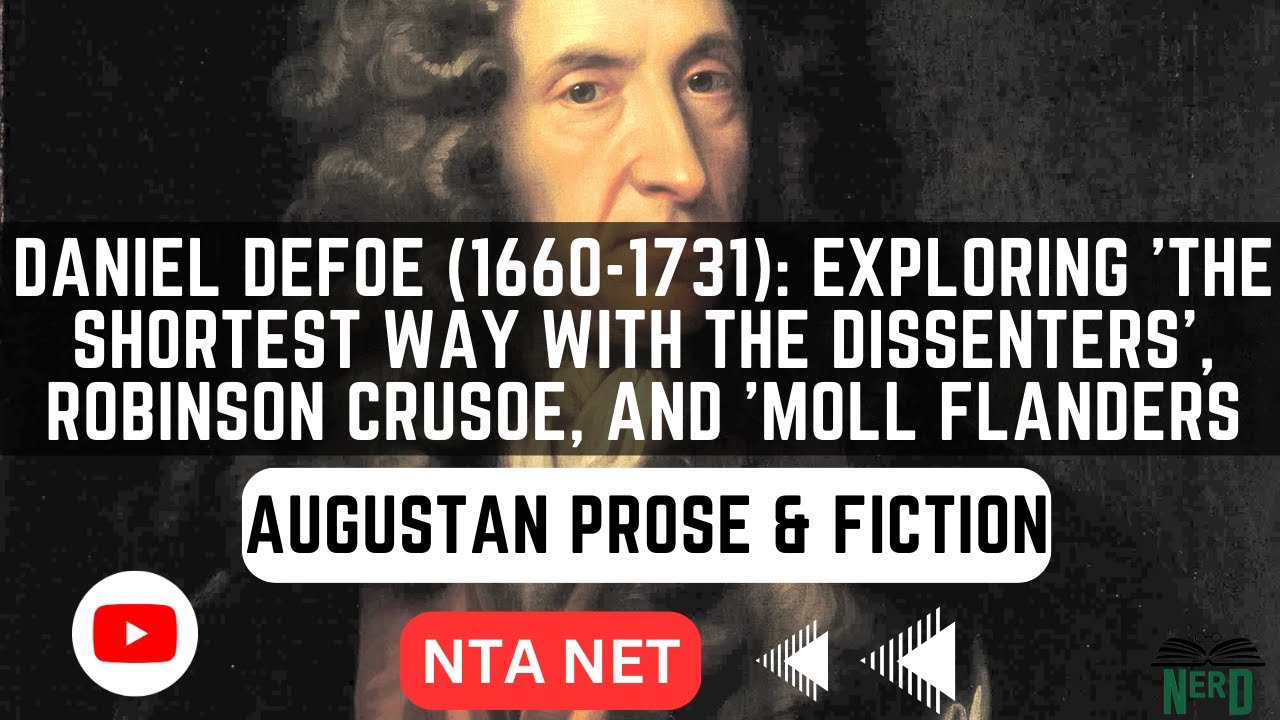




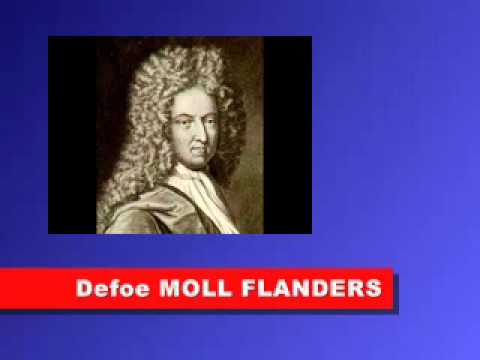


Moll Flanders by Daniel Defoe (1721) is a first-person spiritual biography that follows the protagonist's extraordinary life journey from birth in Newgate Prison to eventual redemption. The novel depicts Moll's experiences as a woman determined to survive and prosper through multiple marriages, periods of criminal activity, and eventual transportation to Virginia, where she discovers her mother's inheritance and rebuilds her life with her son. Defoe presents this story as a moral tale demonstrating how individuals can achieve spiritual growth and redemption through hardship, ultimately showing that even those who have lived lives of debauchery can find forgiveness and live honestly in their later years.
Moll Flanders by Daniel Defoe | Characters, Summary, Analysis
Added:Understanding the rise of the English novel in the 18th century, specifically the transition from epic romance to realistic prose fiction.
Familiarity with the characteristics of the 'picaresque' literary genre, which features a rogue-like protagonist of low social class surviving by their wits.
Basic historical context of late 17th and early 18th-century England, including women's limited economic opportunities, marriage laws, and the harsh penal system.
Applying feminist and Marxist literary theories to analyze Moll's survival strategies and the commodification of marriage and human relationships.
Conducting a comparative study of Moll Flanders and Daniel Defoe's Robinson Crusoe to explore how both protagonists represent early capitalist individualism.
Examining the narrative tension between morality and criminality in early English literature, particularly regarding the sincerity of Moll's spiritual repentance.
Tracing the evolution of the realistic novel and the fallen-woman trope from Defoe's era through to 19th-century Victorian literature.
16.2K views319likes15:03Original Release: 2023-07-08
Mall Flanders by Daniel Depot characters summary analysis hello and welcome to the discourse Paul Flanders was a novel by Daniel Depot that was published in 1721 just like his first novel Robinson Crusoe Daniel Devoe presented this novel as an autobiography A truthful account told in first person narrative Daniel Depot tried to depict the story of Mall Flanders as her spiritual biography detailing her exploits from birth until old age the full title of the novel is the fortunes and misfortunes of the famous Mall Flanders CTC who was born in New Gate and during a life of continued variety for three score years besides her childhood was 12 Year a [ __ ] five times a wife whereof once to her own brother 12 Year a thief eight year a transported felon in Virginia at last grew Rich lived honest and died a penitent written from her own memorandums the full title offers a short summary of the novel in essence characters of Mall Flanders Mall Flanders is the narrator and protagonist of the novel she is a beautiful lady who is determined to survive and do well in her life she is not a wicked person but remains ready to sacrifice morality in favor of prosperity Maul's mother was a prisoner facing execution but was spared for being pregnant she gave birth then was allowed to leave for the American colonies as an alternative to execution mall was raised by a Pious Widow nurse who took good care of mall during her early childhood but then dies Maul is then adopted by the mayor and his wife the mayor's wife is a generous lady who takes small as in as a favored maid the mayor's eldest son is a smart young man who seduces mall but soon gets bored of her and decides to leave her Robert or Robin is the mayor's youngest son who falls in love with Maul and marries her Robert and Maul become parents of two children but then Robert succumbs to death mauldan marries a draper who is a gentleman but terrible at his business he gets bankrupt and runs away from the country while his child from Mall becomes Award of the state Humphrey is a man from the American colonies whom all meets at mint he marries small and takes her to America where she meets Humphrey's old mother Humphrey and Maul become parents of three children one of whom dies during the birth Maul's mother-in-law is a mighty cheerful Good humored Old Woman Who develops a good relationship with Maul when Maul's mother-in-law tells her about how she had to leave England and settle in America mall comes to know that she is the daughter of her mother-in-law and half-sister of Humphrey her husband she then leaves her husband and returns to England where she meets the gentleman of bath and becomes his maid and then mistress he gets a spiritual vision and decides to leave Mall she then meets a grave gentleman whose wife had cheated on him he falls in love with Maul and asks her to marry her but she insists that he should get a divorce from her wife first she then meets James a man from Lancashire he is a poor man who pretends to be a rich landlord Maul falls in love with him and marries him however their marriage fails and they divorce each other Maul then becomes a thief and is helped by the governess an unprecipiled woman who manages the Affairs of many [ __ ] deals with the problems of unmarried mothers and also eventually has a pawn shop and deals with thieves Moore learns that her mother left a plantation for Maul before she died Maul returns to America to take care of her Fortune ball takes help of a quacker to get control of the plantation without letting him free know about her return to Virginia she meets her son Junior Humphrey and reveals to him that she is her mother summary of Mall Flanders The Story begins as Maul introduces herself as a person who led a life of debauchery and wise she says that she is going to share her private history which is full of wickedness and Corruption yet the readers who are willing to read her story with a virtuous purpose will find great spiritual and moral merits in it Mal then says that she is using a pseudonym Mall Flanders to avoid any controversy as some legal matters of criminal significance are still pending on her real name in records of new gate prison and old daily in London she then begins her story and informs that she was born in Newgate Prison where her mother was kept for stealing a few pieces of fabric her mother was sentenced to death but she pleaded her belly that is asked to be spared due to her pregnancy and her sentence was commuted to transportation to American colonies her mother was transported to Virginia when Maul was six months old she was then raised by a widow nurse who took good care of her when Maul was 15 years old the nurse died the mayor took notice of her and she became a maid servant of the mayor's wife who was a generous lady at mayor's house Maul got the same education and treatment as the daughters of the mayor and his wife both the daughters of the mayor were jealous of her because Maul was exceptionally beautiful the mayor's eldest son got infatuated with her and seduced her by giving compliments and gifts to her however after sexually exploiting her for some years he got bored of her the mayor's younger son Robert was unaware of Maul's relationship with his elder brother he fell in love with Maul and proposed to her to marry him his elder brother convinced Maul to marry Robert the mayor's wife was against this marriage yet Robert married Maul and they remained married for a few years during which they became parents of two children Robert died after that and Maul was forced to leave the house while Robert's family took charge of the two children from the marriage mauld and met a Draper or a Tradesman who was a gentleman and always treated mall with respect they married and the Draper continued to spend money on Maul soon he became bankrupt he broke out of jail and left the country leaving mall free to marry again Maul was then helped by one of her widowed friends during the same time she also became a friend of a young girl who was in love with a ship captain the captain was a proud man who though used Maul's friends but didn't wish to marry her with Maul's help her friend succeeds in marrying the captain and turns him into a humble and obedient husband meanwhile Maul meets Humphrey a gentleman from Virginia America she tries to impress him by pretending to be a rich lady Humphrey realizes that Maul is a poor woman but he falls in love with her and proposes to her to marry him then he takes her to Virginia where she meets his old mother who is a former transported convict Maul and Humphrey lead a happy married life for many years and become parents of three children one of whom dies Maul develops a good relationship with her mother-in-law one day her mother-in-law reveals the circumstances in which he was forced to leave England and her six months old daughter whom she gave birth into in a jail Maul realizes that she is the daughter of her mother-in-law and unknowingly she has married her half-brother when Humphrey comes to know about this he becomes too depressed and tries to commit suicide though Maul saves some free he should she decides to leave America and returns to England Maul starts living in bath where she meets a very modest and very friendly gentleman whose wife was insane Maul becomes his housemate and they live a chaste life under the same roof for some years one day he returns home after drinking alcohol and makes love with Maul Maul becomes his mistress then and continues their sexual relationship for some years while she gives birth to his son the gentleman from bath then gets ill and when he recovers he starts worrying for his insane wife and relatives he starts feeling guilty about making a relationship with Maul and asks her to leave him while he decided to take care of their son Maul was 40 years old now and found it difficult to live in London as it was a costly place and decided to go somewhere in the north since living there was cheaper before going away she decided to take care of her financial obligations with the help of an honest Banker the banker introduces her to a grave gentleman whose wife was a cheat whom he had caught red-handed with another man he was looking for a virtuous wife and he found Maul a good woman whom he wished to marry Paul told him that she will marry him but he first needs to get a divorce from his first wife the grave gentleman said that he will get the divorce soon and will marry him all when she returns from the north Maul then shifted to Lancashire where she met one of her old friends mole again decided to pretend to be a rich lady so that her friend May introduce her to some rich young man and then she will be able to marry a rich man her friend introduced her to a rich Catholic Family who to get good care of Mall she also met a handsome Rich looking Irish man named James and fell in love with him James quoted her and she married him after the marriage Maul came to realize that James is actually not a rich man rather just like her he too pretended to be a rich guy so that he may seduce a rich lady and marry her for her wealth after realizing that both are poor and none of them have any wealth they decided to divorce and try their luck elsewhere however both loved and appreciated each other Malden decides to return to London but when she returns she comes to realize that she is pregnant she takes the help of a midwife who tells her to sell her child to a rich man whose wife is unable to conceive a baby maul agrees and sells her child after getting rid of the pregnancy she meets the banker who helped her before she left London she comes to know that the grave gentleman has divorced his first wife and is willing to marry her more ascertains that he may never come to know about what she did in Lancashire and about her child that she sold and marries him they live a happily married life for five years but then the grave gentleman's business fails and he goes bankrupt he fails to control the situation and dies of a heart attack Maul becomes lonely and destitute again and she realizes that she is no longer a young and attractive woman who may get a good Rich handsome man who will marry her she tries her luck but fails to get any honest way of Rich living and then decides to meet the Midwife who helped her in selling her child the Midwife is now working as a pawn broker and leader of Thieves she recruits small and trains her to become a skillful Thief being a clever woman Maul soon becomes an excellent and successful Thief who uses in genuine tricks and techniques to steal silver and cloth Mall always remained careful and never used violence she was clever enough to always hide her real identity and wearabouts from her colleagues and thus she always succeeded in avoiding being caught while most of her colleagues suffered jail terms however her luck fails to save her for long and she ends up in police custody for real stealing some silk mall is then sent to new gate prison where her mother gave birth to her initially she remains unrepentant though she regrets being caught she leads a miserable life in jail one day she finds that James 2 has been imprisoned at the new gates prison for a highway robbery this helps her in bearing the burden of the jail term but when she falls in despair when she is sentenced to death for thievery during such a time her governess sends a minister to help her during her last day so and she starts leading a life of a Pious Christian the minister gets impressed by the Stark change in her behavior and appeals for a reprieve for her from death sentence her punishment is then reduced to transportation to Virginia Maul comes to know that James 2 has been given a chance to either accept the death sentence or to be transported to some American colony she tries to convince him to come with her to Virginia but James is more willing to accept the death sentence than living a life of destitution in some Far Land at such a Time Maul gets the news of the death of her mother who has left a plantation Farmland to her more than convinces James to go to Virginia with her where they can restart their life again after returning to Virginia Maul finds it difficult to acknowledge herself to be her brother's former wife and the mother of his son now a thriving young man because she did not want James to know about her incestuous past she takes the help of a Quaker who is her trustworthy friend to get hold of the plantation left by her mother in her name James and Mall start living on a plantation of tobacco near the plantation of Humphrey her brother who is now a very old and almost blind man Mall finds it difficult to avoid meeting her son Junior Humphrey and decides to reveal to him that she is her mother Junior Humphrey accepts her as his mother and becomes an obedient son while acting as a paid Steve ad of her they decide not to reveal her identity as Junior Humphrey's mother either to James or old Humphrey after some years old Humphrey dies of old days and then Maul tells James about her past and reveals that once she was married to her half-brother and Junior Humphrey is her own son James accepts their relationship and says that he is perfectly easy on that account for said he it was no fault of yours nor of his it was a mistake impossible to be prevented mall and James then make a good fortune through their Plantation and become very rich at the age of 69 Maul decides to return to London along with James and live there with fake names so this is it for today we will continue to discuss the history of English literature please stay connected with the discourse thanks and regards
Up Next
12:24
Huckleberry Finn Analysis: Race, Freedom & Morality in Twain's Novel
@crashcourse
756.6K views•2016-07-14

13:43
Formalism in Literary Criticism: An Academic Lecture Overview
@mattalberhasky9952
39.1K views•2015-08-05
3:32
Robert Lowell Confessional Poetry | Life Studies & Key Works
@TheDiscourse
130 views•2025-07-26

15:25
1984: Orwell's Dystopian World and the Mechanisms of Totalitarianism
@AlternateHistoryHub
7M views•2017-03-04
Related Study Plans & Knowledge Roadmaps
Structured learning paths in Literature
literature
Graphic Memoirs: Visual Art, Trauma & History
01Foundations of Sequential Art and Visual Language
02Autographics and Processing Historical Trauma
03Visualizing Personal Trauma, Grief, and Graphic Medicine
+ 2 more learning modules
14h5 modules
Explore Roadmap
literature
Campus Novels: Evolution, Themes & Critique
01Introduction to the Campus Novel Genre
02Mid-Century Satire and the Post-War Academy
03Dark Academia and the Critique of Privilege
+ 2 more learning modules
14h5 modules
Explore Roadmap
literature
Theater of the Absurd: Philosophy & Plays
01Postwar Existentialism & Historical Roots
02Dismantling Narrative: Esslin & Absurdist Conventions
03Samuel Beckett and Tragicomic Existentialism
+ 2 more learning modules
12h5 modules
Explore Roadmap
literature
Revenge Tragedy: Justice, Madness & State
01Foundations of Early Modern English Theatre
02Anatomy of Revenge: Structural Conventions
03Psychological Complexity: Madness and Melancholy
+ 2 more learning modules
15h5 modules
Explore Roadmap