


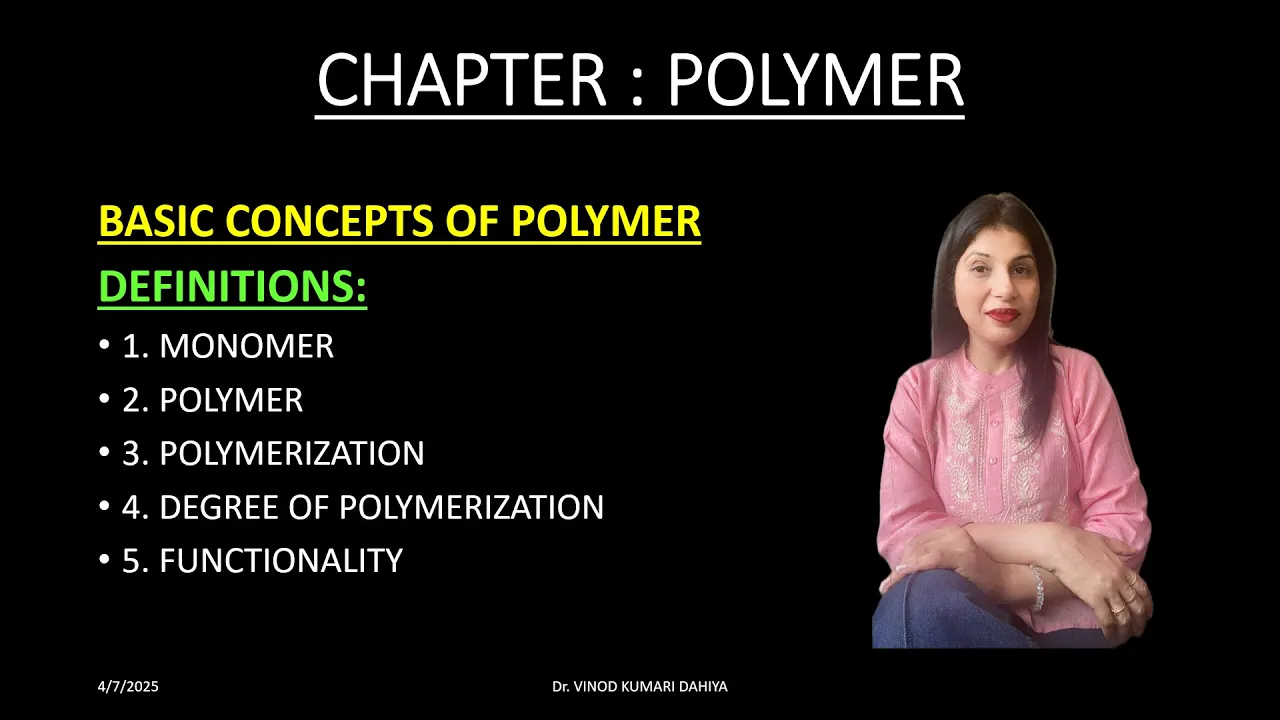
























Biomedical polymers are classified into synthetic (chemically synthesized for specific medical applications) and natural (derived from organisms like plants or animals) types, each with distinct advantages: synthetic polymers offer tunable properties and easy large-scale production, while natural polymers provide inherent biocompatibility but face supply limitations. Key considerations for biomedical polymer selection include biocompatibility (non-immunogenic, non-toxic), mechanical properties, degradation behavior, and application-specific requirements. Degradation occurs through two primary mechanisms: bulk erosion (water penetrates faster than degradation, causing uniform breakdown) and surface erosion (degradation occurs faster than water penetration, causing systematic thinning). Factors influencing hydrolytic degradation include backbone chemistry (amide bonds degrade faster than esters), crystallinity (amorphous polymers degrade faster), molecular weight, and surface-to-volume ratio.
Biomedical Polymers: Properties & Applications in Drug Delivery
Added:[Music] hello everyone welcome to another lecture of red memory principles in engineering in the past five lectures we have basically gone over some of the basics of the drug delivery why it's required what are the different scenarios that are currently used in clinic and what is it that we would like to achieve then subsequent classes we talked about when was parole drug and then another thing was we talked about lots of polymers some properties of the polymers so all this we discussed so that we were kind of building up the base before we go into the actual drug delivery concepts that we're going to use for the rest of this course so now we are almost ready to essentially talk about some of the polymers that are widely used in delivery and how those are much better or at least give you a lot more control for clinical scenarios and we're going to now start doing much more deeper into different kinds of mechanisms in different kinds of systems that are out there okay so just a quick recap of what we did in the last class we talked about polymer properties essentially molecular weight how do we calculate that the number average molecular weight or it could be the weight average molecular weight we did couple of exercises and how to calculate different things if we know individual components we also talked about what is poly dispersity and essentially it's a measure of how how much dispersion is there between the different molecular chains set up present in a system we talked about crystallinity how crystalline the polymer is and associated measurement of temperature with that is TM which is the melting temperature at which point externality is gone and then for some polymers the question T does not exist it's only amorphousness and essentially this is again as Associated time point with that is temperature with that is TG and so now today we are going to talk about biomechanical polymers so so far again as I said we talked about in general the polymers and its properties now we're going to discuss more into biomechanical polymers so just again quickly defining some of the terms biopolymers what is biopolymers biopolymers are polymers it can be safely used in biological or medical application so typically these polymers are naturally present and hence they call biopolymers so again biopolymers can be divided into two different classes when is synthetic biopolymers and as the name suggests the synthetic so did not occur in nature as its earlier said biopolymers is something that can be used for medical applications and they may or may not exist in the nature so in this case the synthetic polymers are something that we synthesize these are chemically synthesized polymer does not occur in nature they designed specifically for a particular use of a disease so this coding fluid delivery this could include tissue engineering some prosthetics and again we're going to talk about all these as we go along in this course and then the other class of course is a natural polymers which as the name suggests these are naturally occurring so these are derived from plants or animals or some other organisms and these are then isolated purified and then they are used for different applications just like the synthetic polymers so just before we go into this here's a good review that you guys can essentially go through and it's a very general review about some of the advances that are made in biomaterials for drug delivery so just something that I would like you guys if you want more information about this you can go through this review although this is not a part of this course so again some of the major properties but some of the major differences between synthetic and natural polymers so synthetic polymers these are chemically synthesized from their monomers some common examples are plc apt in peg and many other and natural polymers are something that I derived from organisms so these could be cellulose titus on hyaluronic acid proteins and DNA collagen one of the most abundant protein synthetic polymers they can be since we are designing them we can easily tailor them to different properties so let's say if we want a polymer to be faster degrading we can incorporate that using the monomers which are hydrolytically cleavable at a faster pace if you want something that is has a certain crystallinity we can again choose polymers on the basis of that however natural polymers of course they are the native forms so you can't really change their properties a whole lot again with synthetic polymers since we synthesized them we can modify them depending on what again is the application however with the natural polymers all the modification is difficult but then they can still be modified so they can be conjugated to different things using some chemistry's and so the modification is feasible although not to an extent which you can do with the synthetic polymers and then of course the large-scale purification and production is very feasible with these synthetic polymers just because you can make big big reactors and the supply is essentially just a monomer so as long as you have enough monomers you can scale it up to whatever amount however natural polymers you are kind of dependent on where to get it from so if it's a plant source you don't really want to cut too many plants similarly if it's derived from animals or sea organisms you are essentially dependent on how much is the supply and how much you can extract a doubt from the nature so typically the large-scale production is sort of difficult and they're synthesized in small small batches which is another some of the shortcomings that people point out about natural polymers because they are synthetic short batches so each batch is although there are protocols in place but they're always treated slightly differently and so there could be batch to batch variation with natural polymers we had a synthetic polymers you can make a huge batch and you don't have to worry about the batch to batch variability at least for your study so some of the natural polymers that are present in the biomedical applications again the several of them we talked about we give example in the last slide so here are some more so you have proteins and protein-based polymers these could be used for different applications such as they could be absorbable there of course biocompatible might live in this engineering example of the proteins as collagen which is basically the most abundant one of the most abundant protein present in the body this is a structural protein and very very widely used in the engineering another there's albumin this is another protein that circulates through our blood and again very widely used you can have polysaccharides so these are essentially sugar moieties that are present in our body so these could be agarose which is derived from a seaweed this could be alginate will be cellulose several of them and all the different applications are it in here you don't really have to remember all these applications particularly will we'll talk about some of these as we go along this is just for your reference that there are a wide variety of natural polymers it exists and we use them for biomedical applications quite a lot so what should be the desirable property of the biopolymer so one thing is certain it should be non immuno genic so of course if it creates any kind of toxic response in the body and you kind of inflammation in the body then that's a complete nono the patient will never feel better with those kinds of polymers so it should definitely be non immuno genic it should be non-toxic of course we're trying to cure the patients so these polymers should be very compatible that they don't really cause any tissue death or even the damage is small damage to the tissue the properties again these depend on specific applications so what are the mechanical chemical and electrical properties let's say if I want to put a material that's going to stabilize my bone I that's a polymer that I need to be structurally very strong so I want very high mechanical properties if I want something to put for our noodle implants or something little brain they should be able to conduct the signals so the electrical properties become important so again all of these properties are important and in which one is more critical than depends on the application that we are looking at and of course as we already briefly discussed is they should easy to scale up I mean it shouldn't be like that we can only get a milligram of that let's say in a year something of that little quantity is not gonna help so there should be a reasonably scale up I mean we may not be able to get condos and tons of these materials but then still depending on the application if we require a certain amount we should be easily able to get that so mass production should be easy in some cases especially in cases of drug delivery it is desirable that the polymer does not remain for a longer period I mean essentially let's say if we have a fever and we want and drug to be given five days and this is the maximum we want polymer to be present so in that case these polymers should degrade and come out from the system as well or excreted or metabolized any of those mechanisms so then the degrade ability of the polymer also becomes important however this is not essential I mean again as I said if you are looking for some structural polymers something that gives you strength in your bones or something like that you do not want it to degrade at least not anytime soon so these are again application dependent so as this is a good segue into this slide so how would he choose biomedical polymers so as we said the major thing is what is the application so there are several library of these biomedical polymers out there but the one that you choose will depend on what is your application then there are the things they are what route of administration you're going to use so there are several ways you can administer a particular polymer in the body or a particular drug in the body you can directly put it into the veins you can take a tablet Overlea you can put it under the skin or you can put it some on some mucosal surface like lungs and all by inhalation and then there are several others and we'll talk about route of initiation in the later part of the course but again you will choose different polymers depending on what you want to achieve different sizes of them different properties all will depend depend on that biocompatibility is a very big term that is being kind of used in the field however this depends essentially on where and how it's going to interact with our body so a biochem pilot compatibility for lung tissue might be very different from the skin tissue which again might be very different from the brain tissue so and this biocompatibility is essentially defined on the basis of the application itself and then as we discussed we may also want some kind of degradation to happen so some kind of by erosion to happen so again this again depends whether we want a permanent implant or we want it to be temporarily injected into the body and gets cleared out and then also what are the surface properties do we want the proteins present in the body to interact with the surface sometimes we do not want that to happen and again all of these we'll discuss but these become all of these are some of the properties that are some of the things that we'll need to consider before we choose a biomechanical polymer for our application so much further on that again mechanical properties are important so how much load does the divide needs to be here so again as if it's a bone implant you need it to be structurally very stable if it's something that you're just putting into the skin for something to release out it doesn't really need to be any kind of load on it so the mechanical properties of those implants will be very different do we need a defined shape or the shape is not very important all of these become important in that case whether we want it to be environmentally sensitive and what essentially that means is there are polymers which will respond to the environment they're in let's say if it's a diseased environment they may behave differently than in a healthy tissue so that allows us to kind of make it very disease responsive so only the drug will come out if there is a certain kind of a disease symptom that is present maybe it might be high temperature due to fever it might be low pH at the site so all of that becomes important and again all of these things we're going to go further into details as we go along in this course then we have permeability so whether we want these polymers to be permeable things may come in and out on these polymers large-scale production we again talked about earlier and then whether we want them to be transparent so if let's say we're designing something as a lens or a cornea we essentially want them to be transparent in other applications we may not care so again it just essentially depends on what is the application we want and depending on that there's several properties that we'll have to consider before it shows what kind of polymer to go with again this is a laundry list of lots of things I don't expect you guys to remember this this is just for information and this will be present in the slides so you can go through these as I need to these are polymeric properties needed for specific biomedical applications so there are several of them listed here dental ocular orthopedic vascular and several others so you can just go through that for your own interest and in a free time this is again not something that you guys should remember okay so let's define some more terms we have biocompatibility and biodegradability so what is biocompatibility as we mentioned previously it's a property of the materials how they are interacting with the body whether they're causing any kind of adverse reactions such as inflammation or toxicity when they're plays inside the body so eventually for any application you would like the biocompatibility to be high and which essentially means that they are causing less and less of these adverse reactions this is again very application dependent of a material may be very compatible in let's say I but may not be very compatible let's say in liver so but even then we can use the material in the eye if we want but then it doesn't mean that it is completely biocompatible it just means that it is biocompatible for the certain application and biodegradability is essentially refers to the breakdown of the polymer into smaller units which can either be then excreted or get adsorbed into the and this is again a very general term and then the several related terms that you'll hear in the field some of them are by or erosion by you absorption by a resorption and we'll talk about this as we go along in this course but essentially all of them have similar meanings although there are certain differences that exist between these terms as well so biocompatibility let's talk about hosts reactions to the polymers what are the different things that may go wrong or what are the different things we need to take care about it so essentially this is a result of how a physiological process kind of acts on a new polymer or a new material that you put inside the body and essentially the key here is that the material should be compatible enough so that the body can tolerate it and coexist so it could be biomimetic if you want to call it like that or the body should not really consider it to be a threat to itself so essentially all material that you put in the body are going to interact with the body how what is the extent of this interaction is basically what is important and not only the extent but what whether the extent is positive or negative or neutral is also very important so some of the key directions when you put things in the body is of course they'll be blood present at that site that you're going to implant it so the blood will interact with your material the blood contains several proteins and platelets so what how they interact with that surface becomes important the blood also contains several components of complement system which is immune response against foreign things and so it's a it's one of the immune responses that body generates so how those those complement proteins tackle the material that you put in is important the immune cells leukocytes how they are adhering when they get activated sometimes what the body does it it doesn't like the material and it wants to just completely wall it off and so that's called encapsulation of scar tissue so what body will do is if it can't clear it by itself it will just surround it with lots and lots of MIDI with lots and lots of proteins and cells and essentially kind of isolated from the rest of the body and so that's called encapsulation or foreign body reaction is also an advanced stage of that and it could also be in terms of infection so whether you might be really may contain something pathogenic that may infect the body so all of these topics will be covered in much more detail when we go to the inflammation part of this course so assessment of biocompatibility so again there are as I said it depends on application and there are several ways to go about method the first is before you put it in the body you can test it with some of the cell lines some of the cells that you may have access to so you can put yourselves on the material you can see how better the cells are why or they die you can take the degradation product of these materials and expose them to cells to see what response do the cells give once they're exposed to materials from your particular biomedical polymer you can look at the biochemical function you can see how the cells are producing different enzymes whether the cells can perform their normal function let's say if it's bone cell whether it can deposit calcium and mineral things like that then you can obviously go in vivo you can put it in the body you can use some small rodent models for that and you can then kind of do histology which essentially means sectioning out the area where you put it and see how is the body responding to it compared to the healthy tissue itself and so you can do it at different time points you didn't mean how what is the extent of the reaction and how the reaction is proceeding over time and then of course you can get access to blood and then test the blood out on these polymers see whether the blood is clotting on it whether the blood is lysing on it the blood cells all icing on it whether it's causing any kind of systemic toxicity and let's say you want to use a material that is not really biocompatible how what would you do so there are strategies out there which will help you make it more compatible then it is and so you can modify it with some surface so you can take a highly biocompatible polymer such as polyethylene glycol or hyaluronic acid and just coat it on the surface so what will happen is the body will only see let's say this is your material and I've put pack chains all around it so now the body can only see the peg chains when any cell comes and it feels that this is compatible and it just goes away it doesn't really do anything adverse to your implant and so that basically causes you to improve the biocompatibility of the implant that you want to use you can again surface modify it further so you if you let's say you want to reduce protein adsorption so again the same strategy will be useful you can code it with some of these materials and we know that the protein adsorption on these ones is low so in general your device will now has lower body protein absorption you can then also devise strategies where let's say you can't prevent the cells to come in attached to it but what you can have you can have a device that is carrying anti inflammatory molecules in it which then slowly get released out so let's say even if your immune system is coming in and interacting with it which you in the first place didn't wanted but then with these molecules coming out into the immune system they will tell the immune system to come down don't acted don't act as if this is a foreign object and that will improve the biocompatibility of your material or you can use some multum Natick alternative routes let's say if you only want to treat a local disease it's it's a wound on the hand maybe you don't need to inject it in the whole body you can apply it topically so you can change the routes of delivery to avoid kind of systemic toxicity and as I said all of these things depend on applications and me here we're going to talk about some general strategies before we go into applications of different things you can also combine properties to satisfy need you can have Co polymerization as we talked about let's say you initially going to use a polymer so is the monomer and you're going to make a poly a this poly a works very well for you for everything that you need for an application except that maybe it's not very mechanically stable and you want the mechanical properties to be enhanced so what you can do you can Co polymerize it with let's say a B a and maybe B is more structurally stable so the copolymer is somewhere in the middle but it improves the mechanical properties enough so that you can use it so that's just one example but you can do the same with chemical properties all of these can be adopted to kind of improve the properties for your own application so as listed here chemical products can be adjusted you can even combine synthetic and natural polymers there's no reason why you want to keep it completely synthetic or completely natural so if one of the property for natural polymers is better you can use that and combine it with synthetic in particular you can modify hydrophobic hydrophilic groups to attain different kind of degradability different kind of interactions with the body and all of that is feasible you can blend things so you don't really have to copolymerize let's say you are going to use a big implant that is made out of a you can just blend B in it so let's say this is one polymer chain you can just blend the polymer B into this and that will still improve the mechanical properties or whatever you're trying to achieve maybe we want a faster degradation so this will degrade faster because that's a B degrades faster so all of that can be achieved and this is again very widely used for drug delivery in to change anything I'm going to talk more about that and then you can network things so mostly used in tissue engineering what it is it's essentially creating a 3d polymer having tailored properties so instead of having them as separate you can have chains of a and then you can network this with let's say chain so be going right through them so that can also be achieved okay so let's talk about polymers and controlled drug release so what are the different polymers that are used so of course there are non degradable polymers such as implants and things you use for oral delivery because you know you know that these things are going to get excreted out and then a membrane control devices such as skin patches so you just put it on the skin let the drug come out and then once the time period is over or disease is cured you can just remove the patch so these you don't really want them to be degradable they can stay wherever they are and then when they're done with when you're done with them you can just remove them out or these can be degradable polymers so again this is where the most of the research is currently going on most fancier systems so these are something that you are gonna actually inject into the body let's say you put it in the blood you don't want to circulate in the blood forever you can't really remove once you inject it into the blood because you can't drain out the whole blood you know in a human or in an animal or let's say you put it on a mucosal system so these are something once you inject them there they're there unless the degrade so you most of the time you want them to be degradable polymers so anything you're making micro nanoparticle they're too big now to remove from the body unless the bake down so you want them to be credible hydrogels in another class of polymers we're going to talk about any degradable plant in plants and matrix type of polymers that again will be discussed later in this course so biodegradability again most relevant devices typically temporary because you are trying to cure a disease and once the disease is cured you do not want that device to be there anymore so that's where the widest user biodegradable polymers is and let's get the terminology we talked about three four slides back so biodegradation is nothing but degradation by biological molecules and this could be in somatic this could be microbial bioerosion on the other hand is the area of the polymer into the water soluble products under physiological conditions so this could include both physical and chemical processes so technically speaking bio erosion is a wider term and bio degradation is a part of it so if it's something that is high dramatically cleavable by water it comes into bio erosion it's not another bio degradation but you'll see that this field has grown enough and there's so many papers and so many literature talking about hydrolytic degradation is also biodegradation i just wanted to kind of introduce you to this concept however you'll see both these terms being used very interchangeably another note here is a polymer that you can talk quite a lot about is PLGA or PLA and that's something that is not biodegradable but by erodible but again if you look into the literature you'll find that people talk about PLA being biodegradable all the time and now it has come to the point that is very kind of being accepted that okay bioregion biodegradation can be used interchangeably however strictly speaking by erosion is different from biodegradation so there are several modes of bioerosion one is a physical mode which essentially could be bulk erosion so what do you mean by bulk erosion is that the rate of water penetration into the solid device exceeds the rate at which the polymer is eroded so what does that mean that means that let's say I have a device and this contains lots and lots of polymeric chains which can hydrolytically cleave in presence of water and the water is actually free to go in right so a water molecule can potentially go in from throughout the polymer device now if this is the case and we are saying that these scenes can be degraded by the what what will happen is that the erosion will happen throughout the matrix right the water will go to all regions and at all regions the change will start to break down so over time this will start getting irregular in shape so this will become something like this after let's say few hours and then further down it will maybe just break down into individual small small units and then they will also degrade over time right so most hydrophilic polymers are like that if they're hydrophilic of course that means that the love water and that means that the water can go through in them because the water will also like them and they'll be bulk eroding they could also be surface erosion which basically means that the rate at which the worldA penetrates in the polymeric device is slower than the rate of corrosion so what that means is let's say if I have a device again containing lots and lots of polymer chains however the water molecule cannot go in at a rate which is faster then at the rate which it will degrade the outer surface so in that case what will happen is this device is going to maintain its shape and only the edges will degrade and it will take this shape which is again further gonna take this shape and so it's going to eventually go on and on and very systematically only from the surface it's gonna keep on eroding so the device will become thinner and smaller over time however it will more or more or less maintain the shape do you guys can think of any example you see in the real life with this so a good example is a soap so if you use soap the soap bar essentially keeps on getting thinner and smaller as you go on it doesn't really disintegrates into small small units so that's that's a surface erosion because the world is not able to penetrate inside and only from the surface the soap is it loading whereas bulk erosion you see any kind of basically let's say you take a sugar molecule this the water is gonna penetrate right through and then just completely disintegrate in your mouth okay so what are the different factors that influence hydrolytic bioerosion so you can have a backbone hydrolysis is the most common mechanism of erosion typically you have a long polymer chain and this is the backbone and there of course site groups to it and then this this particular long chain has some handle it ik bond that is being a tag by the water molecule and eventually degrades them into smaller units so and this is essentially the most common route that is used for a synthetic biopolymers the main factors that determine the erosion is the chemical stability of the backbone of course so there are several functional groups that the hydrolytically cleavable such as a nitride esters amides and the rate of degradation is listed here and that right as you get faster than esters which to get faster than a meit's and so based on what the bond structures are there what different functional groups are there the degradation will eventually change the hydrophobicity the monomer is also important so let's say if the monument is fairly hydrophobic then the water will not try to come close to that monomer and so that would mean that the hydrolytic degradation for that is going to be slower just because the water currently existed the morphology of the polymer is important again the crystalline polymer are dense and as we said that once you're achieving a crystalline entity it's very tightly packed structure and even the water is not able to penetrate the light is not able to penetrate so depending on what temperature you are using typically at higher temperatures you will always see faster degradation however there are some exceptions so another point here is the PLA which is a semi crystalline molecule while PDL a P which is essentially the mixed isomer of PLA is amorphous so which would not liquid fast and of course the one that is amorphous will degrade faster just because the chain are more separated out in in the PLA in the DL form compared with just the P L in the L form and of course the molecular weight of the chain what is the fabrication process you have used the geometry of the implanted device how much surface area is there the surface to volume ratio all of this will in fact influence your hydrolytic by evolution okay so we'll stop right here for today and we'll continue with more of these biomechanical polymer properties in the next class thank you
Up Next

Tendon and Ligament Viscoelasticity: Hysteresis, Creep, and Load Relaxation
@kaytfrisch7595
22.3K views•2020-10-16
Quantitative Real-Time PCR (qPCR): Principle, Method & Data Analysis
@animatedbiologywitharpan
129.2K views•2023-09-06
Microbial Degradation of Plastics: Biodegradation Pathways & Sustainability
@majeedhammad
2.9K views•2021-04-11

CRISPR and Genetic Engineering: How Gene Editing Works and Why It Matters
@kurzgesagt
30.5M views•2016-08-10
Related Study Plans & Knowledge Roadmaps
Structured learning paths in Biotechnology