





![[Dış Politika ve Diplomasi Dersleri 1] Dış Politika Karar verme modelleri](https://i.ytimg.com/vi/EHjSlnGUCG0/maxresdefault.jpg)










![[넛지 파이널에디션 / 리처드 탈러, 캐스 선스타인] 행동경제학 고전 / 넛지 개념, 뜻 / 넛지 예, 유용성 / 선택설계 / 슬러지](https://i.ytimg.com/vi_webp/mT4YipwWQNM/maxresdefault.webp)

A nudge is any small environmental feature that attracts attention and alters behavior without restricting freedom of choice or using economic incentives, and choice architecture—the design of decision environments—can be used to help people make better decisions by making desired options easier to choose, as demonstrated by examples like retirement savings labels and GPS navigation systems.
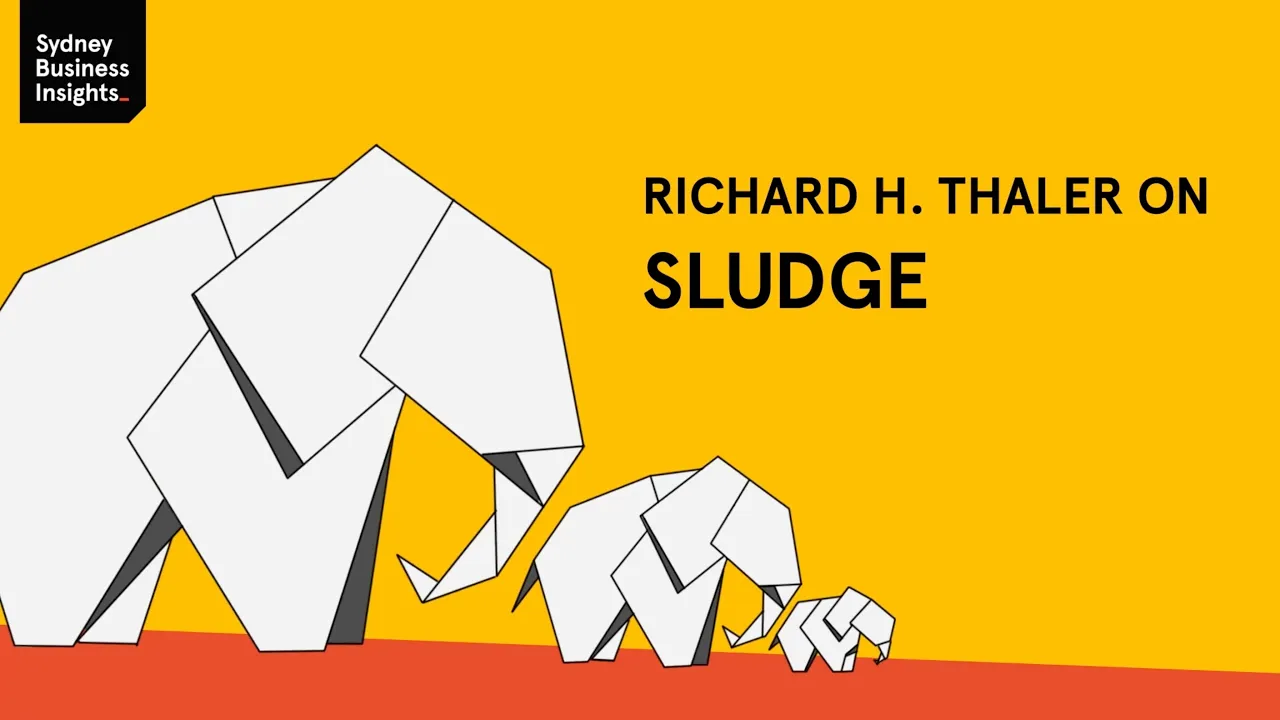
Richard Thaler on Nudges and Choice Architecture Explained
Added:The distinction between Classical Economics (rational actors) and Behavioral Economics (real human behavior).
The concept of Bounded Rationality, which posits that human decision-making is limited by cognitive capacity, time, and information.
Basic cognitive biases and heuristics, particularly System 1 (fast, intuitive) and System 2 (slow, analytical) thinking.
The concept of Status Quo Bias, which explains the human tendency to stick with default options due to inertia.
The philosophy of Libertarian Paternalism and the ethical debates surrounding the manipulation of human choices.
The concept of 'Sludge' or 'Dark Patterns', exploring how choice architecture can be maliciously designed to exploit cognitive biases for corporate profit.
The application of behavioral science in public policy, specifically the work of government 'Nudge Units' (e.g., the UK's Behavioral Insights Team).
The academic debate of 'Nudging' versus 'Boosting' (empowering individuals with skills and tools to make better decisions themselves).
Behavioral Design in technology, analyzing how user interfaces (UI/UX) leverage choice architecture to drive user engagement and habits.
24.8K views0likes15:51Original Release: 2021-10-15
[Music] i would like to start the conversation richard by asking you about the basics so let me start with what is nudging a nudge is any small feature of the environment that attracts our attention and uh alters our behavior and uh it does so without requiring anyone to do anything and without economic incentives so the rational economic actors and economic models would not be affected by nudges but humans are can you give us a couple of examples sure you know we all use nudges all the time in our daily life we set an alarm to wake us up in the morning we don't have to set an alarm we don't have to get up it's just a nudge uh we have a calendar invite to remind us that we have a webinar at seven o'clock my time um we put money aside uh into an account that we label retirement money all of these are nudges that we do to ourselves and uh other people are nudging us all the time for good or for bad can you clarify about the difference between a nudge and how it's different to a shove for a push sure we define a nudge as something you can opt out of almost costlessly ideally one click so pushes and shoves are harder to evade so somebody's pushing you you know you have to lean in to avoid being pushed our ideal our ideal of nudging is gps both of us cass and i have terrible sense of direction and we get lost all the time or we used to and now you know you tune on google maps and you decide where you want to go and it makes a suggestion if you see something else you want to go to never complains it's perfect so our ideal life would be one in which everything you have to do in life is as easy as following the gps directions from home to work nudging is kind of closely related to idea to the idea of choice architecture and choice architecture is kind of a set of ideas you brought over from design from human design literature how should we think about choice architecture choice architecture is just the environment in which we choose so uh think about the amazon storefront which of course is just a web page now they have essentially every book in print anywhere and some that are out of print if you went into a physical store that had that you would run away it would just be horrible and you could certainly never find anything how would they have it organized now a small bookstore you know can be fiction non-fiction a whole section devoted to nudge presumably but the the reason why amazon or netflix can operate on the scale they do is they have good choice architecture meaning people can find what they want and we encounter choice architecture everywhere if we go to a restaurant someone has decided what food will be cooked someone else has decided how to write that down in a menu how to group things how to order things and to a first approximation everything matters so choice architecture and nudging are in some way inevitable everything yeah there are you know some of our critics have said over the years well you shouldn't be nudging that's none of your business um and they are living in a world that doesn't exist it's a world in which there's a neutral way to do things and there is there is no imagine a bookstore uh they have to arrange the books on shelves they have to do it somehow and ran them wouldn't be a good way so there are lots of different ways to do it and they nudge you to buy some books by putting them in piles in the front that's nudging and uh but there's no neutral way to do it so even even active choice is in some ways a choice architecture absolutely and you know we don't always want active choice so you know how many times do you say to your partner or your partner says what do you want to watch today you say i don't care uh and you can get into a fight no you pick no you pick so there are times where we just want somebody to pick and some of the best restaurants in the world that i've ever been to i have no choice you go in you know the best way to eat at a japanese restaurant is omakasi that means the chef pizza that's the chef pick for you you eat nothing's better than that you can tell them if you're allergic to something but that's um anyway yeah we can't get around choice architecture any more than we can have a neutral architecture if you design a building it has to have doors it has to have stairs and elevators and bathrooms and where you situate those things will affect how the building works what's the most important principle of choice architecture well i think it's to make it easy for people to achieve their goals dan in his introduction mentioned that governments around the world have created so-called nudge units i was involved in the first one that david cameron formed in britain in 2010 and i would go around on some of the early meetings and it became my mantra and the group's mantra if you want people to do something make it easy so you know the gps wants me to follow the map make it as obvious as possible which way it wants me to go and that's the most important principle in in any aspect of life business or government we'll come back to making it too easy a little bit later on but um before that i i want to take you a bit to this idea of kind of unlearning homo economicus so i want to reflect for for a second on just how big a departure the premise of what we've just talked about nudging and choice architecture and behavioral economics is from from mainstream economic theory and the core premise of economics is that people choose by by optimizing and people are rational and respond to incentive and this model has has dominated economics and has an incredible influence still and for the last four four decades um you your work has shown how people depart from these fictional creatures in in economic models and you've cur you've coined econs and humans in in the first uh in the first nudged book but it goes back to observations you you've made in in grad school can you tell us a bit about that sure so you know much like dan was describing his experience in graduate school i kept saying where are these people so as you put it well economic theory is based on a theory of optimization that agents they're not called people it's amusing that people are missing from economic theory and even the word doesn't appear you talk they talk about agents and agents can be consumers they could be producers they could be people are factors of production does that sound like humans so these agents solve you give them a problem find the best job because you've been laid off they solve so they pick the best one choose the best mortgage they look at all the mortgages that they qualify for they pick the best one and calculating all the things that could possibly happen to them over the course of the mortgage this is preposterous i don't know any economist who can do that so why does that exist it's because economists are not that smart and i don't mean that as an insult the easiest problems to write down formally are ones that you write down max because anybody who's had high school calculus knows how to solve find the maximum of some function you take a derivative set it equal to zero check the second order conditions right if describing behavior of wandering through the supermarket picking the things that you vaguely remember you were supposed to be there to buy and not paying any attention to things on sale or things that look good or ice cream yum that's hard to model and uh so economists took the easy way out it wasn't always that way adam smith people think of adam smith as mr laissez-faire leave everything alone but he talked about very modern concepts like overconfidence and loss aversion it's all in adam smith i just rediscovered it now i must say though economists um never have to start a book than by explaining homo economics yet it's quite obvious that people suffer from you know the problems you've just described self-control chocolate and all the kinds of emotions that that affect their behavior um humans still have to be the first chapter in in every one of your books and in every behavioral economics book um and for all the the the tremendous success that much has has had homo economicus is still the dominant species and then your work building on on obviously on kahneman and persky's work um was first a nuisance then then it came to be kind of tolerated if not outright accepted um what's been your experience over the years trying to change people's minds why is it so hard to change economists and policy policy makers minds yeah you know i i often say i don't think i changed anyone's mind i've been at this for 40 years i'm not aware of any economist who changed their mind about this stuff so how have i and my colleagues succeeded the strategy was corrupt the youth now some like dan didn't need that much corrupting but we i said look it's not going to work to try and convince gary becker or bob lucas or gene fama my chicago colleagues who are famous adherents to the rational model i'm going to try to get graduate students interested in this and danny kahneman and i uh with another colleague of ours colin kamer started a tradition in 1994 of having a summer camp two two weeks for the best graduate students from around the world and most of the great behavioral economists working today are graduates of that summer camp and it's now being taught and has been taught for a decade or more by two people who were at the first one as students david labson and matthew raven how do we get ordinary people to change their minds i mean i think i take your point about about economists you know it's really difficult to change their mind on something they've worked on their entire lives but how how do we collectively kind of unlearn homo economics as the exception than the rule i think the rest of the world finds homo economicus just to be rather amusing and now it's true that economists have undue weight i said once that in the u.s the government is run by lawyers who occasionally listen to economists and i don't know how it is down under but economists have a lot of influence and pretty much run things like the central bank and there's a council of economic advisors there's no council of psychological advisors and or anything any other kind of advisors there's not even a council of scientific advisors there is an office that's more or less that but uh economists have great sway and uh they have traditionally adhered to the standard model but that's that's changing and um certainly the economists in the obama administration and in the biden administration were if not flag carrying behavioral economists they were certainly friendly converts [Music]
Up Next

57:36
Nudge: Behavioral Economics with Nobel Laureate Richard Thaler
@talksatgoogle
24.2K views•2021-12-29
5:07
Impact of Yuan in Indo-Russian Trade Amid Sanctions
@WION
261.9K views•2022-07-01
10:33
Behavioral Economics Explained: Rationality, Nudges, and Risk
@crashcourse
1.1M views•2016-03-12

113:18
The Age of Easy Money: Fed & Inflation | Full Documentary
@frontline
21.2M views•2023-03-15
Related Study Plans & Knowledge Roadmaps
Structured learning paths in Economics
economics
Sovereign Debt: Defaults, IMF & Restructuring
01Introduction to Sovereign Debt & Government Bonds
02Debt Sustainability & Credit Ratings
03Anatomy and History of Debt Crises
+ 2 more learning modules
12h5 modules
Explore Roadmap
economics
Market Design: Matching Theory & Gale-Shapley
01Introduction to Market Design and Price-Free Markets
02Two-Sided Matching & The Gale-Shapley Algorithm
03School Choice Systems and Mechanism Design
+ 2 more learning modules
10h5 modules
Explore Roadmap
economics
Impossible Trinity: Forex, Capital & Policy
01Introduction to Monetary Policy and Central Banking
02Exchange Rates and International Capital Flows
03The Mundell-Fleming Model
+ 2 more learning modules
8h5 modules
Explore Roadmap
economics
Healthcare Economics: Market Failures & Systems
01Introduction to Healthcare Markets and Market Failure
02Asymmetric Information and Adverse Selection
03Moral Hazard and Insurance Design
+ 2 more learning modules
12h5 modules
Explore Roadmap