ESG (Environmental, Social, and Governance) is a holistic analysis framework that measures and quantifies how organizations operate sustainably by examining their environmental impact (such as greenhouse gas emissions and resource stewardship), social impact (including stakeholder relationships, fair wages, and community outcomes), and governance practices (how firms are led and managed); unlike older sustainability frameworks like CSR that took a philanthropic approach, ESG evaluates these issues through the lens of business risk and opportunity, making it particularly relevant to the investment community, and has evolved into a comprehensive landscape including ESG rating agencies, disclosure requirements, and themed investment products.
ESG Framework and Standards: A Comprehensive Guide
Added:Deep Dive
Basic corporate finance and risk management concepts, specifically how companies evaluate internal and external operational risks.

Financial Risk Management 304: Chapter 9(20) | By: Lamar
278
Risks are categorized into two main types: internal risks and external risks. Internal risks are those that a company can control or manage, such as employee selection, system development, and administrative arrangements. External risks are outside the company's control.
Click to watch →

1 Audit général Pr ELGNAOUI LEILA ENS 2 3 senace 8
3.1K
Risk management is a prerequisite for audit because auditors must evaluate whether enterprises have properly measured risks and implemented appropriate management devices. A risk is an aleatory event characterized by probability of realization that can generate losses. The auditor's role involves evaluating internal controls and risk management. Operational risks affect normal operations, resulting from procedure failures, personnel issues, system failures, or external causes. All risks can be operational, originating from internal or external sources. Risk evaluation uses frequency (how often risks repeat) and severity (cost if realized).
Click to watch →

Part 2.4 The risk management process
197
Drivers of risk can be grouped into two categories: internal and external sources of risk. Strategic risks are external forces that may affect strategic objectives, such as national and global economies and government policies. Operational risks are internal and inherent in ongoing activities, including data management, underwriting, retakaful activities, claim department activities, and marketing and sales activities.
Click to watch →

Risk management
1.7K
As applied to corporate finance, risk management is the technique for measuring, monitoring, and controlling financial or operational risk on a firm's balance sheet. Value at risk is a key concept. The Basel 2 framework breaks risks into market risk, credit risk, and operational risk, and specifies methods for calculating capital requirements for each component. Enterprise risk management defines a risk as a possible event or circumstance that can have negative influences on the enterprise's existence, resources, products, services, or customers, as well as external impacts on society, markets, or the environment. In financial institutions, enterprise risk management is normally thought of as the combination of credit risk, interest rate risk or asset liability management, liquidity risk, market risk, and operational risk.
Click to watch →

Corporate Risk Management | Manajemen Keuangan TM 14
767
Corporate risk management involves identifying, assessing, and mitigating five main risk types: demand risk from competition, commodity risk from price fluctuations, political/country risk from operating in specific nations, operational risk from internal processes, and foreign exchange risk from international operations. Internal risks like operational risk are more controllable than external ones. Risk mitigation reduces uncertainty through strategies including insurance, hedging, derivatives, and self-insurance. Companies can avoid, eliminate, or reduce risks based on their risk tolerance and business objectives.
Click to watch →
Deep Dive
The evolution of Corporate Social Responsibility (CSR) and how it differs from modern, quantitative ESG metrics.

💪알아야 살아남는다?! 기업 생존전략 ESG 경영 투자 - 한 권으로 끝내는 ESG 수업' 김미경의 북토크
60.1K
Corporate Social Responsibility (CSR) evolved into the more comprehensive ESG framework, which encompasses environmental, social, and governance considerations. This evolution reflects a shift from voluntary good deeds to systematic integration of sustainability into core business strategy. The framework originated from European and American corporate practices, particularly in the UK and US where mature corporate governance structures existed. Modern ESG represents a more comprehensive approach that integrates environmental, social, and governance factors into core business strategy rather than treating them as peripheral activities.
Click to watch →

คอร์สฟรี ESG For All (Module 1 ตอน 2)
333
This video explains that while traditional Corporate Social Responsibility (CSR) activities like tree planting and donations are positive, they fail to achieve long-term sustainability because they are disconnected from organizational strategy and vision. The evolution to Environmental, Social, and Governance (ESG) represents a more effective approach where sustainability is integrated into business operations through materiality analysis, connecting organizational strategy, products, and services to long-term sustainability goals. For example, financial institutions can contribute to sustainability by directing capital toward green businesses through mechanisms like Thailand Taxonomy, which offers lower interest rates for sustainable investments. Thailand's accelerated Net Zero target from 2065 to 2050 demonstrates the growing importance of ESG in driving meaningful sustainability outcomes.
Click to watch →

Прямая трансляция ESG-форума «Курсива» 2025
786
Corporate social responsibility (CSR) has evolved from ad-hoc charitable activities to systematic sustainability practices. Early CSR efforts often involved companies responding to immediate community needs without strategic planning. Modern ESG approaches involve: (1) Strategic alignment with business objectives; (2) Long-term commitment rather than one-time initiatives; (3) Integration into corporate governance and decision-making; (4) Measurement and reporting of impact. This evolution reflects growing recognition that sustainability creates long-term value for both companies and society.
Click to watch →
27th National Conference of Practicing Company Secretaries - Day 02
1.9K
Corporate Social Responsibility evolved from Individual Social Responsibility (ISR), which is the basis for fellow mankind's development. As corporate citizens, companies have responsibilities to society. CSR is a subset of ESG, specifically addressing inclusive growth and equitable development. The evolution progressed from traditional philanthropy to structured corporate programs, culminating in Section 135 of the Companies Act mandating 2% contribution to social causes.
Click to watch →

안산 선수 잘못 건드려 나라 망신시킨 국힘 대변인과 언론 - 청국장 89회
20.7K
Corporate Social Responsibility (CSR) traditionally focused on charitable activities and community contributions. ESG (Environmental, Social, Governance) represents a more comprehensive approach that evaluates companies based on their environmental impact, social practices, and governance structures. This evolution reflects growing stakeholder expectations for corporate accountability beyond philanthropy.
Click to watch →
Deep Dive
Stakeholder Theory, particularly the shift from purely maximizing shareholder value to considering broader community and environmental impacts.

What is the stakeholder theory ? by R. Edward Freeman | ESSEC Classes
157.6K
Stakeholder theory proposes that businesses should create value for all stakeholders—including customers, suppliers, employees, communities, and shareholders—rather than prioritizing only one group, as this joint approach offers a more sustainable and hopeful vision for business in the 21st century; unlike traditional shareholder-focused models that contributed to the global financial crisis, stakeholder theory recognizes that what benefits one stakeholder group ultimately benefits all, requiring businesses to expand their definition of value beyond mere profitability to include human-centered considerations like autonomy, mastery, and purpose.
Click to watch →

Capitalismo consciente--uma nova era econômica: Thomas Eckschmidt at TEDxLacador
420.5K
Stakeholder theory expands beyond traditional shareholder focus to include all participants in a business ecosystem: employees, clients, suppliers, and the community. Unlike shareholders who receive returns after profits are distributed, stakeholders are embedded within the operational fabric of the organization. The chain's strength depends entirely on its weakest link, meaning no stakeholder can be allowed to fail without jeopardizing the entire system.
Click to watch →

Virtuous Leadership Program: a conversation with R. Edward Freeman, father of stakeholder theory
611
Stakeholder theory proposes that businesses should create value for all stakeholders—including customers, suppliers, employees, communities, and shareholders—rather than focusing exclusively on maximizing shareholder value. This approach recognizes that stakeholder interests are interdependent, meaning how companies treat one group affects all others. Unlike shareholder value maximization, which treats business and ethics as separate domains, stakeholder theory integrates ethical considerations into core business operations. The theory suggests that companies perform better when they pursue win-win-win-win-win outcomes across all stakeholder groups, leveraging the creative imagination of employees and the cooperative nature of human beings to solve problems without sacrificing one group for another.
Click to watch →

Corporate Governance - What do shareholders really value? (LECTURE ONLY)
146.9K
Shareholder primacy—the doctrine that corporations exist solely to maximize shareholder wealth—is a misconception; corporations are independent legal entities that serve multiple stakeholders (customers, employees, suppliers, communities) and directors have broad discretion under the business judgment rule to pursue purposes beyond shareholder value, as evidenced by the BP oil spill disaster where cost-cutting to boost short-term share prices resulted in $100 billion in shareholder losses and widespread harm to other stakeholders.
Click to watch →

la rendicontazione sociale e ambientale
129
The traditional view held that corporate value creation benefited only shareholders. This evolved to recognize that value creation should benefit all stakeholders, as businesses impact individuals' lives including their work environment and natural surroundings. Stakeholders are subjects with interests in the enterprise, divided into external (shareholders, financiers, communities, government, clients, suppliers) and internal (employees, management). This shift reflects understanding that enterprises must reconcile often conflicting interests of multiple parties.
Click to watch →
Deep Dive
Fundamentals of corporate governance, including the roles of the board of directors, shareholders, and executive leadership.

Risk Management and Corporate Governance (Corporate Governance as a Risk Management strategy )
9K
Effective corporate governance requires understanding the roles of the board, management, and shareholders and their relationships with each other and other corporate stakeholders. 1. The board of directors has the vital role of overseeing the company's management and business strategies to achieve long-term value creation. The board must select a suitable CEO, monitor and evaluate the CEO's performance, and oversee succession planning. The board delegates to the CEO the responsibility for operating the company's business. Executive directors are part of top management to monitor business operations. The board exercises vigorous oversight of company affairs including strategy and risk. 2. Management, led by the CEO, is responsible for setting, managing, and executing company strategies including running operations under board oversight and keeping the board informed of company status. Responsibilities include strategic planning, risk management, and financial reporting. An effective management team focuses on executing strategy over meaningful time horizons and avoiding undue emphasis on short-term metrics. 3. Shareholders invest in corporations by buying stock and receive economic benefits. Shareholders are not involved in day-to-day management but have the right to elect directors and receive material information for voting decisions. Shareholders should expect boards and managers to act as long-term stewards of their investment. Shareholders expecting to use public companies as platforms for personal agendas or promoting political/social causes may need to accept responsibility for long-term planning for all shareholders.
Click to watch →

Board of Directors and KMP | CMA Final | Law | Saviour Revision Lecture-1 | By CA Amit Popli Sir
11.2K
Shareholders (members) are individuals whose names appear in the company's register of members. Directors are appointed by shareholders to manage day-to-day company affairs, while shareholders make major strategic decisions. Ordinary resolutions require more votes in favor than against, while special resolutions require votes in favor or equal to votes against. Board resolutions are passed when more votes are in favor than against. Unanimous resolutions occur when all present directors vote in favor, applicable only in Sections 186 and 203. Under Section 2(34), only individuals appointed to the board qualify as directors. Private companies need minimum 2 directors, public companies need 3, and one-person companies need 1. Maximum directors allowed is 15, requiring special resolution for excess (except government and Section 8 companies). A managing director is a director with substantial powers of management, obtainable through articles, agreements, or resolutions. A manager is an individual (not necessarily a director) with substantially the whole of company affairs. Whole-time directors work full-time and are also called executive directors. Key Managerial Personnel (KMP) includes officers liable for company misconduct: CEO, managing director, manager, whole-time director, and company secretary, plus those one level below whole-time directors.
Click to watch →

Лекция 7. Инвестирование в долевые инструменты. Часть 2.
34.1K
Corporate governance follows a hierarchical structure: (1) Shareholders own the company and make major decisions at general meetings, (2) Board of Directors represents shareholders and oversees management, (3) Executive Management (CEO, board) handles day-to-day operations. The Board acts as an intermediary to reduce transaction costs and enable more efficient decision-making. This structure ensures accountability and protects shareholder interests.
Click to watch →

กรรมการบริษัท คืออะไร ? แบบเข้าใจง่าย ๆ
39K
In corporate governance, there are three key groups: shareholders (owners who receive profits proportionally), the board of directors (representatives elected by shareholders to oversee management and protect shareholder interests, with those holding over 50% having controlling power), and executives (including the CEO who manage daily operations and report to the board). The board of directors sets strategic direction and monitors management, while executives implement business strategies. Shareholders can serve as both board members and executives, and in acquisitions, acquiring companies typically appoint their representatives to the target company's board.
Click to watch →

12º Episódio | Conselho de Administração e Governança, com Dalton Sardenberg (Fundação Dom Cabral)
7.1K
Corporate governance is the system of rules, practices, and processes by which a company is directed and controlled, focusing on balancing the interests of shareholders and other stakeholders. The Board of Directors serves as the 'house of strategy' responsible for long-term strategic oversight, while executive management functions as the 'house of machines' handling daily operations. Organizations should implement governance proactively rather than reactively, ensuring they have robust management systems in place before establishing a board. Board members must transition from an executive mindset to a strategic oversight role, accepting that their decisions have broader impact but less immediate implementation. The board's role in crisis situations expands to include organizational resilience and recovery planning.
Click to watch →
Prerequisite Knowledge
- Concept 01Basic corporate finance and risk management concepts, specifically how companies evaluate internal and external operational risks.
- Concept 02The evolution of Corporate Social Responsibility (CSR) and how it differs from modern, quantitative ESG metrics.
- Concept 03Stakeholder Theory, particularly the shift from purely maximizing shareholder value to considering broader community and environmental impacts.
- Concept 04Fundamentals of corporate governance, including the roles of the board of directors, shareholders, and executive leadership.
Subsequent Learning
- Step 01In-depth analysis of major reporting standards and frameworks such as the Global Reporting Initiative (GRI), Sustainability Accounting Standards Board (SASB), and Task Force on Climate-related Financial Disclosures (TCFD).
- Step 02ESG integration techniques in investment portfolios, including positive/negative screening, thematic investing, and shareholder activism.
- Step 03Regulatory landscapes governing ESG disclosures, such as the EU's Corporate Sustainability Reporting Directive (CSRD) and SEC climate disclosure rules.
- Step 04Methods for auditing and assuring ESG data to combat greenwashing and ensure data transparency and reliability.
ESG Framework
ESG Evolution
ESG Framework
0:00Playing Section
- 1
Defines ESG as a sustainability measurement tool.
- 2
Explains environmental and social assessment criteria.
- 3
Details governance's role in oversight and risk.
Shareholder Primacy and the Pragmatic Critique of ESG
While ESG frameworks aim to integrate sustainability into investment decisions, critics argue they often compromise fiduciary duty and market efficiency. Rooted in Milton Friedman’s theory of shareholder primacy, this perspective asserts that a corporation's primary responsibility is to maximize financial returns for its shareholders within the law. Critics contend that ESG metrics are highly subjective, lack standardization, and are prone to 'greenwashing'—where companies project a socially responsible image without making substantive changes. Furthermore, opponents argue that forcing social and environmental agendas onto corporate governance can lead to misallocated capital, reduced economic performance, and ideological overreach. From this viewpoint, addressing societal and environmental challenges is the proper domain of democratically elected governments and public policy, not private financial markets and arbitrary rating agencies.
Deep Dive
In-depth analysis of major reporting standards and frameworks such as the Global Reporting Initiative (GRI), Sustainability Accounting Standards Board (SASB), and Task Force on Climate-related Financial Disclosures (TCFD).

ESG Technical Skills in Corporate Sustainability & Consulting
49.2K
Sustainability reporting frameworks provide structured guidance for companies to report on environmental and social impacts. GRI (Global Reporting Initiative) is the most widely adopted, with 52% of Russell 1000 companies using it in 2020, offering universal and sector-specific standards. SASB (Sustainability Accounting Standards Board) provides industry-specific frameworks for 77 industries across 11 sectors, used by 39% of Russell 1000 companies, focusing on financially material sustainability information for investors. TCFD (Task Force on Climate-related Financial Disclosures) addresses climate-related financial risks, used by 19% of Russell 1000 companies in 2020. Together, these frameworks help standardize sustainability reporting and enable meaningful comparisons across companies and industries.
Click to watch →

CRCSP e IBRACON apresentam: Elaboração e divulgação do relatório de informações financeiras ...
2K
Multiple frameworks guide sustainability reporting: GRI (Global Reporting Initiative) covers emissions, corruption, water, social performance, health and safety, and product responsibility. SASB (Sustainability Accounting Standards Board) provides industry-specific standards. TCFD (Task Force on Climate-related Financial Disclosures) structures information through four pillars: governance, strategy, risk management, and metrics. IFRS S1 and S2 were structured considering TCFD's four pillars. The GRI provides indicators for emissions, corruption, water, social performance, health and safety, and product responsibility.
Click to watch →

Lecture 46
271
Three major ESG frameworks guide sustainability reporting: GRI (Global Reporting Initiative, established 1997) is the most comprehensive, covering wide-ranging ESG issues with flexibility for all organizations but lacks industry specificity. SASB (Sustainability Accounting Standards Board, established 2011) focuses on financially material factors tailored to specific industries, supported by leading investors but less comprehensive. TCFD (Task Force on Climate-related Financial Disclosures, established 2015) emphasizes climate-related risks and opportunities, supported by major financial institutions including Bank of England, ECB, and SEC. Each framework offers distinct strengths and weaknesses in terms of comprehensiveness, flexibility, and industry applicability.
Click to watch →

IFRS: Sustainability Reporting Under IFRS I Environmental, Social, and Governance (ESG) I ISSB
465
Multiple frameworks have emerged to standardize sustainability reporting: GRI Guidelines (1997-2000, 40 guidelines) covering universal, sector-specific, and topic standards; SASB (2011) releasing 77 industry-specific standards; TCFD (2015) for climate-related financial disclosures; Dow Jones Sustainability Index (1999); and ESRS (European Sustainability Reporting Standards) as a game-changing framework with 11 draft standards. ISSB (formed 2021 by IFRS Foundation) releases IFRS S1 and S2 on sustainability-related risks and opportunities. Both ISSB and ESRS offer interoperability, allowing entities to choose either framework to meet sustainability reporting requirements.
Click to watch →
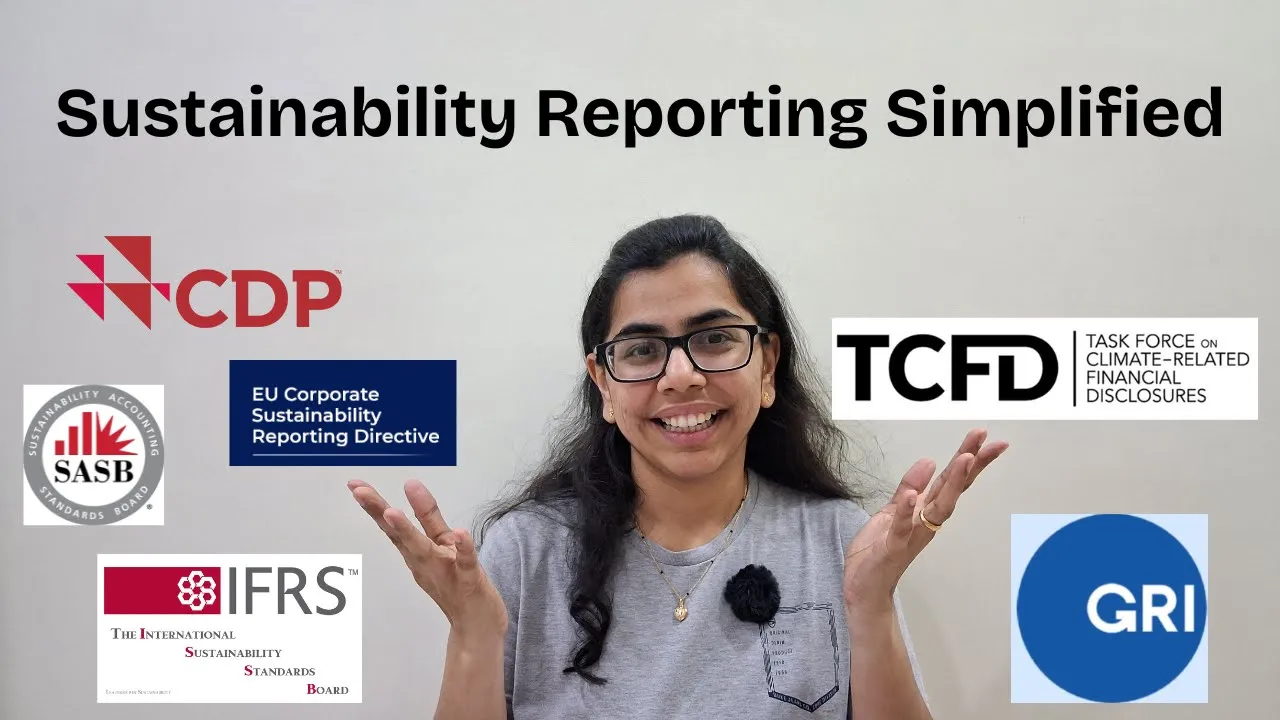
Sustainability Reporting 2025: GRI, SASB, IFRS, ESRS, TCFD, CDP Explained for Freshers
6.4K
This video explains the major sustainability reporting frameworks used by companies worldwide: GRI (Global Reporting Initiative) provides comprehensive ESG reporting standards organized into universal standards and four series (100, 200, 300, 400) covering economic, environmental, and social parameters; SASB (Sustainability Accounting Standards Board) offers industry-specific standards focused on financial materiality with over 77 standards across sectors; IFRS S1/S2 (International Sustainability Standards Board) creates global benchmarks for general sustainability and climate-related disclosures; ESRS/CSRD (European Sustainability Reporting Standards) establishes comprehensive EU-wide requirements with 12 material topics and 1,140 subtopics; TCFD (Task Force on Climate-related Financial Disclosures) focuses exclusively on climate-related financial disclosures through four pillars (governance, strategy, risk management, metrics/targets); and CDP (Climate Disclosure Project) serves as both a reporting framework and rating system based on data disclosure quantity. The video emphasizes that GRI provides foundational ESG reporting knowledge, while CSRD offers the most comprehensive framework integrating requirements from other standards, making it essential for professionals preparing for ESG job interviews and sustainability reporting careers.
Click to watch →
Deep Dive
ESG integration techniques in investment portfolios, including positive/negative screening, thematic investing, and shareholder activism.
Basics of Portfolio Planning and Construction - Module 4- PORTFOLIO MANAGEMENT –CFA® Level I 2026
776
ESG (Environmental, Social, Governance) factors actively affect strategic asset allocation and portfolio construction. ESG mandates must be explicit - are sectors excluded? Are companies favored for governance? Is shareholder engagement happening? ESG constraints can change risk-return profiles by shrinking the investable universe, affecting diversification, risk, and expected returns. Asset managers use ESG-adjusted benchmarks for fair comparison. Implementation approaches include: Negative screening (excluding weapons, tobacco, coal), Positive screening/best-in-class (selecting ESG leaders within industries), Thematic investing (climate change, renewable energy, water scarcity, gender diversity), and Impact investing (measurable social/environmental impact plus returns). Shareholder engagement involves dialogue and voting, not trading - pushing for better governance or disclosure protects long-term value. This isn't activism for headlines but long-term value protection.
Click to watch →
Practitioners’ Insights: Integrating Sustainability in Investment Decisions: What, Why and How?
667
There are six broadly accepted approaches to incorporating ESG factors in investment decisions, none of which are inherently better or worse than others—they depend on client goals and needs. Negative screening excludes companies from specific sectors (like gambling or tobacco) regardless of financial performance. Positive screening selects best-in-class companies using ESG scores or metrics like carbon emissions. Norms-based screening excludes companies violating international norms such as the UN Global Compact principles. Active ownership includes corporate engagement and proxy voting to influence company behavior. Thematic investing builds portfolios around specific themes like renewable energy or affordable housing. ESG integration is the most popular approach, identifying material ESG issues that could affect company valuation and factoring them into financial models and expected return assumptions.
Click to watch →

E.S.G. Investing - What it Means and Its Pros/Cons
129.9K
ESG investing employs two broad strategies: negative screening and positive screening. Negative screening involves removing companies from the universe of stocks to be invested in based on certain traits that investors wish to avoid, such as tobacco, firearms, gambling, or companies with histories of human rights violations or fraud. Positive screening is more proactive and looks to invest in companies that are actively benefiting or supporting positive initiatives while operating their business, including renewable energy companies and organizations with equal opportunity employment practices and diverse management teams.
Click to watch →
![[직장인을 위한 ESG 교양 강의] 14강_ESG 금융과 투자의 이해](https://i.ytimg.com/vi_webp/d8yq8bqkPEw/maxresdefault.webp)
[직장인을 위한 ESG 교양 강의] 14강_ESG 금융과 투자의 이해
1.3K
The Global Sustainable Investment Alliance identifies seven main investment approaches: (1) Shareholder engagement - active dialogue with management and voting rights; (2) Impact investing - prioritizing social/environmental value over financial returns; (3) ESG integration - combining financial and ESG analysis; (4) Positive screening - selecting companies with strong ESG performance; (5) Thematic investing - focusing on sustainability sectors like renewable energy; (6) Norm-based screening - evaluating compliance with international standards; (7) Negative screening - excluding companies with significant controversies. As of 2021, negative screening dominates global ESG investments due to its simplicity and effectiveness in avoiding companies with environmental or social problems.
Click to watch →

WealthBT: Approaches to sustainable investing - A primer (Ep 8)
198
Seven sustainable investment approaches exist: (1) Negative screening excludes sectors like weapons, casinos, or coal companies; Prudential divests from coal companies deriving over 30% of income. (2) Positive screening selects stocks complying with UN norms. (3) Best-in-class picks highest ESG performers within sectors. (4) Portfolio tilting weights toward high-ESG stocks. (5) Thematic ESG invests in trends like clean energy, sustainable agriculture, or climate change—higher risk with concentrated portfolios. (6) Impact investments aim for measurable environmental/social outcomes using UN Sustainable Development Goals, typically in private markets. (7) ESG integration weaves ESG factors into portfolio analysis. According to GSIA, ESG integration became the largest sustainable investment segment in 2020.
Click to watch →
Deep Dive
Regulatory landscapes governing ESG disclosures, such as the EU's Corporate Sustainability Reporting Directive (CSRD) and SEC climate disclosure rules.

한국공인회계사회 제10회 ESG 인증포럼
222
The US SEC climate disclosure rule (finalized March 2024) integrates climate information into financial reporting by modifying Regulation S-K and S-X. It requires disclosure of physical risks (actual expenditures affecting financial statements), transition risks (renewable energy adoption), and greenhouse gas emissions. The rule requires companies to track climate-related expenditures through tagging systems and distinguish between revenue and capital expenditures. The EU CSRD requires companies to publish sustainability reports within 5 days of business reports, enabling near-simultaneous publication with financial statements. Countries implementing CSRD (France, Italy, Spain, Romania) generally allow only external auditors or accounting firms to provide assurance. The trend toward simultaneous introduction of reporting and assurance requirements is observed globally.
Click to watch →

Why (almost) everyone hates ESG right now | Zero: The Climate Race
511
The EU's ESG regulatory framework progresses from disclosure to enforcement. The CSRD requires standardized reporting on ESG factors, while the Corporate Sustainability Due Diligence Directive (CSDDD) adds civil liability for companies failing to address supply chain issues. The CSDDD was partly triggered by the 2013 Rana Plaza collapse in Bangladesh, where hundreds of women died sewing clothes for Western companies. The directive mandates transition plans for climate change risks, requiring companies to address both their climate impact and risks from climate change, such as physical asset vulnerabilities to sea level rise.
Click to watch →

CSRD in 2025: The Food Industry Guide for Compliance & Beyond
238
ESG regulation is accelerating globally and will remain a permanent fixture in both the United States and abroad. Key trends include climate disclosure requirements aligned with ISSB standards, Extended Producer Responsibility (EPR) requirements gaining prominence, increased greenwashing litigation in the UK and EU, and the EU omnibus proposal to consolidate various ESG reporting requirements. The Corporate Sustainability Reporting Directive (CSRD) affects approximately 50,000 entities including large companies and listed SMEs operating within the EU. Member states transpose directives into national legal systems, with some implementing stricter standards. The European Sustainability Reporting Standards (ESRS) framework requires reporting across climate change, pollution, water resources, biodiversity, social standards, and governance. Key requirements include double materiality assessment, Scope 1, 2, and 3 emissions metrics, internal carbon pricing mechanisms, and limited assurance requirements with reporting deadlines phased from FY2024 onward.
Click to watch →
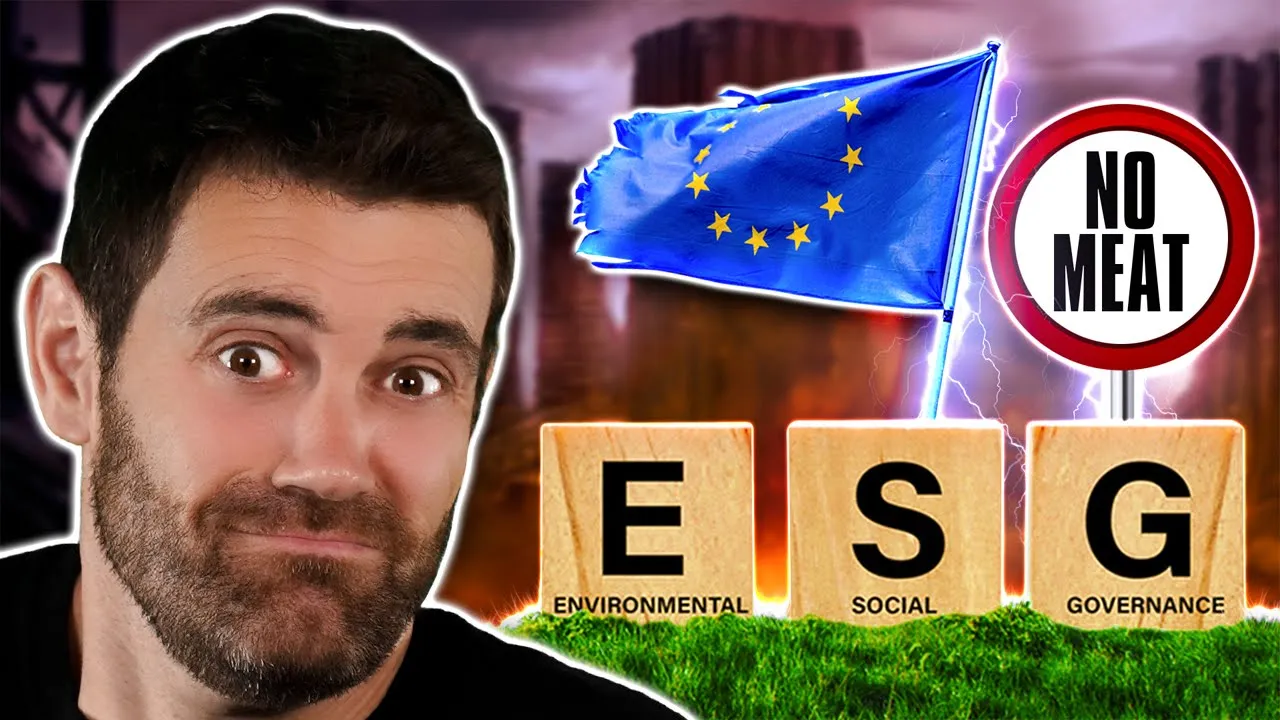
ESG Regulations Are HERE!! How They Will Affect YOU!!
194K
The CSRD was first introduced in April 2021, passed in November 2022, and went into force in January 2024. It is technically a directive, not a regulation, meaning EU countries can adjust the EU law and take their time rolling it out. While it went into force this January, it won't actually be enforced until 2025. The ESG reporting standards themselves won't even be published until June 2024. EU companies will start collecting data using these standards in 2025, and over 1,000 ESG data points will need to be reported.
Click to watch →

ESG Amendments June 25 | CS Professional | CA Mayur Agarwal | Supplement Sheet by ICSI
5.7K
The Corporate Sustainability Reporting Directive (CSRD) is a European Union directive that replaced the Non-Financial Reporting Directive (NFRD). CSRD mandates that companies include social and environmental information in their governance reports, requiring digital format for comparability and third-party assurance. The directive applies to approximately 50,000 companies (up from 11,000 under NFRD) based on thresholds: 500+ employees, 250+ employees with £40M+ turnover or £20M+ assets, or listed SMEs. Companies must follow European Sustainability Reporting Standards (ESRS) with 12 standards covering environmental, social, and governance disclosures. The directive was issued on January 5, 2023, following OECD 2023 amendments.
Click to watch →
Deep Dive
Methods for auditing and assuring ESG data to combat greenwashing and ensure data transparency and reliability.

Key Steps to Start Your ESG Journey
254
Companies should establish appropriate internal controls around ESG data, treating ESG reports with the same rigor as financial reports. Data should be reportable, repeatable, and auditable, with management understanding where data comes from and able to support it. Organizations typically begin considering assurance around year three of ESG data collection. Companies should not let perfect be the enemy of good, as ESG is still in its infancy in many organizations. Assurance can come from CPA firms (providing independent verification with rigorous standards) or expert panels (providing assessments but not formal assurance). External assurance provides value by ensuring consistency and reliability of data, preventing greenwashing, creating a level playing field, and providing recommendations on internal controls. Assurance levels include examination (audit level, providing reasonable assurance including testing internal controls) and review (negative assurance that no material discrepancies exist). For greenhouse gas emissions, CDP gives higher scores for companies with third-party assurance.
Click to watch →

BDO Professional Services: Creating and embedding an ESG strategy
281
The second step involves auditing ESG performance using established frameworks. The Sustainability Accounting Standards Board (now Value Reporting Foundation) provides guidance through five dimensions of sustainability and 26 universal performance indicators, with protocols focused on materiality to avoid excessive burden. Other frameworks include TCFD, GRI, and B Corp. After auditing, companies must analyze data to identify remediation needs and innovation opportunities using the must-should-could framework. Third-party assurance enhances credibility and helps avoid greenwashing accusations. This comprehensive approach ensures accurate baseline data and builds stakeholder trust.
Click to watch →

Live Webinar on ESG and the Future of Business
8.6K
Company secretaries must ensure data integrity in ESG reporting through third-party certificates for difficult-to-verify metrics like emissions. Internal data collection systems need checks and balances to prevent errors. While formal assurance comes later, companies should implement internal assurances through internal audit functions to verify data accuracy before public disclosure. The weakest link in ESG is governance, not environment or social aspects, making leadership commitment essential for success.
Click to watch →

Ryzyko greenwashingu - jak się komunikować i sprostać nadchodzącym wymaganiom prawnym
167
Auditors play a critical role in preventing greenwashing by verifying that ESG reporting meets quality standards. During audits, auditors must ensure companies have documented evidence supporting every claim, including specific time-bound goals with measurable milestones, assignment of responsible individuals, documentation of actual actions taken, and evidence of progress toward stated objectives. The five quality characteristics of information in ESG reporting include relevance (relating to actual facts or planned actions), completeness (no relevant facts omitted), neutrality (presented without manipulation), accuracy (estimates clearly identified), and comparability (allowing benchmarking). The verifiability standard requires documentary evidence for every statement—companies stating university collaborations must show specific partnership documents. Reports should avoid marketing language including superlatives like 'best' or 'most effective.' Honesty about sustainability limitations builds credibility; acknowledging gaps demonstrates genuine commitment. Comprehensive reporting requires supply chain transparency across entire value chains. Reports should be written in clear, concise language assuming readers possess appropriate background knowledge, avoiding verbose explanations and maintaining factual disclosure similar to financial reporting standards.
Click to watch →

The ESG Debate: Is Sustainability a SCAM? (Must Watch)
259
Greenwashing occurs when companies falsely claim sustainable practices through marketing or false reporting. Two main methods exist: advertising products as sustainable when they're not, and falsifying ESG data in reports. Regulatory bodies like CSRD and BRSR require standardized disclosure with third-party assurance. Rating agencies like DJSI and CDP provide additional scores for verified data. Independent certification bodies offer fair trade and green seal certifications. Consumers and investors should research thoroughly to avoid greenwashing and make informed decisions.
Click to watch →
ESG Framework
ESG Evolution
ESG Framework
0:00- 1
Defines ESG as a sustainability measurement tool.
- 2
Explains environmental and social assessment criteria.
- 3
Details governance's role in oversight and risk.
Shareholder Primacy and the Pragmatic Critique of ESG
While ESG frameworks aim to integrate sustainability into investment decisions, critics argue they often compromise fiduciary duty and market efficiency. Rooted in Milton Friedman’s theory of shareholder primacy, this perspective asserts that a corporation's primary responsibility is to maximize financial returns for its shareholders within the law. Critics contend that ESG metrics are highly subjective, lack standardization, and are prone to 'greenwashing'—where companies project a socially responsible image without making substantive changes. Furthermore, opponents argue that forcing social and environmental agendas onto corporate governance can lead to misallocated capital, reduced economic performance, and ideological overreach. From this viewpoint, addressing societal and environmental challenges is the proper domain of democratically elected governments and public policy, not private financial markets and arbitrary rating agencies.
Basic corporate finance and risk management concepts, specifically how companies evaluate internal and external operational risks.
The evolution of Corporate Social Responsibility (CSR) and how it differs from modern, quantitative ESG metrics.
Stakeholder Theory, particularly the shift from purely maximizing shareholder value to considering broader community and environmental impacts.
Fundamentals of corporate governance, including the roles of the board of directors, shareholders, and executive leadership.
In-depth analysis of major reporting standards and frameworks such as the Global Reporting Initiative (GRI), Sustainability Accounting Standards Board (SASB), and Task Force on Climate-related Financial Disclosures (TCFD).
ESG integration techniques in investment portfolios, including positive/negative screening, thematic investing, and shareholder activism.
Regulatory landscapes governing ESG disclosures, such as the EU's Corporate Sustainability Reporting Directive (CSRD) and SEC climate disclosure rules.
Methods for auditing and assuring ESG data to combat greenwashing and ensure data transparency and reliability.
1.4M views2.3Klikes2:27@CFI_OfficialOriginal Release: 2022-08-30
esg stands for environmental social and governance you can think of it as an analysis framework to help measure and quantify the degree to which an organization is operating in a sustainable manner environmental assessment criteria help stakeholders understand an organization's impact on the environment and the climate like its greenhouse gas emissions and its management teams stewardship over natural resources like fresh water while understanding environmental risk and impact is a big part of the esg framework the concept of sustainability in this context extends well beyond just the environment the s pillar social examines an organization's social impact it seeks to understand how well leadership manages relationships with stakeholders including fair wages for workers generating positive outcomes in the communities where they operate and taking accountability for the actions and inactions of supply chain partners in other parts of the world the g as we know is governance so how is the firm led and managed stakeholders are increasingly taking note that a healthy corporate governance function can make or break progress in the e and the s realms but can even create existential threats for business operations more broadly esg as we know it evolved from a number of older sustainability themed acts and frameworks including ehs environmental health and safety and csr or corporate social responsibility but these older frameworks took more of a philanthropic approach implying that management teams should do good because it's the right thing to do what's somewhat unique about esg is that it looks at these issues through the lens of business risk and opportunity which tends to resonate more clearly with the investment community these rapidly changing market and non-market conditions have created the esg landscape as we see it today this includes the emergence of esg rating agencies esg scores mandatory public reporting often called esg disclosure and countless sustainability themed funds and investment strategies you
Up Next

4:50
Sustainable Supply Chain Management: Key Concepts Explained
@JaipuriaInstituteofManagement
124 views•2023-11-02

46:36
Retention Habits of Top DTC Ecommerce Brands Revealed
@SendItPodcast
44K views•2026-03-03

35:25
Financial Modeling Tutorial: Build a Three-Statement Model in Excel
@CFI_Official
21.4K views•2025-09-05

17:30
The Planned Obsolescence of Light Bulbs and Tech
@veritasium
25.3M views•2021-03-26
Related Study Plans & Knowledge Roadmaps
Structured learning paths in Business
business
Pop-Up Retail: Strategy, Design & Execution
01Introduction to Pop-Up Retail & Strategic Goal Setting
02Budgeting, Site Selection, and Legal Essentials
03Experiential Retail Design & Visual Merchandising
+ 2 more learning modules
15h5 modules
Explore Roadmap
business
Reg CF: Startup Funding, Marketing & Launch
01Introduction to Equity Crowdfunding & Reg CF
02Platform Selection & Legal Preparation
03Crafting High-Converting Campaign Assets
+ 2 more learning modules
14h5 modules
Explore Roadmap
business
Productized Services: Scaling Solo Freelance
01Foundations of Productized Services
02Packaging and Scope Definition
03Pricing and Subscription Models
+ 2 more learning modules
15h5 modules
Explore Roadmap
business
Gov Procurement: Find, Bid & Win Contracts
01Introduction to Government Procurement & Business Setup
02Small Business Certifications & Set-Asides
03Finding and Analyzing Contract Opportunities
+ 2 more learning modules
14h5 modules
Explore Roadmap