





![[알릴레오 북's 17회] 약장수에게 속지 않는 법 / 경제학의 향연 - 폴 크루그먼](https://i.ytimg.com/vi/UiHEfgDjieU/maxresdefault.jpg)




![「対外純資産」重視は意味がない。国民の所得が増える「真の経済成長」をしよう[三橋TV第1181回] 三橋貴明・菅沢こゆき](https://i.ytimg.com/vi/TfMK2diAfR4/maxresdefault.jpg)
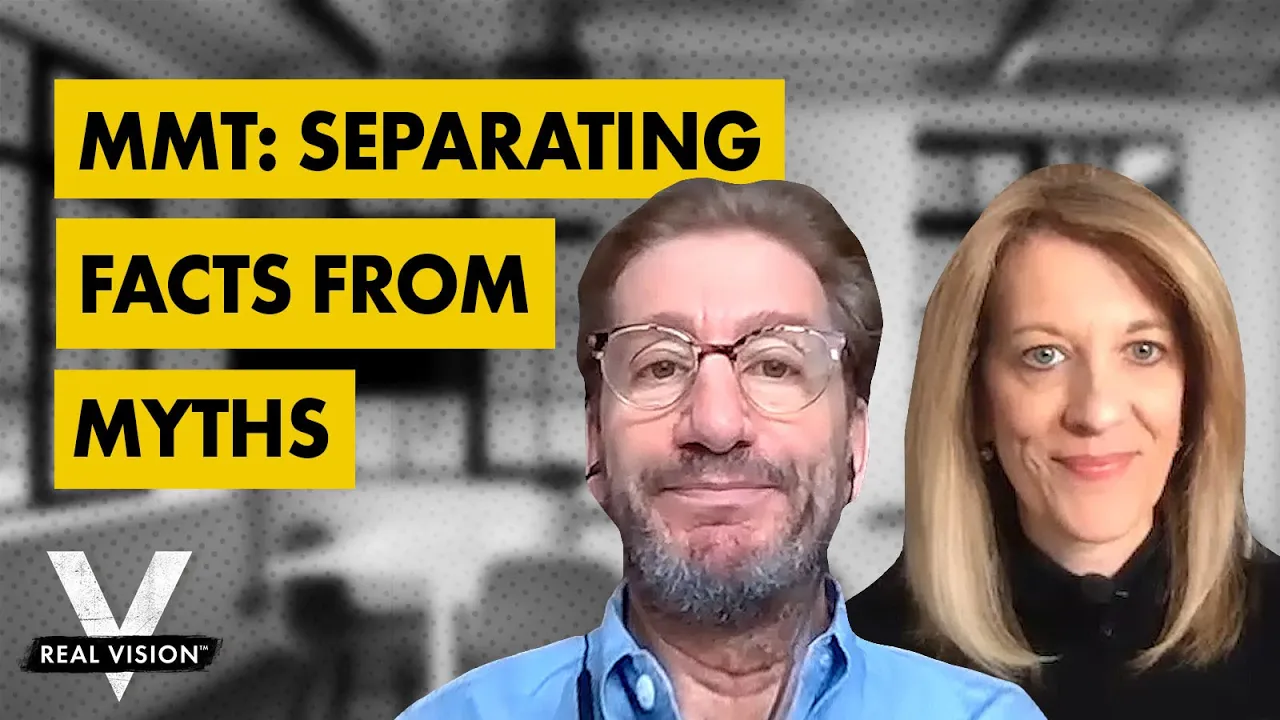
















Austerity economics is fundamentally flawed because treating government finances like household budgets ignores that government spending injects money into the economy while taxation withdraws it; sustained government surpluses require private sector borrowing from banks, which eventually leads to private debt accumulation and economic contraction, making austerity policies counterproductive for long-term economic growth.
Professor Steve Keen: Austerity Economics Is Naive & Childish
Added:The fundamental definition of fiscal policy, including government spending, taxation, and budget deficits.
The core differences between Keynesian economics (demand-side) and Neoclassical economics (supply-side).
The concept of sectoral balances, specifically how government deficits correspond to private sector surpluses.
The distinction between a currency issuer (sovereign government) and a currency user (household or business).
Steve Keen's Minsky Model and the theory of debt deflation during financial crises.
The principles of Modern Monetary Theory (MMT) regarding sovereign spending and inflation constraints.
Historical case studies of austerity policies, such as the Eurozone debt crisis or post-2010 UK economic policy.
The theory of endogenous money and how commercial banks, rather than central banks, drive the money supply.
74.5K views1.4Klikes8:37Original Release: 2015-05-13
well thanks for joining me Steve Keane it's great to have you back um Steve Kean professor of Economics at the Kingston University thank you nice to be here Chris we've heard a lot about austerity and the need to reduce public debt in in the runup to to the election from all the main political parties what's your view on on this and their policies uh it's naive the most positive thing I can say about those views is it's naive and childish uh because they have a vision about how the economy operates that you might as well learn in a Kindergarten class uh you know and we have Daddy who runs the runs the household and Daddy has to make sure that enough income comes in and Daddy has to save Etc otherwise the family be on the street and when you look at the way they talk about this the government needing to run a a surplus and both parties are really selling this idea it's really that kindergarten version of what a government and what an economy is like now normally you know have have quite a few fights with Paul Krugman but I've got to say with a few little nuances completely agree with the argument he made in the guardian long read just this last weekend to say this is you can't think about the economy and the government's role in the economy like a child might think about a household budget which is all that being sold by the both politicians of both sides and it is the public debt um is it's a sign of the state of the economy but it's not a cause of the state of the economy and by focusing on that and trying to reduce the public debt they're likely to push the economy first of all into another slump but also if they actually succeeded in holding that level of surface they're both fantasizing about they'd cause the next financial crisis that way or cause a serious decline in economic activity they certainly won't cause what they both argue will cause which is sustained economic growth so so what should they be doing with the budget I've think I've worked out a way that people can actually visualize this I'll take you through a bit of visual exercise draw a rectangle call that the entire economy divide it in half one half is the government and the other half is the public okay if the government is going to run a surplus which is what both labor and conservatives are saying is their their objective and everybody thinks it's a good idea that means that the taxes the government's imposing upon the public have to be greater than the spending that they also do to the public so what you've got therefore is a flow of money has to be going from the public box you've got you know private economy to the government okay we'll call that flow of net gov that means for the government to run a surplus they've got to be taking money out of your bank accounts now that's to begin with that's the opposite of what people think okay they think our government saves money I can save money too no if the government's going to run a surplus it means it's got to tax the the the people more than it spends on the people and therefore it is taking money out of people's bank accounts stck one question is where do you get the money now if they do it once off you know money comes out of your bank account you can cope once or twice if they're talking about doing this on a sustained basis then you've got to have a sustained flow of money from the Public's bank accounts to the government so where do you get the money now you can't print it yourself okay we're talking money here we're not talking selling widgets to the government you've got to provide a flow of cash where do you get the money you can only get it we're not looking at exports just to look at a closed economy you've got to buy from the banks if the government wants to you you have a flow of money going to the government from your bank account to the government then you to keep your bank account constant you've got to be borrowing money from the banks so if you're going to have the government running a permanent Surplus and the public having simply a constant amount of money in its bank accounts there's got to be a constant borrowing of money from the banks to provide the money the government wants which means consequently you're getting to maintain the government uh Surplus and help it reduce its debt you you've got to be going to get it to the banks okay now if you do that and you simply do it in such a way that you maintain a constant amount of money in the Public's bank accounts in general then the turnover of that money what is what generates economic activity so the only way you can have that situation of the government running a surplus being financed by the public borrowing money from the banks to provide that money therefore keeping a constant amount of money in circulation in the economy the only way the economy could grow in monetary terms will that money turned over more rapidly now we know empirically it's been turning over less rapidly over time okay and it's rate of turnover goes down during a crisis not up okay so if economic slow growth slows down people hoard money they spend less rapidly it turns over less quickly so you get a Contracting economy coming out of that now if you put that together for a substantial period of time if you run a surplus four or five years which is the sort of stuff that both parties are saying kindergarten style is a good idea Daddy's saving the money what it means is you're going to have Rising private debt with a relatively constant GDP a rising private servicing pressure as well at some point the public will stop borrowing money from the banks and you'll go into a downturn so running a sustained government deficit is a recipe for a future economic crisis caused by the private sector getting into too much debt stopping borrowing and then the money turn at level money the economy going backwards because as well as the government taking money out people try to pay their debts now the amount of money in the economy contracts and you go into a serious downturn now that's in a nutshell is why Greece and Spain and Italy and France are in the state they're in right now and both political parties is saying we think it's a good thing to do the same idea it's kindergarten thinking about the economy so if you go for conservatives austerity heavy or labor austerity light you're still essentially on the path to um economic stagnation yeah and we're looking now at what's happening globally U stagnation is the is the story of the Eon of the global economy right now and the reason is again that issue I mentioned about the role of private debt that's what's actually causing it globally too much private debt was accumulated during the bubble not enough has been paid off during the downturn uh the growth that's coming out is now coming off a huge level of private debt so the the room for the private sector to continue borrowing is quite limited and if you have governments at the same time trying to balance their budgets then you have money being taken out of the economy effectively by the two sources that are supposed to provide money which about the banks providing private loans which creates money in people's deposit accounts and the government running a deficit which also puts money into your economy if you have both of them being taken out then the amount of money turning over in the economy isn't growing rapidly and even with good ideas you won't get Finance for good ideas you won't be able to implement them in the very first place and you won't get growth so essentially this is why we've got so-called surprise um poor GDP figures in the US and the UK for the first quarter it's it's it's surprise only if you don't analyze the role of money yes no you last year you were saying that that things were going to end up like this they're ending up faster than I thought it would I mean I'm you know the figures come out of America just these last few days of the annualized growth rate of 0.2% that's rounding error from zero I mean talking 0.05% per quarter measuring the entire change in the real GDP of America uh that's trivial and England's heading in a similar Direction so it is is the whole thing has been caused by letting private debt get out of control not even focusing upon its role in the economy let alone watching whether it's getting too too high or too small I can never see that happening uh and they're not doing anything to reduce it when the government does have the capacity to help us get their private debt levels down you know fantasizing about the public debt being the problem instead when in England's case private debts two two and a half times the level of government debt similar sort story in America it's just bizarre to watch now you'd get my vote for Chancellor in a heartbeat but uh unfortunately you're not going to be elected so is there any mainstream political party that that's got a a more sensible Economic Policy the only ones who are close to a sensible policy that sends are the greens and the SNP because they at least are talking about the dangers of the private banking sector and they're seeing the banking sector as the cause of the problems rather than the potential solution which is still the way that the conservatives look at the banking sector and and labor in effect leans you know banking light rather than banking heavy thank you very much thanks Chris
Up Next

14:55
The U.S. Debt Crisis: How Much Is Too Much? | Analysis
@CBCNews
1.5M views•2025-06-25
5:07
Impact of Yuan in Indo-Russian Trade Amid Sanctions
@WION
261.9K views•2022-07-01
10:33
Behavioral Economics Explained: Rationality, Nudges, and Risk
@crashcourse
1.1M views•2016-03-12

113:18
The Age of Easy Money: Fed & Inflation | Full Documentary
@frontline
21.2M views•2023-03-15
Related Study Plans & Knowledge Roadmaps
Structured learning paths in Economics
economics
Sovereign Debt: Defaults, IMF & Restructuring
01Introduction to Sovereign Debt & Government Bonds
02Debt Sustainability & Credit Ratings
03Anatomy and History of Debt Crises
+ 2 more learning modules
12h5 modules
Explore Roadmap
economics
Market Design: Matching Theory & Gale-Shapley
01Introduction to Market Design and Price-Free Markets
02Two-Sided Matching & The Gale-Shapley Algorithm
03School Choice Systems and Mechanism Design
+ 2 more learning modules
10h5 modules
Explore Roadmap
economics
Impossible Trinity: Forex, Capital & Policy
01Introduction to Monetary Policy and Central Banking
02Exchange Rates and International Capital Flows
03The Mundell-Fleming Model
+ 2 more learning modules
8h5 modules
Explore Roadmap
economics
Healthcare Economics: Market Failures & Systems
01Introduction to Healthcare Markets and Market Failure
02Asymmetric Information and Adverse Selection
03Moral Hazard and Insurance Design
+ 2 more learning modules
12h5 modules
Explore Roadmap