

















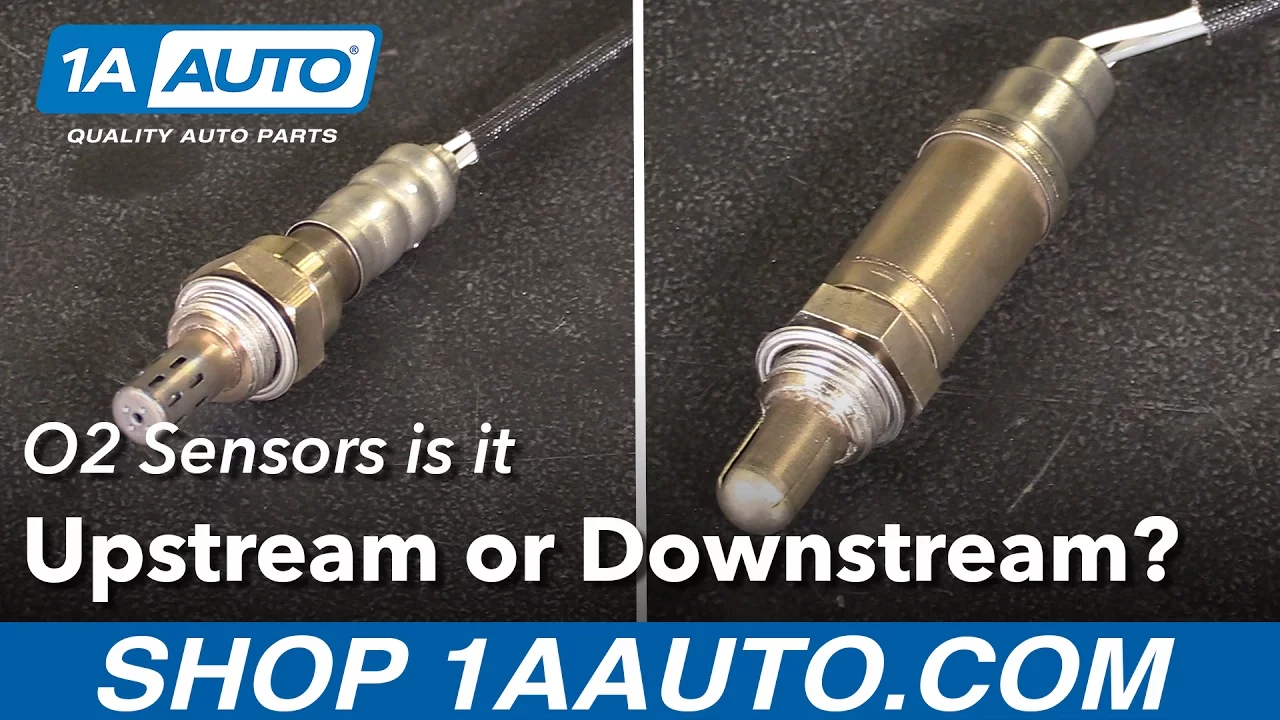
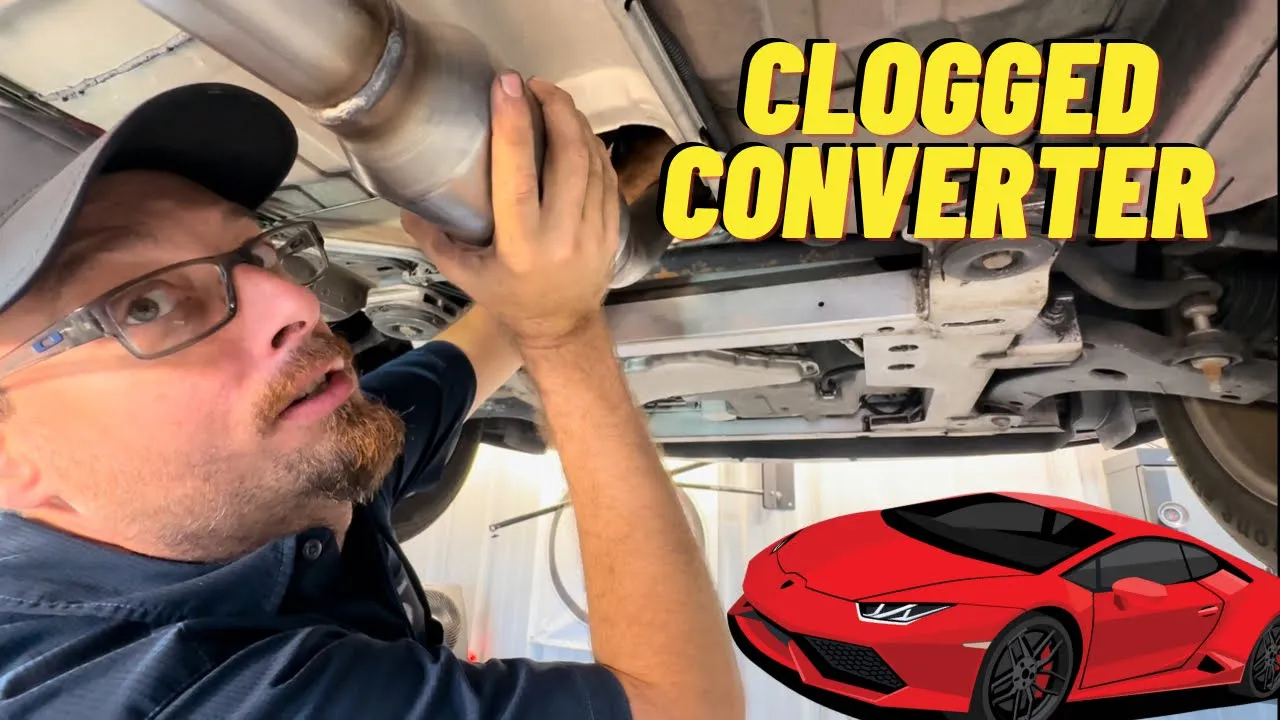

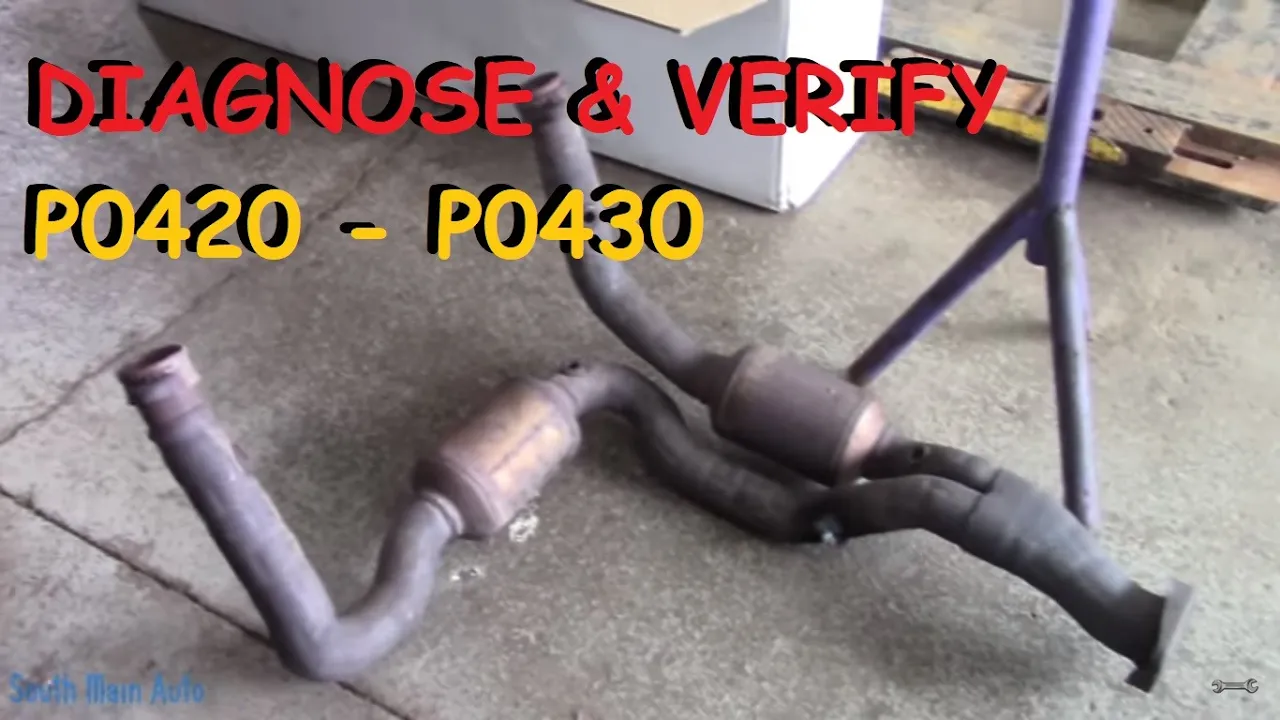











Modern vehicles use sophisticated computer-controlled systems to monitor and maintain catalytic converter efficiency through a dual-oxygen sensor setup: the upstream sensor measures exhaust composition to ensure optimal air/fuel mixture, while the downstream sensor detects whether the catalyst is properly converting pollutants; when the downstream sensor detects oscillations between rich and lean conditions that the upstream sensor shows, it indicates the catalyst has lost oxygen storage capacity and is no longer functioning efficiently, triggering the P0420 fault code.
Catalytic Converters Explained: How They Work & Fail
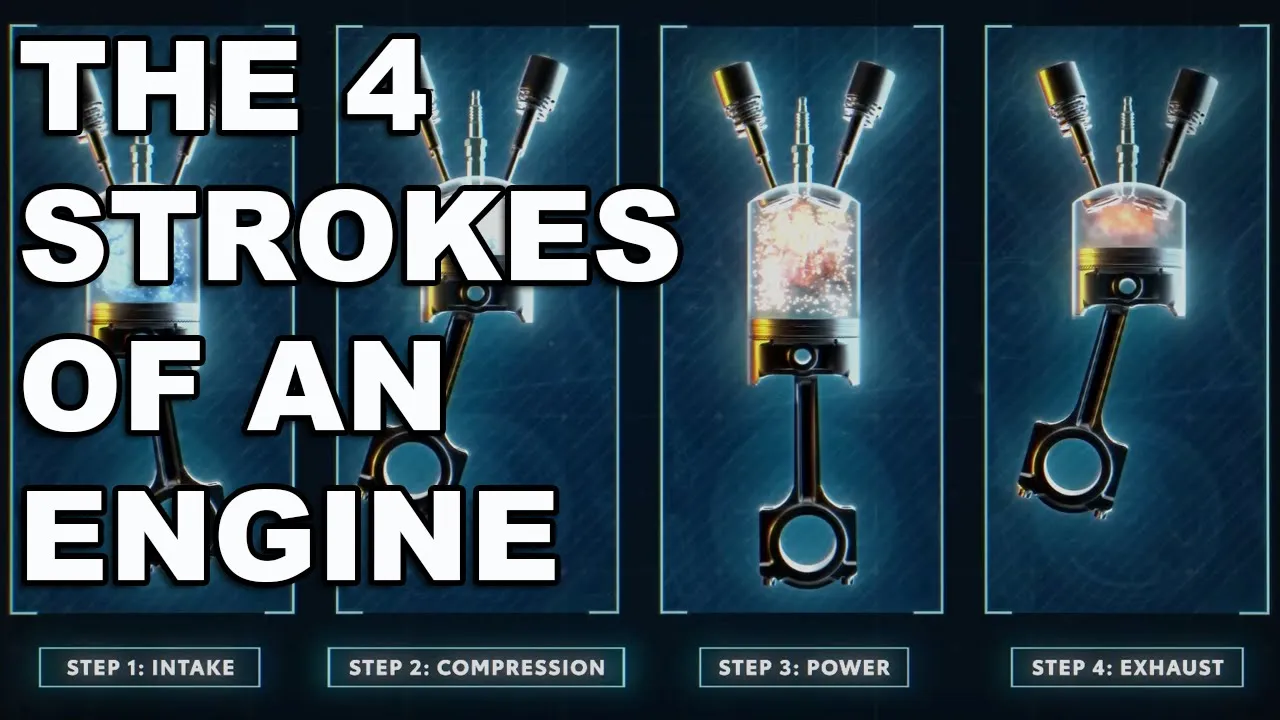
Added:Basic principles of internal combustion engines, including the four-stroke cycle and the concept of the stoichiometric air-fuel ratio.
Fundamentals of chemistry regarding combustion byproducts (hydrocarbons, carbon monoxide, and nitrogen oxides) and the role of catalysts in chemical reactions.
An understanding of basic automotive electronics, specifically how sensors generate and transmit voltage signals to the Engine Control Unit (ECU).
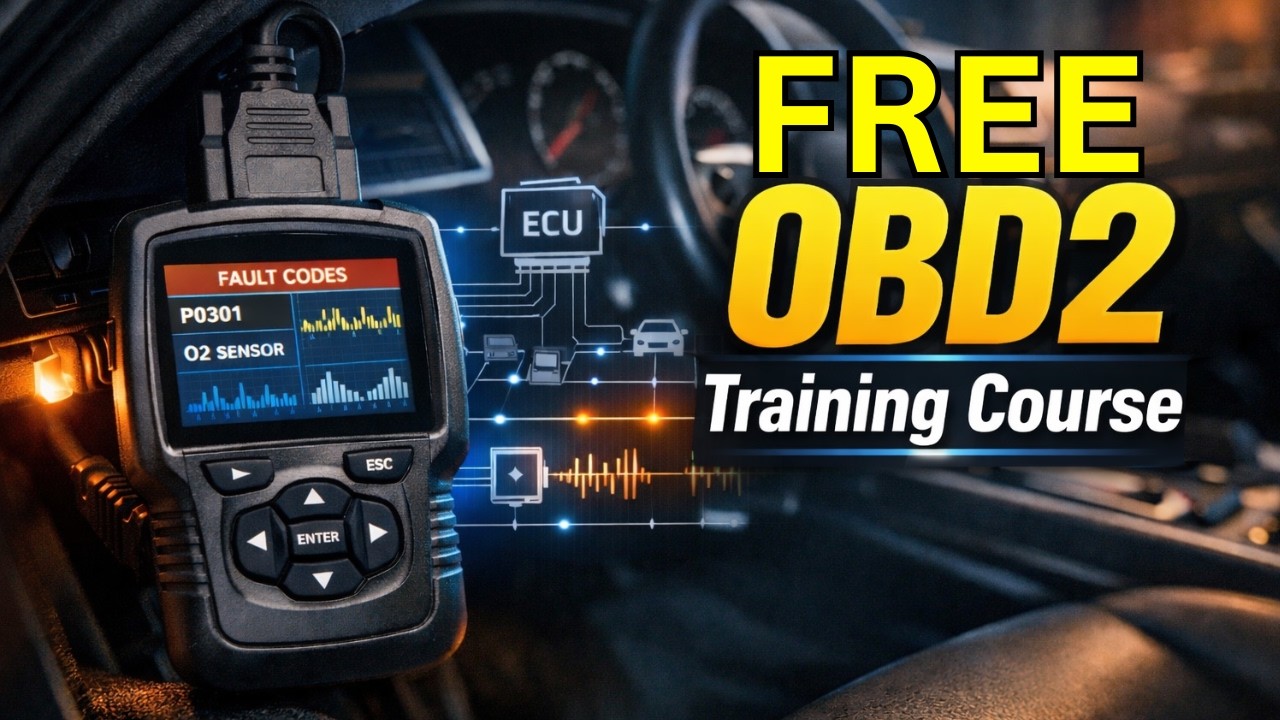
The purpose and structure of the On-Board Diagnostics (OBD-II) standard used in vehicles for system monitoring and error reporting.
Advanced diagnostic techniques using oscilloscopes to graph and analyze upstream and downstream oxygen (O2) sensor waveforms.
In-depth troubleshooting of root causes of catalytic converter failure, such as engine misfires, oil burning, or coolant leaks.
The study of integrated vehicle emission systems, including Exhaust Gas Recirculation (EGR) and Evaporative Emission Control (EVAP).
Exploring alternative emission reduction technologies, such as Selective Catalytic Reduction (SCR) for diesel engines and modern gasoline particulate filters.
1.5M views79.2Klikes41:46Original Release: 2025-10-01
This Nissan Cube has a little yellow light on its dashboard which says "Service Engine Soon."
That's its version of a check engine light, which is more formerly known as the MIL which stands for mother-in-law— I mean, malfunction indicator lamp.
And as its name implies, that means something's wrong with this car.
What's wrong?
Well, a quick check with one of those Bluetooth code scanners revealed its engine computer has stored the dreaded fault code P0420, catalyst system efficiency below threshold.
In other words, this car thinks its catalytic converter isn't working right.
And because of that, it would fail an emissions test if I were to take it in for one, which I'll have to do before I can renew its registration.
But what exactly is the catalytic converter?
What does it do?
And how can the car tell it's not working right?
Well... [motor and hydraulic pump whining] [ratchet wrench sounds]...this is the catalytic converter.
Why is it here on the desk?
We'll get to that.
As you can see, it's actually quite simple.
It's basically just a section of exhaust pipe which has a couple of expanded sections that are filled with a tightly-packed grid of ceramic material.
And the engine exhaust flows through those grids before it's released to the atmosphere.
That ceramic material is coated with precious metals: usually platinum, with a bit of rhodium and palladium for garnish.
Which is why these things are so expensive and often stolen.
The precious metals form a Catalyst that Converts smog- and acid rain-forming nitrogen oxides into plain old nitrogen and carbon dioxide.
It will also convert any unburnt hydrocarbons from imperfect combustion into carbon dioxide and water vapor.
In other words, this thing's job is to make engine exhaust as harmless as possible.
But it doesn't work on its own.
In fact, the chemical reactions which occur inside of here rely on a wildly complicated series of sensors, actuators, and feedback loops which the car's engine computer is orchestrating on a second by second basis.
Now, this is a very ordinary car.
Okay, well, not really.
It's a Nissan Cube!
But I mean it's a 15-year-old economy car which has nothing you might call "advanced technology" under the hood.
In fact, this one even has a manual transmission.
But I'll bet a lot of you watching are going to be very surprised by just how much stuff is going on in this barebones base model every time you turn its key, start the engine, and drive it.
This engine, the Renault-Nissan MR18DE, is the 1.8 L 4-cylinder engine which powers the car and makes it move.
But the engine itself is little more than a complicated air compressor.
This engine cannot do anything without this little computer box running the show.
This is the engine control module, and it controls... everything!
From the spark plugs to the fuel injectors — even the throttle!
This car's gas pedal is just a fancy joystick telling the computer how far you've pressed it down.
And this has been the normal reality of cars for quite a long time.
This video is the first in a series on engine management technology, and while we're going to be exploring a lot of things today to understand the catalytic converter, I'll only be scratching the surface and there will be much more to come.
So, first of all... is that one of those progress bars that shows up when people do ad reads?
On this channel?
I'm gonna have to put my foot down on that.
Ooh, are those Technology Connections socks?
Yes, they are!
That's right, there is now for the first time official TC merch for sale.
But... this is only sort of an ad read.
See, I won't be making a scent from the sale of these socks.
In fact, all of the profit they generate will go to charity.
If this sounds familiar to some of you, well, that's because it's a collaboration with the Awesome Socks Club and Good Store.
I've been a member of the Awesome Socks Club since its inception.
I love silly socks and haven't worn normal socks in years.
So, when Hank Green decided to start a sock subscription service, I signed up right away and have been a happy customer ever since.
And I am both thrilled and honored to announce that Hank and his team worked with me to make Technology Connections a part of it.
For the next two weeks and two weeks only, you can sign up for a limited run of socks designed by independent artists based on my weird ideas.
They'll arrive at your door monthly starting in January with free worldwide shipping, and since they come in pairs, that means each month you too will experience the Magic of Buying Two of Them!
We're offering both a full year of socks as a prepaid subscription and a six-month option if that works better for you.
These are just some of the designs we've cooked up - the rest will be a fun surprise!
And not only will you get some great socks, but you'll be helping Partners in Health fund and operate the Maternal Center of Excellence in Sierra Leone.
This world-class facility provides exceptional medical care to mothers and children in a region with one of the highest maternal mortality rates in the world.
If some silly socks which help people sound like your cup of tea, there will be information in all the places on how to get them.
Thanks for your attention and now back to the show.
So first of all, what is the job of this engine?
Well, very basically, it's to turn a fuel into physical force which we can use to make things happen.
Like push a car along a road.
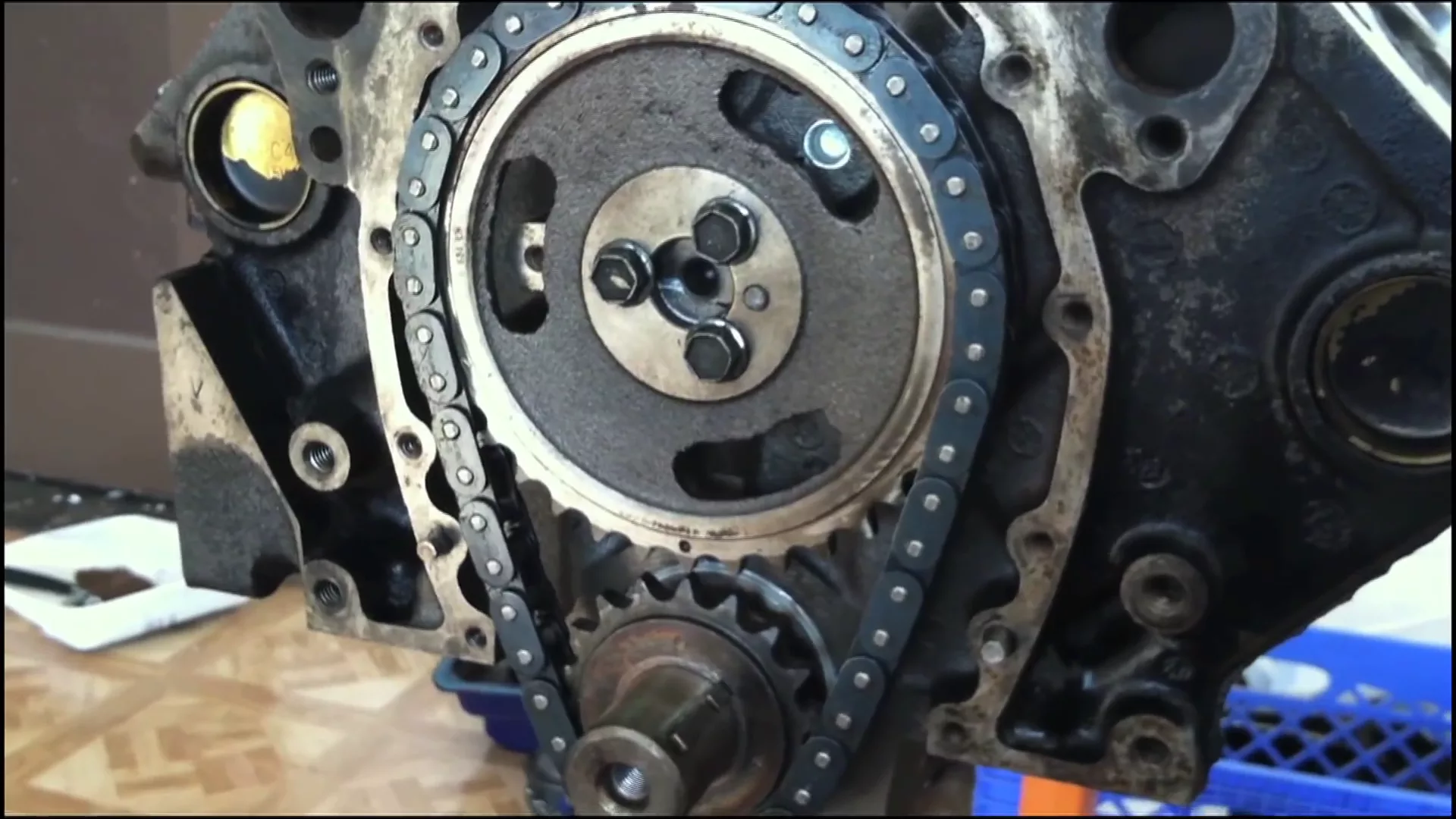
Like most internal combustion engines, this uses pistons traveling up and down cylindrical combustion chambers which are attached to a crankshaft to translate their up and down motion into a spinning motion.
Valves at the top of the combustion chamber open and close in time with the movement of the pistons and through filling the chambers with a basically explosive mix of air and fuel as the pistons move downward, then compressing that mixture as the pistons move back up and then igniting it with a spark plug once it's at the top, the rapidly expanding mixture of hot gas will force the pistons back downward and thus the chemical energy in the fuel is converted to mechanical energy.
Now, as far as explaining the mechanical parts of the engine, that's actually as far as I'm going to go today.
There's a lot of stuff in here that's really interesting, and I'll be tearing this apart in future videos to show you all of it.
But for now, I just want to focus on where air goes in and exhaust comes out.
This large plastic series of tubes is the intake manifold and it delivers fresh air to each of the four cylinders through the cylinder head.
Fuel is mixed in by electronic fuel injectors which live underneath the intake manifold and spray it into the airstream as the cylinders ingest air.
After the fuel is burned in the cylinders, the resulting hot exhaust is pushed out the other side of the cylinder head and into the exhaust manifold.
The catalytic converter bolts to the engine right here.
It needs to be as close to the engine as possible because the catalyst has to be very hot in order to function.
And we need this to function because of what happens when we burn gasoline.
Or rather, what never happens quite correctly.
But before I explain that, have you ever seen what burning a tablespoon of gasoline looks like?
Neither have I, but I'm an adult with access to tablespoons and gasoline.
So, I wanted to find out.
It looks like this!
And this flame burned for about 3 minutes.
But you know how long it takes this Nissan Cube to go through a tablespoon of gasoline when driving 60 mph?
Seven seconds.
This car gets 30 miles per gallon on the highway, which means it burns through gasoline at a rate of 8.53 tablespoons per minute when traveling 60 mph.
And have you ever seen what burning 8 tablespoons of gasoline looks like?
Neither have I, but it looks like this!
This is what's going on inside the engine of this car when you're driving it at highway speeds.
In fact, this is only about half as much because even with the added heat from the other tablespoons helping the gasoline evaporate more quickly, it still took about 3 minutes for all this to burn away.
Now, I know it doesn't seem like you're setting fire to gasoline when you drive a car, but you are in fact burning it and faster than you see here.
Now imagine millions of cars are doing this all at the same time.
Yeah.
All that smoke and crap is why we spend so much effort making sure the internal combustion engine burns gasoline as cleanly as it can.
And the catalytic converter is a hugely important part of that goal.
But before this thing even gets involved, we need to play with chemistry.
The chemical reaction which occurs inside the engine requires oxygen from the air for combustion.
The oxygen combines with the hydrocarbons which make up the fuel and the result should simply be carbon dioxide and water vapor.
Now each molecule of fuel requires a certain number of oxygen molecules for combustion to happen completely.
This is the basis of the air/fuel mixture we feed into the cylinders.
If you don't have enough oxygen, the fuel won't burn completely and you'll get unburnt fuel in the exhaust, which is not good.
But if you have too much oxygen, the combustion happens at higher temperatures which lead to nitrogen oxides forming.
And that's also not good.
Both unburnt fuel and nitrogen oxides contribute to the formation of smog and acid rain in the atmosphere.
So ideally we want the engine to have the exact number of oxygen molecules present in its cylinders for the quantity of fuel which is about to be burned.
If we can manage that, we'd have what's called stochiometric combustion.
Since gasoline is gasoline and air is air, we actually know the air-to-fuel ratio that results in stochiometric combustion.
For gasoline, it's a 14.7:1 ratio of air to fuel by mass.
In the old days, we tried our best to achieve that ratio using a carburetor.
And we still do actually for lots of small engine equipment.
Carburetors are extremely simple.
Basically, you're just running air past a tube with some liquid gasoline in it, and the venturi effect causes it to join the airstream.
Then, gasoline's volatile nature means it quickly becomes a vapor on its way into the engine.
If properly dialed in, you can get a carburetor to put out a pretty consistent ratio of fuel to air no matter how much air flies through it, which is extra useful because then you can control the power an engine produces simply through restricting its air flow.
That's what the throttle does.
When it's closed down, less air can get to the engine which, in the case of a carbureted engine, also means less fuel is delivered and thus less power is produced.
And as the throttle opens, the engine gets more air and the carburetor delivers more fuel, which results in more power.
All with a consistent air-to-fuel ratio.
But well, the world isn't quite so simple.
For a start, there are situations such as acceleration where the engine is under a heavy load where we actually need a rich fuel mixture to prevent the engine from running too hot.
And that will let unburnt fuel into the exhaust system.
But even if we could always run the engine stoichiometrically, combustion inside the cylinders is never perfect.
The world is too random and the pistons are moving too fast.
So even if you know you've got exactly the correct number of fuel molecules to oxygen molecules, you're always going to end up with either some unburnt fuel or some nitrogen oxides or potentially both.
And that's what the catalytic converter is designed to fix.
By passing the exhaust through this grid of precious metal-coated material, nitrogen oxides are reduced to pure nitrogen and unburnt fuel as well as carbon monoxide are oxidized into carbon dioxide.
When properly operating, the catalytic converter will all but eliminate harmful pollutants from the engine.
Except for carbon dioxide, of course... but sadly, we're still having trouble convincing some people that's a problem.
Catalytic converters became more or less required in cars sold in the US back in 1975, but the earliest ones didn't deal with nitrogen oxides.
Those so-called two-way converters only handled carbon monoxide and unburnt fuel - which was a tremendous help for air pollution!
But nitrogen oxides still contribute to smog and acid rain.
So shortly thereafter, we got three-way catalytic converters which is what this is.
And if you're wondering why we don't talk about acid rain much anymore, these are a big part of why.
But with these three-way converters, we have a new can of worms.
You can't just stick one of these in a car and expect it to work.
The chemical reactions the catalyst promotes require the engine to be hovering around the stoichiometric point.
"Hovering around," incidentally, is a fine example of foreshadowing.
Anyway, if the engine is running too rich or too lean, not only will the catalyst stop functioning, but if those incorrect conditions go on for too long, the catalyst itself can be damaged.
This sounds like a pretty big problem.
But, what if we could actually monitor and control the combustion process happening inside the engine in real time?
That would allow us to adjust the engine's air/fuel mixture on the fly and make sure it's right for the catalytic converter.
Well, that's exactly what we do and is the main reason we started having a computer run the show.
Now, in the interest of time, I'm going to skip over all the wacky ways we used to do this like computer-controlled carburetors with fresh air injection systems.
By 1990, we had almost entirely moved on to electronic fuel injection systems very similar to the one we find in the Cube.
And speaking of the Cube, let's take a closer look at what it's doing as the engine runs.
Since this car was made after 1996 — again, nothing about this is new — it has the standard OBDII port under the dashboard which lets scan tools talk to the engine computer.
OBD stands for onboard diagnostics and this interface became standardized because engine computers are able to monitor the emissions equipment for issues.
And plenty of other things, too.
Now, these days, you can pick up a Bluetooth code scanner for about 20 bucks.
And honestly, if you drive a car, it's probably worth having one of these.
This scanner, along with the smartphone app you use it with, can not only show you what trouble code is causing a check engine light, but they can provide enough information to diagnose lots of issues, including the P0420 code the Cube has.
But for this video series, I wanted something a little more powerful.
So, I picked up a proper scan tool!
Which is really just an Android tablet talking to a suspiciously similar Bluetooth dongle... But this scan tool can speak the proprietary languages that Nissan and all the other manufacturers use to hide certain data and functions.
And I can screen record with it so you can see what I can see!
For now, I'm just going to use the standard OBDII protocols.
After selecting live data, the scan tool goes through the parameter IDs or PIDs the engine computer makes available to it.
And once it has its list, we can go through it.
This is just some of the data the engine computer is collecting.
But I want to call out this: air flow rate from mass air flow sensor.
Remember that the cylinders are being fed air from the intake manifold.
And if we follow that back, we'll find that a hose connects it to the air filter housing.
Combustion air is passed through a filter to make sure the engine doesn't ingest things like dust or sand which could damage it.
But between the filter housing and the throttle is the mass air flow sensor.
This is a sensor which can tell the computer exactly how much air the engine is ingesting in real time.
There are various types of mass air flow sensors and some engines use a different technique altogether.
But the computer will use this sensor to calculate how much air the engine is actually ingesting.
That data along with data provided by other sensors which measure things such as the intake air temperature, engine coolant temperature, and more is enough information for the computer to run the engine in what's called open loop control.
Once the computer knows how many grams of air are going into the engine per second, it can calculate the correct amount of fuel to deliver to the cylinders in order to achieve ideal combustion for the current operating conditions.
And it can meter precisely how much fuel will be injected by varying the length of time the fuel injectors are spraying fuel during each intake stroke - down to the hundredth of a millisecond.
But all those sensors, while they can give the computer enough information to make the engine run reasonably well, can't tell it if its calculations were actually correct.
For instance, when the engine is cold, gasoline doesn't vaporize as well.
And while the computer will use the engine coolant temperature sensor to try and compensate, that sensor is only so accurate.
Plus, gasoline is not chemically identical from tank to tank.
Just because 2.51 milliseconds of injection time at idle with the engine hot is correct for one tank of gas doesn't mean it's going to be correct for the next one.
To allow the computer to check its homework, we need an oxygen sensor.
And that's what this is.
As you can see, this thing is installed in the car's exhaust manifold and its sensing probe is exposed to the exhaust gases coming from the engine.
There are two types of oxygen sensors, and the Cube has both of them, which is slightly annoying for the purposes of demonstration, but the important thing is these can confirm whether the engine is actually running stoichiometrically.
The sensors themselves are really interesting.
They function based on what's called a Nernst cell which produces a voltage as oxygen molecules flow through it- sort of like a very strange battery.
The difference in oxygen concentration between the exhaust and the surrounding air is what will generate that voltage.
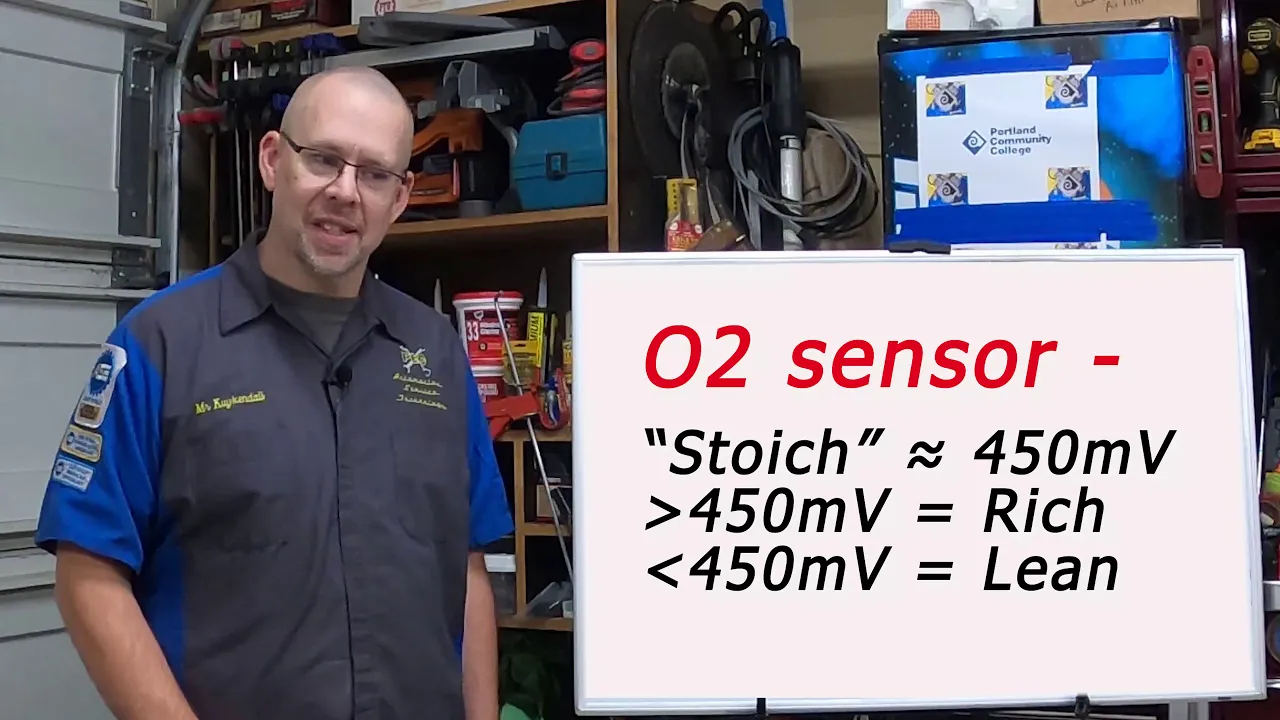
The simpler narrowband sensor outputs a voltage that fluctuates between 0 and 1 volt with voltages below half a volt indicating a lean fuel mix due to excess oxygen in the exhaust, and voltages above 0.5 indicate that the fuel mixture is rich because there's absolutely no oxygen left.
But it can't really do anything but indicate rich or lean.
The midpoint is too fuzzy.
This, though, is a wideband oxygen sensor which can be made much more precise.
But... it's a little more complicated.
The specifics aren't worth getting into for lots of reasons — there's many types out there — but the upshot is that the actual oxygen concentration in the exhaust results in the computer calculating a specific voltage value.
But the oxygen sensor doesn't start working right away.
It needs to be very hot in order to correctly measure oxygen concentration.
That's why each time the engine is started, the computer runs in open loop control.
But once the oxygen sensor is hot enough and it starts responding, which in any reasonably modern car happens quite quickly with the help of an electric heater built into the sensors, the computer can switch to closed loop control.
It will still be using data from all of its other sensors to calculate how much fuel to deliver right now, but it will adjust its calculations based on feedback from the oxygen sensor after it's been burned.
In this case, when the oxygen sensor data PID shows 2.24 volts, the engine is running stoichiometrically.
And so, the engine computer can tell in real time if it's delivering too much or too little fuel and then adjust the fuel mixture to compensate.
And by the way, if this sounds complicated - yeah, it is!
The conditions the engine will see are constantly different.
One moment you're cruising at a steady speed on the highway and the next moment you're downshifting to pass someone, increasing engine RPM and the total load.
Sometimes you're starting the engine when it's already hot and other times you're starting it from cold when it's -10° outside.
There is some really fascinating logic inside this box which is essentially logging how the oxygen sensor responds under those various conditions to establish a long-term fuel trim profile based on all the other sensors.
This allows the engine to have a very nuanced open loop control profile which keeps the engine in check even if one day the oxygen sensor were to fail.
Though of course the computer can detect an issue with the oxygen sensor and will set a fault code which turns on the check engine light if that happens.
But the oxygen sensor itself is also used to detect other issues.
Say for instance one day the oxygen sensor sees a very different oxygen concentration which causes the computer to perform fuel trim adjustments that deviate wildly from the stored fuel trim profile.
That indicates something has gone wrong and the computer will set a fault code if it deviates too much.
But speaking of fault codes, the only code that's in this car is P0420.
This means its computer can't find anything wrong with the engine or the fuel injectors or the oxygen sensors... in fact, any of the sensors.
but it does think this catalytic converter ain't working.
How can it be so sure of that?
Well, the catalytic converter is being monitored by a second oxygen sensor.
That one.
By measuring the oxygen concentration in the exhaust after it has passed through the catalytic converter, the computer can determine how much converting is catalactually happening.
And the reason it can do that goes back to that "hovering around" thing I mentioned earlier.
Let's take a look at this website I found which lists the chemical reactions which happen inside the catalytic converter.
Notice that in order to oxidize any unburnt fuel, we need oxygen available to the catalyst.
Sounds easy. Just run the engine a little bit lean, right?
Well, we could.
But notice that in order for the nitrogen oxides to be reduced to nitrogen, we need carbon and carbon monoxide to be available.
Which only happens when the fuel mixture is a little bit rich.
But then we won't have any oxygen left, so we can't oxidize the excess fuel.
This feels like a catch 22, so... how is this supposed to work?
Well, the engine computer isn't actually trying for perfect combustion.
Instead, in closed loop control, it deliberately oscillates between a little bit rich and a little bit lean.
It needs to be close to stochiometric combustion, but for the catalytic converter to promote both reactions, it can't stay there.
The teeter tottering it does means that when the engine is running a little lean, there are free oxygen molecules in the exhaust which the catalyst will absorb and hold onto.
Then when the engine computer switches back to a slightly rich mixture, we get the inputs we need to reduce nitrogen oxides.
And the stored oxygen in the catalyst will then oxidize whatever excess unburnt fuel remains after the nitrogen oxide reduction reactions are complete.
We can actually observe the engine computer causing these oscillations.
At least... sort of.
This is why the Cube's wideband sensor is a little annoying.
Here I'm graphing both the voltage from the oxygen sensor and the calculated equivalence ratio as I drive the car.
An equivalence ratio of one would be stochiometric.
But you can see that we're never actually sitting on one for very long at all.
It keeps going a little high then a little low.
But this is just data from the oxygen sensor.
Here we can see the equivalence ratio the computer is actually trying for.
And as you can see, it's not shooting for one.
It's constantly going back and forth.
First lean to charge the catalyst with oxygen, then rich to provide the inputs needed to reduce nitrogen oxides, and then back to lean to get more oxygen to the catalyst.
Incidentally, if you've ever heard that catalytic converters get very hot, this is why.
Unburnt fuel still has energy in it, and when the engine is running rich the oxidation reactions which take place inside the catalytic converter release that energy.
So it gets real toasty in there.
Now, do you see how we could use this second oxygen sensor to determine if the catalyst is actually working?
Since the catalyst holds onto the oxygen that comes from the engine when it's running lean, and then that oxygen is used inside the catalyst to oxidize any unburnt fuel when the engine switches back to running rich again, if the catalyst is actually functioning, very little detectable oxygen should make it to this sensor.
It should be used up before the exhaust makes it to this point.
So, this oxygen sensor should not be able to see the switching between rich and lean the engine computer is doing.
It should always see what looks like rich conditions without any oxygen.
If this can detect the engine computer's oscillations, that means the oxidation reactions which should be happening in the catalyst are no longer occurring.
Or, at least, they're not occurring as completely as they should.
This indicates the catalyst is losing oxygen storage capacity and thus has lost efficiency.
And that is why this car has a P0420 trouble code.
This downstream oxygen sensor is able to see too much oscillation, which indicates the catalyst isn't working.
Now, some detected oscillation is okay.
If you remember that the trouble code said "below threshold," that's because the logic in the engine computer is a little lenient.
After all, when the engine runs rich for a while during a burst of acceleration, the catalyst will run out of oxygen.
And thus once back to normal engine loads, the computer needs to recharge it by running the engine lean for a while.
And that process isn't necessarily going to work on the first try.
The computer's not in control of this thing.
So, the downstream sensor may mirror the upstream sensor for a short time.
This is a long way of saying that before I condemn the catalytic converter, it's important to actually see what the downstream oxygen sensor's output looks like while driving.
So, I need to take it for a test drive.
Okay, so here's what's going on: I have the scan tool configured to graph the voltages from both of the oxygen sensors, and it will also show vehicle speed.
It's screen recording right now so you can see it as I take the car for a drive to get everything warmed up and see what the computer is seeing.
Right now, the engine is stone cold and uh well, I'm going to start it.
[engine fires up] The oxygen sensors should wake up pretty quickly.
But they have to get hot before things are really truly right, so, we'll see what happens.
The graph on the bottom is showing the voltages from the upstream oxygen sensor.
Remember, this is the one the engine computer is using to make sure its air/fuel calculations are correct.
And we should see oscillation.
It's hard to see the oscillations as it goes slightly rich and slightly lean because the voltage doesn't change much, but you can make them out a little bit.
The graph on the top is coming from the downstream oxygen sensor... and this is not good.
It is seeing the same oscillations as the upstream sensor pretty much constantly, indicating the catalyst isn't able to store nearly as much oxygen as it should.
Another thing that is proven here is that the oxygen sensors themselves are working.
When, for instance, my foot is off the throttle and the car is engine braking, the downstream sensor voltage drops to near zero.
This is the correct behavior as now the engine is just pumping air and lots of oxygen will make it through to the downstream sensor.
We also see the upstream sensor go high when this happens which for a wideband sensor is normal behavior.
Now if that data is in fact correct then absolutely the cat's bad.
But exhaust leaks can confuse things.
When measuring pure engine exhaust, the oxygen sensors are detecting tiny traces of oxygen.
But the atmosphere has quite a lot of oxygen in it.
And thanks to the fact that the engine sends quick pulses of gas through the exhaust system with each firing cylinder, there are moments where atmospheric pressure can push a little fresh air into the exhaust system if there are any holes in it.
And if that happens, the oxygen sensors will get false readings.
And this car quite obviously has some significant exhaust leaks.
For one, it's a little loud when the engine is running, but much more important to diagnosing a P0420 ever since I've had this car, I've been able to smell engine exhaust in the cabin.
The smell comes and goes, but it's most intense when pulling in fresh air through the climate vents.
That suggests there's an exhaust leak near the engine compartment.
And when sticking my head under the hood with the engine running, it's downright stinky.
But what's not stinky is the exhaust coming out the tailpipe.
That is relatively odorless, as it should be, which suggests that the catalytic converter is at least somewhat functional.
Actually, side note, if you've ever wondered why something like a lawn mower or portable generator smells the way it does when it's running, that's because they don't have catalytic converters.
Traces of unburnt fuel along with combustion byproducts have a very distinctive odor.
And before the catalytic converter came along, the world just smelled like that.
All the time.
If a single cylinder engine which you use to mow your lawn can make that much of a smell, imagine what a city full of cars burning much more fuel much more quickly must have smelled like.
It was awful.
And that's before you consider that we used to put lead in gasoline!
The catalytic converter is actually the reason leaded gas went away.
If you used leaded gas in a car with a catalytic converter, the lead would contaminate the catalyst and destroy it almost instantly.
It is unquestionably a good thing that we require cars to have catalytic converters and that we require them to monitor that they're actually working.
But through neutralizing the smell of burning gasoline, these really do a fantastic job of hiding just how much gasoline we are burning.
The numbers on a gas pump are just numbers.
Unless something's gone horribly wrong, you don't actually see the 10 gallons of fuel you just pumped into your car and are about to set on fire over the next week or two.
You might get a whiff of the gas when you close the gas cap, but otherwise it's out of sight, out of smell, and out of mind.
I've often wondered how much more apparent the environmental harm of our car dependent society would be if cars still smelled like they did back in the early '70s.
Next time you're behind a classic car, pay attention to what it smells like outside.
And then remember, cars all used to smell like that.
And since the Cube kind of does smell like an old car right now, there was only one thing left to do: inspect the exhaust system for signs of a leak near the catalytic converter.
First, I wanted to check the exhaust manifold for cracks or a leaking gasket, but the catalytic converter bolts to the exhaust manifold in such a way that makes it very difficult to see.
So, I had no choice to unbolt it.
And once I did... well, that could be a problem.
There's a ton of carbon buildup around this flange, indicating a significant exhaust leak.
And this is exactly where an exhaust leak would be most likely to cause an erroneous P0420.
It's right next to the upstream oxygen sensor, and that could cause the computer to believe the engine is running leaner than it actually is.
That would cause it to chronically run the engine a little too rich, meaning the catalyst might never get enough oxygen to optimally function.
And even if this leak isn't affecting the upstream sensor and the engine is operating normally, too much air entering the catalyst could tip the scale just enough for the second oxygen sensor to see oscillations which the computer will interpret as inefficient operation.
So, before I condemn this as bad, I need to fix that leak.
One new flange donut and a set of spring bolts later, and I had reinstalled the converter.
I also had to bodge this fix on the rear flange because it was completely falling apart.
I didn't have much confidence that was a good seal, but this is past the second unmonitored catalyst, so a leak here might be loud, but it shouldn't affect the sensor readouts.
And with that repair done, I took it for another test drive.
Good news?
I definitely fixed the exhaust leak.
The smell went away completely, both in the car and under the hood.
Bad news?
Well, you see it on the desk right now, and this is what the data looked like.
Yep, almost nothing changed at all.
I could see tiny differences in behavior, but the rear oxygen sensor was still switching way too much.
I looked at the fuel trim data to see if the car was making any major adjustments after this repair, and it really wasn't.
These values for short-term fuel trim are well within normal, so the upstream oxygen sensor was apparently unaffected by the leak.
As a last ditch effort, I used the scan tool to clear the codes hoping that maybe it had a default strategy with a P0420 set, which wouldn't show a fix in the sensor data... but after just one test drive, the P0420 came back as a pending code.
Meaning that even after clearing the codes, it took only about 20 minutes for the computer to say, "Yeah, this catalytic converter is bad."
So... [sighs] [lift starts] Yes, one very expensive purchase later and I had a new catalytic converter.
I took the old one back out of the car, then swapped the downstream oxygen sensor from the old one to the new one using the wrong wrench (but is it really wrong if it works?)
and then I could put the new cat in the cube.
And because this "factory fit" aftermarket catalytic converter has weirdly thick flanges, that was quite a struggle!
I really needed longer spring bolts for the manifold.
And then I discovered the flange on the output side had different threading from the factory spring bolts.
Either that or the parts store had the wrong information.
The lesson here is be nice to automotive technicians.
They put up with a lot of crap.
So, did I just make a really expensive mistake?
Only one way to find out.
Let's start this sucker up and see what happens.
[engine cranks over and roars to life] Well, the good thing is it doesn't sound any louder than it used to.
But we got to watch the data and see what we see.
Well, when I took the car for its post repair test drive, once the rear oxygen sensor woke up and started reporting rich, it stayed that way.
The oscillations had completely disappeared.
I want to make sure I call out that this is the same oxygen sensor that was in the car before.
A lot of people go chucking oxygen sensors at cars with catalyst codes, hoping that will fix things, but that rarely ever works.
See, the car has ways to test its oxygen sensors: checking for voltages that are too high or too low, checking whether the heaters are working or not, and even checking to make sure they switch to reporting lean or rich when expected and quickly enough.
It's pretty unlikely an O2 sensor goes bad without the computer knowing it and setting an O2 sensor code like P0133 or P0139.
While it sure looks like a fix, it will take a few drive cycles to know for certain.
You'll notice when I scanned the codes earlier that there was a permanent P0420.
This is because once the car decides it has a bad catalytic converter, it flags that trouble code as permanent and it won't go away even if someone uses a scan tool to clear the codes.
This is to prevent people who might try that just to make the engine light go out from fooling an emissions test that easily.
But after enough trips in the car where the performance looks normal to the computer, the car will clear the permanent code on its own.
And I am happy to report there are now no codes present.
It is admittedly a little concerning that the original catalytic converter failed.
They usually don't just stop working one day, and it could be that in this car's past it had a severe engine misfire or perhaps a stuck fuel injector, either one of which could have poisoned the catalyst.
Incidentally, if your engine is misfiring, the check engine light should be flashing.
Never ignore a flashing check engine light.
This means something is majorly wrong and the catalyst could be damaged depending on what's up.
So, don't let a small thing become a big thing.
But this car also has 187,000 miles on it and since it had an exhaust leak for who knows how long, it could very well simply be a combination of age and excess oxygen or something.
Regardless, it's got a new one.
The engine doesn't seem to be burning oil or anything, and so long as nothing new crops up, it should be good to go.
But I didn't just buy this car to replace its catalytic converter.
Actually, I was very much hoping not to have to do that!
In future videos, we're going to be looking at all the other sensors that are in the car, including those which aren't in the engine at all.
For instance, do you know why a loose gas cap will turn on the check engine light?
Well, that's because the car also has an evaporative emissions system designed to keep gasoline vapors entirely in the tank.
And part of that includes a box filled with charcoal.
There's so much to explore with modern cars, even basic ones like this.
From anti-lock brakes to variable valve timing and more.
So, like the computer does for the engine: stay tuned.
♫ stoichiometrically smooth jazz ♫...gasoline's volatile nature means it could... Yeah, I'm starting this over. Something weird happened a couple of times. [laughs]...only handled carbon numo [proceeds to make many grunting noises]...required the engine to be reco - ah, reQUIre and that's what this is.
As you can see, this thing is installed - don't point to that one!
Adjust the... Farts!
...minus 10 degrees outside.
There is some really [devolves into a belch]...we need carbon and carbon monoxide to be available.
Wha that... that sounded weird.
We'll take this out now and you'll - you'll never know the difference.
Look at that. Me being a little trickster.
[smarmily] That was from a different car!
Normally I'd put a gag here, but this time I'm reminding you about the socks!
Two weeks only, 100% of profits go to charity, and best of all you get two of them!
Every month! Two of them!
Links in the description :)
Up Next

82:13
26 Ancient Technologies That Defy Modern Understanding
@TheKnowingDust
120 views•2025-10-14

30:32
Ultrasonic Transducers: Resonant Frequency Measurement and Horn Design
@imajeenyus42
229.9K views•2017-02-22
21:03
Heat Pump Efficiency: A Cold Climate Analysis
@TechnologyConnections
1.4M views•2022-03-26

33:39
How a Student's Question Saved a NYC Skyscraper from Collapse
@veritasium
22.8M views•2025-04-26
Related Study Plans & Knowledge Roadmaps
Structured learning paths in Engineering
engineering
Building Acoustic Levitators: Physics & Arduino
01The Physics of Sound and Standing Waves
02Piezoelectric Transducers and H-Bridge Drivers
03Arduino Programming: Generating 40 kHz Signals
+ 2 more learning modules
14h5 modules
Explore Roadmap
engineering
Building Peltier Cloud Chambers: Particle Tracks
01Cosmic Rays & Cloud Chamber Physics
02Thermoelectric Cooling (TEC) Fundamentals
03Custom Liquid-Cooling Loop Design
+ 2 more learning modules
18h5 modules
Explore Roadmap
engineering
Yagi-Uda Antennas: Modeling, Build & VNA Test
01Introduction to RF and Antenna Fundamentals
02Yagi-Uda Antenna Design Principles
03Antenna Modeling and Simulation in 4NEC2
+ 2 more learning modules
18h5 modules
Explore Roadmap
engineering
ECG Monitor Design: Op-Amps, Filters & Noise
01Electronics & Breadboard Basics
02Op-Amps and Instrumentation Amplifiers
03Bioelectricity and ECG Fundamentals
+ 2 more learning modules
18h5 modules
Explore Roadmap