


![[1/3] Historia Universal - Repaso Final | San Marcos 2020](https://i.ytimg.com/vi_webp/9DdLmJYwipc/maxresdefault.webp)
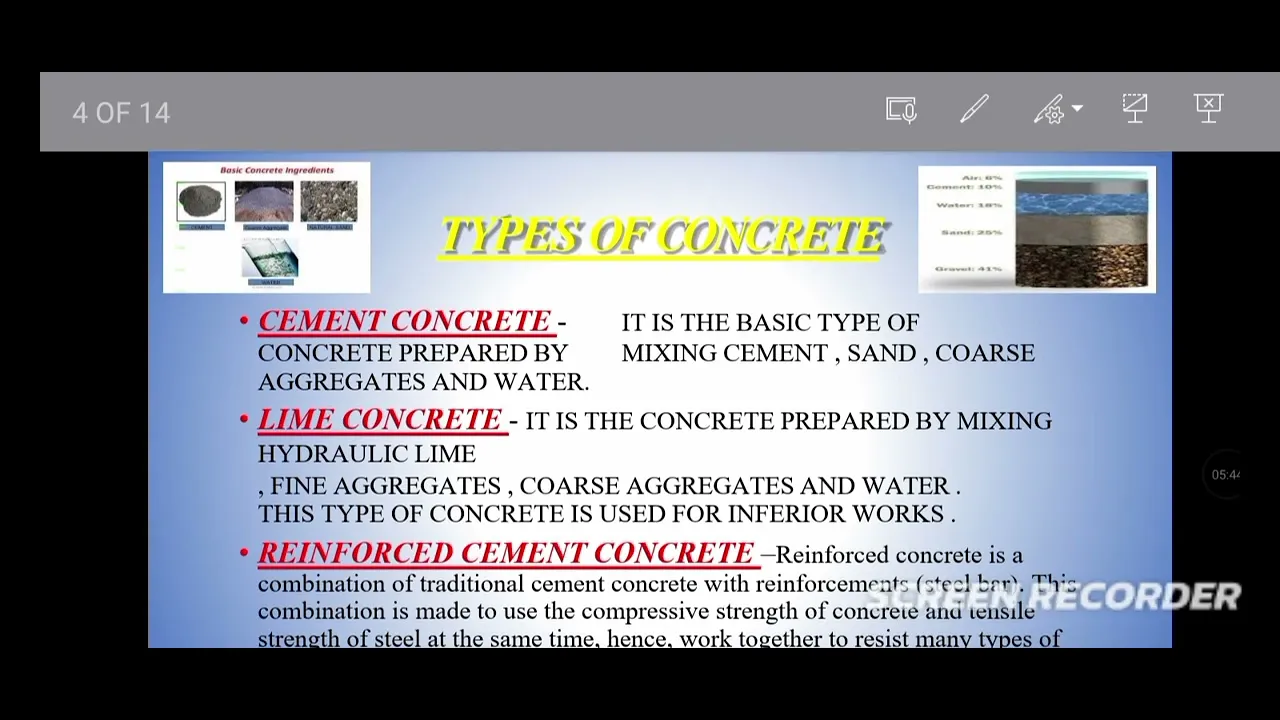









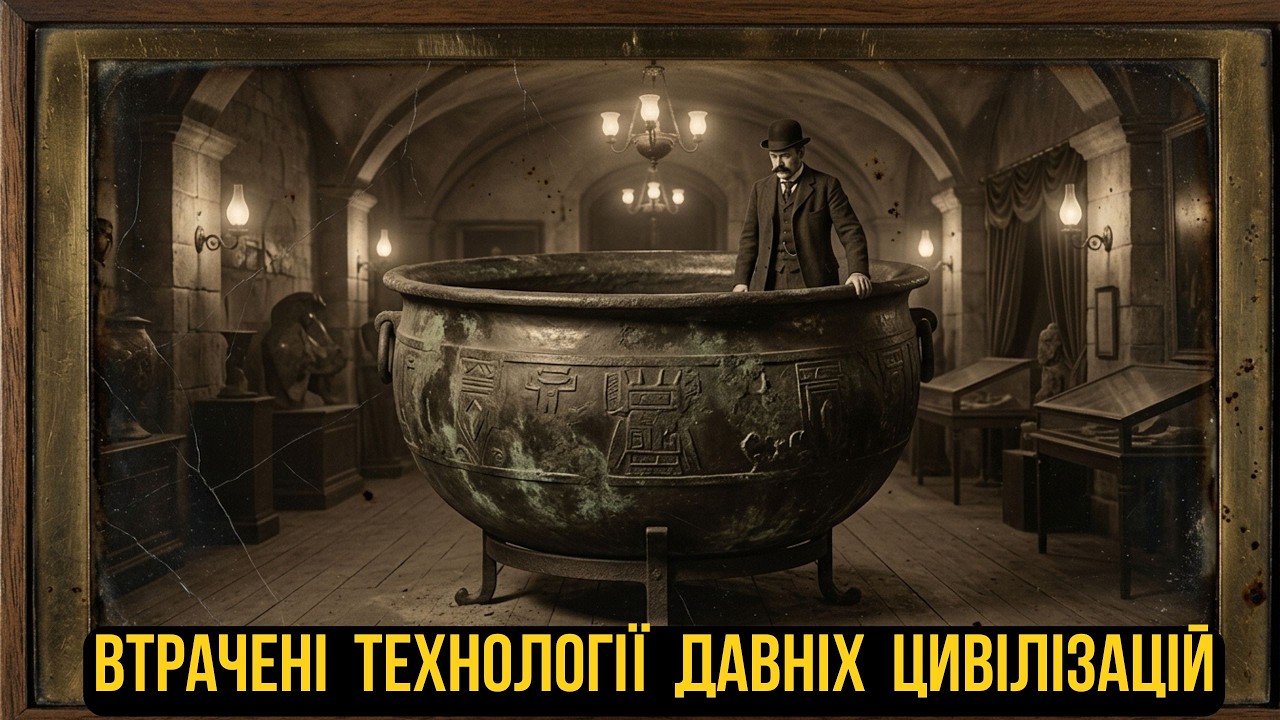
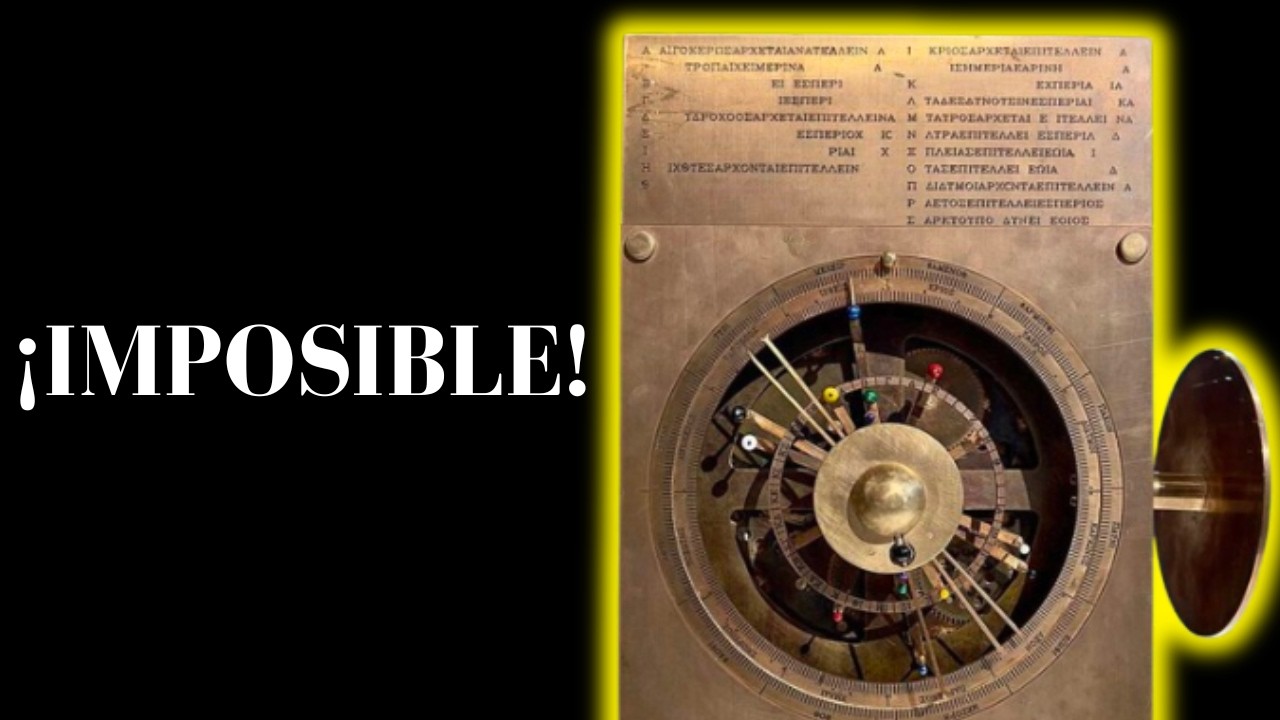

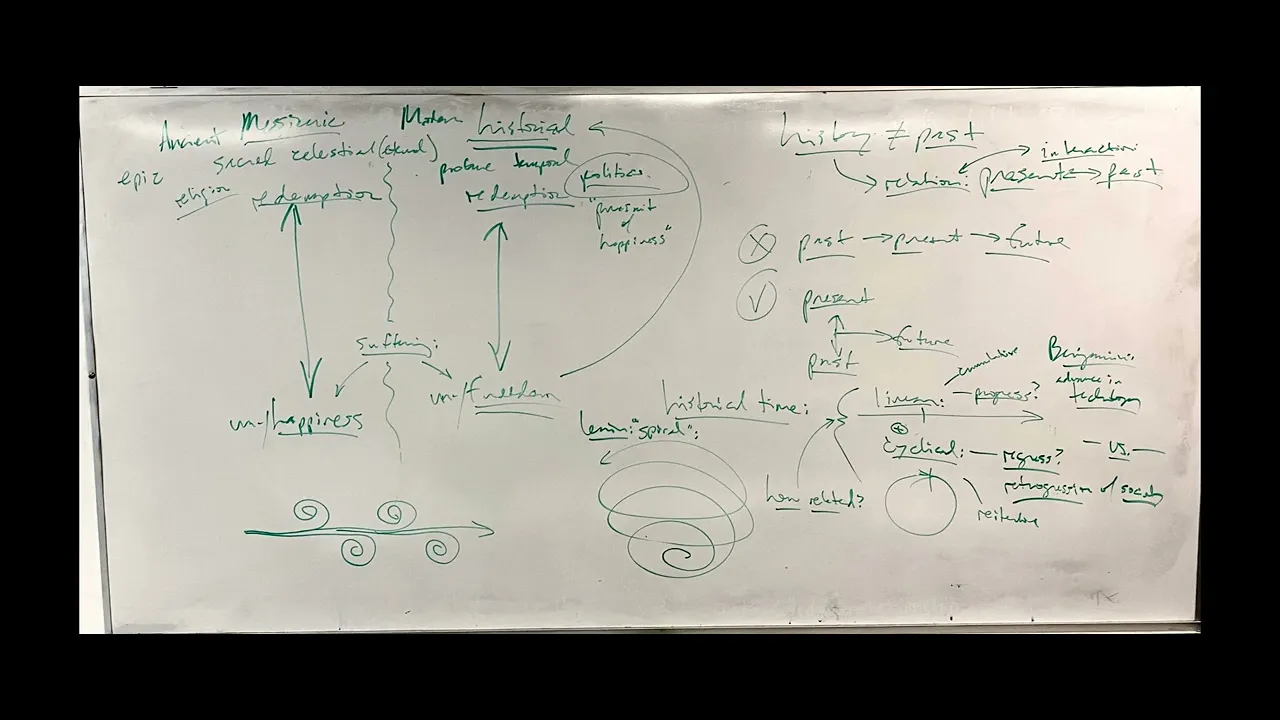


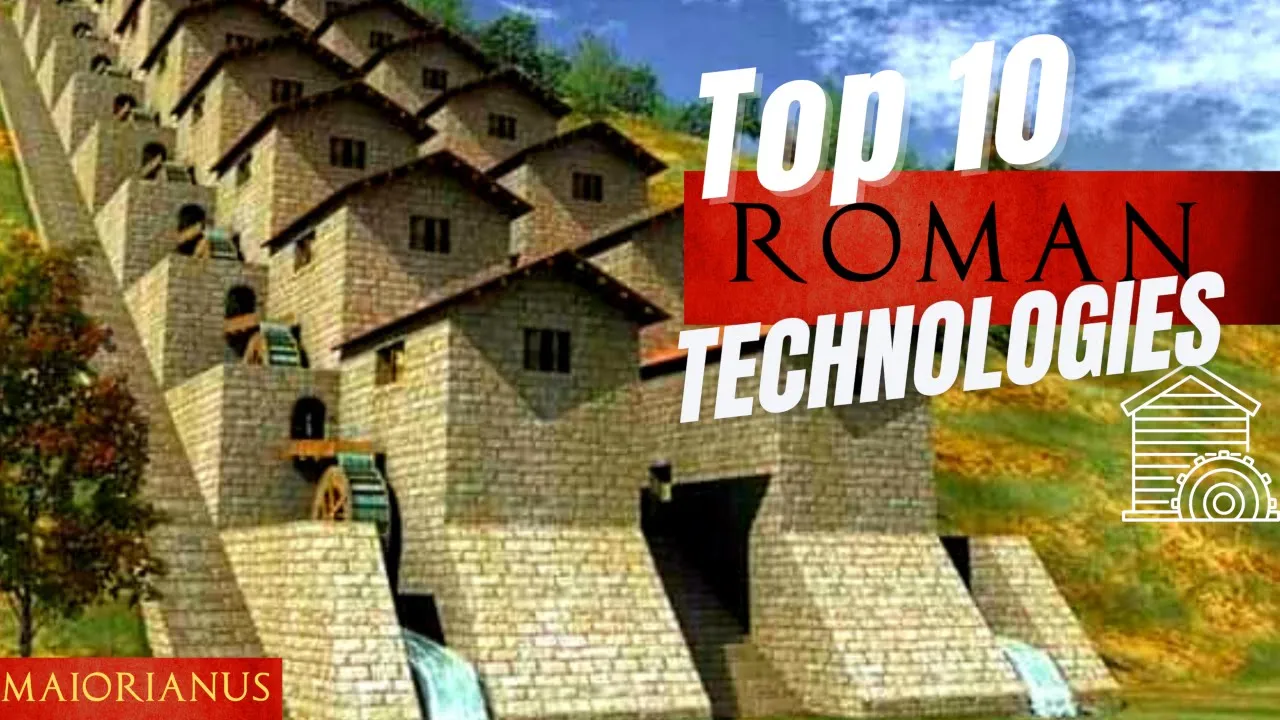


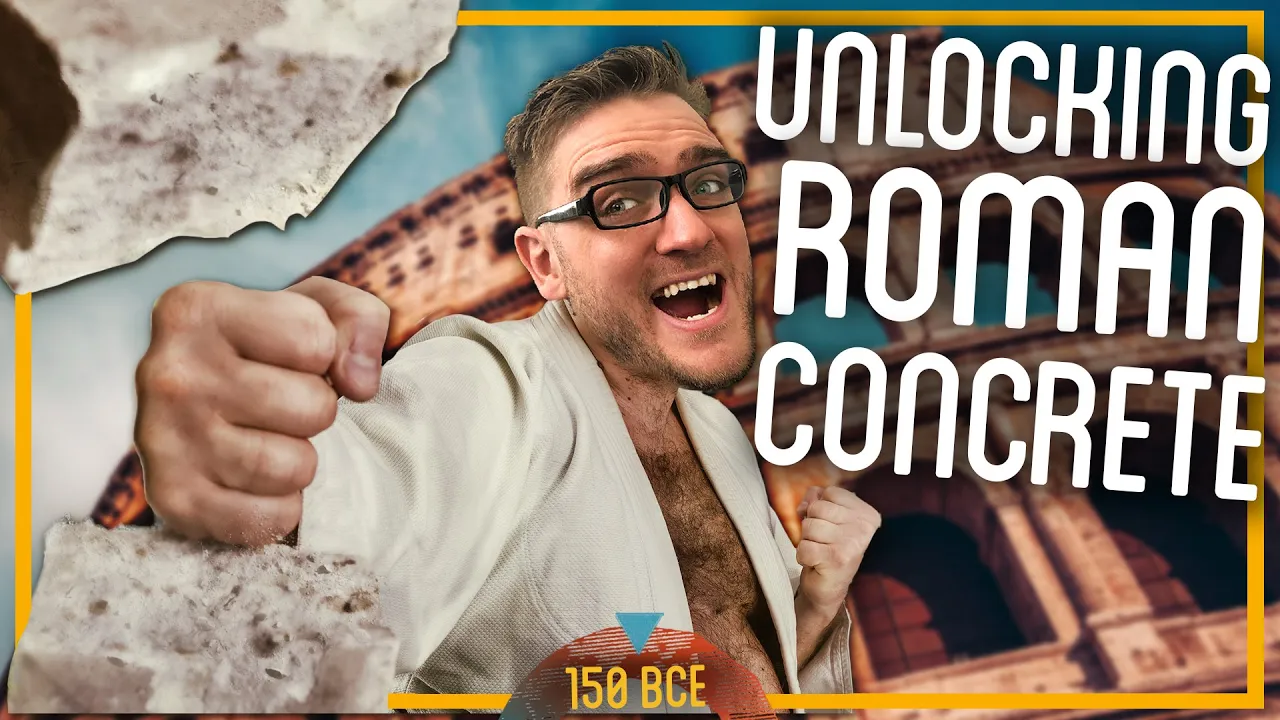










Ancient civilizations developed sophisticated technologies that rival or surpass modern engineering solutions, demonstrating that progress is not a straight line but a web of possibilities. Examples include Roman self-healing concrete that repairs its own cracks using volcanic ash and lime, the Antikythera Mechanism (an ancient Greek analog computer from 200 BCE that could predict planetary positions and eclipses), and Damascus steel containing carbon nanotubes. These innovations reveal that ancient solutions often embraced the world's natural rhythms and worked with nature rather than fighting it, achieving results through deep patient observation and place-based knowledge that modern rapid innovation cycles struggle to replicate.
26 Ancient Technologies That Defy Modern Understanding
Added:A basic chronological understanding of major ancient civilizations, particularly the Greco-Roman world, ancient Egypt, and Mesopotamia.
Fundamental concepts of materials science, specifically how aggregates, binders, and chemical reactions form materials like concrete and mortar.
Basic principles of mechanical engineering, including gear ratios, rotational motion, and simple analog computational mechanisms.
The distinction between linear progress theory (the idea that technology always advances chronologically) and historical cycles of technological loss and rediscovery.
Advanced study in materials science to explore how modern green construction can utilize ancient Roman formulas (e.g., volcanic ash concrete) to reduce carbon emissions.
The history of computing and horology, tracing the lineage of computational design from the Antikythera mechanism to mechanical clocks and modern computers.
The field of experimental archaeology, focusing on how researchers actively reconstruct and test ancient manufacturing and engineering processes.
An investigation into 'lost technologies' through the lens of historical sociology, examining how economic collapse, resource depletion, or social shifts lead to the loss of technical knowledge.
120 views2likes1:22:13Original Release: 2025-10-14
Newer is not always better. Some ancient technologies were so advanced they still baffle our engineers today. By the end of this video, you will discover 26 obsolete inventions that might be smarter than our own.
How did Roman concrete repair its own cracks for 2,000 years? Why can we not replicate the legendary sharpness of Damascus steel? This journey through forgotten genius will reveal secrets from civilizations that mastered their world with incredible ingenuity.
Are you ready to question everything you know about progress? History is filled with brilliant ideas that simply vanished. Our journey of technological advancement does not follow a straight predictable line.
Instead, it is a story of fits and starts where entire libraries of knowledge can be erased by a single war, a shifting trade route, or a society that simply collapses under its own weight.
For centuries, civilizations across the globe developed solutions that were exquisitly tailored to their unique environments. They created technologies that worked with the local climate, the available materials, and the rhythms of nature itself.
This was a form of intelligence deeply rooted in place, a harmony we often struggle to find today. Then came the industrial revolution, a monumental shift that redefined progress.
The new goal was scale, speed, and uniformity. We began to prize machines that could produce millions of identical objects over the artisan who crafted one perfect custom tool.
In this relentless push for standardization, countless specialized innovations were left behind, deemed too slow, too local, or simply too strange for a mass- prodduced world.
This is the crucial context we need to label something as obsolete is not to say it was inferior. It often means it was a perfect answer to a question we stopped asking.
With this perspective in mind, we can truly begin to appreciate the genius we are about to uncover. The Pantheon's magnificent dome has defied time itself, a silent witness to nearly 2,000 years of history.
Its survival is a direct challenge to our modern construction methods where bridges and buildings often show their age within mere decades. The secret lies not in a lost super material but in a forgotten recipe.
Roman builders mixed their concrete with volcanic ash and quicklime creating a far more sophisticated substance than we initially understood. When tiny cracks eventually form and rainwater seeps inside, it triggers a remarkable chemical process.
The water reacts with the volcanic ash and lime, causing new, strong minerals to grow and fill the fractures from within. It is a living material, one that actively heals its own wounds.
Our contemporary Portland cement, by stark contrast, is brittle. Once it cracks, water infiltrates, rusting the internal steel reinforcements and causing irreversible damage.
We are only now, with advanced microscopes, beginning to unlock the precise alchemy the Romans mastered through centuries of practical experience. This self-reping stone represents a profound shift in thinking, moving from fighting nature to working with it.
Such enduring ingenuity is mirrored in another legendary material, one forged not for monuments, but for the finest blades the world has ever seen. From the self-healing stone of Rome, we journey to a device of such intricate complexity, it seems to defy its own era entirely.
Recovered from an ancient shipwreck off the coast of Greece, the Anticha mechanism is a corroded bronze puzzle box that has forced us to rewrite the history of technology.
Crafted around 200 years before the common era, it was not a simple statue or tool, but a breathtakingly precise machine. Inside its wooden case, more than 30 interlocking bronze gears worked in perfect harmony. a miniature mechanical universe driven by a simple hand crank.
This was not merely a calendar. It could predict the wandering paths of planets against the stars, forecast solar and lunar eclipses years in advance, and even calculate the 4-year cycle of the Olympic Games.
It is without exaggeration the world's first known analog computer. The genius of its design is almost incomprehensible.
Modern researchers using advanced threedimensional X-ray scanners discovered something that stunned them.
A complex differential gear system.
This is the same kind of intricate component that allows the wheels on a modern car to turn at different speeds when cornering. We had always believed this engineering concept was invented in the 16th century. Yet here it was fully realized in a device from the ancient world.
The mechanism could track the matonic cycle, a period of 235 lunar months that aligns the sun and moon with an accuracy that would not be surpassed for over a millennium.
This single artifact shatters the linear narrative of progress. It forces a haunting question.
If this one device survived by pure chance at the bottom of the sea, how many other marvels of mechanical computation were lost forever, their genius dissolving into dust and silence?
This spirit of sophisticated observation was not confined to complex machinery, but was also woven into the very fabric of daily life in ways we are only beginning to appreciate.
The same hands that built mechanical computers also forged weapons of mythical perfection. For centuries, the swords of Damascus were the ultimate status symbol for any warrior. Blades so sharp they were said to slice a falling silk scarf in half and so resilient they could cleave through lesser weapons without losing their edge.
Their surface was a flowing watery pattern, a signature of a metallergical secret that modern science has identified but cannot truly resurrect.
The magic began not in Syria but in India with a unique type of highcarbon steel known as woots.
This raw material was a cake of iron packed with carbon melted in a small sealed crucible and cooled over many days. It was this slow controlled process that created an internal microructure of cementite, a very hard iron carbide arranged in bands.
When a skilled damosine smith hammered and folded this steel, they were not just shaping a blade. They were performing an act of nanocale engineering using heat cycles to align these ultra hard carbide bands within a softer, more flexible steel matrix.
The result was the iconic wavy pattern, a visible map of the blade's incredible internal structure. The true genius, however, was invisible to the naked eye.
Modern electron microscopes have revealed that the finest of these blades contained carbon nano tubes, structures so advanced we consider them a modern discovery.
These tiny tubes formed from the specific impurities in the original ore and the unique forging process acted as microscopic reinforcement, giving the steel its legendary combination of hardness that resisted dulling and a toughness that prevented shattering.
This knowledge was not written down in a manual. It was a craft passed from master to apprentice, a tactile understanding of fire and hammer that died out in the 18th century.
The exact recipe for woot steel, the specific mineral impurities in the Indian iron ore and the precise thermal cycles used by the smiths were lost.
Today we can make steel that is very hard and we can make steel that is very tough. But we have not yet managed to perfectly replicate the seamless marriage of both qualities found in an original Damascus blade.
This was not crude blacksmithing. It was a highlevel material science that manipulated matter at the atomic level, achieving through generations of refined intuition what our most advanced labs still struggle to accomplish.
The ancient world's command over materials extended far beyond the forge, reaching into the very air people breathed and the water they drank. While our satellites pinpoint locations from space, the Vikings charted the open ocean using nothing but a piece of crystal.
These legendary Norse explorers ventured across the vast empty North Atlantic long before the magnetic compass was known in Europe. Facing not just storms, but a navigator's true nightmare. The endless overcast skies and dense sea fog that could hide the sun for days.
Their secret weapon was a sunstone, a tool mentioned in their sagas that seemed to border on myth. We now believe these were not magical artifacts, but brilliant applications of natural physics.
The sunstones were likely crystals of a mineral called Iceland spar. A form of calite that possesses a unique property known as brerefingence. This means it splits a single beam of light into two separate rays.
To use it, a Viking navigator would simply hold the clear stone up to the sky and slowly rotate it. Even when the sun was completely obscured by cloud cover or had just dipped below the horizon, the scattered sunlight in the atmosphere remains polarized, its light waves vibrating in a specific direction aligned with the sun's hidden position.
As the crystal was turned, the navigator watched the two glowing images within it. At the precise angle where the two images matched in brightness, the crystal's axis would point directly toward the sun.
Modern experiments have proven this method is startlingly accurate, capable of locating the sun's position within a single degree, even in the hazy twilight of a Nordic evening.
This was not a vague guess. It was a reliable, repeatable scientific instrument carved by nature and understood by human ingenuity. With this crystal compass, Viking sailors could maintain their east west course across featureless waters. A feat that allowed them to reach Iceland, Greenland, and even the coast of North America.
Their entire expansion was built upon a sophisticated understanding of light's hidden behavior. A technology that required no batteries, never broke down, and worked anywhere on the planet.
This deep celestial knowledge, the ability to read the sky itself, was a thread that connected many ancient cultures, each developing their own intricate systems to map the heavens.
High above the jungle floor, the Mayan observatory of El Cararacol stands as a silent stone calculator. Its name, the snail, comes from the spiral staircase within, a structure that seems more like a modern astronomical instrument than a temple.
The Mayer did not merely watch the stars. They integrated celestial mechanics into the very bones of their architecture. Narrow slots in the observatory's walls frame specific points on the horizon, acting as fixed sights to track the complex dance of planets against the backdrop of fixed stars. Their primary fascination was Venus, the morning and evening star, which they tracked with a precision that would not be matched in Europe for centuries.
They developed detailed Venus tables carved into stone that could predict the planet's appearances and disappearances over a 384year cycle.
The margin of error in these predictions was a mere 2 hours across this immense span of time. This was not guesswork. It was the result of generations of meticulous naked eye observation, a data collection project of staggering scale and patience.
Their calculations were so refined that they had determined the length of the solar year to be 365.2420 days.
This is even more accurate than the 365.2425 days of the Gregorian calendar we use today. A system introduced more than a thousand years later.
They achieved this without telescopes, without a written mathematical notation of plus or minus signs, and without the concept of zero as we know it, relying instead on a complex base 20 numeral system and an unbroken chain of recorded observation.
Their entire civilization was synchronized to the cosmos with building alignments marking solstesses and equinoxes with pinpoint accuracy, turning entire cities into grand stone calendars.
This profound focus on cyclical time reveals a world view where human events were intimately tied to celestial patterns. A perspective on the calendar that stands in stark contrast to another ancient system born from the challenge of survival.
The Maya built their calendar with stone, but the Inca built theirs with string across the spine of the Andes, the largest empire in the pre-Colombian Americas, was administered without a single page of written text.
Instead, the Inca relied on the quipoo, a deceptively simple device of knotted cords that served as the administrative backbone of a civilization. At first glance, a quipoo looks like a tangled fringe of colored strings.
But to a trained quipok, or not keeper, it was a dynamic and sophisticated recordkeeping system. Each quipu consisted of a main cord from which dozens of pendant cords hung.
The type of knot, its position on the string, the color of the cord, and even the spin of the fibers carried specific meanings. A single knot could represent a number using a base 10 positional system remarkably similar to our own.
But the system was far more than just an ancient calculator. The arrangement of chords could log census data, track tributes of corn or cloth from distant provinces, and record the complex cycles of the lunar calendar.
Some researchers now believe that certain quippers with their unique arrangements of colors and knot types may have encoded full narratives, histories, and genealogies, making them a true three-dimensional writing system.
Think of it not as a book, but as a physical database. The knots were the data points, the colors were the categories, and the structure of the chords formed the relationships between them.
A modern database architect would instantly recognize the logic, a hierarchical tree structure where information is nested and connected in a way that is both flexible and robust.
This system allowed Inca administrators to manage an empire spanning thousands of miles of some of the most rugged terrain on Earth. A runner could carry a quipoo from a remote mountain village to the capital at Kusco, and a court official could read the exact status of that province's resources at a glance.
The efficiency was breathtaking. Yet for all our understanding of its numerical codes, the full language of the quipu remains just beyond our grasp. We can read the numbers, but the stories, the names, and the laws are still silent, their meaning lost with the last generation of notke keepers.
This was a technology of memory woven into physical form, a testament to the fact that intelligence is not bound to the flat page. It challenges our most basic assumption that writing is the pinnacle of communication, suggesting instead that there are other equally valid ways to structure and preserve complex knowledge.
Moving from woven knowledge to carved stone, the Great Pyramid of Giza presents an engineering puzzle on an entirely different scale. This is not a tool you can hold in your hand, but a mountain crafted by human intention. A structure so precise it defies simple explanation even with our modern understanding.
How did a society with bronze tools and no pulleys quarry transport and position millions of limestone blocks each weighing an average of 2 and 1/2 tons with such breathtaking accuracy.
One clue emerged from a tomb painting that showed workers pouring water onto the sand in front of a massive sled carrying a colossal statue. For a long time, this was seen as a ceremonial act.
But physicists decided to test this in a lab, building a miniature sled and pulling it through dry and then wet sand. The result was astonishing. The required pulling force was cut in half.
The water, it turns out, creates capillary bridges between the sand grains, tiny bonds that dramatically reduce friction. This was not a ritual.
It was a practical application of physics, a simple yet brilliant trick that turned a nearly impossible task into a manageable one. But the mysteries only deepen from there. The pyramid's base is almost a perfect square with its sides aligned to the four cardinal directions with an error of just 115th of a single degree.
This makes its orientation to true north more accurate than the Royal Observatory in Greenwich, London, a building constructed with the aid of telescopes and precision clocks.
Even more curiously, the pyramid's perimeter divided by its height gives a value very close to 2 * pi, the mathematical constant. Was this intentional?
We may never know for sure, but it suggests a profound understanding of geometry and the shape of our world that seems to belong to a much later age.
Then there is the pyramid's internal environment. While the desert outside swings from scorching days to chilly nights, the temperature deep within the pyramid's main chambers remains a constant 68° F.
This is not an accident. The pyramid structure with its specific air shafts and massive stone thermal mass acts as a natural climate control system stabilizing the interior against the harsh external world.
and it has done so for over 4 and a half thousand years, surviving earthquakes that would topple modern structures. The entire edifice is designed with a slight convex curvature on its faces, a feature that allowed it to settle without collapsing and that helps distribute seismic energy.
Modern engineers using contemporary materials would struggle to replicate this combination of precision, environmental control, and longevity.
The pyramids stand not as crude tombs of a primitive people, but as the ultimate expression of a lost architectural science, a harmony with natural forces that we are only beginning to decode.
This mastery of stone and environment finds a fascinating parallel in another part of the world where an entire civilization carved its home directly into the living rock.
While the pyramid stood as monuments to a stable world, other innovators were building devices to sense the very moment that world shook apart. In the year 132 during China's Han Dynasty, the brilliant inventor Cang Hang unveiled a machine that seemed to defy logic, the world's first seismoscope.
It was not a crude tool, but a masterpiece of art and engineering. A large bronze vessel adorned with eight dragon heads, each one poised over a corresponding bronze frog with its mouth open wide.
Inside this vessel lay the secret, a complex and precisely balanced mechanism centered on a heavy pendulum. The true genius of Jang Hen's design was its ability to do more than just detect a tremor. It could point toward its origin.
When an earthquake struck, even 100s of miles away, the seismic waves would travel through the ground and jolt the vessel. The internal pendulum would swing, triggering a clever system of levers, or perhaps toppling a delicately balanced post.
This action would cause just one of the eight dragon heads to release the bronze ball held in its jaws. The ball would clatter into the mouth of the frog below, loudly announcing not only that an earthquake had happened, but from which direction it had come. Imagine the awe of court officials when on one documented occasion, a dragon released its ball without anyone in the capital feeling a single tremor.
Skeptical of the machine's report, they dismissed it as a fluke. Days later, a messenger arrived on a lthered horse reporting a massive earthquake in a province far to the west, exactly in the direction the dragon had indicated.
Modern engineers have built reconstructions based on the limited historical descriptions, and they believe the device used an inverted pendulum principle, a concept so advanced it would not be independently developed in the West for another 1700 years.
The precise internal workings remain a tantalizing mystery lost to time. Jang Hen seismoscope was more than a scientific curiosity. It was a functional early warning system, a device that gave an empire a crucial head start in sending aid to a devastated region.
This was not magic. It was the application of elegant mechanical principles to solve a fundamental human problem, the threat of unpredictable natural disaster.
It stands as a powerful reminder that our modern struggle to predict earthquakes is not new and that ancient wisdom may still hold lessons for our own safety.
In the blistering heat of the Persian desert, where summer temperatures could melt modern resolve, ancient engineers built winter. Their tool was the Yakul, a magnificent domed structure rising from the sand like a giant beehive.
This was not a temple or a tomb, but a functional ice maker, a machine without moving parts that defied the very climate surrounding it. The magic began with a clever understanding of physics.
As night fell in the desert, the temperature could plummet dramatically.
Engineers would channel a thin sheet of water into shallow shaded pools at the base of the yakul.
The dry, cold night air would rapidly pull heat from this water through evaporation, often freezing it completely by dawn. But how do you keep ice from melting under a scorching sun?
The yakual's design was the answer. Its massive walls were built from a special mortar called Souge, a mix of sand, clay, egg whites, lime, and goat hair that was not only waterproof, but provided incredible insulation.
A wind catcher, a tall chimney-like tower, would constantly funnel cool breezes down into a deep underground storage pit, while the hot air inside would naturally rise and escape through a vent at the very top of the dome.
This created a self- sustaining cycle of refrigeration. The result was a yearround supply of ice in the middle of a desert used to preserve food, create chilled treats, and even cool the buildings of the wealthy.
This was not a smallcale experiment.
Some of these structures could store enough ice to last through the entire summer, maintaining a constant internal temperature even when the world outside was an oven.
Modern architects are now looking back at these principles, studying the yakel's passive cooling as a blueprint for sustainable design. It represents a perfect harmony with the environment using the natural cycles of day and night, wind and earth to achieve a modern luxury without a single watt of electricity.
This profound mastery of thermodynamics without consuming power stands in stark contrast to another technology that also shaped the world without fuel. One that moved mountains to bring life to entire civilizations.
The same spirit of working with nature rather than fighting it is beautifully captured in the fields of ancient America. Long before the arrival of European settlers, Native American tribes had perfected a form of agriculture so intelligent it created its own miniature ecosystem.
It is known as the three sisters, a planting method that combined corn, beans, and squash in a single mound.
This was not a random grouping. It was a carefully orchestrated partnership where each plant played a vital supporting role.
The corntock grew tall and sturdy, becoming a natural living trellis for the climbing bean vines. The beans, in a feat of natural magic, pulled nitrogen from the air and fixed it into the soil, acting as a self-relenishing fertilizer for the nutrient- hungry corn.
And the broad sprawling leaves of the squash plant created a living mulch on the ground below, shading the soil to lock in moisture and smothering competing weeds with their prickly stems.
Together, these three crops formed a self- sustaining cycle of growth. This single system produced a more complete nutritional profile than any single crop could. And it did so while actively improving the soil year after year, generation after generation.
There was no need for imported chemical fertilizers or synthetic pesticides because the system itself was the solution. Modern industrial agriculture with its vast monoculture fields is now confronting the severe limitations of its own model including soil depletion and pesticide resistance.
In response, many farmers and researchers are looking back to this ancient policulture recognizing it as a blueprint for a more resilient and sustainable future.
The three sisters was more than a farming technique. It was a philosophical statement, a testament to the power of cooperation over domination. This deep holistic understanding of the land as a web of relationships extended far beyond the garden, shaping entire landscapes through fire and foresight.
A simple clay pot unearthed from the dust of an Iraqi village quietly appends our entire timeline of electrical discovery. Found in 1938, these artifacts from the Paththean period, over 2,000 years old, are deceptively mundane in appearance.
Each jar contained an iron rod nestled inside a rolled copper cylinder sealed at the top with asphalt. To an archaeologist, it was a curious puzzle.
But to an electrical engineer, it was a recognizable blueprint for a galvanic cell. When filled with an acidic electrolyte, something as common as vinegar or grape juice, the chemical reaction between the dissimilar metals generates a flow of electrons.
A modern recreation proves it works, producing a consistent 1.1 volt of electricity. That is enough power to make your finger tingle or more significantly to deposit a thin layer of metal onto another object.
This is the fundamental process of electroplating, gilding a less valuable object with a shimmering coat of gold or silver. While some scholars debate whether these jars were used for religious rituals or medical therapies, the practical demonstration is undeniable.
They could have been used as batteries.
This means that the basic principles of electrochemistry were not invented by Alessandro Volter in the 19th century, but were potentially understood and applied in ancient Mesopotamia.
Imagine the implications. A skilled artisan could have used a bank of these clay pots linked together to create a sufficient current to electroplate a small statue or a piece of jewelry, achieving a luxurious finish without the immense cost of solid gold.
This is not about ancient light bulbs or forgotten power grids. It is about a different kind of intelligence, one that observed natural chemical reactions and harnessed them for practical art. The Baghdad batteries represent a technological branch that was never fully explored. A path that was closed off by time, leaving us to wonder what other electrical secrets were lost, waiting to be rediscovered in the most unassuming of places.
Standing in the heart of Delhi for over 1,600 years is a 7 ton iron pillar that has never rusted. It endures scorching summers and drenching monsoon seasons.
Yet its surface remains smooth and uncorroded. A silent defiance of a fundamental law of nature we take for granted.
Modern metalologists armed with electron microscopes and spectrographic analysis have finally uncovered its secret. The answer lies not in a magical coating, but in the pillar's very chemical soul.
The iron contains an unusually high amount of phosphorus, a result of the specific iron ore and the unique smelting process used by ancient Indian metal workers.
They would forge the iron by hammering it together in a process called forge welding using high phosphorus charcoal that infused the metal with this key ingredient.
This high phosphorus content combined with very low levels of sulfur and manganesees encourages the formation of a thin, invisible, and remarkably stable protective layer called misawite.
When rain hits the pillar, this film solidifies into a hard protective shell that actively shields the iron beneath from oxygen and moisture, preventing the destructive reaction we know as rust. In our modern steel production, we do the exact opposite. We systematically remove phosphorus as a harmful impurity because it can make steel brittle under the intense forces of industrial rolling mills. Our quest for a different kind of strength has inadvertently made our steel vulnerable to its oldest enemy. We build bridges and skyscrapers that require constant expensive painting and maintenance to fight a battle. This ancient pillar has been winning effortlessly for millennia.
The Delhi pillar is not a fluke. It is a monument to a different chemical logic.
A perfect recipe for longevity that we deliberately abandoned in pursuit of other goals.
This profound mastery of materials creating objects meant to last for ages makes one wonder what other formulas for permanence were perfected in the ancient world.
While the Delhi pillar stood as a testament to permanence, another ancient invention offered a fleeting glimpse of a future that never arrived. In the first century, within the great library of Alexandria, an engineer named Hero described a device of startling ingenuity, the ilile.
Often called the world's first steam engine, it was a simple yet profound sphere mounted on a boiler. As the water boiled, steam traveled through pipes into the sphere, then blasted out from two bent nozzles on opposite sides.
The reactive force of these steam jets caused the sphere to spin. A whirling metal demonstration of Newton's third law of motion, every action having an equal and opposite reaction. A principle that would not be formally defined for another 1700 years.
This was not just a toy. It was a functional steam turbine, a machine that converted thermal energy directly into rotational force. The basic principle was identical to the jet engines that would one day power aircraft across oceans.
Yet for the Greeks and Romans, the Eipile remained a temple wonder, a fascinating curiosity to be displayed alongside other marvels. They saw its potential for spectacle but not for society.
Historians have long pondered this great divergence. Why was this technology never connected to a wheel, a pump, or a mill? One compelling theory points to the economic reality of the ancient world. With abundant slave labor readily available, there was little financial incentive to invest in developing complex mechanical alternatives. The intellectual framework was also different.
The classical mind for all its genius in geometry and philosophy had not yet developed the concept of mechanical power as a transformative force for industry.
The eipile was a solution in search of a problem that its culture did not yet recognize. This single device contained the seed of the industrial revolution.
Yet it laid dormant for centuries.
It forces us to confront a humbling thought. The potential for technological transformation can be present, understood, and even demonstrated, yet remain utterly dormant without the right social and economic conditions to nurture it.
What other worldchanging ideas have we ourselves overlooked simply because we lack the framework to see their true potential? Even as Hero's steam engine spun in place, another machine was navigating a far more complex problem on the open road. The Chinese southpointing chariot was a masterpiece of mechanical intuition, a carriage-mounted figure that would perpetually point one outstretched arm toward the south, no matter how many times the vehicle turned or twisted its path.
This was not a magnetic compass. It had no mystical connection to the Earth's poles. Its secret lay in a hidden world of precisely calibrated gears, a system of pure mechanical computation that continuously solved a complex navigational equation.
Inside the chariot, a brilliant differential gear system similar in principle to the one in the Antithther mechanism constantly compared the rotations of the two wheels.
When the chariot traveled in a straight line, both wheels turned at the same rate and the gears remained locked. But the instant the chariot turned a corner, the inner wheel would naturally rotate slower than the outer one.
This difference in rotation was the key input. The gear train automatically calculated this differential, translating the variance into a compensating rotation for the figure on top.
It would turn precisely enough to cancel out the chariot's change in direction, keeping its arm forever aimed at true south. Think of it as a mechanical brain that understood calculus, constantly integrating every turn to maintain a fixed celestial bearing.
Modern engineers who have built working replicas have confirmed its stunning accuracy over long meandering journeys.
This was an analog computer performing a function we now assign to digital GPS satellites, achieving the same result through the pure language of gears and levers.
The chariot represents a technological path not taken, a world where complex problems were solved with elegant mechanics rather than silicon chips. It stands as a powerful sibling to the antither mechanism. proof that the ancients were not just building tools, but were creating thinking machines.
This lineage of mechanical intelligence challenges our modern bias that electronics are the only path to a smart world, reminding us that gears too can hold a profound and unairring wisdom.
While the Chinese chariot calculated direction with gears, the Romans engineered entire buildings for perfect warmth, deep beneath the mosaic floors of a Roman villa, a quiet revolution in comfort was taking place.
This was the hypocost, a central heating system so sophisticated that its principles are only now being fully appreciated by modern sustainable architects.
The system began with a wood burning furnace, the prefernium, often stoked by servants or slaves. But the genius was in the distribution. Instead of letting the heat vanish up a chimney, the Romans channeled the hot air and gases through a carefully engineered void beneath the raised floors of the building.
Rows of short, sturdy brick pillars, the pilly stacks, supported the floor, creating a hidden labyrinth through which the heat could slowly circulate.
From there, the warm air would rise through hollow box tiles embedded in the walls before finally escaping through vents in the roof. This was not just heating.
It was radiant heating. The massive stone floors and walls would absorb the heat, becoming a single giant thermal battery. Once warmed, this thermal mass would gently release the energy over many hours, creating an even, stable temperature throughout the entire space without the drafts or dry air of our modern forced air systems.
Imagine the feeling of a warm stone floor underfoot on a cold morning. a luxury we now associate with expensive modern installations. The Romans achieved this on a grand scale, heating not just private homes, but vast public bath complexes with soaring ceilings.
The engineering was meticulous. The flu systems had to be carefully sized to ensure proper draw. The floor supports engineered to bear immense weight without collapsing. and the entire structure designed to prevent deadly carbon monoxide buildup.
The proof of its effectiveness is in its endurance. Some hypocost systems remained in continuous operation for centuries, a lifespan that puts our modern furnaces with their decadel long expected service lives to utter shame.
This was not brute force technology. It was an elegant dance with physics using thermal mass and radiant principles to create comfort with remarkable fuel efficiency.
We are now in our quest for green building, relearning these ancient lessons, installing underfloor radiant heating and designing homes with thermal mass to stabilize temperatures naturally.
The hypocost stands as a powerful reminder that true sustainability is not always about inventing something new, but sometimes about rediscovering a timeless intelligence woven into the very foundations of our past.
A pharaoh's iconic black eyeliner was far more than a statement of divine beauty. In the marshes of the Nile Delta, where bacterial laden water made eye infections a constant threat, this makeup was a sophisticated form of preventive medicine.
Modern chemists analyzing ancient cosmetic pots were stunned to find their key ingredient was not a harmless mineral, but lead. Our immediate reaction is one of horror, knowing lead as a potent neurotoxin.
Yet the Egyptians were not making a deadly mistake. They had perfected specific leadbased compounds like laurionite and fostite which they synthesized through a week's long process of grinding and aging in specially designed vessels.
These were not raw poisonous ores. They were engineered nanomaterials. When applied in a paste around the eyes, these lead salts performed a kind of microscopic magic.
They gently stimulated the skin cells to produce nitric oxide, a key signaling molecule that supercharges our local immune response. This created an invisible protective barrier on the eyelid, actively fighting off bacteria and preventing infections before they could even begin.
In essence, the wearer was applying a daily lowd dose antimicrobial treatment.
This turns our modern understanding of toxicity on its head. We see lead as universally dangerous and for good reason in most contexts.
But the Egyptians demonstrated that the dose, the chemical formulation and the application method are everything. They had stumbled upon a principle of nanome medicine using specially prepared particles to trigger a beneficial biological response. a concept our own medical science is only now beginning to master with targeted drug delivery.
This was not a lucky guess. It was the result of generations of careful observation and refinement. A testament to a culture that viewed cosmetics and health as two sides of the same coin.
Their coal pots were in fact some of the oldest pharmaceutical kits in history.
This intricate dance between adornment and survival reveals a world view you where every aspect of daily life was an opportunity for applied science. A philosophy that extended far beyond the human body and into the very heart of their cities. Far out in the vast Pacific, a navigator stands alone on a canoe's prow. His only compass the dome of stars above. The Polynesian voyagers who settled islands from Hawaii to New Zealand accomplished this with a mental technology of staggering sophistication.
A living database of the cosmos passed down through chance and stories.
Their star compass was not a physical object, but a conceptual map of the sky divided into 32 directional houses. Each house held a sequence of stars, a celestial pathfinder that would rise and set at a specific point on the horizon.
A navigator memorized hundreds of these stars and their pathways, creating a mental globe that rotated through the night. If the star Arcturus was your guide to Hawaii, you simply kept your canoe positioned so that it rose at the same point night after night. But their genius did not end with the stars. When daylight came or clouds obscured the sky, they read the ocean itself as a text. They learned to interpret the subtle patterns of ocean swells, feeling how the hull of their vessel reacted to deep rolling waves that had bounced back from islands hundreds of miles away.
They watched for specific species of birds that flew out to sea to fish, but always returned to land at dusk, turning them into living compasses. They could spot the greenish reflection of a lagoon on the underside of distant clouds, a phenomenon we now call cloud glow.
This was not a collection of separate tricks. It was a single unified system of environmental literacy where every sensory clue from the sea, the air, and the sky was woven together into a coherent picture of position and direction.
This knowledge was so sacred and complex that training began in early childhood with elders teaching children to memorize star paths by using stones laid out on the ground long before they ever set foot on a voyaging canoe.
In the 1970s, to prove this was not just legend, the Polynesian Voyaging Society built a traditional doublehold canoe named Hokua. Guided by the master navigator Mao Pialug, who carried this entire system in his mind, they sailed from Hawaii to Tahiti without maps, without a compass, and without a single sextant.
They used only the stars, the swells, and the flight of birds, completing the 2,500m journey with breathtaking accuracy. This achievement highlights a profound divergence from our modern approach.
We have outsourced our navigational intelligence to satellites and screens, separating the functions of the Polynesian Master into a GPS for position, a radar for obstacles, and a weather app for forecasts.
We gain incredible precision, but we lose the holistic connection, the ingrained sense of place that comes from reading the world directly. The Polynesian wayfinder did not simply calculate a route. They conversed with their environment, maintaining a relationship with the ocean and the sky that was both practical and deeply spiritual.
This integrated knowledge challenges the very core of our fragmented technological world, asking us what we have sacrificed in our pursuit of ever more specialized tools.
Those soaring stone vaults were not built by faith alone, but by a revolutionary understanding of force and form. Gothic cathedrals are a paradox of stone, appearing impossibly light and delicate despite their immense scale.
Their secret was the flying buttress, an architectural innovation that looks like a stone scaffold braced against the building. This was not just a support.
It was an external skeleton that cleverly redirected the crushing weight of the roof and vaults away from the thin interior walls and out down into the ground.
This brilliant redistribution of force is what allowed those walls to be replaced with vast luminous panels of stained glass, filling the space with colored light in a way that had never been possible before.
Modern structural engineers analyzing these cathedrals find the principles sound, a perfect balance of thrust and counter thrust achieved through stone.
But the medieval masons who designed them did not use the complex mathematical equations we rely on today.
Theirs was a knowledge written in geometry and passed down through guilds, a tactile, intuitive understanding of how stone behaves under pressure.
Each block was precisely cut, often with unique, irregular shapes that locked together into a monolithic hole. A three-dimensional puzzle that has withtood centuries of storms and even earthquakes.
Many of our own steel and concrete structures, by contrast, show their age within 50 years, requiring costly repairs and constant maintenance. The longevity of these cathedrals is a humbling lesson in building for permanence.
Beyond their structural genius, these spaces were engineered for the human soul and the human ear. The specific curves of the vaults and the exact proportions of the naves were not arbitrary.
They were calculated through this geometric intuition to create perfect acoustics for the human voice and for coral music. The reverberation time, the way sound lingers and blends in the air is something modern architects with all their digital modeling tools still find difficult to achieve with such consistent perfection.
A single chant or chord can fill the entire space becoming a tangible enveloping experience. This was the ultimate goal, a complete fusion of art, spirituality and engineering where the structure itself was an instrument designed to elevate both sight and sound.
We have largely separated these disciplines in our contemporary world where an engineer designs the structure and architect the form and an acoustician is brought in later to fix the sound.
The Gothic master builder held all these roles in one mind, creating an integrated masterpiece that challenges our fragmented approach to design. It asks us whether our modern buildings, for all their efficiency, have lost the capacity to inspire such awe, to speak so directly to our senses and our spirit.
While Gothic cathedrals reached for the heavens, another civilization was performing miracles deep beneath the earth. In the heart of the desert, where surface water vanishes in a shimmer of heat, Persian engineers built rivers that ran in permanent shadow.
These were the Canuts, a labyrinthine network of underground canals that transformed barren lands into flourishing oases. The process began with the discovery of a water source, often at the foot of a mountain where groundwater collected.
From there, builders dug a mother well, sometimes plunging hundreds of feet down to reach the hidden aquifer. But the true genius was in the channel that stretched from this well.
Skilled surveyors using nothing more than simple sighting tools and an intuitive grasp of gravity would plot a tunnel with a slope so gentle it was barely perceptible.
This tunnel would then be dug backward toward the destination city or farmland with vertical access shafts sunk every 100 ft or so to remove debris and provide ventilation.
The result was a self- sustaining water highway. Because it flowed entirely underground, the precious liquid was shielded from the relentless desert sun, losing almost nothing to evaporation.
A single cannard could wind for dozens of miles. Its cool, clean water emerging exactly where it was needed, year after year, century after century. Some of these systems have delivered water without interruption for over 3,000 years. A longevity that puts our modern pump systems with their massive energy demands and frequent breakdowns to shame.
This was not just plumbing. It was landscape scale engineering that created its own world. Where a canat surfaced, it gave birth to a microclimate. Lush gardens and orchards would spring up, the air cooled by the evaporation from the water channel.
The access shafts even served as natural refrigerators where food could be stored in the constant cool underground temperature. The entire system was a masterpiece of passive sustainable design, requiring no fuel and only the most basic maintenance to clear the occasional silt.
Today, as modern mega cities in Arab regions grapple with depleted aquifers and soaring energy costs for water pumps, engineers are looking back at the Canat with renewed respect.
This ancient approach to resource management demonstrates a profound principle we are desperately relearning today that the most intelligent systems are often those that work in silent harmony with the forces of nature, not against them.
Deep within the tombs of ancient Chinese emperors, bronze vessels rest as monuments to a lost industrial art.
During the Shang and Zu dynasties, metal workers did not simply cast bronze. They composed with it, creating ritual cauldrons and wine beers of such intricate beauty that modern engineers are left in awe.
Their secret was a revolutionary technique known as peace mold casting. A process so complex it stands in stark contrast to the simpler lost wax method used elsewhere in the ancient world.
Instead of carving a single model in wax, Chinese artisans would first create a precise model of the final vessel in clay. This model was then used to press individual sections of a negative mold, also made of fired ceramic.
Each section was a puzzle piece carefully engineered to lock together with its neighbors. The true genius was that the artisan could then carve the most elaborate designs directly into the inner surfaces of these fired clay molds before assembly. A step that allowed for absolute control over the finest details.
Imagine a complex pattern of interlacing dragons or swirling thunder patterns being etched in reverse into the mold ceramic skin. The molds were then perfectly assembled around a clay core, leaving a thin uniform gap into which the molten bronze was poured.
When the metal cooled and the ceramic shell was broken away, the vessel emerged with its decoration cast directly into the metal, seamless and sharp.
This method was not just about artistry.
The metallogy itself was a science of precise recipes. These master smiths understood that the properties of bronze were dictated by its tin content.
For a ritual bell that needed a perfect resonant chime, they used an alloy with around 20% tin. For a sharp, durable sword, the ratio was closer to 17%.
And for a flexible, longlasting tool, they might drop to just 10%. They were in effect custom mixing their metal's molecular structure for its intended purpose. A concept we call materials engineering today.
The results were surfaces adorned with dense interlocking patterns so fine and three-dimensional that even with computer aided design and advanced investment casting, a modern foundry would find them extraordinarily difficult and costly to reproduce.
This was a technological tradition that developed in complete isolation. A parallel path of innovation that reached a zenith of technical and artistic expression unmatched for over a thousand years.
The loss of such specialized manufacturing knowledge is a quiet tragedy reminding us that some peaks of human ingenuity once abandoned cannot be easily scaled again.
A painting on a cathedral wall appears as nothing more than a strange elongated smear of color. But take three steps to the left and the distorted shapes snap into focus, revealing the serene face of a saint gazing down from the heavens.
This was the magic of Renaissance anamorphic art. A clever manipulation of perception that turned a flat surface into a dynamic interactive experience.
Artists like Hans Holbean the Younger did not just paint what they saw. They painted what the viewer would eventually discover. A process demanding a revolutionary grasp of geometry.
To create these illusions, an artist had to first imagine the perfect undistorted image. Then they would mentally project that image onto an imaginary skewed plane as if it were being stretched across a folded piece of paper or reflected in a curved mirror.
Every brush stroke on the actual canvas was a calculated correction for this imagined distortion. This was a highwire act of visual reasoning performed without the aid of the computer modeling software that modern graphic designers rely on for similar effects.
The artist was in essence functioning as a living breathing algorithm solving complex spatial problems with intuition and pencil sketches. Some of the most sophisticated anamorphic works contained not one but multiple hidden images within a single chaotic surface.
A painting that resolved into a portrait of a king from one angle might transform into a scene of peasant life from another, embedding political commentary or philosophical dualities directly into the fabric of the artwork.
To achieve this, the artist had to mentally layer multiple perfect images, project them all onto the same distorted grid, and then paint the impossible intersection where all these projections aligned.
It was a feat of mental cgraphy that mapped meaning directly onto perspective. This mastery challenges the rigid modern division between the artist's studio and the scientist's laboratory.
For these Renaissance masters, art was not separate from optics or mathematics.
It was the very medium through which these principles were explored and demonstrated.
Their work represents a holistic form of intelligence where the hand and the mind worked in unison to create wonders that still make us pause and reconsider our own fragmented world of specialization.
The same wisdom that carved rivers beneath the desert also sculpted the land with flames. For over 50,000 years, indigenous Australians perfected a technology that was not a tool, but a rhythm. A seasonal practice of controlled burning that shaped an entire continent.
This was not wildfire. It was cultural burning. A sophisticated form of land management passed down through countless generations. The goal was to prevent the very catastrophes we associate with fire today.
By deliberately setting small cool burns during the early dry season, Aboriginal communities intentionally created a mosaic across the landscape. These patches of recently burned land acted as natural fire breaks, interrupting the continuity of dry grasses, leaves, and twigs that would otherwise fuel a massive unstoppable inferno later in the hottest month.
But this was about more than just prevention. The fire was a gardener. The low inensity flames would crack open the hard seed pods of certain native plants, triggering regeneration.
They would clear out the undergrowth, allowing sunlight to reach the soil and encouraging a diversity of new plant life to sprout. Different plants and trees required different fire intensities and seasonal timing.
Knowledge so precise it was woven into song lines and ceremony.
This created a rich tapestry of habitats at various stages of growth, supporting a far wider array of animal life than a uniform overgrown landscape ever could.
The land was not just lived on, it was actively curated. When European settlers arrived and implemented a policy of total fire suppression, they broke this ancient cycle.
For decades, they fought to eliminate fire entirely, seeing it only as a destructive force. The result was a dangerous buildup of fuel. The very catastrophic wildfires that modern agencies desperately fight are in large part a consequence of ignoring this deep place-based wisdom.
Today, after witnessing repeated failures, fire management agencies in Australia and around the world are humbly turning back. They are collaborating with Aboriginal elders to relearn these techniques, implementing controlled burns to reduce fuel loads and protect both communities and ecosystems.
This ancient practice reveals a profound truth. True intelligence is not always about dominating nature, but about learning its language and working within its rhythms.
It demonstrates that the most advanced environmental technology can be a carefully applied flame guided by a knowledge system refined over millennia.
A system that understood sustainability not as a concept but as a daily practice.
The steady rhythm of the monastery bell was more than a call to prayer. It was the heartbeat of a new era. Within the stone walls of medieval abbies, a quiet revolution in engineering was taking place, driven by the monastic need for strict, unvarying prayer schedules.
The earliest mechanical clocks were not public spectacles, but monastic tools, and their invention hinged on a single brilliant component, the verge and foliate escapement.
This deceptively simple mechanism was the clock soul, a kind of mechanical governor that transformed a continuous driving force from a falling weight into a regulated ticking motion.
The Verge, a vertical shaft with two pallets, would rock back and forth, engaging and releasing the gears of the clock's gear train. The speed of this rocking was controlled by the foliate, a horizontal bar with adjustable weights.
Moving these weights inward or outward changed the bar's moment of inertia, allowing the monks to finally tune the clock's speed, making it run faster or slower with remarkable control.
This was not just a timer. It was the first true machine capable of autonomously segmenting the continuous flow of time into measurable, equal units.
The craftsmanship required to forge the intricate gear trains was a form of applied mathematics. Each gear tooth had to be hand filed to a specific profile and ratio to translate the slow powerful turns of the main drive wheel into the rapid ticks of the escapement and the steady crawl of the hourhand.
The calculations behind these gear ratios, often derived from complex astronomical cycles, demonstrated a mathematical sophistication that would not be widely surpassed for centuries.
Some of these clocks evolved into breathtaking public marvels. The astronomical clock in Prague, for instance, did not merely tell the hour.
It displayed the positions of the sun and moon, the progression of the zodiac, and even the date, all driven by an intricate labyrinth of gears and levers.
On the hour, a parade of automated apostles would appear while a skeletal figure of death told a bell, a mechanical morality play performed day after day.
These features blending timekeeping, astronomy, and theater would be considered advanced engineering feats even in a modern time piece. The mechanical principles honed in these clock towers, the precise gearing, the regulated control of energy, and the conversion of rotational motion became the absolute bedrock of later machinery.
They were the direct ancestors of the lathes, looms, and steam engines that would power the industrial revolution.
This entire technological lineage emerged not from a secular workshop, but from the quiet, ordered world of the monastery, proving that the drive for precision can spring from the most unexpected places, forever changing our relationship with time itself and setting the stage for the machines that would reshape the world.
The anticha mechanism was not a singular miracle, but a glimpse of a technological lineage. Ancient Greek texts whisper of other machines lost to time but described with startling clarity.
Cyro wrote of a bronze sphere built by Archimedes that replicated the motions of the sun, moon, and five known planets, a portable cosmos you could hold in your hands.
Posedonius was said to have constructed a device that calculated the daily risings and settings of specific stars.
These were not vague philosophical concepts.
They were functional analog computers built from bronze gears and driven by hand cranks designed to model the very laws of the universe. Their existence points to a sustained tradition of high precision engineering, one that flourished within a unique intellectual climate.
Greek philosophy was consumed with the idea of a cosmos governed by mathematical order. The planets did not wander randomly. They moved in perfect predictable circles according to a divine geometry.
This belief did not just inspire stargazing. It demanded physical models.
If the universe was a machine, then the highest form of understanding was to build a working replica.
This philosophical drive married with their advanced metalwork skills created a fertile ground for computational thinking. These devices represent a road not taken in the history of technology.
A world where complex problems were solved with intricate mechanics rather than streams of electrons.
Imagine a timeline where this path was pursued, where mechanical computation evolved for another thousand years. We might have had gear driven analytical engines during the Renaissance or complex brass computers predicting tides and plotting orbits long before the silicon chip was ever conceived.
The quiet ticking of gears, not the hum of electricity, could have been the sound of progress. The loss of this parallel technological history forces a profound question.
How many other brilliant trajectories have been closed off by the accidents of time, leaving us with only the faintest echo of what might have been? A delicate wooden puzzle locks together with a satisfying click, holding fast without a single drop of glue.
This is the essence of Japanese wood joinery, a centuries old craft where buildings were woven together from wood alone. In a land plagued by earthquakes, the rigid steel frames and concrete of modern construction can be a death sentence as the ground's violent shaking transfers immense forces into the structure, causing it to snap.
Traditional Japanese joinery, however, embraces flexibility. The joints themselves are designed to be the building shock absorbers. A master carpenter would carve a dizzying array of interlocking joints, each with a specific purpose.
Some would allow beams to sway and shift, while others would lock and tighten as pressure increased, creating a structure that could dance with an earthquake rather than fight it. The level of precision required was superhuman. Each cut had to be perfect because a gap of even a single millimeter could compromise the entire joint strength.
This was not just woodworking. It was a form of three-dimensional structural engineering performed with a hand saw and chisel. The knowledge behind these techniques was a closely guarded secret passed from master to apprentice over years of silent observation and practice.
There were no blueprints, only the embodied skill in the carpenter's hands and eyes. Today, using advanced computer modeling and stress analysis software, engineers can finally quantify the genius they could previously only admire.
They simulate earthquakes and watch as the digital models of these traditional joints flex, dissipate energy, and reenter themselves, performing with a resilience that often surpasses modern steel connections.
We are now in essence using our most powerful computational tools to decode an intelligence that was carved directly into wood. rediscovering that sometimes the strongest bond is not a rigid weld, but a perfectly crafted, flexible embrace.
High in the Andes, a stone staircase cuts across a vertical cliff face, a path that has not shifted for 500 years.
This is just one fragment of the Kuwapaknyan, the magnificent Inca road system, a network that stitched together the largest empire in the Americas across a spine of mountains.
The Incas did not conquer their geography. They conversed with it. Their engineers built over 25,000 m of roadway through some of the most punishing terrain on Earth. From coastal deserts to cloud forests to peaks over 3 mi high.
Unlike modern roads that blast through mountains and fill in valleys, the Inca approach was one of masterful adaptation. They carved stairways directly into rock when a slope was too steep, tunnneled through obstructions rather than removing them, and built retaining walls that looked like they had grown from the mountain itself.
Their most breathtaking innovations were the suspension bridges woven from native grasses into thick cables that swung across bottomless gorgees. These were not temporary structures.
Each year, local communities would perform a ritual renewal, braiding new fibers into the old, ensuring the bridge was perpetually strong. This was infrastructure as a living tradition maintained by a shared social contract.
The road's durability is a direct result of its intelligent design. Sophisticated drainage channels ran alongside the paths, diverting torrential rain and melt water away from the surface to prevent erosion.
The road bed itself was layered with different materials, compacted stone for a firm base and finer gravel on top, creating a surface that was stable yet flexible enough to withstand earthquakes and landslides.
This entire system operated without a single wheel, cart, or draft animal. The Empire ran on the feet of its relay runners, the Chasquiz, who could carry a message or a fresh catch of fish from the coast to the mountain capital of Kusco in a matter of days.
The roads were the arteries of the state, allowing for the swift movement of armies, administrators, and tribute, binding a vast and diverse territory into a cohesive hole.
Today, modern highways in the same regions buckle and crack under the assault of the same elements, requiring constant, expensive repairs with heavy machinery and imported asphalt.
The Inca roads built with local stone and profound insight simply endure. They stand as a quiet challenge to our own notions of progress, asking us why our most advanced infrastructure often lacks the resilience of a path laid by hand.
This legacy of sustainable engineering, of building in harmony with the land, brings our journey through forgotten genius to a close, prompting a final reflection on what true technological wisdom really means.
These 26 inventions reveal a fundamental divergence in technological philosophy.
Ancient solutions often embrace the world's natural rhythms, while our modern approach frequently seeks to overpower them. The common thread is a profound harmony with the environment.
Roman concrete healed itself by using rainwater as a catalyst. Persian yakils created ice by harnessing the desert's own extreme temperature swings.
The three sisters planting method built a self-fertilizing pestresistant garden by understanding plant relationships.
These were not technologies imposed upon nature, but ones that worked through it, leveraging existing physics and chemistry to achieve their goals with minimal waste and incredible efficiency.
This stands in stark contrast to many of our energyintensive modern systems that fight constant battles against natural entropy. Another crucial distinction lies in the very purpose of creation.
Ancient builders and artisans overwhelmingly designed for permanence.
The Great Pyramid, the Delhi Iron Pillar, the Gothic Cathedrals, and the Inca Road Network were all engineered to last for centuries, even millennia.
Their value was measured in longevity.
We, however, live in an age of planned obsolescence where products are often designed with a limited lifespan to ensure future sales. Our buildings are expected to last decades, not centuries.
And our devices become outdated within a few years. This shift from permanence to disposability represents a profound change in our relationship with the objects that shape our world.
Ancient technologies also excelled at integration. A single system often served multiple interconnected purposes.
The canat was not just a water delivery system. It was a method of refrigeration, a creator of microclimates and a community project.
The Polynesian star compass was not just a navigation tool. It was a spiritual map, an environmental library, and a cultural archive, all woven into one.
Modern technology, by contrast, thrives on specialization. We have a different device for nearly every single task leading to incredible precision in one narrow area but often at the cost of a holistic understanding.
We have outsourced our knowledge to these specialized tools and in the process we have fragmented the unified worldview that guided these ancient innovators.
This does not mean we should abandon modern progress. Our technology achieves miracles of scale, precision, and accessibility that were unimaginable in the ancient world.
We can manufacture microchips, vaccinate millions, and communicate instantly across the globe. The modern paradigm excels at taking a good idea and replicating it for billions.
But this very strength can be a weakness. In our quest for standardization and mass production, we often strip away the contextual intelligence that made ancient solutions so resilient.
A one-sizefitsall approach fails when faced with the beautifully complex variations of local environments and cultures. So, what can we learn from this collective wisdom?
The most inspiring ancient technologies all share a foundation of deep patient observation. They are the result of generations of people watching, testing, and slowly refining their understanding of a specific material, a local climate, or a celestial pattern.
This long-term accumulation of placebased knowledge is something our rapid innovation cycles struggle to replicate. Today, the emerging fields of biomimicry and sustainable design are in essence attempts to rediscover this ancient mindset.
We are now looking to termite mounds to design passive cooling for buildings and studying humpback whale fins to create more efficient wind turbines.
We are slowly relearning the value of working with nature, of designing for durability, and of seeing systems as interconnected holes. The true lesson is not that old is always better, but that progress is not a single straight path.
It is a vast landscape of possibilities.
By looking back at these forks in the road, at the technological paths we abandoned, we can find inspiration for a more resilient, more harmonious, and truly smarter future.
Our journey through these 26 forgotten marvels reveals a humbling truth that progress is not a straight line moving ever upward. It is a web of possibilities, many of which we have left unexplored.
These ancient innovations were not primitive guesses. They were sophisticated understandings of materials, forces, and natural systems, achieving results that in specific applications can still rival or even surpass our own.
The self-healing concrete, the rust proof iron, the celestial computer made of gears, all point to a different technological philosophy, one rooted in harmony and permanence.
This history shows us that our current path of high energy consumption and planned obsolescence is not the only way. It is simply the one we have chosen as we confront global challenges like climate change and resource scarcity.
The most forwardthinking solutions may require us to look backward. The past is not a museum of curiosities.
It is a library of proven ideas, a treasure trove of practical wisdom tested by the most rigorous judge of all, time itself. The next time you see an ancient structure or a forgotten artifact, do not see it as a relic. See it as a question. What other keys to a more resilient and harmonious future are waiting, silent and patient, for us to rediscover
Up Next
7:20
How a Mechanical Watch Works: Animated Anatomy
@animagraffs
5.6M views•2019-11-20

30:32
Ultrasonic Transducers: Resonant Frequency Measurement and Horn Design
@imajeenyus42
229.9K views•2017-02-22

54:16
Polymer Environmental Degradation: Mechanisms & Stabilization
@iit
1.8K views•2012-07-10
33:39
How a Student's Question Saved a NYC Skyscraper from Collapse
@veritasium
22.8M views•2025-04-26
Related Study Plans & Knowledge Roadmaps
Structured learning paths in Engineering
engineering
Building Acoustic Levitators: Physics & Arduino
01The Physics of Sound and Standing Waves
02Piezoelectric Transducers and H-Bridge Drivers
03Arduino Programming: Generating 40 kHz Signals
+ 2 more learning modules
14h5 modules
Explore Roadmap
engineering
Building Peltier Cloud Chambers: Particle Tracks
01Cosmic Rays & Cloud Chamber Physics
02Thermoelectric Cooling (TEC) Fundamentals
03Custom Liquid-Cooling Loop Design
+ 2 more learning modules
18h5 modules
Explore Roadmap
engineering
Yagi-Uda Antennas: Modeling, Build & VNA Test
01Introduction to RF and Antenna Fundamentals
02Yagi-Uda Antenna Design Principles
03Antenna Modeling and Simulation in 4NEC2
+ 2 more learning modules
18h5 modules
Explore Roadmap
engineering
ECG Monitor Design: Op-Amps, Filters & Noise
01Electronics & Breadboard Basics
02Op-Amps and Instrumentation Amplifiers
03Bioelectricity and ECG Fundamentals
+ 2 more learning modules
18h5 modules
Explore Roadmap