





















Heat pumps are crucial for reducing energy consumption and emissions because they move heat rather than generating it, achieving coefficients of performance (COP) greater than 1—often 2.5 to 5 times more efficient than resistive electric heating. When powered by electricity generated from natural gas power plants (which are about 40% efficient), heat pumps can achieve effective efficiencies exceeding 200%, making them more energy-efficient than burning natural gas directly in homes. Modern air-source heat pumps can maintain effective operation down to -15°C (5°F), making them viable even in cold climates like Chicago, where temperatures below this threshold occur only about 14 days per winter season. This technology enables electrification of heating with today's grid capacity while reducing dependence on fossil fuels and supporting the transition to renewable energy sources.
Heat Pump Efficiency: A Cold Climate Analysis
Added:Hi.
It’s no secret that I love heat pumps.
Making a substance liquify in one place and vaporize in another on our command to move heat feels like a physics cheat code.
We’ve been doing it for a very long time in refrigerators and air conditioners, and we’re finally starting to collectively realize the benefits of doing it backwards.
And, thanks to the very unfortunate global happenings, the need to reduce our dependence on fossil fuels has found new and different urgency.
The world seems increasingly in agreement that it’s time for more pumping more now.
And the world is absolutely right about that!
In this video, I’d like to explain why.
Real quick, you may have realized that I have already made a video— as a matter of fact two —on the subject of heat pumps.
So what’s this one for?
Well, heat pumps are at the top of a lot of folks’ minds right now but also, you see, that second video?
I’m not really happy with it.
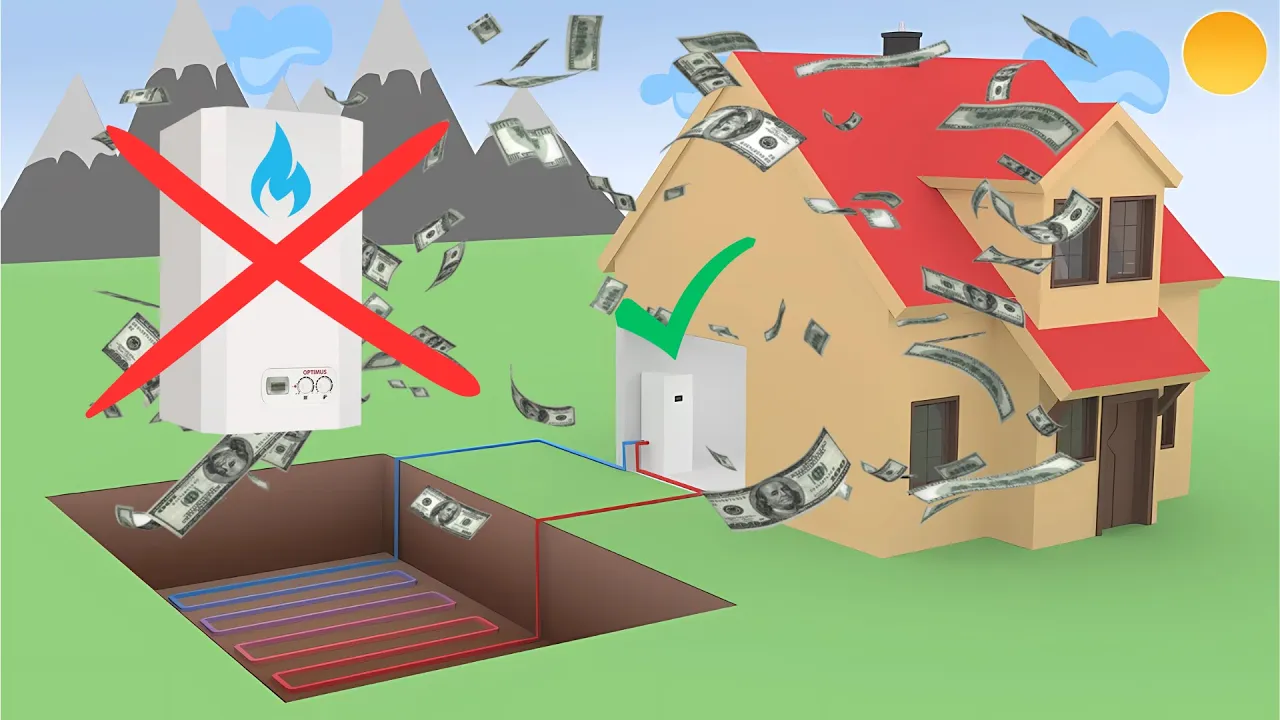
Largely because I ignored the developments that are happening and indeed have already happened in the air-source heat pump space, and I touted the much, MUCH harder to build ground-source heat pump as “the future.” Now, to be clear, if you are in a very cold place and have the ability to invest in a geothermal heat pump system, I still think you should consider it.
And by the way if you want to know what that is, well check out the link below.
But even in pretty cold climates like mine, effective air-source heat pumps are available today which will reduce the total amount of fuel required to heat your home over a year — even with today’s electric grid.
That’s good from an emissions standpoint, yes, but it also means more simply that we need less fuel for heating our living spaces.
And that means we don’t need to obtain as much of it from places we may not want to.
Simply put, in a world where heat pumps exist — which is this one right now! — it actually makes more sense to burn natural gas in a power plant to generate electricity than it does to pipe that gas into homes and businesses to be burned on-site for heat.
I know, pretty wild, right?
Let’s talk about why that is.
Since this more of a heat pump update, or heat pumpdate, I’m not going to go into how heat pumps actually work - check out the original video if you’d like to understand that.
It is pretty cool, and pretty hot.
But I will go over the COP again because it’s what really matters - and why they’re so important.
The coefficient of performance is a number that expresses how much heat energy a heating device produces compared to how much electrical energy it consumes in the process.
Resistive electric heat — the ordinary kind you find in toasters, space heaters, hair dryers, and whatnot — has a COP of 1.
That means every 1 kilowatt of power consumed becomes 1 kilowatt of heat output.
Turning electrical energy into heat is 100% efficient, so every single watt of power that this heater is consuming is ending up in the room as heat.
That’s not bad, but a wrinkle there is that electricity *generation* is A) not 100% efficient and B) somewhat scarce.
Let’s start with efficiency - a modern power plant that burns natural gas is, after transmission losses, about 40% efficient.
Note that I’m deliberately talking only about natural gas plants - you’ll understand why as we go on.
If you burn natural gas at a rate of 10 megawatts, a power plant will only produce 4 megawatts of electricity from it.
While that would get turned into about 4 megawatts of heat if it was run through a few thousand space heaters, we could turn that into more than 9 megawatts of heat if we piped that gas into buildings and burned it locally in boilers or furnaces.
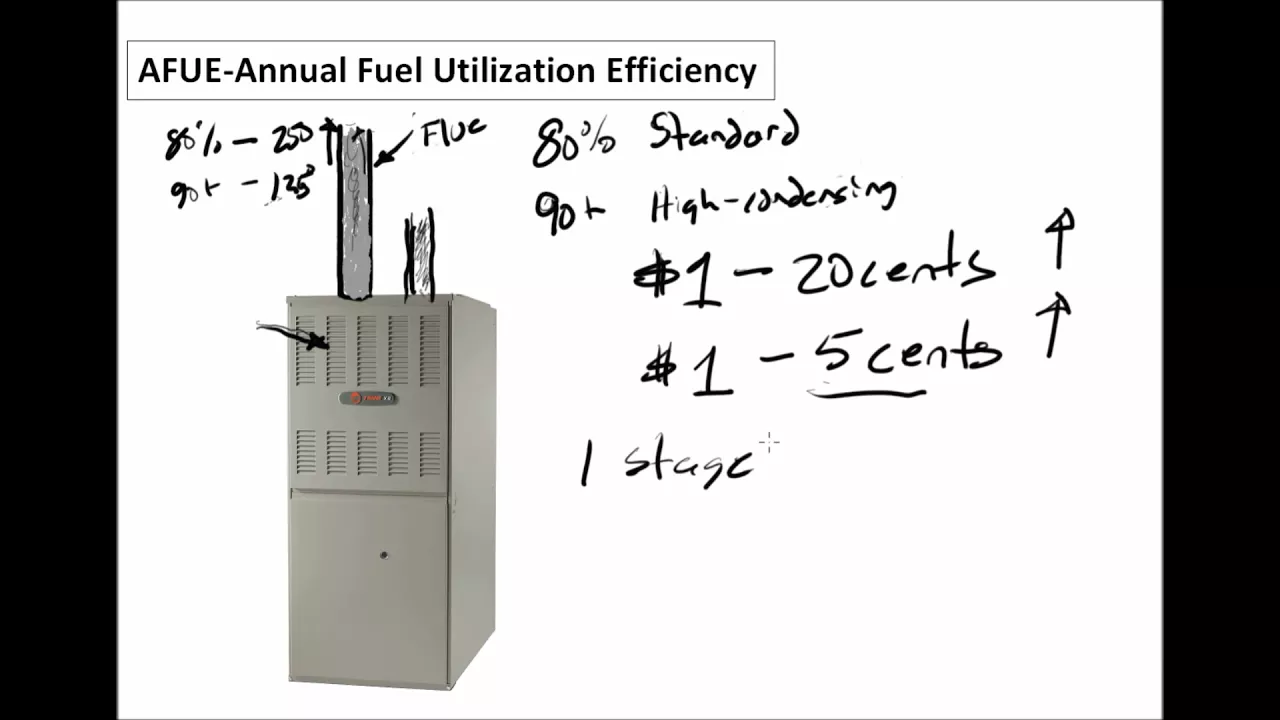
As I explored in my video on furnaces, we know how to get nearly all of a fuel’s heat energy out of it in a safe, effective fashion.
So… in many parts of the world that’s exactly what we do.
Burning fuel on-site has been until pretty recently the most rational way to use that resource for the purpose of space heating.
The other problem with electric heat a la toasters is that there is only so much grid capacity to go around.
It takes a lot of energy to heat a building - heating buildings is among the most energy-intensive things we do.
And in many areas the electric grid just isn’t big enough to switch everyone over to simple electric heat.
And it’s not because we couldn’t build it to do so, to be clear.
It’s just that, except in areas with access to abundant and stable renewable energy like hydroelectric power, it has traditionally been much more expensive and resource intensive to heat with electricity because of the efficiency challenges in fossil-fuel power plants.
The electric infrastructure in areas like where I live just isn't expected to produce as much much energy in winter months because electricity demand has historically fallen when air conditioners stop running and furnaces fire up.
But, thanks to heat pumps, we can largely sidestep both of those challenges altogether.
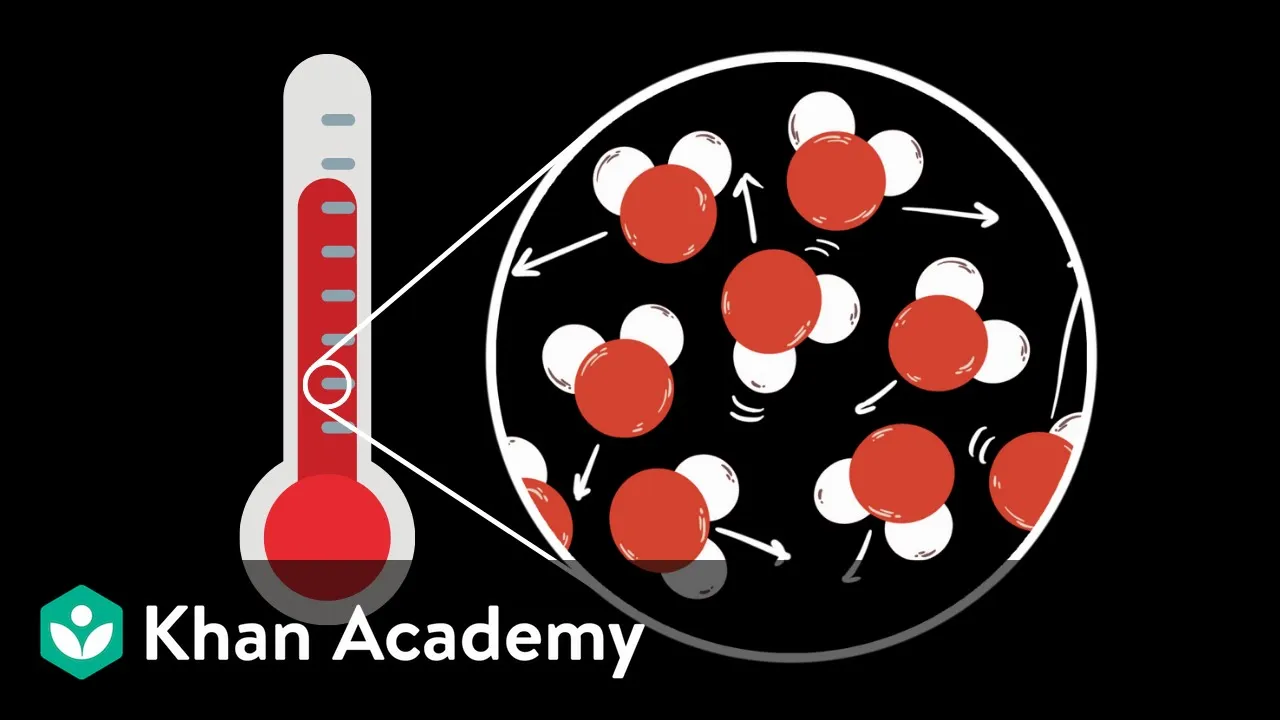
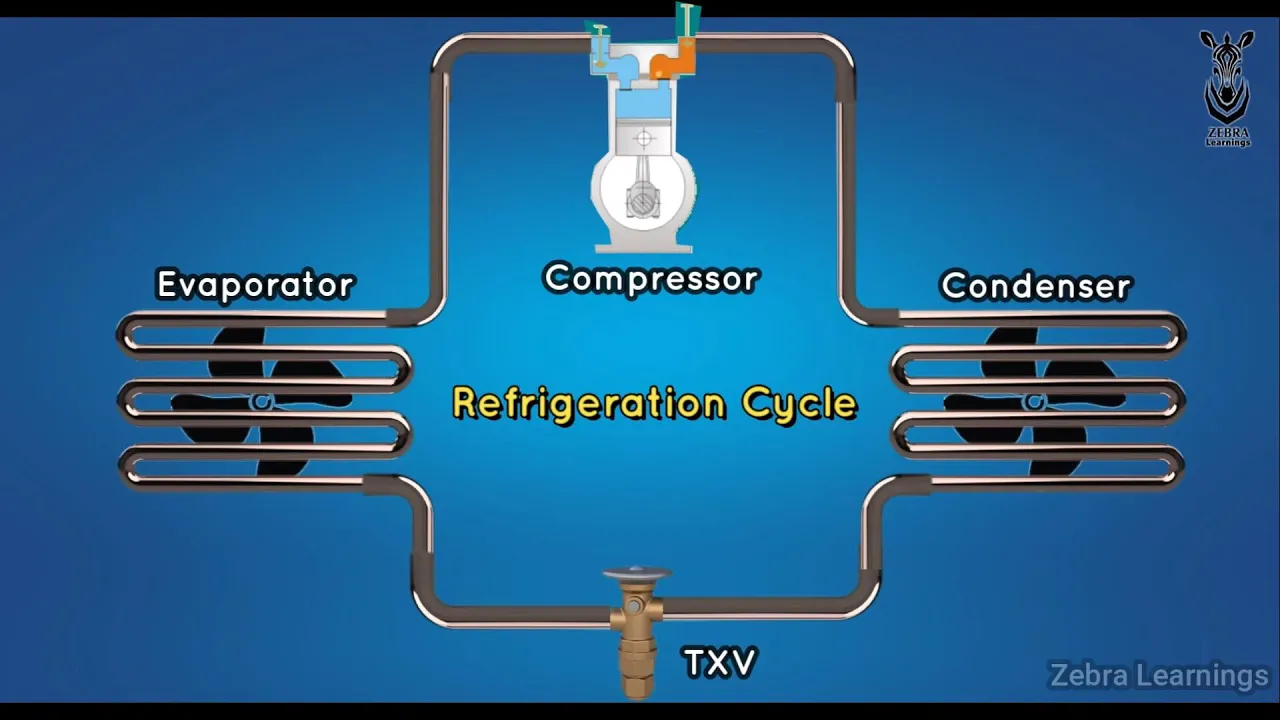
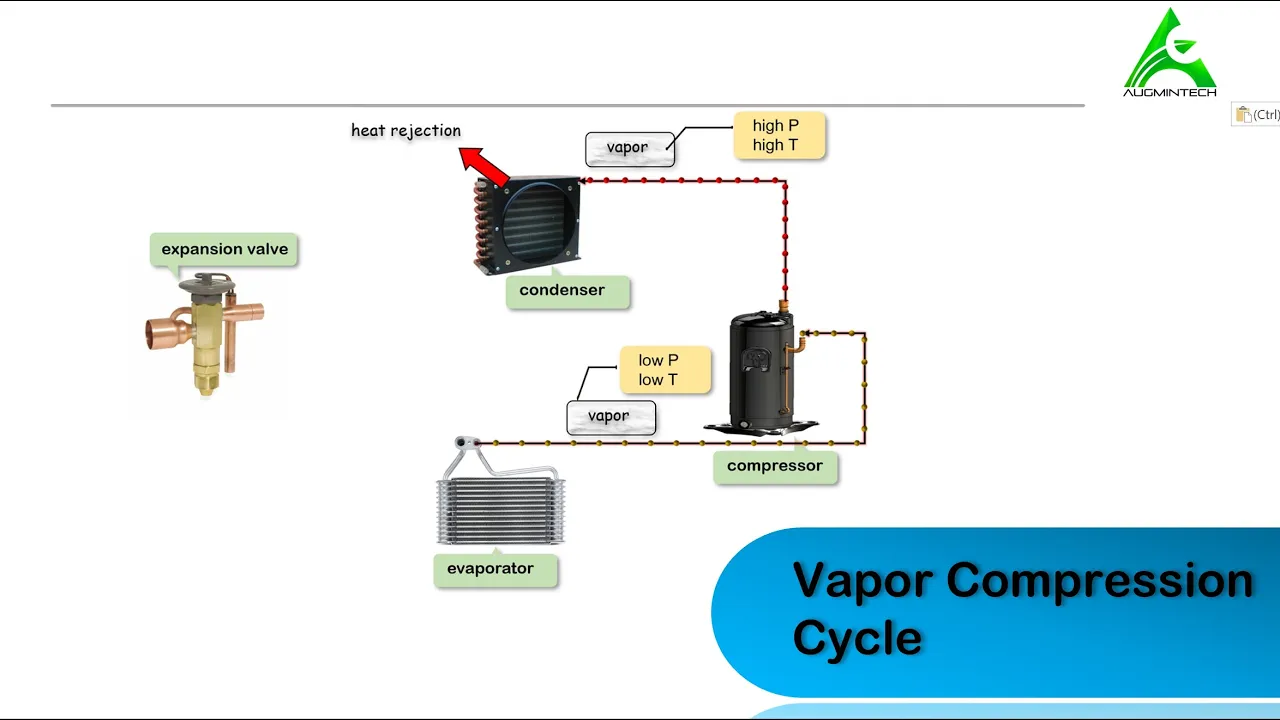
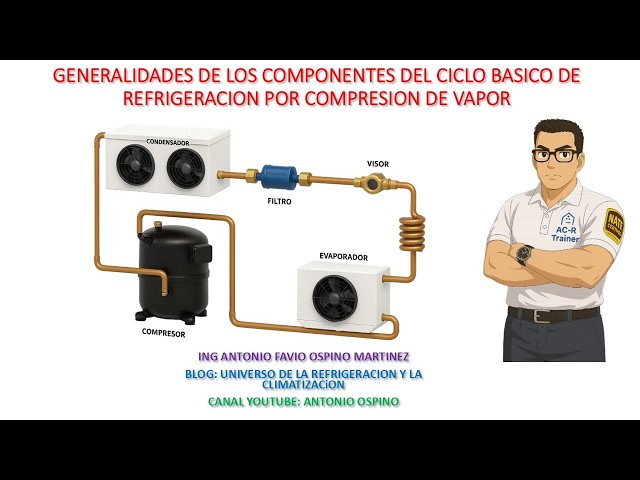
When it comes to the need for electricity generation, since heat pumps aren’t converting electrical energy into heat but are instead using it to drive a refrigeration circuit which moves heat indoors, they have coefficients of performance that are greater than 1.
Simply put, they produce more useful heat with the same electricity than a simple electric heater does.
Sometimes, more than 5 times as much.
This means that although heat pumps will put more demand on the electric grid in places that currently use gas for heating, they require a fraction of the energy of resistive heat and so make electrification much more feasible in those parts of the world.
That’s definitely good, but here’s where things get even better.
Dare I say, mind-blowing.
Remember that we can pipe natural gas into a building and burn it there, as we’ve been doing for decades, and we can capture perhaps 95% of its energy as heat.
But if instead of doing that we burned it in a power plant to make electricity, heat pumps will work their magic.
We may only get 40% of the gas’s energy turned into electricity, but when you use it to run a heat pump operating with a COP of 5, in the end you’re effectively operating at 200% efficiency.
That’s a 100% bonus compared to burning the gas in a furnace or boiler with perfect efficiency.
Literally more energy than the gas itself contains ends up getting put into buildings when you use it this way, and that’s nothing short of amazing!
Of course, as I’m sure certain curmudgeons are shouting loudly at their screens, I need to tell you that heat pumps don’t always work that well.
But, they only need to operate with a COP of 2.5 to break even with on-site fuel combustion.
That turns the 40% captured in a natural gas power plant right back into 100% - eking out even the most efficient furnaces.
And, here’s why this video’s happening, that is actually very, very attainable.
Today.
With simple air source heat pumps.
Even in cold climates.
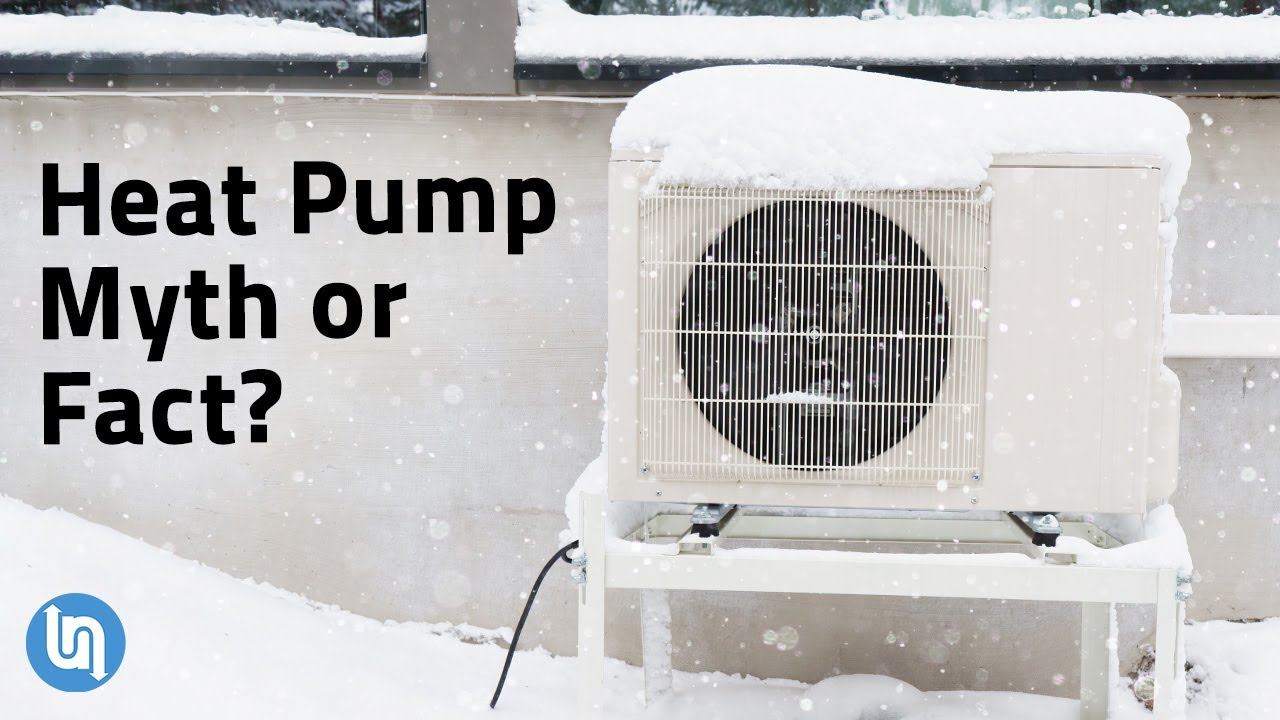
Various manufacturers are now producing ductless cold-climate mini-split heat pumps that manage that COP or better down to -15 degrees Celsius, or 5 Fahrenheit.
They’re also able to maintain their full rated output at that temperature, though with reduced efficiency compared to milder weather.
For the purposes of this video I’m only focusing on published data for certain models, and I will freely admit that these models are state-of-the-art and, for the moment, exceptionally efficient.
But it’s important to remember that these are machines for sale right now, not some theoretical future devices.
And they are no more disruptive to install than an air conditioner.
The technology is here. Now. We know how to build it, and if we had any sense we’d start doing that as fast as we can.
But I’m getting a little bit ahead of myself.
I live in the Chicago area, and we love to tell you just how brutally cold our winters can get.
And yes, I know there are places that get colder than here.
Much colder.
But we are definitely one of those places where the conventional wisdom says heat pumps don’t work.
Many, many people think it’s just too cold here to bother installing a heat pump, and so that pretty much never happens.
It does get quite cold for some stretch of every winter - a few years ago we had a 48 hour period where the actual air temperature didn’t get above -10° F, which is about -23° C.
For much of that time, it was warmer in your freezer than it was outside!
But, and very importantly, that’s far from ordinary.
It sticks out in our minds because it hurts to go outside on those days, but if we actually look at historical data for the winter of 2018 into 2019, here’s what we find.
In the month of November, we didn’t get anywhere close to 5° Fahrenheit.
And remember, it needs to be colder than that for a furnace to beat a good heat pump.
In December, the closest we got was 16°.
In January... things got worse, we spent 2 nights below 5 ° in the third week, and then that lovely polar vortex hit and things got particularly rough.
Almost the entire last week of January had evenings below 5 degrees, and then… well… this wasn’t fun.
But actually? That was… kinda it.
Only three days in February, the 1st, 8th, and 9th, landed at or below 5 degrees.
In March we had two more days at the start that dipped below 5, but then by April we’re essentially out of the woods of Winter so, yeah, nothing close to that cold was experienced.
So, for the entire winter season that year, there were only 14 days where a conventional furnace would have outperformed a heat pump - when it comes to the amount of fuel needed to produce the same amount of heat.
And for most of those days, it still got above 5 degrees during at least part of the day.
In fact there were only two days the entire year where that didn’t happen.
Three if you count the 25th of January where we just barely hit 5.
Actually, why stop there?
We’ve got hourly data, too, how many hours were we below 5 that year?
By my count it was 141 hours, or not quite 6 entire days.
So, there were only 6 days of the entire winter season in which, when it comes to the amount of energy natural gas contains, a furnace made more sense than a heat pump running on electricity produced with that natural gas.
That’s… astounding!
Are we willing to say that heat pumps don’t work in Chicago because for six days of the winter we’d have been better off with a furnace?
Well I hope not because that’s ludicrous.
You’d literally be saying “Well, we shouldn’t with this technology which can reduce our use of energy for 144 days of the five-month heating season because SOMETIMES it can’t do that.” Listen to that. It’s ridiculous!
“But sometimes…” Yeah, sometimes life is hard, and new solutions bring new challenges.
But let’s keep it big picture, alright?
Let’s look at some other years, too.
I’m just gonna look at days, though, finding the total hours is a bit of a pain.
The previous winter had 13 days where the temperature dipped below 5 at some point.
The year before that had only 9.
And 2015 into 2016 had only 8.
Jumping forward, 2019 into 2020 had but 2, though some days did just hit 5 degrees.
2020 into 2021 experienced 8 days with a low below 5 degrees, all in February incidentally.
And the winter we’re just clawing our way out of now had only 5 days.
Though, it’s not impossible for there to be another one before May rolls around.
Now, it’s important to note a couple of things.
First, I’m not talking about the monetary cost of delivered energy here.
I do need to make that clear - the cost of electricity in your area compared to that of natural gas makes cost comparisons a hyper-local exercise.
Although, recent volatility sure makes this a fluid situation, and suggests that maybe we ought to diversify our energy portfolios, which the electric grid is particularly suited to do by the way, in case you hadn’t noticed.
But this is a wrinkle to heat pump adoption that we should probably figure a way around.
If it’s more expensive to use the option that saves energy... that’s a problem.
And second, I do need to acknowledge that those periods of time where heat pumps can’t get to natural gas parity are also when heating demand is greatest.
So while I can say that there were only 141 hours in which a furnace would have used fewer resources than a state-of-the-art air-source heat pump in the 2018-2019 Chicago winter season [inhales] that’s incomplete.
We’d need to normalize things by weighting that time more heavily if we want to get a more complete answer.
But I’m not gonna do that for you because I do not possess the expertise.
However, it is factually the case that right now, today, BTU for BTU, therm for therm, cubic meter for cubic meter, kilowatt-hour for kilowatt-hour, we can heat more homes and businesses by burning gas in power plants and using that energy to run simple air-source heat pumps than we can by piping that gas to those places and burning it locally for the vast majority of the winter.
So long as we are going to use natural gas, that is full stop the smarter way to use it most of the time.
And most of the time is what actually matters, folks.
There are also some other marginal benefits to this.
In places that have district heating infrastructure, the waste heat from those power plants could be used to heat buildings nearby.
We have very little of that in the US so, ya know... yay, but methane itself is a really potent greenhouse gas and leaks in the infrastructure are problematic.
The fact that we have pipes filled with it everywhere around here and there are countless fittings, junctions, valves, pumping stations, and who knows what else means we have a lot of potential for leaks.
Eliminating that infrastructure, or at least reducing its use, can reduce those impacts of natural gas as well.
Of course, and for the long-term most importantly, being electric, a heat pump is energy agnostic.
It doesn’t have to be powered by natural gas, it can be powered by the sun, by the wind, or by the atom.
And since they use any of those resources much more efficiently than resistive heating does, they allow us to electrify many more homes and businesses with today’s grid output, and reduce the need for the grid to grow as more and more places ditch gas altogether.
Heat pumps are incredibly important not just for their immediate ability to curb gas use, but for their long-term sustainability.
Now, I do want to answer a question I’m sure many of you are asking: what happens on those *really* cold days?
Well, that depends.
Many units now guarantee operation down to -13°F which is -25°C, but they won’t attain their full output and will have a poor COP at that temp.
Still generally better than 1, though, so it still makes sense to run over resistive heat.
If that’s about the coldest temperature you ever experience, you may not need a backup at all assuming your home is insulated well enough.
But, having some sort of backup may be required depending on where you are.
If you have a centrally ducted system this can be auxiliary, high-powered electric heating elements often known as heat strips which are placed in the air handler.
Or you could be pairing a heat pump up with a gas furnace if you so desire.
The backup can be as simple as a few space heaters, which might be ideal if you’ve chosen a ductless system, although they’re not very efficient and can be dangerous if not properly used.
It should also be noted that simply bundling up and choosing to tolerate cooler indoor temperatures during those periods is also an option.
The thing to keep in mind about these backups, though, is that they are needed only in exceptional cases.
And because modern heat pumps will operate down to -25°C, or -13°F those cases can be quite rare.
Going back to that 2018-2019 winter season, here around Chicago we were below that temperature for about 32 hours total, all consecutive during that polar vortex event.
This past winter, it never got that cold.
Again, I know we’re talking about what are today exceptionally good heat pumps.
Plenty are on the market that don’t perform that well, and won’t perform at all at those cold temps.
But there are tons of places with much milder heating needs than here, and in those places the more average-performing models will be great fits.
That’s why they’re pretty common already in the southern US.
And let’s not forget - we’re probably only going to get better at building heat pumps as time goes on.
In fact, of that I am certain.
I’ll be surprised if in 10 years from now, a COP of 2.5 isn’t maintained down to truly arctic temps.
And also, I do just want to note that every home I’ve lived in so far has had a single point of failure when it comes to the heating system.
When the furnace has stopped working, which it has, the space heaters come out until it’s fixed.
Maybe don’t fixate on the whole backup situation all that much, is what I’m saying.
OK, so I hope we’re in agreement that heat pumps are amazing devices and reduce our need for literally any source of energy in all but the most extreme temperatures.
And to reiterate, that not only means we can burn less gas as we transition away from it, but also means we need fewer wind turbines, solar farms, nuclear plants, batteries, hydro storage facilities... literally whatever because reducing the amount of energy we need to heat buildings reduces the need for all those things and so makes transitioning to an all-electric future much, much easier.
I say again, with vigor; More pumping.
More now.
But what does that future look like?
Well, that is in many ways up to you.
Air-source heat pumps are really just slightly refined air conditioners, and they come in all sorts of shapes, sizes, and applications - some of which are really exciting!
However, we also have many challenges we need to overcome— some real, and some artificial.
But this video’s gone on pretty long as it is.
I hope you enjoyed this new part 2? Part 2.5? of my heat pump series, and in part three we’ll talk about what it takes to install a heat pump - both literally, as in, like, what the parts are, where they go, and how they connect together.
And a look at why the process can be so hard - and what we need to do to fix that.
♫ importantly smooth jazz ♫ and air conditioners, and we're finally starting to collectively realize... hoo I'm out of breath!
So... what's this one for.
Well, heat pumps are at the t.... [haughhghhg noises] Largely because I ignored the developments that are already... whoops. That have happened!
[inhales].
Hi.
Hi.
Hang on a second.
My eyes are playing tricks on me.
Which is this one. Right now.
It actuallya mae.... I'm not gonna do that for you because I don't porsess... Oh crud.
Porsess? I don't porsess the exportise?
So, more pumping more now, amirite?
Seriously, this is probably the single most impactful thing we could be doing in the immediate future for *so* many reasons and in *so* many ways.
Manufacturers need to get cranking, and as we'll see in Part 3... American manufacturers in particular need to learn how to make a decent heat pump.
They're really... quite mediocre at the moment.
Up Next

Newton's Laws of Motion Explained for Biomechanics
@sgvuphysiotherapye-learnin3355
3.7K views•2023-07-13

Ultrasonic Transducers: Resonant Frequency Measurement and Horn Design
@imajeenyus42
229.9K views•2017-02-22
Catalytic Converters Explained: How They Work & Fail
@TechnologyConnections
1.5M views•2025-10-01

How a Student's Question Saved a NYC Skyscraper from Collapse
@veritasium
22.8M views•2025-04-26
Related Study Plans & Knowledge Roadmaps
Structured learning paths in Engineering