













![Hybridization Theory (A-Z) with Animation | Chemical Bonding [PLAY Chemistry]](https://i.ytimg.com/vi/lf-ciEyp3jM/maxresdefault.jpg)







Molecular geometry describes how atoms arrange in space around a central atom, determined by the number of bonded atoms (X) and lone electron pairs (E) using the AXE notation system; common geometries include linear (AX2, 180°), trigonal planar (AX3, 120°), tetrahedral (AX4, 109.5°), trigonal pyramidal (AX3E, ~107°), and bent (AX2E2, ~104.5°), with bond angles decreasing as lone pairs replace bonded atoms due to greater electron pair repulsion.
Molecular Geometry Introduction: VSEPR Bonding Shapes
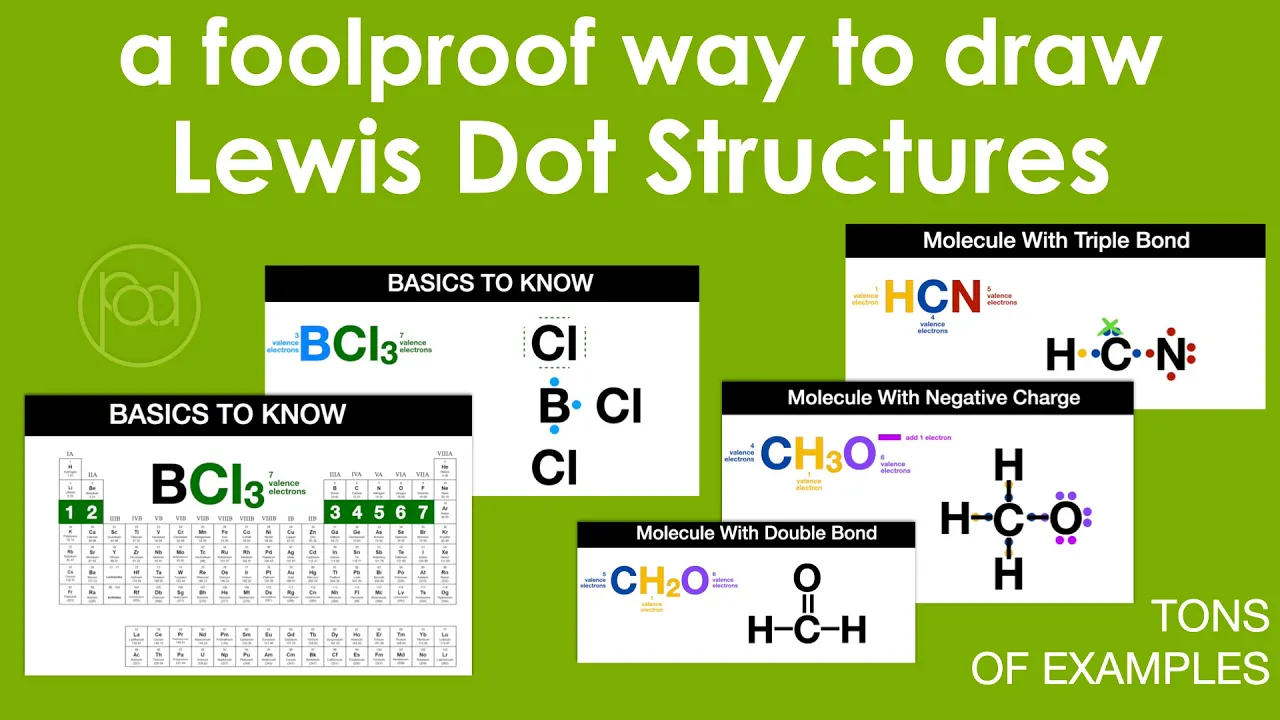
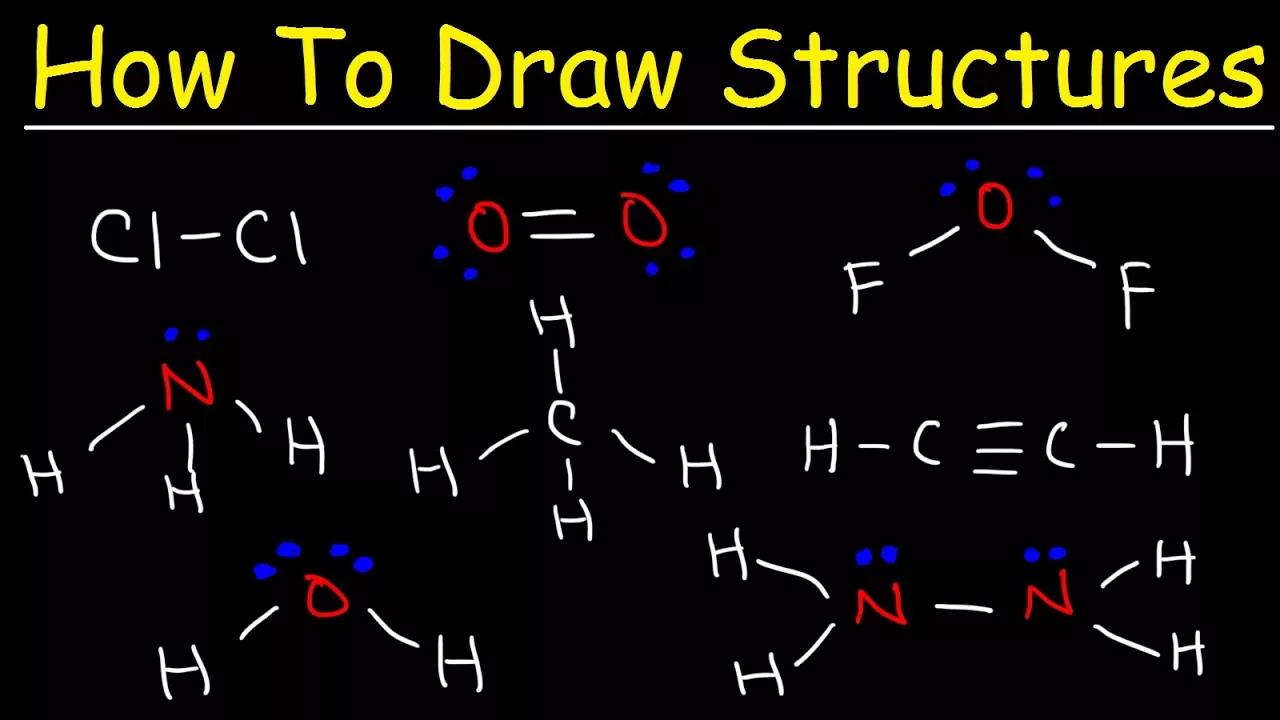
Added:Understanding how to draw Lewis Dot Structures, including representing valence electrons, bonding pairs, and lone pairs.
Familiarity with covalent bonding principles and the octet rule for stable atoms.
The basic physical concept of electrostatic repulsion, specifically that like charges (such as electron pairs) repel one another.
Determining molecular polarity by combining molecular geometry with electronegativity differences (dipole moments).
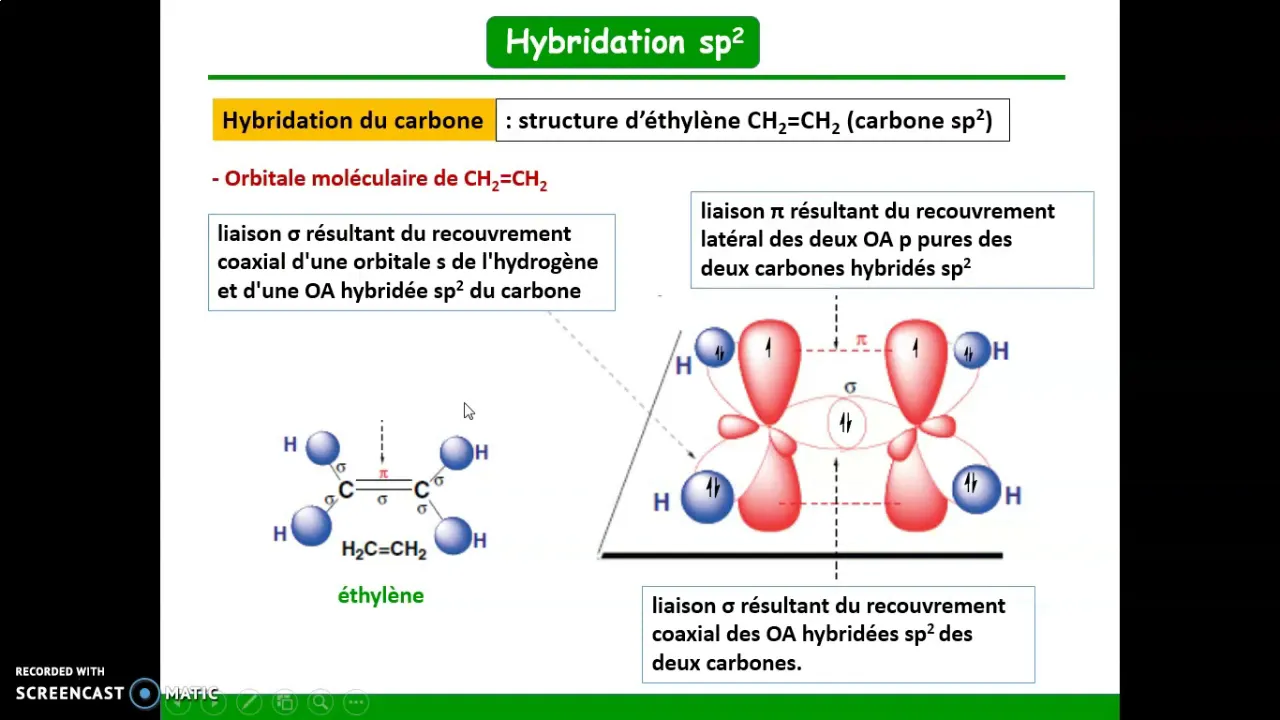
Exploring orbital hybridization theory (such as sp, sp2, and sp3 hybridization) to explain how atomic orbitals mix to form these shapes.
Investigating expanded octet geometries (e.g., trigonal bipyramidal and octahedral shapes) for elements in period 3 and below.
Analyzing how molecular shape and polarity dictate intermolecular forces (IMFs) and physical properties like boiling point, solubility, and viscosity.
131 views1likes15:01Original Release: 2020-02-10
so the first one is pretty simple it's just two atoms bonded together all right and they're both hydrogens all right so our example is going to be h2 and there's not a good place to kind of draw this on here so I'm just gonna kind of draw it around here the reason that these two go together is because of how many valence electrons hydrogen has so hydrogen has how many valence electrons just one right so that would be like an H with one dot and then if you had another H it would have its its own dots right and for hydrogen how many valence electrons does it want to have it only wants to have two right that'll fill it up so if hydrogen shares with another hydrogen now they both have two because they're sharing right so that's kind of why this works for hydrogen all right hydrogen is one of kind of the exceptions because most of the time they want to have eight but hydrogen's one of the few that only wants to because it's the first energy level we're gonna see a few more exceptions and then we'll get into the the eight ones okay but what about this shape so the shape is not very complex so we're just gonna call it linear linear it's like a little line and that's pretty much all we can say about that one because there's no central atom for it and a big thing with all of these is there's a central atom for all of them all right so let's look at the next one the next one looks like this here and I 3d printed the the middle part because we didn't have one that really worked well with this this is gonna be beryllium and then we're gonna bond two hydrogen's to it and it's gonna form this kind of shape right here so our example is b e:h - it's it's also linear right but we need to distinguish it from this top one so we're gonna call it tri atomic linear so it's tri atomic linear all right and for the rest of this we're gonna do something over here first now this has a central atom right for whatever reason to have a central atom they're gonna call that an a all right and then any atoms that are attached directly to that a that central atom they're gonna be X and that makes more sense because they're talking about like external atoms here so we have an A in the middle and then we have two x's so what we're gonna call this is a x2 all right and that means you have one atom in the center and then two atoms connected to it and that's it all right there's no extra electrons nothing else is going on there so every time you see this ax 2 you know it's gonna be trying to Tomic linear because that's they're connected that's how it works all right all right let's draw this out you draw this structure of the central atom so it's B e alright and how many valence electrons does beryllium have it has two how do you know they have to be across from each other and not next to each other goes back to this any x2 right there across from each other so you're gonna draw them across now you can draw them up and down that's fine but they have to be across from each other because everything that's a x2 will have this kind of shape okay and then we have hydrogen's we're gonna add and we'll add them here in here for the same reason as we did for h2 because if they have one electron they're gonna want to share with another electron because now the hydrogen copy it has two around it and then this hydrogen is also happy it has two around it now this is an exception because usually everything besides hydrogen wants to have eight but this only has how many around at the brilliant it only has four yeah - from over here and - from over here so beryllium and newsgroup - if they do this if they covalently bond they're gonna form like like this okay not all of them are covalent but we'll talk about that more later on all right so how many nonbonding electron pairs are on the central atom zero right there's no extra electrons there what about single bonds how many do we have - and let's talk geometry what's the angle underneath yeah exactly 180 degrees right make sense the line okay let's look at the next one let's talk about it's a X pattern here does it have an A yeah does it have an X yeah how many three so every time you have one a and three X's it's gonna have this shape so we're gonna call this a x3 all right and there's three external atoms here right there's one two three and then there's one in the center so we're gonna call this trigonal and then look at it what is its geometric shape if you look at it like this you can see all the atoms but if you look at it this way what do you notice about it they're all on the same plane yeah so it's trigonal planar right trigonal planar all right let's look at the central atom here the central atom is going to be what was this one boron boron a ch3 will be here how many valence electrons is boron has it has three right how am I gonna draw them yeah kind of like a triangle right because we're gonna have one maybe up here maybe down here down there because they want to we want to have that shape right we're gonna have that trigonal planar shape and then the hydrogens will be attracted to where those electrons are and don't share them all right so then we'll do a connection here and then it looks like this just turned a little which is fine you can do that all right how many nonbonding electron pairs is this one happens zero as well and then how many single bonds three angle yeah 120 right awesome okay every school that yeah let's look at the next one does this have an A yeah how many X's good so this one we're gonna call a x or all right and the name there's four external here we use the same kind of thing from nomenclature so we use the word tetra in here it's gonna be tetrahedral all right tetrahedral tetra for four and then we need to draw how many valence electrons does this have it's four right carbon four that's weird we built ch4 all right so carbon has four where are they gonna go now this is a little bit more difficult because we're drawing this on paper which is two-dimensional this is the shape we want this is kind of how we're gonna represent it on paper all right it's not the best you can see it looks different when you have a film it's not flat like that one it's more like this right but you can kind of turn this in such a way that you could see all right one two three four kind of has that shape to it when you're looking right at it it's okay all right we'll put the hydrogen's around it and this is the first non exception how many electrons are around this carbon now eight and that's what it wants right how many were around this boron yeah there were only six right this one has eight so this is critical okay how many nonbonding electron pairs still zero yeah there's no extra electrons and then how many single bonds for okay what's the angle okay so no it's not ninety because it's not flat right this looks 90 but remember I just said it really looks like this if you were to hold this up and look at it you can see that's more than ninety degrees right yeah so I mean we'd have to guess right order to have a tiny protractor so 109.5 okay so let's go over this what's the ax e pattern for this one does it have an a that's when you say yes all right good and then what about X's how many X's does it have three good okay so these three and then what's the thing at the top here it looks like a ghost what is that representing we don't know all right let's draw it out and let's see if we can figure it out let's go over to here how many valence electrons does nitrogen have it has five right so one two three four five all right what's the ghost thing yeah we have some unpaired electrons right so that just represents two electrons in there okay so we have a X 3 and then what's up here the electrons so this is the first time we would use a X 3 and then e and a capital e represents a pair of electrons you only need one E and that covers both of the electrons okay now if we look at this one what was the difference between this ax 3 E and this regular ax 3 remember what shape this one was well it says the name right there what did that planer me yeah it was flat right is this one flat no when you build this one it it's not flat it kind of like stands up if you're gonna hold it right and if you gave it sides what would it kind of look like yeah exactly it kind of has a pyramid shape and this one was a flat shape all right the difference between those two are the electrons and the electrons being on the top force the other atoms to go down and that gives this shape put in so and this one would be trigonal pyramidal all right so that's our shape this one trigonal pyramidal we have three exes right and we know we have three hydrogen's so just like before his single dots they get those hydrogens so we'll get a hydrogen hydrogen hydrogen and then they'll bond together so we'll get something that looks like this all right now how many non bonding electron pairs do we have on the central atom for this one yeah now we actually have one hair right there's two electrons but there's one pair and then how many single bonds good three now look at it what's the angle for it get out of tiny protractors what does it look like is it ninety it's more than ninety right when you look at it it's a bit opportunities good all right under the Sabbath all right hundred seconds all right okay everybody's cool that one yes alright last one we had up here is water so does it have an egg yes doesn't have an X yeah how many - good and then does it have ease yeah - so this is a X - E - right there's two of these electrons up here as opposed to this one up here which was just a X - this one was linear right it just straight across linear what's this one now if you were to compare the two shapes linear versus okay that's okay it's nonlinear not straight but what is it it's been it's bent all right you want to sound fancy you could call it angular but bent is fine for this one it is bent alright how many valence electrons does oxygen have it has six good so let's draw them out we'll have 1 2 3 4 5 and then 6 and the trick with this one is the two paired electrons are always gonna be next to each other they're never gonna be a cross from each other all right you can see it right here they're next to each other that's what causes the bend all right they're not going to be a cross or a cross you can rotate this any way you'd like you can have the double bonds on the other side they just have to be next to each other all right instead of this there's two single dots here's two single electrons so we can have a hydrogen bond here and then a hi okay bonded okay how many nonbonding electron pairs do we have good we have two all right and then how many single bonds - what's the angle again it's somewhere over 90 right it's somewhere over 90 even though this drawing looks like it's 90 right and it's not a great drawing but okay it's two-dimensional I guess we could draw it a little bit better it's 104 point 5 so this one was 109.5 right this is 107 this is one of a 4.5 why are they all different the difference here is you're replacing atoms with electrons and that has this kind of push to reduce the angle slightly and that's why those basically decrease as you go down there okay any questions with any of that the chart
Up Next

29:34
Molecular Mechanics: Stretch, Bend & Torsion Terms
@DavidSherrill1
23.8K views•2021-01-19
83:56
Biocatalysis and Catalysis in Islatravir Synthesis | Merck Webinar
@SCIwheresciencemeetsbusiness
675 views•2020-10-08
10:06
1H NMR: Determining Number of Peaks from Structure
@MSJChem
59.2K views•2017-04-06

17:31
Edible Water Bottles: A DIY Guide to Sodium Alginate Spherification
@ryan
10.5M views•2019-06-21
Related Study Plans & Knowledge Roadmaps
Structured learning paths in Chemistry
chemistry
Nuclear Chemistry: Decay, Meds & Fuel Cycle
01Introduction to Nuclear Structure and Radioactivity
02Decay Dynamics and Kinetics
03Radiation Interaction and Detection
+ 2 more learning modules
24h5 modules
Explore Roadmap
chemistry
Supramolecular Chemistry: Forces & Machines
01Foundations of Chemical Bonding and Intermolecular Forces
02Introduction to Host-Guest Chemistry
03Thermodynamics and Dynamics of Self-Assembly
+ 2 more learning modules
16h5 modules
Explore Roadmap
chemistry
Photochemistry: Excited States & Reactions
01Foundations of Light-Matter Interactions
02Molecular Orbitals and Electronic States
03Photophysical Processes and Jablonski Diagrams
+ 2 more learning modules
18h5 modules
Explore Roadmap
chemistry
Coordination Chemistry: Bonding & Properties
01Introduction to Transition Metals and Ligands
02Crystal Field Theory (CFT) and Geometry
03Magnetic Behavior and Spin States
+ 2 more learning modules
14h5 modules
Explore Roadmap