
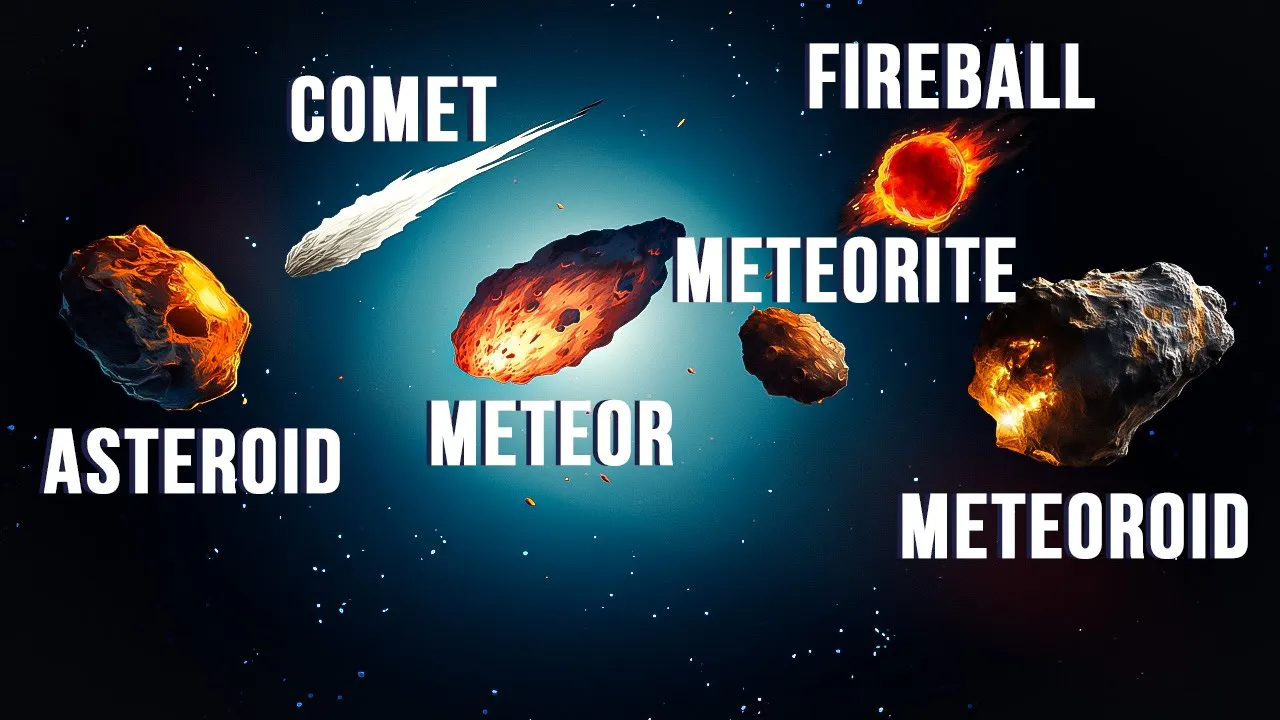









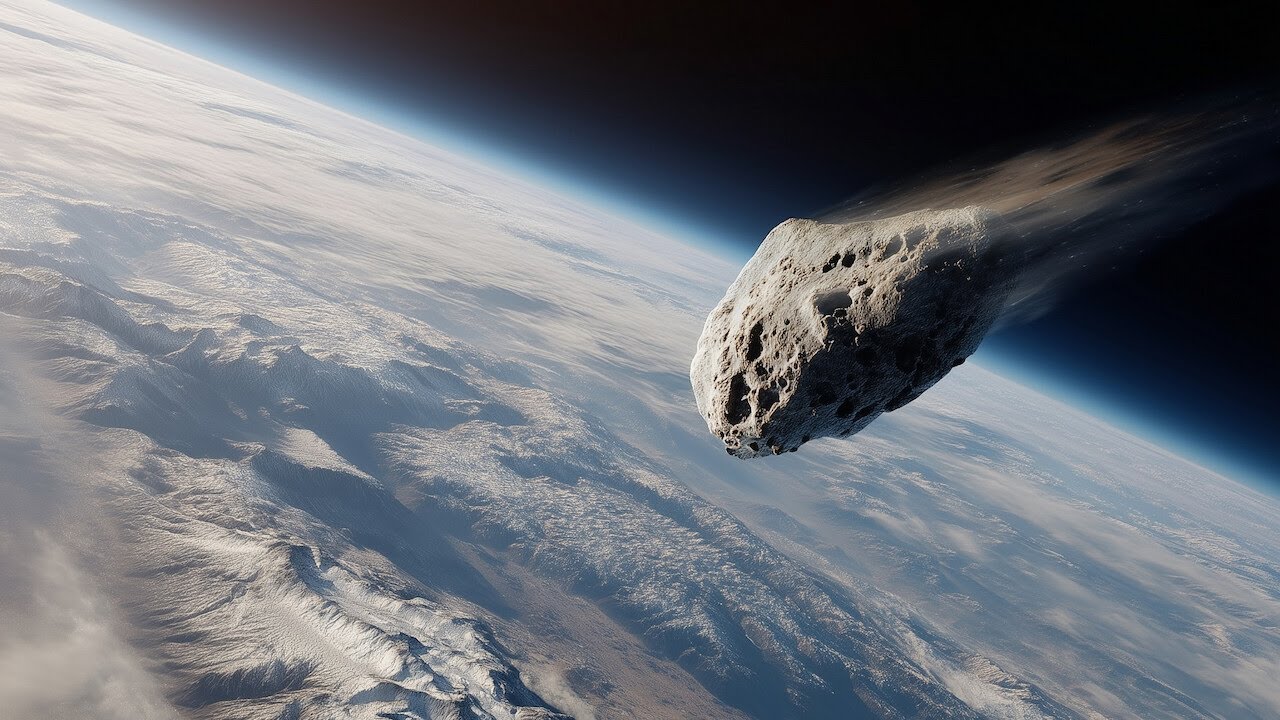






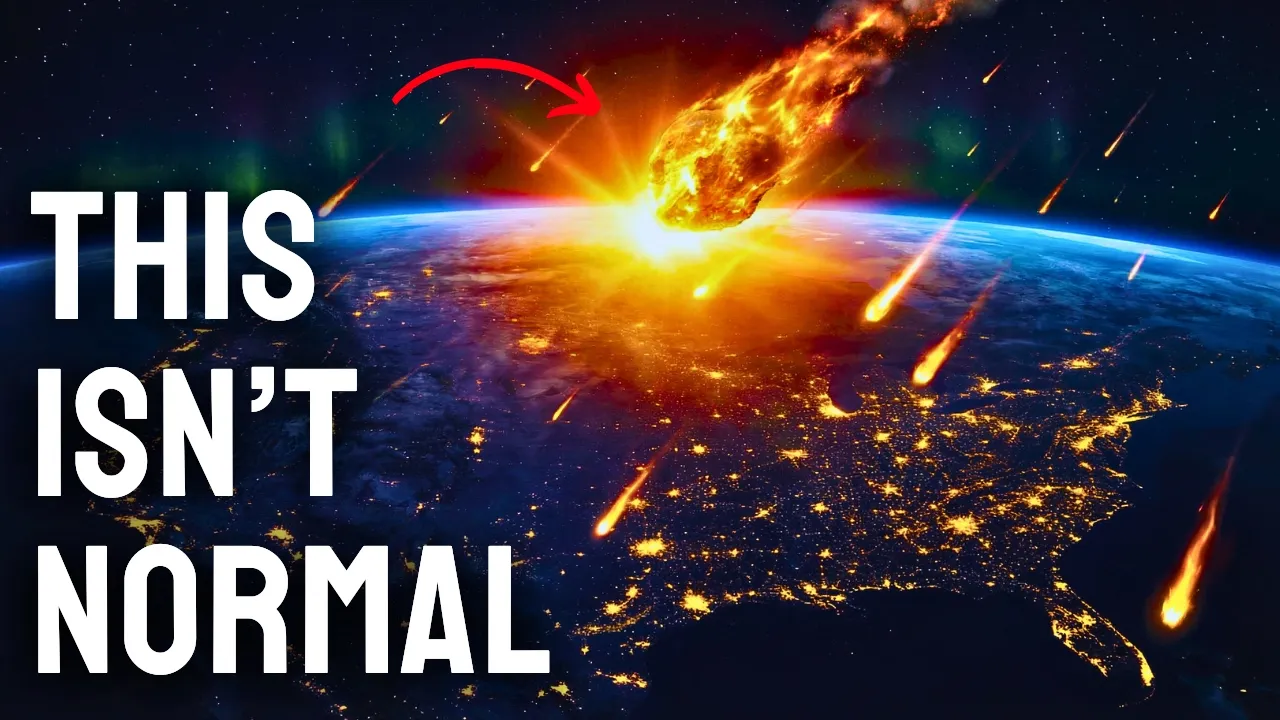


Asteroid hazards are scientifically assessed using the Palermo Technical Impact Hazard Scale, which evaluates potential threats based on kinetic energy and collision probability; astronomers classify potentially hazardous objects (PHOs) as asteroids approaching Earth within 0.05 AU with absolute magnitude ≤22 (diameter ≥100-150 meters), and current monitoring programs have identified approximately 3,000 such objects, with three particularly concerning asteroids (1950 DA, 101955 Bennu, and 410777) posing long-term collision risks that could cause catastrophic global consequences.
Asteroid Hazards: Assessing Real Threats from 2009 JF1 to Bennu
Added:Basic orbital mechanics and the classification of solar system bodies, specifically differentiating between asteroids, comets, and Near-Earth Objects (NEOs).
The concept of orbital uncertainty and how astronomers use tracking data (observation arcs) to refine trajectory predictions over time.
An introduction to the Torino and Palermo impact hazard scales used by scientists to quantify and communicate asteroid impact risks.
Active planetary defense mitigation strategies, such as kinetic impactors (e.g., NASA's DART mission), gravity tractors, and nuclear deflection options.
Analysis of asteroid composition and physical properties through close-up missions, such as the OSIRIS-REx sample return mission to asteroid Bennu.
The operation of automated sky surveys and tracking systems (like JPL's Sentry-II) and how future observatories like the Vera C. Rubin Observatory will enhance detection capabilities.
The societal, political, and ethical dimensions of risk communication and planetary defense decision-making under scientific uncertainty.
828.9K views13.3Klikes10:50Original Release: 2022-04-30
A message was published in mass media: “NASA scientists issued an emergency warning - an asteroid the size of the Egyptian pyramid is moving towards our planet. There’s a high probability of collision. The approximate date of collision is May 6, 2022.” Immediately some experts stated that if such an asteroid hit the Earth, it would’ve been equal to 230 kilotons of TNT. And this is about 15 Hiroshima explosions!
Statements like this are always blood-curdling, but before panicking, watch the full video first.
NASA's warning quickly raised our fears. Not just because of the existing threat but because of the size of the asteroid dubbed 2009 JF1. Normally, to measure things scientists use meters, kilometers, or astronomical units but not physical objects like Egyptian pyramids.
And what kind of a pyramid were they talking about in the first place? After all, there are dozens of them in the Giza Valley! We turned to the official NASA website and... didn’t find a word about the asteroid 2009 JF1. No alarming headlines like those in some media sources were found. So far, everything makes it seem like another fake news.
The Russian Roscosmos space agency has already reacted to the warning. The agency conducted several astrometric observations of the asteroid’s movement and found out that instead of May 6, it would fly past Earth on May 15. And this would happen at a safe distance of 23 million kilometers [14.3 million miles]. “At the same time, the object doesn’t cease to be potentially dangerous, but the degree of this danger doesn’t exceed 1:1,700,000.” That is, the danger was greatly exaggerated. But that doesn't mean it doesn't exist at all, especially according to recent events.
February 15, 2013. Chelyabinsk region, Russia. 9:20 AM local time, 12:20 PM New York time.
A hot ball rushed across the sky, leaving a thick contrail behind it. All this was accompanied by a strong roar. This is how the world learned about the Chelyabinsk meteorite. As it turned out later, an asteroid with a diameter of about 18 meters [59 feet] and a mass of about 11,000 tons entered the Earth's atmosphere at a speed of roughly 18.6 km/s [11.5 m/s].
Approximately 32 seconds later, the celestial body collapsed and generated a shock wave.
According to NASA’s estimates, the amount of energy released was about 440 kilotons of TNT. A total of 1,615 people were injured, mostly from broken glass. According to different sources, 40-112 people were hospitalized; two victims were placed in intensive care units. Aside from that, the shock wave also damaged buildings. The total amount of damage was about 30 million dollars. Fortunately, fragments from the asteroid, the largest of which weighed about 500 kilograms [1,100 pounds], landed in a deserted area.
Neither astronomical services nor the Russian missile defense system were able to detect the intruder. On the very same day, before everything happened, NASA warned that an asteroid would fly past the Earth. However, they weren’t talking about the Chelyabinsk meteorite, but the asteroid named Duende. 16 hours after the events in Russia, an asteroid about the same size as the Chelyabinsk meteorite flew past our planet at a distance of 27,000 kilometers [16,780 miles]. But even without another impressive demonstration of their power, humanity has already realized how fatal a collision of the Earth with an asteroid can be.
In 1991, autonomous observation systems began a regular survey of the sky. Jointly with the US military, NASA created the Near-Earth Asteroid Tracking [NEAT] program to search for near-Earth asteroids and comets using a 1.2-meter [3.9-feet] telescope in Hawaii.
Afterward, other programs with the same mission were created as well.
The number of known near-Earth asteroids [NEAs] is rapidly growing. On average, about 30 new asteroids are discovered weekly. And more than 95% of NEAs are detected by NASA-funded observing programs. To date, about 3,000 potentially dangerous asteroids have been found.
Astronomers call such celestial bodies potentially hazardous objects [PHOs] and they include asteroids that can approach the Earth at a distance of less than 0.05 AU. This is closer than 7,479,894 kilometers [4,647,790 miles] but still more than 19 times the distance between the Earth and the Moon. Also, an absolute magnitude of PHOs should be 22 units or less - the smaller the magnitude, the brighter the object, and therefore, larger. In practice, this means objects with a diameter of at least 100-150 meters [330-490 feet]. A space body this size is large enough to cause unprecedented destruction on land or a giant tsunami if it falls into the ocean. And because the asteroid 2009 JF1 doesn’t meet any of the above-mentioned criteria, it doesn’t fit into the category of potentially hazardous objects.
Nevertheless, based on information obtained from the WISE space telescope, there are between 3200 and 6200 potentially dangerous objects with a diameter of more than 100 meters [330 feet].
This is why scientists created a specific logarithmic scale [The Palermo Technical Impact Hazard Scale] to assess potential hazards from such celestial bodies. The scale uses two types of data: kinetic energy and the probability of collision.
Since 2017, mankind has been celebrating International Asteroid Day on June 30 every year. It aims to raise public awareness about the asteroid impact hazard and possible methods of preventing such collisions with the Earth. The date wasn’t picked by chance. On June 30, 1908, the famous Tunguska meteorite fell on Earth. Its explosion energy was later estimated to be 58 megatons of TNT, and its size was just about 50-100 meters [165-330 feet]. Luckily, it landed in a deserted coniferous forest region or taiga. But had it fallen a few hours later, it would’ve hit Petersburg, the former capital of the Russian Empire. This is because the city was on the same latitude as the site of the collision.
So how big was the explosion?
A nuclear explosion in Hiroshima was in the range of about 13-15 kilotons of TNT equivalent.
And the Tunguska meteorite was about 3200 times more powerful than that. In fact, it had just about the same power as the most impressive thermonuclear bomb ever created by mankind, the Tsar Bomba.
But what kind of space rocks are astronomers afraid of now? There are three most potentially dangerous celestial bodies.
The asteroid named 1950 DA is one of them and it has the highest Palermo rating — -1.42.
Its closest approach to us will happen in 2032. But since the asteroid has a period of revolution around the Sun of only 2.2 years, it will make several approaches before that.
And the closest one, or possibly a collision, could happen on March 16, 2880. In case of collision, human civilization will face catastrophic consequences, given we manage to survive this long. If this is the case, our descendants would have to prepare for global climate change and the death of a significant part of the biosphere.
The diameter of the asteroid is 1.3 kilometers [0.8 miles] and its mass, according to various calculations, ranges from 2-4 billion tons. So we can only imagine how big of an impact it could cause.
The second asteroid is 101955 Bennu.
On the Palermo scale, it is a bit lower, -1.71. In 2135, it will be traveling at a distance of only 300,000 kilometers [186,000 miles] from the Earth, which is even closer than the Moon. The date of the possible collision is somewhere between 2175 and 2199. The asteroid revolves around the Sun every 1.2 years, which means that during this period, it will come close to our planet 78 times.
With a mass of about 60-78 million tons, the average diameter of the asteroid is more than 510 meters [0.3 miles]. If it fell on Earth, an impact would’ve been equivalent to the explosion of a bomb with a capacity of 1150 megatons of TNT. The Tunguska meteorite with the power of just 58 megatons was able to knock down centuries-old trees within a radius of 2150 km² [830 mi²]. To compare, the entire land area of New York is just 784 km² [302 mi²]. 101955 Bennu would be 20 times more powerful!
Asteroid 410777 is the last one on our list and it’s a bit different because it’s a binary asteroid.
Similar to a binary star, the system consists of two gravitationally connected celestial bodies that revolve around a common center of mass. The first component of the asteroid is a celestial body with a diameter of 120-180 meters [390-590 feet], while the second one measures about 60-120 meters [195-390 feet]. Its Palermo rating is -1.78 and it has a striking mass of roughly 3.2 million tons!
According to the theory of probability, an asteroid capable of causing catastrophic consequences for the entire civilization will one day hit our planet. And we can only hope that, by that time, people will be able to prevent any possible fatal collision.
Up Next
20:58
How the Vera Rubin Telescope Will Revolutionize Astronomy
@scottmanley
304.8K views•2025-06-25
61:17
First Billion Years of the Universe with the Square Kilometre Array
@iaaudc
121 views•2022-05-26

6:25
Kepler's Laws of Planetary Motion Explained (Educational Astronomy Video)
@Peekaboo_Kidz
404.9K views•2023-02-17
6:10
Gamma-Ray Bursts: Cosmic Snipers Explained | Astronomy
@kurzgesagt
15M views•2016-07-31
Related Study Plans & Knowledge Roadmaps
Structured learning paths in Astronomy
astronomy
Reionization: Pop III Stars, IGM & 21cm Line
01Foundations of Cosmology & the Early Universe
02Population III Stars & Cosmic Dawn
03Physical Mechanisms of Reionization
+ 2 more learning modules
17h5 modules
Explore Roadmap
astronomy
Planetary Rings: Dynamics, Roche & Resonances
01Foundations of Gravity and Orbital Mechanics
02Tidal Forces and the Roche Limit
03Structure, Composition, and Collisions
+ 2 more learning modules
10h5 modules
Explore Roadmap
astronomy
Asteroseismology: Stellar Waves, Ages & Cores
01Foundations of Stellar Astrophysics & Wave Mechanics
02Stellar Oscillation Modes: P-modes and G-modes
03Mathematical Framework of Asteroseismology
+ 2 more learning modules
35h5 modules
Explore Roadmap
astronomy
Adaptive Optics: Physics, Engineering & Control
01Foundations of Wave Optics and Wavefronts
02Atmospheric Turbulence & Optical Distortion
03Wavefront Sensing Technologies
+ 3 more learning modules
35h6 modules
Explore Roadmap