









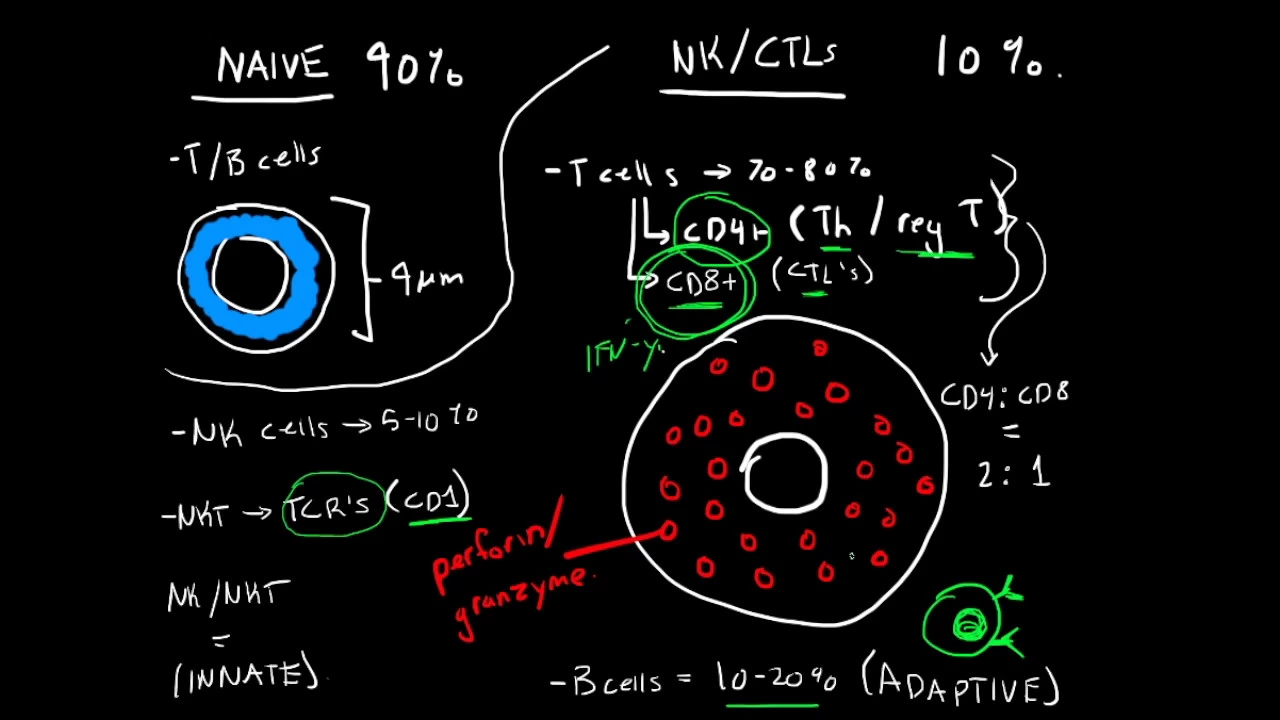







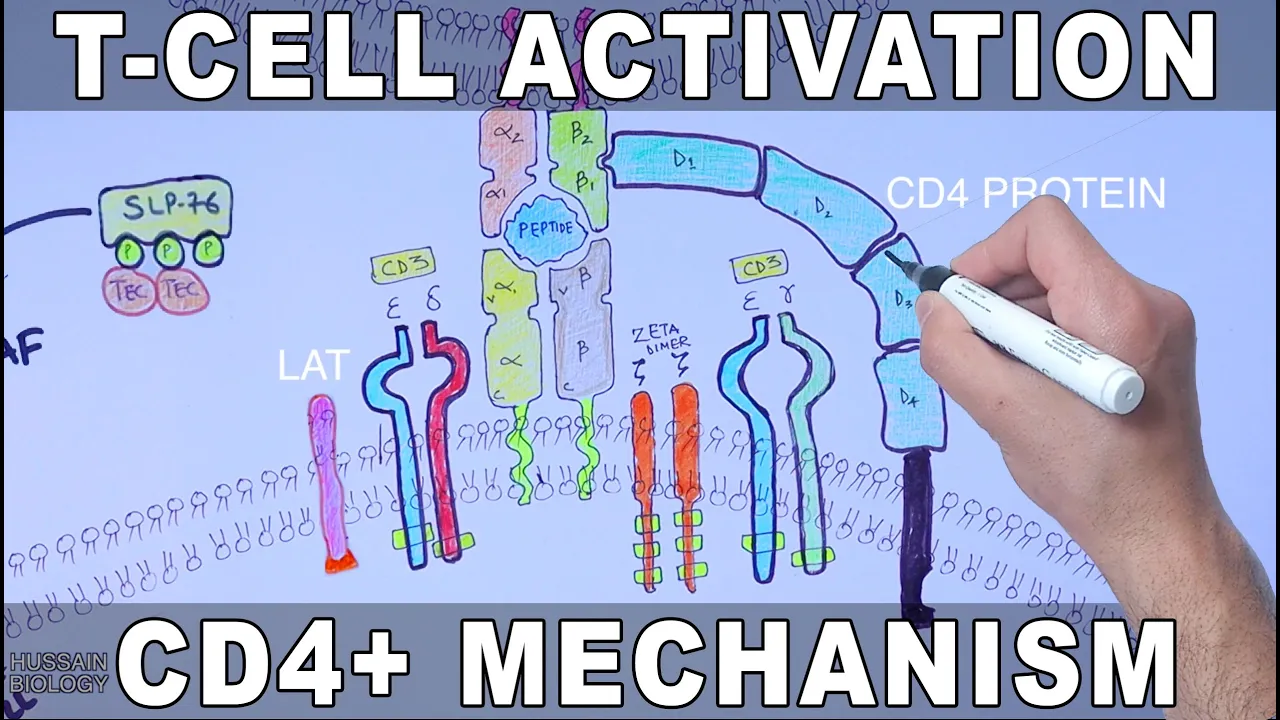



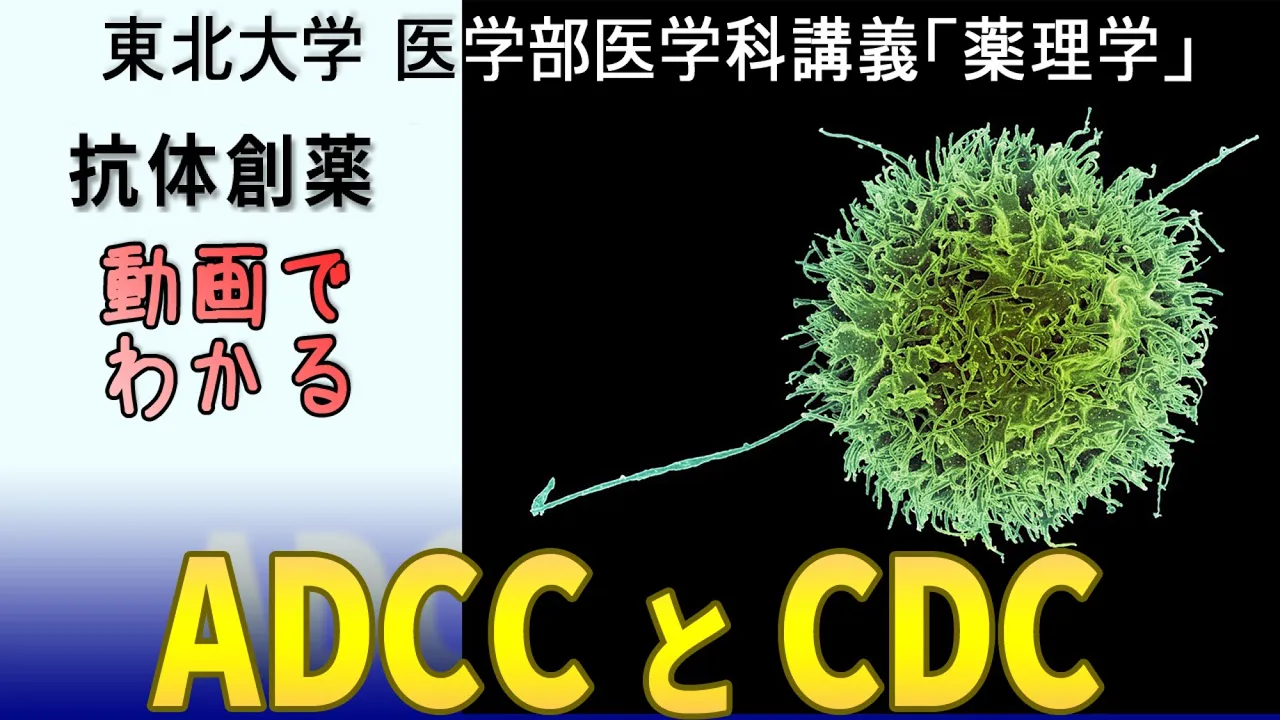

Cell surface markers are proteins expressed on cell membranes that identify specific cell types and their functions in the immune system; CD3 identifies T cells (which include CD4+ T helper cells and CD8+ cytotoxic T cells), CD4 binds to MHC class II molecules on antigen-presenting cells, CD8 binds to MHC class I molecules on infected cells, CD19/CD20/CD21 identify B cells, CD14/CD40/CD16 mark macrophages, and CD56 serves as a tumor indicator marker when expressed on non-NK/non-neural cells.
Cell Surface Markers Explained: CD3, CD4, CD8, CD19, CD28, CD16, CD56
Added:The distinction between innate and adaptive immunity, including the primary roles of different white blood cells.
Basic cell biology concepts, specifically how membrane proteins and receptors facilitate intercellular communication.
The fundamentals of antigen presentation, including the roles of Major Histocompatibility Complex (MHC) Class I and Class II molecules.
General lymphocyte biology, specifically the distinct developmental origins and functions of T cells, B cells, and Natural Killer (NK) cells.
Flow cytometry and immunophenotyping techniques used in research and clinical labs to isolate and analyze specific cell populations.
Clinical applications and diagnostics, such as monitoring CD4+ T cell counts in HIV patients and classifying leukemias and lymphomas.
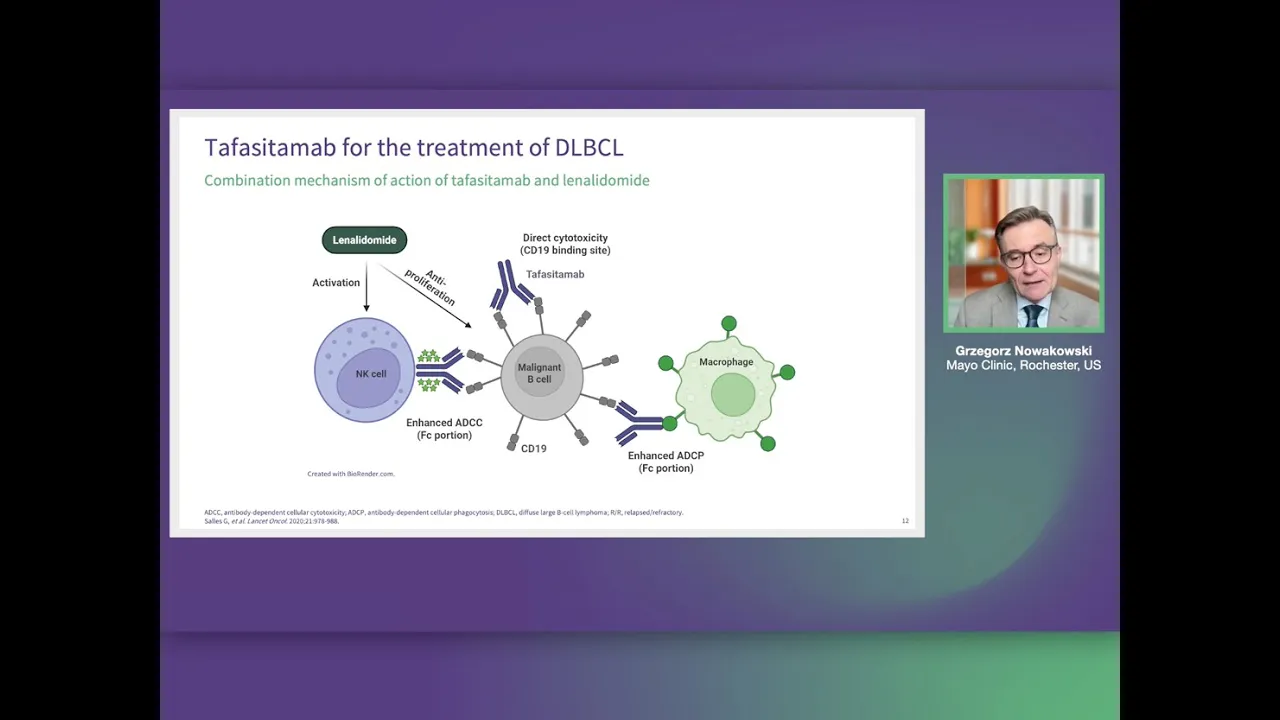
Advanced immunotherapies, including CAR-T cell therapy targeting CD19 and monoclonal antibody treatments targeting specific CD markers.
The molecular mechanisms of T-cell activation, specifically the role of co-stimulatory signals like the CD28-B7 interaction.
Antibody-Dependent Cellular Cytotoxicity (ADCC) and the specific role of CD16 (FcγRIII) in Natural Killer (NK) cell activation.
79.4K views977likes21:23Original Release: 2013-05-31
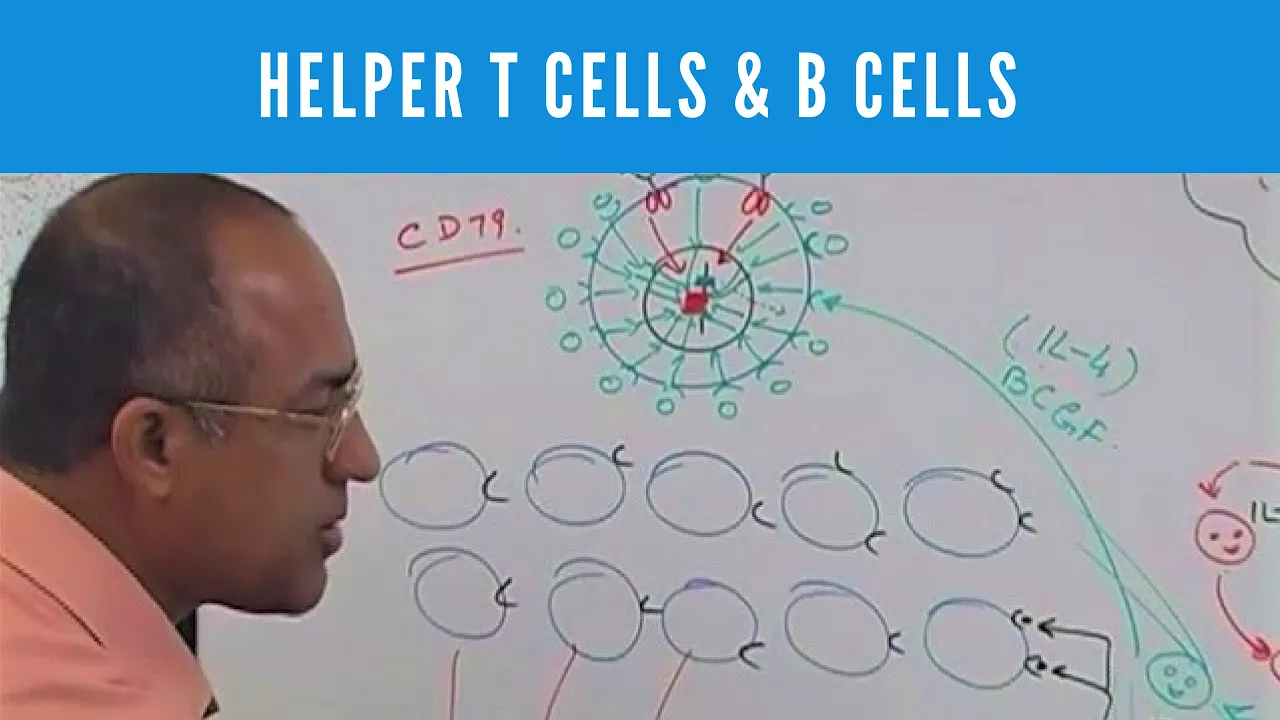
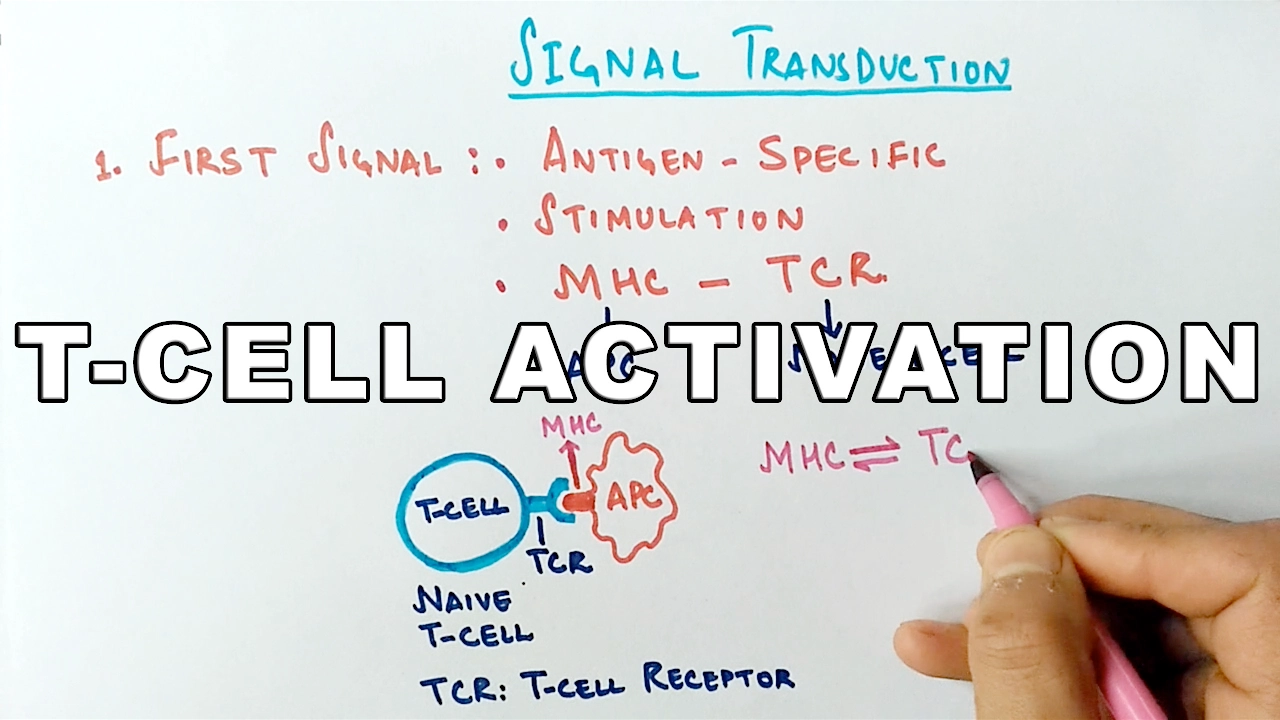
okay well welcome to today's lecture we're going to talk about cell surface markers so there are a lot of different cell surface markers and my goal is to cover what they are so for example when somebody says CD3 what are they talking about when somebody says cd8 positive what does that mean so that's my goal today is to try and figure out uh what these cell surface markers and trust me there are tons I'm just going to cover some of the basics uh some of the higher yield stuff that you'll see more often um some of the stuff that you could be tested on um depending on what level you're at uh I am just going to go over the very Basics so I I I am aware that I'm leaving out a lot of material cuz there is a lot out there so now let's let's start talking about some of the different markers so someone says CD3 so if a cell is CD3 positive it means they express the CD3 cell surface marker well what does a CD3 cell surface marker mean that simply means that this cell is a T Cell so CD3 positive cells are going to be T cells and this is going to be an important part to remember so not B cells t- cells and there are two different types you have the cytotoxic t- cell then the T helper cell so T Helper and the cytotoxic all right so we've got two different types the B cells remember they secrete antibodies that's all a B cell is is it's going to be an antibody secreting cell so we've got three types out of these two main categories so we've got a CD3 positive cell it's going to be these T helper cells will Express CD3 cytotoxic te- cells will Express CD3 so what else do we have uh let's move on to CD4 what does a CD4 positive cell mean well this means that we're going to bind maybe you've heard before CD4 always binds MHC to uh mhc2 uh you may have heard that before so the MHC 2 let's talk about this first mhc2 is going to be a complex that's going to be found on antigen presenting cells so let's say a dendritic cell for example it's going to it's going to grab stuff from the environment it's going to grab antigens from the environment maybe a protein maybe a maybe a saccharide maybe a sugar and then what it's going to do is it's going to break it down into fragments and what it's going to do is it's going to break it down so it's going to eat it up kind of like Pac-Man nom nom nom nom and then it's going to spit it out on this mhc2 uh process on its on its surface so it's going to chop it up we're going to express parts of that stuff that it ate up onto its surface so um we've got a little bit of antigen here like a fragment of that antigen that it just ate up and now it's being expressed Along Comes A CD4 positive cell it's going to bind it it's going to have co- stimulatory factors that it also must bind I'm just going on the very Basics um but it's going to find this mhc2 it's going to bind these CD4 cells are going to recognize mhc2 when we say mhc1 what does that mean well all cells except for red blood cells uh primarily red blood cells all cells have MHC class one it's going to do the same thing it's going to snip up stuff however this is going to be more uh intracellular so instead of finding all these molecules outside the cell you're going to have all these pieces maybe it's a rough endoplasmic reticulum maybe it's part of the nucleus maybe it's a lome part of whatever is found in the cell going to break that up into small little fragments stick again onto a cell surface marker this time it'll be mhc1 and we're going to express intracellular stuff well why are we doing this well here we go we've got extracellular stuff that's going to be expressed by mht2 Along Comes CD4 it's going to bind it's going to stimulate t- helper cells T helper cells help stuff become active it's going to help a B cell become active it's going to help a cytotoxic tea cell so te- helper cells don't actually do much themselves they'll help so that's why they're abely named te- helper cells they're going to help stimulate cytotoxic tea cells they're going to help stimulate macrofagos they're going to help stimulate B cells to produce antibody let's see if I can do that better that doesn't look like antibody antibody okay so let's go back here I know I'm kind of going off on tangents but I do think that this is important to understand so this extracellular stuff is going to be degraded and the extracellular stuff will be expressed on mhc2 along comes a t- helper it's going to say hey that extra cellular fragment doesn't look normal so there's something in our extracellular space that's wrong so therefore we should activate extracellular defense through antibodies or through cytotoxic tea cells um okay so now we've got MHC class one it's going to express intracellular stuff stuff that's found inside that cell uh let's say it's infected with a uh intracellular microb so something that lives inside the cell it's going to chop that up going Express part of that little molecule there um the recognizes that this cell is infected because this mhc1 always binds cd8 positive so when you think mhc1 you think cd8 when you think mhc2 you think CD4 easiest way to remember this is 4 * 2 is 8 1 * 8 is 8 so8 is the golden number well what does this mean means to 4 * mhc2 is equal to 8 mhc1 * cd8 is 8 there's only one combination of how you get eight and that's how you do it that's how I remember it at least so we've got mhc1 and mht2 I haven't yet said what CD4 positive is and I did want to give you a little bit of a background before I went to it CD4 positive cells simply means it's going to be a t helper cell I kind of alluded to it over here where you have these extra cellular fragments get or extracellular antigens get degraded by Pac-Man over here the cell uh this is going to be an antigen presenting cell it's going to present it on its MHC Class 2 cell surface marker and that is going to bind to a CD4 positive cell that CD4 positive cell also known as a t- helper cell which will also be expressing CD3 because it's a t- cell so this t- helper will have CD4 and it'll have CD3 it's going to bind that mhc2 it's going to say hey there's stuff in the extracellular environment we need to get rid of it the t- helper cell will help activate other stuff to get rid of it all right so a lot of talking about only two things we need to pick this up a little otherwise this video will be very long so I did already allude to cd8 positive what is a cd8 positive that's going to be a cytotoxic cell so remember we have a t- cell it can either be a t- helper cell or it can be a cytotoxic t lymphocyte so it'll be a cytotoxic cell these are our big boys if a cell is infected it can be either eaten up by a maccrage macras are part of our innate immunity meaning it'll be there always we don't have to ramp it up before it's active so a maccrage will be part of our innate immunity can be eaten by a maccrage it can be killed by a natural killer cell natural killer sounds pretty pretty big important it's not um if a natural killer cell can't kill it what'll happen is you'll need to recruit a cytotoxic tea cytotoxic cell these are like the minor leagues this is the major leagues right here uh if you want to watch football you don't want to watch well maybe you want to watch minor leagues but I always want to watch NFL instead so you have the cytotoxic cell the cytotoxic tea lymy these are the big players these will kill intracellular organisms so you'll have a cell here cell here cell here middle one's going to be infected with red the red the microbe our cytotoxic T lymphocytotoxic te- cells also remember that it should also have CD3 because Cy CD3 simply means it's a t- cell so aot toxic t C d8 while ctrs that's over there our T helper cell will have CD4 positive and CD3 positive so four and three okay so I've already covered all that uh pretty good detail hopefully it's making sense next we've got cd28 so we have a cd28 marker what is that well let's look back if it'll go back okay we've got this remember I said you've got this MHT Class 2 you've also got this MHT class one then I also said there are a whole bunch of other things other factors see if I can get a different color other stuff over here we got these co- stimulatory molecules well you've got cd28 and what this is going to be is this will be one of those co- stimulatory markers so you need this cd28 to be effective if you don't have a cd28 uh you're not going to be working so not only do MH C Class 2 plus CD4 need to be matching you also need to have B7 match with cd28 and this will also be required so you need one reaction this is a co- stimulatory meaning it needs to be activated as well somehow B27 cell surface marker is going to match with cd28 uh cell surface marker it's going to be co-stimulatory all right uh anything you need it for the t- Cell Activation so notice how I've talked about t- cells I've talked about the basics of the te- cell I've talked about t- helper cells I've talked about cytotoxic te- cells I've talked about co- stimulatory molecules for t- Cell Activation for that t- cell for this for this what did I do it I didn't draw anything out for Te cells for a te- cell to become active for the cytotoxic te- cell to be active it'll need to bind to its mhc1 it'll also need to bind to its co- stimulatory cd28 marker all right so what else do we have let's see if I can get a new slide here so I just talked about T Cell stuff now let's talk about B cell stuff B cell stuff all right we've got C d19 got cd20 got cd21 all in a row 19 20 and 21 this makes it really easy all this is there are stuff for like estein bar virus um not as important right now I just want to point out this all means B cell when you see cd19 when you see cd20 and 21 you want to think B cell b cells are going to secrete the antibodies B cells secrete antibodies yeah that's about all I want to go into that now let's talk about macrophages B cells are going to be part of your adaptive immunity uh maybe I'll make a video about adaptive versus innate uh if I haven't already the adaptive immunity you're going to have to ramp it up um so you have a piece of antigen here goes into your body you're not going to react to it right away you're going to be affected by that antigen so let's say this is a mono a mono bug no let's say let's say it's a chickenpox bug cuz I just got done making a video with chickenpox I like chickenpox so we got chickenpox got our patient here they're going to be infected with chickenpox right away you're going to have some macrofagos you're going to have some neutrophils you're going to have some uh NK cells so some natural killer cells all this stuff will start trying to get rid of this vericella microbe right away however this is going to be your innate they are innately there innate so they are innately present doesn't matter what this is they'll try and get rid of it if it's if it's not normal however it's also weaker it's not as strong so then we've got the Adaptive the adaptive immunity and an adaptive immunity you're going to see this veracel buug it's going to go into the body your adaptive immunity unless if they've already seen it before they're going to say what I have no clue what that is however it's going to activate B cells activate B cells so if it can kill it via antibodies you're going to secrete antibodies or it's or it's going to recruit te- cells and you're going to need your t- helper cells and then also your cytotoxic tea lymphocytes remember I said those were really strong and powerful so you're going to activate your cytotoxic T lymphocytes takes time takes time time but it's very strong strong okay didn't know this is a spelling be all right so we've got our adaptive oh I tried to change color we got our adaptive we've got our innate immunity so your maccrage whoa whoa where did I get off to a tangent there started talking about macro fages okay so macras if you hear C why do I write the D first cd14 or if you hear CD 40 you may see these molecules on others however if I hear cd14 or 40 I'm thinking maccrage first I'm thinking maccrage until proven otherwise instead of innocent until proven otherwise um you may also see this cd14 maybe like on a d IC cell or a couple other cell types um what these what this is going to do is the cd14 is going to bind the lipopolysaccharides and um and express it there so the cd14 binds lipopolysaccharides cd40 I'm thinking maccrage it just simply means it's a cell surface marker for macro fages less important of a function as of CD4 and cd8 um just like CD3 meant it was a t- Cel cd14 or cd40 a lot of fours in here maccrage maccrage all right new slide here uh kind of going to finish up with just a couple other ones um you know you've got CD 16 when you hear cd6 can like I said it can be associated with a whole bunch of stuff well CD4 cd40 were associated with macro fages cd16 can also be on macro fages oo M fages it can also be seen on other stuff like uh NK cell can also be seen on neutr well this is interesting didn't I just say maccrage neutr NK cell when this all dealt with your innate immunity so at age 16 or cd6 you have innate ability to do stuff your innate stuff is going to be your macras your nutrifil your in K cells stuff that's going to be innately present so cd16 just simply means it's going to be part of one of these when I hear cd16 I'm thinking innate instead of having to remember three of those at a time I just think innate all right and then lastly we'll end with a cd56 molecule you're saying what happened to the rest of them cd1 cd2 C I don't care about those those are lesser important um I'm just touching on the main ones that I like and the main ones that I think are important so sorry if uh sorry if I didn't cover one that you wanted me to cover maybe I'll make another video on those if if I get some requests however so what this is going to be it's going to be [Music] adhesion molecule so neural cell adhesion molecule and simply meaning it's used for cell adhesion thus the name where you're going to see these you're going to see these in NK cells you're going to see them in neural cells neural cells um also uh it's typically found in NK cells and neural cells however if a cell is producing cd56 but it is not a neural a natural killer or a neural cell I'm thinking Tor so cd56 may be a tumor indicator so if you're if you're checking different cells and you see cd56 you want to rule out is it a natural killer cell is it a neural cell if it is it's normal however if it is not a natural killer cell or a neural cell I'm thinking tumor so it could be a pathologic marker or a tumor indicator uh this is this let's see I just want to go back to first screen make sure I hit all yeah I just wanted to cover the basics that was my goal um if you have any questions be sure to ask otherwise I really enjoy hearing comments whether you liked it whether you hated it whether you hate my guts uh if you did enjoy this presentation please click like uh it builds my ego up hugely otherwise if you want more great videos subscribe for more uh thank you very much for paying attention today and I hope to see you all again
Up Next

108:37
T Cells Explained: Types, MHC, and Activation | Immunology Lecture 2
@easyimmunology7335
105 views•2025-12-07
50:12
Bacterial Communication: Quorum Sensing and Biofilm Formation Explained
@JHUAAP
12.6K views•2011-06-28

5:35
Enteric Nervous System Explained: The Gut's Brain | Neurobiology Lecture
@alumniu6029
438 views•2018-09-12
7:08
Bacteriophages: Earth's Deadliest Killers and Future Antibiotics
@kurzgesagt
34.6M views•2018-05-13
Related Study Plans & Knowledge Roadmaps
Structured learning paths in Biology
biology
RNAi: Biogenesis, RISC & Gene Silencing
01Molecular Biology Foundations: DNA to Protein
02Introduction to RNA Interference (RNAi)
03Molecular Biogenesis of miRNA and siRNA
+ 2 more learning modules
10h5 modules
Explore Roadmap
biology
Mycorrhizae: Signaling, Biophysics & Ecology
01Foundations of Mycorrhizal Symbiosis
02Molecular Signaling and Root Colonization
03Biophysics and Bioenergetics of Nutrient Exchange
+ 1 more learning modules
11h4 modules
Explore Roadmap
biology
Circadian Clocks: TTFL, SCN & Periphery
01Foundations of Molecular Biology & Gene Expression
02Introduction to Chronobiology and Actograms
03The Core TTFL: Molecular Architecture of the Clock
+ 3 more learning modules
14h6 modules
Explore Roadmap
biology
Population Genetics: Math, Drift & Selection
01Genetic & Probability Foundations
02The Hardy-Weinberg Principle and Baseline Models
03Mathematical Modeling of Natural Selection
+ 3 more learning modules
18h6 modules
Explore Roadmap