
























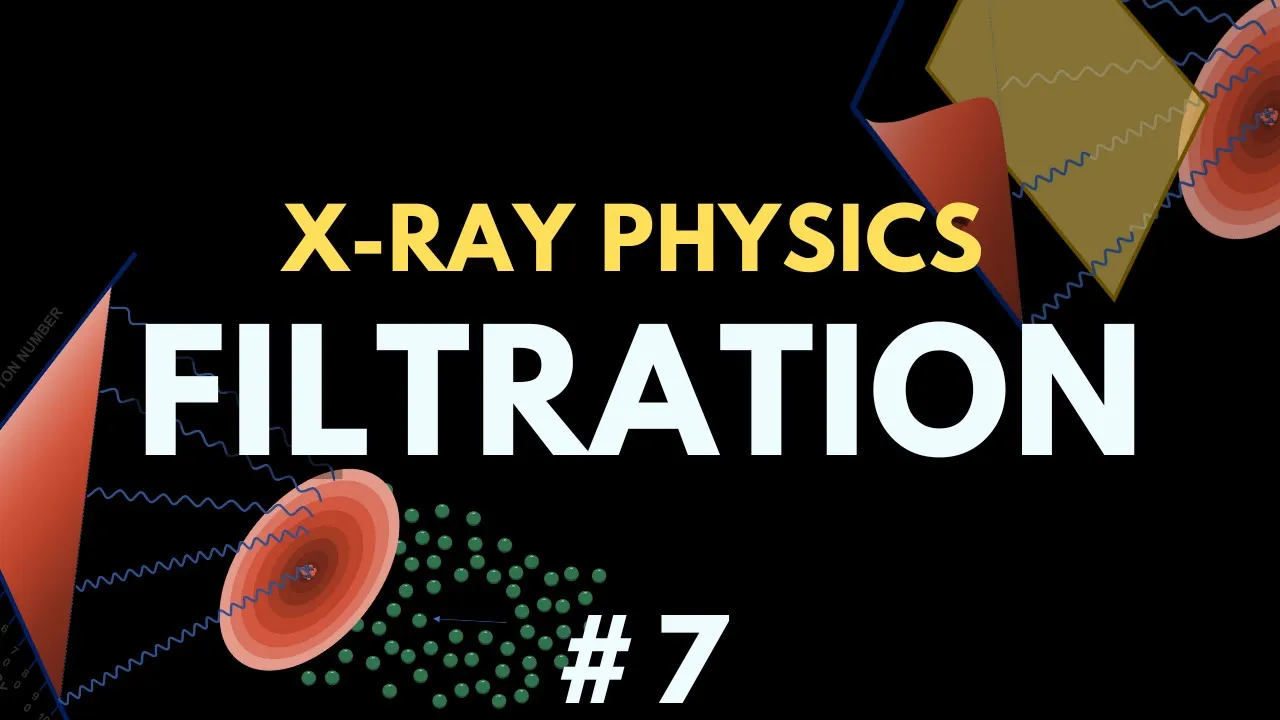

Bremsstrahlung radiation is produced when high-speed electrons from the cathode strike the anode target material and experience an attractive electromagnetic force from the positively charged nucleus, causing them to slow down and change direction; this loss of kinetic energy is released as electromagnetic radiation (X-rays), with the photon energy being proportional to the kinetic energy lost and inversely related to the distance between the electron and nucleus, resulting in a continuous spectrum where maximum photon energy equals the bombarding electron energy (determined by kVp) and the number of photons increases with higher kVp, mA, and atomic number of the target material.
Bremsstrahlung Radiation: X-Ray Production & Physics
Added:Basic atomic structure, including the concepts of a positively charged nucleus, orbiting electrons, and electrostatic (Coulomb) forces.
The relationship between kinetic energy and conservation of energy during particle interactions.
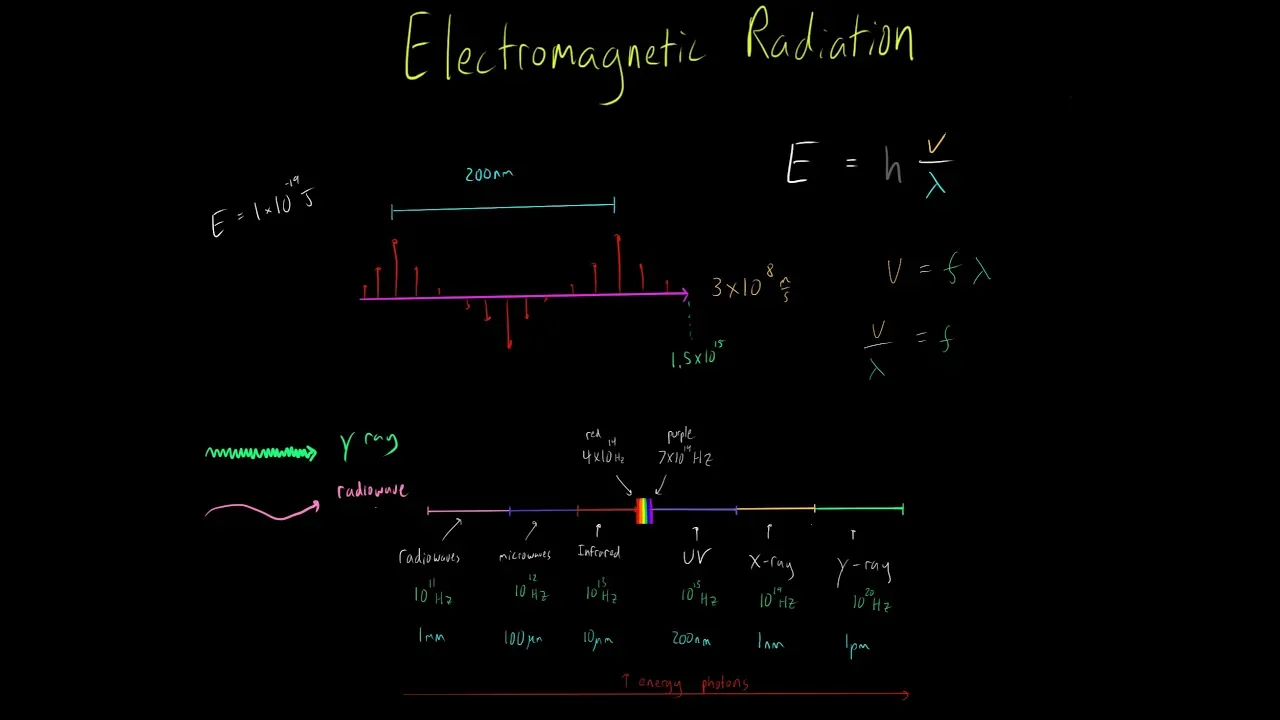
Fundamental principles of electromagnetic radiation, including photon energy, frequency, wavelength, and the electromagnetic spectrum.
The concept that accelerating or decelerating charged particles (such as high-speed electrons) emit electromagnetic radiation.
Characteristic X-ray production, which occurs alongside Bremsstrahlung due to inner-shell electron transitions.
Analysis of X-ray emission spectra, including the distinction between continuous Bremsstrahlung spectra and discrete characteristic peaks.
The primary mechanisms of X-ray interaction with matter, including the Photoelectric Effect, Compton Scattering, and Pair Production.
Practical engineering and clinical applications, such as X-ray tube design, beam filtration, and radiation safety protocols in medical imaging.
111.5K views1.8Klikes10:36Original Release: 2023-02-24
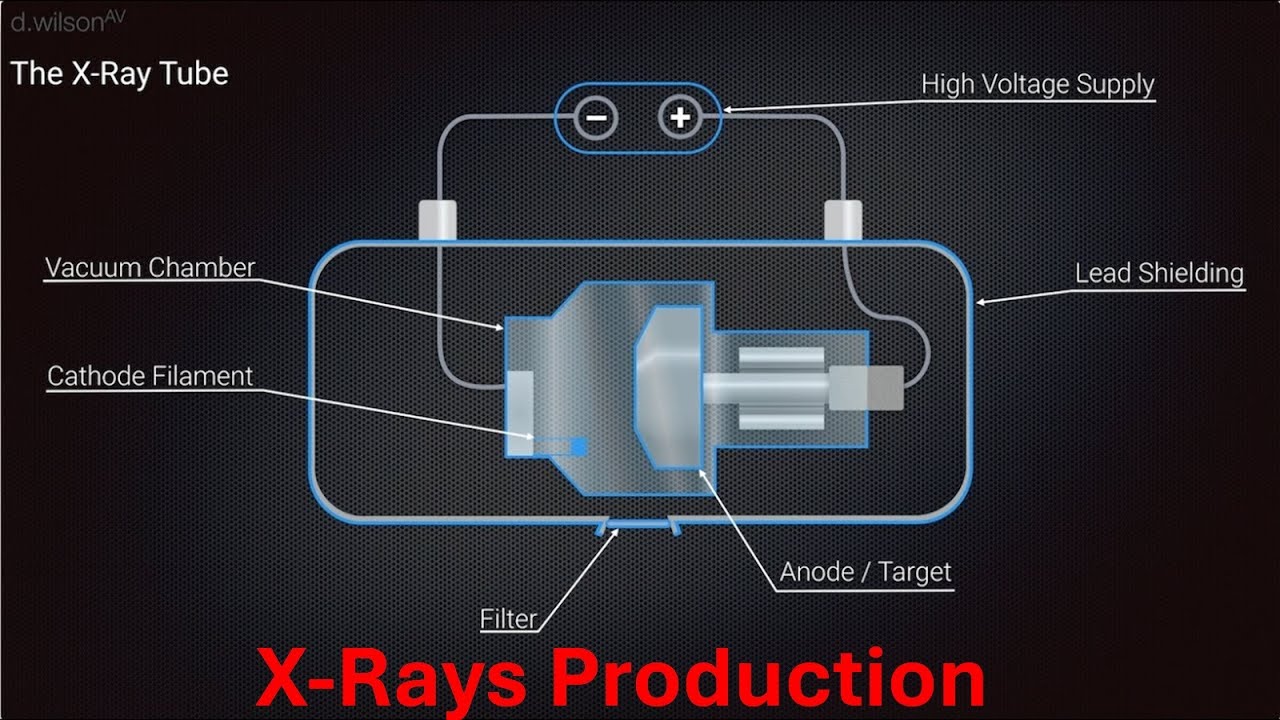
finally having spent some time looking at the X-ray tube the X-ray circuit as well as x-ray beam geometry we can get into the meat of our x-ray physics module by looking at how we actually go about creating x-rays within the X-ray tube now as I've mentioned there are two separate mechanisms that we create X-rays at the anode the first is via bremster lung radiation and the second is characteristic radiation now in this first talk we're going to focus specifically on bremster lung radiation before moving on to characteristic radiation in our next talk so where exactly are these x-rays produced well they're produced on the actual focal spots in the anode here and they're not just produced on the anode surface they are produced within the anode like we've seen in our anode heel effect talk so we have our cathode producing electrons our tube potential accelerating those electrons those electrons striking our anode and x-ray production occurring at this anode now a really common question that comes up is what happens to the energy of those electrons that strike the anode now less than one percent of that energy is then converted into x-rays the rest over 99 of that energy is converted into heat at the anode and we've looked at the various different mechanisms the anode has in order to deal with all of that heat production now of that less than one percent that is converted into x-rays the majority of those will be brim's lung radiation so if we have a look at our Rutherford ball model of the atom here and we have an electron that has come from our cathode it's being accelerated towards our anode via our tube potential and it is going to strike our Target material now this atom represents the target material of our anode which is most commonly tungsten now this isn't technically a Tungsten atom there aren't 74 protons here and there aren't 74 electrons but it's a diagrammatic representation of tungsten now the energy at which this bombarding electron will strike the anode is determined by the two potential our primary and secondary circuit have created a true potential that accelerates those electrons towards the anode now this electron will be coming at a specific kinetic energy and will be interacting with our Target material now one of the major differences between bremster lung radiation and characteristic radiation is that in bremster lung radiation there's an interaction between the Striking or bombarding electron and the nucleus of our atom in characteristic radiation we get interaction of this striking electron with the initial electrons of our Target so what I've done here is I've removed the electrons from this diagram in order for us to not get confused here bremster lung radiation this is really important to remember is the attractive force between this electron and the positive nucleus of our Target now Brian Sri Lanka in German I'm told means breaking and you'll see why that is used to describe this type of radiation this electron is coming in at a specific kinetic energy and it will experience an attractive force between the positive nucleus and that negative electron now this electron as it gets attracted to that nucleus will slow down and change direction if we're driving a car and we turn we're going at a constant speed and we turn the car will slow down as we turn and our body will feel like it needs to carry on in the other direction that's a similar thing to What's Happening Here in brem's lung radiation as this electron changes its course due to that attractive force that electromagnetic force it loses some kinetic energy and in a closed system energy needs to be conserved and that loss in kinetic energy is then released in the form of branched lung radiation so let's have a look at three examples here the first is we have an electron coming in at a specific kinetic energy it comes close to the nucleus and slows down as it experiences that electromagnetic force now the closer this electron is to the nucleus the stronger that electromagnetic force the distance between the electron and the nucleus is inversely proportional to the force that is experienced between the two so the closer we are the more loss of kinetic energy we get and the greater the brainstorm radiation energy is that is released this Branch lung radiation energy is proportional to the amount of kinetic energy that is lost by the bombarding electron now if an electron coming from the cathode was further away from the nucleus here that attractive force would be less than in our previous example there will be less loss of kinetic energy here and the branch lung radiation energy that is released will also be less the opposite is also true if an electron was to strike the nucleus and lose all of its kinetic energy the branch lung radiation that is released will be equal to the energy of that bombarding electron now there's another way to represent this graphically and we looked at this diagram when we looked at our filtration torque now here on our y-axis we've got photon number Photon our electromagnetic radiation the number of photons and on our x-axis is our Photon energy the energy of that brain's lung radiation now we have electrons coming from our cathode towards our Target material here now the way I've drawn this the color coding here represents the strength of the electromagnetic field that is experienced between the negative electron and the nucleus of our atom these don't represent the electron shells here these represent distance away from this nucleus here now the more protons within our nucleus the more brem's lung radiation that will be generated so the higher our atomic number of our anode Target the more brain's lung radiation that is produced the kinetic energy or the energy of these electrons that are being accelerated towards our anode as I've said before is determined by our kvp our kilovolt Peak here the number of electrons that are heading from our cathode to our anode is directly proportional to our current and our exposure time our Mas and it's exponentially proportional to our kvp now if an electron was to strike the nucleus as we've said all of that energy will be converted into a bremster lung radiation and that Photon energy here will be equal to the energy of that bombarding electron now as we head out more and more to the periphery of our Target material here the brain slung radiation that is released will have a low Photon energy but the surface area here the likelihood of an electron to be interacting at a longer distance is much more than as we get closer to the nucleus the nucleus is a very small part of our atom therefore very few photons are produced at these high energies and much more occur at these low Energies now low energy electromagnetic radiation has a longer wavelength and high energy has a shorter wavelength a higher frequency and therefore a higher energy just as we discussed in our electromagnetic radiation torque now this is what's known as an unfiltered Brimstone radiation Spectrum here we've got this linear Spectrum where we've got lots of low energy photons and fewer high energy photons now as I've said before if we were to place a filter between our Target material and our patient we would preferentially filter out these lower energy x-rays x-rays that contribute to Patient dose but don't contribute to our image and that occurs via the photoelectric effect that we've looked at before as the energy of these x-rays increase the likelihood of our photoelectric effect to occur decreases we preferentially attenuate the lower energy X-rays and higher energy x-rays are more likely to go through our filtered material now this filter can represent our inherent filtration our glass envelope our conducting oil and our x-ray tube window all the added filtration that we place between the X-ray tube and our patient again this is a really important formula to understand now if we were to look at this graph from head on this is the kind of graph that comes up in exams over and over again and in some countries that have short answer question based exams drawing this or explaining this graph is very important and even in McQ exams knowing where these graphs intersect especially with our x-axis is incredibly important so this is what's known as our filtered brainstorm lung spectrum and I just want to take you through a couple of points that are core knowledge you need to understand this maximum Photon energy is determined by our kvp nothing else determines this energy here if we were to change our Target material from tungsten to another type of material this maximum Photon energy would not change this is purely determined by the energy that these striking electrons have coming from our cathode to our anode the number of x-rays the area under this curve is determined by our kvp our current our Target material and our filter tradition here all of which we're going to look at in more detail when we look at the X-ray Spectrum now it's very difficult to create an unfiltered x-ray spectrum because we have some inherent filtration so most of the x-rays below a photon energy of 12 will not reach the patient here so when asked to draw this graph here we don't want to include any x-rays below that energy level now there are multiple ways in which this specific question can be asked in exams and what you need to do is understand how this spectrum is generated understand the process of bremster lung radiation and then when you're asked about what a change in kvp or a change in Target material or generator waveform does to the Spectrum you can go through the steps in your head and using the logic and reasoning by understanding this process you can see what will happen to the Spectrum and if you want to practice these types of questions check out the question bank that I've linked in the top line of the description I go through all the different ways in which these questions get asked in exams so now we've looked at the production of brem's lung radiation and the brem's lung Spectrum let's shift our attention now to characteristic radiation combine those two Spectra and get our x-ray Spectrum proper I'll see you all in that talk goodbye everybody
Up Next
44:54
CT Physics Basics: Radiology Resident Review Guide
@neiljhansenmd
75.3K views•2021-01-06
6:05
Radiation Units Explained: Gray, Sievert, and More
@SciShow
342.1K views•2019-09-12

18:20
T1 Relaxation in MRI: Spin-Lattice & Longitudinal Recovery
@radiologytutorials
86.2K views•2023-06-14

27:14
Entropy and the Second Law of Thermodynamics Explained
@veritasium
27.5M views•2023-07-01
Related Study Plans & Knowledge Roadmaps
Structured learning paths in Physics
physics
Medical Physics: Imaging, MRI & Radiotherapy
01Foundations of Radiation and Matter Interaction
02X-Ray Imaging and Computed Tomography (CT)
03Magnetic Resonance Imaging (MRI) Physics
+ 3 more learning modules
15h6 modules
Explore Roadmap
physics
Nuclear Physics (Decay, Fission & Reactors)
01Atomic Structure and the Binding Force
02Radioactive Decay and Half-Life
03Nuclear Fission Mechanics and Chain Reactions
+ 2 more learning modules
12h5 modules
Explore Roadmap
physics
Soft Matter (Polymers, Colloids & Rheology)
01Foundations of Soft Matter & Thermal Forces
02Polymer Physics and Macromolecules
03Colloids, Surfactants, and Self-Assembly
+ 2 more learning modules
38h5 modules
Explore Roadmap
physics
Analytical Mechanics: Lagrangian & Hamiltonian
01Mathematical Foundations: Calculus of Variations
02From Newtonian Mechanics to Constraint Dynamics
03The Principle of Least Action & Lagrangian Mechanics
+ 3 more learning modules
28h6 modules
Explore Roadmap