Soft robotics is an emerging field that creates flexible, compliant robots using rubber polymers and fabric instead of traditional rigid materials, drawing inspiration from soft organisms like octopi and squid to achieve advantages in manipulation, maneuverability, and adaptability for applications including space exploration, rescue missions, and medical procedures.
Soft Robotics: Nature-Inspired Robot Evolution in Emerging Technology
Added:Deep Dive
Fundamental principles of traditional rigid-body robotics and kinematics.
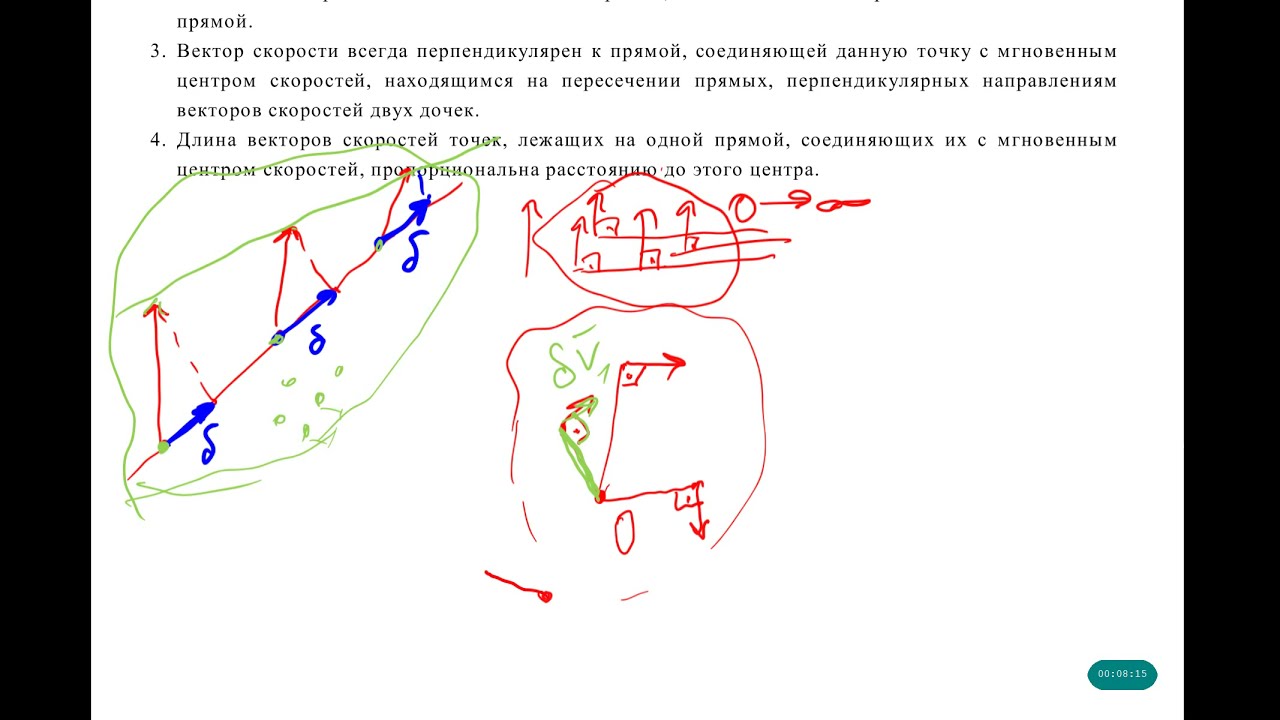
Теоретическая механика 12-0 - Принцип виртуальных перемещений
727
Four principles govern rigid body motion: (1) Velocity projections on any line connecting two points are equal; (2) If three velocity application points lie on one line, their endpoints also lie on one line; (3) Velocity vectors are always perpendicular to lines connecting points to the instantaneous center of velocities; (4) Velocity magnitudes for points on a line are proportional to their distances from the instantaneous center. These principles ensure rigid bodies maintain shape and consistent motion patterns during movement.
Click to watch →

TM3: Starrkörperkinematik
24.9K
A rigid body maintains constant distances between all its points during motion. The velocity of any point P is given by v_P = v_O + ω × r_PO, requiring six independent parameters (three translational, three rotational) to fully describe motion. Acceleration follows a_P = a_O + α × r_PO + ω × (ω × r_PO). These formulas use absolute angular quantities measured relative to inertial frames. Analysis proceeds by starting from known values (like fixed supports with zero velocity) and propagating through mechanisms using kinematic equations.
Click to watch →

Teoría sólido rígido: Cinemática SR (todo lo que hay que saber en 2D)
76.6K
A rigid body is a system of particles where distances between any two points remain constant. The kinematics of rigid bodies relies on vector products, particularly the cross product, which follows specific rules (i × j = k, j × k = i, k × i = j). Angular velocity is a vector with magnitude equal to angular velocity (rad/s) and direction perpendicular to the rotation plane. Motion is classified as pure translation (all points move identically), pure rotation about a fixed axis, or combined motion. The absolute velocity of any point equals the reference point's velocity plus ω × r. The instantaneous center of rotation is a point with zero velocity at a given instant, with all other points' velocities proportional to their distance from it. Acceleration has tangential (α × r) and normal (ω × (ω × r)) components. The complete kinematics is described by two fundamental equations: velocity (v = v_ref + ω × r) and acceleration (a = a_ref + α × r + ω × (ω × r)). For fixed-axis problems, use the fixed point as reference; for mobile-axis problems, use the center of mass.
Click to watch →

Кинематика движения твёрдого тела | Олимпиадная физика, Пенкин | 9, 10, 11 класс
24.7K
A rigid body maintains constant distances between any two points during motion. This leads to the Law of the Stick: projections of velocities onto the line connecting any two points must be equal (v_A cos(α) = v_B cos(β)). Rigid body motion is classified into three types: translational (all points move parallel with identical velocity), rotational (all points move in circles in parallel planes with centers on a common axis), and complex motion (combination of translational and rotational). Understanding these fundamentals is essential for analyzing rigid body kinematics.
Click to watch →

Kinematics of Rigid Body Motion-2
296
A rigid body is a system of particles where distances between any two particles remain constant. It has 6 degrees of freedom: 3 translational (along x, y, z axes) and 3 rotational (about x, y, z axes). To describe rigid body motion, two coordinate systems are used: a body coordinate system attached to the body (typically with origin at center of mass) and a space coordinate system fixed in space. The body coordinate system moves with the body while the space coordinate system remains stationary.
Click to watch →
Deep Dive
The concept of biomimicry (how engineering designs imitate biological processes and organisms).

Evidências da Criação - Adauto J. B. Lourenço - PARTE 1 - 06/11/2017
64.2K
Biomimicry is the practice of imitating nature's designs in human technology. Examples include: Mercedes studying fish for aerodynamic car design, wind turbine blades modeled after humpback whale fins, and self-cleaning surfaces inspired by lotus leaves.
Click to watch →

Biomimicry in engineering design - Science speedrun with Elicit
172
Biomimicry is an engineering design approach that learns from biological systems to solve human problems, with applications including velcro inspired by plant hooks, wind turbine blades mimicking maple seeds, bionic cars shaped like fish for aerodynamics, self-healing concrete based on lizard skin, bird-safe glass preventing collisions, water collection systems inspired by cacti, and medical prosthetics; this approach spans multiple fields including architecture, automobile engineering, and material science, with future applications potentially including photosynthesis-inspired solar panels and more advanced robotic sensors.
Click to watch →

Thiết kế mô phỏng sinh học là gì? | Kiến Sĩ #shorts #kiếnsĩ #shortskiếnsĩ
448K
Biomimicry, or bio-inspired design, involves studying natural organisms to solve engineering problems; for example, Japan's Shinkansen bullet train was redesigned in 1997 using the beak shape of the osprey bird to reduce noise and improve efficiency, while the lotus leaf's self-cleaning surface has been applied to modern paint coatings.
Click to watch →
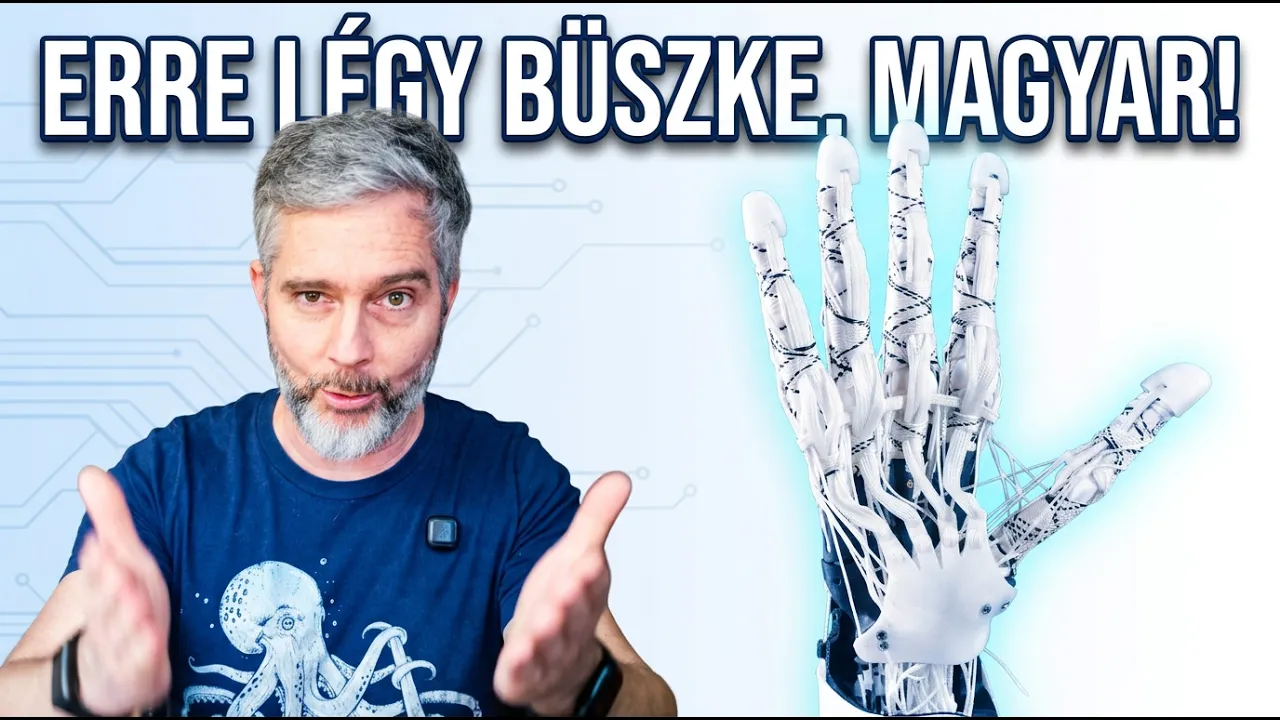
Az évszázad magyar találmánya tán, el ne lopják!
197.3K
Biomimicry is an engineering approach that involves studying and imitating biological systems to solve human problems. In robotics, biomimicry involves creating machines that function similarly to biological organisms. The human hand serves as a primary inspiration because it has evolved over millions of years to achieve remarkable functionality. By understanding how biological systems solve complex problems, engineers can develop more effective and efficient robotic solutions.
Click to watch →
![🔴 HALF-LIFE 2 EPISODE 1 FULL PLAYTHROUGH | [SCIENTIST PLAYS]](https://i.ytimg.com/vi/lWNv_REri_M/maxresdefault.jpg)
🔴 HALF-LIFE 2 EPISODE 1 FULL PLAYTHROUGH | [SCIENTIST PLAYS]
9.6K
Biomimicry is the practice of studying successful natural designs and applying them to engineering. Evolution had 4 billion years to optimize solutions, so nature provides proven blueprints. Examples include shark skin-inspired hospital surfaces that prevent bacterial growth by poking bacteria walls, termite mound-inspired passive cooling buildings in Africa, and velcro derived from burrs. The Combine's insectoid designs reflect this principle, showing how successful species' body forms influence technological innovation.
Click to watch →
Deep Dive
Basic material science, specifically the properties of polymers, elastomers, and smart materials.
Production Eng Material ( شرح + حل 60 سؤال)
411
Polymers are classified: thermoplastics (meltable, PVC, polystyrene), thermosets (non-meltable, epoxy), elastomers (rubber-like, natural rubber). Ceramics include glass, marble, concrete. Composites combine materials: reinforced concrete, LCD displays, wood products. Smart materials change properties: shape memory alloys (return to original shape when heated), photochromic materials (change color with light). Material properties are interrelated: hardness correlates with strength, ductility correlates with toughness, hardness inversely relates to formability. Properties are identified through impact tests (toughness), hardness tests (indentation resistance), tensile tests (strength and ductility), and chemical tests (composition). Understanding these relationships helps engineers select materials based on required performance characteristics.
Click to watch →

VTU Question Paper Solution | Material Science | 18ME34 | 3rd Sem Mechanical Jan 2021 Allacademy
9.6K
This segment covers polymers and smart materials in material science. The instructor explains the properties and applications of polymers including their mechanical properties, thermal behavior, and various uses in engineering. The segment also introduces smart materials that can respond to external stimuli such as temperature, stress, or electrical fields. The instructor discusses the significance of these materials in modern engineering applications and their potential for future technological developments.
Click to watch →
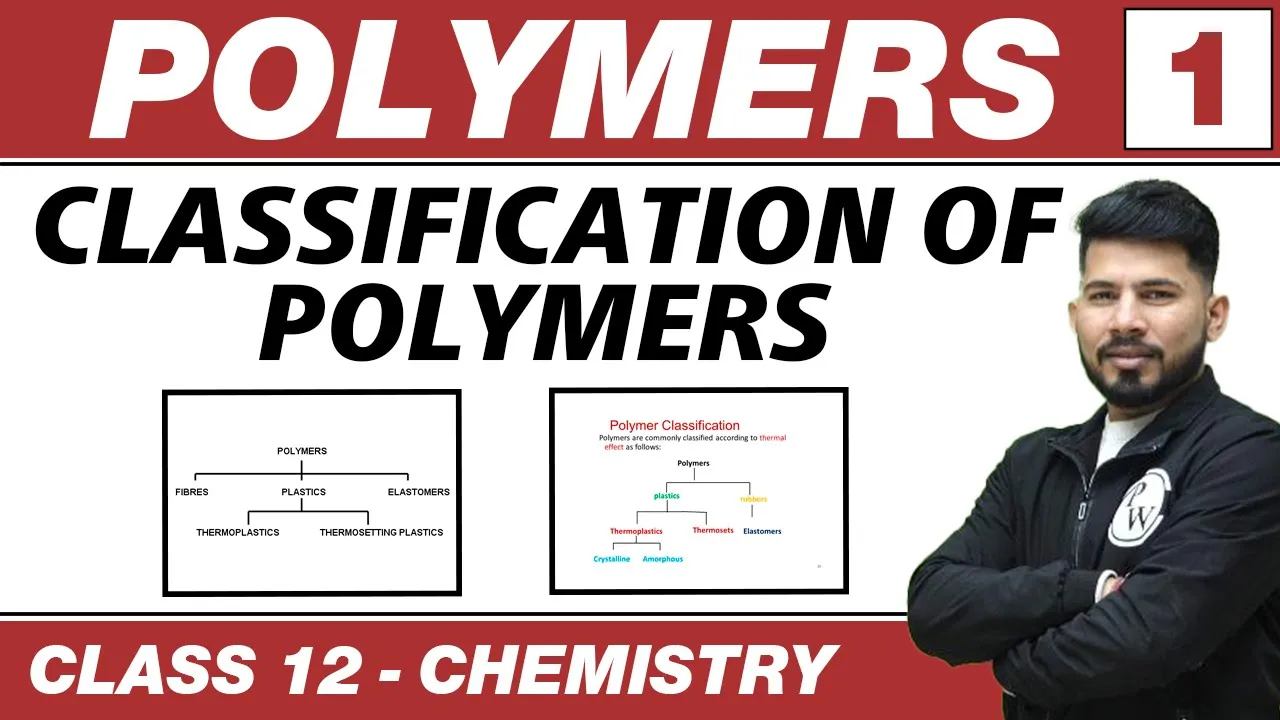
Polymers 01 : Classification of Polymers | Class 12 NCERT
92.2K
Elastomers are polymers with elastic properties that can be stretched and return to their original shape. They have weak intermolecular forces (Van der Waals forces) between chains, which allows stretching. Cross-links are introduced between chains to help them return to their original position after stretching. Examples include natural rubber and Buna-S.
Click to watch →
Smart Materials of the Future - with Anna Ploszajski
61.8K
Materials science bridges engineering, chemistry, and physics to study material properties at the atomic level, examining how atoms behave in materials like glass, steel, wood, and plastics to understand properties such as hardness, flexibility, and sharpness. Smart materials represent a revolutionary category of solid objects whose properties—shape or color—change in response to external stimuli like heat, light, moisture, pressure, or magnetism. Historical examples include pine cones (natural smart materials that open/close based on humidity) and ancient Egyptian self-healing lime mortar that repairs cracks using air moisture and carbon dioxide. The first scientifically recognized smart material was piezoelectricity, discovered by Pierre and Jacques Curie in 1880, demonstrating how mechanical stress generates electricity in certain crystals. This discovery revealed that materials could actively perform useful functions rather than merely being acted upon, transforming materials development and design approaches.
Click to watch →

POLYMERS in One Shot || Bihar Board Class 12th
58.3K
Polymers are classified by their behavior when heated. Thermoplastic polymers soften when heated and can be reshaped multiple times (e.g., polyethylene, PVC). Thermosetting polymers, once set, cannot be reshaped due to cross-links (e.g., bakelite, melamine). Elastomers have elastic properties, stretching and returning to original shape (e.g., natural rubber). The intermolecular forces and chain mobility determine these properties, affecting applications from packaging to tires.
Click to watch →
Deep Dive
Introduction to fluid power systems, including basic pneumatic and hydraulic actuation.

Introduction to Fluid Power Systems (Full Lecture)
203.9K
Fluid power systems use liquids (hydraulic) or gases (pneumatic) to transmit power, where hydraulic systems leverage the incompressible nature of liquids for precise, powerful, and holding capabilities, while pneumatic systems use compressible air for lighter, cleaner applications; these systems are characterized by three fundamental properties—pressure (which determines actuation strength), flow rate (which determines actuation speed), and valve position (which determines actuation direction)—controlled through pumps, actuators (cylinders and motors), and various valves, with energy conversion efficiency being a critical consideration in system design.
Click to watch →

mod-01 lec-01 What is Hydraulic and Pneumatic System
58.2K
Hydraulic and pneumatic systems, collectively known as fluid power, use pressurized fluids (liquids for hydraulics, gases for pneumatics) to transmit power through actuators like piston cylinders. A basic system consists of a pump to supply pressurized fluid, a reservoir for storage, directional control valves to manage flow direction, and actuators to convert hydraulic energy into mechanical motion. Key advantages include high force-to-weight ratio, easy heat dissipation, and high stiffness, while disadvantages include leakage risks, contamination concerns, and fire hazards with mineral oil. Control mechanisms include pressure relief valves for safety, flow restrictors for speed control, and feedback systems for precise positioning. The technology evolved from Pascal's law (1650) through key developments like Bramah's hydraulic press (1800), Thomas Dy's synthetic rubber seals (1930), and modern electronic integration.
Click to watch →

Фізика 7 НУШ. Урок №57. Гідравлічні та пневматичні пристрої
11.7K
This section introduces pneumatic and hydraulic systems as fundamental technologies in modern machinery. Pneumatic devices use compressed air to perform work, including aerosol spray cans, pneumatic jackhammers, air guns, and drills. Hydraulic devices use pressurized liquid, found in excavator systems, aircraft flight controls, vehicle brakes, jacks, lifts, and presses. Both systems utilize interconnected chambers filled with working fluids (air or liquid) to transmit forces efficiently across mechanical components.
Click to watch →
![🚀⚙️OLEOHIDRÁULICA : Simbología HIDRÁULICA ⚡ Símbolos D mando y regulación D Energía (válvulas) [2/6]](https://i.ytimg.com/vi_webp/2NgStMSlCYc/maxresdefault.webp)
🚀⚙️OLEOHIDRÁULICA : Simbología HIDRÁULICA ⚡ Símbolos D mando y regulación D Energía (válvulas) [2/6]
167.3K
Hydraulic valves can be actuated through multiple methods: manual actuation using override pins (most common for maintenance and testing), push buttons for simple position changes, push-pull mechanisms for bidirectional control, rotary handles for precise spool positioning, locking mechanisms with keys for position maintenance, levers and pedals for pilot valves, mechanical actuation with stops for limited travel, roller mechanisms for component-based actuation, single and double solenoids for electrical control, proportional solenoids for continuous variable control, remote pilot systems for indirect control, pneumatic and hydraulic actuation for high-force applications, internal pilot channels using system pressure, external pilot channels, two-stage hydraulic actuation for precise positioning, and servomotors for servo valves. Spring return valves automatically reset when force is removed, while latching valves maintain position until externally changed.
Click to watch →
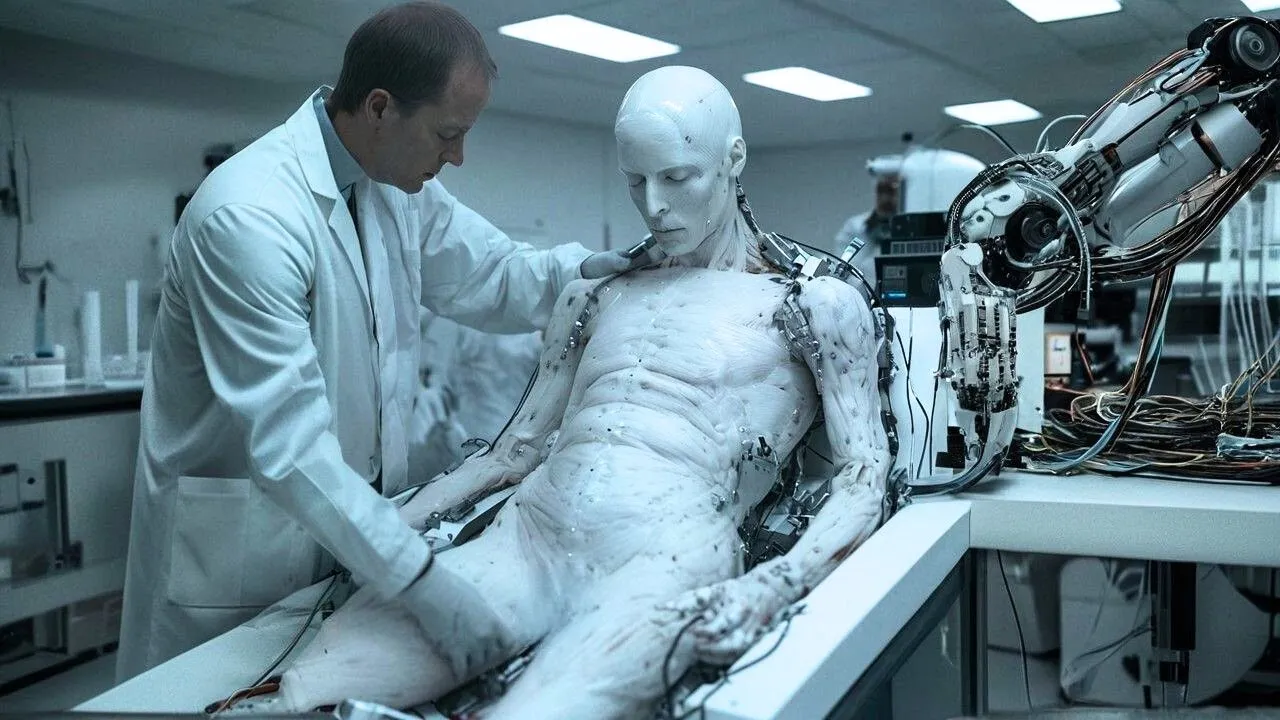
Meet The FIRST WATER POWERED Biomimetic AI Humanoid - Synthetic Humans Are Coming!
158K
Hydraulic systems offer significant advantages over pneumatic models in robotics. While pneumatic systems require large compressors (such as a 12 kg compressor consuming 1.2 KW that failed after one hour), hydraulic systems use much smaller pumps (3 kg at 200 watts) that can power 40 muscles continuously. Water's incompressibility also produces smoother motions without the muscle vibrations that make pneumatic bots clunkier and louder.
Click to watch →
Prerequisite Knowledge
- Concept 01Fundamental principles of traditional rigid-body robotics and kinematics.
- Concept 02The concept of biomimicry (how engineering designs imitate biological processes and organisms).
- Concept 03Basic material science, specifically the properties of polymers, elastomers, and smart materials.
- Concept 04Introduction to fluid power systems, including basic pneumatic and hydraulic actuation.
Subsequent Learning
- Step 01Advanced control theory for continuum mechanics and non-linear deformation in soft bodies.
- Step 02Design and integration of flexible, stretchable sensors for proprioception in soft robots.
- Step 03Clinical and surgical applications of soft robotics, such as minimally invasive surgical tools.
- Step 04Bio-hybrid robotics, incorporating living tissues or cells with synthetic soft structures.
Soft Robotics
Applications
Soft Robotics
0:00Playing Section
- 1
Soft robots use flexible materials like rubber and polymers.
- 2
Inspiration drawn from octopi and squid for adaptability.
- 3
Aimed at space exploration and manipulation tasks.
The Precision, Control, and Durability Limits of Soft Robotics
While soft robotics offers remarkable flexibility, a significant counterpoint emphasizes the inherent limitations of soft materials in precision, force propagation, and durability. Proponents of traditional rigid robotics and hybrid systems argue that soft robots are constrained by 'underactuation' and highly non-linear dynamics. This makes precise control, mathematical modeling, and sensor integration extremely difficult compared to rigid counterparts. Additionally, soft materials like elastomers are highly susceptible to tearing, punctures, and environmental degradation, which limits their reliability in extreme environments like deep space. For tasks requiring high-speed operations, heavy payload capacity, and sub-millimeter accuracy, traditional rigid systems remain vastly superior, suggesting that soft robotics is a niche complement rather than a replacement.
Deep Dive
Advanced control theory for continuum mechanics and non-linear deformation in soft bodies.

Blender 2.91 | Class 17 - Soft body physics by Rohan Rahule | Pinwheel Animation Studios
506
Advanced soft body settings control how objects deform during simulation. Bend Limit determines how much faces can bend relative to each other—higher values create more flexible, jelly-like behavior. Push and Pull settings control how the origin point affects faces: Push moves faces outward, Pull moves them inward. Plasticity and Elasticity are opposite properties controlling shape recovery—higher plasticity means objects retain their deformed shape permanently, while higher elasticity means they return to original shape. These settings work together to create realistic soft body behaviors from rigid to highly deformable.
Click to watch →
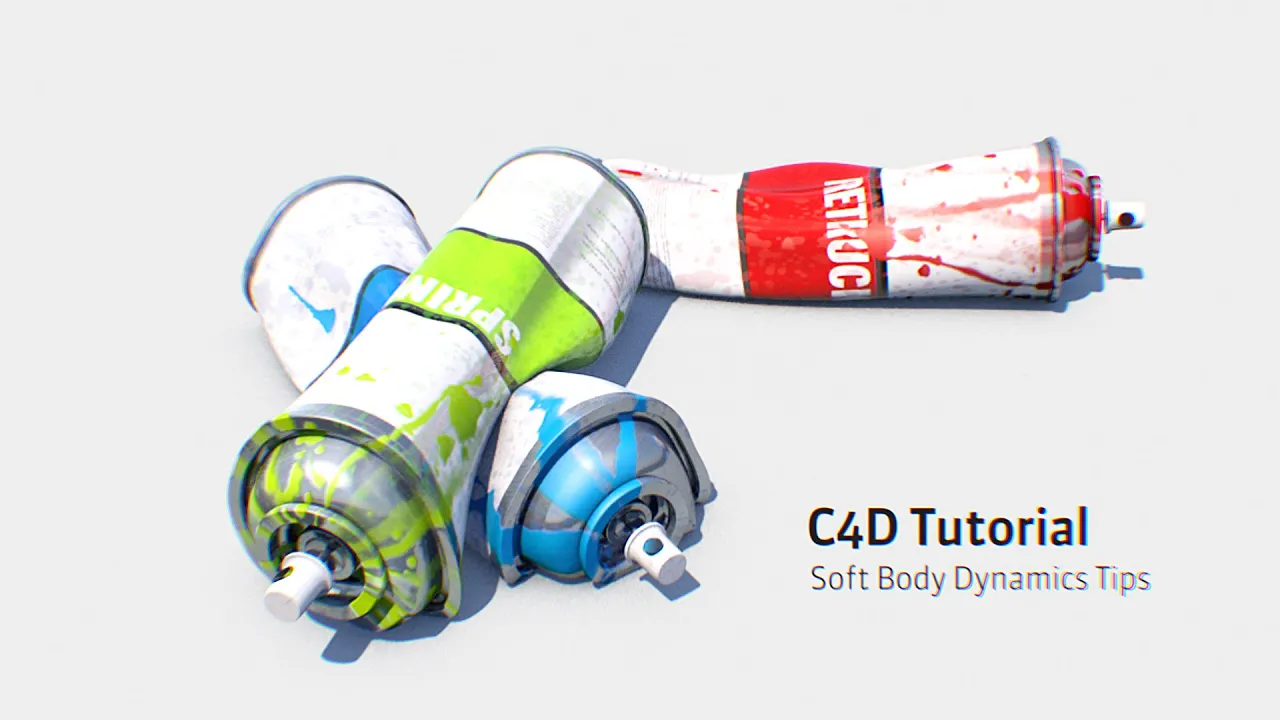
Cinema 4D Tutorial: Tips For Using Soft Body Dynamics
16.8K
Advanced soft body control uses vertex maps to selectively apply stiffness values to different model parts. Paint areas that should remain rigid with high stiffness values, while leaving other areas with zero stiffness to allow natural deformation. Balance stiffness across the model by painting with varying strengths - light painting (around 1%) adds minimal stiffness to areas that need some resistance. This technique enables realistic variations where some parts crumple while others remain intact, and can be used to create crushed props by saving simulation results as separate model states.
Click to watch →

Soft Body Simulation Settings | Blender 4.2 Tutorial
8.1K
Advanced soft body controls provide fine-grained control over deformation behavior. The Goal panel allows selective pinning using vertex groups—paint vertices with weights and adjust strength values (default 70%) to control rigidity. Edge physics controls how mesh edges deform: Pull values control stretching (low = elastic, high = stiff), Push values control compression resistance (suitable for fabrics vs. inflated objects). Springs vertex groups enable gradual transitions in edge properties across the mesh using gradient painting. Edge damping controls spring friction, while plasticity enables permanent deformation after collisions. Bending and Length values control overall mesh flexibility and scaling during deformation.
Click to watch →

MdC-2021-01
289
In continuum mechanics, unlike rational mechanics which deals with discrete points, we use 'subbodies' (parts of the body) to describe continuous matter. The deformation function χ maps initial positions to final positions, with the composition property χ(t1,t2,χ(t0,t1,P)) = χ(t0,t2,P). This mathematical framework allows us to analyze how geometric objects transform under deformation, such as vertical lines remaining lines, planes becoming quadric surfaces, and circles transforming into circles with modified radii.
Click to watch →

【Blender3.4解説Tutorial】ソフトボディを設定するための詳細説明。【リクエスト】
2.1K
Goal settings control deformation intensity, with values near 1 allowing maximum deformation. Mass and goal strength interact: lower mass with low goal strength causes collapse under weight. Stiffness (default 0.5) controls rigidity, with values near 1 maintaining shape better. Damping (max 50) controls return to original shape, with higher values creating elastic effects. Strength settings in the Goal tab control overall deformation intensity.
Click to watch →
Deep Dive
Design and integration of flexible, stretchable sensors for proprioception in soft robots.

ORI Anniversary Seminar Series 21-22 - Daniela Rus
110
This section addresses the critical challenge of giving soft robots the ability to sense their own configuration. The speaker describes 3D embedded printing, a method that adds sensors (curvature, inflation, and contact sensors) into silicone molded material while it cures. This creates flexible, elastic sensors that support robot needs. The goal is to create a system where continuous sensors embedded in the robot's body can provide automatic measurements of the robot's configuration—proprioception. The speaker introduces kirigami, a method where sensor response depends on cut patterns, and a data-driven approach using neural networks to associate sensory values with geometric configuration. This creates robots with perceptual skin that also know what configuration they are in, which is essential for control.
Click to watch →

Kaitlyn Becker: Mechanical Programming of Soft Robots via Fabrication-Integrated Design
2.2K
Sensor integration in soft robots requires balancing information richness with fabrication complexity. Starting with few sensors provides redundancy for mapping proprioceptive and exteroceptive feedback through signal analysis. Strategic sensor placement can mechanically guide actuator curvature. Acoustic sensing using microphones detects object shape by analyzing how filament contacts change vibration frequencies—identical-weight objects of different spatial densities produce distinguishable signatures. Optical fiber sensors embedded in soft sheets detect deformation and pressure through refractive index differences, with roughened sides providing directional bending sensitivity. For soft robotics, form defines function, meaning design necessarily involves designing the fabrication process itself. Applying fabrication-integrated design yields soft robots that are more durable, reliable, stronger, faster, and scalable in manufacturing. Geometric and material optimization is necessary but not sufficient; similarly, manufacturing alone is insufficient. A comprehensive framework requires multidisciplinary community effort integrating design and fabrication considerations throughout development.
Click to watch →

A bending sensor for soft body proprioception- Presented by Hareesh Godaba for Robosoft 2020
157
This video presents a low-cost bending sensor developed using commercially available braided optical fibers, where roughening the cladding surface increases light scattering and sensitivity to bending without requiring extreme curvatures; the sensor demonstrates high sensitivity to deformation while being relatively insensitive to normal forces (less than 0.03 change ratio at 120N compared to 0.04 for silicon-based sensors at 50-60N), enabling distributed proprioception in soft robotic fingers through simple optical intensity measurements.
Click to watch →

What's Hard About Sensor Design for Soft Robots? | Kris Dorsey
119
Designing sensors for soft robots is particularly challenging because soft robots continuously deform, making it difficult to create mechanically robust and reliable sensing systems for proprioception (understanding the robot's own state) and exteroception (understanding the external environment). Key challenges include high sensor-to-sensor variations from manual fabrication, difficulty decoupling different types of mechanical deformation (bending, stretching, twisting, pressure), and environmental effects like temperature and humidity that impact sensor performance. Effective solutions involve designing sensors with reduced deformation sets to improve mechanical selectivity, using materials like carbon fiber for better repeatability, and implementing shielding techniques for capacitive sensing to mitigate interference from external objects and electromagnetic fields.
Click to watch →
Princeton Robotics Seminar - Kris Dorsey
168
This lecture presents research on designing sensors for soft robots and wearable devices, focusing on overcoming challenges such as cross-sensitivity to multiple mechanical inputs, hysteresis, and delamination. The work demonstrates applications in healthcare monitoring for conditions like edema, using strain and pressure sensors embedded in garments to track limb volume changes, and in soft origami robots where capacitive sensors enable proprioception through fold angle measurement. The key insight is that better fundamental sensor design—considering materials, structure, and modality—can reduce computational processing needs and improve performance for wearable and soft robotic applications.
Click to watch →
Deep Dive
Clinical and surgical applications of soft robotics, such as minimally invasive surgical tools.

Intelligent modelling and control of flexible and soft surgical robotic instruments-Dr Ka-Wai KWOK
217
Soft robotics offers transformative potential for minimally invasive surgery through applications like laser ablation and cardiac catheterization. For laryngeal tumor treatment, soft robots route optical fibers carrying laser energy to precisely targeted locations while MRI monitors heat diffusion and surgical margins in real-time, preserving vocal function. Cardiac catheterization applications leverage soft robotic catheters navigating heart chambers to create controlled scars blocking abnormal electrical signals. Combining MRI guidance with FBG sensing enables simultaneous monitoring of catheter position and temperature during ablation. Despite promising research, translating these innovations to clinical practice requires overcoming significant barriers including high costs, regulatory hurdles, and demonstrating consistent performance across diverse patient populations.
Click to watch →

Stanford Seminar - Soft Material Robotics and Next-Generation Surgical Robots
7.2K
Soft material robotics offers transformative potential for minimally invasive surgery by combining compliant, safe materials with integrated sensing and actuation capabilities; these soft surgical robots—including soft continuum robots for lung cancer navigation, soft reactive skins for colonoscopy force distribution, and hybrid soft-rigid origami mechanisms for neurosurgery—address critical challenges in surgical navigation, manipulation, and tissue interaction while enabling new therapeutic possibilities that rigid robotic systems cannot achieve.
Click to watch →

Flexible Soft Robots: Revolutionizing Surgery and Medicine | Giada Gerboni, TED
222.7K
Soft robotics offers significant advantages in medical applications, particularly minimally invasive surgery. Traditional endoscopes use rigid instruments that must enter the body through small holes and interact with delicate structures in uncertain environments. Soft camera robots can bend in every direction and elongate, allowing surgeons to view surgical fields from multiple angles without worrying about what surrounding tissues are touched. This flexibility improves safety and visualization during procedures.
Click to watch →

Tentacle-like Continuum Robots for Minimally Invasive Surgery | Yue Chen; Assistant Professor
564
Soft robotics emerged from 1990s research but gained prominence through bioinspiration from nature. Calibration-based modeling addresses the limitation of assuming constant curvature in soft robots. Stiffness modulation through backbone insertion achieves 350% stiffness increase, combining soft safety with rigid performance. For pancreatic cancer treatment (less than 10% survival), soft robotic systems integrate micro-cameras, shape-controllable tips, and laser fibers for photodynamic therapy. Sub-millimeter accuracy and significant tumor reduction in animal trials demonstrate clinical viability for delivering therapies to confined anatomical regions while preserving healthy tissue.
Click to watch →

Cosa sono i SOFT ROBOT?
1.9K
Soft robotics has transformative applications in biomedicine. The Skiff Flop is a flexible endoscopic surgical robot enabling minimally invasive operations in complex conditions, developed through collaboration between Sant'Anna Institute of Pisa and the Italian Institute of Technology. Soft prosthetics, 3D printed and completely flexible, connect to the forearm using electrodes and can adapt force output for delicate or strong tasks. Hydrogel, a water-based biomaterial, offers exceptional biocompatibility for internal tissue contact, enabling microchirurgia applications. These advances demonstrate how soft robotics can address human needs in ways rigid robots cannot, from surgical precision to adaptive prosthetic functionality.
Click to watch →
Deep Dive
Bio-hybrid robotics, incorporating living tissues or cells with synthetic soft structures.
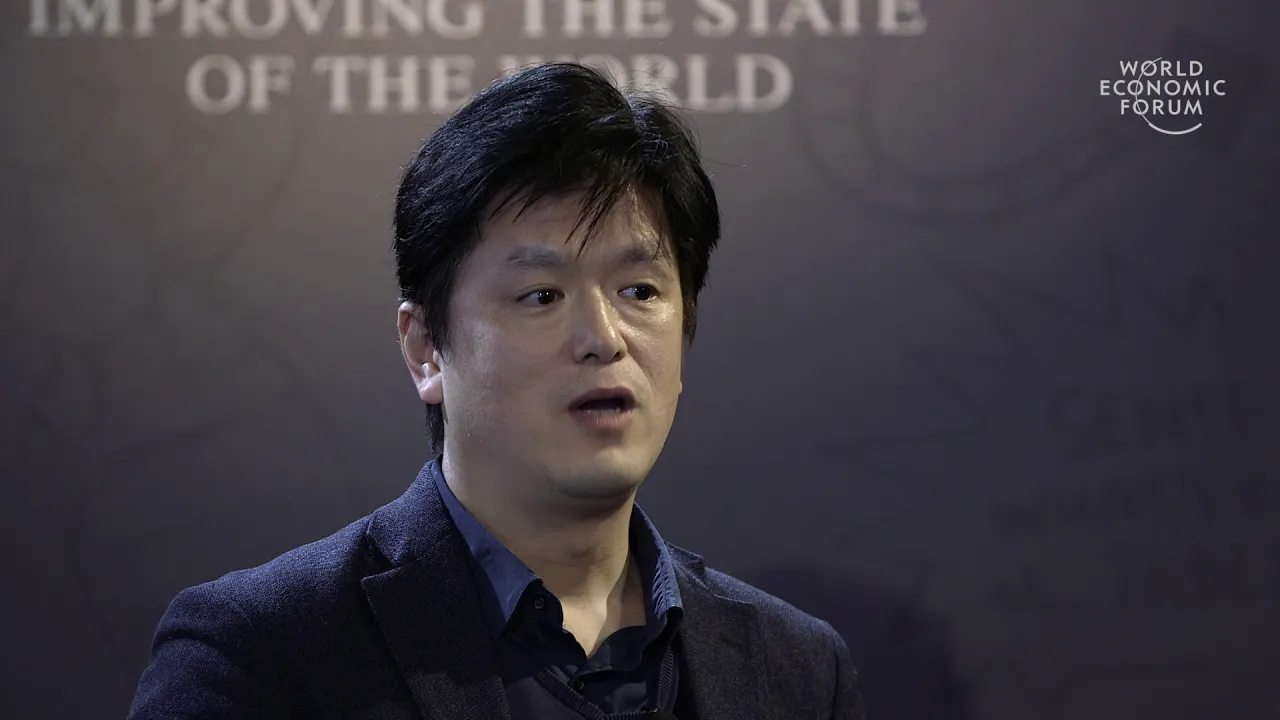
Bio-hybrid robotics built from living tissue | Shoji Takeuchi
13.6K
Bio-hybrid robotics integrates living biological materials, such as engineered muscles and insect proteins, with artificial materials to create devices that achieve biological functions like highly sensitive detection, self-healing, and energy-efficient motion—functions that purely artificial systems cannot replicate; for example, researchers have developed a bio-hybrid finger using tissue-engineered muscles and 3D-printed structures that can contract and move when electrically stimulated, and created sensors using mosquito proteins that can detect human sweat to help locate survivors in disaster scenarios.
Click to watch →

Exército testa robôs com IA controlados pela mente | Elon Musk e a sede da Tesla para IA e robótica
20.1K
Researchers led by Rashid Bachir at the University of Illinois created a new type of biohybrid robot combining living tissue with an artificial soft skeleton. The team seeded this skeleton with optogenetically cultured muscle cells, the first time such cells were cultivated in mice. Using laser cutting, they fabricated an intricate optoelectronic circuit from a stack of copper sheets. This circuit captures radio commands through a receiver coil and regulates energy to power microscopic LEDs, creating a completely wireless, battery-free configuration. This technology has significant medical applications, potentially enabling minimally invasive surgeries and cancer detection by identifying characteristic chemical signatures.
Click to watch →

This NEW Type of ROBOT Will SHOCK THE WORLD!
89.2K
Bio-hybrid robotics combines living cells (such as neurons, muscle tissue, or heart cells) with artificial mechanical systems to create robots that demonstrate nature's high level of adaptation, with applications ranging from enhanced mobility and sensory capabilities to potential medical uses like artificial hearts, though this technology raises significant ethical questions about sentience, self-awareness, and the potential for synthetic systems to override biological will.
Click to watch →
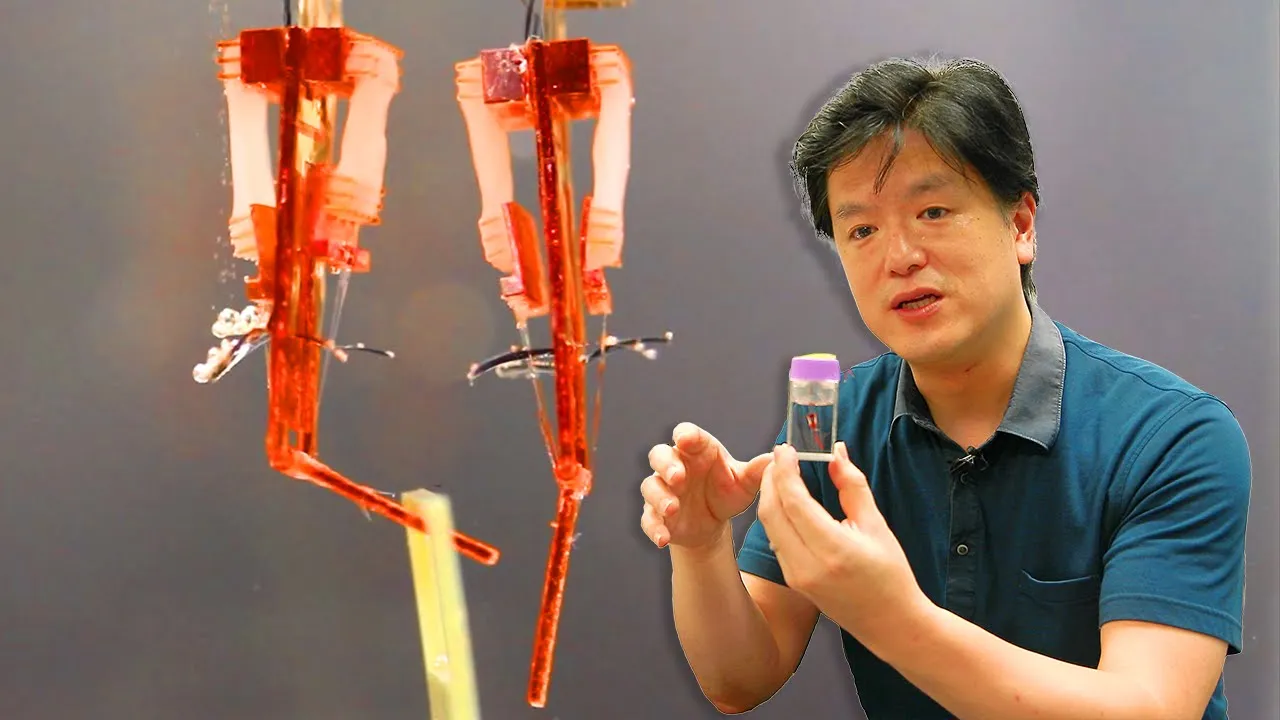
Meet Shoji Takeuchi and Yuya Morimoto — Rise of the biohybrid robots (Audio:EN, Subs:JP|EN)
17.2K
Biohybrid robots are miniature machines that combine 3D printed skeletal structures with living muscle tissues, where applying voltage to the muscle tissues causes contractions that move the printed finger-like bones; these robots have dual applications in creating artificial robots powered by living materials and in pharmaceutical studies where 3D engineered tissues can replace animal testing for drug development.
Click to watch →

This Bizarre Footage Wasn’t Meant to Be Seen
225.1K
A research group has developed proof-of-concept instructions for creating bio-hybrid robots using human biological components. The system includes artificial skin made from human stem cells grown into real skin, which could clothe robots and provide healing and growth capabilities. The skin attaches to fabricated muscles, with individual brain organoids (like ganglia) distributed along the body rather than a central brain. The robot would have a mouth for gas exchange and a glucose drip system for nutrition, with waste elimination capabilities. Human tissue is used specifically because most research and fabrication is done with human tissue to ensure applicability to human medicine, avoiding the significant barrier of transitioning from mouse tissue to human tissue.
Click to watch →
Soft Robotics
Applications
Soft Robotics
0:00- 1
Soft robots use flexible materials like rubber and polymers.
- 2
Inspiration drawn from octopi and squid for adaptability.
- 3
Aimed at space exploration and manipulation tasks.
The Precision, Control, and Durability Limits of Soft Robotics
While soft robotics offers remarkable flexibility, a significant counterpoint emphasizes the inherent limitations of soft materials in precision, force propagation, and durability. Proponents of traditional rigid robotics and hybrid systems argue that soft robots are constrained by 'underactuation' and highly non-linear dynamics. This makes precise control, mathematical modeling, and sensor integration extremely difficult compared to rigid counterparts. Additionally, soft materials like elastomers are highly susceptible to tearing, punctures, and environmental degradation, which limits their reliability in extreme environments like deep space. For tasks requiring high-speed operations, heavy payload capacity, and sub-millimeter accuracy, traditional rigid systems remain vastly superior, suggesting that soft robotics is a niche complement rather than a replacement.
Fundamental principles of traditional rigid-body robotics and kinematics.
The concept of biomimicry (how engineering designs imitate biological processes and organisms).
Basic material science, specifically the properties of polymers, elastomers, and smart materials.
Introduction to fluid power systems, including basic pneumatic and hydraulic actuation.
Advanced control theory for continuum mechanics and non-linear deformation in soft bodies.
Design and integration of flexible, stretchable sensors for proprioception in soft robots.
Clinical and surgical applications of soft robotics, such as minimally invasive surgical tools.
Bio-hybrid robotics, incorporating living tissues or cells with synthetic soft structures.
2.4K views379likes3:15@FalconAutomationOriginal Release: 2021-10-05
when you imagine the robots of the future what do you picture if you haven't noticed evolution of biological life has done a pretty good job at making things perfectly equipped to interact with our world and now robotics is starting to follow suit in an emerging field called soft robotics the main characteristic of a soft robot is that well it's soft instead of traditional materials the body is constructed out of rubber polymers and sometimes even fabric but it's harder to adapt the components that make the bot move like the actuators these have to be radically rethought for soft bots since traditional robots tend to use electric motors that are difficult to downsize so instead some use hydraulics or pneumatics to push air or water through soft body parts in a way that creates predictable motion we're looking at using soft robotic systems to manipulate the lunar and mars surface materials to help further the development of human habitation on the surface a soft robot is a mechanical system that is flexible and compliant and not a standard hard or rigid system soft robotics is a program that we've been working on in the lab for a little bit over a year now and what we've done is to basically look to nature for inspiration and specifically organisms like octopi and squid soft organisms with the idea that these robots would have advantages in terms of manipulation maneuverability fabrication cost over the traditional hard robots that most people are familiar with one of the remarkable things that they can do is they can actually change their color and their appearance and and they do this to signal one another to blend in with their environment we again drew on these organisms as inspiration and decided that it was actually a pretty uh logical evolution to try and include some of these aspects in our robots but you can also use these soft robotics within the spacesuit to give them more power to lift more power to run more power to walk and ease the workload on an astronaut for longer eva in space what makes all of these robots so promising is the way they easily adapt to new tasks and environments unlike traditional robots that would need to be frequently modified or reprogrammed this also means they have a ton of applications they could one day be using rescue missions that require squeezing through small spaces and traversing over rugged terrain or these soft bio-compatible robots could be used inside your body for medical diagnosis and treatment to be honest i'm kind of surprised it's taken us this long to start making soft robots i mean when you look at animals which are debatably the best examples we have for adapting to new environments they're pretty much all soft humans ourselves are less than 15 rigid material but i suppose biological evolution did take millions of years and to be fair robot evolution has only just begun to keep up with the latest soft robot updates subscribe thanks for watching [Music]
Up Next

1:22
Jellyfish-Inspired Soft Robot Gripper Grasps Fragile Objects
@harvardengineering
136.1K views•2022-10-21

58:25
MathWorks Virtual RoboSub Simulation Environment | Webinar 2026
@RoboNationInc
209 views•2026-03-10

11:04
How to Build a Self-Balancing Robot: Arduino Nano & MPU6050
@easytechzones
16.8K views•2022-03-09
25:22
Micromouse: The Fastest Maze-Solving Robots on Earth
@veritasium
23.5M views•2023-05-24
Related Study Plans & Knowledge Roadmaps
Structured learning paths in Robotics
robotics
Building Delta Robots: Kinematics & Pico
01Foundations of Delta Robots & Mechanical Design
02Electronics and Microcontroller Setup with Pi Pico
03Delta Robot Kinematics and Coordinate Math
+ 3 more learning modules
65h6 modules
Explore Roadmap
robotics
Building Ballbots: Dynamics, Kalman & LQR
01Embedded Electronics & Omniwheel Actuation
02Ballbot Kinematics & Rigid Body Dynamics
03IMU Sensors & Kalman Filter State Estimation
+ 2 more learning modules
42h5 modules
Explore Roadmap
robotics
Micromouse: Hardware, PID Control & Flood-Fill
01Electronics & Teensy Microcontroller Basics
02Sensors and Actuators: Motors, Encoders & IR
03Precision Movement: Implementing PID Control
+ 2 more learning modules
35h5 modules
Explore Roadmap
robotics
CDPR: Kinematics, Arduino & Winch Control
01Foundations of Arduino & Basic Electronics
02Stepper Motors and Winch Mechanics
03Kinematics of 2D Cable-Driven Robots
+ 2 more learning modules
28h5 modules
Explore Roadmap