








![The Electron Transport Chain and Chemiosmosis [IB Biology HL]](https://i.ytimg.com/vi/-baEfpKoPqA/sddefault.jpg)












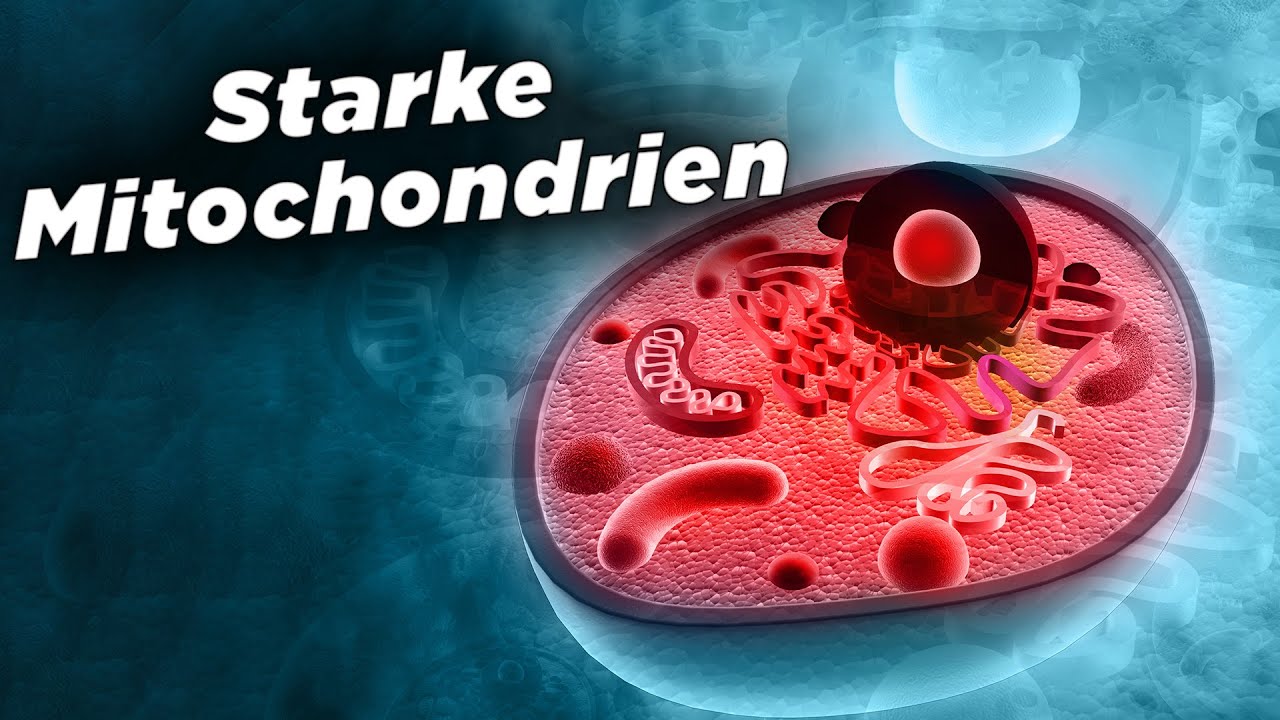


Low-dose methylene blue and near infrared light protect neurons by restoring mitochondrial function through electron donation to the electron transport chain, reducing reactive oxygen species, and inducing mitophagy; methylene blue acts as an exogenous electron donor that bypasses damaged mitochondrial components to restart ATP production, while near infrared light directly activates complex IV of the electron transport chain, both mechanisms promoting neuronal survival and improving blood-brain barrier integrity.
Methylene Blue & Near-Infrared Light: Neuroprotective Mechanisms
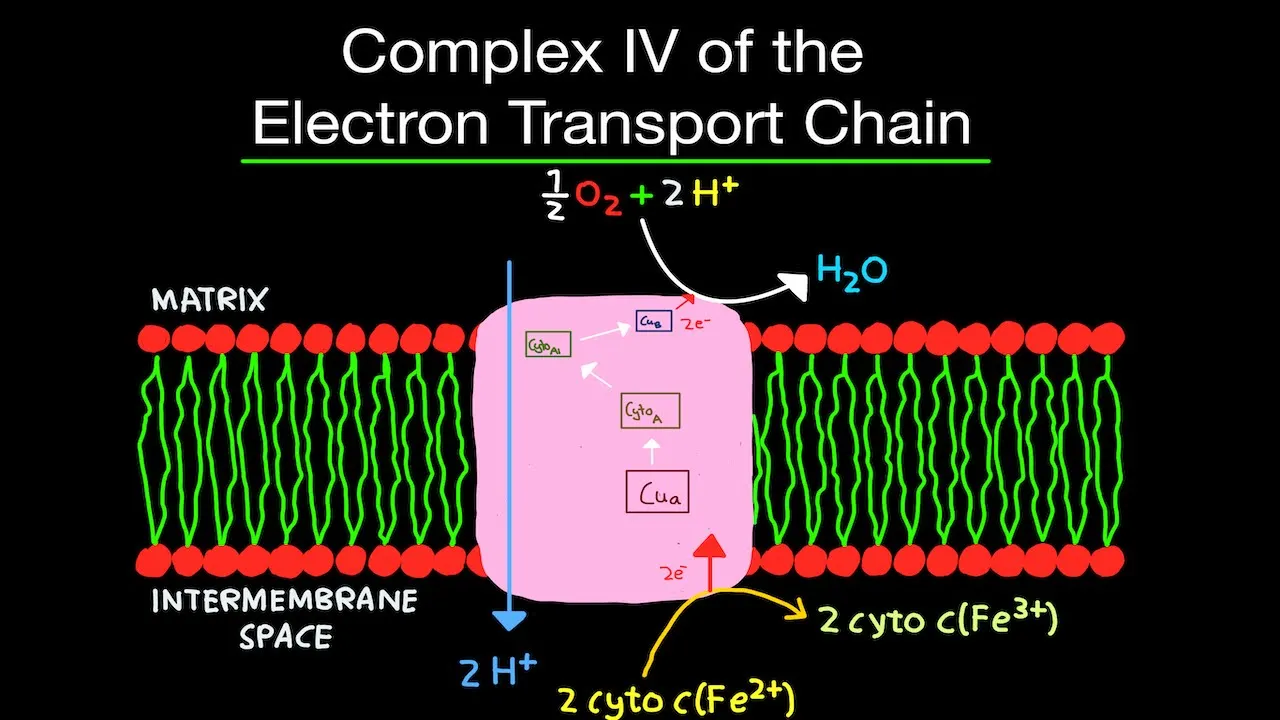
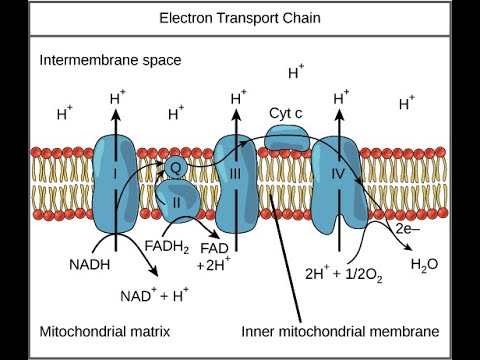
Added:The structure and function of the mitochondrial Electron Transport Chain (ETC), specifically the role of Cytochrome c Oxidase (Complex IV) in ATP synthesis.
Basic neuronal physiology, including why brain cells are exceptionally sensitive to energy depletion and oxidative stress.
Fundamental principles of cellular redox reactions, specifically how molecules act as electron donors and acceptors.
The concept of photobiomodulation (PBM), explaining how specific wavelengths of light can interact with biological chromophores.
The clinical applications of transcranial photobiomodulation (tPBM) and methylene blue in treating neurodegenerative diseases like Alzheimer's and Parkinson's.
The biphasic dose-response curve (hormesis) of methylene blue, exploring why low doses act as beneficial electron cyclers while high doses induce oxidative stress.
Advanced photobiology concepts, such as tissue penetration depths of different light wavelengths (near-infrared vs. visible red light) through the skull.
Other therapeutic interventions in 'mitochondrial medicine', including Coenzyme Q10, NAD+ precursors, and ketogenic diets, to compare synergistic metabolic effects.
128.6K views4.5Klikes38:05Original Release: 2022-11-24
foreign [Music] with one more episode of long story short with Dr bean from the flccc platform so today's discussion is very interesting Dr Paul Merrick had suggested that I look into methylene blue and its mechanism specially for the neural protection or neuronal protection and it makes sense as well because with the long coved or vaccine injury there are many of us who may have become neuronally damaged or they may have neuronal compromise so it is important to understand what substances what molecules can help in methylene blue is a surprisingly beautiful molecule that works there so let's start a discussion first let's look at the references so here this is flccc.net or covid-19 criticalcare.com so if you see this was the last conference that is here you can actually get the CME me as well for this then here is the study there are so many methylene blue studies and for so many areas of neuronal protection that covering them all in one session will actually take five six hours so today I'm going to focus on one area and that one area is methylene blue and near infrared light together or separately helping to protect the neurons by re-establishing mitochondrial health and nutritional flow to the brain that's it that is the area that I want to tackle today we will talk more about mitophagy or other mechanisms in the future talks so this is that study there are other studies here as well for example this one is methylene blue reduces acute cerebral ischemia injury via the induction of mitophy then effects of methylene blue and white matter injury after ischemic stroke then repurposing methylene blue in the management of over 19 mechanistic aspects and clinical investigations methylene blue reduces neuronal apoptosis and improves blood brain barrier Integrity after traumatic brain injury addressing personal protective equipment decontamination methylene blue and light inactivated sarsk of 2 and n95s mitochondria is a target of neural protection role of methylene blue so I guess you can see where I'm going with this and we have these links in the description of this video so with this now let's start a discussion so to understand methylene blue in the whole series of it it is important to start with understanding where does a cell stand and what is the role of mitochondria in it and when mitochondria becomes sick or damaged or malfunctioning or dysregulated then how can what what is the impact in the cell and then how methylene blue helps so in the beginning three four slides we're going to talk of more the physiological aspects and then we'll go in the pathology and management so first of all here is a quick view of a cell I'm going to explain some more parts of this first of all here is a nucleus we are all aware of it but still around the nucleus we have various organelles and for example this one is rough endoplasmic reticulum this one is smooth endoplasmic reticulum these orange things the red things are the mitochondria these are the ones that we're going to be talking about today then there are peroxisomes and Golgi operators and many other organelles which are not even here mitochondria is the main character today and imagine that the cell that I've drawn here this is a neuron so majority of our discussion or actually all of our discussion today is about neurons bones now in mitochondria if you see if you look inside a mitochondria if you read study the anatomy of it mitochondria has an outer double layered membrane just like a cell membrane it has a double layered outer membrane within the mitochondria imagine mitochondria being a purse and then within the purse is another tiny purse so here within the mitochondria there is another purse which I have opened up and that also is a double membrane structure so that means a mitochondria has an outer membrane then an inner membrane because there is a purse within the purse and of course there is space between the two purses and that is called the inter membrane space and then the internal purse and whatever is inside of that that inside of that is called Matrix within the Matrix is the DNA of the mitochondria the ribosomes of the mitochondria and the enzymes of the mitochondria however what is really important is to pay attention to this internal membrane because all the action that we're going to be doing today is on this internal membrane so if you see here this is a quick note again outer membrane that is this side then between the two membranes there is space that is inter-membranous space or inter membrane space inner membrane then within that is the Matrix and these little folds that are present to increase the surface area of the membrane these folds are called Christie so imagine that the inner purse is actually bigger than the outer purse so you have mushed it together and you have folded it multiple times so that it can fit in the outer purse so those little folds will be called Christie now what I'm showing here is if I go back for a second this inner membrane the red one that inner membrane is painted with enzymes which are two types there are many kinds of enzymes there but for our concept today for methylene blue the electron transport chain and the ATP synthase these are the two that are important so imagine this whole wall the inner membrane is painted with them there is highly dense molecules that are present everywhere on it and they are working to make the mitochondria the PowerHouse an energy producer of the cell so here we are now looking at the inner membrane up close so imagine you are standing in the Matrix that blue area and that is your room and now you're looking at the wall and here is what you see on the wall you see a cluster of enzymes here which are very densely packed I have made them a little separated but they're dense packed working together and this cluster is called electron transport chain then right next to the electron transport chain there is another enzyme that is also studied in the wall and that is the ATP synthase more accurately F0 F1 ATP synthase they both are actually they both perform different functions but together we say that they perform oxidative phosphorylation methylene blue has its action here so we will understand the electron transport chain a little we'll review it and we'll understand the ATP synthesis function a little bit so that we can then understand the damage to the mitochondria and what happens to these structures and so that we can then understand how methylene blue would help so here a quick note this is called the complex one so these electron transport chain enzymes they are called complex one two three and four this is why sometimes the ATP synthesis is called complex 5 but ATP synthesis has nothing really much to do with the electron transporting ATP synthesis function is to make ATP and the electron transport chain is actually in service of ATP synthase these guys are helping ATP synthase and we'll see how now the complex one enzyme complex two complex 3 and complex four they all can work with electrons so Within These complexes these enzymes there are enzymes called or sites called redox sites where electron can jump from one side to the next site and during that jump of an electron electron would release energy and complex one and three and four can use that energy to pull protons or hydrogen ions from within the Matrix and push them outside to the inter membrane space so if I go back to the previous diagram for a second L protons will be pulled from here through these enzymes that are stuck in the wall and these protons will be thrown in the inter membrane space why are these enzymes doing this they are trying to create a concentration gradient they want more protons to be present outside in the membrane inter membrane space so that these protons say you know what I want to go back in The Matrix because the concentration of proton is more outside less inside and they would like to move back from higher concentration to the lower concentration this is called Kami osmosis so chemical substances osmosis the movement of the chemical substance chemiosmosis so back here these guys complex one to four are helping to move protons outside to move the proton outside they need energy and that energy is u used by moving electrons in this chain eventually those electrons that are used they would be given to oxygen oxygen will become the final acceptor of these electrons and then oxygen will receive the electron and it would become an ionized oxygen that ionized oxygen will then become combined with protons to make water so the oxygen that we breathe and the nutrition that we have especially fats and glucose they eventually end up being water and carbon dioxide so if somebody says that the food that you ate what happened to it and if you said it became heat then we are not really there it actually becomes water and carbon dioxide okay so one more thing over here if you see pyruvate and acetyl COA or acetyl-coa pyruvate is the end product of glycolysis or not end product one product of the glycolysis right so glucose is converted to pyruvate pyruvate can then go to four various Pathways one of those Pathways is acetyl coil so here pyruvate that was created in the cytoplasm of the cell by glycolysis process that pyruvate enters in the mitochondria so for the bigger picture if I go back here for a second in the cytoplasm is when the glucose enters here it is converted to pyruvate that pyruvate enters the mitochondria similarly if we have eaten fats then those fats can also go into the mitochondria and be converted to acetyl-coa so that's what we're talking about so back here this is pyruvate here this is acetyl-coa now these two products take part in Krebs cycle or coricycle or citric AC acid cycle and what happens is they produce the Krebs cycle produces nadh in fadh2 these two products are electron donors to the electron transport chain so you ate food we made nadh or fadh2 that nadh what is the purpose of that nadh actually does many things but here within the mitochondria the purpose is it would donate electrons to these complexes so for example complex one uses nadh to extract electrons the complex two uses fadh2 to extract electrons complex 2 is the only one that does not use that energy to move protons outside so once they extract the electrons those electrons would now move so what happens is from complex 1 and complex two these electrons sit on a common vehicle called Coq enzyme and that code Q enzyme moves the electrons to complex 3. complex 3 then once again uses those electrons to use their Harvest their energy and move protons outside so these complexes are just using electron movement as energy producers to eventually bring hydrogen out or proton out that's all that's the basic purpose bring proton outside of the Matrix or in the inter membrane space complex 3 then uses cytochrome C and gives electrons to it which then bring those electrons to complex four complex 4 also uses these electrons to move the hydrogen out or proton out but at the same time it wants to finish this electron transport it's going to be done with it and so what it does is it picks up oxygen that you breathe and is present in the mitochondria it picks up that oxygen it ionizes them using those electrons and then converts that into ionized oxygen to water what is the energy result of all that you ate food to make an ADH in fadh2 that gave electrons that electron energy is used to move protons from Matrix to inter membrane space the result there is a higher concentration gradient of protons outside of the Matrix then this enzyme system ATP synthase that allows the protons to come back in So when there is larger concentration outside the protons want to find a way to go back in so we have specialized turbines you know those turbines that run with water or with air and they produce energy here in the mitochondria at the cellular level the microscopic turbine is a ATP synthase so when it allows the protons to pass through it back from the inter membrane space to Matrix in that process that energy potential that was present moves it's a physical system it moves or changes ATP sync is which would then pick up ADP adenosine diphosphate and convert that to ATP adenosine triphosphate so now we have gotten this is the gold this is the currency of the cell mitochondria just made ATP for our cells and that ATP will be used everywhere as a currency to work in that process mitochondria has made water as well this is what happened to the food that we ate now imagine if the mitochondria is not able to do this the cell will not produce ATP and soon the cell the whole cell will die so it is very important that if mitochondria is under stress then we take care of that quickly otherwise the cell will very soon die now there is another important thing to keep in mind when this machine runs oxidative phosphorylating machine the electrons that are produced remember electrons are harvested these electrons can actually be some of them amp they can escape this machine so how many of them about 0.2 to 2 percent of electrons escape this machine these are the electrons that would bind for example with oxygen to make it ionized oxygen and that would be superoxide radical and this is fine about 0.2 to 2 percent of the electrons are used up to radicalize the oxygen and that radical oxygen or reactive oxygen species are used actually to do many beneficial functions however keep in mind that if this number increases then we have a problem and that number increases when the mitochondria is suffering and of course you will bring in methylene blue to help that situation so a simpler diagram because I'm going to use this in the next slides a simpler diagram this is a mitochondria this one is the outer membrane then this is the inter membrane space which has the stars in it these are protons that are in high concentration gradient out side inside the Matrix there are fewer why because on the inner membrane see these little clusters of systems these are the electron transport chain and ATP synthase which are continuously pumping these protons outside then those protons are going back in using the ATP synthase and that is what is running the machine to make ATP so here we're going to talk about complex four this is a very important enzyme especially in the context of methylene blue so we're gonna look a little closer to it so here important concept to keep in mind when there is ample oxygen present in the environment and as a result present in the mitochondria so imagine we are all healthy we are breathing fine oxygen is reaching the tissue is fine it is entering the cells and then going to the mitochondria everything is good when there is ample oxygen present what does ample oxygen to a cell mean that means nutrition is coming to the cell correctly oxygen is Flowing incorrectly everything is good now if everything is good think about it for a second what do we want to do to nitric oxide we want to keep the nitric oxide production at this level what happened all of a sudden we're talking about nitric oxide yes mitochondria are also related to nitric oxide levels because mitochondria know how much oxygen is present in the system and if there is less oxygen then we need to release nitric oxide in that environment to open up the blood vessels remember nitric oxide is a vasodilator because it relaxes the smooth muscles not only it does that it also helps with clotting or preventing of the clotting and prevention of inflammation by preventing intercellular adhesion molecules to pop up so generally nitric oxide in good healthy oxygenated environment needs to stay at a baseline so here if you see this complex 4 is not only making water and not only pumping protons from inside of the Matrix to outside it is also related to nitric oxide when there is ample oxygen the complex four would start using nitric oxide and keep it in check some books say and some literature say that complex 4 actually help produce nitric oxide and it would reduce the production of no other literature says complex 4 can actually eat up nitric oxide and keep it in check the basic idea is the more oxygen less nitric oxide less oxygen more nitric oxide and this level is maintained by complex four this is a tremendously important concept to keep in mind so if you see here the second diagram imagine for some reason there is less oxygen for example there is a clot in the cerebral arteries or for example let's say there is a trauma that has caused blood supply to a certain area of the brain to be impacted or imagine there is Spike injury or there is some viral infection or endothelialitis or endothelial problems and so on the result is that there is less oxygen supply there is relative hypoxia and we have seen so many times that for the neurological symptoms within the context of vaccine injury or long covid one problem is relatively lesser oxygenation of the brain tissue so when the oxygen is less then what complex 4 does is it stops using up the Nitric oxides and some literature say it starts making more nitric oxide which the reason to do that is that if the mitochondria feels that I am receiving less oxygen that means maybe the blood supply to me this tissue is less so it produces more nitric oxide that would go out and dilate the blood vessels so that more fluids come in more Blood come in which would bring in more oxygen but not only that it will bring in more nutrients as well mitochondria is helping manage the the blood flow through nitric oxide so when the mitochondria is damaged for example when the tissue is ischemic for example there is a blood vessel injury there is a trauma there is endotheliitis there are clots and the nutrition is less to a cell which would also mean nutrition is less from mitochondria and now the mitochondria is getting damaged when the mitochondria is damaged it would produce of course less ATP the electron transport chains are going to run slowly or may not run at all depending upon the accident of damage and when the energy levels reduce for the cell the cell will go in a crisis an even more inflammatory outcomes will occur at the same time the reactive oxygen species production will increase why because if I go back to this diagram we were using electrons to harvest their energy and move the protons out but now the system is dysregulated it is not able to capture those electrons from various redox sites Within These enzymes and capture their energy instead more electrons are now getting liberated or escaped and these electrons are going to interact with oxygen and other molecules and radicalize them so more reactive oxygen species would start becoming produced so more reactive oxygen species will escape where will they escape they will Escape From Within the electron transport chain to mitochondria then outside of the mitochondria back into the cell cytoplasm and these reactive oxygen species when they are present in more than required quantity they act like little welding machines they come across lipids and they weld them they come across phosphates and proteins and they weld them they deshape them they denature them they destroy them most important destruction is of the nuclear material and the membranous materials which would eventually destroy the cell so we do not want a lot of reactive oxygen species so here enter methylene blue to the system low dose methylene blue given systemically meaning not to the brain directly but maybe orally but in Low Dose it is seen that in high dose methylene blue can be negative for the brain tissue but in Low Dose it is amazingly protective and I'll explain what low dose mean a little later so when the low dose methylene blue is given what happens is methylene blue itself acts as an electron donor so imagine these systems were not functioning very good because the mitochondria is under stress because the cell is under stress because of ischemia because of hypoxia because of oxidative stresses because of toxic substances so when the mitochondria is under stress the electron redox sites are not functioning correctly and the system is not able to harvest electron from nadh in feth2 or even the crap cycle isn't running correctly and we are not producing enough nadh and fadh2 to get electrons from them maybe system the cell is not able to do glycolysis correctly maybe it is not able to do beta oxidation of the lipids correctly meaning the Machinery is freezing up guess what methylene blue does it arrives in the mitochondria it has methylene blue low dose has propensity to enter neurons compared to the rest of the tissues and then it enters the mitochondria and acts as an electron donor directly without the need of nutritional substances that we've eaten it directly offers electrons so you do not have to work with nadh or fadh2 and harvested electrons maybe these molecules are less in quantity or the whole machine is not working correctly here we directly offer electrons when the electrons are directly offered then the machine would start running again protons would start going out again and an oxygen and water consumption would start oxygen consumption would start occurring so directly secondly methylene blue it directly reduce oxygen to water it directly takes this oxygen and without the need of complex 4 it converts that into water so you would say hey that is foul we don't want that but no we want that do you know what happens when oxygen is reduced there is a relative local hypoxia produced because of methylene blue that causes in turn this machine to start running better because there is stress on the machine to say work number one and number two when oxygen is less in the tissue then the tissue would start causing the local blood supply or blood vessels to dilate and more nutritional Supply would start coming in not just oxygen and not only that more waste products will be taken out so they have seen that when there is neurological damage after traumatic brain injury or other reasons for the brain injury when they give methylene blue the tissue starts developing less edema it starts having less edema it starts becoming healed faster so the tissue starts having less edema less congestion more nutrition comes its way the mitochondria start working more regularly and the nutritional Supply allows a whole cell to start recovering so because of this methylene blue also protects a cell from dying with inflammatory outcomes so it improves cell survival it also improves the mitophagy of a mitochondria and we will discuss that in another lecture but here two things have happened what are the two things that methylene blue did if somebody asked you that okay so what does methylene blue do two things it does number one it is an electron donor regardless of fadh and nadh2's presence so it helps kick start the slowing down or stopping electron transport chain so say so what well that allows to restore the mitochondrial function in ATP production which is the basic Hub of every cellular function so as soon as ATP production is corrected the cell would function correctly and the inflammatory mediators will reduce the stresses will reduce number one number two it would take up oxygen and convert that into water which will result in a need for more oxygen and the cell would start producing nitric oxide which would cause local blood vessel dilatations and more blood would flow that will bring in more energy that will bring in more oxygen that would take away more waste products and all of a sudden the damaged tissue or tissue and distress will feel better what a protective mechanism not just for that neuron but for the whole area then as the methylene blue consumes oxygen causing a local hypoxia I talked about it the mitochondria start helping preserve and create nitric oxide of course when there is less oxygen we discussed this before when there is more more oxygen then less nitric oxide is left in the system by mitochondria but when there is less oxygen which methylene blue would come and do by using up oxygen to make water then mitochondria's complex 4 would say you know what I should make more nitric oxide or I should use less nitric oxide the end result is in the damaged tissue there'll be more nitric oxide dilating blood vessels and I've discussed what is the outcome what an interesting mechanism methylene blue using a water causing complex 4 to create more nitric oxide then this metabolic Cascade of vasodilatation more blood flow more nutritional flow more oxygen flow more clearing away of waste products is very neuroprotective so then let's look at very quickly the dosage for the methylene blue so the study that I'm discussing in that study they say high doses May inhibit Tau aggregation and nitric oxide formation in vitro they are toxic in Vivo so they're saying methylene Blue's high dose in vitro in lab testing may actually show benefit but in Vivo in the actual animal studies high dose is damaging however if you see here but systemic low doses so what are the low doses then 0.4 to 4 milligram per kilogram of methylene blue that stimulate mitochondrial respiration in Vivo are safe and effective in both animals and humans similarly only low level near infrared light is beneficial because of higher doses become ineffective or produce opposite effect so that is the dose for methylene blue now going to the infrared light infrared light before we go understand the mechanism let's look at the dose as well because we're talking about the doses so low power laser and light emitting diodes and I have a study in the description of this video where where they have discussed so many various experiments to see if the infrared can cross the scalp area and the bone and reach the brain tissue or not so here is this study so they say for example forehead transcranial stimulation of the human cerebral cortex has been done effectively with A continuous wave 1064 nanometer laser at 60 joules per centimeter Square then 250 MW per centimeter Square for four minutes which corresponds to about 1.2 Joel per centimeter Square energy density reaching the cortical surface with a two percent transmission so the point is somebody who is able to work with the infrared light these are the dose parameters that produce enough wavelength that the photon are delivered to mitochondria now what would these photons the light in energy what will they do so here is what happens once again it is about the complex four of the electron transport chain so if you see here this is the light and when that light is given what it does is it increases the activity of complex 4 directly by providing it energy it causes more oxygen consumption so as the complex 4 starts working more it starts consuming more oxygen and what will it do with that it will make it into water just like methylene blue did that too so it produces more water it also produces more ATP because now the complex 4 is more active and in addition to that this is common for both methylene blue and photobiomodulation the light that they open up they induce the genes in the neurons and the genes in mitochondria Gene in the DNA of the neuron and in the dnf the mitochondria to produce more enzyme times including producing more complex four enzyme so it's not that the existing complex 4 enzyme is working better but we are going to make new complex four enzymes and they say in this study that it is not just that day when you give the therapy it continues for weeks afterwards and the effect behavioral effects can be seen for weeks after one therapy so enzyme induction causes long-term metabolic capacity increase and blood flow is increased so conclusion is an effective mechanism of stimulation of mitochondrial respiration so this whole process that we saw is called mitochondrial respiration so these two are effective mechanisms to stimulate that it protects against neurodegeneration by increasing the oxidative metabolic energy capacity of neurons and reducing oxidative damage remember when the mitochondria was in distress it was making more reactive oxygen species that were damaging everything and now you donated electrons plus you activated the electron transport chain plus you used up oxygen which then caused the increased blood flow and nutrition and waste product take away so with increase in capacity to produce ATP by up regulation of cytochrome oxidase the complex four multiple secondary benefits accrue such as enhancement of neuronal metabolic energy and biogenomic responses anti-apoptotic signaling so when the mitochondria is healthy cell has enough ATP then the cell and mitochondria would make sure that the apoptosis does not occur because cell is healthy and we want to protect neurons so it is anti-apoptotic DNA repair improves in these cells mitogenic signaling exoner sprouting is that when an Exon is broken then there are branches of the same Exon or the branches of the near by axons which try to cover the area that was now not innervated this is called axonal sprouting exoner sprouting is very important for rehabilitation of a damaged tissue and methylene blue helps with the axonal sprouting then synaptogenesis synapse means that a neuron makes a connection with another neuron or another tissue so that area is the synapse synaptogenesis is an improvement to build more connections and brain derived neurotrophic factors the healthy factors that would help make more neurons then low dose of methylene blue and near infrared light that upregulate mitochondrial respiration in Vivo have similar neuroprotective effects in multiple model systems featuring neurodegenerations now if I go back for a second two the studies that we looked at they would start making sense here is a steady protection against neurodegeneration with low methylene blue dose and near infrared light here is a steady methylene blue reduces acute cerebral ischemia injury via the induction of mitophy although I did not talk about mitophagy we will do that next time but that is also methylene blue preventing a mitochondria from dying or keeping the mitochondria healthy effect of methylene blue and white matter injury after ischemic stroke repurposing methylene blue in the management of covid-19 methylene blue reduces neuronal apoptosis and improves blood brain barrier so if I asked you that do you know how the apoptosis is prevented I think you know the answer that as the mitochondrial function is improved as reactive oxygen species are reduced as oxygen consumption is improved as ATP is made more the whole cell will become healthier and that would prevent the cell from causing its death right and just a very quick note how further apoptosis is prevented when a mitochondria area starts becoming dysregulated it loses membrane potential mitochondria has a potential on its membrane it has a charge so normally there is a protein called pink that protein can come and attach on the surface of the mitochondria but if a mitochondria is healthy and the charge is correct then the pink will be removed on the other hand if the mitochondria is not healthy its internal functions are not good it is sick then the membrane potential the charge on the membrane of mitochondria starts reducing and pink starts accumulating on the surface of the mitochondria that allows other proteins to become activated which will then cause ubiquitin system to become activated and the mitochondria will be eaten up not only mitochondria will be phagocytosed the whole cell can undergo apoptosis thinking that if my mitochondrias are not going to work I'm not going to produce ATP then why should I live because I will not have energy methylene Blue by restoring the electron transport 4 chains and the health of the mitochondria restores the mitochondrial membrane potential called MMP as soon as the mitochondrial membrane potential is improved the pink is removed the pink the protein is called pink the pink is removed from the mitochondria and all of a sudden the mytophagy or eating up of the mitochondria is stopped all of a sudden mitochondria works better all of a sudden the cell starts feeling healthy and does not die we don't want cells to die in the neuronal tissues number one number two when the cell die in the neural tissues that causes local congestion and edema and inflammation that all is protected this is why they say that when methylene blue is given within 24 hours of neuronal injury ischemia stroke it actually protects the brain for getting too much damage so that is the discussion I hope you liked it we will continue this discussion of methylene blue and infrared for other neuroprotective effects later on thank you and see you next time [Music]
Up Next

5:07
Six Layers of the Cerebral Cortex Explained | Neuroscience 101
@real.psyched
36.1K views•2023-06-04
21:55
Deciphering Neural Circuits Controlling Anorexia in Mice | Richard Palmiter
@AllenInstitute
2.3K views•2011-10-10

4:10
Vagus Nerve (CN X): Anatomy, Nuclei & Functions Explained
@Alilamedicalmedia
305.2K views•2022-10-31
13:03
How Exercise Benefits Your Brain: Science Explained
@TED
11.4M views•2018-03-21
Related Study Plans & Knowledge Roadmaps
Structured learning paths in Neuroscience
neuroscience
Appetite Regulation: Brain Circuits & Hormones
01Foundations of Endocrinology and Brain Anatomy
02Introduction to Energy Homeostasis
03Peripheral Signals: Leptin, Ghrelin, and Insulin
+ 2 more learning modules
14h5 modules
Explore Roadmap
neuroscience
Neuroeconomics: Value, Risk & Brain Mechanisms
01Foundations of Neuroscience and Brain Anatomy
02Introduction to Neuroeconomics and Subjective Value
03Dopaminergic Prediction Errors & Reinforcement Learning
+ 3 more learning modules
18h6 modules
Explore Roadmap
neuroscience
Spatial Navigation: Cells, Grids & Brain Maps
01Foundations of Brain Anatomy and Memory
02Place Cells and Head-Direction Cells
03Grid Cells: The Brain's Coordinate System
+ 2 more learning modules
12h5 modules
Explore Roadmap
neuroscience
BCIs: Neural Decoding & Prosthetic Control
01Neuroscience Foundations: How the Brain Signals Intent
02Signal Acquisition: Recording the Brain's Activity
03Neural Decoding: Translating Brain Waves into Data
+ 2 more learning modules
25h5 modules
Explore Roadmap