Tennessee Williams employs numerous gothic elements in A Streetcar Named Desire, including the haunted city of New Orleans as a metaphor for decay, symbolic place names like Elysian Fields and cemeteries, death-related imagery such as flowers for the dead and the name 'Graves,' and the recurring motif of the Tormentor of the Train, all of which create a gothic atmosphere that reflects the play's themes of loss, decay, and the struggle of sensitive individuals in an unsympathetic world.
Southern Gothic Elements in A Streetcar Named Desire Explained
Added:Deep Dive
Familiarity with the plot, characters (particularly Blanche DuBois and Stanley Kowalski), and setting of Tennessee Williams' play 'A Streetcar Named Desire'.

🔴Exam 2026-27 B.A.3rd Semester English Literature Unit 8 A Streetcar Named Desire Tennessee Williams
4.3K
Blanche DuBois is the main female character - a lonely, delicate woman who comes to live with her sister Stella in New Orleans after losing her family home due to debt from excessive drinking. She tries to hide her sad past and lives in dreams instead of reality. She was fired from her teaching job for having an affair with a student, but cannot accept this truth. Stanley Kowalski is Stella's husband and Blanche's brother-in-law. He is strong, proud, and rude, representing the real practical world. He constantly clashes with Blanche because she lives in illusion while he forces her to face truth. At the end of the play, Blanche loses her mental balance after Stanley's cruelty and is taken to a mental hospital.
Click to watch →

B.A. English Semester-III | A Streetcar Named Desire by Tennessee Williams |
134
A Streetcar Named Desire (1947) is a tragic psychological drama by Tennessee Williams (1911-1983), one of America's greatest playwrights. Born Thomas Lanier Williams III, he won the Pulitzer Prize twice for his emotional, poetic, and psychological plays set in the American South. The play explores themes of illusion versus reality, sexual politics, mental breakdown, class conflict, and the decline of Southern aristocracy. Main characters include Blanche DuBois (a fragile former school teacher from Mississippi), her sister Stella, and Stanley Kowalski (a working-class man with primal instincts). The play is classified as tragedy, modern psychological drama, realistic drama, domestic drama, and symbolic drama. Tension grows between Blanche and Stanley as he suspects her of hiding secrets, leading to the revelation of her hidden past.
Click to watch →

욕망이라는이름의전차(테네시윌리엄스)
14.5K
Tennessee Williams, Pulitzer Prize winner twice for 'A Streetcar Named Desire' and 'Cat on a Hot Tin Roof', is a representative playwright of American modern literature. The play is set in late 1940s New Orleans, specifically in the French Quarter. Blanche DuBois, the protagonist, comes from a wealthy family at Belle Reve plantation but lost everything after her husband's death and the sale of her estate. She was dismissed from teaching due to an improper relationship with a student. Her sister Stella lives in poverty with her husband Stanley Kowalski, a Polish-American salesman with animalistic vitality. The play explores themes of human vulnerability, loss, and the consequences of past mistakes.
Click to watch →
A Streetcar Named Desire | A Streetcar Named Desire Summary | A Streetcar Named Desire in Hindi
23.1K
Streetcar Named Desire is Tennessee Williams' landmark American play, considered one of the most important works of 20th-century American drama alongside works by Arthur Miller and Eugene O'Neill. The play won the New York Drama Critics Circle Award in 1947. Set in a New Orleans apartment building, it follows Blanche DuBois, a former school teacher who arrives after losing her family plantation and being fired for an affair with a 17-year-old student. The four major characters are Blanche, Stanley Kowalski, Stella Kowalski, and Mitch. Stanley immediately questions Blanche about her past and her family's lost wealth. Despite initial tension, Stanley and Blanche develop a complex relationship where Stanley becomes attracted to her. Blanche confides in Mitch about her husband's suicide and her fear of homosexuality. When Blanche becomes pregnant, Stanley rapes her—a pivotal moment representing the ultimate violation of her dignity. After this, Blanche's mental state deteriorates as she becomes increasingly unstable. The doctor and nurse decide she needs institutionalization. Blanche's final line, 'I have always depended on the kindness of strangers,' encapsulates her tragic dependence on others throughout her life.
Click to watch →
A Streetcar Named Desire by Tennessee Williams | Summary & Analysis
231.6K
Tennessee Williams's A Streetcar Named Desire explores the destructive power of truth versus illusion through the tragic downfall of Blanche DuBois, a refined but fragile woman who arrives in New Orleans seeking refuge with her sister Stella and brother-in-law Stanley Kowalski; Blanche's desperate attempts to maintain her illusions about herself and her past ultimately lead to her mental breakdown after Stanley rapes her, illustrating how repressed desires and the clash between illusion and harsh reality can destroy individuals.
Click to watch →
Deep Dive
An understanding of the historical transition from the 'Old South' (agrarian, aristocratic) to the 'New South' (industrial, urban) in post-WWII America.

History of the Southern United States
3K
The New South emerged after WWII, transforming from agrarian economy to industrial powerhouse. Railroads expanded from 11,000 to 29,000 miles (1870-1890). The Panic of 1873 ended expansion, leaving many Southern lines bankrupt. Northern investment dominated railroad development, with owners often paying bribes to corrupt politicians. The Great Migration (1910s-1940s) empowered Black urban communities, contributing to jazz and blues culture. The Civil Rights Movement focused primarily on ending Jim Crow segregation in the South, where most major events occurred: Montgomery Bus Boycott, Mississippi Freedom Summer, March on Selma, and King's assassination. Brown v. Board of Education (1954) overturned Plessy v. Ferguson, and Civil Rights Laws of 1964 and 1965 ended legal segregation. The South urbanized as cotton declined after mechanical harvesters eliminated the need for manual pickers post-1945. Nearly all Black cotton farmers migrated northward, while white farmers moved to towns where factories opened. State governments aggressively recruited Northern businesses with promises of favorable business conditions. The Sunbelt migration increased Southern population and political influence, displacing old rural political systems based on courthouse cliques. Suburbs became Republican Party bases, dominating presidential elections since 1968. Tourism became major industry in destinations like Williamsburg, Myrtle Beach, Orlando, and Branson. Millions of Northern retirees moved south for mild winters, often into hurricane-prone areas.
Click to watch →

Democrat to be first black Georgia Senator - Karl Bostic
258
The election of Raphael Warnock symbolizes the transition from the Old South to the New South. The Old South represented an era of racial discrimination, including practices like sharecropping and lynching, with Georgia being one of the leading states for lynchings up until the 1930s. The New South represents a younger, more diverse population, including college-educated whites and increased migration to cities like Atlanta. Warnock's coalition-building strategy involved reaching across racial lines to include young college-educated whites while simultaneously mobilizing Black voters through church networks and rural communities.
Click to watch →
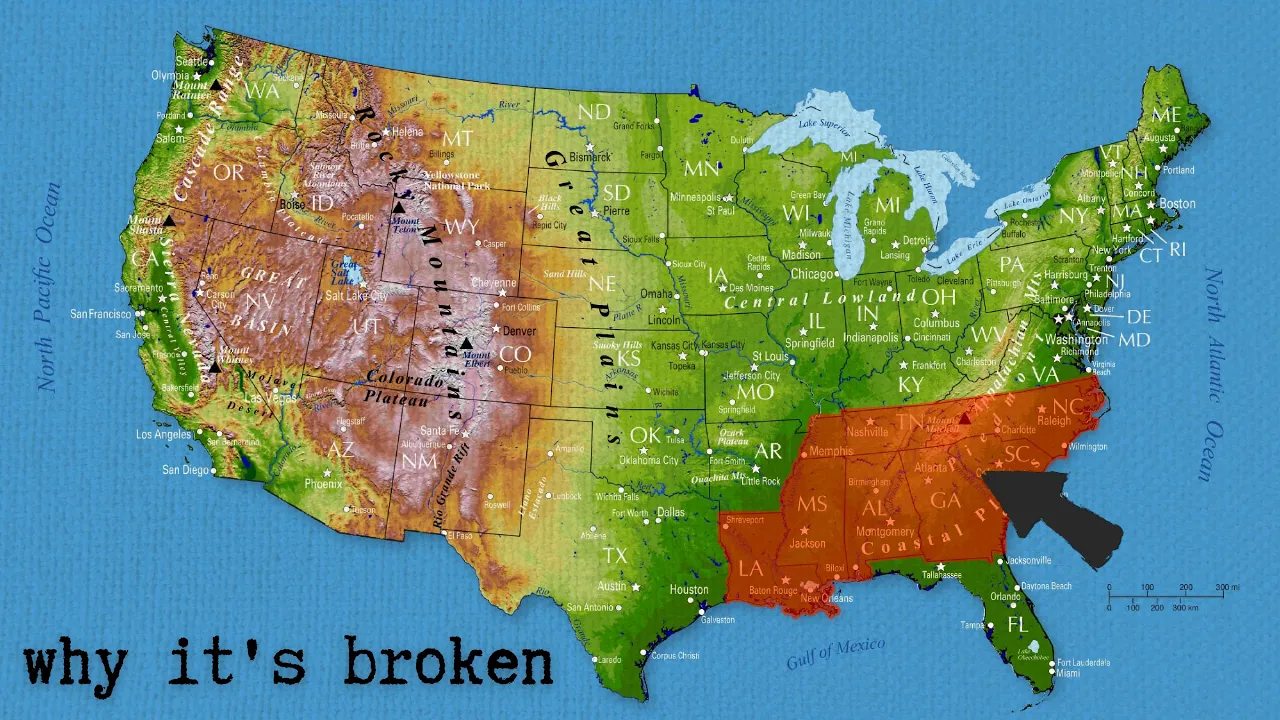
Why The South Is Broken
390.9K
The American South is as much about a period in time as it is a physical land mass. This is why people refer to the 'Old South' and the 'New South'—covering roughly the same geographic area but representing vastly different eras. The Old South represents the antebellum period with its plantation economy and slavery, while the New South refers to post-Civil War industrialization and modernization. The difference between the inevitability of change and the acceptance of change has always been a real problem in the American South, creating tension between preserving traditional values and embracing progress.
Click to watch →

OUP History Book Club: The Movement | April 2021
341
The civil rights movement can be understood through the geographic distinction between 'new south' and 'old south' cities. The 'new south' refers to cities that had undergone economic progress, industrialization, and progressive outlooks, while the 'old south' maintained plantation agriculture and traditional social orders. This distinction explains why the movement emerged in certain cities by the 1950s—conditions and possibilities for action were simply not present in the 'old south' despite similar levels of anger and courage among people.
Click to watch →

James C. Cobb: The South and America Since World War II
1.4K
World War II served as a pivotal catalyst for the transformation of the American South, fundamentally reshaping its economic, cultural, and political landscapes. The war's economic impact drew approximately 400,000 workers from southern farms, creating labor shortages that tripled agricultural wages and accelerated the mechanization of agriculture through innovations like the mechanical cotton picker. This economic upheaval, combined with the ideological pressure of sending black citizens to fight for democracy abroad while facing discrimination at home, set the stage for the Civil Rights Movement. The subsequent industrial development attracted businesses to metropolitan areas, shifting political power from rural 'small town rich men' to urban business elites. This transformation enabled the Republican Party to sweep the South beginning in 1964, marking a dramatic political realignment that continues to influence American national politics today.
Click to watch →
Deep Dive
Basic knowledge of the Southern Gothic literary genre, including its focus on decay, alienated characters, and the grotesque.
What is Gothic Fiction?
26.3K
Southern Gothic centers on the life of the American South and emerged with Edgar Allan Poe, considered the first Southern Gothic writer. However, the features of Southern Gothic as we know them today were only defined after the American Civil War. At the heart of Southern Gothic is the death and destruction that desolated America in the 19th century, showing country life as oppressive and brutal. It subverts notions of the American dream. Characters are usually outcasts, and stories revolve around themes of alienation, oppression, the clash between Old and New South, and the grotesque. This subgenre combines Gothic conventions with regional American history and social critique.
Click to watch →

Clase 01 damas goticas
1.9K
Southern Gothic literature uses elements of terror and the fantastical to describe social and cultural issues, particularly through the lens of the grotesque. The grotesque involves deliberate exaggeration or the union of objects that would naturally be impossible, such as deformations. It also involves distorting the external world through descriptions of humans in non-human terms, creating a heightened realism with caricature that evokes terror. Grotesque characters in Southern Gothic literature are often static characters who cannot change throughout the narrative. However, because they are pushed to extremes, they become representative and objectify complex fears and impulses. The American cultural belief that happiness is the norm of existence creates a need for writers to use the grotesque or Gothic as a means to suggest the complexity of reality.
Click to watch →

Livro: O Som e a Fúria | Vevsvaladares
14.1K
Southern Gothic is a subgenre of Gothic literature specific to the United States that transposes European Gothic elements into a new American context. Unlike traditional Gothic literature that relies on supernatural elements, Southern Gothic uses realistic elements to create horror and shock—racism is more frightening than vampires. Key substitutions include replacing European castles with Southern plantation houses, and replacing European aristocratic tensions with racial tensions between white former slave owners and Black former slaves. The genre employs grotesque aesthetics and buried family secrets, with the central theme being the gradual decline of the American South from a place of luxury to one of social decay.
Click to watch →
Ti consiglio 5 titoli del Gotico Sudista (o Southern Gothic) - Speciale #Halloween
21.7K
Southern Gothic is a subgenre of American Gothic literature characterized by desolate, ruined settings, outsider characters, and themes that evoke paranoia, grotesque imagery, and disgust. The genre's longevity stems from its exploration of universal existential themes. It emerged from the broader Gothic tradition that began in 18th-century Europe as a response to Enlightenment rationality, focusing instead on irrational, Dionysian aspects of human nature. The genre's connection to American culture lies in how Southern Gothic transformed European Gothic elements to address uniquely American regional experiences, particularly those of the American South.
Click to watch →

How to Read The Sound and the Fury by William Faulkner
40K
The southern gothic is a subgenre of Gothic literature that exploded as popular entertainment in response to the horrors of the French Revolution and Reign of Terror. The sins of the fathers will be visited upon the next generations. Southern gothic shares dark themes with European Gothic—racism, incest, suicide, madness, alcoholism, nihilism—but instead of crumbling crypts and abbeys, it features decaying plantations and old aristocratic households that made generational wealth through slavery but are now falling into ruin. It is set in the deep south states like Mississippi, Louisiana, Alabama, and Georgia, typically in the early 20th century to capture the tension between pre-Civil War and post-Civil War eras. Gothic works take place in crumbling structures with supernatural forces lurking, with the past informing the present and atrocities coming back to haunt successes. Character types include the outsider figure, drifter, outlaw, fugitive; fallen aristocrats longing for the Confederate past; corrupt preachers; doomed or tormented women; and the holy fool or innocent, naive idiot.
Click to watch →
Deep Dive
An understanding of core literary devices such as symbolism, motif, and juxtaposition.

Literary Devices 01 | Grade 10 & 11 | #englishliterature | @litspark-n5v
129
Literary devices are special techniques writers use to make their work more powerful and attractive, creating images, emotions, and deeper meanings. The main compulsory devices in the syllabus include simile, metaphor, symbolism, personification, and hyperbole. A simile compares two things using 'like' or 'as' (e.g., 'He fought like a lion'). A metaphor makes direct comparison without these words (e.g., 'Time is a thief'). Symbolism uses objects to represent deeper meanings (e.g., rising sun = new beginnings, rose = love). Allusion is an indirect reference to well-known people, places, or texts (e.g., 'He was a real Romeo' refers to Shakespeare). Understanding these devices is essential for analyzing literature and answering exam questions.
Click to watch →

50 Language Devices: Defined & Explained With Examples
98.4K
This section covers devices for deeper meaning. Satire uses humor to critique society or human behavior. Symbolism assigns deeper meanings to objects, characters, or events (e.g., the dagger in Macbeth symbolizes guilt). Anecdotes use personal stories to illustrate points. Anaphora and epistrophe repeat phrases at beginnings or ends of sentences for emphasis. These devices allow writers to convey complex ideas through indirect or layered meanings.
Click to watch →

20 Literary Devices you NEED to know!
123.2K
This video explains 20 fundamental literary devices that writers should master to enhance their writing and literary analysis skills, including imagery (creating mental pictures through sensory details), simile (comparing two things using 'like' or 'as'), metaphor (comparing two things without using 'like' or 'as'), personification (giving human qualities to non-human entities), alliteration (repeating initial consonant sounds), consonance (repeating consonant sounds anywhere in words), irony (contradictory statements revealing unexpected realities), oxymoron (opposing words creating interesting effects), juxtaposition (placing entities side by side for comparison), paradox (statements that seem contradictory but make sense upon reflection), cliché (overused expressions), adage (wise sayings accepted as truths), colloquialism (informal language providing authenticity), foreshadowing (hinting at future events), hyperbole (deliberate exaggeration), euphemism (softening uncomfortable truths), pun (play on words with similar sounds), connotation (implied meanings beyond literal definitions), idiom (figurative sayings with non-literal meanings), and symbolism (using symbols to represent deeper meanings).
Click to watch →

Grade 11 English - Literature - Juxtaposition
6.4K
Juxtaposition is a literary device that places two unexpected things close together to create contrast. It is used to develop character, explore connections between unrelated things, and support persuasive arguments. Common examples include proverbs like 'What's good for the goose is good for the gander' and 'Beggars can't be choosers.' In visual art, juxtaposition appears through contrasting images like trees versus atomic bombs. In poetry, Catherine Tynan's 'Joining the Colours' juxtaposes young happy boys against their tragic deaths in war, while Robert Frost's 'The Road Not Taken' uses the splitting road to explore life choices.
Click to watch →

Literary Devices: How to Use Literary Elements to Improve Writing
279.8K
Literary devices are intentional techniques writers use to shape reader perception and enhance storytelling effectiveness; the top 15 devices include allusion (referencing real-world elements), diction (word choice affecting tone), alliteration (repeating consonants for rhythm), allegory (abstract ideas through stories), colloquialism (everyday language), euphemism (polite alternatives), flashbacks (time travel in narrative), foreshadowing (clues about future events), imagery (visual description), personification (human traits to non-human things), juxtaposition (contrasting elements), metaphor/simile (comparisons), onomatopoeia (sound-representing words), symbolism (objects representing bigger ideas), and tone (narrator's attitude), each serving to create more engaging, meaningful, and impactful writing experiences.
Click to watch →
Prerequisite Knowledge
- Concept 01Familiarity with the plot, characters (particularly Blanche DuBois and Stanley Kowalski), and setting of Tennessee Williams' play 'A Streetcar Named Desire'.
- Concept 02An understanding of the historical transition from the 'Old South' (agrarian, aristocratic) to the 'New South' (industrial, urban) in post-WWII America.
- Concept 03Basic knowledge of the Southern Gothic literary genre, including its focus on decay, alienated characters, and the grotesque.
- Concept 04An understanding of core literary devices such as symbolism, motif, and juxtaposition.
Subsequent Learning
- Step 01A comparative analysis of Southern Gothic motifs in other works by Tennessee Williams, such as 'The Glass Menagerie' or 'Cat on a Hot Tin Roof'.
- Step 02An exploration of other major Southern Gothic authors (e.g., William Faulkner, Flannery O'Connor, Carson McCullers) to trace common themes of trauma and isolation.
- Step 03Applying feminist literary theory to analyze the gender dynamics, domestic violence, and social constraints faced by female characters in the play.
- Step 04An investigation of how cinematic techniques (such as lighting, music, and set design) are used to visually represent Southern Gothic themes in film adaptations of the play.
- Step 05A deeper psychological study of the defense mechanisms, trauma response, and cognitive decline of Blanche DuBois.
Gothic Elements
Symbolic Names
Death Motifs
Sensitive Crushed
Gothic Elements
0:06Playing Section
- 1
Identifies gothic elements in the play, rooted in Romanticism.
- 2
Cites examples like Dracula, Frankenstein, and Poe's works.
- 3
Uses New Orleans as a symbolic setting of decay and loss.
Social Realism and Materialist Critique of Class Conflict
While a Southern Gothic reading focuses on psychological decay, romanticized tragedy, and symbolic madness, a Social Realist and Materialist critique argues that A Streetcar Named Desire is primarily an examination of class struggle in post-WWII America. This perspective rejects the mythic inevitability of Southern Gothic doom. Instead, it positions Blanche DuBois not as a haunted Gothic heroine, but as a displaced member of the bourgeois academic and land-owning class who is economically and socially obsolete. Stanley Kowalski represents the rising, multicultural working class fueled by industrial capitalism. Rather than viewing the play's violence and decay through a lens of stylized, grotesque melodrama, this counterpoint emphasizes the concrete socio-economic realities of urban migration, labor, and the brutal transition from an agrarian Southern economy to modern industrialization. It encourages students to analyze the characters' struggles as products of systemic economic shifts rather than inherent psychological or spiritual decay.
Deep Dive
A comparative analysis of Southern Gothic motifs in other works by Tennessee Williams, such as 'The Glass Menagerie' or 'Cat on a Hot Tin Roof'.

Analysis of The Glass Menagerie by Tennessee Williams. Part 01
1.9K
When analyzing autobiographical plays, apply a comparative framework across four dimensions: (1) Setting—transformation from southern eden to urban conditions; (2) Socioeconomic class—lower middle class status affected by the Great Depression; (3) Relationships—distant father relationships and close sibling bonds; (4) Identity—five facets: social, political, economic, interpersonal, and intrapersonal. Tennessee Williams structures The Glass Menagerie around three temporal dimensions: past (Amanda's lost southern glory), present (Great Depression victimization), and future (Tom and Jim's aspirations). The spatial setting juxtaposes romanticized southern America (debutant balls, plantations) against present urban congestion—a dinghy St. Louis apartment with only one fire escape exit. This physical confinement mirrors psychological oppression, with the fire escape representing the sole pathway to external liberation and creative freedom.
Click to watch →

الحيوانات الزجاجية || تينسي ويليامز The glass menagerie by Tennessee Williams
3.1K
The Glass Menagerie is a Memory Play by Tennessee Williams (1911-1983), meaning parts are adapted from his own life. Set in St. Louis, Missouri in 1937, it follows the Wingfield family: Amanda (mother from the South), Tom (narrator and protagonist), Laura (disabled daughter), and Jim O'Connor (Tom's coworker). The play explores themes of abandonment, family responsibility, and the struggle between reality and fantasy.
Click to watch →
THE GLASS MENAGERIE ENG552 LECTURE in Hindi Urdu 31
179
Tennessee Williams is one of the most famous American playwrights, known for his contemporary works. He was involved in the actual presentation and performance of his plays, working with directors like Elia Kazan. Williams wrote two endings for 'Cat on a Hot Tin Roof' because Kazan was not satisfied with the original. His plays were performed on Broadway and adapted into movies. The Glass Menagerie represents the collection of glass animals Laura Wingfield has in her house. Laura is shown polishing and cleaning these glass animals, and when Tom accidentally breaks the cabinet, Laura cries as if she herself has been wounded, symbolizing her fragile nature and deep attachment to these animals.
Click to watch →

A Lecture on Tennessee Williams's A Streetcar Named Desire, Part One
9.4K
Southern Gothic is a literary genre emphasizing the American South's haunted history of slavery, civil war, Jim Crow, poverty, and resulting grotesque horror and alienation. It applies Gothic tropes—where the present is haunted by a violent past thought to be overcome—to Southern settings. Key writers include William Faulkner (foundational), Flannery O'Connor, Eudora Welty, and Tennessee Williams. In 'Streetcar Named Desire,' Blanche Dubois represents the fading Southern Belle ideal haunting the modern urban landscape of post-WWII New Orleans.
Click to watch →
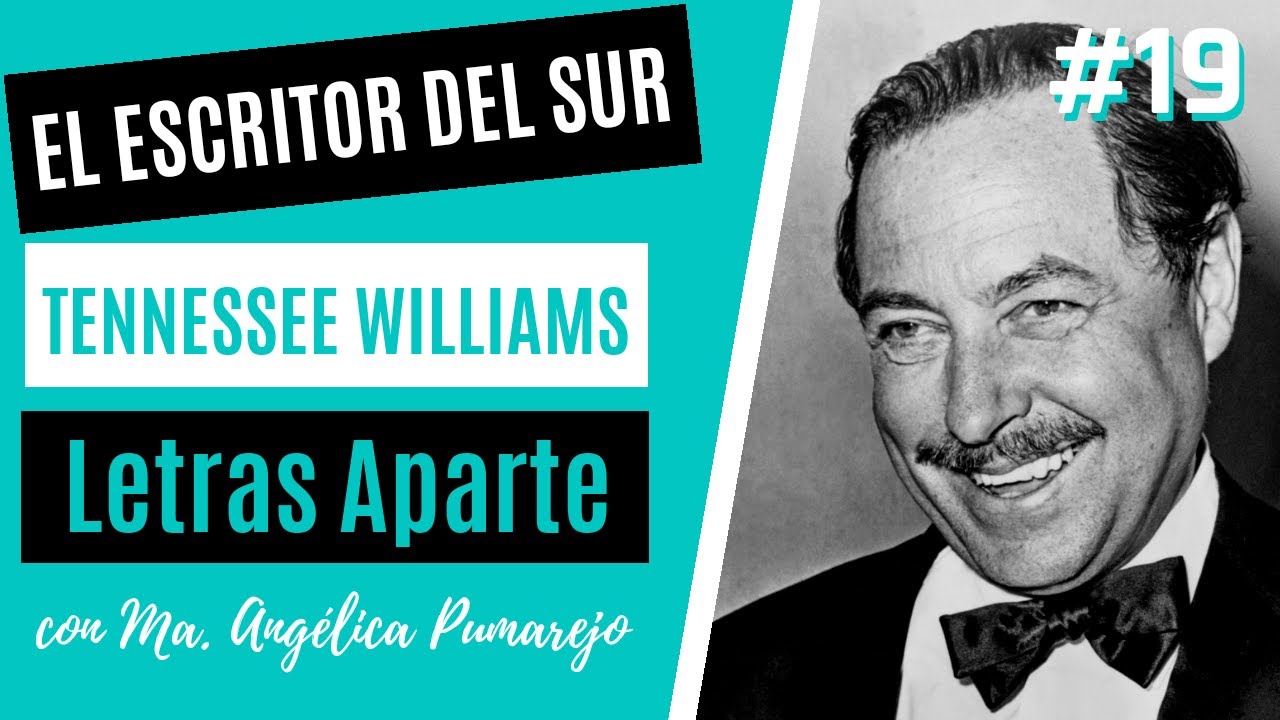
TENNESSEE WILLIAMS, EL ESCRITOR DEL SUR. Letras Aparte 19 con María Angélica Pumarejo
355
Tennessee Williams' 'The Glass Menagerie' (1945) is a Southern Gothic drama that explores the fragility of dreams and the struggle of characters from a declining Southern aristocratic family; the play features Amanda Wingfield, a mother clinging to her past dreams of plantation life; her son Tom, a frustrated writer working in a shoe store; and Laura, a delicate woman with a slight physical disability who tends to her crystal collection, symbolizing the fragility of the family's situation. The broken unicorn during a dance scene serves as a powerful metaphor for the family's vulnerability, while the play's dreamlike atmosphere and use of lighting create a unique theatrical experience that has been adapted to film and television worldwide.
Click to watch →
Deep Dive
An exploration of other major Southern Gothic authors (e.g., William Faulkner, Flannery O'Connor, Carson McCullers) to trace common themes of trauma and isolation.

What would you add to this ‘Southern Gothic’ reading list? #booktube #literature #gothic #books
43.2K
Southern Gothic is a 20th-century American literary genre that adapts 18th-century European Gothic themes (violence, corruption, spiritual decay, repression, and horror) to the American South, setting them in plantations and small towns haunted by slavery, poverty, and religion; key authors include William Faulkner (father of the genre), Carson McCullers, Truman Capote, Flannery O'Connor, Harry Crews, Cormac McCarthy, and Toni Morrison, whose works explore themes of decay, trauma, and moral complexity through unreliable perspectives and often grotesque characters.
Click to watch →
Southern Gothic Project
7.5K
Southern Gothic is a literary genre set in the American South that explores themes of violence, decay, and moral ambiguity, with William Faulkner and Flannery O'Connor as its most prominent writers; the genre examines how regional literature confronts societal sins and cultural trauma, though this raises questions about cultural appropriation when non-Southerners engage with Southern narratives.
Click to watch →
How to Read The Sound and the Fury by William Faulkner
40K
Southern gothic features character types including the outsider figure, drifter, outlaw, fugitive; fallen aristocrats longing for the Confederate past; corrupt preachers; doomed or tormented women; and the holy fool or innocent, naive idiot (Benji fills this role). The town itself often functions as a character. Major southern gothic writers include Harper Lee, Carson McCullers, Cormac McCarthy, and Toni Morrison. Faulkner's portrayal of race relations was both progressive and controversial—he depicted the South in dark, stark terms challenging romanticized views. The period depicted includes the Jim Crow era when slavery was ostensibly abolished but racial oppression continued through segregation laws, with Mississippi being one of the worst states for violence against minorities.
Click to watch →

Reflections in a Golden Eye - Carson McCullers (Review)
170
Carson McCullers (1917-1967) was a Southern Gothic author who wrote her first novel at age 23. Known for deep psychological immersion, she stated that 'their motives are my own' when writing, identifying completely with her characters. Her work belongs to a literary tradition including Flannery O'Connor and William Faulkner, with later influences from Cormac McCarthy and John Williams. The novel reflects entrenched Southern class hierarchies similar to Russian oligarchic structures, featuring servants and social stratification that persisted into the 1940s. McCullers struggled with addiction throughout her life, which contributed to her early death at age 50.
Click to watch →
American Southern Gothic Literature: Themes, Characters, and Author Biographies of Southern Fiction
15.3K
William Faulkner (1897-1962) achieved literary acclaim without formal education, creating the fictional Yoknapatawpha County Mississippi setting. Despite Great Depression poverty, he wrote masterpieces including 'The Sound and the Fury' and 'Absalom, Absalom!' He won the Nobel Prize for Literature in 1949. Flannery O'Connor (1925-1964), a devout Catholic, wrote about grace amid grotesque Southern events. Despite limited output, she produced powerful works exploring faith and morality. Both authors examined universal human struggles through distinctly Southern characters and settings.
Click to watch →
Deep Dive
Applying feminist literary theory to analyze the gender dynamics, domestic violence, and social constraints faced by female characters in the play.
AN INTRODUCTION TO LITERARY THEORY: What is Literary Theory?
46.7K
Feminist theory examines traditional gender roles, power dynamics between sexes, and the position of women in society. It analyzes how these dynamics affect female characters and, by contrast, male characters through their interactions. In Pride and Prejudice, feminist analysis would examine Charlotte Lucas' acceptance of Mr. Collins' proposal ('I am not romantic... I ask only a comfortable home') as commentary on limited options for women seeking economic security, versus Elizabeth Bennet's rejection of marriage proposals as subversion of gender narratives and assertion of independence. Feminist theory reveals how literature reflects and reinforces societal constraints on women while also identifying moments where female characters resist or challenge those limitations.
Click to watch →

Theories in a Doll's House by Henrik Ibsen in Urdu/Hindi| A Doll's House by Henrik Ibsen| Theories.
8.2K
This section applies feminist theory to analyze Henrik Ibsen's A Doll's House. Feminist theory examines the public-private split and the binary of masculinity and femininity, revealing how Nora's lack of self-identity reflects broader patriarchal structures. The play is considered one of the most feminist works of the 19th century, challenging male writers' tendency to stereotype women as submissive and sympathetic rather than strong and intellectual. Nora's journey from being treated as a 'doll' to asserting her independence demonstrates the feminist critique of patriarchal structures that limit women's autonomy. The section also addresses how women were historically portrayed as less educated and unintelligent, and how Nora's self-realization challenges these stereotypes.
Click to watch →

Harvard ENGL E-129 - Lecture 3: Measure for Measure
67.9K
Feminist readings examine how women navigate patriarchal structures in the play. Mariana represents extreme confinement—her marriage promise was broken when Angelo abandoned her, leaving her in a moated grange (a walled garden symbolizing Edenic purity). She needs rescue by the wise Friar/Duke. Isabella begins as a novice nun who desires stricter restraint than the order requires, revealing how religious institutions constrain women's agency. The play explores whether women gain freedom through marriage or remain trapped within new forms of constraint, questioning whether the nunnery or marriage offers true liberation.
Click to watch →
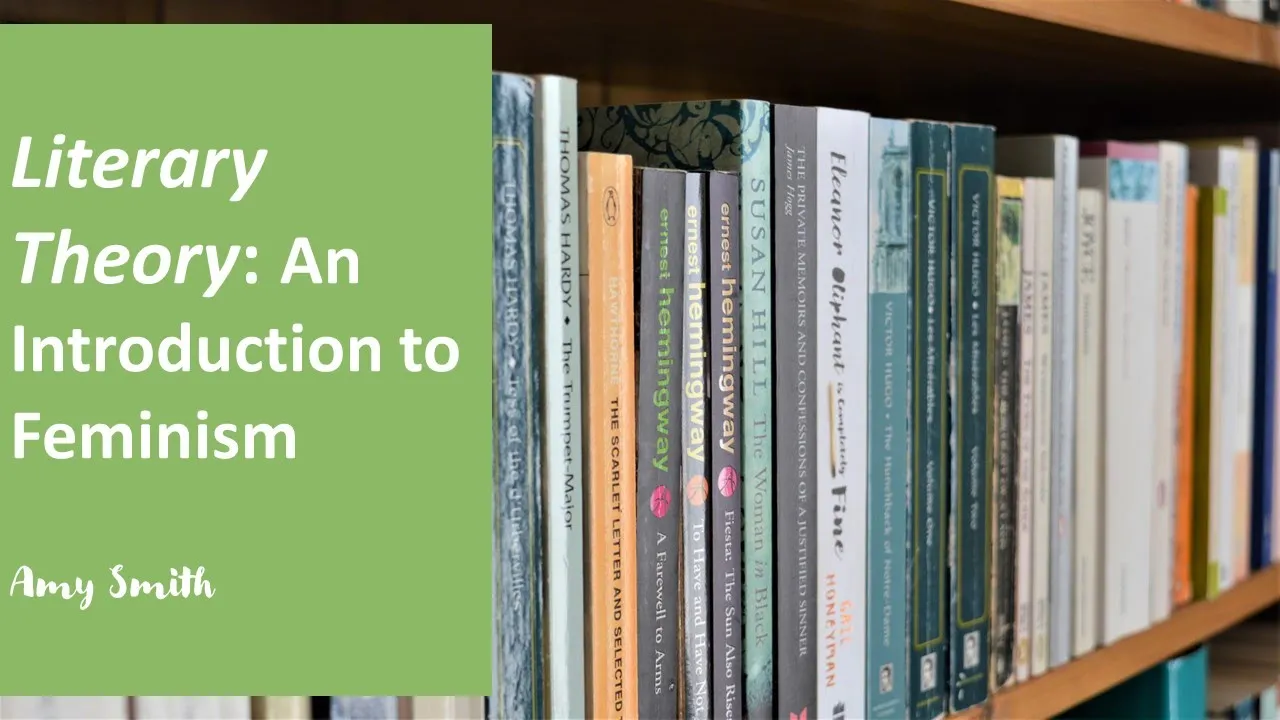
Literary Theory - Introduction to Feminism
5.2K
Feminist literary critics explore how women's struggles are represented, challenged, or redressed in literature, examining social, economic, psychological, and political contexts. The core premise is that societies have been male-centered and require challenging to achieve equality. Shakespeare's Lady Macbeth exemplifies proto-feminism—her determination and vocal nature contrast with her eventual inability to cope within patriarchal structures. Jane Austen's Emma demonstrates how female independence requires compromising one's voice to conform. Charlotte Brontë reveals psychological impacts of gender restrictions, while DH Lawrence faces feminist critique for potentially repressive sexual representations.
Click to watch →

Symposium - “Feminism in American and English Literature”
103
This section explores how feminism is applied in English drama through two different periods. In Elizabethan drama, Shakespeare portrays two kinds of women: those who refuse to submit to men and demand equal rights, and those who are submissive. Shakespeare identified feminism in his works before the notion emerged in Europe. In Macbeth, Lady Macbeth is stronger and more ambitious than her husband, plotting Duncan's murder and wishing she were not a woman. Her husband describes her as 'a masculine soul inhabiting a female body,' implying women can be as ambitious as men but social constraints deny them this power. In King Lear, Cordelia proves her individuality by rejecting her father's rules, demonstrating feminism's focus on the freedom and individuality of characters. In modern drama, Henrik Ibsen, considered the father of modern drama, is described by critics as a dedicated feminist. His play The Doll's House represents a conflict between masculine and feminine, where women's individuality and freedom are taken by masculine power. Nora, the heroine, leaves her house by slamming the door, symbolizing her rejection of being a slave to her husband. When Nora closes the door on her husband and children, she opens the way to the turn of the century women's movement.
Click to watch →
Deep Dive
An investigation of how cinematic techniques (such as lighting, music, and set design) are used to visually represent Southern Gothic themes in film adaptations of the play.

💀Южная Готика: Триллеры, Детективы, Фильмы ужасов(часть 1)💀
4.6K
Southern Gothic is a cinematic aesthetic that originated from Southern Gothic literature, characterized by themes of decay, moral corruption, and supernatural elements set in the American South, featuring elements like poverty, racism, religious fanaticism, and voodoo, and can be found in various genres including thrillers, mysteries, and horror films such as 'Psycho', 'Rebecca', and 'Jezebel'.
Click to watch →
Hush...Hush, Sweet Charlotte (1964)
2.8K
The film employs classic Southern Gothic tropes including decapitation at a party, a mysterious mad woman in a decaying plantation mansion, gossiping townspeople, and ghostly hauntings. The black and white cinematography uses deep focus, split diopter shots, and strategic lighting to create atmospheric tension. The voice discrepancy between young Charlotte's shadowed image and Betty Davis's mature voice creates deliberate mystery, demonstrating how technical choices enhance genre-specific moods rather than following visual trends.
Click to watch →
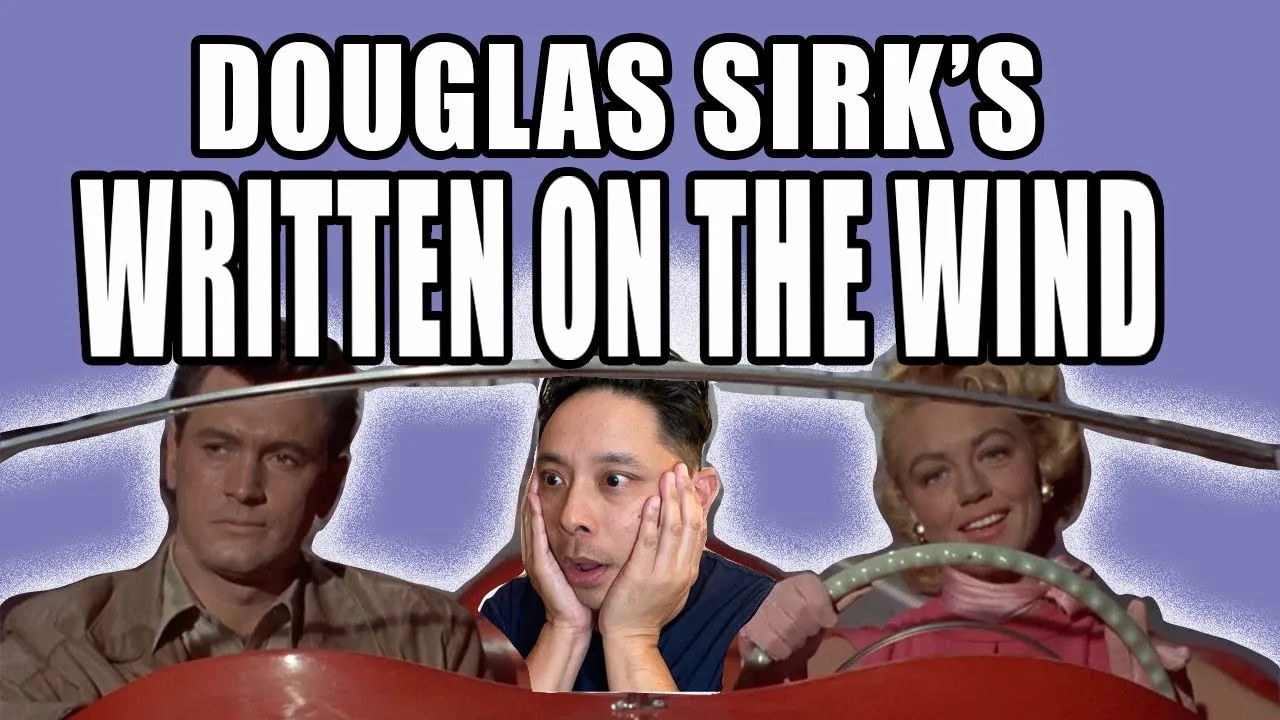
Douglas Sirk's Written on the Wind (1956)
2.8K
Douglas Sirk's Written on the Wind exemplifies Southern Gothic cinema through its exploration of wealth, family dysfunction, and moral decay, using visual techniques like shadow and obscured faces to create audience privilege while examining how Southern culture's obsession with the past creates collective guilt and reveals that extreme wealth can isolate individuals from genuine human connection.
Click to watch →

Adaptation | Cinematography in Rosemary's Baby
415
Filmmakers use cinematography techniques such as camera angles, shot distances, and framing to convey narrative tone and character vulnerability, as demonstrated in Rosemary's Baby where high angles create vulnerability, close-ups generate claustrophobia, and camera movement controls audience experience, translating the novel's sparse, urgent prose into visual tension through formal cinematic choices.
Click to watch →

In the Screening Room with Guillermo del Toro (Frankenstein)
43K
Gothic films feature distinctive visual design elements including kerosene lighting, mannered cinematography, and carefully crafted set designs. Uncle Silas exemplifies these characteristics with its astounding set design, framing, and cinematography that was ahead of its time. These visual trappings—dark interiors, atmospheric lighting, and elaborate settings—are essential components of Gothic storytelling that create mood and atmosphere.
Click to watch →
Deep Dive
A deeper psychological study of the defense mechanisms, trauma response, and cognitive decline of Blanche DuBois.
A Defense of Blanche DuBois from "A Streetcar Named Desire."
5K
Blanche DuBois in 'A Streetcar Named Desire' demonstrates how severe trauma, including the death of her husband, multiple family deaths, and economic hardship, can lead to psychological defense mechanisms such as delusions, lying, and inappropriate behavior, which are coping strategies rather than moral failures.
Click to watch →
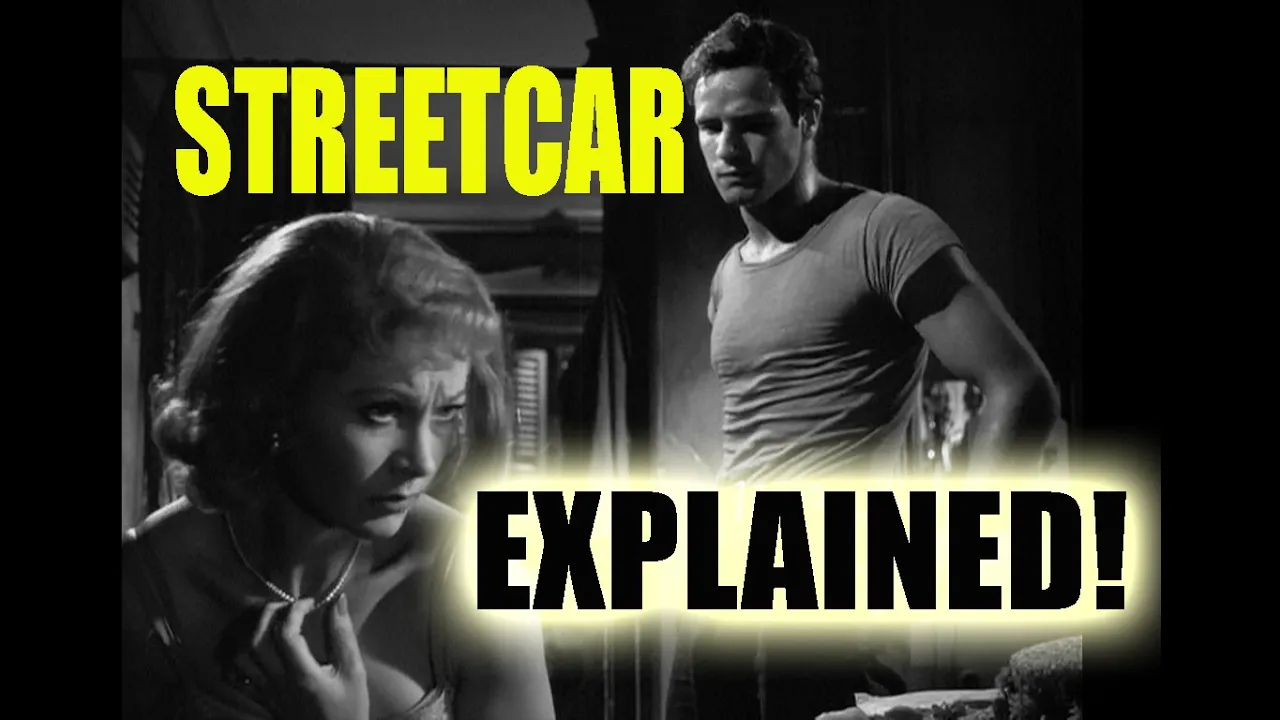
Explaining 'A STREETCAR NAMED DESIRE' from a Black perspective!
17.7K
Blanche DuBois embodies the psychological burden of hidden sins—fear of discovery of her age, prostitution at the Flamingo hotel, and expulsion from teaching for inappropriate conduct with a 17-year-old student. Her fear manifests physically as she hides behind paper lanterns and soft colors, attempting illusions of purity. Stella accepts desires openly, admitting to being turned on by Stanley's violence and returning to him immediately after beatings. This contrast illustrates two approaches to sin: suppression through illusion versus acceptance through honesty. Both approaches fail to provide lasting redemption, as Blanche's facade crumbles under Stanley's investigation while Stella's complicity perpetuates an abusive cycle. The concept of death takes two forms: physical death like a corpse at a funeral, and incremental spiritual death occurring over time. Blanche describes deaths at Belle Reve funerals as quiet compared to deaths involving pleas of 'don't let me go.' The death of Belle Reve itself serves as a metaphor for Blanche's gradual disintegration—she tells Stella she was never strong enough and notes Southern people must have shimmer and glow, soft colors like butterfly wings. She feels she is fading and no longer knows how long she can 'turn the trick.' A ghetto is any community restricted to its own kind, isolated from other communities, breeding repetitive destructive patterns where violence and submission become normalized.
Click to watch →

UN TRANVIA LLAMADO DESEO (A STREETCAR NAMED DESIRE) de Elia Kazan (1951) CRÍTICA Y ANÁLISIS.
6K
Blanche DuBois is a woman who has lost absolutely everything: her family (parents died in a disintegrated household), her job as a teacher, and her marriage to a man who physically and psychologically abused her. Her psychological profile places her on a line separating sanity from madness. She arrives in New Orleans to visit her sister but intends to stay permanently because she has nowhere else to go. The film reveals she was not fired from teaching but dismissed, and her husband committed suicide due to the unbearable situation. She carries a heavy emotional burden and lives in a bubble of a parallel world disconnected from reality. She believes she has many suitors who call her and write her love letters, but the film creates ambiguity about whether her late husband actually wrote these letters or whether she wrote them herself in her delusion. This psychological state is similar to Gloria Swanson in 'Sunset Boulevard' (1950). She is desperate for love, affection, and protection, having never received the love she craved. She clings to any opportunity to feel desired, even attempting to seduce a young man who comes to the Kowalski house. Her past reveals significant moral compromises: she was fired for seducing a student who was a minor, sold her parents' belongings, and had affairs with young men in a cheap hotel.
Click to watch →
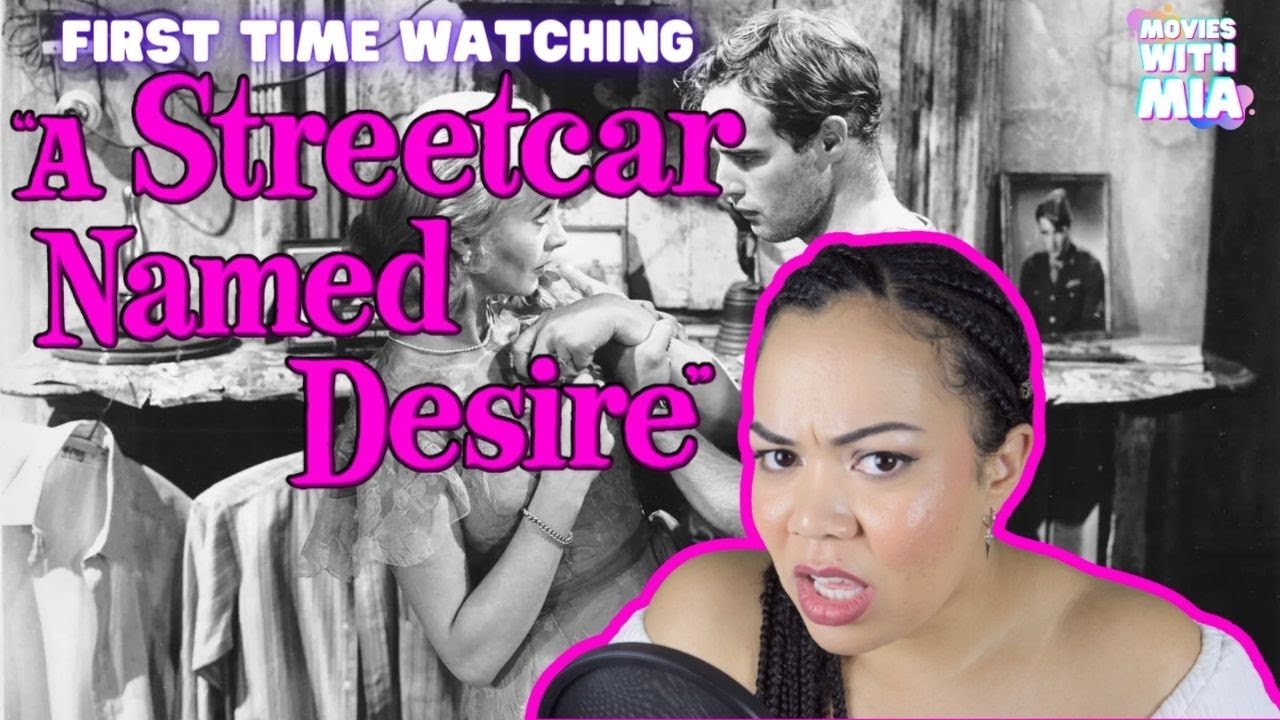
Was not prepared for THIS powerhouse! *A STREETCAR NAMED DESIRE* (1951) | first time watching
12.1K
Vivien Lee brings subtle feminine sensuality to Blanche DuBois, not in a sex kitten way but something very subtle. The film explores Blanche's traumatic past including her time at the Flamingo Hotel and her relationship with a 17-year-old boy. Her statement about not loving as deeply as her first husband compounded Stanley's insecurities, bringing them to a head. The film depicts the unraveling of Blanche's mind as core-shakingly terrifying, showing how psychological trauma leads to complete mental collapse. The combination of Blanche's fragility and Stanley's erratic nature creates tension about when Blanche will break. The film shows that none of the characters have redemption, with even the nice character Mitch turning on Blanche after hearing her stories. The film is described as all despair and sorrow with no room for happiness or light. Marlon Brando's youth brought a different perspective to Stanley, making him more sinister and cold. The scene with his twisted smile is unsettling, showing how age and youth can influence character portrayal.
Click to watch →

"Habitación 613"- La Dama de Blanco
9.3K
The narrator's elaborate mental construction collapses when she confronts reality. The library dissolves instantly, and she finds herself in a stark concrete room with prison walls. Her black veins disappear, replaced by pale skin with scars. The doctor Evans, without his reflective glasses or notebook, shows her photographs of her victims. The narrator's defense mechanisms—her constructed hospital, her patients, her memories—were all elaborate fictions created to avoid facing her crimes. This illustrates how psychological defense mechanisms can become so elaborate that they constitute an entire alternate reality.
Click to watch →
Gothic Elements
Symbolic Names
Death Motifs
Sensitive Crushed
Gothic Elements
0:06- 1
Identifies gothic elements in the play, rooted in Romanticism.
- 2
Cites examples like Dracula, Frankenstein, and Poe's works.
- 3
Uses New Orleans as a symbolic setting of decay and loss.
Social Realism and Materialist Critique of Class Conflict
While a Southern Gothic reading focuses on psychological decay, romanticized tragedy, and symbolic madness, a Social Realist and Materialist critique argues that A Streetcar Named Desire is primarily an examination of class struggle in post-WWII America. This perspective rejects the mythic inevitability of Southern Gothic doom. Instead, it positions Blanche DuBois not as a haunted Gothic heroine, but as a displaced member of the bourgeois academic and land-owning class who is economically and socially obsolete. Stanley Kowalski represents the rising, multicultural working class fueled by industrial capitalism. Rather than viewing the play's violence and decay through a lens of stylized, grotesque melodrama, this counterpoint emphasizes the concrete socio-economic realities of urban migration, labor, and the brutal transition from an agrarian Southern economy to modern industrialization. It encourages students to analyze the characters' struggles as products of systemic economic shifts rather than inherent psychological or spiritual decay.
Familiarity with the plot, characters (particularly Blanche DuBois and Stanley Kowalski), and setting of Tennessee Williams' play 'A Streetcar Named Desire'.
An understanding of the historical transition from the 'Old South' (agrarian, aristocratic) to the 'New South' (industrial, urban) in post-WWII America.
Basic knowledge of the Southern Gothic literary genre, including its focus on decay, alienated characters, and the grotesque.
An understanding of core literary devices such as symbolism, motif, and juxtaposition.
A comparative analysis of Southern Gothic motifs in other works by Tennessee Williams, such as 'The Glass Menagerie' or 'Cat on a Hot Tin Roof'.
An exploration of other major Southern Gothic authors (e.g., William Faulkner, Flannery O'Connor, Carson McCullers) to trace common themes of trauma and isolation.
Applying feminist literary theory to analyze the gender dynamics, domestic violence, and social constraints faced by female characters in the play.
An investigation of how cinematic techniques (such as lighting, music, and set design) are used to visually represent Southern Gothic themes in film adaptations of the play.
A deeper psychological study of the defense mechanisms, trauma response, and cognitive decline of Blanche DuBois.
1.6K views60likes6:27@MrWalterthomasOriginal Release: 2020-05-22
if you're paying attention and you know some literary thing like the gothic element it's all over the place here I mean you really can't there's so many all right let's start with a few of the gothic elements now what is a gothic element well the gothis ISM you know we talked about romanticism we're talking about books like Dracula we're talking books like the Castle of Otranto oh we're talking Frankenstein for Mary Shelley century then of course we have Edgar Allen Poe in America and of course the southern gothic is a whole other lecture but Tennessee Williams writing in New Orleans is a southern writer and he uses the South as a metaphor of decay of loss kind of like shabby chic gentility the the beautiful lady that has been defrocked or taken over and of course defeated and New Orleans as I as I've read is one of the most haunted cities in America they know what the graveyard of course you know about Hurricane Katrina and the poverty but so New Orleans here takes on a character of its own when she when she arrives to Elysian Fields and of course the lesion is where the honored dead go so he's not just you know let me just make this up you know there's a place Elysian Fields there is a streetcar named desire there's a streetcar called cemeteries so he's using the actual names of places in New Orleans for his only symbolic means it means to an end all right sir desire leads to the cemetery which leads to Elysian Fields the place where the honored dead dead go in mythology right so already we have the gothic element of cemetery Elysian Fields and then she sees her sister Stella and she says I can't believe you live in such a place it's horrible only Edgar Allan Poe could you justice to this place and Blanche isn't English teacher she's well-spoken she's well-read she's you know educated she's intelligent she's sophisticated she's cultured and she's living with people who were not right and these two these two worlds are colliding here and her superintendent at the school his name was mr. graves right he could have named them anything and mr. Smith mr. Jones No mr. graves all right so again another gothic element here of death we have so many we have the Mexican woman selling flowers for the dead flowers for the dead she can't escape this prison of the apartment and she could have saved herself by getting out before sandy raped her but she sees the flowers so dead you know the woman's and she is reminded of her husband and she can't she can't leave she can't move she cries out and the police come and she seals everything up and she could have escaped then too but she does it right when mitch has his cigarette case and there's the quote from browning if if I should love thee better after death and of course she knows the quote she's an English teacher she's well-read and again this idea of death so both Mitch and Blanche have lost someone young and they carry that loss of them into their adulthood right so it stays lift up there's so many of these these elements here are the Tormentor of the Train it's a constant in the movie kind of like musical motifs that come in through the play okay again it all adds to this kind of Gothic shabby environment that's this beautiful woman cultured has now entered and will be leaving to lesion fields not really dead but trying to play almost like The Walking Dead when she goes to the insane asylum okay another big gothic element and the play is of course Tennessee Williams could have named the dead husband anything Joe Smith Kevin Smith you know a buddy names him Alan gray all right and okay it's Edgar Allan Poe all right so the gray boy and the sensitive poet type of guy again adding to that element of darkness of javis isms of death of the macabre and someone who's very very sensitive who like Blanche can't exist in the world that does not accept sensitivity right I read that Tennessee Williams wanted to write a play about what a butterfly would be like in an environment that's hostile to its existence all right so Tennessee Williams felt that way not accepted gay at a time that it was not okay all right you had you had to like keep that in the closet and blanch sensitive totally crushed by society
Up Next

15:25
1984: Orwell's Dystopian World and the Mechanisms of Totalitarianism
@AlternateHistoryHub
7M views•2017-03-04

13:43
Formalism in Literary Criticism: An Academic Lecture Overview
@mattalberhasky9952
39.1K views•2015-08-05

6:08
Point of View in Fiction: First Person vs. Third Person
@magicalthriftyteacher
153.8K views•2014-03-31
13:07
Dr. Jekyll and Mr. Hyde: The True Horror of Victorian Repression
@OverlySarcasticProductions
4M views•2019-10-31
Related Study Plans & Knowledge Roadmaps
Structured learning paths in Literature
literature
Graphic Memoirs: Visual Art, Trauma & History
01Foundations of Sequential Art and Visual Language
02Autographics and Processing Historical Trauma
03Visualizing Personal Trauma, Grief, and Graphic Medicine
+ 2 more learning modules
14h5 modules
Explore Roadmap
literature
Campus Novels: Evolution, Themes & Critique
01Introduction to the Campus Novel Genre
02Mid-Century Satire and the Post-War Academy
03Dark Academia and the Critique of Privilege
+ 2 more learning modules
14h5 modules
Explore Roadmap
literature
Theater of the Absurd: Philosophy & Plays
01Postwar Existentialism & Historical Roots
02Dismantling Narrative: Esslin & Absurdist Conventions
03Samuel Beckett and Tragicomic Existentialism
+ 2 more learning modules
12h5 modules
Explore Roadmap
literature
Revenge Tragedy: Justice, Madness & State
01Foundations of Early Modern English Theatre
02Anatomy of Revenge: Structural Conventions
03Psychological Complexity: Madness and Melancholy
+ 2 more learning modules
15h5 modules
Explore Roadmap