






















Steve Bannon, former executive chairman of Breitbart News and Trump White House chief strategist, explains how Breitbart emerged from the Tea Party movement to become a media platform challenging the Republican establishment's free-trade and open-border policies. He describes how Breitbart's strategy of attacking the Republican establishment rather than Democrats helped defeat establishment figures like Eric Cantor, and how this populist approach, combined with the media's amplification of Trump's controversial statements, transformed American politics by shifting the Overton window toward nationalism and economic protectionism, fundamentally changing the debate between globalization and nation-state sovereignty.
Zero Tolerance: Bannon, Trump & Populism | FRONTLINE
Added:Understanding of the core definition and historical context of populism, particularly how populist leaders leverage anti-establishment sentiments.
An overview of the structure of the U.S. political landscape and the ideological shifts within the Republican Party leading up to the 2016 presidential election.
Basic knowledge of the economic debates surrounding globalization, protectionist trade policies, and economic nationalism.
A foundational understanding of U.S. immigration history, the role of key enforcement agencies (like ICE and CBP), and previous legislative reform efforts.
In-depth analysis of the legislative and humanitarian outcomes of the 'Zero Tolerance' border policy, including the family separation crisis.
Comparative study of international right-wing populist movements and figures (e.g., Brexit in the UK, Viktor Orbán in Hungary) and Steve Bannon's efforts to network them globally.
The influence of alternative media ecosystems, digital data targeting (such as Cambridge Analytica), and strategic polarization in modern electoral campaigns.
Evaluation of the lasting institutional changes in the American judiciary, trade agreements, and political discourse stemming from the Trump administration's populist agenda.
704.6K views8.7Klikes1:03:38Original Release: 2019-10-22
>>… But now let’s go to you, Breitbart, coming here, coming out of—out of Los Angeles, coming to Washington with what kind of a plan, what kind of an idea.
What was Breitbart in Los Angeles, and what does Breitbart become in Washington?
>>Andrew was, had been Matt Drudge editor.
He’d been one of the launch editors for Arianna Huffington and the Huffington Post.
He always had a vision of what a news site could be.
At the time, he was a blog, right?
People kind of posted stuff that were citizen journalists.
Andrew had this big vision of what a real news site could be.
We were the blog kind of for the Tea Party.
This Tea Party energy, you know, right after the financial collapse, in the spring of the next year, in fact, Rick Santelli had this rant, this very famous rant, that took place when the first TARP [Troubled Asset Relief Program] thing was being talked about.
And he was basically saying, “Hey, all the working-class people are paying for this, right?” That rant initiated these group of kind of disparate people to have a meeting and basically have people come out on April 15, on Tax Day, April 15 at 2009.
That was the beginning of the Tea Party.
And Andrew saw very quickly, as I saw, that there was this real populist power in this; that this was something totally different.
This wasn’t—this was not standard Republican Party.
This was a whole new deal.
And so we started covering that, and Breitbart kind of became the blog site for that.
Andrew wanted to do a news site.
We were able to raise some money.
And in 2011, we closed on the money, and we decided that the center of gravity of our political coverage had to be in Washington, D.C.
And we leased this house right in back of the Supreme Court, and we called it the “Breitbart Embassy.” And the reason was, we were an embassy in a foreign capital, right, because everybody told us— I mean, we were lectured by guys saying: “You’re not going to have any access.
You’re going to have to play the game to get access.” And we kind of said: “Hey, we’re just going to kick down doors.
How about this?
We’re going to be totally different.” And so we called this place the Embassy for the simple reason that, you know, we thought we were in an embassy in a foreign capital; that this was owned and run by the permanent political class.
And so a handful of people, like Peter Schweizer and others, Matt Boyle and Andrew, we started this news site.
Now, unfortunately, Andrew died, tragically, you know, four days before the site was to be launched.
He was working 20 hours a day to build the site, to perfect it.
He had these—he was a quite a visionary when it came to new media and how people accessed information.
And so the whole site you see today was really his creation.
He created every component piece of it, including how news … flowed through the system, how we promoted things, etc. And so that was this kind of rowdy—and remember, one thing, decision we made very fundamentally—and I kind of was, I think, a big influence on Andrew on this—I said, look, attacking [Rep.] Nancy Pelosi and Barack Obama, we’re so far removed from having any influence over that.
Because at this time we were a very small site.
I said, we’re the populist, you know, kind of economic nationalist part of this.
Let’s attack the real enemy.
And the real enemy’s the Republican establishment.
What we’re going to do is just go after the House leadership.
We’re going to go after the [Sen.] Mitch McConnells; we’re going to go after the donors.
We’re just going to go hard at kind of this kind of [Rep.] Paul Ryan philosophy.
>>Why did you think [Speaker of the House John] Boehner and [House Majority Leader Eric] Cantor were vulnerable?
>>Because they were vulnerable, because of the huge disconnect.
Remember, the one thing the Democrats, they have lined up— they have actually, at least till here recently, donors and their base kind of line up.
The Republican Party’s totally dysfunctional.
It’s essentially a working-class party.
The votes all come from working-class or lower-middle-class people predominantly, right?
And it doesn’t represent their interests.
There’s a book written by a guy called What’s the Matter with Kansas?, where he kind of walks through how the—the donor class, the Singers and the Kochs, these kind of libertarians, have this entirely different concept, this kind of Austrian school of economics concept, that the political apparatchiks—remember, the consultant class, the political class around it and the donors all line up perfectly.
Unfortunately, you’ve got a working-class party that— for instance, trade.
You know, mass illegal immigration, which the chamber of commerce pushes all the time, and more legal immigration and trade are just two sides of the same coin, right?
The two sides of the same coin, it’s suppression of workers’ wages, OK?
Mass illegal immigration is to flood the zone against predominantly black and Hispanic working class so that you’ve got unlimited, you know, unlimited labor pool, and you can keep wages down for higher margins.
Immigration and H-1B visas are the same thing in the tech area, that you don’t have to hire American citizens; I can do it with these visas to increase margins.
Trade is the same thing.
Trade is just you’re competing against foreign labor and foreign countries unfairly.
And so all of it is to suppress workers’ wages and to have higher margins; therefore, higher stock prices; therefore, more wealth, of which the workers don’t own any piece of.
And so our thesis was not just the cultural stuff but the economic stuff.
You have an ability to reform this Republican Party and make it a true populist entity.
>>But they weren’t going to let that happen.
They were going to resist that in almost— >>They did, and we took them down.
We took down Cantor.
Remember, we took down Cantor with Dave Brat.
The first time in the history of the republic that a sitting majority leader had ever been beaten.
Remember, he was beaten in a primary that— Cantor was up here in D.C. on the day of the primary and schlepped down there the last night.
Fox News, when they came on last [sic] night, didn’t even know Dave Brat’s name.
This was an unknown.
And we had worked it with Laura Ingraham.
I mean, we had been—Breitbart had been all over this.
We had Dave Brat on our radio show, I think, every week for the 10 weeks’ run-up to the election.
We saw real vulnerability.
>>Did you know it was coming?
>>You definitely knew it was coming.
That was—also happened to be my home district, but I could feel it.
I knew that that a guy like Brat— they were very weak; they were very weak.
They didn’t have a grasp, and this Tea Party revolt was picking up.
You had the—you had the—you had the huge Tea Party revolt in 2010, which we won 62 seats.
The Republican Party didn’t see that coming.
That was all grassroots-oriented, which played out over time.
Remember, today, the 2000—really, Obama’s ’08 and particularly the primaries in 2010 I think changed American politics pretty fundamentally, because the concept got to be mobilization versus persuasion.
I don’t believe we live in an era of persuasion anymore.
People are so saturated with this all day long, they kind of know where they come out.
You’ve just got to motivate them to get out there and vote.
You’ve go to motivate them to go door to door.
So the ’08 Obama primary that completely caught Clinton by surprise was all about mobilization.
The 2010 Tea Party, particularly the House part of it, that was absolutely, you know, the biggest in the history, I think, since the Great Depression, 1932, was about mobilization.
That’s why Romney didn’t want to have anything to do with it in ’12, right?
He washed his hands of it.
And that’s why in this very room in January of 2013, they had this huge—this huge controversy between— the Republican Party did the “autopsy.” They said, “Oh, the reason that—the reason that Romney lost was because we didn’t reach out to the Hispanic community; we didn’t talk about DACA [Deferred Action for Childhood Arrivals]; we didn’t talk about, you know, open borders, immigration policy.” And a young guy named Stephen Miller, who’s on the staff, he’d been with [Rep.] Michele Bachmann for the Tea Party revolt, we were very close to.
Stephen Miller and [Sen.] Jeff Sessions and myself had a dinner in this very room basically the same week that Rupert Murdoch and Roger Ailes had this dinner with [Sen. Chuck] Schumer and [Sen. Marco] Rubio in New York to talk about the Gang of Eight bill.
And we just came down and looked at this.
There was a lawyer at Hunton & Williams in Richmond, [Virginia], that wrote a three-part piece, I believe it was, for RealClearPolitics.
His name is Sean Trende.
He looked at the same analysis coming out of 2012, which remember, all the donors thought Romney was going to win in a landslide.
He looked at the same thing and said, “The inability of the Republican Party to connect with working-class voters is the single biggest reason that they’re not winning.” And that’s where Sessions and I talked about, we’re going to take trade from number 100, right?
It’s not an issue.
The whole Republican Party’s got this fetish on free trade— they’re like automatons, “Oh, free trade, free trade, free trade”— which is a radical idea, particularly when you’re against a mercantilist opponent like China.
So we’re make trade from number 100 to number two, and we’re going to take immigration number three to number one.
The one and two issues will be immigration and trade.
And that will be focused on workers, right?
And we’re going to remake the Republican Party.
In fact, I’d— >>Wait a minute.
That’s like the anti-autopsy result.
>>180%.
Autopsy—and I told Reince [Priebus] later, to his face, it was a total joke and another donor-driven lie, OK?
No statistics in the victory in 2016 showed that.
And by the way, all the guys in the verticals, the Jeb Bushes and the Marco Rubios and all these other guys, Chris Christie, all the geniuses and their staffs all bought into the autopsy, remember.
They thought we were crazy.
You know, we had [Sarah] Palin in ’08 and hoped that she’d run in ’12, and she just—she— it just didn’t work out.
I actually worked with Lou Dobbs and tried to get Lou Dobbs to run in ’12 as a populist, because it was Lou Dobbs’ economic ideas on his TV show all the time, particularly China and immigration and trade, and Lou Dobbs, for a host of reasons, didn’t do it.
And here I actually tried to talk Sessions into doing it.
I told Sessions, just like I told Palin: “You’re not going to be president of the United States.
But remember, if we win the primary— and you will win the primary— you control the Republican apparatus; you take over the RNC [Republican National Committee] for the whole next cycle.
You can turn the RNC; you can turn the Republican Party into a worker-based party.
The goal is to get control of the party.
You’re not going to win the presidency against this.
That will take time.” And Sessions goes—I remember, he said— it was about five hours.
We walked down to his front steps, and he said— he turns to me and goes, “It’s not me; I’m not going to do it,” he says.
“But our guy will come along. We’ll find our guy.” And that guy a couple years later turned out to be Donald Trump.
>>… Trump comes up, and really the key moment is coming down the escalator.
When Trump—at the top of the escalator, if you go back and look at the polling, I think Trump was in seventh place, right?
At the bottom of the escalator, in the speech, and particularly when the media bites— and I’m sitting there watching.
We have five people up at Trump Tower.
We have Boyle leading an entire team.
We’ve got wall-to-wall coverage. … And in the speech, when he starts going on to not just the immigration part and trade, which nobody’s ever talked about, but when he starts doing the over-the-top stuff, and I go—I said: “You watch.
They’re going to bite hard.
And they’re going to bite hard and blow this up.” I’m sitting there watching this thing on TV.
When he starts talking about the Mexican rapists and everything like that, I go, “Oh, my God.” I said, “This is—” I said: “He’s just buried—they’re going to go nuts.
CNN is literally going to broadcast 24 hours a day.” By that—he goes to Iowa, I think, that night.
It’s all they talk about.
He goes from number seven.
He’s at one and never looks back.
The next-day polling, Trump’s gone to one.
In fact, I think it’s the next day or the day after, Don Lemon has him on for the most classic Trump interview in human history.
Lemon’s sitting there hammering him— “You’ve got to show us some facts.
You’ve got to show us some facts.” And Trump goes—it’s a TV—it’s a phone interview.
Trump goes: “Don! Don!
Somebody’s doing the raping,” right?
But it was the mainstream media that catapulted Trump from— because remember, when people—at the top of the escalator, nobody still thought, even though he had filed his financial report, right, which in hindsight, you know, is the financial report, but nobody thought— they thought it was a marketing ploy to get a better deal at The Apprentice, etc. The mainstream media catapulted him to the number one.
And then it was within 30 days we had the Fox News, the 1st, on Aug. 1, I think it was, was the— was the debate when Fox News, when [Rupert] Murdoch and [Roger] Ailes, particularly Murdoch, and Ailes, being part of the Bush apparatus, decided they were going to kneecap Donald Trump right out of the box.
And that’s what Megyn Kelly—they went through his Twitter feed; they went through all The Apprentice tapes; they went through everything and came out and did a hit like the left would do on somebody.
And that’s when all war broke out.
That’s when Breitbart—that’s when you had to choose sides.
>>Who’s in the war?
>>The war was Fox and all the conservative media— National Review, Weekly Standard.
The Republican—basically, it’s a racket.
It’s a racket, because the people are over here.
The voters are focused on illegal immigration, trade deals, jobs, you know, why income inequality, where’s my pay raise, basic nuts-and-bolts stuff that people— the sovereignty of the country.
The National Review, Weekly Standard, neoliberal neocons are kind of at the beck and call of the donors.
It’s a total disconnect on foreign policy.
And remember, one of the powers of Trump and the basic thing is that America’s in decline, and the elites are OK with that.
This is about managed decline.
So whether it’s health care, the southern border, NATO, China, Iran—pick it, right?—the education system, we’re in managed decline, and the elites are fine with that.
And what’s looked at as the Republican elites are OK [with that], because they’re kind of the junior partner and the punching bag of Obama and these progressive Democrats, and they don’t do anything.
They kind of agree with them at the end of the day.
Remember, after 2014, the reason Obama becomes kind of a hero to the Breitbart staff— we call him “honorary honey badger”— because we’re humping this thing in ’14, Ebola, the border, and all of a sudden, he gets smoked in the midterm elections, OK?
What does he do?
He calls a press conference for the next day.
Press conference, everybody shows up— >>This is the shellacking?
>>Yeah, he gets shellacked.
He loses the Senate. He shows back up. He gets smoked.
He calls a press conference, and all CNN and everybody, New York Times, is he going to listen to what the people are saying?
Is the country going in a different direction?
Is Obama going to listen?
He gets up there and goes: “OK, guys, here’s how it is.
I’m president of the United States, and you’re not.” He goes—he has 10 executive orders.
“I’m going to sign immediately.
And by the way, you know that DACA thing?
I’ve got a DAPA [Deferred Action for Parents of Americans and Lawful Permanent Residents]. I’m adding the parents on to it.
How do you like that?” I’m sitting there going, “This guy’s my role model.” I said he just got smoked, and he comes out and hits you right in the mouth.
This is a leader!
Remember, [Speaker of the House John] Boehner collapses.
We get the omnibus.
Everything we fought for we just won!
We just won!
And Boehner does this omnibus bill, gives him Planned Parenthood, gives him DACA, everything he’s wanted and more.
That’s when we realized the Republican apparatus is the Washington Generals to their Harlem Globetrotters, right?
You’re just set to lose.
And so—but that is this thing that builds up.
And so when you get to the Fox situation, Fox has chosen a side.
It’s so evident in that—in that debate that they’re there to kneecap Donald Trump, OK?
They’re there to take him out.
And that’s when we go, OK.
So we run 20 stories on Megyn Kelly.
I get Tony Lee and Matt Boyle, my two hammers.
They go right after Megyn Kelly.
We’re going to Alinsky her, right?
We’re going to cut her out from the— cull her out from the herd and just hit her nonstop.
And after about 48 hours, I get a call from Ailes, who was kind of a mentor.
But remember, in building Breitbart, I never allowed anybody at Breitbart to go on Fox, ever.
I went on a couple of times about films— >>Because?
>>Because National Review, Rich Lowry, Tucker Carlson at the time, Daily Caller, none of those guys existed unless they were on Fox.
They’re all on Fox; their guys are on Fox.
They’re a subsidiary of Fox.
When—when Ailes calls them up, they’ve got to line up in a certain way, and this was the payoff.
He calls up; they’ve all got to line up in back of Megyn Kelly.
We’re independent.
We don’t need Ailes. I don’t need Ailes financially.
He’s not going to do anything for me, right?
So we never any—I was never on Fox.
None of our reporters were ever on Fox.
If you want to come here and get some story and get a Drudge link and go on Fox, you’re in the wrong line of work, because it’s not going to happen.
We’re Breitbart, and we’ve got our own point of view; we’re going to do it our own way.
And this is where it came down to.
All of the rest of them line up with those— with anti-Trump.
And Ailes calls me up and says: “You’ve got to knock off these stories.
She’s crying. She’s all upset.
She’s getting death threats.” I go, “It sounds like a personal problem.” I said: “We’re not backing off.
We’re going to put more stories up tomorrow.” And he goes: “You’ve got to calm— what do you guys, you guys”— says: “No, you’re not going to pull what the left pulls.
This is the typical drive-by.
You’re going to go into a guy’s Twitter feed?
You’re going to go into 14 years of a show, and this is what you’re going to come up with, is Rosie O’Donnell?
It doesn’t roll like that, OK?
We’re all in now, OK?
And if you don’t like it, that’s your problem, because I don’t owe you anything.
You have no bearing whatsoever on how we do.” >>What were the stakes for you, Steve, at that moment?
>>Well, the stakes were the country, the country’s.
To me, it’s about the country.
You finally have somebody in Trump that is now giving voice to kind of this voiceless working class and lower middle class that’s had no representation.
They’ve been voting for Republicans that work exactly against their economic interest.
Look at these trade deals.
They have all this theory of free markets.
These free markets against a mercantilist power is destroying the manufacturing base of the country, right?
You have these guys who were chamber of commerce that— look, the state of Texas is controlled by Republicans.
You have Republican—why can’t you shut down— why can’t you shut down the border?
The reason is they want the labor.
The Republican Party donors want the cheap labor.
That’s the point.
So you finally have a guy that’s speaking in a nonpolitical vernacular, and you can tell he’s connecting with people already in the rallies.
I said, this is our guy.
He’s a very imperfect instrument, but he’s an armor-piercing shell, OK?
And here's the other thing, they're scared to death.
>>… He gets in the Oval Office; he sits down, and the weight of it all, the responsibility to heal, the inclusion moment or the division moment or the fight-back moment.
And everybody said he’s going to pivot; he has to pivot.
But he didn’t pivot.
>>Because the media doesn’t—remember, the mainstream media is not in on the joke.
Here’s the joke: The American elite have allowed the nation to decline.
They are into managed decline.
And this is not about political party.
This is the permanent political class, OK?
It’s sponsorship on Wall Street and in corporate America.
They have this kind of, these political apparatchiks down in Washington.
But they are in managed decline to unacceptable outcomes to average citizens, managed decline for unacceptable outcomes to average citizens, because they don’t have to bear the brunt of it.
They don’t bear the brunt of the health care system in collapse.
They don’t bear the brunt of the education system in collapse.
They’re taken care of.
To wit, they bring about the largest financial collapse in the country, and they’re better off in 10 years.
Why wouldn’t you like the system?
The system is working great for them.
It’s not managed decline for them.
They’re making more money on the way down than they made on the way up.
And so that’s where Trump is a rallying cry for that.
Remember, the lead-up to the inauguration is we’re going to hit the deck plates running with these executive orders.
We’ve got this whole system that Miller has gone through— >>Tell me about that.
>>An outside—an outside organization had done this theoretical analysis to show that every executive order that was still around from Obama and from Bush, and we had this whole thing; we had a whole tiger team of the White House counsel guys, the “deconstruction of the administrative state,” which is a huge element.
Remember, you’ve got two forms of populism.
You have right-wing populism; you have left-wing populism.
Right-wing populism is about deconstruction of the administrative state.
[Sen.] Bernie Sanders and AOC [Rep. Alexandria Ocasio-Cortez] is about more inclusion of the state.
We’re both populists, but they want more state intervention; we want less.
In fact, we want to start to take apart certain parts of the apparatus.
And so that whole thing is basically focused on the deconstruction of the administrative state at the same time, saying: “Hey, we’re nationalists.
This is about the nation.
The nation’s concerns have to come—have to come forward.” We had in the first 100 days, every day we’re going to be hitting with either three executive orders, whatever, number one is that the Democratic Party is shattered.
They don’t know if they’re coming or going, right?
They’ve got one group that’s doing identity politics, another group that’s the Clinton centrists.
I said: “We’ve broken them right now.
They have no idea.
They’re going to have their own internal civil war, right?
That will keep them occupied for a while.” So what we’ve got to do is just hit, hit, hit, and keep it up.
It’s momentum, momentum, momentum.
The opposition party is the media.
And the media can only, because they’re dumb and they’re lazy, they can only focus on one thing at a time.
And the one thing they’ll mainly focus on is either they do the horse race, or what’s the horse race, who’s in, who’s out.
It’s like the high school— who are the cool kids in the cafeteria, right?
Because it’s easy.
It’s the reason they do the horse-race stuff all the time, right?
They won’t do the basic, what are the core things that are going on in the country.
I said, all we have to do is flood the zone.
Every day we hit them with three things.
They’ll bite on one, and we’ll get all of our stuff done, bang, bang, bang.
These guys will never—will never be able to recover.
But we’ve got to start with muzzle velocity.
So it’s got to start, and it’s got to hammer, and it’s got to— >>What was the word?
>>Muzzle velocity.
When you get anything in life— remember the house is 5-7 against, right?
To get something done, you’ve got to go through these certain stages of momentum and keep forcing it.
And so otherwise just pure inertia, right, or the loss of energy.
>>So did you know that with the travel ban and lots of other—the things that came, just the chaos that appeared to be chaos that wasn’t apparently chaos, that you’d lose some, that you might lose many of them?
>>Why do you say “lose”?
Correct me if I’m wrong: Didn’t the Supreme Court of these United States say that the travel ban, as written— and by the way, they would have said the first travel ban was 100% constitutional.
Is that not just a fact? Yes, it is. OK?
We knew the travel ban was bulletproof, OK?
Also look at the other EOs we did that day.
The other EO is really what galvanizes everything about border enforcement and about tying together all the laws are out there and giving [Secretary of Homeland Security John] Kelly the actual momentum to go do it.
So no, the—and the travel ban had been worked on— remember, this is something that Miller started working on in early November.
This was all pushed through the interagency process.
Here’s the thing that’s so phony about the media.
Every time you do an executive order, you have to get basically a legal opinion.
The Office of Legal Counsel of DOJ [Department of Justice] has to basically give you a signoff thing that this thing is constitutional.
Otherwise, you just have guys doing executive orders all the time.
There is a governing unit to the system.
That governing unit is the Office of Legal Counsel telling you you can actually do this or not.
So we thought we were on very strong grounds constitutionally, and operationally we thought we were on strong grounds, too.
And the other thing I would say is that, you know, knock on wood, but there hasn’t been a terrorist attack— there has not been a terrorist attack since the extreme vetting went in.
Remember, Trump, and to his credit, wanted to stick with the original.
The backing off of the original was because of literally [Secretary of Defense James] Mattis and other people about Iraq being an ally in the war to take down the physical caliphate of ISIS.
And there was some, you know, some changes to that.
But President Trump, from the very beginning, goes: “No, I’ve done the analysis.
I’ve had you guys walk me through it.
I signed this thing originally.
I’m sticking with this.
The Supreme Court will eventually back us up after we get out of this crazy 9th District.
This is what I’m going to stick with.” It was the staff that went back.
The people kind of blinked, right?
Because you’ve got some people in the White House that are a little more sensitive than other people, right?
Some people blinked, and he—we got the second version.
The second version was proved constitutional after all the— all the—you know, all the things.
And it’s been very effective.
That’s the other thing.
It’s been a very effective process.
>>… You hit them right away at the Pentagon, of all places.
>>Yes.
>>Your idea?
>>I think a collective idea, the way to do it, because it was about national security.
The way to do it was to do it at the Pentagon.
Actually, the interesting thing, I think the more powerful of the two—of the two that day was the second EO that really organized everything, of all the different laws of the country, put it on one document, signed by an EO, that empowered the Department of Homeland Security and the attorney general actually to start enforcing, to enforcing—you don’t need to change one immigration law in the books; they’re all there.
You just need to start enforcing them.
Remember, Gen. Kelly was not an ideologue like Stephen Miller and myself and others.
He was a guy who says, “Hey, if it’s the law of the land, I’m going to enforce the law.” This gave him, this just brought into high relief, this.
And I think it was only the L.A. Times that weekend, the L.A. Times actually wrote the article I thought was so smart.
They said: “Hey, everybody’s focused on this travel ban.
Actually, the one has much bigger implications is this other one.” So no.
But my point is that every day we were hitting— you know, we were going to hit them with additional stuff.
And after that it started—you can tell in the White House.
We had the two camps start to develop: the more globalist, you know, establishment camp and more the kind of disrupters, populist, nationalist camp.
And then everything eventually became a knife fight shortly thereafter.
>>… When did you know you were in the knife fight?
>>The first wakeup call is when everybody didn’t say— on the on the victory address, “Oh, yeah, this is amazing; this is great.
Why don’t we do this?” It was kind of “Meh.” They said, “No, no, no, this is like a Trump rally speech.” And it was all, “We should bring the country together.” To me, look, there’s times for that, and there’s times not for that, OK?
We didn’t win an election to bring the country together.
He won an election to basically come after the permanent political class and the elite in this country and hold them accountable for what they’ve done.
And here’s what they’ve done, OK?
… They’ve then taken off the backs of the taxpayer, the little guy, and they’ve saved themselves with this explosion of the balance sheet of the Federal Reserve, which is just free money for them.
They’ve destroyed the pension programs.
They’ve destroyed the ability to save.
Nobody owns anything.
We have neo-feudalistic system.
Yes.
It’s not time to bring the country together.
It’s time to take on the elites in this country.
Take the torch to them.
Hit them with a blowtorch.
And that’s what the Trump—and look, my only time in the White House, the only thing— and I never apologize, but the one thing I look back in hindsight, I wasn’t tough and strong enough.
We should have been much harder, OK?
We should have—I should have fought harder for some of the things, I’m not saying I compromised on, but I said, OK, if that’s the way it’s got to be.
I should have been tougher.
This country has a massive problem, and now you’re seeing it.
And what I told the donors, I said, “You may hate my guts, OK?,” because remember, in the Oval Office, I’m the guy arguing for a 44% tax on every, all dollar—all income over 5 million bucks, because I told the donors, I said: “If we don’t get this thing sorted, you’re going to have a left-wing populism, and they’re not coming for your income.
They’re coming for your assets, OK?
It’s going to be just like Europe.”… You know, I’ve told these donors that you’ve got to understand something.
We have to make fundamental changes to this neo-feudalistic system.
People have to start to get ownership.
They have to get ownership in the companies.
They have to get ownership in real estate.
Incomes have to start to rise.
The Wall Street Journal can’t go through meltdown when income—wages are starting to rise, you know, “Inflation coming back,” you know, “Income’s rising.” So there has to be fundamental change.
And so I knew right away that something was going on.
There were all kind of knife fights during the transition.
But it really got ugly after about the second week in there.
And it really started to get ugly, not about immigration; they were ugly.
The biggest fights were about China and trade.
And that’s because, the reason is we had so many Wall Street guys.
And look, I worked at Goldman Sachs.
We had Goldman Sachs guys in there who were basically the IR department, the investors—Goldman Sachs and Wall Street is the investor relations partner, you know, for the Chinese CCP, this radical cadre that runs China.
This is not about the Chinese people.
This is about a radical cadre that runs the Chinese Community Party that has a totalitarian, mercantilist system that is incompatible—incompatible— with the system we have in the West.
One side will win, and one side will lose.
So very early on, in the first couple of weeks of the administration, this confrontation with China’s economic war became the most explosive thing.
It’s where all the knife fights came, all the [former National Security Adviser H. R.] McMaster stuff, the [Michael] Cohen stuff, [Secretary of the Treasury Steve] Mnuchin, myself, Jared, the—the nationalist and the globalist divide was because of that.
Then many, many other issues, whether it’s, you know, putting stuff in—because remember, Obama and Bush, the globalists, support this kind of— they turned the military into kind of this humanitarian expeditionary force, right?
They want to be everywhere, sticking their nose in everybody’s business.
They’re just dying to get up into Syria.
Syria’s a place they got to get up into And my point is, hey, American foreign policy for 50 years has had one thing in the Middle East: Keep Russia out, OK?
And Obama’s watch and [Secretary of State John] Kerry’s, whatever they do with Iran, Russia got a foothold in the Middle East.
Well, you ain’t gonna get them out of there, OK?
It’s just not going to happen.
And so anything that you’re doing, get up there, they want to get it on with Russia.
They are manically focused on Russia, a country with an economy smaller than New York state that’s in a total demographic death spiral, that doesn’t make anything, that has— it wouldn’t exist if Germany and these countries in Europe wouldn’t do natural gas deals with them.
Yet we have an existential threat.
The greatest existential threat we’ve ever had in the country’s history, is this totalitarian, mercantilist society in China which has One Belt, One Road, Made in China 2025 and 5G rollout converging to take away advanced manufacturing in perpetuity.
And yet you have the corporatists and you have Wall Street, who have all made money.
Remember, the decline of America is inextricably linked to the shipping of its manufacturing base to China.
It’s the Wall Street faction.
This is what Donald Trump understood in 2010.
Donald Trump’s—Donald Trump today, when he goes out and speaks about China, you could literally take it from what he said in 2010.
He understood the facts of the case then.
And it’s been the biggest—the biggest thing we’ve done as a government is in two years, we now are confronting China in the true economic war they’ve been running on us.
That is the single—when history looks back on this thing, all the other Twitter madness and everything, they will look at the signal and the noise.
And the signal is, a great power struggle as we personified or manifested in the first national security document that ever came out of the—the first national security plan that came out in December of 2017 said global radical jihad is a problem.
It’s a containable problem; here’s how we’re containing it.
Now the two great threats to the country are— it’s a great power struggle, and they put Russia in there— but it’s basically China’s gone from a strategic partner to strategic competitor, right?
And then today you’re seeing the secretary of defense say today we’ve got three issues: China, China, China.
That is what Trump reoriented, and from the very first days of the administration, the nastiest, nastiest fights by inordinate magnitude were about trade and about this engagement with China.
>>… The story of—I know you know Sessions very well, and really closely collaborated on the immigration stuff for Breitbart.
The story the day that Sessions and Trump are in the Oval Office and hear that [Special Counsel Robert] Mueller’s been picked, and the president, by all accounts, loses it on— whether it’s true or not—loses it on Sessions.
Sessions goes to the car and is in tears and resigns.
Then he’s brought back up by Reince, I guess.
And you talked to Sessions with Reince.
Take me in there, can you?
>>I think we got Sessions back.
We couldn’t have Sessions resigning, so we got Sessions back, and, you know, talked to him and realized that he just put the, you know, don’t— let’s not do anything in haste.
>>What kind of shape was he in?
>>Well, I think he was— I think he’d had better days, right?
I think he’s—you know, he’s kind of an unflappable guy.
Really when you see him, he’s very solid, you know, and really the driving force of this kind of populist revolt for many, many years before Trump came on the thing.
And so I’m not just fond of him; I really consider him a mentor in a lot of regards.
And I realized many conservatives are very upset because— and even I was—he did not seem to be very focused on Hillary Clinton or Uranium One, and he’s just a— it’s just the way he is.
You’ve just got to take it the way it is.
And I did pull him off to the side into my—into the war room, and we talked, and I said, “Is there any doubt in your mind?” I said, “You were there from the beginning.” I said, “You were the very first guy.” In fact, in this very room, I paced up and down for two hours on the phone with him when he was in an airport in Memphis in an SUV waiting for Trump to show up, where that day they were going to go down to northern Alabama, and he was going to endorse him on a stage.
And what Sessions told me, he said: “You don’t understand, Steve.
This is—I’m never coming back from this.” He says: “The establishment will come—they hate this guy so much that this will—and although I’m kind of outside of this immigration and the trade stuff and I’m hammering them all the time, this will be looked like as I’m a traitor.
And, you know, you don’t come back from this.
So it’s either we’ve got to win, or, you know, my political career is over.” And I—I said, “We’re going to win this.” I said, “This is a huge endorsement.” I think it was right before Super Tuesday.
So he was there from the very beginning.
And so I—we just came in, and I said: “I’ve got a question.
You were there from the beginning.
You saw the whole thing.
You rode shotgun with me the entire time.” He goes "yup.” I said, “Is there any doubt in your mind that this was divine providence that put us here, right; that this just didn’t happen; that this— something’s worked here—because he’s a very imperfect instrument, but we’re here.
And what you’re doing on immigration, what you’re doing on counterterrorism, everything that you’re doing, the real work that you’re doing”– which Sessions and Miller and these guys were on fire about getting stuff done; the deconstruction of the administrative state, all of that, all the real work that we would have never been able to do it unless we won.
And we won.
There was something that was there, and that’s why we shocked everybody.
I said, “Is there any doubt in your mind?” He goes, “No doubt.” I said, “You’re sure it’s no doubt?” He says, “No doubt.” I said, “And you’re never going to quit?” He says, “I will never quit.” I go, “No matter how bad it gets?” He goes, “I’ll never quit.” I go, “Fine, I just wanted to make sure we’re in sync, just make sure we’re in sync.” And that’s why I knew he was going to hang in there.
And he had some very, very, very tough days.
Note: The following is an excerpt of an interview with Steve Bannon conducted September 19, 2019. The interview was conducted by Gabrielle Schonder.
So we’re in the summer of 2017.
The president is waffling on DACA.
You recognize that.
He’s talking in press conferences about feeling for the kids.
He knows kids; he’s got kids himself.
You’re concerned.
You call Kris Kobach, and you guys have a plan.
Can you tell me about— >>Yeah. I don’t know if I would call it “waffling” with the president.
If you go back and look at President Trump, candidate Trump, citizen Trump, you know, he’s always—and he looks at this, I think, holistically, right, not just from a policy perspective.
And this has followed him from the time he was a private citizen.
So he is on anything on immigration—on the wall, on asylum, on, you know, gaming the system— he’s always had, you know, a more holistic, I think, idea or concept than someone, I would say, who would be the immigration hard-liners or people that think that we have to, you know, control our sovereignty and also protect our low-skilled workers, particularly Hispanic and African American.
… What Kobach—Kris is, I think, considered the top lawyer in the immigration debate on our side of the football.
And so it was decided that he was going to talk to certain attorney generals [sic] in the spring of ’17 about bringing a suit, particularly Louisiana and maybe Texas teaming together, so you go to the 5th Circuit and actually bring something up on DACA and get it into the court system to ultimately prove that it’s obviously unconstitutional.
What happened is I think the Texas attorney general wrote a letter to Jeff Sessions and said, "This is essentially what we’re going to do."
Sessions—and when you say “waffling,” the president, a lot of times he’s thinking through his policy and getting feedback.
Remember, he is a marketer, and he’s trying to figure out, in his mind, what is the right way to go.
And like I said, if you talk to Stephen Miller or Jeff Sessions or myself, people that have been with the president, you know, for even before the campaign, but have been people that talked to him about immigration for years—Lou Dobbs— you would see that this is one that—I’m not saying he’s ambivalent, but he’s always trying to think through a more what I would call holistic solution than some of the immigration hard-liners.
And what Sessions did is then gave a pretty important speech in the fall of 2017, at the same time all these debates were going on the budget and debt ceiling, and DACA was part of that, and said that essentially it was unconstitutional, and they were going to go forward.
Kelly then came out in I think 2018, early 2018, said we’re going to phase it out, which was from the hard-liners’ perspective not what we wanted.
We wanted to be more aggressive than that.
Certain progressive, liberal, left-wing groups then went to court.
It’s in the court system today.
And so DACA is one that I think is emblematic, quite frankly, about a lot of the ambivalence throughout the entire country on certain issues of immigration.
Did they help— did that suit help pressure things?
>>Not pressure.
I think what it was is it brought in high relief—you know, people have argued for a long time that what President Obama did was unconstitutional and that this should be taken care of and then dealt— and then deal with the situation once you prove it’s unconstitutional.
I think what Kobach and the attorney generals wanted to do was to get this up at the right level and let’s get on with it; let’s quit having all this kind of disparate movements.
And I think that’s why the Texas A.G. took the lead, wrote a very powerful letter, really put the attorney general on notice.
Jeff Sessions, obviously being a hard-liner on immigration, came out with his speech, which I think was a pretty seminal speech at the time, in the fall of 2017.
And I think this is one of the benefits of Trump’s presidency, is that it brought—you know, all this stuff had kind of been going in different directions, and things were never really brought to conclusion, or at least brought to the venue where you could determine, make some determination.
I think that that was—I thought it was a big help, and quite frankly is what we intended to have done very early on.
… So let me now jump to Jan. 9 and Jan. 11.
This is ’18.
This is the White House meeting where there’s a bipartisan group that’s come over from the Hill that’s now meeting in the Cabinet Room.
It’s being broadcast on CNN.
I’m curious to know where you are around this time, because it looks in that meeting like the president is about to agree to do a clean DREAM Act or DACA deal.
[Rep.] Kevin McCarthy has to kind of pull him back, right?
>>Right.
So there’s that.
And then there’s a day.
And on the 11th, the president calls [Sen. Dick] Durbin and [Sen. Lindsey] Graham from the Hill.
They’re on their way over to the White House because he wants to sign something; that’s what he’s told them.
They get there, and there is a group of hard-liners.
Representative [Robert] Goodlatte is there; Sen. [Tom] Cotton is there.
Help me understand what’s changed, what’s gone on in these two days.
>>Yeah. Well, once again, I think this is— it shows that the—how the president is trying to think through this.
Remember, Durbin and Graham don’t just appear in January of ’18 in the Roosevelt Room.
They are in the spring of ’17.
One of the reasons that Kobach is kind of brought into the mix and we start talking to the attorney generals, there is a huge movement behind the scenes in the spring of ’17 with—led by Durbin and—and Graham and certain elements, certain more progressive elements in the White House, of— in fact, this is where Gen. [John] Kelly is essentially jumped at a hearing and said, “Hey, you know, about this DACA thing, we’re way down the road,” and Kelly knows absolutely nothing about it.
Gen. Kelly is so upset that he’s saying, hey— he informs the chief of staff, Reince Priebus, and others, right, maybe some of the progressive elements working with Durbin and Graham: “This can’t happen again.
If you’re going to start talking about DACA, you know, this is my purview; this is in my vertical; I’ve got to be in the loop.” So the Durbin-Graham thing is from almost the beginning of the administration.
You have this, you know, and I wouldn’t— it was kind of the moderate element of the Republican Party, the Republican establishment apparatus that is, to me, very open borders, very much almost ideologically tied to the left in a large extent to give some happy talk about border security.
But they’re very inclined to agree.
And I think in January, you start to see this play out.
Kelly gets involved.
There’s going to be this decrease in DACA.
That’s what comes out of this.
But those two elements—and here’s what’s interesting.
You call Goodlatte and Cotton, or Goodlatte particularly, hard-liners; from the hard-liners’ perspective, they’re, you know, moderates.
But that is the voices you’re hearing.
And President Trump is—he— it’s a Socratic process, you know.
He’s thinking this through as he goes along.
Remember, on DACA particularly, where he’s very hard-line on the wall, he’s very hard-line on asylum, you know, many of these things, like birthright citizenship today, about the ability to go on welfare immediately, public services, you know, President Trump is extremely— has—his default position is tough.
On DACA, it’s the one that he’s, I would say, ambivalent on and searching for an answer that he thinks is right, searching for a solution that fits Donald Trump.
And I’ve always respected that.
And I was very open about, hey, here’s— and I’ve always said, and one of the reasons I seem to take, you know, sometimes extreme positions on issues, that’s how you can get to compromise.
If you take these extreme issues, positions, and you identify it clearly of what it is and the trade-offs, that allows people room to actually have a discussion and a debate internally.
But Jan. 18 will go down, I think, as one that— and it’s one of the reasons I think things have dragged on to date.
I think the progressive groups went to court right after that, and we still don’t have the clarity on DACA.
But thinking back to the early immigration work that you and Sessions and Miller were involved in and know so well, when you’re watching the meeting on the 9th, are you worried?
Are you freaking out?
>>No, I’m not freaking out, but it’s—it’s part of the process.
You just have to—you just have to—you just have to— you just have to work the program.
Somebody’s got to get in there, you know.
We have to get Stephen.
These things are going to happen.
They happen on other issues, too.
It’s happened on—it happens on national security when people wanted to take kinetic military action and other people who are more inclined to do economic warfare, this is the way, you know— here’s the thing about Trump, and this is why I think he is a stabilizing force: He looks at all options, and he’s going to take the option he thinks is best and one of the ones that’s maybe argued the best and has the most backup to it.
And in DACA, yeah, am I concerned?
You’re always concerned, particularly when you hear that, “Hey, I want to sign—guys are coming up because I want to sign something.” So yeah, you’ve got to be concerned.
But at that time, particularly with Stephen in the White House, and Sessions was still—and even Kelly, who was never a DACA hard-liner, just knowing you had reasonable voices around, I knew it would settle out.
Let me ask you about “zero tolerance.” So we jump now to May.
The significance of the announcement to you, to Miller, to Sessions, the message that it’s sending to the base, but then also I’m interested in when the president does back off of it, what are you thinking?
What are you watching and seeing?
>>One of my concerns with this is that, I think zero tolerance is the most humane, because I think it stops— if you’re trying to stop the cartels from this human trafficking, you should be all over—you know, a safe third-party country.
You should be all over, you know, trying to stop the trafficking, human trafficking.
The zero tolerance, to me, is the policy to do it.
What I’m concerned about is this takes a major messaging operation.
You have to explain— the American people are kind of detached from the details of what’s happening on the southern border.
They’re particularly detached, I think, about the reality of what’s happening in Central America.
They’re detached about, you know, this cauldron, right, that’s on the southern border, particularly how it’s been not just militarized by— particularly in northern Mexico and the cartel wars of the Mexican authorities against the cartels, but how the cartels are winning.
You know, in many regards, northern Mexico and even some of the southern United States along the border, as people down there will tell you, are like Afghanistan to a degree that it’s an actual war going on and an insurgency.
And so my concern at the time is that, you know, not just people hadn’t thought three moves down, but maybe the messaging is not well enough, and the battlefield’s not prepared enough to— it just kind of dropped.
And understanding President Trump, President Trump is always going to respond to what he sees in the media and what—he’s a marketing guy.
He’s going to— he’s going to respond.
And if this thing’s not—not messaged properly, and people don’t understand what you’re trying to accomplish, then I think you can have some— some blowback.
And in fact, that’s what happened.
And I think this is—I think this goes to the fact of not just the White House communications department, but also Stephen, Attorney General Sessions and a broader group, that you really had to think three or four moves down in order to serve the American people and to make sure that you’re doing— that you’re doing the right thing for this biblical tragedy that’s coming up from Central America and now on the southern border of the United States.
But ultimately the president feels like the rollout and the public sort of criticism is messy; it’s fierce; it’s pretty aggressive.
And he has to withdraw.
What are you—what are you feeling at that point?
>>That, look, it’s ultimately the right policy; that you’re going to have to do something, and the something is now, I think, going to galvanize what the real issues are.
One, it’s the Mexican government.
Think about where we’ve come in that time frame, since the president did back off.
You now have a third-party, I think, agreement with Guatemala, which the Northern Triangle [Guatemala, Honduras and El Salvador], you have to have.
You’re well down the road of having one with Mexico, although you’re not there.
We have this thing about, you know, they will— the asylum seekers will stay in Mexico, the “Stay [Remain] in Mexico” program that I know the courts are involved in.
We’ll have to see how that plays out.
The Mexican government has also brought Mexican Marines up to the—to the northern border, which has had a pretty dramatic decrease in asylum seekers.
We’ve seen a pretty dramatic decrease, given other comparable time periods, here recently.
So I wasn’t thrilled at the time.
And the reason I wasn’t thrilled, I do believe that zero tolerance is the correct policy, right?
You can’t just have unlimited, open economic migration.
You have to make people go through the ports of entry.
You have to stick to the political— you know, the political asylum system.
And so I thought at the time it was mishandled.
And it wasn’t Trump’s fault.
It was the people around him who were very well intentioned, understood the policy, but maybe didn’t understand the dynamics of what was going to happen, not just from the media but from the execution.
Let me ask you about the midterms and the caravans that sort of are covered around this time.
My understanding is that Miller is really keeping a close eye on that, giving that information to the president.
Can you take us in there a little bit?
>>Well, you know, the caravans started coming up from Central America.
And look, I thought some of the stuff was overhyped about, you know, [George] Soros is back of this or who’s in back of it.
Look, what’s happening in Central America, OK, with those economies in those countries is a tragedy of biblical proportion.
Nobody faults the people in Central America.
I mean, it’s a horrible situation.
But the solution to that, just like in Europe, the solution to North Africa is not in southern Italy.
The solution to the problems, the economic problems in Central America is not on the southern border of the United States.
It’s not in Texas or New Mexico or Arizona or California, you know; that—we have to find a solution there.
And I think the caravans obviously became, you know, pretty dramatic, particularly some of the media coverage of it.
President Trump got involved.
I think the—I think the ’18 midterms were totally mishandled by the Republican Party because they did not make it a total referendum.
I think we would have held the House if we had had the ground game that went out and made this a referendum on Trump’s presidency.
I was advocating very early on, went on Fox, went on a lot of news shows, I went around the country with a film called Trump at War to those battleground districts— we kind of knew the 25 to 30 that were going to be in play— and made the case for Trump’s overall policies, not just focus on immigration, but do it on China, the economy and immigration, particularly is what he’s trying to accomplish.
I think that part of the caravan, I think, I think got overdramatized.
And I also don’t think that we did a particularly good job of empathy with the people coming up.
Look, I’m as hard-line on immigration as you can possibly get, and that is to protect the sovereignty of this country, to have the rule of law, and particularly to protect—because I’m a populist— protect working-class Hispanic and African American people in these border communities and low-skilled workers.
The solution can’t be on their backs, and that’s where it’s always going to be unless we solve this.
And so I think that there are solutions to solve it.
The first, I think, is breaking the cartels.
That’s where you have to have a zero tolerance policy.
But I do think that it got into too much, and what we can’t do is demonize the people themselves, right?
They’re in horrible situations in these countries.
We understand that, but we can’t get into the business of economic migrants, and that’s why we have to have more engagement, I think, in Central America to help sort this thing out.
And the solution for these problems, to me, is on the southern border of Mexico and in the Triangle countries of Central America.
Let me ask you a little bit about this— we jumped over it—but, you know, you leave at a certain point, and I wonder about that mission on immigration.
Does that go with you?
Does that—you know, do you find there’s more you can do outside?
>>As President Trump says, I’m his top student.
So he—look, these are core issues with Trump from the beginning.
This is why he ran for president.
People forget.
Look, this guy’s 70 years old.
He’s a multibillionaire.
He’s got a great family.
He’s buying championship golf courses throughout the world.
I mean, this is—you know, this is not just a life well lived; this is the way that you live your best life at the end of your career.
Now, for him to step into this cauldron and literally have his face ripped off every day, right, is that—he felt it was a call and a duty.
A big part of that is this whole situation with mass illegal immigration.
It was one of the cornerstones of the campaign, the entire immigration, the entire immigration, both the mass illegal and also the legal immigration issues.
So no, this was core.
I—look, I do think, when I left, and I went on the outside because I thought I had more—I took one year of my life from basically Aug. 14 to go on the campaign to Aug. 14 in the administration.
I’m not a staff guy, and I felt I’d have a lot more impact— and I think I’ve had more impact.
I mean, one of the things we’re doing is we have this group that’s actually building a physical wall on the southern border.
Now, we’re augmenting President Trump’s program.
He and the Army Corps of Engineers are building big swaths of wall, which you need, but there’s those niches in the mountains, in the deserts, that the Army Corps either can’t get to or they bypassed that you need to have built.
And so I feel like I’ve been more active on the immigration issue on the outside.
Now, I do admit you probably lost a little bit of the sting that I can bring to conversations, maybe some of the debates that happen internally.
But you’ve got somebody that’s still there; I mean, Stephen is.
>>And Jeff Sessions was for a long time.
Remember all the problems that President Trump had, he and Sessions had, over collusion and that part of the Justice Department.
If you look at somebody that is actually implementing the Trump program, Stephen Miller’s internal working group [Immigration Strategic Working Group], OK, which really got under the hood, inside the federal government, in the apparatus.
And that’s why Stephen has kind of retreated from the public eye, because he’s actually running something that’s quite significant about actually getting stuff done.
Jeff Sessions did the same thing.
I mean, as far as the Trump agenda on immigration, he would have never had a better attorney general than he had with Jeff Sessions.
I mean, those two, from the dinner we had, those two who stayed behind, at least for a while, really started to execute on the president’s plan.
And that’s why I think we’ve made such tremendous strides.
I mean, we’ve made huge strides on this whole immigration issue in the last couple of years, a lot of it unheralded.
And that is because of Stephen Miller, Jeff Sessions and the people at the working level that have made this work.
Yeah. And the legacy that Sessions leaves at Justice, for instance.
I mean, the amount of work that he was doing there from day one is extraordinary.
>>Yes, I think that, I think you would say that immigration was the central organizing factor in the Justice Department to bring everything together to actually help execute on the president’s plan, I think has been extraordinary.
And help me a little bit on that detail on what Stephen Miller is doing now with sort of stepping out of the public eye.
I mean, we’ve tried to get to him for a few interviews for this project, and it hasn’t happened.
But—but what is the mission?
He still represents what you guys set out to do.
>>Well, I think he’s accomplishing that.
I think if you see—I think if you see what’s— what’s happening, all the work that’s being done, you know—and now you see it every now and again pop up into the public sphere—all of that work is coming out of the Stephen Miller working group.
I mean, Stephen is a very detailed policy guy.
You know, we got him on the campaign as a speechwriter.
You know, speechwriter is like his third hat.
He’s really—he was a policy guy.
And so he really—and immigration policy has been his thing for many, many, many years.
You know, so it’s—you know, at Capitol Hill, so even before he worked for Sessions.
So he’s—and I think this working group he has has been very effective.
It’s been methodical, and it’s also been below the radar, which I think has also been very helpful.
Help me understand what you guys have accomplished at this point.
>>Well, I think if you start—look, first off, we brought border security now up to the forefront, and where he’s building the wall, there will be 500, what, 500 miles of replacement wall alone.
And remember, replacement wall, they mocked Trump, said, "Oh, you’re just replacing."
Remember, the wall that was originally there, the Normandy barriers and others, were in the high-volume areas of coming across.
So it’s very important to do the replacement wall, and I think they’re actually quite smart at doing that.
Then he’s got all this new wall.
I mean, in Trump’s administration, you’re going to have— you’re going to have a lot of the wall built, plus you have enhanced awareness by Border Patrol of border security.
Also with ICE [Immigration and Customs Enforcement], you really have had a real execution on the issue of internal enforcement.
And I realize that that’s been controversial, and of course Democrats want to do away with ICE, they want to do away with Border Patrol, but he’s done a real—he’s done an effective job.
I don’t think they’ve quite gotten to the employees— the employers, excuse me—as they should.
But I think they’ve done a very effective job.
I think he’s also started to—to bring up the whole— this controversy over economic asylum, which really was not addressed in the Obama administration.
Remember, they say kids in cages and all that; that all started during Obama in ’14.
It was Breitbart—because Border Patrol came to us with the photographs.
It was Breitbart that broke all of those stories about kids in cages were in the Obama administration.
We broke it, and then, you know, CNN and Huffington Post and the BBC jumped on it right away.
And so this has been going on for a while, and I think now you’re seeing some resolution of this.
The whole accomplishment of the safe third party, of really getting an asylum system that works, that’s going to work both for asylum seekers and for the people of the United States.
I believe this is why President Trump— now, we got 29% of the Hispanic vote.
I think President Trump, because of economic policies and his enforcement, is going to get, I believe, 40% of the Hispanic vote in 2020 because of these policies.
So I think if you look at—we now have a couple of very innovative programs on legal immigration.
I don’t think they’re hard-line enough, but you’re starting to see that debate and discussion with [Sen.] Tom Cotton and other people putting forward bills.
So now you really have a policy, and you have an engaged debate.
And I don’t—you know, you have Durbin, you have people on the left, they have an opinion.
And look, they have political power, too.
But now we’re engaged in really a debate.
For years and years and years and years and years we just let this drift, and you go down— everybody that watches the show should go down to the border.
They should go to El Paso, they should go to the Rio Grande Valley, and they should go to some of these border towns as Americans and talk to the people in these border towns, right?
And now every town in the country’s becoming a border town because of the influence of the cartels and the drugs and the human trafficking.
But for many years we let this drift.
And this is what I really admire about Trump, whether it’s China, whether it’s the Middle East, whether it’s—whether it’s immigration, he’s not going to let these problems drift.
He’s a businessman.
Businesspeople are into providing solutions.
He’s not a politician.
Politicians all talk, and they will let stuff drift.
Right now we actually are engaged as a nation, and I think in 2020 it’s even going to be more of a centerpiece in the national debate, as it should be.
You know, I believe— look, we’re going to— we’re going to win some, we’re going to lose some.
You know, we lost in ’18.
We won in ’16.
That’s what a democracy’s about, but at least now it’s a fully engaged debate about what the issues are and what the stakes are, and quite frankly what direction we want to see the country go.
How potent of an issue is immigration as we look to 2020?
>>I think it’s going to be, like in 2013, going back to that dinner, where he said, “Hey, trade is number 100 and immigration is number three.” 2020 is going to be shaped, I think, by two things— by China and the trade, really the economic war in China, which brings in many elements of Iran, Saudi Arabia, all of that into one; and then immigration.
And it’s really about globalization versus the nation-state.
Both of these are coming down to, what is a nation?
What is the sovereignty of the nation?
What does it mean to be a citizen?
What type of deal should you have if you are a citizen?
This, to me, is going to be what the real debate is on 2020.
I think it’s a great debate to have.
And I think, I know people have very different opinions on this.
That’s what a democracy is about.
And I think that Trump is the perfect candidate for us to bring this up.
And I think you’re going to see on the Democratic side, as they select somebody that comes through their primaries, you’re going to see—I think they’re going to be a little more radicalized; I think you already see this.
But I think it’s a great debate to have.
And to me, those two will be the central defining elements of the 2020 campaign.
So last thing on immigration, this film starts off with the Embassy meeting.
Now we’re seven years later, but, you know, at the point in which you look back, and you think about everything you’ve set out to do at that meeting, everything you dreamed about doing, what did you accomplish? How do you— >>If we had sat there that night, because the dinner went on for five hours or longer, if that night we had said that in the fall of ’19 going into ’20 we would have made this, these two issues, the centerpiece of American politics and quite frankly changed American politics—remember, American politics today, what’s going forward, you’re either going to have populist nationalism or you’re going to have populist socialism.
But the populist movement—OK, which I think is great, right?
Even on the left, I’d rather have a populist than these elites of either side running things, that you have populism.
And at that time it was a word nobody knew.
You know, “nationalism” was like this horrible word, right?
To defend the nation-state.
If we had said at that dinner, “Oh, you know what?
In seven or eight years, this will be the defining— this will be the nomenclature people use, and actually the trade will be number one, probably about China, and immigration number two, but both inextricably linked, because they’re, you know, they’re two sides of the same coin,” that we would be having that, and that— and that, you know, networks like PBS would be doing specials to talk about this, I would have said, “Well, then, Jeff, we’ve definitely got— you’ve definitely got to run for president.” Sessions was very wise that night.
He says, “I’m not the guy, but that person will come along, and these issues will be up and manifested in that.” And I think we’ve seen that.
I think we’ve seen that in American political history.
I think you said that that figure was the “imperfect instrument.” Now, looking back?
>>He’s the first—look, Donald Trump, all the grief he gets in the media, you know, he knows he has human failings like everybody else.
A lot of that is the false bravado You know, he didn’t have to do this.
It was a duty, I think he felt, and he did it for his country.
He’s a patriot.
And, you know, he’s not perfect.
None of us are perfect.
But if you look at what he’s accomplished, and particularly what I’m most proud of is the stability he’s offered— let’s talk about those times he goes back and forth.
There’s still—it’s the signal and the noise.
The signal is very strong that this is going to be a big issue; we’re not going to back down on it; we’re going to solve it, but we’re going to solve it in a way—his default position: We’re always going to solve it in favor of citizens.
Whether those citizens are Hispanic, African American, Muslim, we’re going to solve it on the side of the citizens, OK?
And that is what a nation-state is, and that is what nationalism is.
And so I think his default position, although I’m sure in this film you’re going to see times he’s done it this way and that way, if you look at— that’s the noise.
The signal couldn’t be stronger.
And I think that’s what we’re going to come to ultimately.
Look, he shifted the Overton window, right?
We are now debating all the topics on Donald Trump’s turf, OK?
That, in January 2013, that looked like a pipe dream.
Today that’s the reality.
Up Next

65:15
Cultural Backlash: Trump, Brexit, and the Rise of Authoritarian Populism
@UWMadisonSJMC
8.8K views•2019-04-10

24:30
BRICS Pay and de-dollarization: A New Financial Order Emerges? | 55 chars
@DannyHaiphongYT
164.6K views•2024-10-22

83:19
Presidential Power and the Rule of Law: Legal Showdowns and Constitutional Strains (2025 FRONTLINE Documentary) – An Inside Look at Executive Action, Justice Dept. Politics, and Judicial Checks During Trump's Second Term (Full Documentary Analysis) – PBS FRONTLINE
@frontline
1.4M views•2025-07-16
10:19
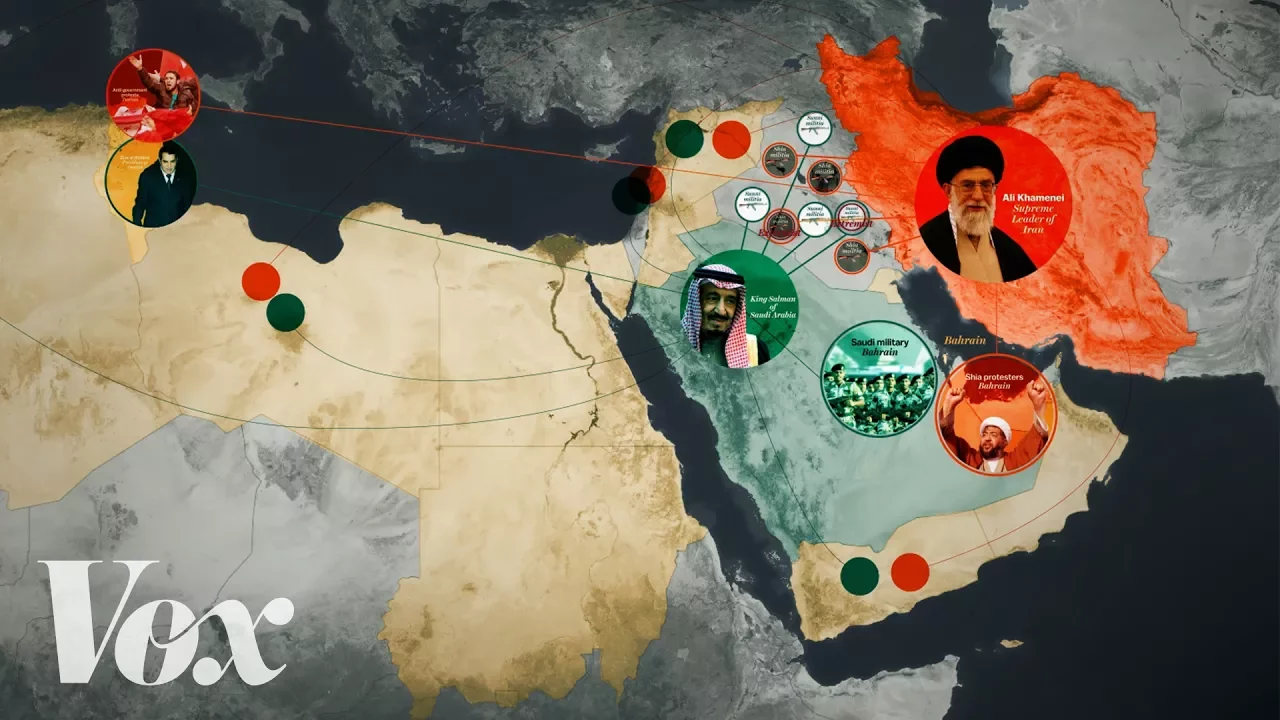
Explaining the Saudi-Iranian Proxy Conflict in the Middle East
@Vox
18.2M views•2017-07-17
Related Study Plans & Knowledge Roadmaps
Structured learning paths in Political Science
political-science
Economic Statecraft: Sanctions & Chokepoints
01Foundations of Geoeconomics and Economic Statecraft
02The Mechanics of Weaponized Interdependence
03International Sanctions: Types, Implementation, and Efficacy
+ 2 more learning modules
12h5 modules
Explore Roadmap
political-science
Central Bank Independence: Politics & Policy
01Foundations of Central Banking and Monetary Policy
02The Time Inconsistency Problem & Inflation Bias
03The Delegation Model and Designing Independence
+ 2 more learning modules
12h5 modules
Explore Roadmap
political-science
Consociationalism: Power-Sharing & Stability
01Democratic Dilemmas in Divided Societies
02Introduction to Consociational Democracy
03The Four Pillars of Consociational Design
+ 2 more learning modules
12h5 modules
Explore Roadmap
political-science
Rebel Governance: Legitimacy, Economy & State
01Foundations of Rebel Governance and Statehood
02Establishing Political Legitimacy and the Rebel Social Contract
03Wartime Economies and Rebel Resource Management
+ 2 more learning modules
14h5 modules
Explore Roadmap