




















This FRONTLINE documentary examines how President Trump's administration tested the boundaries of presidential power through executive orders, pardons, and institutional reforms, ultimately leading to a Supreme Court ruling (Trump v. United States) that granted presidents immunity from prosecution for core constitutional powers, fundamentally reshaping the balance of power between the executive branch and other branches of government.
Presidential Power and the Rule of Law: Legal Showdowns and Constitutional Strains (2025 FRONTLINE Documentary) – An Inside Look at Executive Action, Justice Dept. Politics, and Judicial Checks During Trump's Second Term (Full Documentary Analysis) – PBS FRONTLINE
Added:The constitutional framework of Separation of Powers and the system of Checks and Balances among the executive, legislative, and judicial branches of the US Government.
The scope of Presidential Authority under Article II of the US Constitution, including the nature of executive orders, executive privilege, and appointment powers.
The historical norm of Department of Justice (DOJ) independence from political interference, established in the post-Watergate era.
The 'Unitary Executive Theory' and how it influences modern conservative legal perspectives on presidential control over administrative agencies.
The evolution of Presidential Immunity jurisprudence, focusing on landmark Supreme Court decisions such as Trump v. United States (2024).
The legal and administrative conflicts surrounding civil service reform, including policies like 'Schedule F' and the transition of career bureaucratic roles into political appointments.
Comparative constitutional studies analyzing executive aggrandizement and democratic backsliding in international legal systems.
Potential legislative mechanisms for Congress to reassert its Article I authorities and curb unilateral executive overreach.
1.4M views25.4Klikes1:23:19Original Release: 2025-07-16
>> United States Supreme Court is allowing the Trump Administration to continue with their cuts to the Department of Education.
>> NARRATOR: The showdown over the power of the president.
>> The constitution vests all of the executive power of the federal government in a single person, the president.
>> Do we have the rule of law or do we have royal decrees?
That's what's at stake here.
>> You're not going to scare us, and we're not going to stop.
>> Our constitutional structure is definitely stressed.
>> NARRATOR: Now on FRONTLINE, Trump's Power & the Rule of Law.
(crowd cheering, drums playing) (bagpipes begin) >> President Trump is at the Capital One Arena for his inauguration parade.
He is expected to fire up that packed crowd there.
>> President Trump will sign, in the arena, in front of cheering crowds, a number of executive orders.
>> Norms and institutions are a thing of the past.
The wrecking ball is back.
And this time, he and his supporters mean business.
Things are going to get wrecked because they need to be.
>> Why don't you say what I'm signing?
>> Sure, uh, the first item that President Trump is signing is the recision of 78 Biden-era executive actions, executive orders, presidential memoranda, and others.
(crowd cheering) >> For a lot of Americans, it just looks like change.
Donald Trump is someone who campaigned on saying he would test American institutions, and it looks like Donald Trump is delivering on these promises: to upend Washington, to drain the swamp, to do it completely differently.
(crowd cheering) >> It was as if he was sending thunderbolts out to the country. (chuckles) >> The next item here is the withdrawal from the Paris Climate Treaty.
(crowd cheering) >> "All I have to do is put my Sharpie on the page, and I can make law a reality."
(crowd cheering) And he did one after the next after the next.
>> The next item, sir, is a freeze on all federal hiring... >> There were so many things happening at once that it was very hard to focus on any single one thing.
>>...to address the cost-of-living crisis that has cost Americans so dearly......requirement that federal workers return to full-time, in-person work immediately... (crowd cheering)...the restoration of freedom of speech and preventing government censorship of free speech going forward... (crowd cheering)...ending the weaponization of government against the political adversaries of the previous administration, as we've seen. (crowd cheering) >> That was what Steve Bannon used to call the flood-the-zone approach to politics-- just drown them in it.
>> Could you imagine Biden doing this?
I don't think so.
(crowd cheering) I don't think so!
>> That's President Trump.
I mean, he's all about action.
You know, all gas, no brake.
"I want to hit it and just overwhelm the system with action, action, action."
(crowd cheering) That's why we called it "Days of Thunder."
(crowd cheering) >> President Trump ran on very specific campaign promises.
He's gonna reform our government to make our governments work for real Americans, instead of the other way around.
(siren wailing in distance) He's gonna secure our border.
He's gonna get illegal immigrants, including dangerous terrorists, the hell out of our country.
And President Trump is doing the unthinkable in Washington, D.C., and he's actually delivering on his campaign promises to the American people, and he's doing it very fast.
(siren wailing in distance) >> What he's saying in that day is, "I'm going to be a man of action" It's a phrase he likes, "a man of action."
And he's going to do it with a stroke of a pen.
We saw a President using his power from the very first moment in very expansive ways to put his figerprints on all sorts of areas of government and society.
He signed more executive orders on day 1 than any of his predecessors ever did in their early days and they stretched the power and the authroity of the presidency beyond what any previous president had done.
>> President Trump leaving the White House for the last time as president... >> Just how quickly and how fast things fell apart from this president... He is leaving the White House with much fewer people standing by his side in the wake of the January 6 riots.
>> After January 6 and what happened on the Capitol that day, it was universally terrible.
There wasn't even the most ardent Trump fan defending it.
He had been entirely ruled out.
>> He leaves office in disgrace, the only ever president to be impeached twice.
>> Trump leaves Washington, seemingly for four years of exile, maybe a lifetime of exile.
Just utter bottom.
♪ ♪ >> After President Trump left in January 2021, your audience should understand that President Trump and the core team around him, we were deplatformed by big tech.
We were de-banked.
>> NARRATOR: Steve Bannon was Trump's 2016 campaign C.E.O., his White House chief strategist.
He was charged with fraud and went to prison rather than testify about Trump's role in the January 6 attack on the Capitol.
>> In those years of '21 and '22, when the entire world was against President Trump and his team, it looked like the odds were so incredibly long.
>> It was a very lonely time around Mar-a-Lago.
President Trump was essentially a dead political body left on the side of the road.
>> NARRATOR: In isolation at his Florida estate, more trouble for the former president.
>> The FBI raided the former president's Florida home, Mar-a-Lago, unannounced, breaking into the home.
>> Former U.S. President Donald Trump once again found himself the target of an investigation.
>> NARRATOR: A cascade of other legal problems-- multiple civil trials.
>> Trump was found liable for sexually abusing and defaming E. Jean Carroll.
>> NARRATOR: Business fraud.
>>...Trump guilty on all 34 counts of falsifying business records in the Stormy Daniels hush money case.
>> A federal grand jury here has indicted former President Donald Trump on four counts... >> NARRATOR: Indictment after indictment.
>>...charged with leading a criminal organization that worked to overturn the results... >> NARRATOR: The most serious charges: that he'd worked to overturn the 2020 election, culminating with a mob of his supporters attacking the Capitol on January 6 while Congress was trying to certify the results.
>> An indictment was unsealed charging Donald J. Trump with conspiring to defraud the United States, conspiring to disenfranchise voters, and conspiring and attempting to obstruct an official proceeding.
Since the attack on our Capitol, the Department of Justice has remained committed to ensuring accountability for those criminally responsible for what happened that day.
>> NARRATOR: Special Counsel Jack Smith had prosecuted Democrats and Republicans, but Trump supporters saw this case as politically motivated.
>> What they were doing was so wrong and so destructive to the presidency.
That you can have a presidents throw his predecessor in prison for non-crimes and that's how we destroy our country.
That's how we become a third-world Marxist hellhole.
>> NARRATOR: Mike Davis is one of Trump's trusted advisers, known in Trump's circle as "the viceroy," a Washington insider, a former chief counsel to the Senate Judiciary Committee.
>> I was the only person, it seems, who would go on Fox News every day and defend President Trump.
We've seen that they have weaponized, they have politicized, law enforcement repeatedly to get Trump.
I've done over 4,500 media hits supporting and defending President Trump.
They have completely politicized the Justice Department.
This Justice Department is rotten to the core.
>> A lot of what they're trying to do is recast the narrative of what happened to him during his impeachments, to recast the narrative of what happened on January 6, to suggest it was a day of peaceful protest, and not a violent attack on democracy.
I, I think the public record in the investigations would show otherwise.
>> This is lawless, this is Democrat lawfare, this is election interference.
He has presidential immunity for his acts as the president of the United States.
>> Trump has come right up to the edge of saying, "You don't get to tell me what the law says.
I get to say what the law says."
He believes, as he once said, that Article II of the Constitution means that he can do whatever he wants.
He believes that if the president does it, it can't be illegal.
>> NARRATOR: It was a familiar argument-- that a president was above the law.
It went back more than 50 years to another president dogged by legal problems.
>> So what in a sense you're saying is that there are certain situations where the president can decide that it's in the best interests of the nation, or something, and do something illegal.
>> Well, when the president does it, that means that it is not illegal.
>> By definition. >> Exactly.
>> If you think back to Richard Nixon's period, people called Richard Nixon "an imperial president."
He violated the laws, and, and... (stammers): His administration was corrupt.
>> NARRATOR: Nixon was accused of weaponizing the FBI and I.R.S. against his political enemies.
>> The country tonight is in the midst of what may be the most serious constitutional crisis in its history.
(gavel bangs) >> NARRATOR: Of covering up the break-in at the Democratic Party's offices at the Watergate complex.
>> What did the president know and when did he know it, about the cover-up?
>> NARRATOR: And refusing to comply with court orders to turn over Oval Office recordings.
>> President Nixon announced that he will neither appeal nor comply with a federal court order to turn over the Watergate tapes.
>> The news has caused a storm in Washington, and some of Mr. Nixon's most loyal supporters are calling for his resignation.
>> NARRATOR: When the Supreme Court weighed in, Nixon relented, turning over the tapes and resigning the presidency in disgrace.
>> The president now at the door, a final wave.
>> After Watergate, there was an effort to reform the presidency and to put some constraints on it.
A lot of ethics laws were passed, um, independent agencies were safeguarded.
The whole effort was to fight corruption and to fight tyranny, to make sure that a president didn't become a tyrant.
>> Congress tried to take some power back.
One way to think of it is, you know, Gulliver is the president.
And then, after Watergate, what Congress did is, they tried to tie him down, just like the Lilliputians tried to tie down Gulliver.
Inspector generals, special counsels-- these efforts to reduce the president's ability to control the cabinet agencies.
That was an effort to fragment the executive branch.
I think that was the mistake, to try to solve the Nixon problem by making the executive branch less effective.
>> NARRATOR: Law professor John Yoo has long been an advocate for strong presidential power and a controversial doctrine called "the unitary executive theory."
>> It is the idea that the Constitution vests all of the executive power of the federal government in a single person, the president.
>> NARRATOR: It was a fringe theory that had been rejected by the Supreme Court.
And in those years after Nixon, president after president would find their power constrained.
>> The power of the presidency was probably at its weakest in the post-Watergate years.
I don't think it really picked up steam until, you know, the post-9/11 era.
You know, 9/11 obviously was a significant event that, you know, required strong executive action.
>> The Twin Towers, the New York landmarks, have collapsed and are gone.
The Pentagon... >> NARRATOR: 9/11-- thousands of Americans dead, a nation in crisis.
>> I can hear you, the rest of the world hears you, and the people who knocked these buildings down will hear all of us soon.
(crowd cheering) >> NARRATOR: A presidential administration wanting to respond forcefully-- exercise its power without constraints.
>> We also have to work, though, sort of the, the dark side, if you will.
We gotta spend time in the shadows of the, the intelligence world.
Um, a lot of what needs to be done here will, uh, have to be done quietly, without any discussion, using our sources and methods that are available to our intelligence agencies if we're going to be successful.
>> Alexander Hamilton had said, "The definition of good government is an energetic executive."
You want someone who can act with speed, decisiveness-- energy.
You could see the presidency is trying to reassert itself, to break free from these bonds that have been with us since Watergate.
>> NARRATOR: John Yoo was at the Justice Department Office of Legal Counsel at the time.
>> The Bush administration relied on Yoo more than any other lawyer in government to justify what they were doing.
>> We are protected from attack only by vigorous action abroad and increased vigilance at home.
>> Yoo is on the extreme of legal debate over presidential power.
That the law allowed the president to do extraordinary things after 9/11. (man speaking on radio) Including secret rendition to black sites.
Including torture. (door shutting) Including spying on Americans with the NSA.
(computers chirping) Those things were nearly all repudiated either by his successors at the Office of Legal Counsel or by courts who said, "That's not legal."
>> NARRATOR: But in the years that followed, the Supreme Court was ready to enhance executive power.
>> Justice by justice, the conservatives were taking over the Supreme Court, and the theory of the unitary executive was becoming more widespread.
And finally, this came to a head, really, in the final session of the 2024 Supreme Court.
>> NARRATOR: It was that Trump case, about his role in trying to overturn the 2020 election.
It had gone all the way to the Supreme Court.
Trump's lawyers made the Nixon argument: if the president does it, it's not illegal.
And in large part, the court agreed.
>> In Trump v. United States, the Supreme Court, with Chief Justice Roberts writing, says the president is the chief of the executive branch and the president is also in charge of executing the laws, and for this reason, must have immunity from presidents later on prosecuting him or her for those decisions.
>> The president may not be prosecuted for exercising his core constitutional powers.
>> One of the reasons the chief justice gives is so that the president can fully run the executive branch without having to worry about his criminal liability or civil liability after.
>> The immunity decision was arguably one of the biggest, if not the biggest, legal victory that Donald Trump has had in his entire time in public life.
It essentially spelled the meaningful end of the federal prosecutions of Donald Trump.
That immunity decision, you could say, that was like the precursor event to Trump 2.0 in almost every respect.
>> It was hugely important.
It was the difference between President Trump going to prison versus going back to the White House.
It was hugely consequential.
It was one of the most important Supreme Court decisions in our history.
>> Trump won the presidency and a get-out-of-jail-free card.
>> He has now been gifted legal immunity.
>> After winning an election, the federal cases all go away.
>> In his hush money case, unconditional discharge covering all 34 counts.
No prison time, no fine.
>> Psychologically, it was a big stamp of approval, in the sense that the president is kind of above the law.
I mean, literally above the law.
That's what the immunity decision found.
You can't find-- he's immune from a normal legal challenge.
You got a pretty powerful feeling that you're kind of unconstrained.
>> I, Donald John Trump, do solemnly swear... >> NARRATOR: Now that sense of power would fuel his presidency.
>> It signals a very different kind of president, and a president who doesn't want to be bound by either the Constitution or statutory law.
He believes he has literally unrestricted power.
>> So help me God.
>> Congratulations, Mr. President.
>> The strategy is to flood the zone, to overwhelm the opposition, and stun people who are used to the legal constitutional order and the rule of law.
>> Donald Trump immediately getting to work with a remarkable show of the use of executive power.
>> We're going to see a president pardoning people who participated in insurrection that he supported.
>> So this is January 6.
These are the hostages.
Approximately 1,500 for a pardon.
>> Yes.
>> Full pardon.
>> Full pardon or commutation?
>> Full pardon.
>> He issues pardons and commutations to everybody who had been convicted of crimes in connection with the January 6 attack on the Capitol.
>> We hope to get them... We hope they come out tonight, frankly.
>> He said it was a grave national injustice, in his view, that they had been convicted and prosecuted.
And he called them hostages.
>> NARRATOR: Peter Keisler, a prominent voice in the conservative legal world, was acting attorney general for George W. Bush.
He has become a critic of President Trump.
>> There's really no way to understand that decision except as an effort to protect people who had committed serious crimes simply because they committed those crimes in the course of supporting the president's effort to stay in power.
>> (chanting): Free J6!
>>...with the stroke of a pen, the legal consequences virtually undone.
>> The largest criminal prosecution in U.S. history is abruptly over.
>> (chanting): U.S.A.! U.S.A.!
>> The prosecutions, persecutions of these January 6 defendants was so politicized, made it illegitimate.
>> (talking in background) >> They went through years of suffering.
They had their lives destroyed, bankrupted, lost family members.
Some people killed themselves.
So I have no problem with President Trump pardoning almost all of those January 6 defendants, because they've suffered enough.
>> (talking in background) >> People who attacked Congress, people who used violence to spread their political message, people who had no regard for our institutions and our democracy, that's who he was issuing pardons for.
>> This was a day of violence, this was a day in which 140 police officers were injured, and we cannot rewrite the history of that day.
>> Property was destroyed, there were injured police officers trying to defend the democratic process, died.
>> We stood up against a stolen election.
We will be vindicated in the pages of history as patriots and freedom fighters.
(crowd shouting in background) >> He's put my family back together again.
Without him, I wouldn't be out right now.
(crowd shouting in background) >> We don't condone violence, but we're also not the insurrectionists here.
(crowd shouting in background) >> I feel, I feel-- yes, I feel vindicated and validated.
Yes, absolutely.
(crowd shouting in background) >> It really sends the signal that people can engage in violence on his behalf, and he's got that pardon power there for them.
He wants people who are on his side to think, "You know what?
If I go a little bit too far..." You know, they got a president there who's kind of watching out for you.
(siren wailing) It really puts us on a road that goes pretty far from the neutral rule of law and pretty, and pretty far, unfortunately, towards a kind of personalized use of government to go after your enemies, and to forgive those on your side who break the law.
(sirens blaring) >> NARRATOR: Trump and his advisers were pushing to go further-- exact retribution for what they called "lawfare."
>> I think retribution is a very important component of justice.
It serves as a powerful deterrent to people who may commit crimes in the future that there are going to be consequences.
The president and his Justice Department team should hold accountable those who wage this unprecedented republic-ending lawfare against President Trump.
>> NARRATOR: The first target: the Department of Justice itself.
>> They fired more than two dozen career prosecutors.
People who had worked either on the investigations and cases against Donald Trump himself or against the people who had stormed the Capitol on January 6.
>> The message that I took out of it was, "If you persecute Americans "as a Justice Department prosecutor or agent, you're going to lose your job, and you should."
When you try to throw President Trump in prison for the rest of his life, when you try to bankrupt him, when you throw his supporters in prison after January 6-- when you do these things, there are consequences.
>> They also forced out about half a dozen or so of the senior career leaders at the FBI.
They were fired as a group because they were not deemed to be sufficiently politically reliable.
The message that sends is, "Your job may depend "on you being perceived as supporting the president's personal and political interests."
And that sets the stage for turning law enforcement into another instrumentality of politics, where, if you're the subject or a target of an investigation, how you're treated may depend on what your politics are, and that's the opposite of what the system should be doing.
>> NARRATOR: It was time for Trump to deploy his own team to the Justice Department-- one he could depend on.
>> At this stage of his presidency and what he wants to accomplish, he really only values loyalty, and virtually nothing else.
>> NARRATOR: Criminal defense attorney Ty Cobb was part of Trump's legal team during the first term.
Now he's a critic.
>> He's not looking for them to tell him what to do.
He's looking for them to do what he tells them to do.
He learned a lot the first time around, I think, in terms of how far he could go.
>> NARRATOR: Trump's first attorney general was Jeff Sessions.
>> Sessions was a constant object of his ire, in part because of the recusal without consultation with the White House.
>> I have now decided to recuse myself from any existing or future investigations of any matter relating in any way to the campaigns for president of the United States.
>> NARRATOR: Trump saw Sessions' decision as disloyal-- not protecting him from a D.O.J. investigation into Russian interference in the 2016 election.
>> The Justice Department naming the former FBI director Robert Mueller special counsel to take over the investigation... >> That rubbed the president the wrong way, and he never got over it.
>> NARRATOR: Time and again during Trump's first term, it was the lawyers who got in his way.
>> There were people in the first Trump administration, the so-called grown-ups in the room-- more traditional conservatives, Federalist Society lawyers who were very conservative ideologically, but were also very serious lawyers, as well-- who were occasionally willing to say no, to ideas that they thought were outside the bounds of legitimate legal interpretation or just simply bad ideas, to raise objections, to slow things down.
One of the lessons learned for the people who stuck with Trump after the events of January 6th, was that one of their mistakes was having too many people like that around the president.
And there was a very deliberate effort to vet people to ensure that they would be more in the MAGA mold-- more permissive lawyers, people who were not going to be obstacles slowing down ideas coming out of the White House, but accelerators.
>> NARRATOR: His new attorney general this time would be Pam Bondi.
>> I think she's going to be as impartial as you can possibly be.
I know, I'm supposed to say she's going to be totally impartial with respect to Democrats, and I think she will be as impartial as a person can be.
I'm not sure if there's a possibility of totally, but she's going to be as total as you can get.
>> They were friends.
They've known each other a long time.
Part of this with Trump, yes, it is loyalty, and part of it is personal.
She has served as his personal lawyer.
I think he just really likes her.
>> NARRATOR: The top deputies, Todd Blanche and Emil Bove, had both served as Trump's personal criminal defense attorneys.
>> The truism that he's treating the Justice Department as a personal law firm is almost literally true in the second term here, where he has filled its upper ranks with people who previously had been his personal lawyers.
Defense lawyers for him have abruptly gone from trying to counter federal prosecutors and FBI agents to being the bosses of those people and being the instruments of his revenge against that institution.
>> NARRATOR: It was breaking a barrier that had been erected after Watergate.
>> The Justice Department was not always as independent as it has been in my adult lifetime.
John F. Kennedy did name his brother as attorney general.
But post-Nixon, because of who Nixon was and what he did, and how the Justice Department abetted what he did, it has been separate.
>> Since Watergate, the norm-- and it's been a healthy norm-- has been really to keep hands off the Justice Department, hands off the FBI.
I was in the White House many years ago.
I actually went to the Justice Department very rarely when I was the vice president's chief of staff, and partly that was because we were really not just encouraged, but required not to deal directly with the Justice Department.
It was just considered a terrible abuse of power to try to use the Justice Department for your own personal purposes or political purposes.
>> NARRATOR: But Trump wasn't going to follow those rules.
>> He's the chief magistrate and the chief law enforcement officer of the United States.
And the attorney general reports directly to him, the FBI director reports to him.
That's one of the keys to the unitary theory of the executive, that in the office of the president is executive power, which has really been lost since Watergate.
>> NARRATOR: Trump decided to make a statement.
He would go to the Department of Justice.
Make it clear he was in charge.
>> By going to speak at the Justice Department, he is reasserting the president actually is, under the Constitution, ultimately responsible for the execution of federal law, for federal law enforcement-- all of it.
The Justice Department is not independent of the president.
>> NARRATOR: Others who had worked in the Justice Department saw it differently.
>> Presidents only infrequently go to the Department of Justice at all, and for good reason.
>> NARRATOR: J. Michael Luttig was a lawyer in the Reagan White House, a veteran of the D.O.J. under George H.W. Bush, and a prominent conservative appeals court judge.
After January 6, he became a vocal Trump critic.
>> There's every reason in the world, under our constitutional order, for the president of the United States to, to keep his distance.
>> (speaks indistinctly) >> Oh, wow!
He looks like such a nice person.
That's a rough picture-- that's a rough picture.
>> We're waiting on... >> The president's political rally at the Department of Justice was reprehensible and, of course, it was unprecedented in all of American history.
(audience applauding) >> Ladies and gentlemen, please welcome Attorney General Pamela Bondi. (audience cheering) >> Hi-- please, please, be seated.
Welcome to the Department of Justice.
>> It is an institution whose goals have uniformly been revered as a place where you try to at least achieve your vision of equal justice, unbiased justice, and depoliticized justice.
Bondi didn't even try to talk about those things.
>> And we all work for the greatest president in the history of our country.
We are so proud to work at the directive of Donald Trump.
It is, um... (audience applauds) >> He will never... >> She made a point that they were all there for him, and devoted to him.
That's just not, that's just not the way it's supposed to work.
They're, they're supposed to preserve and protect the Constitution.
And, um, they're not there to preserve and protect the presidency.
(audience applauding, cheering, "Hail to the Chief" playing) >> During the previous couple of years, while Trump was being prosecuted and convicted for crimes, he must have been seething and just waiting until he could take his revenge, because that's basically what he announced he was going to do when he walked into that Justice Department that day.
>> So now, as the chief law enforcement officer in our country, I will insist upon and demand full and complete accountability for the wrongs and abuses that have occurred.
>> There is a new sheriff in town.
The American people elected President Trump back into the White House, and that Justice Department works for President Trump.
Unfortunately in recent years a corrupt group of hacks and radicals... weaponized the vast powers of our intelligence and law enforcement agencies.
>> There is going to be much needed accountability in his second term.
>> It's a campaign, and it's by the same scum, that you have been dealing with for years like guys like Andrew Weissmann... >> The message, to me, at least, was, this is going to be the Department of Justice that is basically the right hand of the White House.
>> NARRATOR: Andrew Weissmann was a federal prosecutor who worked for Robert Mueller investigating Trump and Russian interference in the 2016 election.
In the years since, he's become a legal analyst and outspoken Trump critic.
>> If you are thinking about the attack on the rule of law, having a Justice Department that is not making decisions based on the political party, um, or whether you're an opponent or supporter of the president is absolutely central.
>> There's a guy named Norm Eisen.
I don't even know what he looks like.
His name is Norm Eisen of CREW.
He's been after me for nine years.
>> He's singling me out as an example.
"Hey, all you other lawyers, I'm going to make a target of you, as well."
>> NARRATOR: Attorney Norm Eisen was a White House counsel under President Obama, and helped Democrats build an impeachment case against Trump in 2019.
And he filed numerous lawsuits against the Trump administration.
>> His sole life is to get Donald Trump and he's been vicious and violent.
>> When I see Donald Trump lashing out against the legal profession, I see a loser acting out of rage at the institution, rule of law, that he thinks is-- and he's right-- is holding him back.
>> They're not legitimate people there.
They're horrible people, they're scum... >> It is the unambiguous declaration of an enemies list.
People to become the targets of retribution, uh, from the federal government under his command.
>> I want these Democrat prosecutors and agents and judges and other operatives to understand there are still going to be severe legal, political, and financial consequences.
The only way this will stop is if we give them very severe consequences.
>> NARRATOR: Trump expected results, and delivered a message directly to Deputy Attorney General Todd Blanche.
>> And the reason I'm saying this, Todd, is, I'm only going to get one chance to say this.
But these are bad people.
>> When he said, "Todd," referring to Todd Blanche, who's now the number-two person at the Justice Department, "Todd, this is the only chance I'll get," he means, "Todd Blanche, "use the Justice Department "and the weight of the power of the American government against Norm Eisen."
>> With the return of law and order... >> He puts his arm around the Justice Department and essentially recruits them into his mission to take control.
>> We will revive the storied... >> And in the kind of Orwellian guise of ending weaponization of the Justice Department, actually weaponizing it.
>> We will bring back faith in our justice system for the citizens... >> I was shocked beyond words.
Even after all that we've seen from the president over the past eight years, to watch him stand in the Great Hall of the Department of Justice......a sacred place in America......and claim that now he was going to get even by politicizing and weaponizing the Department of Justice and the FBI against his political enemies......was a travesty in all of American history.
>> I happen to think President Trump should go there every week.
They are shocked that he's in the sacred temple of the Justice Department.
(bleep) them! Right?
This is, this is what democracy is about.
These are anti-democratic forces-- they have to be broken.
They are shocked because the president of the United States, and worst of all, Donald Trump, actually soiled their temple by going in there.
(bleep) you!
He's president of the United States.
He's the chief magistrate and the chief law enforcement officer by the Constitution.
(siren wailing in distance) >> The message could not have been clearer.
Donald Trump is now in charge at Justice.
>> NARRATOR: Outside Washington, Trump was also exercising power over the D.O.J., targeting its most prominent office in New York City.
>> There are 93 U.S. attorneys across the country.
But the Southern District of New York is the most prominent in the country, often called the Sovereign District.
Because for so long, the Southern District has acted with a kind of independence from main Justice in D.C.
that other offices have only dreamed of matching.
>> NARRATOR: The case: the prosecution of New York City's Democratic mayor, Eric Adams.
>> The charges against Eric Adams were brought by the Southern District of New York.
I think it's the first time that there's been a federal indictment against a sitting mayor of New York City.
And charged with corruption charges, with bribery, all high-profile.
>> And Eric Adams went down to Mar-a-Lago to appeal to Trump.
And his lawyers made a case to the new team at the Justice Department that this case was interfering with Eric Adams' ability to help Trump in his mass deportation agenda.
And they made a deal.
>> The deal that they came up with was one of the most transparent quid pro quos that you could possibly imagine.
"We made a deal to drop this prosecution, and in exchange, he's going to help us."
>> Emil Bove, the acting deputy attorney general, sent a memorandum that the case should be dismissed, so that Mayor Adams could help the president achieve his immigration agenda in New York City.
>> The pending prosecution has unduly restricted Mayor Adams' ability to devote full attention and resources to the illegal immigration and violent crime... >> Now, that's as nakedly political a rationale as you could imagine.
What it says is that because Mayor Adams has said he's supporting the president's immigration agenda, he doesn't get prosecuted.
But, presumably, if he had been an opponent of the president's immigration agenda, he would have been prosecuted.
>> NARRATOR: Bove's memo went straight to the desk of Acting U.S. Attorney Danielle Sassoon.
>> Danielle Sassoon-- who had been appointed by Trump, a conservative attorney, member of the Federalist Society, clerked for Supreme Court Justice Scalia-- she tried to convince D.O.J., appealing directly and sort of going around Bove to Bondi and saying, "This is not how criminal law should be used."
>> The reasons advanced by Mr. Bove for dismissing the indictment are not ones I can in good faith defend.
>> That's when the issue catapulted into national prominence.
It's when conservative lawyers in the Department of Justice objected to this.
Because they knew, they knew what this was.
They knew this was a quid pro quo.
And that was deeply unethical.
>> Because the law does not support a dismissal, I cannot agree to seek a dismissal driven by improper considerations.
Very truly yours, Danielle R. Sassoon.
>> Danielle Sassoon was not the kind of person who you would have thought was going to stand up to Donald Trump, at least not politically, but she believed in the rule of law, and she saw this as a corruption, and she said, "I want no part of it."
>> Bondi refused to even meet with Sassoon.
In her letter, Danielle had said, "If you're not going to meet with me, "if you're not going to reconsider this, then I will resign."
She then got a letter from Bove which said, "Okay, I accept your resignation."
>> The Justice Department will not tolerate the insubordination and apparent misconduct reflected in the approach that you and your office have taken in this matter.
>> I would say to Danielle Sassoon and the others that they work for the deputy attorney general, who works for the attorney general, who works for the president, who is elected by all Americans.
And if you don't like that, then get out of the Justice Department.
>> NARRATOR: And many would.
Nearly a dozen prosecutors in New York and Washington resigned or were forced out.
>> People in the Department of Justice don't just up and resign.
When you resign, it's because it's either, in your view, amoral, or in, it's a quid pro quo that you think is illegal.
And that is the reason that you saw so many career people, including conservatives, say, "I can't stomach this."
>> Upheaval in the Justice Department.
>> A showdown between the Trump administration and its own Justice Department prosecutors.
>> They wanted prosecutors across the country to see that, this time around, they would not be standing for any pushback, that they would not be permitting offices, even the Southern District of New York, to push back against main Justice.
And that if you did stand up, that you will lose your careers.
(siren wailing in distance) It's all about sending the chilling effect across the department and across the country.
>> That sweeping federal corruption case against New York City Mayor Eric Adams is now officially dead.
>> NARRATOR: Mayor Adams denied there'd been a quid pro quo or that he'd done anything wrong.
But regardless of guilt or innocence, for the advocates of the unitary executive, Trump's decision was well within his power.
>> I think the criticism of Trump deciding not to prosecute Adams is way overblown.
The president and the Justice Department have the right to choose who to prosecute and not to prosecute.
The president says, "Don't prosecute this person."
That is not illegal or unconstitutional.
That's, that's certainly constitutional.
And presidents can do it for reasons that don't have to do with guilt or innocence.
>> The message out there to the public is, "Even if you've committed a serious crime, "if you support the administration politically, "you can get off.
"And if you haven't, we'll throw the book at you.
"But if you've supported the administration politically, you may get off."
It sends that message to the public at large.
(siren blaring in distance) >> From now on, there is no concept of an independent law enforcement function in this country.
It exists purely to carry out the personal will of the president.
The era that began with the disgrace of Richard Nixon and the forcing from office of a president who sought to use the machinery of government on his own behalf, that era is over, very definitively.
>> NARRATOR: Trump's transformation of the government and his use of presidential power would be far-reaching.
>> When Trump came into power, he was surrounded by ideologues who had been nursing these theories for quite some time that are really quite extreme.
One of the principal ones is a man named Russell Vought.
He is someone who is a self-described Christian nationalist who has been around Washington for a long time.
He's seen how government works.
And he has an idea of really kind of radical changes he wants to implement.
And he's someone who knows how to do it.
>> My belief is that the president has to move executively as fast and as aggressively as possible with a radical constitutional perspective to be able to dismantle that bureaucracy and their power centers.
>> NARRATOR: Before the election, Vought laid out his vision in a chapter he wrote for the Heritage Foundation's "Project 2025," a blueprint for Trump's return.
>> The great challenge confronting a conservative president is the existential need for aggressive use of the vast powers of the executive branch.
>> He told us quite explicitly, he wants to search out for pockets of independence from, uh, presidential control and stamp them out.
He's made no secret of the fact that he wants to wrest for the presidency more power over spending decisions, away from Congress.
>> Trump and people around him understand what we have to do to get back to a constitutional republic.
We're going after the infrastructure and the plumbing and the wiring of the whole system.
We are not going to quit, we're not going to surrender, we're not going to take our foot off the gas pedal.
>> NARRATOR: Now, with Russell Vought the head of the powerful Office of Management and Budget, Trump would take on departments Congress had authorized and funded, starting with the agency that handled foreign aid: U.S.A.I.D.
>> President Donald Trump is calling for U.S. AID to be shut down, calling the organization that delivers aid to people around the world "corrupt."
>> Many people see it's frivolous if not outright wasteful spending.
>> Shutdown of U.S.A.I.D.
could mean less medicine for the sick and less food for starving families, including babies.
>> This is a power grab.
You're watching the presidency turned into something much more imperial than we've seen for a very long time, and maybe ever.
>> The Trump administration's efforts to reshape the federal government and its workforce... >> U.S.A.I.D.'s workforce will be whittled down from about 14,000 employees to fewer than 300, a 98% cut.
>> Large chunks of U.S. AID employees were placed on administrative leave and cut off from agency email systems and other databases.
We had hundreds of millions, if not billions, of dollars in play around the world in ongoing programs.
All came to a dead stop.
>> NARRATOR: Paul Martin, U.S.A.I.D.'s inspector general, had spent decades in government, but had never seen anything like this.
>> People have dedicated their lives trying to make a difference at U.S.A.I.D., and to sort of overnight, without any engagement, without any warning, it was a massive shock to the system.
>> Hundreds of workers at U.S.A.I.D.
are cleaning out their desks.
>> An emotional exodus at the former headquarters of U.S.A.I.D.
Recently fired federal workers were given just 15 minutes to clear out their desks.
>> I do think that U.S.A.I.D. was the canary in the coal mine.
The speed and the rapidity at which this occurred was pretty breathtaking.
>> A senior official at U.S. AID called it a mafia-like takeover.
>> It's less than one percent of the federal budget.
The fact that this was the very first agency they chose to target in force underscores that this is not a cost-cutting exercise.
It's an exercise in power.
It was a classic demonstration execution.
"We'll kill one federal agency in order to terrify thousands of others."
>> When Congress establishes an agency by law, that's not optional.
That's a law.
And the agency exists, and then has to discharge the responsibilities that Congress has given it.
So when the president tries just to shut down an agency that has statutory responsibilities, that will, in many cases, be inconsistent with the law.
What's the point of having the authority to enact laws, which is Congress's big power, um, if the president can then disregard whatever they enact?
>> Go back to the unitary theory of the executive.
The president of the United States, as chief executive, has the ability to make personnel decisions and to fire anybody.
You don't have permanent employment in the federal government.
>> U.S.A.I.D. was the perfect political target from their point of view, a lot of Americans don't feel all that aggrieved by that and so, yeah, it was a test case, he wanted to see how far he could go.
>> NARRATOR: As he cleared the ranks at U.S.A.I.D., there was one more target: the agency's independent watchdog.
>> I, too, received a two-sentence email thanking me for my service but dismissing me as inspector general.
>> Dear Paul, On behalf of President Donald J. Trump, I am writing to inform you that your position as inspector general is terminated, effective immediately.
Thank you for your service.
>> No explanation, no 30-day notice, no reasons.
>> It seems pretty clear a violation of the law.
You can fire inspectors general, but you have to notify the Senate.
You have to give 30 days' notice. (clicks) He was, like, "Yeah, I'm not going to do that."
>> NARRATOR: From agencies all over Washington, 17 other inspectors general were purged.
>> The inspector general community has been a concept created by Congress to help Congress and the administration conduct meaningful, effective oversight of federal taxpayer spending in executive branch agencies.
We are Congress's eyes and ears.
When you dismiss 17 inspector generals, you've turned the system on its head.
>> The role of inspector general was created by Congress.
It is a response to the Watergate scandal.
And often, Congress will ask I.G. offices to conduct investigations that Congress doesn't have the staff or the power or the ability to do, because they're not housed inside these agencies.
So firing the I.Gs. isn't just about creating a less transparent government, but also really cuts off a channel to Congress.
>> These inspector generals are a great example of these Watergate reforms that tried to chip away at the unitary executive.
If the president can't fire them, then they don't have to listen to the president.
They don't have to take orders or direction from the president.
And that, I think, is really an affront to the idea of a unitary executive.
>> What he's doing is systematically removing any instrument of independent accountability in the government.
If Congress was healthy at all, it should rise up and say, "Our creations-- we're going to protect our creations."
>> There really is no dissent.
Certainly within the Republican Party, which is what controls Washington.
Lawmakers are almost uniformly aligned behind the president right now.
And they also see that there's almost no upside to being publicly critical of the president.
>> This is not a, a usurpation of authority in any way-- it's not a power grab.
I think they're doing what we've all expected and hoped and asked that they would do.
>> Congress, under the Constitution, has plenty of authority to fight for itself.
The founders wanted the president and Congress to fight.
What they did not anticipate was political parties.
The reason why Congress isn't fighting now, if people want Congress to fight more, is that Congress is controlled by the same party as the president.
Congress, the majority of the House and Senate, probably agree with what the president's doing.
>> President Donald Trump is delivering on his promise to shake up the status quo in Washington.
>> I think all of us believe that we want to be good partners in making sure that the agenda that he campaigned on, and which the American people voted for, is accomplished and delivered on.
>> The fact that the Congress of the United States is silent is unforgivable.
The system created under the Constitution was one of, one of separated powers, under which each branch serves as a check and balance on the other branches.
Right now in America, one cannot say that we have the separation of powers that was envisioned by our founders and written into the Constitution of the United States.
(siren wailing in distance) >> Without a functioning Congress, without an independent Justice Department, without inspectors general watching things, literally, the only real check on, on a president's power at this point would be the courts.
>> NARRATOR: It would be up to the lawyers to confront Trump.
>> When I saw the dismantling of U.S. AID, I said, "I'm gonna sue, I'm gonna go to court, "I'm gonna file a case, I'm gonna argue "this is against the Constitution.
"It's against what Congress has commanded.
"No element of Donald Trump's attacks are going to go unmet.
We're gonna litigate it and win," and we did.
>> President Trump was dealt not one, but three legal defeats in the span of just 90 minutes yesterday.
>> The legal challenges to the president's efforts to reshape the government mounting.
>> In the first months of the Trump administration, at this point, there's almost 200 lawsuits that are on file, and whether it's Democratic or Republican judges who are deciding them, Donald Trump is losing the majority of the time.
>> The battle significantly slowing down the president's efforts to downsize the government.
>> The lawyers are part of the problem.
These lawyers and these law firms are oftentimes partisan actors and they are, uh, coming up with plaintiffs to sabotage the president of the United States.
>> NARRATOR: Trump would send a message to the lawyers, attacking powerful law firms that had crossed him in the past.
>> We're gonna sign some executive orders... What they've done is in, it's just terrible... And it should never be allowed to happen again.
>> NARRATOR: He ordered the firms' security clearances revoked, that they be denied entrance to all federal buildings, their government contracts canceled.
>> This is just gangster stuff.
I mean, it, it really is.
This is mob-style intimidation, uh, because what it is saying, nakedly, is that, "I can essentially destroy the law firm."
>> And you're looking at about 15 different firms?
>> Uh, that or more, sir, yes, sir.
>> Okay.
>> I am so impressed.
The power of what President Trump did, I was stunned of how brilliantly thoughtful it was.
>> What the firms need to understand is that if I were their clients, I would probably find new attorneys, because if you've made it on one of these lists, you're probably not gonna get a very good reception at the Trump administration for the next four years.
>> The law firm of Jenner & Block, this is a law firm that, as you know, employed Andrew Weissmann, uh, after he came off of the Mueller investigation.
He is one of a number of reasons that we believe this executive order is warranted.
>> He's a bad guy.
>> That is really insidious.
That is saying that "I'm gonna target you "if you take positions and bring cases in front of judges."
(people applauding) In order to have a functioning judiciary, you need to have lawyers who don't feel threatened by bringing good-faith litigation.
>> This is an executive order that takes certain measures against Susman Godfrey, given their, their previous activities.
>> These attacks on the nation's, uh, law firms are intended to put the individual firms out of business.
But then, larger, to send a message to the nation's 1.2 million lawyers that they better never take again a case representing a client against Donald Trump and his administration.
>> NARRATOR: Some firms fought back.
>> Hundreds of firms denouncing the president's executive orders.
>> NARRATOR: Some even won in court.
But the vast majority of the country's largest law firms stayed silent.
>> Some firms fighting back while others are bending the knee to Trump.
>> By and large, the legal industry has kind of folded.
>> These orders are certainly unlawful, and a judge has already said so.
But it's very difficult for courts to really remedy the situation.
Because, at the end of the day, even when a court says that an order like this is unlawful, everybody still knows that the law firm is persona non grata, in fact, toxic inside the administration.
(siren wailing in distance) >> Several of the firms have come to the White House seeking a way to avoid punishment.
>> Paul, Weiss now reaching a deal with the president to get the president to drop the executive order against the firm.
>> After that was sent, they collapsed in their opposition.
And here's what I tell people: "They're not that powerful."
This whole system has been so powerful and so overwhelming, they cratered, the most powerful law firms in the country.
>> The word that largely defines the response is "capitulation."
>> Five more law firms have now struck deals with the Trump administration.
>> It sent a message to the administration that this works, meaning, "Do it again."
>> NARRATOR: The law firms claimed the deals didn't threaten their independence and denied they were payoffs to Trump.
>> Have you noticed that lots of law firms have been signing up with Trump? (audience chuckling)...They give you $100 million and then they announce that, uh, "But we have done nothing wrong."
And I agree, they've done nothing wrong.
But what the hell? They give me a lot of money, considering they've done nothing wrong.
>> Altogether, they agreed to give nearly $1 billion in legal services to causes that the firms and Trump support.
>> All in an effort to sort of appease him and keep him from criticizing them or targeting them.
>> I want these lawyers to understand that this is not the George W. Bush Republican Party.
We're not gonna turn the other cheek.
The American people elected President Trump with a broad mandate, so, time to deliver.
>> All American people should be worried about what we're seeing.
I know lawyers are not the most favored group with society.
But lawyers are who you go to when you need your rights defended.
Lawyers are who you go to when you need to access the courts.
And I think it begins with lawyers, but this kind of trend will expand across the board.
(sirens wailing in distance) >> He is extending his reach really far.
Much further than most presidents have.
And it's not just on politics.
What's striking is how much he wants to impose his point of view on different aspects of society.
He is trying to reshape the country, in a way.
It's not just whether the U.S.A.I.D.
should be a agency or not.
It's what should be played at the Kennedy Center.
>> President Trump now is the chair of the John F. Kennedy Center for the Performing Arts.
>> Trump plans to fire Kennedy Center board members, appoint himself as chair.
>> It's what we should call a body of water off our southern shores. >> President Trump is calling it the Gulf of America as opposed to the Gulf of Mexico.
>> It's what the Associated Press can put in its style guide.
>> Trump has barred the Associated Press from the Oval Office and White House press pool.
>> It's what is taught in the classrooms at Columbia.
>> Columbia University will comply with policy changes demanded by the Trump administration.
>> Trump calling for Harvard to lose its tax-exempt status.
>> He wants to have everybody defer to him.
>> Paramount announcing they will settle President Trump's lawsuit over a "60 minutes" interview for 16 million dollars.
>> And he is accomplishing a lot.
And a lot of his people are very happy about that.
(sirens wailing in distance) >> Here's what we know.
If you take power and exert it, this system's not so tough, you know why?
They're all gutless cowards.
The university administrators, they're not that tough.
The big law firms, eh, they're not that tough.
The media?
Look who's cratered-- how many times... Look how they're settling with Trump.
They're not tough.
We're resilient, we're anti-fragile, and we're tough.
The people around Trump are battle-hardened, okay?
You're not gonna scare us, and we're not gonna stop.
And what we know is, you guys are a bunch of (bleep).
You will crater.
PBS is gonna crater.
You don't believe, actually, at your core, in what you're trying to do.
And you'll fold, like the law firms, like the universities, like the media, like all of these institutions-- you will fold.
Because we're relentless and we're not gonna stop.
(sirens wailing in distance) >> NARRATOR: PBS and NPR sued Trump over his attempts to defund them.
Harvard also refused to back down.
And many of Trump's efforts were blocked by the courts.
But he has been pressing ahead.
>> Our golden age has only just begun... We will never give in, we will never give up, we will never back down.
We will never, ever surrender. (audience cheering) We will fight, fight, fight, and we will win, win, win.
Together, we will make America powerful again.
>> This is new territory for people.
And a lot of people are very courageous in their heads when they imagine themselves facing the government, but then, when the actual reality is looming in front of them, when the actual crushing weight of the federal government comes upon you, or the thought that you could be publicly named and shamed in a way that can bring threats and intimidation to your family, an awful lot of people are gonna say, "Well, somebody else can take on this thing."
>> I've lived in Washington my whole life.
I've never seen people in Washington scared the way they are now.
I've never seen people in Washington as scared as they are now.
They are scared to talk.
They are scared to pop their head up.
They are scared to be noticed.
They don't want to be on his radar screen because they fear that he will use his power against them.
I, when I call people to talk to them and quote them in a story, they say, "Hey, I can't be on the record anymore."
"I have a kid who's in, works in the government."
"I have a brother who has a federal grant."
Um, "My law firm doesn't want me to talk."
"I'm scared," they say.
"I don't want to be prosecuted."
I've never seen that before in Washington.
There's never been a situation where adversaries of the president-- Democrat or Republican-- felt afraid in the same way we're seeing now, across the board, to speak their mind.
>> NARRATOR: He was attacking government agencies, overpowering Congress, threatening law firms, the press, and more.
Trump's far-reaching use of presidential power was leading to confrontation with the Supreme Court.
>> I think the administration is seeking an opportunity to create a constitutional crisis.
And by that, I mean a crisis that tests the scope of the judicial power to control the executive.
That's why the attack on the rule of law is really Trump's focus now.
>> NARRATOR: Trump's test case: an unprecedented campaign against illegal immigration.
(men shouting, siren wails) >> A massive immigration enforcement crackdown has led to hundreds of arrests in a matter of days.
>> NARRATOR: The administration claimed it was targeting violent gangs and criminals.
(radios running in background) >> You had President Trump rounding up international gangbangers.
They are robbing, kidnapping, raping, torturing, and murdering Americans.
The president has absolute statutory and constitutional authority to get them the hell out of our country.
>> (talking in background) >> NARRATOR: But many others were being swept up, too.
>> Immigrants with legal status or no criminal history are also being detained and deported.
>> Many of the deported men lack criminal records in the United States, according to ICE.
>> The families of some of those men deported say not all of them are gang members.
>> How do you know that this person in front of you actually is a gang member?
What if they say they're not?
Do they have a right to some kind of process, to go before a judge and say, "Mistaken identity, I'm just a barber," or, "I'm just a soccer player."
"This tattoo you say is a gang tattoo is just my favorite team."
What's your proof?
>> They are deporting people they've said are very dangerous gang members.
But everyone in the country who's accused of something has basic rights of due process, which in this case would mean a hearing to determine whether they are, in fact, members of this gang and whether they are subject to deportation under the law.
That's the process that the administration has tried to short-circuit.
(radio running in background) >> He's saying, "All I'm doing is deporting criminal gangs," or, "I'm taking action against murderers and rapists."
♪ ♪ And it's very hard to get people worked up over concepts like due process, a legal term, right?
But you know who does get very, very agitated about due process?
Judges.
>> NARRATOR: In an emergency lawsuit, A.C.L.U. lawyers presented federal judge Jeb Boasberg with startling evidence: the government was racing to deport alleged gang members to a notorious prison in El Salvador without any judicial review.
>> Trump was rushing people onto planes.
Judge Boasberg said, "Slow down, temporary restraining order, "let's figure out... "Let's freeze the status quo into place.
"Let's figure out whether this is legal or not.
"You need to turn those planes around, bring these people back to the United States."
And Trump administration did not turn the planes around.
They handed more than a hundred people off to a prison in El Salvador.
So that raises the question, not only was this legal to do in the first place, but did they violate a court order?
>> That was an extraordinary act.
Virtually all presidents throughout history have acknowledged that you have to obey court orders.
That if you disagree with a court order, it's not optional to, to refuse to comply with it.
The answer is to appeal.
(people talking in background) >> It's very close to, uh, just, the kind of clash that everybody's fearing between the executive branch and the judicial branch.
It seems possible that, for the first time in the United States' history, a president might just say he's not gonna listen to the courts.
>> I'm happy those planes landed in El Salvador, because the president had a constitutional duty to ignore that lawless and dangerous order and land those planes in El Salvador.
This Boasberg, the clown, thinks he's the commander-in-chief.
He thinks he can order the president to turn around military planes carrying terrorists.
What the hell is Jeb Boasberg thinking that he thinks he can, uh, expose and sabotage an ongoing military operation?
Judge Boasberg does not have the jurisdiction to do what he did, he did not have the power to do what he did, and what he did was lawless.
>> The judge in this case, uh, is essentially trying to say that the president doesn't have the executive authority to deport foreign terrorists from our American soil.
>> NARRATOR: Judge Boasberg fired back, ruling there was probable cause the administration was guilty of criminal contempt.
And Boasberg wasn't alone.
>> The immigration standoff is heating up between the Trump administration and the courts.
>> NARRATOR: Court after court ruling against Trump.
>> U.S. district judge Brian Murphy ruled the U.S. government must retain custody of migrants... >> NARRATOR: Challenging the deportations.
>> A federal judge appointed by President Trump blocked the administration from summarily removing migrants in South Texas.
>> NARRATOR: Finding the administration was violating people's due process rights.
>> A federal judge says the Trump administration violated a court order for again sending migrants to a country they're not from without due process.
>> The Trump administration is now formally complying with a Supreme Court order to bring back Abrego Garcia.
>> This is a victory for due process, it's a victory for the Constitution.
>> The American public may not even know it as due process.
But they know that whenever the government comes against them, whether it be in a criminal proceeding, a civil proceeding, where the government intends to take away your property or your liberty, that you're entitled to be heard.
The Trump administration does not want to give those people the opportunity simply to make their case to the federal government that they're not members of the gang at all.
That's about as rudimentary and fundamental to America as anything that I can conceive of.
>> NARRATOR: Despite the challenges, Trump and his team haven't let up.
>> And the question should be, why is a judge trying to protect terrorists who have invaded our country over American citizens?
>> The broadest, uh, theme that arises from it is a White House that is unafraid to provoke legal challenges and enjoys the fight as an end to itself.
Is not embarrassed by the prospect that it might be accused of doing something illegal, but revels in it.
>> We're not stopping.
I don't care what the judges think, I don't care what the left thinks, we're coming.
>> I deplore the rhetoric that suggests that anyone in the government doesn't have to follow the Constitution or the laws or obey court orders.
I think it would be a dangerous path for our country if any president starts saying they're going to act outside the Constitution.
And so I hope it's just careless rhetoric.
>> We have bad judges, we have very bad judges, and these are judges that shouldn't be allowed... I think they, I think, at a certain point, you have to start looking at, what do you do when you have a rogue judge?
>> The Trump administration is escalating its fight with federal judges.
>> Trump suggested that the judges, including one he appointed, were backroom hustlers.
>> NARRATOR: He went after the Federalist Society, a longtime ally that had helped him select judicial appointments.
>> Why is he attacking the Federalist Society when it was an ally in the first term?
>> Trump wrote on Truth Social, "I am so disappointed in the Federalist Society "because of the bad advice they gave me on judicial nominations."
It seems like what Trump wants is just judges who will agree with him.
>> Loyal to him.
>> You have to think that it's a knowing effort on the part of Trump to delegitimize the power of the judiciary.
I mean, what he's basically also saying is that there is no such thing as neutral law or principled law.
It's all just politics.
And that's basically Trump's view of judges.
>> This radical left lunatic of a judge, a troublemaker and agitator, was not elected president.
This judge should be impeached.
>> This is unequivocally, indisputably, an attack by the president on the, on the, the independence of the, of the federal judiciary, pure and simple.
>> NARRATOR: Amidst the attacks, Supreme Court Chief Justice John Roberts issued an extraordinary rebuke to the president.
>> Impeachment is not an appropriate response to disagreement concerning a judicial decision.
The normal appellate review process exists for that purpose.
>> Even Chief Justice John Roberts, who doesn't enter the political fray very often, felt compelled, within hours, to put out his own statement saying, "You don't agree with this ruling, "you go to the appeals court.
"You don't like the appeals court, you come to me, the Supreme Court, and we'll deal with it."
What he did there was lay down a marker.
Because what he said is, "This isn't about Judge Boasberg.
"It's not about a rogue judge, "the way the president would like it to be.
It's about the whole system."
And Roberts took that arrow for himself.
He was saying, "It's about us-- it's about the system, and do you respect the system?"
>> Justice Roberts needs to remember that he is a federal judge.
He's not a politician.
And when judges take off their judicial robes and climb into the political arena and throw political punches, they can expect political counterpunches.
And so it's probably not a good idea for judges to make political statements like he does.
>> NARRATOR: Now Chief Justice Roberts, who had written that pivotal presidential immunity decision a year before, is the face of a court at a crossroads.
>> It's a little bit hard to reconcile Justice Roberts, who has claimed to stand for the balance of powers in our system, with the same man who wrote this decision granting Donald Trump sweeping, unfettered power.
And now it seems to me that, with many of these actions that Trump is undertaking, he's seeking to test the Supreme Court.
"Did you really mean it?"
>> The last democratic institution that remains between us and the precipice of a constitutional crisis is the Supreme Court.
>> There have been more than 300 lawsuits filed against the Trump administration since he took office.
>> All the big cases are gonna end up in front of the Supreme Court eventually.
>> These legal challenges are making their way up the appellate process.
Some will land in the Supreme Court.
>> Chief Justice Roberts is on the hot seat because the judiciary doesn't have the powers of the purse and it doesn't have an army.
So the only thing it has is its own legitimacy.
And so they don't want to be in a position where they make a decision and Trump defies it.
Because then it makes them look like a paper tiger.
So it's a tight spot.
>> What happens if there's a definitive ruling and Trump just decides, "I don't care"?
>> The president has acted as prosecutor and judge, but he's gonna have to understand, at the end of the day, that for the federal judiciary to yield to him would literally be to surrender its constitutional role to Donald Trump.
That's simply never going to happen.
>> But the president and his advisors are betting that the Supreme Court will see it otherwise.
>> They want to get a lot of these challenges into the courts, because they believe that the Supreme Court, with a conservative six-three makeup, is a more friendly place to wager some of these fights over executive power.
And I think that a lot of the people around the president have a higher degree of confidence now that the Supreme Court will rule in their favor and ultimately codify the expansive presidential power.
>> There's nothing to compromise.
There's two different theories about what the Constitution says, what the framers had in mind, and what this country is.
It's gonna build up to a crescendo.
One side's gonna win and one side's gonna lose.
Trump is not only not gonna blink, he's gonna win.
>> A big win for the Trump Administration, the Supreme Court slammed the breaks saying, "no" to nationwide injunctions.
>> NARRATOR: And in the final days of the Supreme Court's term-- >> The Supreme Court potentially cleared the way for even greater presidential power.
>> NARRATOR: Victories......for now.
>> The Supreme Court ruled in favor of the Trump Administration's efforts to deport migrants to third countries.
>> The White House is claiming victory after the Supreme Court allowed the White House to move forward with the mass layoffs of federal workers.
>> The battle here may, on the face, be between Trump versus the courts, or Trump versus the rule of law, but this is the battle for, what is going to be normal in America, what are our norms?
What is our system of government that we are all going to subject ourselves to?
Do we have the rule of law or do we have royal decrees?
That's what's at stake here.
>> President Trump seems to be riding a major wave of momentum these past couple of weeks.
>> The Supreme Court is allowing the Trump Administration to move forward with its staffing cuts at the Department of Education.
>> The FBI is now investigating the former FBI director James Comey in conjunction with the genesis of the Russia investigation.
>> In Los Angeles, tensions flaring after President Trump deployed National Guard troops.
>> Our constitutional structure is definitely stressed.
And how it emerges from that will really depend on how the public understands and reacts to what's going on.
Ultimately, we're a democracy, and our government is never gonna be much better or much worse than what people want it to be.
So I think, ultimately, the question is, you know, how does the country decide to understand what it sees happening around it and how does it react to that?
Captioned by Media Access Group at WGBH access.wgbh.org >> For more on this and other "FRONTLINE" programs, visit our website at pbs.org/frontline.
♪ ♪ FRONTLINE's "Trump's Power & The Rule of Law" is available on Amazon Prime Video.
♪ ♪
Up Next
95:31
House Judiciary Committee Debates REINS Act Limits on Federal Bureaucrats
@ForbesBreakingNews
170.8K views•2023-05-24
88:38
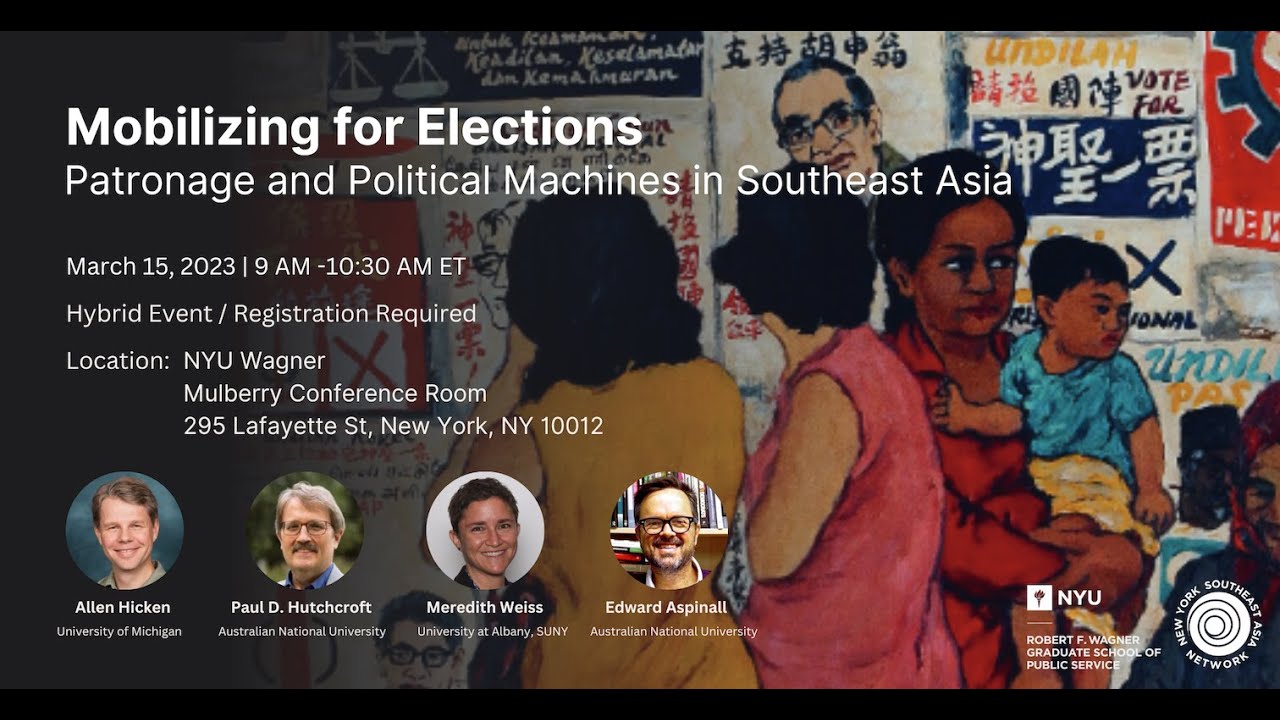
Patronage and Political Machines in Southeast Asian Elections
@NewYorkSoutheastAsiaNetwork
511 views•2023-04-05
63:38
Zero Tolerance: Bannon, Trump & Populism | FRONTLINE
@frontline
704.6K views•2019-10-22
10:19
Explaining the Saudi-Iranian Proxy Conflict in the Middle East
@Vox
18.2M views•2017-07-17
Related Study Plans & Knowledge Roadmaps
Structured learning paths in Political Science
political-science
Analyzing Clientelism: Patronage & Vote-Buying
01Foundational Concepts of Clientelism
02Mechanics of Patronage and Resource Allocation
03Vote-Buying, Turnout Buying, and Ballot Secrecy
+ 2 more learning modules
12h5 modules
Explore Roadmap
political-science
Economic Statecraft: Sanctions & Chokepoints
01Foundations of Geoeconomics and Economic Statecraft
02The Mechanics of Weaponized Interdependence
03International Sanctions: Types, Implementation, and Efficacy
+ 2 more learning modules
12h5 modules
Explore Roadmap
political-science
Central Bank Independence: Politics & Policy
01Foundations of Central Banking and Monetary Policy
02The Time Inconsistency Problem & Inflation Bias
03The Delegation Model and Designing Independence
+ 2 more learning modules
12h5 modules
Explore Roadmap
political-science
Consociationalism: Power-Sharing & Stability
01Democratic Dilemmas in Divided Societies
02Introduction to Consociational Democracy
03The Four Pillars of Consociational Design
+ 2 more learning modules
12h5 modules
Explore Roadmap