







![Judge Douglas H. Ginsburg: 'I Don't Think We've Had Any [Constitutional] Crises in My Lifetime''](https://i.ytimg.com/vi_webp/95eyP_zkg-I/maxresdefault.webp)







![Why is a Legislative Veto Unconstitutional? [No. 86]](https://i.ytimg.com/vi/TGWQS9Pt6uY/maxresdefault.jpg)




The REINS Act (Regulations from the Executive in Need of Scrutiny Act) is a proposed federal law requiring Congressional approval for major regulations with annual economic impacts exceeding $100 million. The bill aims to restore constitutional separation of powers by ensuring elected legislators, rather than unelected federal agencies, have primary authority over significant regulatory decisions. Proponents argue this prevents bureaucratic overreach and increases democratic accountability, while opponents contend it would slow essential regulatory processes and may be unconstitutional under Supreme Court precedents regarding legislative vetoes.
House Judiciary Committee Debates REINS Act Limits on Federal Bureaucrats
Added:The constitutional principle of the Separation of Powers, specifically the distinct roles of the Legislative Branch in making laws and the Executive Branch in enforcing them.
The Administrative Procedure Act (APA) of 1946, which governs the process by which federal agencies propose and establish federal regulations.
The growth of the 'Administrative State' and how executive branch agencies (such as the EPA, FDA, or SEC) exercise delegated legislative-like authority to create rules.
The basic function and jurisdiction of congressional committees, specifically the House Judiciary Committee, in reviewing bills and conducting oversight.
The Nondelegation Doctrine and recent Supreme Court jurisprudence (such as West Virginia v. EPA and the 'Major Questions Doctrine') that limit agency power.
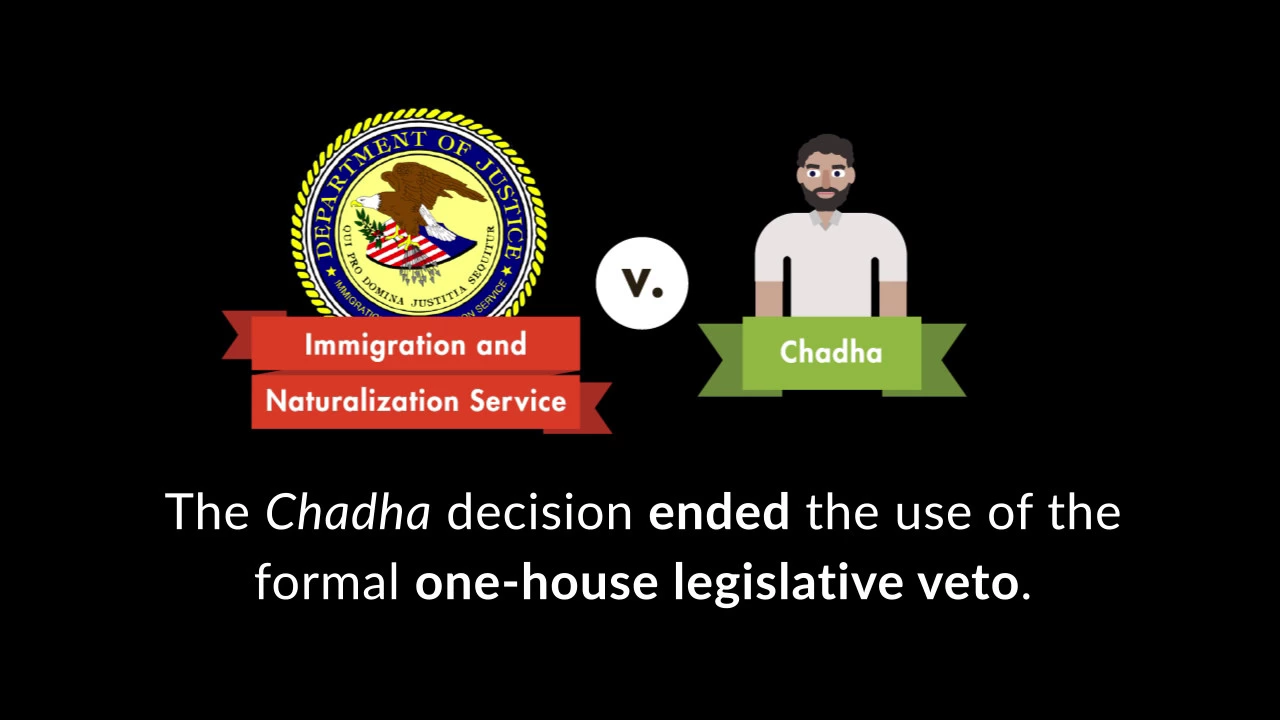
The landmark case INS v. Chadha (1983) and how it shapes the constitutional debate around legislative vetoes and executive-legislative balance.
The practical and economic arguments surrounding the REINS Act, comparing regulatory capture and compliance costs against public safety and environmental protections.
Alternative regulatory reform mechanisms, such as executive order-mandated Cost-Benefit Analyses overseen by the Office of Information and Regulatory Affairs (OIRA).
170.8K views1.6Klikes1:35:31Original Release: 2023-05-24
7 the regulations from the executive in need of scrutiny act for purposes of a markup and move the Committee reported Fairburn to the house the clerk will report the bill H.R 277 to amend chapter 8 of title V United States code without objection the bill will be considered as read open for Amendment at any point recognize myself for an opening statement the Constitution separates the powers of the federal government and gives only Congress Congress the power to make federal laws but the administrative State violates these principles charged with executing the law federal agencies have assumed the legislative power they now impose policy through rules and guidance further the administrative state has little if any political accountability to the people whose lives it controls the administrative State's lack of accountability means that it can impose radical unpopular policies that could never make it through a vote of the Congress the regulations from the executive in need of scrutiny act or the Reigns act would be a good step to help remedy these problems the bill would require affirmative Congressional approval for major rules including those with an annual effect on the economy of at least a hundred million dollars this helps put legislative power back in the hands of the legislature back in the hands of those of us here in Congress the bill is a good start toward restoring the Constitutional separation powers and increasing the accountability of policy makers to the American people our support for this bill and yield back the balance of our time and the chair now recognizes the distinguished member from New York the ranking member Mr Nadler for his opening statement thank you thank you Mr chairman Mr chairman once again we are gathered here to mark up a bill that would frustrate the purpose of government and would put our constituents In Harm's Way the regulations from the executive in need of scrutiny act or the reins Act is a huge expansion of the Congressional review act that requires both houses of Congress to vote and approve for the president and for the president to sign any rule from our executive branch that is in progress the rains act would grind the the gears of rulemaking to a halt by requiring all major rules to be affirmatively approved by both chambers of Congress regulation would be blocked from being implemented if even one chamber declines to pass an approval resolution the goal of this legislation quite simply is to stop the regulatory process in its tracks regardless of its impact on public health and safety the bill purports to give Congress control of the rulemaking process but Congress already has this power and exercises it in a number of ways for example Congress can delegate authority to agencies with specificity thus limiting the scope of the agency agency's Authority it can impose restrictions on rulemaking through Appropriations it can also influence rulemaking through oversight activities and if all of these measures are insufficient we also have the blunt tool of the Congressional review act which allows Congress not only to overturn a rule but also to Bar the agency from ever passing a substantially similar rule the majority has certainly not been shy about exercising his authority under the Congressional review act this year the range Act is not only redundant but it also creates insurmountable procedural hurdles that would stall the approval of rules of Major Impact rules that would be highly beneficial to the Public's health and safety it is important to remember why we have regulations in the first place Congress sets broad policies but we delegate authority to executive agencies because we do not have the expertise to craft technical regulations ourselves who here knows how many parts per billion of arsenic should be allowed in our drinking water it's 10 the proper amount should it be 5 or 15. none of us here knows the answer but the dedicated professionals on our federal agencies many of whom have Decades of experience and vast technical expertise undertake a careful process to protect their health and safety this process includes numerous procedural safeguards including public notice and comment regulations ensure that our air is safe to breathe our water safe to drink our food is safe to eat and the life-saving medications we depend on are safe and effective it means that the cars we drive and the planes we fly have proper safety mechanisms and when we do not properly regulate sometimes it means the trains carrying dangerous chemicals can derail in our communities putting thousands of people at risk I feel much better about leaving regulatory decisions to the careful study of agency experts rather than to members of Congress who want to substitute their judgment subject to the whims of politics Republicans have spent decades waging an all-out assault on the regulatory process trying to add hurdle after hurdle to the ability of agencies to issue regulations that protect public health and safety regulations as benefits consistently outweigh their costs Often by many multiples if we want to improve the regulatory process we would consider legislation such as that stop corporate capture act which would bring more transparency and accountability to the rulemaking process but instead we are taking up legislation to dismantle and destroy the regulatory process regardless of the impact on public health and safety Mr chairman one final word about process if we were to follow regular order we would have this markup today and then perhaps the bill would come to the floor for consideration but consistent with the Republicans have Hazard approach to governing this legislation has actually already passed the house as part of the majority's Reckless default on America plan that's right we're marking up a bill that has already passed the house but this is not just irresponsible legislating it is irresponsible policy the majority plans to cut costs by cutting the very protections that ensure our health and safety I urge my colleagues to join me in opposing this dangerous Bill and they yield back the balance of my time without objection the gentleman yields back without objection all their opening statements will be included in the record the chair now recognize himself for the purpose of offering an amendment in the nature of a substitute the clerk will report the amendment amendment in the nature of a substitute to H.R 277 offered by Mr Jordan without objection the amendment of the nation of subsequent we consider is read and shall be considered base text for the purpose of the amendment the chair record himself to explain the amendment this amendment permits the regulations from the executive in need of scrutiny Act of 2023 to also be cited as the Reigns Act of 2023. this change more readily allows this bill to be cited by its commonly known acronym when it is passed into law it is not intended in any way to alter the important purpose of the legislation or support for the amendment and yield back who seeks recognition gentleman from Arizona Mr chairman I have an amendment at the desk gentleman has an amendment clerk will report the amendment gentleman from uh Georgia reserves a point of order Amendment to the amendment and the nature of a substitute to H.R 277 offered by Mr objection the uh mem will be considered as read the gentleman from Arizona is recognized to um to speak on his Amendment thanks Mr chairman I applaud my colleagues uh supporting the 100 million dollar threshold in the Reigns Act in fact I initially sponsors the rains act a number of years ago and did for several years I think 100 million dollars does not go nearly far enough the administrative state has grown so big its spending has gotten too out of control it's regulatory Authority unchecked by Congress has gotten too great for even a 100 million dollar threshold to be sufficient my Republican colleagues admit we have these two problems these expansion administrative State and spending they admit that we also have this regulatory environment which is essentially created a fourth branch of government as many political science Scholars would attest I suggest we reduce the threshold for Congressional approval to 50 million dollars in order to address these problems more fully and further constrain the growth of the administrative state I know it will mean that we will have to vote more often we will be called to prove more rule-making proposals I'm okay with that that's our job that's our job that's what we're supposed to do we should be the ones that are approving rules that are willing to be held accountable I want to approve rules that make America better Freer more productive Now's the Time for Congress to regain control of agencies which we have too long negligently delegated our lawmaking authority to when James Madison talked about tyranny he often talked about how a legislative executive and adjudicative Authority were combined into one body we have done that in Congress over the last 90 years and created to a tyrannical bureaucratic state I think it's time for us to do something about it I like that the rains act at 100 million threshold but I think we should be doing more I want the agencies to have to earn our support I want to challenge them to write rules that field needs that spend taxpayer money wisely and efficiently I want them to be constrained I want them to think critically about their rules and I want the president to want Congressional support for substantial actions by his or her agencies our founder system of checks and balances demand that we rein in the administrative State and demand accountability the smaller rules add up I worry that we won't have a say in a Litany of 99 million dollar rule rules that will never inevitably result from agencies attempting to circumvent the 100 million dollar threshold my my result in more 49 million rules but I can tell you that it's going to be a lot harder for agencies to get around that than the 100 million dollar rule I proposed more than 500 bills to curb spending this year because we're spending far more than is authorized there are more than 1200 agencies departments and programs that are currently unauthorized that we give 500 billion dollars to every year I think it's time uh oh yeah I just got to mention this I was criticized in the rules committee by the the ranker because it cost eighteen thousand dollars for me to introduce over 500 bills so think about it he was critical of a legislator for legislating but right here I am hearing and suspect that my colleagues across the i i l they're going to be absolutely okay uh with these uh these uh bureaucratic agencies continue to have an unchecked blank check going forward so I would urge us to um adopt my Amendment Mr chairman uh the gentleman on Georgia is recognized Georgia withdrawals his point of order Mr chairman if I might I actually had a question about the point of order gentlemen from um I think Maryland but I think the point of order has been withdrawn Mr chairman gentleman from Maryland's recognized for five minutes well I don't need five minutes but I did have a question about your maintenance at the last markup we had um I don't know maybe a dozen Democratic amendments were ruled as non-germaine because they expanded the scope of the legislative proposal that was underlying it I think this proposal here clearly increases the scope of what would be covered by this language um by dropping the threshold from 100 million to 50 million and so I inquire I raised the germanis issue again because it seems like that it would be inconsistent with the position that the chair has taken in the previous markup the question the last markup was those those amendments added additional issues into the legislation this one is the same issue just determining what the dollar amount may or may not be depending on how the committee decides to uh to proceed with the amendment if I might you're uh I'm sorry for five minutes Mr chairman it it clearly expands the scope of what would be covered by this language um and uh I I I I don't know that the chair used the term issues when we were dealing with this last time around I believe it was scope was the standard that the chair used in making his tremendous decision so I would say that this is not germane under the standard that the chairman reused at the previous markup with respect I would you know just to underscore your point um by essentially doubling potentially doubling the number of regulations that would be the subject of this those regulations would cover all kinds of different topics all kinds of different issues so you're absolutely right by changing this number reducing it and therefore sweeping more within the Ambit of this build it vastly increased the scope of the legislation and uh is impossibly consistent with the rulings of the chair from just the last markup the gentleman yield it's not my time to yield but I will yield back to the gentleman yes thank you uh I think you are entirely correct by the standards the majority used in the uh what was the last markup when they ruled all those amendments on germane this is equally on germane but I think we have to recognize that their rulings on germanus at the last markup were nonsense and they were partisan and deliberate nonsense uh by any normal standard this amendment is in order by the standard they used at the last markup it is not an order um but uh I don't see that we should hold the majority to a nonsensical standard I yield back reclaiming my time I I uh appreciate the ranking members comments I yield back to the chair I appreciate the ranking member telling us that this amendment's in order I recognize the gentleman from um I recognize the gentleman from Louisiana thank you Mr chairman let me address first the argument that was just made because I was in the chair when those decisions were made and I just want to note the obvious here A change in a threshold dollar amount of a bill does not equate to a change in the scope of the underlying legislation very much unlike the Amendments that were brought in our last session on the bill they're talking about and we can go back and play the tape if you want to hear the full explanation but I don't want to eat up all my time on that um I do want to rise in support of the gentleman's Amendment uh for a very important reason and I think that the American people are behind us here and I think they would support this amendment for certain if they're paying attention and following what all this is about here's the simple fact and I explained this in town halls back home all the time and I'm sure some of you do similar things but we have to acknowledge that the federal government is way too big and it does way too many things and very little of what it does does it do well the administrative state has grown exponentially over the recent decades and it as stated earlier is Consolidated governmental powers in the executive branch and what that's done then is it's usurped the proper and constitutional role of Congress our article one authority over lawmaking and policy making and that consolidation of power has become really very dangerous it's created an administrative state that is out of control it's contrary to the separation of powers Doctrine in our constitution our matchless Constitution and it diminishes the political accountability of the people who set policy if you have nameless faceless bureaucrats who are effectively making law they are by definition unaccountable we literally do not know who to hold accountable the people do not know who to hold accountable when you have bureaucrats making all the laws and that's effectively what's happened now uh Congress allowed this to happen over a series of decades as the power as you serve but it creates a real problem in our system our our matchless system that everybody around the world tries to emulate the reason it works so well is because we have separation of powers we have checks and balances as members of the house we have to run for office every two years why because we're closest to the people we have accountability if we don't do our jobs well then they'll send someone else to do it but we can't do that with the administrative State because we don't even know who they are and so by limiting this lowering the threshold to 50 million is an essential thing to do we're going to be 247 years old as a nation on July 4th we are still a very young Nation you know if a high school Civic student looks at 247 years they think that's a life that's an eternity but we know that's just a small spec on the span of human history we don't know how long our constitutional republic is going to endure the founders didn't know but they said there are certain foundations that you have to maintain and the reason that they were so insistent about the checks and balances and the separation of powers is because they understood that all men are fallen and corrupt and that power corrupts and as Lord Acton said absolute power corrupts absolutely we are veering towards absolute corruption in the administrative state that is why so many agencies in our in our weaponization uh select committee why we're so busy because so many of the agencies that were designed to protect and serve the American people have been turned against them and are being used against their very citizens they're supposed to serve how did that happen it's because we allowed our article one authority to be usurp so the reins Act is essential I think this threshold of 50 million is very reasonable and I would just close by reminding us of the words of John Adams he said you know explaining the difference between us and what was happening in the monarchy and in Great Britain he said you know we're a nation of laws not of men it's the rule of law that defines who we are that's why our system works so well and as the great evangelist Charles Spurgeon said the best of men are but men at best we better maintain this system of checks and balances and I think this would be a really really important step to prevent this death by a thousand little cuts of our Liberty and our oversight and allowing the government to grow so out of control we wouldn't have a 31.8 trillion dollar federal debt if Congress was more involved in these decisions and so I'm in full support of this amendment I think everybody should and I think as I said at the outset if the American people understood and were following this argument they would absolutely be in favor of the Big's Amendment so with that I yield back gentleman yields back chair recognizes the ranking member Mr chairman I'm going to be brief as I said in my opening statement the several things are the case number one we have delegated Congress has delegated over the years rule-making authority to federal agencies because we have not the confidence to judge how many parts per billion of arsenic are safe in the air or the water and a million other things so we have delegated that power to agencies who hire experts to deal with that if we don't like the result if we disagree we have the Congressional review act which can overturn the regulation if you want to improve the process we would consider legislation such as stop corporate capture act which would bring more transparency and accountability to the rulemaking process I oppose this amendment because it makes a terrible Bill even worse would the gentleman yield for a question no no not at the moment it would make a terrible Bill even worse the bill now uh subjects all rules over 100 million dollars uh a limit essentially says you can't do those rules and that would say 50 million that's even worse um and it would uh make it even worse for the Public's health and safety and now I'll use it with the gentleman yield for a question yes um part of the legislative process a very critical part and a part that we exercise here all the time is that we rely upon the testimony of experts I mean that that's sort of the function here we have hearings we bring in people of all Persuasions in in our areas of jurisdiction and Judiciary but we have Committees of Congress in that would cover every potential field and so I mean the question is why should we send that Authority down to people who we can't hold accountable instead of doing the job ourselves craving reclaiming my time we hold hearings those hearings are designed to uh result in in bills that we pass in laws but Congress cannot possibly no matter how many hearings we hold no matter how specific we make the law have the flexibility and the and the ability to define the various environmental and other dangers again we had a a a trained derail and East Palatine what was it Ohio I think in East Palestine Ohio what regulations what degree of Regulation would have uh prevented that um we can know in general terms we can't know in exact terms what percentage what percentage of lead uh in in in what was carrying should be permitted in case it got into the atmosphere we we cannot do those things that's why we have uh delegated these kinds of specific decisions to agencies which have the expertise which have a process with public comment on them and we have given ourselves the power to overturn these regulations through the Congressional review Act and that's why this bill would be affirmatively harmful and the amendment would make it even worse I yield back gentleman yields back uh gentlewoman from uh Wyoming is recognized first of all the non-delegation doctrine is a constitutional provision indicating that the legislative branch does not have the authority to delegate our legislative authority to administrative agencies so what the ranking member is suggesting is unconstitutional in and of itself with that said I'd just like to provide some very specific statistics from the ten thousand Commandments from 2022 published by the competitive Enterprise Institute federal spending surged to 6.822 trillion dollars in 2021 these Federal outlays are projected to reach 5.872 trillion in fiscal year 2022 the burden of regulatory rate of regulatory regulation is equivalent to 33 percent of these projected Federal outlays regulatory costs of 1.927 trillion dollars amounts to eight percent of the U.S gross domestic product which is estimated at 23.99 trillion for 2021. when regulatory costs are combined with Federal outlays of 6.822 trillion in 2021 the federal government share of the entire economy reached at least 36 percent if we're if it were a country U.S regulation would be the world's eighth largest economy not counting the U.S but ranking behind France and ahead of Italy the regulatory or hidden tax associated with the regulatory burden exceeds individual income taxes by several billion dollars if one assumed that all costs of Federal Regulation flowed all the way down to households U.S households would pay 14 684 annually on average in a hidden regulatory tax that amounts to 17 percent of the average pre-tax income of eighty four thousand dollars the regulatory tax exceeds every item in the household budget except housing that means a typical American household spends more on embedded regulation costs than on Health Care food Transportation entertainment services or savings Trump's total of 2964 final rules in 2019 was the lowest count since records began being kept in the 1970s and is the only tele below three thousand during calendar year 2021 while agencies issued 3257 rules Congress enacted only 143 laws thus agencies issued 23 rules for every law enacted by Congress this unconstitutionality index which is the ratio of regulations issued by agencies to laws passed by Congress and signed by the president highlights the entrenched delegation of lawmaking power to unelected agency officials President Biden had the largest or highest number of pages in the Federal Register of over 95 894 pages in 2021 the Federal Register contained 74 532 pages of regulations since 1993 when the first edition of ten thousand Commandments was published agencies have issued 114 821 final rules of the 95 848 fine rules issued since the Congressional review Act passed in 1996 under President Bill Clinton there's been a revocation of just 20 rules the weidenbaum center at Washington University in St Louis in the George Washington University regulatory studies Center in Washington D.C jointly estimate that agencies spent 78 billion dollars in fiscal year 2020 just to administer and police the federal administrative apparatus at the end of calendar year 2021 2094 proposed rules had been published in the Federal Register 272 of them deemed significant which the federal government defines as those rules having an annual economic effect of 100 million dollars or more the reality is that we are not being governed by the Legislative Branch by the people who are accountable to the American citizens to those who are elected pursuant to our Constitution and our laws it is the unelected bureaucrats that are dictating the laws in this country I support the reins act I support the amendment it is time that Congress took back its rightful constitutional authority to legislate and we need to take it away from unelected bureaucrats who are abusing the power that this body has illegally granted to them and with that please generally to yield to the gentleman from Arizona yeah I just want to point out something on pages 9 and 10 of the underlying bill it negates the argument oh that oh my gosh we're not going to regulate anything this will bring it to Congress it doesn't mean that there are no regulations be issued it means that we will be the ones and we're the ones that get held accountable and we should be held accountable I'll yield back gentlemen it was back gentle lady yields back the chair uh who seeks recognition the gentleman from Maryland oh I'm sorry you've already been recognized that's right Mr chairman I thought I was only recognized on the uh the Germans issue sure we can get someone I recognize him for five minutes I'm sure we get someone to yield okay if you if you want to go now on the amendment well gentlemen from Georgia is recognized thank you Mr chairman um Americans rely on administrative agencies to ensure that our air is safe to breathe that our water is safe to drink and that our medications are safe they depend on administrative agencies like the FAA to make sure that all of the rules and regulations to promote safe air travel are in full force and effect there are so many responsibilities of federal agencies over the years it has been the American tradition that we have experts making rules to carry out legislative intent as evidenced by the legislation that Congress passes now I've got five minutes to uh to make my comments today if this was a hearing I'd have five minutes to question a witness and uh you can't deal with Public Safety regulations in such a format as a legislative hearing it's just simply to unwieldily an operation to be able to get at the niceties of how we're going to protect the health safety and Welfare of Americans and so we need federal agencies and what we're doing today is demonizing what they call the Deep state anybody in an agency you you you you really uh saying that government is bad and in fact it's been the Republican uh objective for decades now low taxes less government this this is uh really getting to what they really want which is a society of no rules no regulations Only the Strong Survive corporations the rich and wealthy get richer and wealthier working people poor people trying to make it into the middle class are perennial League confined to poverty and uh this is what my friends on the other side of the aisle want this is the kind of society that they want to to see and so the Reigns Act is a big step forward in that direction and that's why I opposed the rains act I opposed this uh um amendment that has been posed America is in Jeopardy of defaulting on our debt because House Republicans are holding our debt hostage now imagine if every administrative decision required explicit approval from Congress Congress does not move that quickly agencies would lose their ability to function and the world would become a more dangerous place and uh to put into uh to to to to to give you an example of how Congress operates I mean at the start of this Congress it took my friends on the other side of dial 15 ballots to select a speaker and selected the weakest speaker in the history of the country now trying to negotiate a a a a a a a default scenario uh with an unwielding conference uh just can't get it done we would never have any action on protecting health safety and and the welfare of of Americans if we left it up to Congress the rains act Also may be unconstitutional because its effect is nearly indistinguishable from the one House Legislative veto that the Supreme Court has already held to be unconstitutional in ins versus Charter so in short the rains act would hurt American citizens and so I strongly urge my colleagues to vote no on this amendment I'll yield to the chip to the ranking member thank you I I just want to point out that we can't pass 13 Appropriations bills by September do we really think we can carefully consider and vote on every regulation on poison on specific Provisions to prevent airplanes from falling out of the sky I think the question answers itself I yield back to the gentleman I thank him are you you'll bet yeah John Neal's back the chair recognizes the gentleman from North Carolina thank you Mr chairman the last Point by the ranking member actually I don't think it makes his point I think it makes ours so one reason that Congress can't do its job is because it has handed over its job to others to do if the circumstances were different and Congress were in a position to be necessary to achieve those results Congress would change its practices in order to get there I can tell you that under this Republican majority there will be in the house prompt passage of Appropriations bills on all all the relevant departments and um it is interesting that that how fundamentally it is a sort of a political Mantra of my friends on the minority side of the aisle uh to say that they're protecting our democracy and I don't know if we all have the same common understanding of what they're referring to I assume they mean the constitutional republic that exists by Design and to that point they're refusing the ranking member said well if you pass this bill it would reduce the efficiency of passing laws You couldn't possibly pass laws fast enough uh to to satisfy all needs but we don't have a monarchy a monarchy would be one very efficient way to pass laws the king simply decides and there were many if you look at executive orders that would like to go that direction or you could want a technocracy he said right he said well Congress Congress speaks only in very broad terms we leave the details to experts well I mean who says what one problem that we often see if you look at the West Virginia versus EPA is Congress speaking in Broad terms often leaves ambiguity ambiguity in the language and that is often a product of insufficient deliberation and Care in the design of the statute Congress needs to do its work carefully in order to give enough guidance that people know what the law is without hordes of experts so-called experts filling in the gaps by the way that doesn't mean we can't take advantage of expertise Congress can be advised by experts should be advised by experts certainly would-be is advised by experts but the decision maker must be accountable to the people for another fundamental principle to be observed in our law making at least as by Design which is the consent of the government and this idea that that regulations only deal with details that was the terminology the ranking member used in his argument uh it's a little bit like the debate that's entered here uh on germaneness uh germanness is sort of a at the at the very margins it's an elastic concept but certainly we cannot say that our admin our administrative agencies in their regulations have been limited to details and that's what this gets at this amendment by the way a lot of the debate about the amendment is not limited to the amendment but the amendment uh says it proposes the idea that it wouldn't even take a regulation that's going to have a hundred million dollar impact in the economy to be major to be of significance to be to require to make appropriate congress's attention it should be 50 million without I readily agree but um you you by no means in practice in practice have our administrative agencies been limited to details they dominate the legal landscape and since they dominate it they if if so effective they have displaced the predominant role that Congress is designed to have in a way that is inefficient it is a bicameral legislature you must pass the law twice because it is designed to prevent laws from being passed so rapidly and ill-advisedly that the people are oppressed by them that is a it is a feature not a bug and to say that we want to move away from that can not by no means be reconciled with the notion of protecting our democracy in one respect though I agree with uh comments for the minority the gentleman from Georgia said there has been that we have a tradition it is not our constitutional design to turn over our lawmaking authority to agencies but it has become I don't know if I even want a term at a tradition but it certainly has been a practice since about 1940 and it is out of control and it is like an eighty percent ninety percent issue the American people understand it and agree that it must be corrected sorry I didn't save much time to yield to anybody I will yield in the 12 seconds I've got that that's fine gentleman yields back the gentlelady from Pennsylvania thank you Mr chairman um I really can't believe this bill is being offered again as a serious piece of legislation the majority's position is that this bill is needed to ensure that Congress has more checks and balance to stop regulations promulgated by any Administration while ignoring the fact that any regulations issued by an Administration must first have as their purpose to implement laws that congress has already passed so it's just not true Congress has multiple legislative Avenues to review and reverse regulations issued by an Administration we can hold hearings we can offer public comment we can disapprove major regulations before they take effect we can rescind regulations under the Congressional review act and in fact we're considering three such measures this week and we can pass legislation to change laws or regulations that we disagree with so to say that this is some kind of noble effort to empower Congress is disingenuous and it diverts attention from the disastrous consequences that this bill would create today's legislation would ultimately prevent the federal government from issuing the regulations it needs to to protect and defend our nation and the American people in the modern world any new regulation would have to be passed by Congress in order to take effect think about that for a minute in a congress with a house majority that can barely agree on anything including whether to keep the government open and pay the United States legal already incurred debts Congress would have to approve every new major regulation from every Federal agency and if that doesn't scare you think about the fact that the Senate hardly a model of expeditious legislation would also have to pay pass every regulation Congress struggles every day to meet the most pressing needs of the American people as the ranking member noted Congress hasn't managed to pass the Appropriations bills that it's required to in about a decade there are not enough hours in a day or a year or a congressional term to have Congress weighing in on every regulation needed to implement the laws that we do pass the reins act would effectively nullify all new rulemaking by any president Republican or Democrat and it would grind government operations to a halt which may be the real purpose here imagine an FDA that can't issue new drug regulations an EPA that can't keep our drinking water clean and a VA that isn't meeting the needs of our veterans imagine a department of transportation that can enforce safety standards for cars or trains or God forbid airplanes that's what the majority has proposed and it's a dangerous vision for America but since the chair has already offered an amendment to the title of this bill I would suggest that a more accurate acronym would be formed if the ACT were renamed the Republican agitators inflicting nonsense on us today or rain out and that I would suggest is how we should dispose of this bill as a rain out I yield back generally yields back gentleman from Kentucky's recognized I'd be remiss if during this markup uh I didn't talk about the history of the rains Act and where it came from a brilliant man named Lloyd Rogers who's a constituent of mine grew up in an orphanage in Kentucky where he met the the girl that would later become his wife they were married for 65 years he was a veteran he served in during the Korean War and then he came back home and he was a County judge executive in Campbell County Kentucky and in his retirement he became concerned about the drift in government from the legislative branch to the executive branch so he came up with this idea that really isn't novel it's the idea that our Founders have which is that all the laws should go through Congress and so he came up with the Reigns act and he went to his Congressman I wasn't the congressman at the time the gentleman before me met with judge Lloyd Rogers retired judge Lloyd Rogers and took his idea and brought it back to Congress put it through ledge Council and and that's how the reins act came to be it was a citizen activist who was concerned about the structure of his government having defended it during the Korean War and having served in in local government he was passionate enough to put this bill together and so his name is Lloyd Rogers and I'm sure he's watching this markup right now because he's very engaged what I what I hear from the other side of the aisle arguments against the Reigns act uh one is that well we've got a CRA we don't need the rains act we've got a congressional review act but the Congressional review Act is inoperable on about 95 percent maybe 98 of the regulations that pass because the Congressional review act requires the president who promulgated the president's Administration promulgated a rule it would require the president to sign on to cancel his own rule there's only a narrow window of opportunity where the Congressional review act has ever been able to be used and is very rarely because it has to act within a certain amount of time the administration would have to change during that period of time and that's why the Congressional review Act is not suitable it also turns as Mr Bishop pointed out the legislative process on its head instead of requiring concurrent majorities in both Chambers to agree to an idea it requires the Congressional review act requires concurrent majorities to disagree with an idea that the exec which is presumed to be a law even though it's just a rule that the executive branch has promulgated and we should get away from calling them rules these are laws they're not rules the the pistol race so-called rule you get 10 years in prison for violating that give me a break that's not a rule that's a law so um the other argument that I hear from the other side of the aisle is that Congress is so dysfunctional that we can't be trusted with lawmaking oh my gosh what if there's uh you know an emergency or something Congress is just incapable of writing laws effectively I I reject that if you give up on the idea that we are the lawmaking body then you've given up on this Republic in the structure that this uh that our founding fathers put in place for our people to be self-governed but I just want to close by thanking judge Lloyd Rogers for introducing this bill to his congressman and I'm going to yield back to uh chairman Jordan I take the gentleman for yielding and I think he's exactly right the fundamental question is who decides the quote experts the technocracy as Mr Bishops described or the elected officials the elected officials who answer to Lloyd Rogers who's going to make the decision that's the fundamental question here I may not know we may not know how many parks per billionaires necessarily we may not know that but I do know one thing regulations and rules that impact the economy to the tune of millions and millions of dollars and impact the 800 000 folks I get to represent that's important and they get to talk to me they get to talk to Thomas Lloyd Rogers gets to talk to Thomas Massey that is how our system works and that is the fundamental question that we have to deal with not just on this bill but on so many things we have deferred to the quote experts the experts who think they can run our lives and never be held accountable that is what this legislation is all about and I appreciate the story and how this how this idea came to came into being from Mr Rogers and I yield back to the gentleman yield now no um and Lloyd Rogers doesn't get to talk to the faceless bureaucrats he gets to talk to his elected representatives now yield to uh Mr Biggs 15 seconds I'm gonna go fast if you've ever been into Senator Mike Lee's office you can go in and he has a very visual demonstration of this 14 feet high that's the annual regulations about this High six to eight inches of what Congress puts out his laws that's wrong gentleman's time is expired John yields back the chair now recognizes I think the gentlelady from uh Misty and generally from Pennsylvania thank you Mr chairman I rise in opposition to the amendment and to the underlying Bill uh the rains act would grind the gears of rulemaking to a halt by requiring Congressional Ascent to the major rules before they can take effect uh thinking about grinding things to a halt I can't imagine why we are considering this again today when the majority party is right now threatening to grind our economy to a halt as we wait on this nonsensical negotiation with the majority party this is a crisis that never should have happened but they like to grind things to a halt and what happens when that happens is we hurt our constituents my constituents are worried that the rains act threatens the health and safety of all Americans who rely upon administrative agencies to ensure that our air is safe that our water is safe to drink that our food is safe to eat and that life-saving medications will depend on safe and that they depend upon are safe and effective the rains Act is based on a false premise that regulations harm economic employment growth the data shows the exact opposite uh with that I I just wish the majority party would focus on that which is important to the American people safety for all Americans and in their health and in their economy in their climate and with that I yield to the gentleman from Maryland I I thank you uh I just had a couple quick points that I wanted to make um one as someone who's worked on the hill and actually run an administrative agency it was a state agency but we were implementing the Telecom act I gotta say that um the types of hearings we do are dramatically different from the types of hearings that you do in an administrative proceeding we had uh hundreds of hours of testimony from people who are experts in their fields you know uh engineering degrees technical economists and all of that stuff things that we just don't do with the hearings that we have we can change that but I gotta say in the 35 years I've been dealing with Capitol Hill I've never seen us do hearings like that on the house or the Senate side for that matter so I I I also wanted to raise this quick point with respect to constitutionality I think there's a clear question as to whether this provision is in line with Chata the Supreme Court opinion it doesn't appear to be to me I took a look at the Constitutional Authority statement that came with the introduction of this bill it cites article one section 8 and that's provision 17 which is the necessary and proper clause which really doesn't seem to have much to do with what we're trying to talk about here uh by contrast Shadow bases its decision on the legislative veto on Section seven rather than section 8 and talks in terms of the need to my colleagues who are making constitutional arguments and the importance of following the Constitution the importance of uh following the the document as it was drafted by the founders and the point that they make and and reaching that holding in part is that there are only four points in the Constitution where either one house or the other has a role where it can do something on its own either initiating impeachment having a trial after impeachment is initiated confirmation of appointments and ratification of treaties well the gentleman yield for a question I will on that point I think it is an interesting issue it's her term oh I picked part whose term whose time is it well you'll tell you into her absence okay so just to get to that that question so Charter said you can't have a legislative veto you can't uh have the uh something take effect and then the Congress abide resolution say a joint resolution say no because there's it violates a presentment Clause right you're not tendering something the Congress has acted on to the president but isn't this different and I've tried to look real quickly I don't know know the answer frankly uh is there any state constitutional law that where this or somebody's maybe taking a shot at this because this is different it's a condition on the effectiveness of regulations it's not in other words something else has to happen before it becomes law I'm reading it a little differently I think what we're trying to do here is essentially amend the CRA and give a sec invite at the Apple so it's the legislative veto after um the statute's been passed but then you can basically go back and limit the the reach of the statute uh unilaterally or unicamerally I guess and so the issue I think here is in twofold one is there's no explanation given with the introduction of this bill as to why it's constitutional uh and I think it's clearly inconsistent with the the spirit of what chief justice Berger wrote in China with respect to uh and I apologize for running over uh the the time there but uh inconsistent with the the point that chief justice Berger made which is there's a constitutional approach to dealing with this we tried to circumvent that with the CRA um my colleagues on the Republican side are saying that's insufficient but this isn't the option that was permitted by the the opinion in China gentleman's time as our general ladies time expired the gentlelady from Indiana is recognized thank you Mr chairman I was listening to this debate and uh I have some things I agree with the other side that Congress is not doing its job over 90 percent of our spending is not authorized by Congress which is our primary duty to authorize spending and we're not doing our job so maybe if we have to really spend more time looking at what's happening you know maybe we'll start actually doing the important job for the American people and as a matter of fact the House Majority did pass legislation related to that ceiling and it's right now the Senate majority that is not passing their bill and I think they need to be hold accountable because we did pass legislation and Chuck Schumer has to be accountable where is his bill and that's a question should be asked you know and then if we think about it you know the administrative state grew so much you know and it has the power to write laws and now they adjudicate laws that even just as Elena Kagan in her recent opinion which is Justice Who was appointed by President Obama she wrote about and she was referring to FTC that FTC knows a good deal about competition policy but nothing special about the separation of powers and I think we have to really start thinking about it who has a real representatives and what we're allow to do you know to the other Branch to write Lords on our behalf where people don't have an ability to get rid of the people or even have an input you know that maybe not representing their opinion and we're not expert on every issues here but ultimately if we need to have experts we can bring them agency can bring you know their you know regulations to us and propose rules and they can you know talk about that but we also need to hear from real people on the ground because we're not legislating for them they are executive branch to execute the policy the American people want and if people don't want the policy the only way they can voice their opinion is through us through our branch and if we are not doing our job people become very you know powerless and if we can see with the growth of the government the power of the people decrease and large corporations getting rich and richer and now we have oligopolies in oligarchs controlling almost every sector of our economy and this is very dangerous but we haven't because we are turning into the country where all of the Power sits in Washington DC and our founding fathers were very afraid of that so I think our brain should get our act together and start legislating for with the people so I think it's a good legislation it's a good step forward but I think we need to do even more because if we are not going to be doing our job here then we shouldn't really not be elected to these positions we should just stay home and not waste experts money coming here and just doing like talking hats doing presentations we are here to legislate on behalf of the people and people have such a frustration we actually have a lower approval rating than president does okay we can complain about Bread Congress has a very high disapproval rating in the right list Source I hope people will pay attention more what's happening here and I think we need to support legislation like that and I support this amendment and support this bill and I will use my time to gentlemen from Wyoming thank you uh I I think there's just an absolute fundamental difference in philosophy and a complete misunderstanding on the other side of the aisle as to how agencies actually work we're continuously hearing about the EPA keeping our water safe and our air safe and things like that EPA doesn't keep our water safer our air safe those those Duties are handled by States and municipalities the fish and wildlife service doesn't manage Wildlife the states and landowners manage Wildlife using the EPA as an example the EPA does not focus on clean water it instead wields its powers trying to dramatically expand its Authority in order to take control over things that it has absolutely no legal authority to manage I'll give you an example under the Clean Water Act the it only applies to navigable Waters of the United States yet I have had lawsuits with the EPA where they've attempted to Define irrigation ditches as navigable Waters of the United States and brought enforcement actions against Farmers who've done nothing more than clean out their irrigation ditches that's the problem that we are facing that's where the courts have had to intervene is that our agencies have been taking more and more power well outside of the statutory Authority that has been granted to them by us it is through such things as is the Chevron deference doctrine that courts have then deferred to their interpretation or misinterpretation of the statutes that they are allegedly applying what this law does is it just simply states that the legislative branch will legislate nothing more and nothing less this is the time of the I yield back thank you and the gentle ladies expired that you're now recognizes Ms Jackson Leave a gentlemate from Texas chairman thank you for giving me this very brief moment and I am delighted to hear of the rising voices that are concerned about the American people that means that we're all going to rush to the floor today under martial law and raise the debt ceiling stop the default that is the evidence of my friends on the other side they are standing up for the people of the United States is standing up for 30 million veterans who lose their medical appointments they're standing up for parents who will lose Head Start seats they are standing up for uh military personnel who won't have housing or food substance they are standing up for Social Security recipients and Medicare persons and Medicaid recipients that's a good thing so maybe we can finish this markup convene on the floor and stop the default but when it comes to the interpretation of The reigns Act um it is a um inexplicable response to the three branches of government because there are three branches of government article one article two and article three and they are to work uh with the respective responsibilities with an election and the leadership of the head of state the president of the United States comes obligations responsibilities and benefits and that is the process of being able to utilize the process of a regulatory structure and as my friend from Maryland said in the course of state regulatory structures and federal there is a large amount of hearings evidence Witnesses uh there's uh the response that the American people allowed after rule is promulgated you have a time to provide comments that's not seen much with respect to these kinds of legislation in fact the rains act that has been introduced almost as many times as I've been in the United States Congress and no one wants to hear me say how long that is has never gone further in the Senate than a hearing that's as far as it's gone and as I understand it in Congress there are two bodies this will be not a stop sign but a tsunami against any functioning need that the American people have and I highlight precisely the amount of dangerous toys that have been kept off the streets because of the regulatory structure or baby formula that have been vetted over and over through the regulatory process to stop babies from dying so to have a regulatory structure with three branches of government where the article one branch stops all regulation good and in between to wait on them for a vote when my colleague is just said of the overall reputation that Congress has I don't see to the work of good members who come here every day have taken an oath and want to do their best not even to my friends on the other side of the aisle so the collective vote of confidence I separate out from hard-working members but the member has already said what our general image is and you want to give us the authority to run the government by literally a tsunami of opposition stagnation ineffectiveness not getting to where we need to be because that's what you're claiming that you will overcome if you use this law and my view of it is that you will just stop government in its tracks and frankly I believe in government I believe in local government state government even in opposition to some of the things that they're doing I think we can do good if we do it together and it is amazing to be here in America where The Entity that you call on a rainy day or fire or tornado or even Californian earthquake the United States of America and what good is it to stop this nation from doing its patriotic Duty its response to its people to come when they are in need those who may have some difficulty with some of the laws in the latest times expired that is the nature of our business Mr chairman and I just say democracy demands that we oppose the rains act I yield back yes ma'am General lady yields back and chair recognizes Mr Roy from Texas five minutes I think the speaker I noticed it's been a lot of comments about you know uh this being dangerous this is dangerous this empowerment of article one in the Constitution the people's house and the Senate it's dangerous to empower Congress I want to remind the American people that it is your representatives that you hired to come to Washington and represent you that are sitting here in the house Judiciary Committee a committee charged with defending the Constitution of the United States that is looking at you and all of his country and saying we would rather empower the administrative State under Article 2 in the Constitution then do our job to defend the Constitution of the United States as your representative that is what your representative is saying to you and they're saying it emphatically they are saying it with passion they're not even just ignoring it they're actually fighting to give more power to the administrative State more power to the bureaucracy more power to article two under a constitution specifically designed fought for to ensure that wouldn't be the case that gives you a glimpse into the problem that we face today that an all-powerful government is somehow preferred that an all-powerful government with bureaucrats unchecked by The People's Representatives is the preferred state in the 21st century in America by my colleagues on the other side of the aisle there's been a lot of pointing at the Reigns act as being dangerous and and a lot of wailing and gnashing of teeth of of the calamity that we face with respect to the debt ceiling I would remind my colleagues the American people that in the legislation put forward by Republicans limit save grow that we're fighting to cut the inflationary spending by a trillion dollars in year one and five trillion dollars over a decade our Democratic colleagues want to keep the status quo of record inflation and record spending we want to cut the spending of the federal bureaucracy that's at war with the American people that is targeting former presidents and targeting the American citizenry interfering with their ability to live free and prosper economically we want to limit that simply to pre-covered levels something that pulls at 76 percent our Democrat colleagues want to expand it we're fighting for Reliable energy and for the working class and hard-working American families but our Democratic colleagues want to preserve their fat cat subsidies for unreliable energy to the wealthy to the elite to corporations into Chinese Communists ninety percent of subsidies going to billion dollar corporations 80 percent of EV subsidies going to individuals making over a hundred thousand dollars or couples making over three hundred thousand dollars that is your modern democratic party the party of corporate subsidy we're fighting for the plumber with no student loans in the veteran that's sacrifice for the nation Democrats are bailing out people with master's degree in gender studies we are fighting for poor and middle class Americans that are already targeted by the Internal Revenue Service at higher rates black Americans three times more poor five times more not yes Democrats want to expand the IRS to go after those Americans even more we're fighting to reassert congress's role right here in this committee we're debating this matter over an executive branch pumping out new regulations that cost hundreds of billions of dollars Democrats want to empower these faceless bureaucrats we are fighting to restore the Dignity of work in this country our Democratic colleagues want to continue to destroy families and communities by spending billions to keep Americans at home we simply want to restore the work requirements that Bill Clinton signed and Joe Biden voted for and our colleagues can't even sit down to agree to that which was already accepted previously by our Democratic colleagues we are fighting to preserve an American dream that is increasingly Out Of Reach for Americans our Democratic colleagues want to destroy that dream and here we debate the rains act designed very specifically to pull back the regulatory state and I would just add with respect to the student loan issue remember that it was speaker Pelosi who said people think the president of the United States has the power for debt forgiveness he does not he can postpone he can delay but he does not have that power that has to be an act of Congress and here we are with our Democratic colleagues in the Judiciary Committee yielding that power not wanting to reclaim that power I yield back gentlemen's times expired the gentleman from Virginia Mr Klein to recognized five minutes well thank you Mr chairman I'm I'm frankly uh gobsmacked by the logic being used by the other side to argue that somehow democracy demands that we defeat this legislation which is designed to empower the people through their elected representatives under article one the idea that somehow by permitting this bill we would threaten our commitment to clean water or clean air or safe drugs ensure that benefits that people depend on are delivered on time the argument essentially is that Congress should not be trusted with determining such things and in doing so they argue that the people who elect us should not be empowered to determine such things because bypassing the rains act you actually do Empower Congress you empower the elected those who elect the members of Congress to make those decisions so what does this bill really mean you know God forbid it should mean that we're actually here more than four days a week God forbid it should mean that we actually vote on more than a few bills a day but you know I'm ready to work and it may be hard for some members to adjust to on the other side but I I would say that uh we should do this for the people we we represent to ensure that they are these regulations that are promulgated by a bureaucracy that is unresponsive you know the Department of Health and Human Services from 2001 to 2017 uh issued 2952 rules 77 percent were unconstitutionally issued without a principal agency officer approval so nobody accountable to the people signed off on these Rags of the Food and Drug Administration final rules 98 percent were invalid so we've got an unelected unaccountable bureaucracy issuing thousands and thousands of rules and the American people are unrepresented so would the gentleman yield for a question this legislation is important for that purpose and uh for those who were who were upset about the bill that was passed by this body to actually address the debt limit um you may not have liked the bill but you can't deny that this body passed the bill in fact this is the only body that passed a bill and he also can't deny that none of you voted for it so the crisis that is occurring belongs completely the the uh the crisis blame belongs at the other end of Pennsylvania Avenue and the other end of the hallway in the senate for their failure to put forward any kind of proposal that could pass muster in the Senate and uh with that I'm happy to yield to the gentleman for a question um in your view why is this bill constitutional under the Supreme Court principles and enunciated in China the well the bill is constitutional because it re retains those Powers which were delegated to the administrative agencies in the first place within congress's authority to take back those Powers which were delegated so uh I I'd see no problem with the constitutionality of it and I'm happy to yield to the gentleman from Arizona for his comments as well yeah thanks so much so in Charter you had a kind of a bizarre situation where uh uh bill was taken up in Judiciary Committee but not ever taken up I shouldn't say it was referred to but it was it was removed from Judiciary and was taken to the floor uh for a vote now what China turned on was that that particular piece of legislation actually was removing a regulation that had already been put in place and was doing so without bicameralism without presentment what this bill does is completely different it effectively blocks a regulation from becoming effective that's very very different than taking regulation that's there and without bicameralism and without resentment then stepping in that's why this bill uh it doesn't even fall under Charter because uh because just the process that we've have we've had here um it it would this does not allow a single house it requires the bicameralism and it actually kind of in a way presumes that that regulation doesn't take effect until we approve it that's why the language of of the of the approval is actually set forth in the Reigns act itself oh you bet gentlemen's times expired and uh chair recognizes Mr Liu California for five minutes uh thank you uh Mr chair there the arrogance that I've heard from some members across Iowa is astounding let me just put it out to you this way do you want members of Congress to decide of a particular drug cures pneumonia I mean I know we're like all that no one here has any idea you want the experts and doctors of it FDA to do that right do you want members of Congress to determine if certain brake systems on cars work or not I mean I know we're all that but I we have no idea about that you want people in the National Highway translation safety agency to look at that you want members of Congress to determine if a particular airplane is worthy for flight and Commercial airspace I know members crossed I don't think were really smart and we should be doing all this stuff or do you want the experts at the FAA who know what they're doing to look at this let's go back to reality here we're in a modern world there are lots of things members of Congress simply do not know we don't have the expertise we rely on federal agencies and do they do a pretty damn good job I yield back with the gentleman yield with the gentleman you the gentleman why did your back but if I could reclaim that I'll give it back to you all right I'll let you know thank you you do Mr Johnson meaning I've been meaning to ask this question of the gentleman from Kentucky Mr Massey um he uh indicted in effect the Congressional review act and said it was useless would the gentleman be interested in helping repeal it no I said it's inoperable for about 98 of of regulations would you be interested in repealing such no I'd like to amend it with the Reigns act okay I yield back to the gentleman would the gentleman yield I yield yes I I you know we talk about Congress taking over the rule-making apparatus of the federal agencies so that uh we can bring it back to the people who've elected us so that they can have an uh impact on the uh regulations which they already do by the way through the uh notice and comment period associated with the promulgation of rules but once a rule has been put in place then the agencies hear from consumers they hear from stakeholders they hear from businesses they hear from other governmental agencies seeking to be in compliance or asking questions about a particular rule do my friends on the other side of the aisle think that their offices are set up to address the many phone calls and inquiries that are coming in from all of the stakeholders about a rule that Congress might promulgate do we actually think that the legislative branch has the capacity to administer a rule I mean that's nonsense come on people let's let's wake up this is about defunding the federal government this is about putting in place an apparatus where every man is for himself every woman is for herself and by the way women are not equal to men in that kind of a society there's no protection for women no protection no protection for babies no protection for our anyone's health safety and well-being is just uh Open Season by the corporations and the wealthy that's what my Republican friends are advocating for with this uh this change is one step in that process and we've gone too far it's time for America to wake up and realize that government is of by and for the people it's us including the people who who man those agencies those are our relatives those who are our friends those are our neighbors we're working for the common good uh not just for the uh for the sake of wealthy corporations and Wealthy individuals and with that I yield back gentlemen Hills back to uh gentleman from New Jersey Mr evangelo is recognizing you know I almost can't believe I'm hearing this so I'm gonna as best I can in the way that I do try to straighten this out a little bit this has nothing to do with thinking that women are inferior in fact quite frankly this bill has nothing to do with a responsible debt ceiling but what folks on the other side are doing again as they continue to do is let the American people who are watching this on TV look at the shiny object over here because we don't want them to see what the real deal is I've served at every level of government I've been a mayor I've been a councilman I've been a county commissioner I've been a state legislator in the Senate and the house and let me tell you I talk to a lot of people if there's anything I do in life is I get out in the street and I talk to people and there aren't a lot of people who think boy the regulatory process is great uh you know dentists and doctors orange saying I love the way that they're regulating me because it's really helping patients because it isn't small businesses aren't feeling that way people who are trying to work in the work a day world who work for other companies aren't feeling that way and my friend Mr Johnson he talks about the big cooperations they're able to deal with it because they're big they're powerful they have a lot of money so they can deal with this excessive regulation we do have a responsibility in Congress it isn't we're not going to be administering every minor issue that comes along and have an administrative branch in each and one of our congrat Congressional offices what we are saying is something that other people call sometimes legislative intent I don't know how many times I've seen a bill passed in Congress I've seen a bill passed in the house of rep in in the house in literally the state of New Jersey or any state and it doesn't represent what the people want and it doesn't represent what the legislators want ladies and gentlemen this is the way it works we work hard we go out we talk to people they tell us we need to do something we pass a law and then you need to have an appropriate appropriate action with that law not the stuff that we're doing now where we literally just go forward uh pass a law and then whatever you know a particular regulatory group wants to do may be very different than the law we passed very different than what the people want and people also mentioned that you know we were talking about the responsible debt ceiling and talking about our bill and somehow that got brought into this I don't know how uh let me just say that Republicans believe that women are totally equal I don't know how that got brought into this I don't know how this bill would hurt women I don't know how it would hurt babies the ones trying to protect babies and you know what people want when you talk about a debt ceiling damn it do you know what people want they want us to stop spending they want on a responsible debt ceiling they want our government to control itself they don't want it to waste money and when it does spend they wanted to spend on things that protect the American public and to protect our American country but we go astray I I hear things that are so far astray that's not what this bill does the things that you're saying it doesn't do any of those things what it does is make sure that literally the laws that we pass in the country we have reflect the values of the people who live and work in this great United States and they reflect those values through their Congress and if they're Congressman or congresswoman isn't doing that they lose the damn election they lose the election and then we move on that's the way we work but not some you know high-end regulatory group that doesn't have to listen to everybody that tells you how to live your life how to legislate how to do every part of the government and how it should function that is not how it was meant to be that is not what we want it is not what the American people want and if anybody wants to go out and walk the streets with me and talk to some folks and ask them if they want more regulation do they believe we have too much regulation they will all tell you that we do and that they're tired of it some regulation but no I'm I want to finish this up I'm sorry but you know what the bottom line is regulation is obviously a necessity but good government and listening to the people of America is why we are here it doesn't have to have Regulatory Agencies run our lives and do things to us that we never intended and don't want so we do have a voice in it this America people have a voice and we have a voice I yield back gentleman yields back the chair recognizes the gentleman from Colorado Mr Bucket I thank the chair Mr Roy I wanted to visit with you about a few of the comments you made earlier if you're willing to engage with me yes sir um I'm wondering uh do you know approximately in the last few conferences that we have served together how many bills passed by suspension well I don't know the number but it is a it is a large number in the hundred hundreds yeah hundreds of bills and other than our friend from um Kentucky most of the people in the house vote for those bills that passed by a suspension I might have the second most number of nodes to my friend from Kentucky but it is pretty high and by the way we objected to a lot of that in order to protect the American people right and make sure that we had the time to read those bills before we voted for those correct but um if there was a common sense regulation that was passed by the administration that cost more than 100 million dollars would it be fair to say that that bill could be brought under suspension fairly quickly passed and we would have the result where Congress Article 1 Congress saw that and and uh and certainly a drug that's going to save lives it's it's certainly possible to do that under the rules um and and isn't it uh true or let me just ask you I won't do a leading question but um when the Magna Carta was signed uh did it require the parliament to yield to the king or did it require the king to yield to the parliament it was fairly revolutionary in the transformation and and and isn't our constitution based on that same concept it is and is an article one of our constitution dealing with legislative power because our founders believed that article one was the most important article in the Constitution absolutely aren't we on a hill overlooking the executive branch because we are supposed to be overlooking the functions of the executive branch isn't that the the plan that they came up with to make sure that that the visual was there that that the White House is lower geographically than Congress the white house looks up to Congress and there is a mall that people can gather on and petition Congress you can't walk into the White House and get through security you can walk into your member's office knock on the door and ask to speak to your member you can't go to the Supreme Court and asked to speak to a Supreme Court Justice you can in this Congress we are accessible as opposed to the administration and isn't that what the Reigns Act is all about is asking people so at bureaucrats to understand that we're responsible we've got the power of the prayers we're responsible to the people and they should come to us if they have a need for an expensive regulation yeah the general from Colorado is correct and that is what is so extraordinary about how uh my colleagues on their side of the aisle uh just seem to just whisk away the whole purpose of a republic the whole reason that we have a republic where we're supposed to represent our constituents and do so in such a way that we are restraining a over uh burdensome powerful and potentially tyrannical executive branch it was literally why our system was created and all we're trying to do here and by the way was supported on a bipartisan basis in previous years this past on a bipartisan basis in 2017 only now do our colleagues believe somehow standing up for Article 1 over article two is uh going to be dangerous in their words in is this Reigns act does it apply equally to in a republic Administration and a Democrat Administration it does and should and are there subcommittees set up in the house so that uh subcommittees could hear these very important very expensive regulations and make recommendations to the body absolutely and by the way to the arguments of saying there's all these experts over the administrative State I would have posit that that's part of the problem uh but but if they're going to bring their expertise they can present that in summary form and say Here's why this regulation is necessary and we can make a decision some committees are committees as to whether or not it's worth 100 million dollars and doesn't step on the rights of our citizens or doesn't spend money that we don't have we can do that and and my friends on the other side of the aisle keep talking about a democracy and you keep talking about a republic could you tell me the difference please well and it seems like that is completely lost in this town that that we created a republic on purpose so that those of us who represent our constituents can come here and make decisions that we think is beneficial for the Republic and keep in mind the laws keep in mind the Constitution and make those decisions as representatives of the people not through the direct decisions made by the people I would make one note on that point I I had to go through that decision making in January of 2021 as did you and make a decision that I had to then go explain to the people of my district why I made a choice because that's how this works in a republic you want to heal yes are you to the gentleman from Louisiana in six seconds democracy is two wolves and a lamb deciding what's for dinner the founders were afraid of that it's not majority rules it's constitutional republic I yield back I yield back someone yields back uh the chair recognizes the gentleman from California Mr McClintock Mr chairman uh Madison pointed out that when all the powers of government are concentrated in the same hands you have tyranny that's why the founders meticulously divided the powers of government those are the checks and balances that we all learned at school or though some of us seem to have forgotten them all legislative powers herein granted are vested in a Congress of the United States not some of the legislative powers all of those Powers congress makes law but cannot enforce it the president enforces law but cannot make it and an independent Judiciary resolves its disputes the founders wanted every law to be made by representatives of the people who were accountable to the people they wanted every voice in America heard through their representatives before a law was made they wanted it to be hard to make law they split the legislative branch into two houses and gave those two houses different perspectives so they'd even argue with each other the modern regulatory State puts all of these powers back in single hands an unelected agency writes the law then it enforces the law that it is just written and if it accuses you of violating that law you have to answer to the agency in a court run by that agency without a jury and the agency keeps the fines it assesses on you is there any more profound threat to a democracy than that ten times more laws are written by the Regulatory Agencies today than by The People's Representatives Americans now have 10 times the chance of being hauled into an administrative law court for breaking an agency regulation then they have being charged with the statutory crime where they have the full protection of the Bill of Rights my only problem with this bill is that Congress is supposed to make all law the president decides whether to sign or veto this bill still has it backwards the president's agencies make law in Congress then approves it but at least it's a step back from the precipice now to Mr Lou's question do you want Congress making these decisions or leave it to the experts well we all know the saying that to a hammer everything looks like a nail relying on Experts without taking into account all of the factors outside of their expertise's dangerous Folly democracies don't always make the best decisions but they make the best decisions that are acceptable to the most people we've just endured The Madness of experts lockdowns and mandates the expert told us would spread the slow of the disease and we now have study after study documenting that their measures not only failed to do that but did incalculable damage to the economy to the education of our children to the Public's overall health they needlessly cost lies who delayed Health screenings and treatments drug and alcohol-related deaths increased suicide rates no representative voted for these measures the regulatory State simply imposed them Lord Salisbury put it this way more than a century ago he said no lesson seems to be so deeply inculcated by the experience of life as that you never should trust experts if you believe the doctors nothing is wholesome if you believe the theologians nothing is innocent if you believe the soldiers nothing is safe they all required to have their strong wine diluted by a very large admixture of insipid common sense that is why we have a Congress to to weigh all of those opinions and to sort through them you know experts are there to advise us from every perspective but it's then our responsibility on behalf of the people to sort through their perspectives and advice and chart a course that takes into account all of the issues at hand and be countable to the people for those decisions in 1848 Alex De tocqueville issued this warning that I think is important to us today as it was to his audience so many years ago he said the trait which best describes socialists of all schools and shades is a profound opposition to personal Liberty and Scorn for individual reason a complete contempt for the individual the unceasingly attempt to mutilate to curtail to obstruct personal freedom in any and all ways they hold that the state must not only act as the Director of society but must further be master of each man and not only master but keeper and trainer for fear of allowing him to err the state must Place itself Forever by his side above him around him better to guide him to maintain him in a word to confine him they call in fact for the forfeiture to a greater or less degree of human Liberty to the point where were I to attempt to sum up what socialism is I would say that it was simply a new system of serfdom and Mr chairman throughout American history that party has not changed this fundamental belief I yield back gentleman yields back gentleman from question is the question occurs on the gentleman from Arizona Mr Mr chairman before you proceed with the question I would like to proceed with a question but I've been asked to do this so without with uh out of objection I'll withdraw my Amendment gentleman's roles is amendment the question now occurs on the amendment oh okay okay but the question in front of the committee is the question now on the amendment but unless you want to amend that without objection oh without objections Mr
Up Next

13:24
Project 2025 Danger: Schedule F and the Civil Service
@briantylercohen
433.4K views•2024-11-29

24:30
BRICS Pay and de-dollarization: A New Financial Order Emerges? | 55 chars
@DannyHaiphongYT
164.6K views•2024-10-22
30:41
Marco Rubio's Address at the Munich Security Conference | Full Speech
@ForbesBreakingNews
233.1K views•2026-02-14

10:19
Explaining the Saudi-Iranian Proxy Conflict in the Middle East
@Vox
18.2M views•2017-07-17
Related Study Plans & Knowledge Roadmaps
Structured learning paths in Political Science
political-science
Economic Statecraft: Sanctions & Chokepoints
01Foundations of Geoeconomics and Economic Statecraft
02The Mechanics of Weaponized Interdependence
03International Sanctions: Types, Implementation, and Efficacy
+ 2 more learning modules
12h5 modules
Explore Roadmap
political-science
Central Bank Independence: Politics & Policy
01Foundations of Central Banking and Monetary Policy
02The Time Inconsistency Problem & Inflation Bias
03The Delegation Model and Designing Independence
+ 2 more learning modules
12h5 modules
Explore Roadmap
political-science
Consociationalism: Power-Sharing & Stability
01Democratic Dilemmas in Divided Societies
02Introduction to Consociational Democracy
03The Four Pillars of Consociational Design
+ 2 more learning modules
12h5 modules
Explore Roadmap
political-science
Rebel Governance: Legitimacy, Economy & State
01Foundations of Rebel Governance and Statehood
02Establishing Political Legitimacy and the Rebel Social Contract
03Wartime Economies and Rebel Resource Management
+ 2 more learning modules
14h5 modules
Explore Roadmap