





















Donna Haraway's 'A Cyborg Manifesto' proposes that the cyborg—a hybrid entity existing between organism and machine, human and animal, and grounded networks—represents a radical political strategy for challenging capitalist patriarchy; Haraway argues that since all humans are already cyborgs through our reliance on technology and networks, we can embrace this liminal identity to resist the rigid boundaries of race, gender, and class that capitalist systems enforce, advocating for a form of united front politics that rejects fixed identities in favor of perpetual becoming and technological anti-patriarchal resistance.
Donna Haraway's Cyborg Manifesto Explained: Key Ideas
Added:An understanding of Second-Wave Feminism and its critiques of patriarchy and essentialist views of gender.
Basic familiarity with Postmodernism and Post-structuralism, particularly the deconstruction of traditional dualisms (e.g., nature/culture, human/machine, male/female).
An introduction to Socialist Feminism and how it analyzes the intersections of capitalism, labor, and gender oppression.
Fundamental concepts in Science and Technology Studies (STS), specifically how scientific knowledge and technological tools are socially constructed.
The evolution of Cyberfeminism and Xenofeminism in the 1990s and 2010s, exploring how women and marginalized groups reclaimed digital spaces.
The philosophical framework of Posthumanism, investigating how technology, ecology, and biotechnology challenge the traditional definition of 'the human'.
Donna Haraway's later theories, such as 'Companion Species' and the 'Chthulucene', which shift focus from cyborgs to multispecies interdependency.
Real-world ethical and political implications of biotechnology, artificial intelligence, and algorithmic bias through a feminist lens.
39.8K views1.1Klikes27:09Original Release: 2020-09-26
[Music] hey everyone back again today we're going to talk about donna haraway's a cyborg manifesto now before jumping into that you can follow me uh on instagram theory underscore and underscore philosophy you can help me out by liking sharing subscribing if you're listening to this in podcast form you know you can leave five stars leave comments that helps me out a lot if you want to support me monetarily you can do that via paypal or patreon if you felt like you you wanted to do that obviously you don't feel obliged um and what else is there anything else i have to extend a thanks to everyone that's helped me so far via patreon and paypal it's been meant a lot to me um and yeah so i don't waste any more of your time i'm talking about all that stuff except oh yeah one more thing if you're listening to this in youtube form you can find it in podcast form where there won't be any ads and i hope to keep it that way because ads are annoying and yeah great so a cyborg manifesto this is a complicated text if anyone's tried to read it um it's not that accessible dot harway is a very um it's hard to describe her she's at the at one time very methodical and and linear but she's also very um eclectic like she's drawing upon a number of different uh philosophical and theoretical domains to get this point across that is the point about the cyborg but she owes a great deal of her influence to marxist feminist thoughts specifically and i want to set that out at the at the outset or lay that out at the outside so that you know kind of where she's going with this that is she's trying to think about new ways to confront globalized capitalism through the cyborg and specifically how that intersects with the treatment of women in the globalized capitalist world and how that can be i guess challenged or undone with the cyborg so she starts out by kind of setting the scene of the the essay or or in the essay and she sets the scene of the kind of secular yet religious evangelical united states now this is where we find ourselves in this kind of weird you know the united states experiment so to speak and in this world in this very strange world and you know we look around us and we see both these strange commitments to kind of scientific rationality and these strange commitments to uh you know religious dogma that you know it's hard to believe these two things are held in such high esteem in the same place like it's difficult to reconcile so she's like maybe a challenge to this system doesn't necessarily take the form of either accepting the system and trying to change it from within per se uh or or leaving the system but maybe irony can play a role in undoing this kind of strange system we already find ourselves in so it is i guess using some of the tools of the system to oppose that system in the form of its kind of i and so this ironic figure is the figure of the cyborg because like the united states kind of holding both secular and ultra religious kind of viewpoints the cyborgs is the cyborg exists between worlds it exists between organism and machine it exists between networks and grounded you know communications or kind of grounded uh currents that guide these these networks and these machines the cyborg is what even connects you know human and animal in you know this extends into our kind of um fantastical realm in the forms of science fiction and literature where cyborgs have often been figures that can kind of travel between worlds and so because of that it has both a foot in the world as it is and a foot in the world that is to come you know it is the sign of the future the cyborg is always something that is supposed to come out of the future and that's why you know in science fiction it plays such a seminal role because science fiction is often that depiction of the future now it's important that we don't just say the cyborg is you know that that thing that exists in science fiction or you know in these very clearly demarcated zones of of like scientific ingenuity or networked you know systems or anything like that we are all cyborgs to uh haraway and we can think of this in a number of different ways um one one person that definitely contributes to this conversation is a woman by the name of uh and catherine hales who in her book i think it's called what is posthumanism she says that to some extent many of us are cyborgs in that we rely upon various prostheses to get us through the day for instance i have glasses and these glasses are essentially an extension of me but is a kind of robotic extension and of course all of our lives are mediated by this we can't really actually think none of us go through our days without engaging with some kind of tool that is separate from us but that operates as an extension of us be it a hammer or a laptop or you know a lamp all of these things form a kind of artificial nexus or or part of an artificial nexus that connects humans and machines so in that way we are these kind of hybrid figures navigating this world of tools of machines of networks while also recognizing our kind of bodily side you know or supposedly real side and it is this kind of recognition of the liminality or the kind of existing in between these kinds of worlds that troubles what she calls the racist male dominant uh capitalism that is so intent on policing borders by you know saying you belong here and you belong there and this is what you should do and yada yada yada so her thesis then goes as follows in her own word she says this is an essay or sorry this is an argument for pleasure in the construction of boundaries and for responsibility in their construction which is to say that it is imagining a world without gender now she extends this also to imagining a world without race and i have to be quite upfront about this there's a lot of problematic um kind of assumptions being leveled here kind of arguments being leveled here because it can only come from a certain privileged position to prescribe this end to uh like gender or race when for so many people they can't just shed that identity um you know the the operations of like this racist male dominated capitalism does not allow people to just kind of undo uh their race and for that matter many people might not want to like it's okay if you know you're a black haitian person living in the the united states that you embrace your heritage like it seems strange to want people to undo that in favor of this kind of uh moving away from identity you know identity or race or gender so i just want to put that out there before we we proceed because it's important to keep that on the back burner so where does the cyborg come from and this is an interesting problem that runs through the current of this text because horoway says that it doesn't really have an origin like there isn't a kind of genesis point of the cyborg but the cyborg does emerge from something and it it emerges from these kinds of movements afforded by you know capitalist domination you know the structures of various like intelligence communities that formed um you know things like the internet and other kind of networked apparatuses that gave birth to the possibility of the cyborg so she says that it is kind of a unity without or the cyborg kind of vise for a certain unity without being a totality so the cyborg doesn't have a face so to speak it doesn't have an identity that it makes it readily recognizable because it is that thing that kind of um you know traverses various worlds and because of that has many faces so it doesn't it's not born in the sense that it is is given this kind of identity but it does come from the very structures of this kind of militaristic capitalist world to kind of undo that world and this is certainly a commitment to uh you know marx in this way you know capitalism will produce the conditions that end capitalism the same kind of network systems are going to produce the conditions to undo these network systems it's kind of you know militaristic especially like a militaristic use of these networks and another thing i'd just like to say off the bat and i'd like to encourage people to you know bring this up or discuss this in the comments is like do you buy it is it is it that easy to kind of undo these networks or do you even agree that these networks you know primo fascia uh mean a certain militaristic um agenda that only the cyborg can usurp but i'll just leave that up to you so although i'm you know i'm certainly aligning her with marxist thought she has some uh disagreements especially with you know marxism and psychoanalysis specifically where she says that they belonging to the kind of ideological constructions indicative of the west that is you know trying to explain the world via you know class struggle like that's the determining thing or the psyche you know that's the determining thing right the edible complex that's the determining thing harway is like the cyborg isn't trying to uh find this kind of determining factor the thing that you know sets the conditions for all oppression it instead wants to eschew any such explanation in favor of kind of perpetual becoming or changing sorry about my voice that resists any kind of clear identification and with this it has in her words a natural feel for united front politics hence the kind of marxist commitment here but without the vanguard party so it doesn't culminate into a single form of united politics and she's going to get into more detail about what this might look like in terms of the women's movement and and the struggle of women across the globe in a bit so in her responding to marx she's also extending this to a general um kind of struggle against marxism especially the kind of marxism that emerged with uh marcusa so for those that aren't familiar you know i've done an episode on marcus or a couple or few i don't know um on marcusa whose argument can be summarized kind of as follows very briefly that the human as a biological entity entity has various drives that that it wants to satisfy like pleasure creativity things like that and these drives these kind of natural human propensity for for these drives is sequestered is is um is limited by capitalism so by undoing capitalism for marcusa we can open ourselves up to these natural drives harway doesn't really like that because it it's too humanistic in that it posits the human to be the thing that commands all of like nature and technology whereas with her project she's trying to think about it the human in relation to these other things not as the having dominion over them and that is only you know it's only a limited explanation for her because it always points to this kind of end point you know the humans realization in the form of their their drives uh the things that they get take pleasure in so for her that's like it's boring right and of course it's wrapped up with various um you know heterosexist uh you know patriarchal constructions about what you know humans are supposed their natural drives like the things that determine them naturally which of course is excluding a lot of the time you know it's it's excluding the experiences of people of color but that's you know she just kind of touches him on that briefly so kind of in opposition to that you know she's supplanting that with the cyborg to say that the cyborg the cyborg's propensity for united front politics that she said it already is more radical than the identities or the ideas of unity that are constructed around gender class or race consciousness which to go back to what i said previously is a little bit problematic but this is what we have here and this kind of takes its cues for for harway from the d co d colonial discourses that you know permeated at the time and before she was writing this so she was writing this in the early 90s i believe late 80s maybe um where at that time decolonial discourse was certainly um at the forefront of you know global uh women's movement where through that was a recognition of a sort of common stake on the part of very different women across the world against a very homogeneous kind of colonial apparatus this eurocentric colonial apparatus so you know you had women in india you had black women in many parts of africa in the united states you know you had indigenous women that in you know from australia to canada united states of course everywhere and all of these people although they are exceptionally different in terms of their culture and identity essentially shared the common experience of colonization and it was that that that could bring them together so she says that these women of color all across the globe can be understood as cyborgs because of their these are her words their potent subjectivity synthesized from fusions of outsider identities so they have these kinds of identities crafted upon them uh you know through these various uh colonial endeavors and you know there's obviously some strands of what spivak says here too where spivak's saying that uh colonized women don't really have a voice like their identities are constructed through patriarchal others and for haraway it is this lack of a kind of set identity that gives them a kind of radical potential in that they disturb boundaries now to reiterate there are some problematic assumptions here one being how do you know that these women don't identify with their own heritage and it seems very dismissive to say to give them this other kind of moniker the cyborg to supplant their apparently you know restrictive recognition of their gender race or class and this is at the time haraway was part of a feminist project especially a white privileged woman or women's feminist project that spoke on behalf of women of color across the world um to an alarming degree and then you had people like you know sarah ahmed you know taking aim at these women uh speaking on behalf jesus my voice that's what i get for running speaking on behalf of these women and so for her an effective effective strategy a socialist feminist strategy that takes into account these these all these disparate identities is not concerned with identity itself but rather with partial contradictory permanently unclosed constructions so then she puts herself into dialogue with the work of catherine mckinnon so catherine mckinnon was writing about how um essentially how women across the world didn't have an identity and the reason they didn't have an identity is because they are determined so much by by men where men only see women as sites for their kind of own sexual pleasure pretty much or to just be reproductive baby-making machines so harway has a problem with this because it totally removes the possibility of autonomy from women saying you know that you know women are pretty much screwed because they're always going to be determined by men in this way so harway you know in her own way she's also wanting to get get rid of like identity per se but not in this radical way that she identifies in mckinnon because for mckinnon there's almost no room for a cyborg to exist because that would only be a part of the system itself so one way we can kind of illustrate this is with the film ex machina which if you haven't seen involves a male scientist kind of constructing these women cyborgs or these cyborgs that look like women that are anatomically um you know have uh i don't know just it's kind of weird because he designs in like frankenstein's these these these women cyborgs that he uses essentially as as sex slaves which is it's extremely uh troubling but a mckinnon reading of that would be like yes of course like that is a perfect indication of what is going on here like women don't have identities they're just constructed by men for their own pleasure whereas harway comes back and says well these women actually challenged the man and spoiler alert the one female robot woman robot i don't even know how to refer to it's just weird uh kills him by piercing him and of course there's a certain uh the imagery there is that you know she's penetrating him almost a return of that how he was penetrating her in this heterosexist cisgender dynamic that the film portrays but harway would probably i assume celebrate that as being a sign of the cyborg's capacity to challenge that authority whereas mckinnon is like no no no that at best that's just like the sign of uh some kind of artificial challenge while the system continues so besides mckinnon harway even though she has an affinity with socialist feminism has has problems with it of course because rather than uh mckinnon just totally getting rid of identity she sees a problem in in socialist feminism or marxist feminism in its kind of just reducing everything like i've already said to a specific structure you know capitalist exploitation so rather than constructing a kind of class consciousness she wants to construct a kind of consciousness that is in tandem or kind of in tune with design boundary constraints rates of flow systems that are all indicative of the kind of technological affordances by uh affordances by these various technologies that emerged you know at the time that she was writing this and a little bit before and that is because nothing can be detached from these these networks these kind of technol technological advances like reproduction she says you know it can't be disconnected from the idea of networks flowing uh or for her race can't be disconnected from what she calls frequencies of parameters like blood groups of uh intelligence scores where these ideas about race and the certainly the history of colonization lends its um kind of efficacy in splitting people apart to a certain scientific apparatus that sought to you know determine what kind of uh hierarchies of colonized people based on like totally arbitrary um scientific designations of the you know head size and height and all of these ridiculous things that are all kind of technological cyborg uses of of of science against these people so for her in her uh critique of marx she says that exchange in this world transcends the universal translation affected by capitalist markets that marx analyzed so well so we're confronted with something totally new and this united front politics can only come with a recognition of these technological functions these technological advances and can be challenged via those advances where for her the actual situation of women is their integration and exploitation into a world system of production and reproduction and communication called the informatics of domination and the the cyborg is this new figure that that can um kind of navigate this terrain whereas for marx you know the proletariat was the one that could navigate this terrain here it is the cyborg and with this cyborg comes a new worldwide working class as well as new sexualities and ethnicities and she goes off now on this kind of strange-ish tangent where she says this she says these developments are neither gender nor race neutral white men in advanced industrial societies have become newly vulnerable to permanent job loss and women are not disappearing from their the job roles at the same rates as men and this ushers in what she calls or she borrows from someone else the homework economy in which there's a kind of feminization of work so in relation to electronics this is certainly the case where all across the world there are um third world women uh global women who are working to produce electronics that you know people in the west use and and for that matter all over the world use and with that is certainly a kind of feminization of what labor looks like um in and you know this ushers in a whole number of different possibilities like this is why in the united states there's there this might be why there's such a move to retain jobs like like mining and fracking you know these masculine jobs because people men especially don't want to be associated with these kinds of labor that are have now become associated with women's work like production line labor working with little intricate parts in the world where she says the feminization of work intensifies which men don't want to associate with and it is in this kind of new position of women in all these roles but you know you gotta wonder how new it is because there are kind of flare-ups of these same kind of activities like during world war ii and men were mostly men were going off to war women were occupying more of the labor force in in production and anything but anyways this is what we have here she's like we can imagine women organizing around this and how this organization would work is an embracement an embracement by embracing um the the kind of undecidability that these technologies afford and through that they resist they're being categorized or identified as like women per se so they then associate with the fusion with uh between animals and machines between you know humans and machines between every everything else between genders and sexualities that essentially teach women in her words how not to be men which is a kind of technological anti-patriarchal lingua franca a common language uh how not to be men through these technologies because men as she's sketching it here men representing that patriarchal formation is in the service of identifying categorizing demarcating setting boundaries that these women are challenging and this sees its kind of apotheosis in like in science fiction as i've already said especially with with the the ideas of the or and horror too of the monstrous feminine like this kind of woman that that you know just completely opposes everything uh man in favor of a of a kind of uh amongst monstrous monstro monstrosity or kind of monstrous nature that goes beyond male comprehension um and you know one example might be like i don't know for some reason the witch i don't know if you've if if you haven't seen that movie it's really good um the witch in which you know this young woman is essentially suspected of being a witch in the whole film i won't spoil this one it's like issue which or is she not that you know really speaks to this un knowing about what to do with women that fail to accommodate this this very structured system and they are monstrous in that way and then she leaves us off here with a pretty famous final line where she says i would rather be a cyborg than a goddess because a goddess for her would be you know to re-enter that that very patriarchal system whereas the the cyborg opposes that at its foundations at its roots so that's pretty much it i you know there was some things i kind of glossed over that i maybe should have said a little more about and some things i just omitted completely in in you know favor of presenting a more linear uh presentation here but if i did anything wrong i'd love to hear about it and yeah catch you next time
Up Next
41:21
Models of Democracy in Comparative Politics | POLS 303 Lecture 04
@BilkentUniversitesi
3.4K views•2016-10-10

33:09
Microsoft Activision Merger Antitrust Analysis under Biden
@HoegLaw
10.3K views•2022-01-22

7:33
Government Surveillance Methods: 10 Ways You May Be Watched
@BeAmazed
1.6M views•2017-04-09
10:19
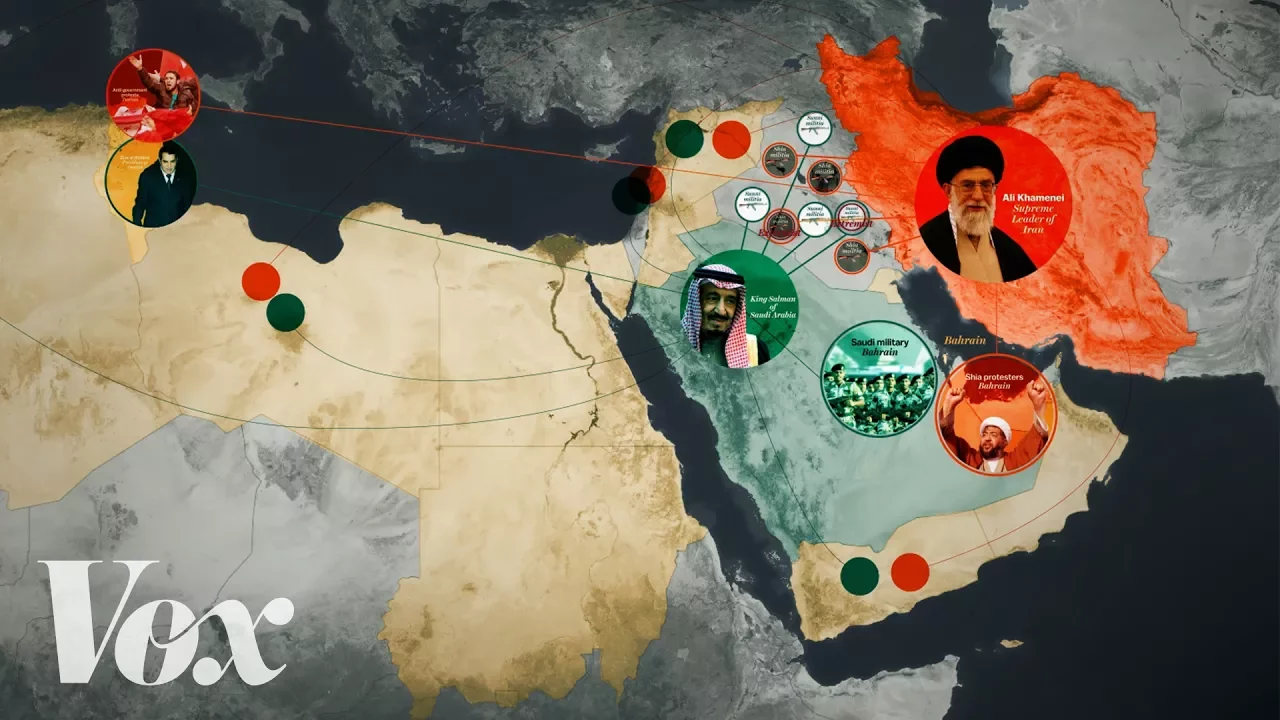
Explaining the Saudi-Iranian Proxy Conflict in the Middle East
@Vox
18.2M views•2017-07-17
Related Study Plans & Knowledge Roadmaps
Structured learning paths in Political Science
political-science
Economic Statecraft: Sanctions & Chokepoints
01Foundations of Geoeconomics and Economic Statecraft
02The Mechanics of Weaponized Interdependence
03International Sanctions: Types, Implementation, and Efficacy
+ 2 more learning modules
12h5 modules
Explore Roadmap
political-science
Central Bank Independence: Politics & Policy
01Foundations of Central Banking and Monetary Policy
02The Time Inconsistency Problem & Inflation Bias
03The Delegation Model and Designing Independence
+ 2 more learning modules
12h5 modules
Explore Roadmap
political-science
Consociationalism: Power-Sharing & Stability
01Democratic Dilemmas in Divided Societies
02Introduction to Consociational Democracy
03The Four Pillars of Consociational Design
+ 2 more learning modules
12h5 modules
Explore Roadmap
political-science
Rebel Governance: Legitimacy, Economy & State
01Foundations of Rebel Governance and Statehood
02Establishing Political Legitimacy and the Rebel Social Contract
03Wartime Economies and Rebel Resource Management
+ 2 more learning modules
14h5 modules
Explore Roadmap