














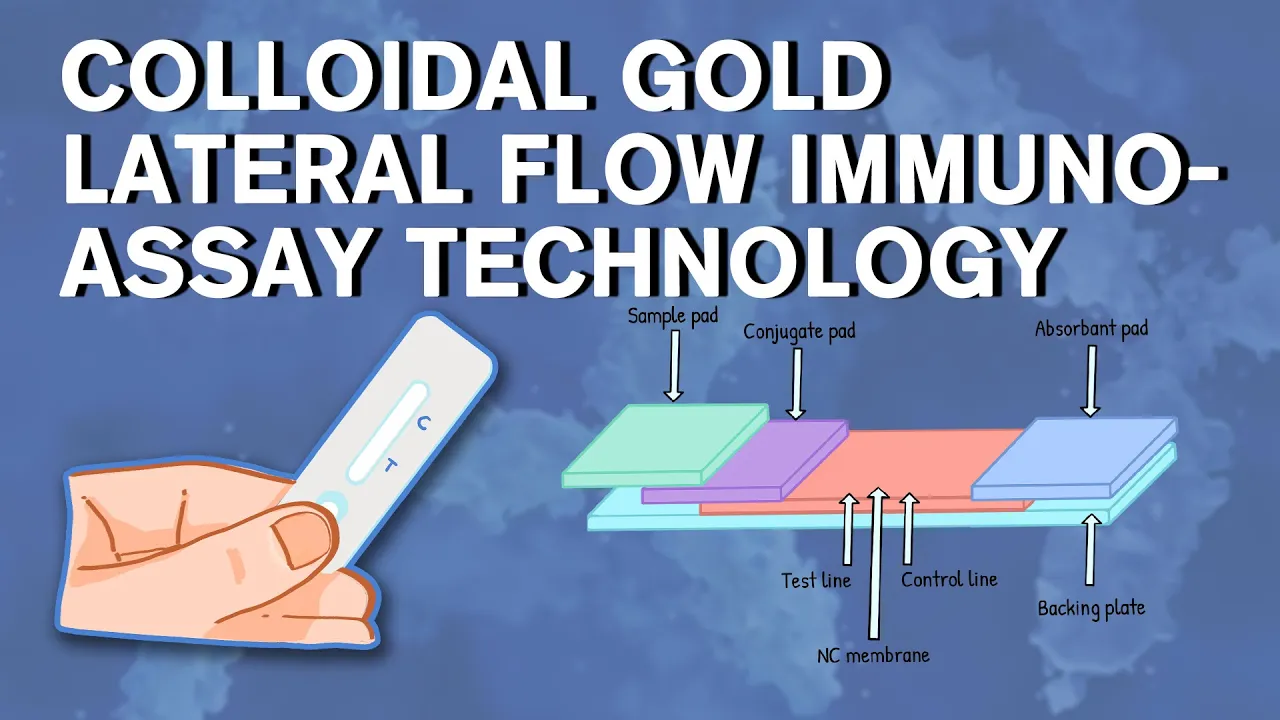





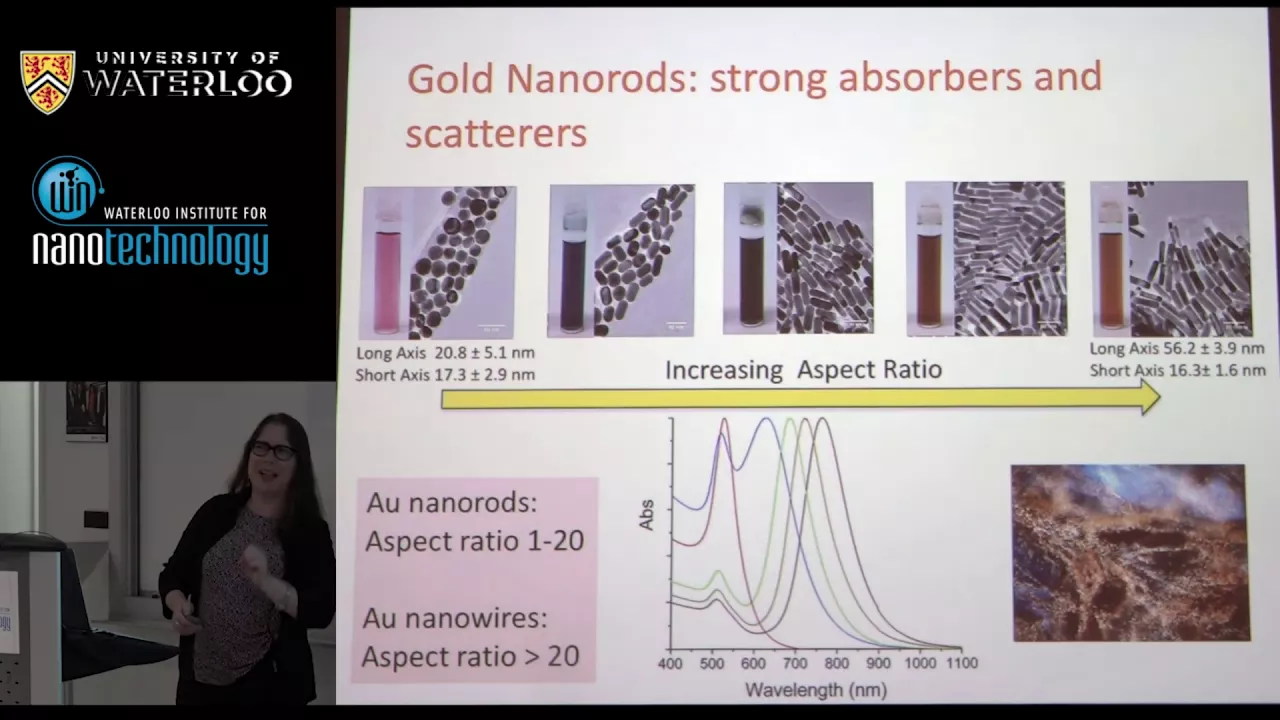



Gold nanoparticles exhibit unique optical properties due to surface plasmon resonance, where light absorption causes electron oscillation creating electric fields that enable diverse applications. The choice between passive binding (electrostatic attachment of antibodies to naked gold) and covalent conjugation (irreversible attachment using surface-coated gold with functional groups like NHS esters, carboxylates, or hydrazides) depends on the specific application requirements. Particle shape and size significantly impact performance: spherical particles (~40 nm) suit lateral flow assays, while rod-shaped particles enhance photothermal therapy for cancer treatment. Optimization involves systematic testing of pH, salt concentration, and conjugation conditions to achieve stable, functional conjugates for detection or therapeutic applications.
Optimizing Gold Nanoparticle Conjugation: Size, Shape & Stability
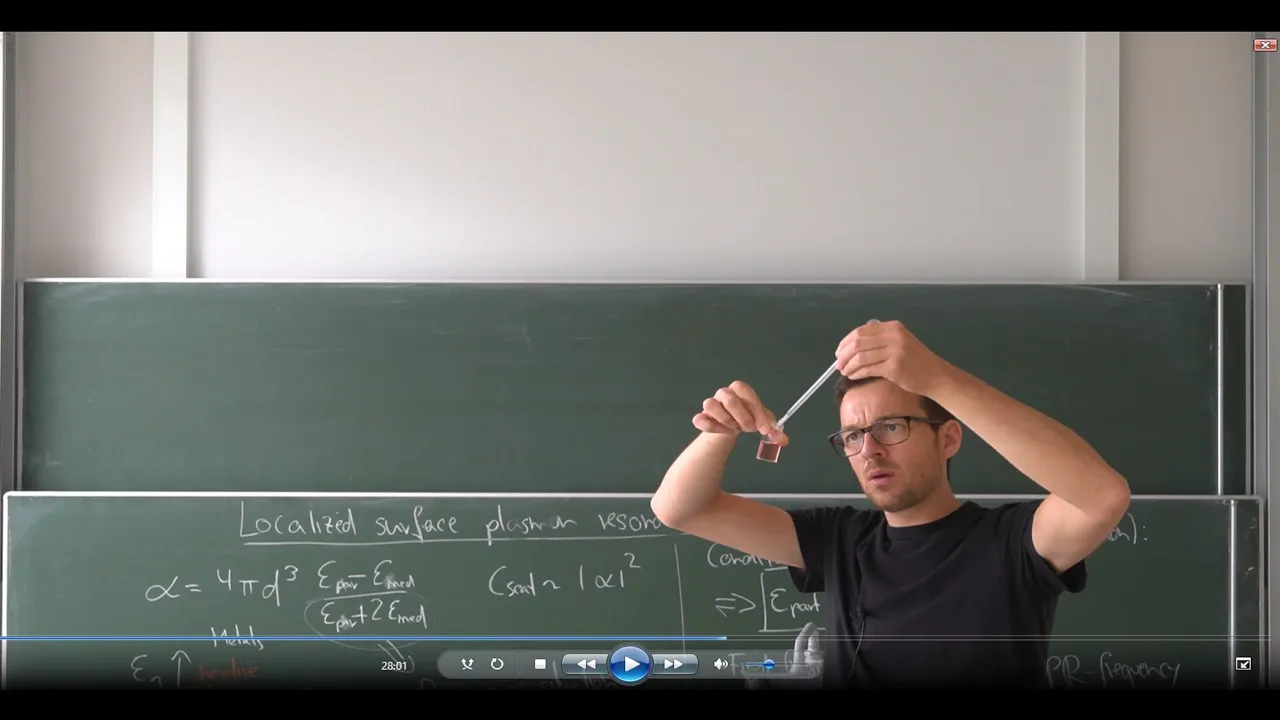
Added:hello and welcome to the 16th episode of the Innova biosciences webinar series today's webinar focuses on gold nanoparticles optimization of conjugates and the importance of size shape and surface properties in different applications our speaker today is Dr Nick G the CEO and CSO of Innova biosciences today Nick will outline how to determine the size and shape of gold nanoparticles how to make conjugates using passive binding and coent conjugation techniques and shape and size requirements of different applications there will be a question and answer session at the end of the presentation please submit your questions by typing in the questions box in your control panel which is circled in red here and feel free to send questions throughout the webinar as we will answer as many way as we can in the Q&A session and any outstanding questions will be answered by email in the next few days so that's the basics laid out now please welcome Nick okay thanks uh claudina here we have uh samples of five nanop particles on the right hand side uh all measured at 40 net size but you can see quite clearly that they're different from one another equally this set of five samples is very different in color from Bolt gold in the form of gold bars on the left hand side so what why do we why do we see the red color and why are there different shades Okay the reason is that gold nanop particles can absorb certain wavelengths from White Light um this is why you see usually a red color and the energy from the light causes the surface electrons to oscillate creating uh net positive and net negative charge uh and this this Phenom phenomenon is called plasmine resonance and it explains the color and it also uh results in an electric field because you have these positive and negative charges and uh this explains many of the properties many many of the useful properties of gold nanop particles okay the different shades can be explained in terms of different shapes um so the interaction with the light is is altered when the S when the shape of the particle is changed so here we have uh transmission electron micrographs of the various samples of gold nanop particles and you can see in the bottom right corner some spherical particles and there are other shapes and sizes so in the bottom left you can see uh a triangular structure and if you look around the um the slide you can see rods and some ex hexagonal uh uh particles as well and in the top right you have this um structure looks to be Fusion of maybe five or six nanoparticles so um temm is a fantastic technique for looking at the shape of individual particles and um it it it explains why you see uh different shades so particles that are all said to be 40 neter can still look different because of different shapes okay moving on now not everyone has access to uh tem but you can tell an awful lot from about gold particles just from what your eye tells you and also simple absorb and scanning uh in the range 400 to 700 nanometers which is shown here on the left so um a welld dispersed uh suspension of nanoparticles will give the uh quite a sharp Peak as shown here with the the the black uh curve and uh in the presence of salt the whole system is destabilized and you get aggregation so you can see that by eye quite clearly in the image on the right uh and the absorbance profile changes completely uh the green line shown here um in particular there's a huge increase in absorbance between wavelength 600 and 700 nanometers um so the r ratio of the absorbance at 650 to 530 is a useful aggregation parameter you can also tell more about uh how spherical the path particles are from the absorbance scan so um those familiar with chromatography have perhaps heard of uh Peak width at half height um now we can't quite use the halfy method with uh gold nanoparticles uh because sometimes um you can't get the reading at at the 50% level so but by just using Peak width at 75% uh of the Y AIS um you can measure the distance between the uh the peak uh uh going upwards and then coming downwards so in this particular case we have um a peak width at 75% he of about 45 nanom um the monodispersed spherical particles will also have a low 650 to 530 ratio um the additional information you get from such a an absorption profile is a crude measure particle diameter so the peak absorbance for 40 NM gold in water is about 526 so if you see a profile like this with a Peak at around 526 um it's probably around 40 nmet it's this is not as reliable as the uh uh electron micrographs you know you're looking at a population here um but it gives you a rough indication of the size okay uh if you see a a profile for any solution of uh nanop particles gold nanoparticles um the profile will look vaguely similar but when you overlay them you can actually see that there are significant differences so again the samples that you saw earlier here's some uh absor absorbance profiles and you can see that they vary in uh width at 75% absorbance and they also vary in the region of 600 to 700 nanometers um on the x-axis so um the sample um which has the highest reading at 650 is probably showing signs of some aggregation because the curves lifted off off the Baseline and the others um don't really show much aggregation but you can see they're different in terms of uh Peak width and this relates to the shape and really um it's consistent with what the electron micrographs tell us so um absorbance profiles really easy to get tell you a lot of information useful information not quite as good as time it's great if you can do both but still very valuable technique in this uh particular case um the narrowest peak width we have is 45.5 and most of the samples uh are below 0.2 um with a really good batch of particles you might be getting around to 0.1 for the 65530 ratio um now for different applications you may need different shapes so this is not a question of good and bad necessary necessarily different types of nanop particles with different shapes might work um in different applications I'll come on to that more later in the presentation okay I'm going to turn now to methods of attaching molecules to Gold nanop particles and whatever the size and whatever the shape um these um these approaches is uh a valid so we have two types of material um we can have naked gold which is gold that doesn't have anything on the surface otherwi other than counter ions and it's usually it's usually citrate which uh adds a bit of negative charge and helps to maintain colloidal stability um completely different type of material is gold to which you've uh attached some sort of surface layer um and uh I'll come on to that later and what what the advantages of doing that might be so we have two materials and there are three basic approaches to conjugation so for small folated molecules we can use uh an approach called self assembly this is um almost coent but not not as strong as a typical coent bond uh we have passive AB absorption of proteins on onto naked gold and we can always use we can also use coent attachment either of small molecules or large large biomolecules uh to coated gold so I'm going to come on to each of those in turn um so the self assembly technique has been used for years with um plar gold surfaces and the idea is you exploit the high Affinity of thyes for for gold metal so if you have a molecule with th group and some other functional group say x at the other end of the molecule you can actually create a metal surface which displays the functional group X because the th will automatically assemble uh in into an an orderly Fashion on the gold surface um now this approach can also be used with nanoparticles and so it's described here so here we have the naked gold with with the stabilizing citrite ions they're only very Loosely absorbed onto the the gold surface the thiolated molecule uh the th represented by the blue blob is added and hopefully we get a structure like the one shown on the right here with the THS arranged in an orderly fashion and then whatever is uh at the other end of the molecule a functional group it might be a drug whatever it is it's displayed on the surface now one of the disadvantages but maybe advantages in C in certain circumstances is um that the thiolated molecules can dissociate because each molecule is anchored by a single point and if there's a dissociation event then the molecule will essentially fall off what this what what happens then is you have um uh bare metal exposed and the particles can aggregate as shown at the bottom so there's a change of color and the whole things turns into a mess um now generally that's bad but if you if you actually want molecules to dissociate there may be sort of therapeutic applications here um then you know this is this is potentially a useful technique and that the molecues is not firmly anchored okay if if you use this approach and the rate of dissociation is too high what you can do as shown on the right is to introduce two THS into your small molecule and this promotes stronger interaction with the gold surface and you you can take this further you can do three or four and then it's then down to the chemistry can you actually incorporate so manys into a small molecule um and again as shown here x could be a drug it could be a functional group say car oxal which you might use uh to carry out further conjugation reactions um but the the system uh generally is a little unstable but you can you can improve it perhaps by introducing multiple files okay turning on now to the second uh approach um this is attachment of antibodies or large proteins to naked gold now there's uh there's a high risk of aggregation with this approach if the conditions are not quite right um The Binding of the antibodies pH and salt dependent and it's it's often said that the best pH is the is equivalent to the isoelectric point of the antibody plus uh 0.5 um so for example if the iso electric points eight you should perhaps do the uh The Binding at 8.5 um now usually you don't know the electric point and in practice the way that uh um conjugations are carried out uh is to use a range of phes and I'll give you an example of that on the next Slide the The Binding mechanism is not completely understood um you need to carry out multiple trial conjugations to get things uh exactly right um and at the end after you've blocked um plot the gold surface with BSA after you've attached the antibody just to make sure there are no there's no bare metal you perform a stress test with sodium chloride um as I mentioned earlier if you add sodium chloride to naked gold the gold particles will aggregate instantly so this is essentially a test of whether you have any bare metal U if you have the sodium chloride will drive aggregation okay um before I come on to the actual uh examples of conjugation using uh passive absorption um the these are the particles that uh um are used in the next slide um so this is this is gold that we we produce here um the electron micrograph shown on the right so these are nice spherical particles um consist with that the uh Peak width at 75% height is 43 nanom um we also have quite a low 65530 ratio so using these particles um with four anti-troponin antibodies we've determined the best conditions for for for each one so what what we have here is so this is a salt uh stability test so we're showing on the y- AIS 650 530 uh ratio of absorbances uh and on the xais this is the amount of antibody that we're using to try and make the conjugate and the whole thing is carried out at five different phes so um to optimize each antibody there's quite a lot of experiments need to be done it's a it's a trial and error uh procedure um so in this case top left this particular antibody seems to work best at five at ph8 and what I mean by that is we have a very low ratio uh with the blue line for example and we um we're using quite a small amount of antibody three micrograms in this case to efficiently coat the gold surface um for the uh antibody 2 top right um the pH Optima here is quite different it's ph6 or ph7 both both both look good but the profile in general is very different from that for anti antibody one uh going to bottom left this time it's uh ph6 Optimum and bottom right um this is significantly different from the other profiles ph7 8 or nine seem to be giving conjugates with um very high St stability so using this is a tried and trusted method it's uh it's just carried out systematically and um in in in all four cases here we were able to get stable conjugates okay turn turning on to a calent approach to conjugation now this is this is radically different from the method just described uh but it's it's significantly easier so let me explain what we have here so this is an electron micrograph in the in the uh the bottom sector you can this this is a support grid that you can see and the support grid has a a tiny hole in it which is uh the sort of right top left area and what we have here is a coated particle so we have a coating material that's been wrapped around the nanop particle and it this particular particle is half on the grid and and half off and in the area where there's a hole you can see the surface layer quite clearly um it's about 1.5 to 2 nanm thick and this coat uh completely changes the properties of the gold particle because the the the metal surface is not uh facing the external environment now it's completely shielded by the um the coat so we can see we can see the effect of the coat here again using various uh stress tests so on the left hand side for comparison we have naked gold and um we have the uh nice Peak for the profile in water and then in the green blue and red curves we've got sodium chloride one molar or hydrochloric acid or sodium hydroxide um and in in in these conditions gold nanoparticles will aggregate instantly and you get the the profile with the uh absorbance uh ratio 650 to 530 is is usually around one um now you can see on the right uh and hand uh picture with the of the coated gold um the the co par is now particle is now completely resistant to Salt it's resistant to acid it's resistant to sodium hydroxide there's no aggregation whatsoever all four curves are superimposable so the pret the the coach Shield the metal from the external environment it becomes very resistant to the usual stress tests and in fact this material Will Survive 2.5 mol sodium hydroxide at 70 Dees C for 90 minutes and that that's That's the basis of our QC test for uh this material um I should point out that this material cannot be used for Passive binding because um the antibody cannot actually make contact with bare metal so this is just for coent conjugation okay the these are some of the materials that we have so here again uh electron micrograph of the particle and we've just uh uh uh annotated it with various functional groups so starting from top left aine carboxy uh mide biotin hydrazide streptavidin provides a whole range of possible chemistries that you can use to attach small molecules or antibodies so for example with the aans you can attach any NHS eser to the surface coat or you could use a carox molecule in combination with a carbamide and then top right carboxy uh similar reaction with a carbide but this time you would have an aminated molecule um potentially a lysing from a a protein molecule for example and then yeah with mide you can attach th containing molecules um bottom left hydrazide will react with molecules with alhida with Biotin and strepavidin and uh they will obviously bind the appropriate streptavidin or biotin label molecules um so not coent in that time but in all cases uh irreversible attachments of analytes and antibodies to a gold particle so um in the case of antibodies because this is so commonly done we've we've developed a special one-step conjugation kit for antibodies it's um analogous in some ways to lightning link for those who are familiar with that product of us um so because we have this surface coat we can actually freeze dry um the coated gold and we can add in all the other chemistry in a freeze dried format that's required for conjugation reaction so the um conjugate can be prepared simply by petting in a solution of the antibody it reconstitutes the freeze Drive mixture um the reaction just happens uh ready to use in 20 minutes but your Hands-On time is just the the petting step so really really easy but there's all sorts of other chemistries available um if you want to uh a couple other molecules with a variety of groups okay so um passive binding versus C attachment which is the better approach um well it depends that there's there's no right answer here uh I think it's good to have a variety of options so with naked gold um you can uh couple uh whole antibodies with the traditional passive approach I showed you the data for that it's uh it's uh trusted approach very reliable but very timec consuming um you can also couple small thiolated ligans we showed some examples of the self assembly technique uh particularly good if you want to exchange those small molecules on the surface or if you want them to fall off um and by um by attaching a surface coat that we call inov coat to the particle on the right hand side then again you can do whole antibodies it's becomes much easier than the the passive binding method you can also do small molecules with a truly irreversible link um also useful for small antibody fragments which some sometimes unravel on a bare metal surface with the Anova coat derivative the antibody fragment will not actually make contact with metal um if you want molecules to fall off uh in a controlled fashion you could incorporate a cleavable link so the molecule stays on it only comes off when you want it to come off um as I mentioned there are multiple chemistries and uh at least for antibody conjugates you generally rely require less antibody with the coated particle and uh that's Pro because less of the antibody D Natures because the antibody doesn't touch the metal surface okay uh this is just an example this is this is lateral flow data that we're showing here here uh with some CRP conjugates and uh the data that you see is for um uh calent conjugates made with the Inova coat uh gold um so there are pairs of conjugates for each antibody CRP 1 two and three and um we can see that we have we have a strong signal in in all cases um and um the level of signal obtained with a passive conjugate is indicated by the horizontal black bar so um so for the uh leftand uh pairs of conjugates crp1 and two um the performance is essentially the same regardless of whether you use the passive binding method or the calent method um calent method is much much faster so uh that that that might be a consideration um but uh with uh CRP antibody 3 the coent approach actually gave a much higher signal than the passive method um I'm sure if we did enough antibodies we would find one that would be damaged by coent modification so uh I think it's great to have both approaches and it's just a question of um trying both but perhaps starting with the coent because it's so simple and if that delivers the performance you need then you don't have to get into all the ph and salt TI tiations of the passive method okay the the the other um the other um conjugation methods that can be applied to coated gold is um oriented coupling in this case we're showing um periodate treated antibody the periodate positions um alahi group on the FC domain and this can react with the hydroxide derivative of gold um thus projecting the antibody binding arms out in space hopefully favorably positioned for the interaction with the antigen um you can also use the gold for oriented cup coated gold for oriented coupling of antibody fragments for example Fab primes so the thol groups shown here will react with the mide very efficiently and you can get a fragment on a gold particle um without the protein metal contact um you can obviously use uh exactly the same fragment and use the self assembly approach using bare metal um nanoparticles um but you know sometimes that damages the fragment and uh it's usually better to use a surface coated particle if you've got small fragments um here's some data just to show the benefits of orientation um the here here we here we see um a fragment oriented uh through the syain uh versus a random attachment through lysine to a carboxilate surface coat so in this particular case you see additional performance uh because the antibodies presumably are oriented more favorably with the uh the syain uh mide link okay so just just a just a summary of the the various nanoparticle tools that are available and the the conjugation methods um so gold nanoparticles come in many different shapes and sizes um and the example I showed you 40 nmet gold although they're all 40 nimer you have lots of different shapes different colors and different properties you can attach molecules to Gold by passive absorption uh self assembly technique or you can irreversibly anchor molecules if you've got a surface coat um in the case of antibodies there's a simple onstep calent method available now um but there's a whole range of calent chemistries for other analytes and depending on which functional group you have there'll be you'll need a particular type of coated gold um the best approach in any situation is going to depend on the nature of the substance that you want to conjugate and the intended application um and it's just a question of screening it's a screening exercise really to find the best combination for your for your particular antibody or small molecule okay I just just remind you here of the properties of gold nanop particles which stem from uh the absorption of energy from uh white light causing this oscillation this this plasman resonance um which GES so you got the color which U allows gold to be used for detection um and you also get an electric field created and this field is altered by the environment the type of solvent that the that the particle in is in you usually it's water or a water-based buffer um also affected by other molecules or other particles in close proximity um so these these features of gold uh have been exploited in a number of different assay formats okay here's here's a snap s snapshot of applications um so two areas really detection or Therapeutics so on the detection side here um major use of gold in lateral flow uh surface plasman shift assays surface enhanced Ramen scattering or S um metal enhanced fluoresence and microscopy um in terms of Therapeutics phototherapy uh radio frequency ablation and Drug delivery and targeting I'm just going to uh pick out some of these uh meth me now tell you a little bit more about those okay plasma and shift assays so what what we have here is um a demonstration of a plasmon shift using uh strepavidin attached to coated gold and biotin attached to coated gold so the absorbance profiles for those two entities the separate entities shown in the red and blue uh so you can see a sharp Peak and uh a low 650 to 530 ratio for those for those curves so essentially these particles would appear as red and then if you mix the two together obviously the Biotin and strept avidin particles will associate with one another um so the the peak actually moves position shifts to the right because you now have something that's of Greater size um but the main change to the profile is the uplift uh in absorbance um of the uh green line on the right hand side in the 600 to 700 region of the uh x-axis um so this is the basis of an assay uh where you monit where you can monitor interactions of Bio biomolecules in this case we just Ed two particles with with the binding entities um so uh same materials just a different uh a different experiment so this is looking at the time course uh so the Blue Line shows the increase in absorbance at uh in this case 620 nanometers um and you you can see this by ey so uh it can be a simple uh readout in a plate so the image here shows um with competing by bio in so the particles stay separate and appear red and then without biotin particles Aggregate and you get the blue the blue color um so you could use this obviously as a a bio sensing assay for biotin um so this is just for illustration but you know you can think of any number of analytes that you could use with this setup if you just had a the appropriate binding entity attached to uh one of the gold particles okay um uh sir surface enhanced Ramen spectroscopy um th this has been this technique has been used by chemists for years um it provides information about molecular vibrations and that tells you about structure but it can also be used um by biologists and uh to to to look at interactions between molecules so um so a Ren Dy is analogous in a way to a fluorescent Dy it's a it's a reporter molecule um usually the ramen signal from a molecule is extremely weak but if you position the ramen D in the electric field created around the particle um by the plasma resonance um and the field is particularly intense when you have two particles close together or you have a rough surface or you've deposited nanoparticles on a Surface um the ramen signal when it's from a from a Ramen die when it's in this electric field and very close to the surface can be Amplified by many orders of magnitude so potentially RAM and Dy can be used as labels in conjunction with gold particles so this is a this is the a hot area um and I think we'll see biologist using this um increasingly in the future okay um so we got two two things here fret quenching and metal enhanced fluoresence um and I can mention Ramen again briefly so if we we have a fluorescent molecule here the green green molecule and it's moving towards the gold nanop particle um now um if the fluorescent molecule attaches directly onto the metal surface although it's a fluorescent molecule it will be quenched in that situation but you might see this Ramen effect the massive uh amplification of the ramen signal if the if the molecule uh happens to be positioned between n and 5 nanometers from the surface then you get a quenching effect um and you can see how you could use this to uh steady biomolecular interaction so the fluorescent molecule at distance from the particle gives a bright signal and it's quenched if there's an interaction with the particle um um equally if the if the fluorescent molecule uh is positioned 10 to 30 nanometers from the surface um this is particularly seen with silver but also with gold then you can get enhanced fluorescence so again you can see how you could use this to study interactions between gold particles and other molecules where you either get amplification of the ramen signal you either get fluoresence quenching or you get fluoresence enhancement and this is all to do with the electric field that's created around the gold particle it leads to all these possibilities okay coming on to some of the therapeutic applications now um photo Thal therapy now this this is an interesting approach you tend not to use uh gold spheres here it's uh tends to be rods or Hollow spheres or sometimes spheres that have a thick silica shell um the reason these shapes are used is that the absorbance profile shifts from around 530 nanometers into the infrared region and infrared light will penetrate tissues more than than than than light around the 530 uh region so what you can do with these materials is attach a targeting molecule such as an antibody to transport one of these shapes to uh a tumor and if the tumor is uh not too deep in in the tissue you can um use the infrar an infrared uh light source to heat up the the particles so the particles absorb the energy from the light and it's essentially turned into heat uh can even cause rods to melt and turn into uh molten spheres so obviously if you've targeted your antibody conjugate to the tumor you get a selective kill of the tumor when the infrared light is uh is shown on the area um okay uh here's another therapeutic um approach with particles so this is usually spheres now um again same sort of idea you target the Spheres using an antibody or some other targeting mechanism to a tumor um and um the particles once in the tumor can be heated up um now at the moment radio frequency ablation as it's called um involves inserting electrodes into the tumor and then the um the radio frequency therapy um is is used uh to heat up um um the the probe inside the inside the tumor um obviously that's not the particularly Pleasant uh uh approach roach for the patient um so there's a lot of interest in non-invasive radio frequency ablation where nanop particles uh instead of electrodes uh are positioned in the tumor by as I said some targeting mechanism and radio frequencies uh very very very safe and easily penetrate tissues and will go you know straight through the body uh and will only be halted inside the tumor by by nanoparticles so so these particles will then heat up again um by a process that's not completely understood but um has the same effect as the photothermal therapy with rods that I just showed you except this is um non-invasive um much better for the patient and the tumor whether it's on the surface or or deep um the approach is just as uh as useful for for um destroying the tumor okay uh here's a summary of size and shape requirements um um I'm sure you'll be able to find examples in the literature where uh sizes other than those that I've described here have been used but this this is just to give you a general idea so uh techniques such as lateral flow Western blocks dot blocks where you it's a visual uh application can can essentially see what's happening by by eye um tend to use the largest sizes of gold particles 20 to 80 range um also this range is used for dark field microscopy I'm not really I've not mentioned that at all today but that's a that's an interesting technique that uses SK nanoparticles um electron microscopy used for localizing um antigens in tissues in organel um generally they're quite small nanop particles 5 to 20 range um metal enhanced fluoresence that I showed you um now this is this depends on um the electric field and it's more intense the more rough or spiky the surface is so um this is perhaps one of the techniques where you don't want a perfect sphere there's a lot of literature that says the uh enhancement is is is is greater if you have a rough surface so again not really discuss this today but there are methods that you can use where you can make uh gold particles with spikes um and there are other methods for roughening surfaces as well um the C technique as well yeah I think this one you definitely don't want a spherical uh particle very much uh greater enhancements if you have a rough surface um the Fret quench uh uh approach has literage from particles of 5 nanometer up to 40 size with that again imagine you can find other examples with different sizes um photothermal therapy and radio frequency ablation um fairly new areas um not entirely clear what the best size is yet I think for these techniques or or the best shape even um drug deliver is obviously a massive feeli tends to be 40 nmet or less because the larger sizes um seem to be a bit more toxic uh can be rods or spheres in the case of drug delivery um okay well that that that brings us to the end of um the presentation um I hope that's been useful and I'll hand you back to claudina okay thank you very much Nick let's move on to our Q Q&A session so there's still time to submit questions s simply type in the questions box as shown in the picture on the slide uh thank you to everyone who submitted questions during the presentation and Nick will answer as many as possible in the time allocated if there are any outstanding questions we will get back to those individually by email the next few days okay so our first question today is can you coat any gold Nano particle all the particles that we have tested so far yes um that's 40 NM size from all of the well-known suppliers we've also coated particles successfully from 10 nanomer to 80 nanomer in size okay we've got another question here what is the best ramen D um we haven't done a huge amount of work on Ramen so I'm probably not the best person to answer this question however uh rodamine 6G seems to be quite popular okay our next question is is a disulfide as good as a die for the self assembly approach um generally speaking THS give tighter binding than disulfides so if you want a stable attachment probably the DIY is better okay and here's another question can I attach oligos to an Overcoat gold yes the easiest option is to use the Mami gold derivative uh for that you'll need a thle on the oligo but this can be added during synthesis okay and our next question is can the one-step conjugation kit be used with proteins not antibodies yeah I I did say in the the talk that the kit was for antibodies um it can be used with proteins we've done the optimization for antibodies but as long as your protein has lysines then in principle yes it can be used uh you may need to try different amounts of protein to optimize the system okay here's another question I make my own gold can I buy your coating material uh we we don't sell the coating material at the moment as it has to be freshly prepared however we can coat your particles in our custom lab if you're able to provide the particles okay our next question is do you have to do coent conjugation at different pH values uh no you don't it seems to be very different from the passive Method All reactions are done using exactly the same conditions the only variable is how much antibody you add but we provide advice with the kit it's fairly predictable generally you just try three amounts okay and I'm I'm afraid we only have um enough time for one more question so our last question in the Q&A session is can you provide bulk quantities of coded gold or do you just have a kit yes we we can provide bulk we we generally coat 50,000 OD units of gold at a time and and we can freeze Drive vials at any scale so the the kit if you like gets bigger but the process stays the same you just add antibody to the freeze dried mixture okay so uh thank you very much for sending in all those questions now please bear in mind that this webinar is recorded so we will upload it to our YouTube channel in the next few days so that you can always come back to it and you can find our YouTube channel at youtube.com/ Inova Sciences um please keep an eye out on our social media channels where we will soon be advertising our upcoming webinars and if you would like to receive a PDF copy of the presentation or a link to the video video recording of the webinar then please please contact me you can find my contact details on any of the webinar emails that you've received so thank you very much for joining us today we hope that you enjoyed the webinar and we hope that you will be able to join us for our next webinar in October
Up Next
Root Causes & Solutions for Lateral Flow Assay False Positives
@pallmedical
466 views•2022-08-26
Quantitative Real-Time PCR (qPCR): Principle, Method & Data Analysis
@animatedbiologywitharpan
129.2K views•2023-09-06
Microbial Degradation of Plastics: Biodegradation Pathways & Sustainability
@majeedhammad
2.9K views•2021-04-11

CRISPR and Genetic Engineering: How Gene Editing Works and Why It Matters
@kurzgesagt
30.5M views•2016-08-10
Related Study Plans & Knowledge Roadmaps
Structured learning paths in Biotechnology