

















![[Recording] Webinar: qPCR 101](https://i.ytimg.com/vi/2aUt9AEArzQ/maxresdefault.jpg)








This video explains the complete process of preparing gold conjugate pads used in pregnancy and HIV rapid tests, including colloidal gold nanoparticle synthesis (20-80nm), conjugation with antigens/antibodies using potassium carbonate pH adjustment, blocking with BSA/casein, and drying methods (desiccator, forced air, ionization). The key machine requirements include spectrophotometers for wavelength scanning, centrifuges for separating conjugates, and spraying/strippling machines for dispensing. Proper storage at 2-8°C ensures conjugate stability for at least three months.
Gold Conjugate Pad Preparation & Conjugation for Lateral Flow Tests
Added:Basic principles of Lateral Flow Assays (LFAs), including the structural components (sample pad, conjugate pad, nitrocellulose membrane, and wicking pad) and their roles.
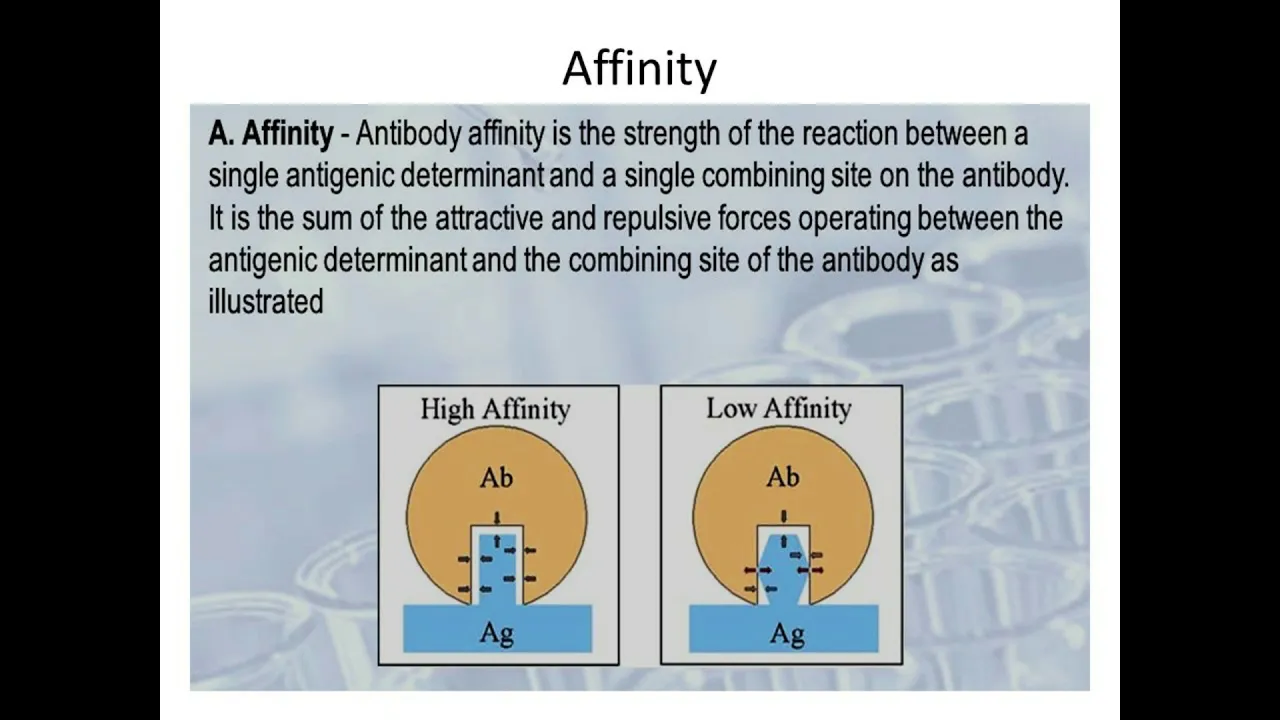
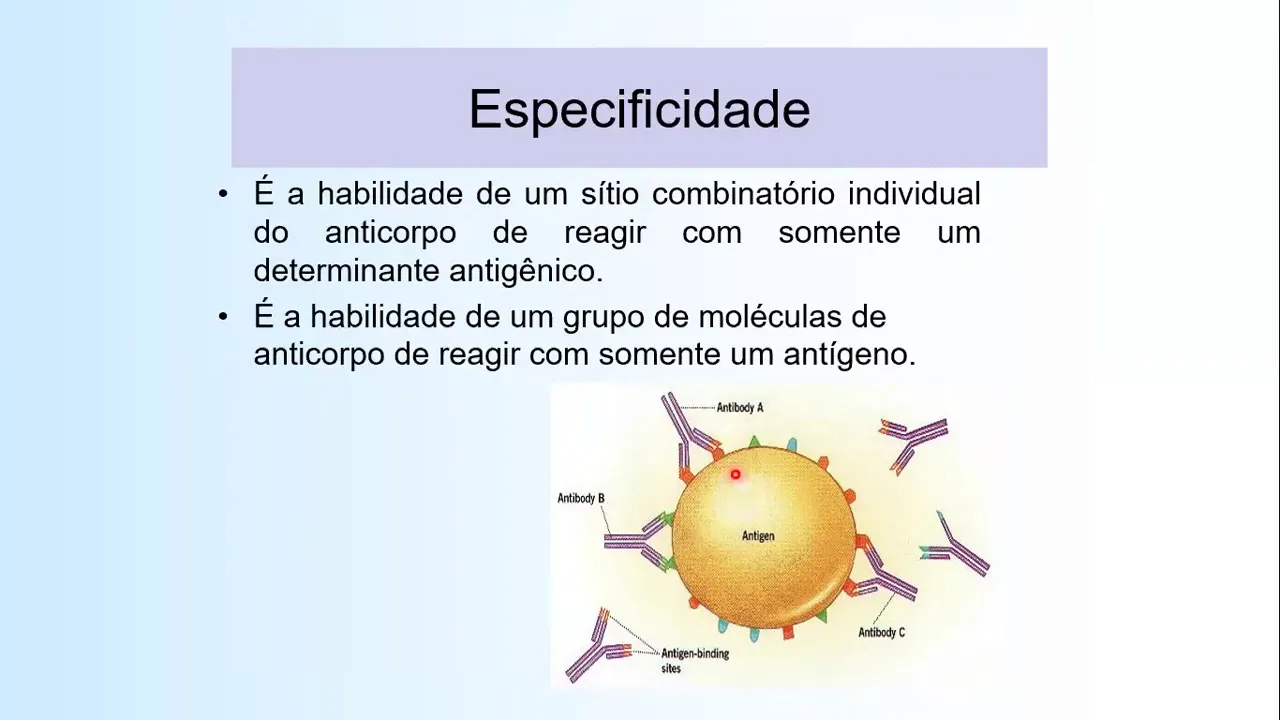
Fundamental concepts of immunology and biochemistry, particularly antibody-antigen interactions, binding affinity, and specificity.
Introduction to colloid chemistry, specifically the physical properties, stability, and optical characteristics (surface plasmon resonance) of gold nanoparticles.
Basic surface chemistry concepts, such as the isoelectric point (pI) of proteins and how pH influences passive adsorption onto nanoparticles.
Techniques for reagent dispensing (striping) on nitrocellulose membranes and the physical assembly/lamination of multi-layered test strips.
Assay optimization, validation, and troubleshooting protocols to address issues like non-specific binding, false positives, or low sensitivity.
The use of alternative reporter labels in rapid diagnostics, such as fluorescent nanoparticles, latex beads, magnetic particles, and quantum dots.
Industrial scale-up processes, high-throughput manufacturing equipment, and quality management systems (e.g., ISO 13485) for diagnostic medical devices.
1.5K views32likes12:43Original Release: 2020-01-05
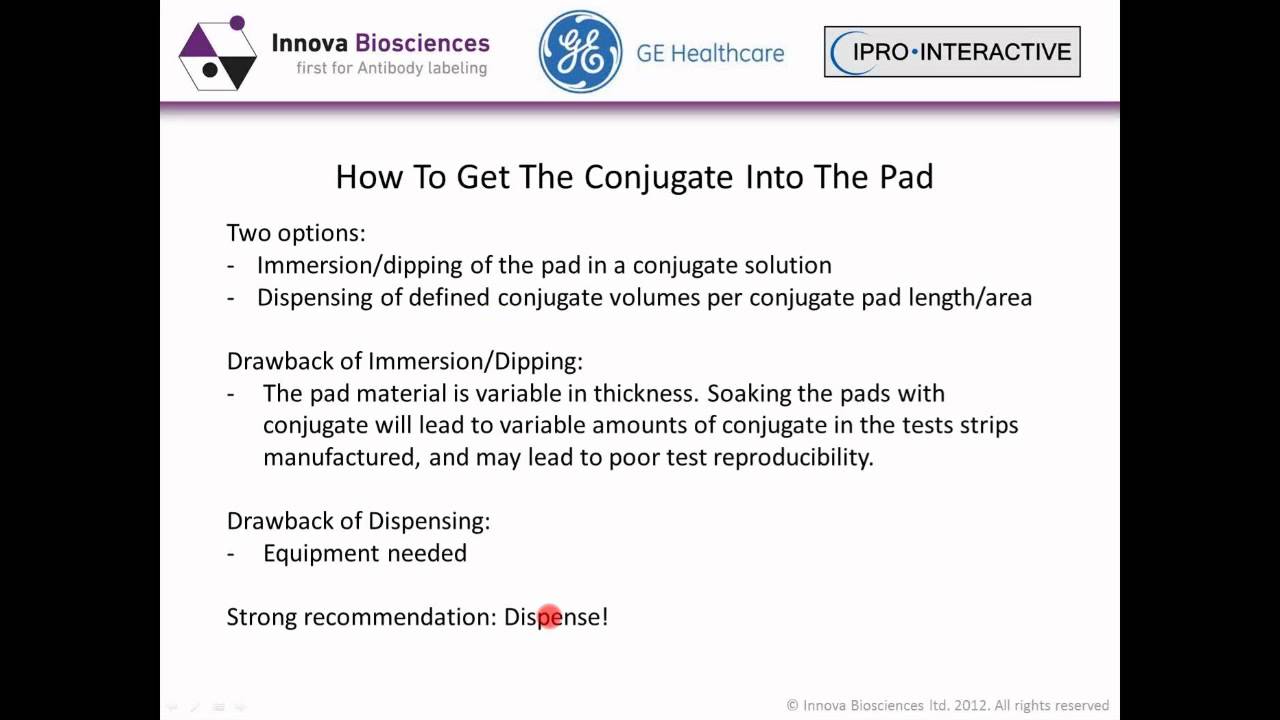
[Music] hi do you know how great color line all dot formed in the pregnancy or HIV test stay tuned to know about the technique behind this indicator [Music] [Applause] [Music] today's video I am going to discuss about conjugate bag in its process and machine used in these processes chromatic diagram of lateral flow assay as shown in the figure here we will only focus about the conjugate plan and it's process to know more about lateral flow assay and coated membrane please click the link below in the description box once you get back it is one of the crucial and delicate component of the lateral flow or rapid test conjugate provides the medium for the conjugate to stable in the dried form but I'll use for the conjugate pairs are polyester or PT our materials are supplied in the form of rolled shield or stiff type of conjugate path based on the baking pans and physical parameter conjugate pairs are classified wicking time is the time taken to move the sample with a definite distance by capillary action it is usually measured in second different conjugate pair supplied based on the weekend thing that is seconds per 4 centimeters are 25 seconds in 30 seconds except time based on the physical parameter Phi mm 7 mm 10 mm conjugate pairs are available new things to be noted while selecting the conjugate pan number 1 conjugate path should be stable after draining number 2 should release 100% and rapidly number 3 hello the rapid sample penetration to all part of the back number it should not bind or interfere with the sample number 5 material should be a homogeneous he thinks to be remember during the conjugate mass storage and its use number 1 conjugate path should be kept away from the moisture or heat number 2 materials should be stored preferably in the cleanroom it should be free from the dust and other particulates number 3 temperature of the room should be 15 to 35 degree centi it's a general condition for story for specific Patrick Department follow the instruction provided by the manufacturer conjugate particle used in the lateral flow assay first one colliding hold on gb typical size ranges from 20 to 80 nanometer to be un color provide the boot intensity proteins are fine ass again the second one is related one to sphere because in size ranges from one day for under a variety of the color and the fluorescent dyes are available protein can be covalently attached third one is a magnetic particle size ranges is fifty three hundred nanometer magnetite that is fv304 particle mix it with the polymath protein can be covalently attached here we will concentrate only on the Google Idol world conduit let's move on to the process first one is colloidal gold preparation second one is a bolt on education third one is a blocking photon in the dispensing brain will be fifth one is a trainee for lightning bolt depression it's a general method but we use it a gold chloride trisodium citrate and ultra-pure water equiptment requires a container or basal tool for handling hot container magnetic stirrer with the heater magnetic bead stopwatch order time processes are number one the preparation of 1% gold chloride and 1% rise during its you click stop trisodium citrate solution pepper freshly second one heat water in glass vessel and air one lemon of wool chloride from stock in 100ml of productive award her pen start boiling add 1% citrate from stock you to the above solution and start angle number two after a definite interval and 1% goal arrived solution number five use the solution after definite interval different : wood nanoparticle 20 nanometer ordinary matter 16 nanometer size are synthesized by changing the world fluoride and Secretariat concentration ratio and also time interval of the process hold conjugation mitrice requires a gold collides antigen or antibody buffer and blocking referred equipment use at our centrifuge machine centrifuge to prepared or suction from system to remove the supernatant vessel magnetic stirrer or magnetic beam and timer or the stopwatch processes our first one preparation of coating buffer or blocking buffer second one preparation of solution a adnan concentration of antigen or antibody to the buffer of hundred ml third repression of solution be separately in a container and just the gold coli pH by 0.2 molar potassium carbonate solution food slowly mix the solution a and B for 30 minutes 5 block fo mixture with the blocking buffer and mix for 30 minutes 6 after that centrifuge a definite rpm for 30 minutes serve and collect the valet and discard the supernatant next carefully dissolve the pallet in the bow red purple check the decree density holy in the spectrophotometer adjust ood with the gold dilution buffer Here I am providing typical formulation of old conjugate recipe first one raw gold collide solution depression a 1% gold chloride dissolved 1 comma tetra chloro body acid that is at a UCL food in exact hundred ml of ultra-pure water in a dark room as gold chloride isn't light sensitive to this solution at 4 degree centigrade covered with the OPEC material be 1% trisodium citrate dissolve 1 grammar trisodium sitting in 100 ml of puppy odor filter to 0.45 micron filter this solution made fresh slate see add 1 ml of 1% gold chloride stock solution to a class containing hundred ml of theta pure water he to boy the ones he boiling vigorously add 2 ml of 1% trisodium citrate stock solution this must be added extremely rapidly in a single dispensed he stir and continue to boil with the 10-minute reflux kept cool in a water bath for 20 to 30 minutes G scan the gold and determine the lambda max and absorbance in spectrophotometer and Max should be 525 with the absorbance 1.1 plus or minus 2 depletion of antigen or antibody solution first one tripping a 1 mg per ml solution of antigen or antibody not to be a mega Oded worth per Vietnam on 0 or in 10 millimolar phosphate buffered pH 7.4 depending on the P I value of the protein second one - the antigen or antibody into appropriate buffer third determine the protein concentration at 280 nano meter fourth adjust the pH of the whole solution eight to nine using 0.2 molar potassium carbonate and 0.1 not axial then how to determine the coating concentration for gold conservation because the solution in a test tube has given below pink level testitude capacity of 2 ml or more and buffer an antigen or antibody given as in the table mix then add colloidal gold to eat to mix and allowed to stand for 2 minutes and then add saline and vertex wait 5 minute and using lambda max determine in the preparation of gold abou determine the OD of the each solution and generate a curve for e versus antibody the optimal concentration of antigen or antibody to use to stabilize the goal is at the point where the curve shows no apparent change in the Hori conjugation and quantity of antigen or antibody greater than or equal to the required stabilizing amount per ml of a volt will be conjugated mix for minimum 30 minutes at room temperature add sufficient volume of 0.45 filtered blocking buffer to is a final one percent BSA or point zero 2 percent case in concentration mix slowly for 30 minutes centrifuge the gold solution at 16,000 g at 4 degree centigrade with no break for 30 minutes carefully a spirit of the supernatant please suspend the pallet in a storage buffer the volume of the storage buffer will determine the final OD of the conjugate liquid conjugate should be stable for at least three months at two to eight degree centigrade hina gold conjugate preparation before dispensing first one if the conjugate felt block but with the blocking buffer calculated optical density OD gold conjugate solution is existed and spray down with a conjugate pad second if the conjugate pad is not blocked with the blocking buffer gold dilution will be prepared and according to the required OD dilution is done with the dilution buffer and dipping course painting is done composition of gold elution buffer first one buffer for example 0.1 molar trees for body number two sucrose 10% tell those 10% and last port one surfactant or detergent such as a point five percent between 24.1% triton x-100 this is for the final concentration will conjugate bad blocking depletion of gold conjugate bad blocking buffer general recipe buffer block that is BSA or casein or suspected or detergent and poly one typical example of conjugate clad block to the first are borate buffer pH eight-point bill BSA three percent did onyx hundred 0.1 percent pvp 41 percent gold conjugate pad block a punch plate blocking done usually the pink or spraying or dispensing in automated system this is an additional process normally is the this process is skipped and blocking and gold dispensing done simultaneously conjugate dispensing spinning or stripping method or second one is a dipping member spinning was stepping conduits paid on to the pair by the space or stepping machine here the quantity or the concentration of the conjugate can be fixed or edges before Spain good release property as a conjugate applied only to the surface rapid drying due to the low sample volume and loaded alum of the conjugate solution dipping absorb and saturate the conjugate pad and then by increasing the signal some annual exact concentration at any point it's difficult to calculate as the prints the process based on the absorption of the conjugate dead volume will be more this process is fast and does not wear any machine and hence less expensive other distancing methods are operating is not the deep only for R&D or you see sample testing this is not viable for production while crying conjugal crying is a critical factor conjugate drying is done by one dehumidifier ad HR method sample is kept in my DHR room to dry second force air convention host air convention is more controllable and process friendly method but may not die efficiently third ionization or visit I am trying done by the life logician are more stable compared to the other method the utilization or phase Rahimi does not change the integrity but property of the component samples are loosely bound to the pan after drying so need extra care when handling the life blessed conjugate pair desiccation desiccation method is a time consuming and hence not suitable for the production partly the machine used in the conjugate pad process first one is spectrophotometers but ultimately used to scam the gold wavelength and determine the absorbance of the protein and gold conjugate the second centrifuge machine centrifuge machine used to centrifuge the whole conjugate in order to collect the conjugated pair a third spraying or stripping machine strain must be machine used to dispense with the gold conjugate on with a conjugate pad both one is a thr hot life eliezer these our life laser to use it for the drying the conjugate pack thank you for watching hope this video is useful for you please don't forget to Like share subscribe for upcoming videos
Up Next

5:11
Social Reproduction and Social Inequality | MCAT Prep
@khanacademymedicine
121.3K views•2015-03-27

12:54
Triumph of Orthodoxy Icon: Byzantine Art & History Explained
@BenCallan
2.1K views•2024-08-06

9:49
FastAPI vs Flask vs Django: Choosing the Right Python Web Framework
@TechWithTim
302.5K views•2024-05-26

1:42
Game of Thrones Opening Credits: A Cinematic Analysis
@gameofthrones
46.3M views•2011-04-18
Related Study Plans & Knowledge Roadmaps
Structured learning paths in General & Interdisciplinary Studies
general-studies
Elevator Engineering: History, Physics & Cities
01From Hoists to Safety Brakes: The Dawn of Vertical Lift
02Hydraulic vs. Traction: The Engineering Physics of Elevators
03Modern Speed, Safety, and Algorithms
+ 2 more learning modules
12h5 modules
Explore Roadmap
general-studies
Rubber: Material Science, History & Geopolitics
01Origins of Natural Rubber & Mesoamerican History
02The Chemistry of Natural Rubber & Vulcanization
03The Geopolitics of the Rubber Boom & Colonization
+ 2 more learning modules
12h5 modules
Explore Roadmap
general-studies
Containerization: Evolution, Logistics & Trade
01Ancient Trade & Bulk Cargo: Amphorae to Barrels
02The Industrial Revolution & Cardboard Packaging
03The Containerization Revolution: Malcom McLean
+ 2 more learning modules
12h5 modules
Explore Roadmap
general-studies
Textile Tech: Evolution, Labor & Global Impact
01Pre-Industrial Textiles: Handloom & Cottage Industry
02Mechanization: The Spinning Jenny to the Power Loom
03The Factory System & Global Labor Transformation
+ 2 more learning modules
10h5 modules
Explore Roadmap