


![[#하이라이트#] 살아있는 것처럼 우유를 마시는 석상 미스터리! #다빈치노트 EP.5](https://i.ytimg.com/vi/Yp25GpNuE-E/maxresdefault.jpg)









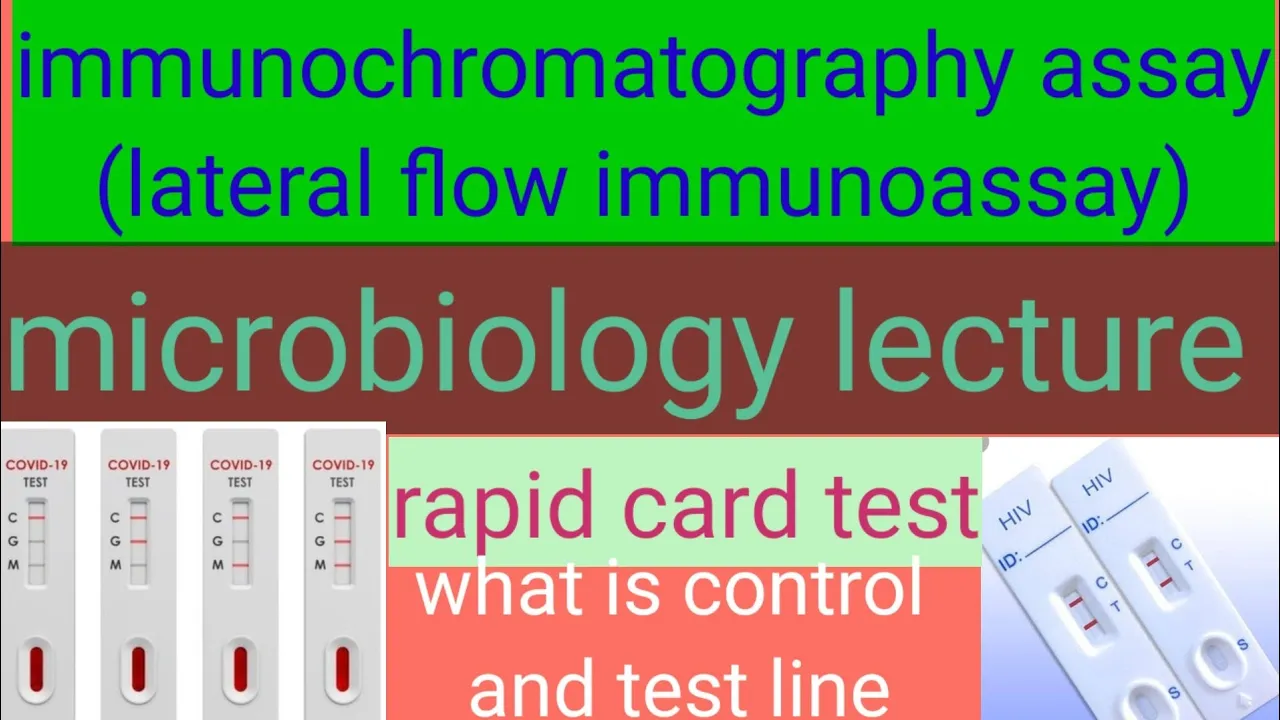























Lateral flow devices are rapid diagnostic tests that detect specific analytes through a sandwich immunoassay mechanism, where capture antibodies immobilized on a nitrocellulose membrane bind to target antigens in a sample, and detector antibodies conjugated with visual particles (like gold nanoparticles) form a visible line when they bind to the captured antigen; the manufacturing process involves preparing antibody solutions, dispensing capture antibodies onto membrane strips to create test and control lines, spraying detector antibodies onto conjugate pads, and assembling these components with wick pads into a cassette format that allows untrained users to perform tests by applying samples and reading results within 10 minutes.
Lateral Flow Assay Fundamentals: How Rapid Tests Work
Added:Basic immunology, specifically the structure of antibodies and the high specificity of antigen-antibody binding.
The physical principle of capillary action and how fluids transport through porous materials like nitrocellulose membranes.
Fundamental assay formats, particularly the difference between a sandwich assay and a competitive assay.
The role of signal reporters, such as colloidal gold nanoparticles or fluorescent beads, in visual detection.
Multiplexed lateral flow assays designed to detect multiple analytes from a single sample simultaneously.
Quantitative lateral flow technologies that use optical or digital strip readers rather than simple visual inspection.
Industrial manufacturing and quality control standards for diagnostic devices, including reagent stability and strip lamination.
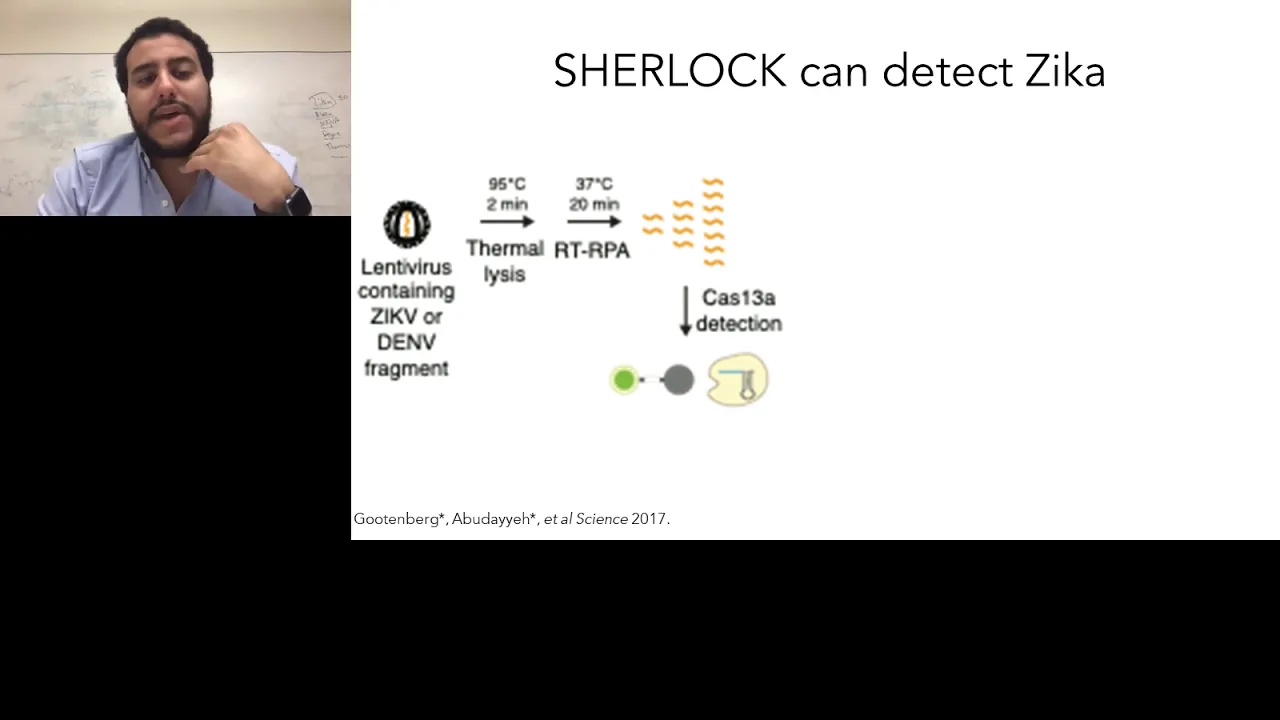
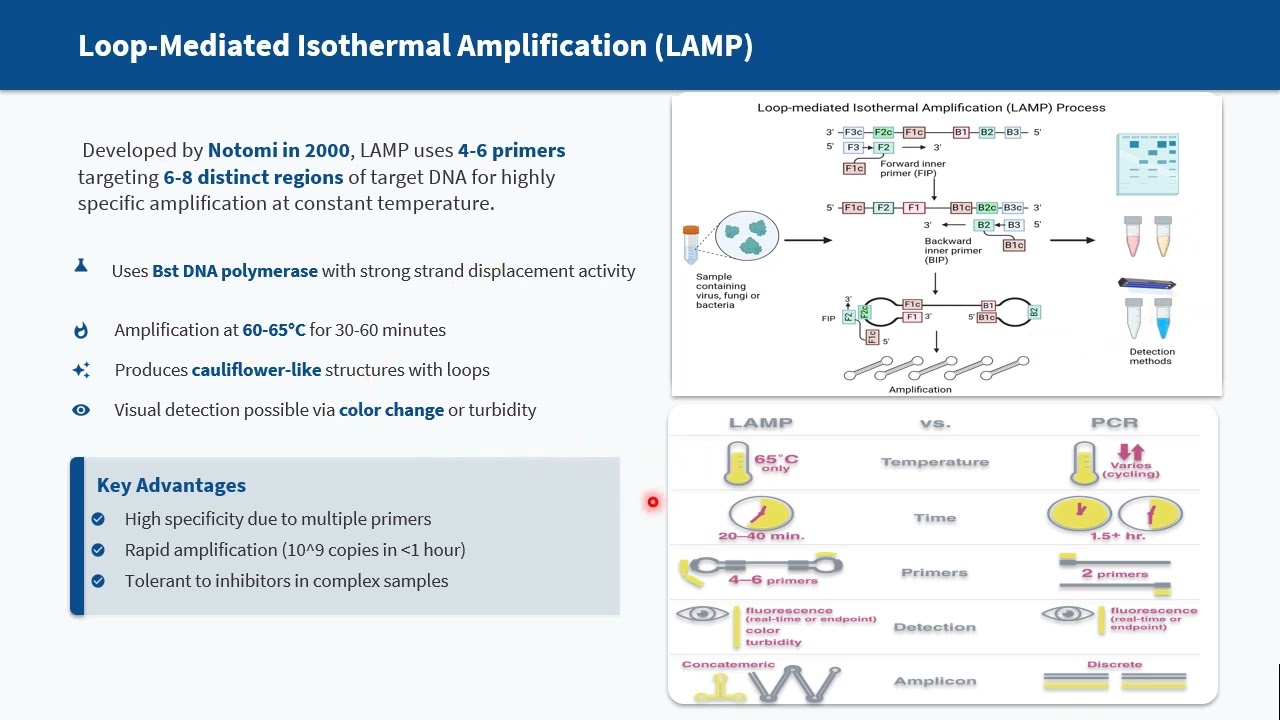
Nucleic Acid Lateral Flow Assays (NALFAs) and their combination with rapid molecular amplification methods like LAMP or CRISPR.
Troubleshooting assay limitations, such as mitigating the Hook effect, cross-reactivity, and matrix interference in clinical samples.
36.2K views0likes10:21Original Release: 2020-04-14
[Music] [Music] lateral flow is a technology is a very very straightforward very effective technology for rapid tests so rapid Diagnostics are kind of what it sounds like you're getting your diagnostic answer between 2 to 15 minutes unlike the traditional testing methods where there's long incubation it'll be hours before you get a lab result rapid Diagnostics means you have your sample and within you know waiting at the doctor's office you have an answer so lateral flow is where we take reagents like antibodies our binders that detect certain analytes we put them onto specific materials like natural cellulose and different types of pads and wick pads and then we can encapsulate that into a cassette a plastic housing and that holds the device and protects it then we combine that with potentially a sample handling methods for instance taking a finger stick blood applying that to the test and running the test very quickly and getting a result on the spot so I think the example that comes to mind when you talk about lateral flow is the pregnancy test that is lateral flow in its most recognizable form but that same platform where you see one or two lines to indicate a yes or no can be applied to a lot of different things and not just to tell you whether you're pregnant or not it could be to say whether you have an infectious disease like malaria or HIV or Kovan 19 so let's get started with making our lateral flow test so step one we want to prepare in solution tubes of our control line antibody and our test line antibody that's why you see two lines so the test line antibody is the antibody that recognizes the thing you're testing for so for pregnancy its HCG it can be different for different applications once you have them prepared in the solutions you can then dispense it onto nitrocellulose that we have here and this is how you get the two lines so I'm going to place my membrane make sure it's flush to the bottom so that my positioning of the lines is the same from membrane - membrane and here you can designate the the X the Y and the Z of these needles right here first I want to select the dispensed pattern so I'll select front lines since I'm striping the membrane and I'm gonna go through each parameter and make adjustments accordingly and then I hit go so there's two parts of lateral flow there's we're dispensing the capture antibody and then later we will dispense the detector antibody so I've just finished up marking where the lines were dispensed I've labeled the control line where we dispensed our control antibody to ensure that the test was run correctly and then here are test lines that's kind of the line that we care the most about that is where our capture antibody is and then you let that dry in the oven for 30 minutes and then the second major aspect of your lateral flow strip is the conjugate so what is the conjugate the conjugate is your other antibody that would detect your antigen and form a sandwich but on that antibody we'll have a visual particle so that we can see it when we stripe on the test line we can't really see the antibody other than you know initially when you dispense so in order to visualize whether two antibodies bound to an antigen we need one of the antibodies to be labeled to a visual particle and this visual particle will dry down and dispense into what we call a conjugate pad and then later we will take all of these and we will put them together to form our lateral full strip all right so now we are going to dispense our detection label and the detection label we aren't going to stripe like we did for the capture we are going to spray it so it's a little bit more spread out so I'm gonna disable our front lines since we're no longer dispensing antibody on to a membrane and I will enable the air Jets and now we are good to go when we stripe we're immobilizing it but here we're only kind of temporarily storing it this allows us to keep reagent dried down onto a material and allows lateral flow to be run in various different conditions and places traditional laboratory tests you would need to use a pipette in order to use this reagent but with lateral flow we can dry it onto this pad and then now anybody with a plastic transfer pipette or a dropper bottle can run this test so now that we've dispensed our detector label we are ready to put this on a screen and drive for one hour and we're now ready to assemble our test so now it's time to put everything together we have our dried dispensary agents we have our nitrocellulose membrane with our immobilized capture antibody we have our kanji pad sprayed with our detector antibody and one more part of the lateral flow strip is the wick pad or the absorbent pad this will allow the liquid to flow from the bottom to the top in a continuous fashion so what I'll need is this backing card this is what is going to hold all of the different components of my lateral flow strip together so first I'll take out the adhesive liner and I will take our membrane where we dispense the capture antibody and line it on the card [Music] and then just to make sure it adheres very gently press then our absorbent pad on top flush to the top so we are still making contact with the membrane this contact is what allows the liquid to wick through and in this strip we are just going to have a conjugate pattern and then just like we did for the WIC we are making sure that there is some contact from the conjugate to the membrane and then press it in place and then now I have an assembled card ready to cut into strips now that we have our assembled strip now it's time to cut them to our final strip so we're just gonna load the card here and then adjust our width and how many strips will cut out of time and now we have our final strip ready to put into a Kasai so now that we've cut our card we have our lateral flow strip and we are almost done so at this point we will place it into the cassette or some sort of device and at this point is kind of where things start looking like finished products out there and we'll have a sample court where we'll put our liquid and then we have a window where we'll see either one line or two lines and you can close it either Mallett or through this cassette roller did you have your assembled device ready to run all right so now we have our final letter flow cassette and I am gonna test to see if we get a positive or negative so I've prepared a positive solution and we should see two lines once it is done developing in ten minutes now at this stage we are ready to take this test to either other labs for it to be deployed there or to be deployed out in the field in your doctor's office or even at home that's the beauty of lateral flow
Up Next

3:32
Dispensing 5 Lines on Lateral Flow Test Strips: Equipment Guide
@AntiTeck
121 views•2022-10-19

12:54
Triumph of Orthodoxy Icon: Byzantine Art & History Explained
@BenCallan
2.1K views•2024-08-06

9:49
FastAPI vs Flask vs Django: Choosing the Right Python Web Framework
@TechWithTim
302.5K views•2024-05-26

1:42
Game of Thrones Opening Credits: A Cinematic Analysis
@gameofthrones
46.3M views•2011-04-18
Related Study Plans & Knowledge Roadmaps
Structured learning paths in General & Interdisciplinary Studies
general-studies
Elevator Engineering: History, Physics & Cities
01From Hoists to Safety Brakes: The Dawn of Vertical Lift
02Hydraulic vs. Traction: The Engineering Physics of Elevators
03Modern Speed, Safety, and Algorithms
+ 2 more learning modules
12h5 modules
Explore Roadmap
general-studies
Rubber: Material Science, History & Geopolitics
01Origins of Natural Rubber & Mesoamerican History
02The Chemistry of Natural Rubber & Vulcanization
03The Geopolitics of the Rubber Boom & Colonization
+ 2 more learning modules
12h5 modules
Explore Roadmap
general-studies
Containerization: Evolution, Logistics & Trade
01Ancient Trade & Bulk Cargo: Amphorae to Barrels
02The Industrial Revolution & Cardboard Packaging
03The Containerization Revolution: Malcom McLean
+ 2 more learning modules
12h5 modules
Explore Roadmap
general-studies
Textile Tech: Evolution, Labor & Global Impact
01Pre-Industrial Textiles: Handloom & Cottage Industry
02Mechanization: The Spinning Jenny to the Power Loom
03The Factory System & Global Labor Transformation
+ 2 more learning modules
10h5 modules
Explore Roadmap