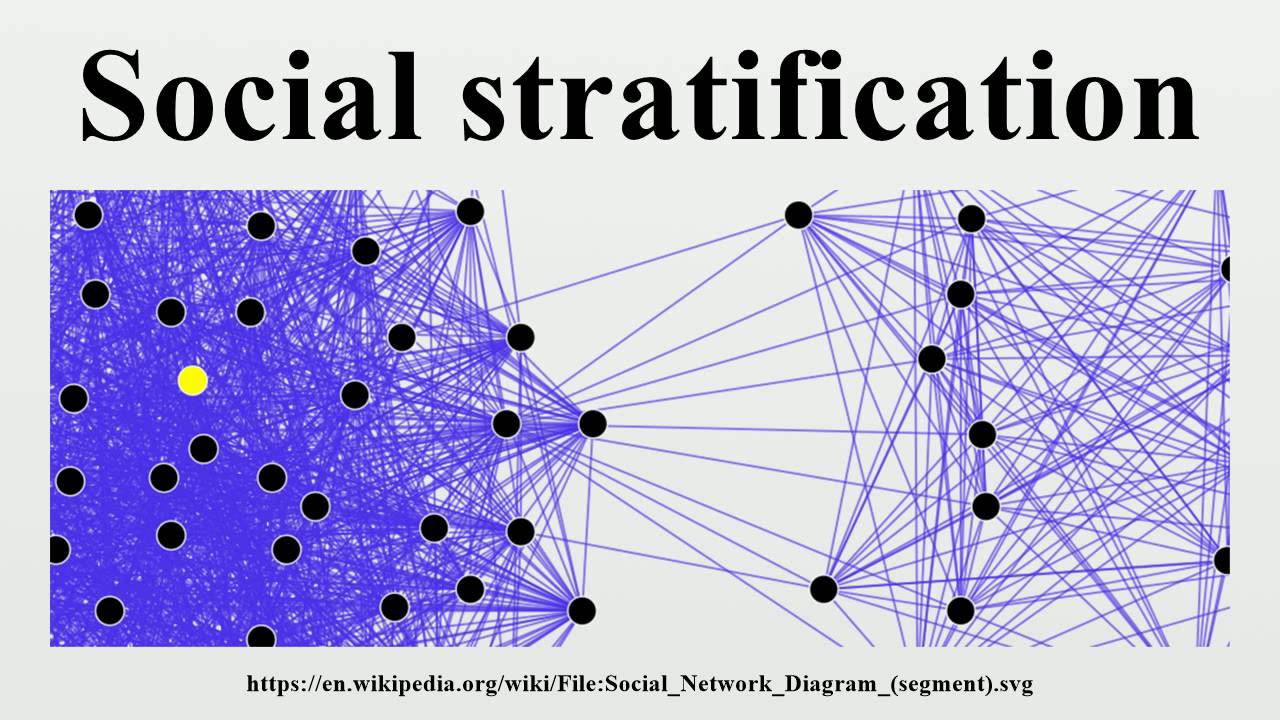




























Social reproduction is the process by which social inequality persists across generations, where wealthy families transmit advantages through financial capital (monetary resources), social capital (trustworthy networks providing opportunities), and cultural capital (cultural experiences like foreign languages, arts, and elite social knowledge), while educational systems often reinforce this stratification by valuing the cultural capital of privileged groups over that of disadvantaged populations.
Social Reproduction and Social Inequality | MCAT Prep
Added:Understanding the basic concept of social stratification and how societies are grouped into socioeconomic strata.
Familiarity with the definitions of socioeconomic status (SES) and its primary indicators (income, occupation, and education).
An introductory awareness of social mobility, specifically the difference between upward/downward mobility and social stability.
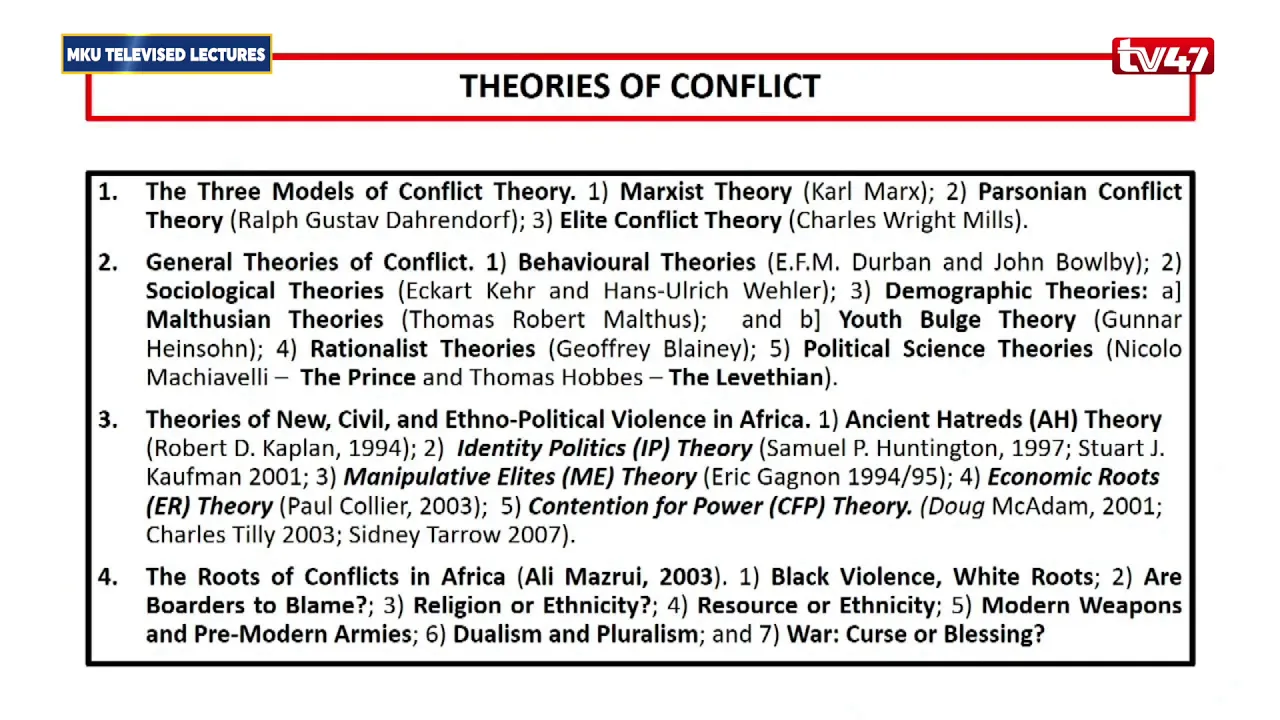
A foundational understanding of classical sociological paradigms, particularly Conflict Theory, which emphasizes power struggles and resource distribution.
An in-depth exploration of Pierre Bourdieu's sociological theories, specifically how educational institutions validate and reward specific forms of cultural capital.
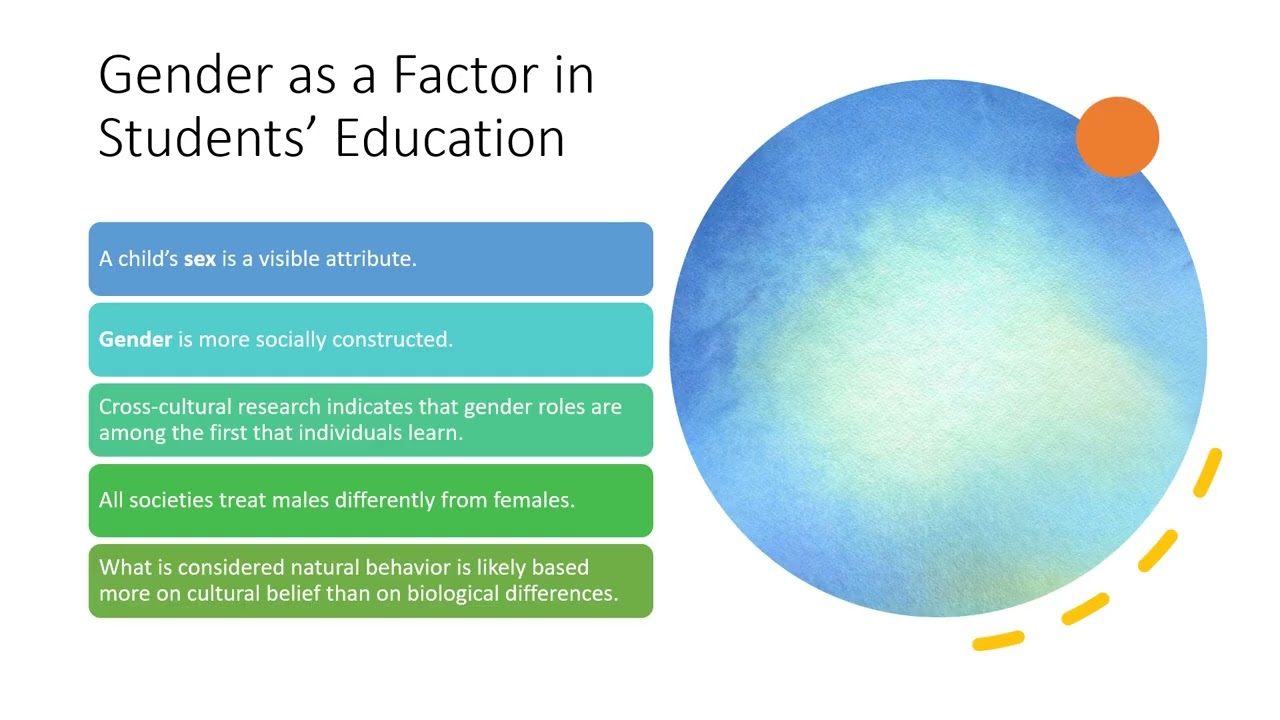
Analysis of how intersectionality (the intersection of race, gender, and class) compounds and alters the dynamics of social reproduction.
Examination of public policy measures and systemic interventions (such as educational reform, universal preschool, or progressive taxation) aimed at disrupting social reproduction.
Application of capital concepts to sociological research methods, including how to measure social and cultural capital empirically.
Integration of these concepts into MCAT-style practice passages to analyze demographic data and social stratification scenarios.
121.3K views711likes5:11Original Release: 2015-03-27
- [Voiceover] There remains a huge amount of social inequality between rich families and poor families.
One of the things that we know is that this large social inequality between the rich and families with much more resources, and the poor elements of society seems to replicate itself across generations.
So if we label this first group, "Generation one," and the second group, "Generation two," a large group of people who have rich parents tend to end up pretty wealthy themselves.
And people who had poorer parents tend to end up poor.
This is actually a process that's called "Social Reproduction."
And what social reproduction means is that we are reproducing the social inequality across generations.
There must be reasons to help explain what's happening.
One of the things that we see that wealthy families have is all these dollars here.
They have a lot of what's called "Financial Capital."
The useful thing about financial capital, and capital suggests that when someone has it they can invest in something and get some returns, The good thing about financial capital is you can invest it into other things.
You can invest it and obtain what's called "Social Capital."
And essentially what social capital means is building up reliable, useful social networks, networks of trustworthy, useful connections.
>From those connections you can really obtain opportunities and advantages in society.
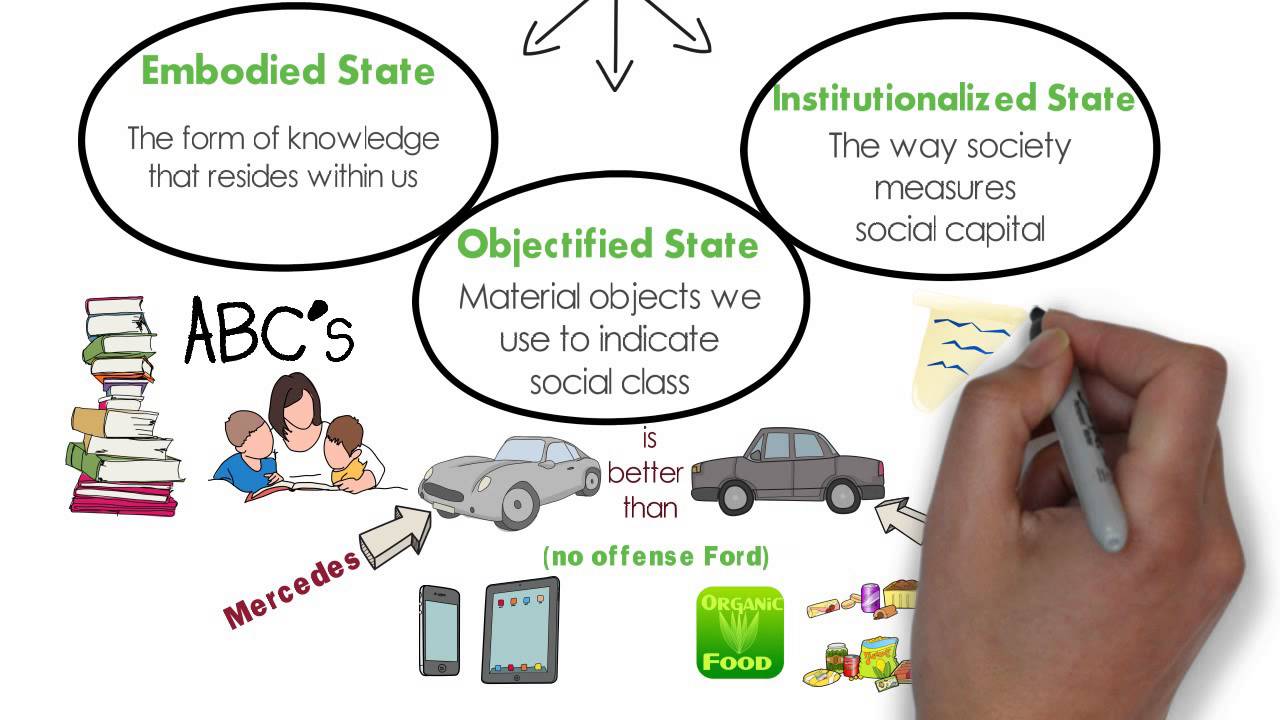
The other thing that financial capital can expose you to is something called "Cultural Capital."
What cultural capital is talking about is a few different things.
So, for example, if your parents are regularly exposing you to trips abroad and you may be learning foreign languages, such as French.
They may be taking you to movies, to the theater.
You could have a fine appreciation of classical music, for example.
You may know all the social nuances of the local golf club, know how to play polo, know how to do the things that many middle-class and upper-class children know how to do, and have those experiences.
You may also have cultural items within your house, such as paintings, portraits and other cultural artifacts, and you may know a lot about them.
Your parents will clue you in.
And both those things, social capital and cultural capital, they're capital.
So with this understanding you may gain some rewards.
Part of that reward is that these two processes, these two capitals, can actually turbo-charge this social reproduction.
But, hold on a second.
Even if someone is really poor, won't they have social capital?
They will certainly have social networks, and they will certainly have culture, and cultural experiences.
But I'm gonna bring something else into this mix.
I'm gonna bring something that you would think would help to break all of this up.
I'm gonna bring our educational system in.
Because one of the things you can say to me is that, hold on, doesn't our educational system give the poor a chance to break out of poverty and the rich, they presumably get a good education anyway, right?
Doesn't it give a chance to kind of shake up the system, put everyone on an equal footing?
Think about this.
Does our educational system value the culture of people from the lower classes as much as the culture of the people who have got much more resources, may come from the higher classes or more privileged classes?
For an example of this will be graffiti.
If a child knows all about the graffiti in their local neighborhood, I'm not too sure our educational system would care as much about that as it would fine art.
What we may find is that educational system really doesn't value the culture and the social networks of the poorer population, or the less advantaged population.
But what it does is really values the cultural capital and social capital of the more wealthy people.
So, in fact, our educational system can be reinforcing this social stratification that we see here.
The children of rich parents are more likely to be wealthy themselves, and the children of poorer parents are more likely to be, to stay poor, compared to their richer peers.
So actually our educational system may be reinforcing social reproduction.
Now obviously, a lot of this may be controversial and people may argue against it.
And there are a lot of different variations and other, and aspects to consider.
But this is just a brief overview of social reproduction.
Up Next

7:22
The Case Against Student Tracking in Schools | TEDx Talk
@TEDx
36.8K views•2015-02-09

12:54
Triumph of Orthodoxy Icon: Byzantine Art & History Explained
@BenCallan
2.1K views•2024-08-06

8:21
Cerebral Cortex Structure and Function | MCAT Biology
@khanacademymedicine
752.4K views•2014-04-25

1:42
Game of Thrones Opening Credits: A Cinematic Analysis
@gameofthrones
46.3M views•2011-04-18
Related Study Plans & Knowledge Roadmaps
Structured learning paths in General & Interdisciplinary Studies
general-studies
Elevator Engineering: History, Physics & Cities
01From Hoists to Safety Brakes: The Dawn of Vertical Lift
02Hydraulic vs. Traction: The Engineering Physics of Elevators
03Modern Speed, Safety, and Algorithms
+ 2 more learning modules
12h5 modules
Explore Roadmap
general-studies
Rubber: Material Science, History & Geopolitics
01Origins of Natural Rubber & Mesoamerican History
02The Chemistry of Natural Rubber & Vulcanization
03The Geopolitics of the Rubber Boom & Colonization
+ 2 more learning modules
12h5 modules
Explore Roadmap
general-studies
Containerization: Evolution, Logistics & Trade
01Ancient Trade & Bulk Cargo: Amphorae to Barrels
02The Industrial Revolution & Cardboard Packaging
03The Containerization Revolution: Malcom McLean
+ 2 more learning modules
12h5 modules
Explore Roadmap
general-studies
Textile Tech: Evolution, Labor & Global Impact
01Pre-Industrial Textiles: Handloom & Cottage Industry
02Mechanization: The Spinning Jenny to the Power Loom
03The Factory System & Global Labor Transformation
+ 2 more learning modules
10h5 modules
Explore Roadmap