

















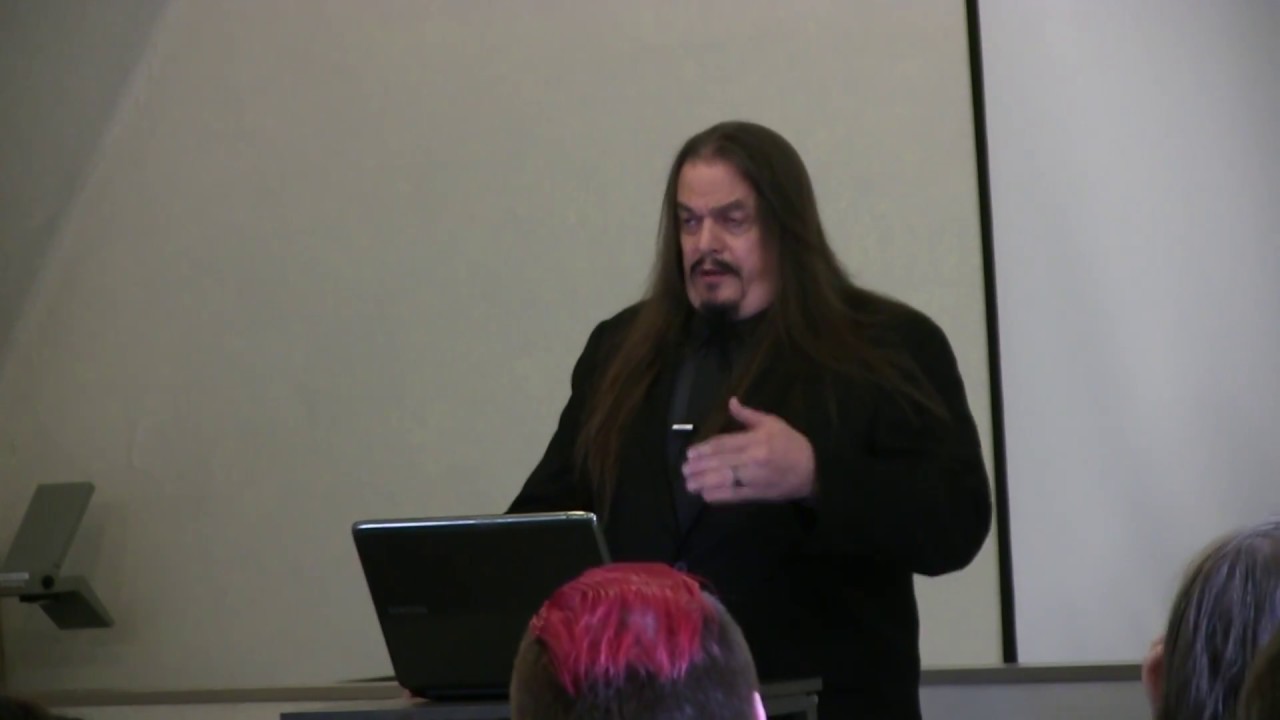


Student tracking, which separates students by academic ability into high, average, and below-average tracks starting as early as fourth grade, creates an outdated educational system that fails to prepare students for modern economic demands; this practice produces high-performing students who face excessive stress and burnout, middle-track students who become unmotivated and lose ambition, and average students who disengage from learning, while simultaneously misaligning with the evolving US economy that increasingly requires high-skill workers in fields like engineering and programming rather than the post-WWII model of 20% professionals, 20% skilled workers, and 60% factory/farm workers.
The Case Against Student Tracking in Schools | TEDx Talk
Added:Understanding the definition of academic tracking (ability grouping) and how it is traditionally implemented in primary and secondary education.
Familiarity with the concept of the Pygmalion Effect (self-fulfilling prophecy) and how teacher expectations influence student performance.
Basic knowledge of educational equity versus equality and how systemic biases can affect student placement in school systems.
An overview of standardized testing and its historical role in sorting and categorizing students.
Exploring 'detracking' strategies and the pedagogical models used to transition to heterogeneous (mixed-ability) classrooms.
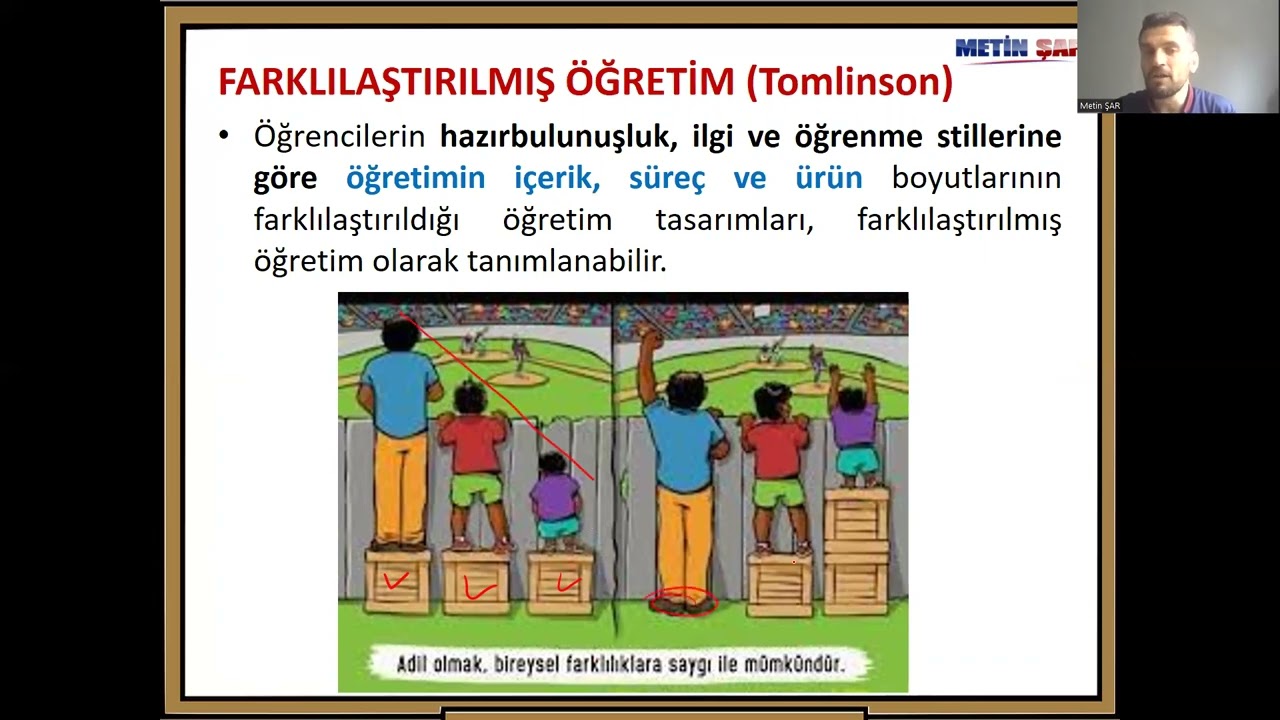
Studying the principles of Differentiated Instruction, which allows educators to teach diverse learners effectively within the same space.
Analyzing comparative international education systems (such as Finland's comprehensive school system) that do not utilize early academic tracking.
Investigating restorative justice and socio-emotional learning (SEL) as frameworks to support students previously marginalized by tracking systems.
36.8K views179likes7:22Original Release: 2015-02-09
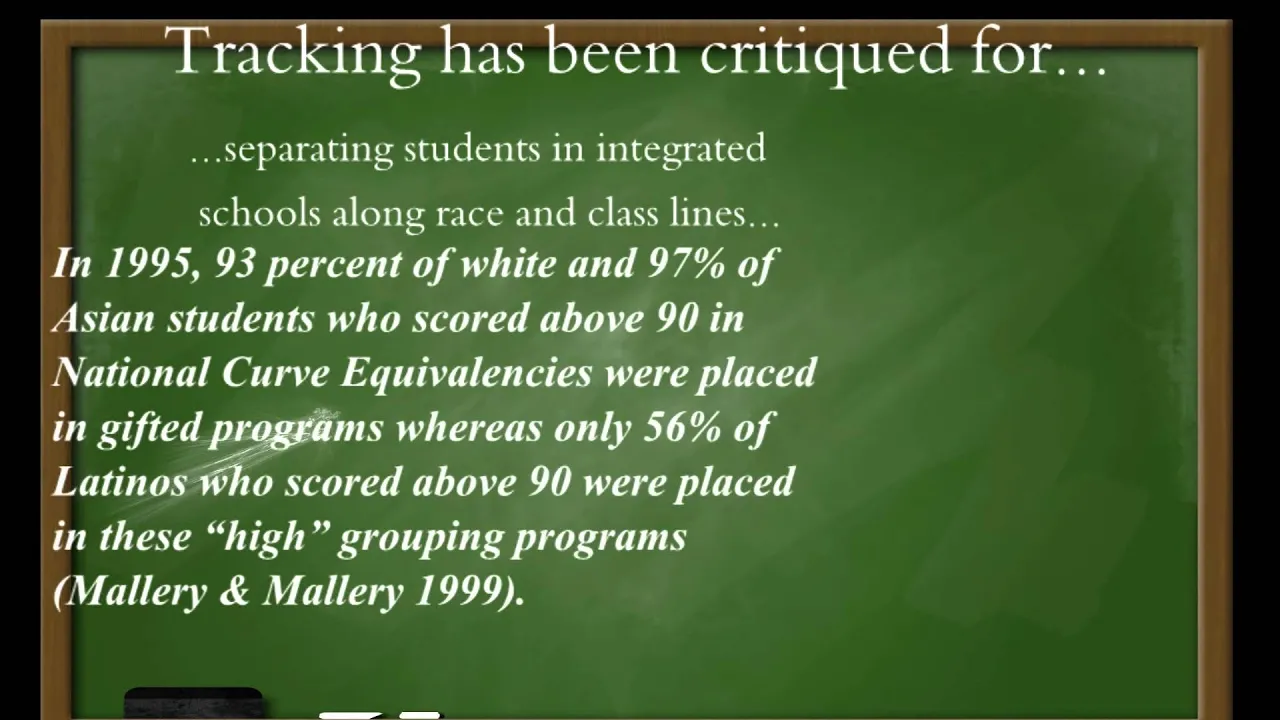
[Music] how many of you have or are currently enrolled in American public school within the past 70 years please raise your hand every single one of you have been tracked now and there's a lot of reasons for that but first let's talk about what tracking is tracking by definition is a separation of pupils by academic Merit we have three tracks that we are separated into we have high performing average and below average this is the reason why we have AP classes honors CP and standards and this all happens in the fourth grade yes you are separated into an academic track in fourth grade somewhere up in the in the Department of Education in Sacramento or even your local elementary school office you are being separated into a track now I'd like to spend today to talk about three students and their Journeys through tracking the first student is our high performing student Madison Madison as you can probably see it's pretty impressive straight A leaders in her extracurriculars full AP schedule Madison is the ideal product of tracking where they have created a leader who knows what she wants to do Madison is hoping to to enroll in a university next year studying neuroscience and specifically stem cells to find a c for Alzheimer's really impressive next we have Ray Rey is not as smart as Madison but by all definition still pretty smart he has a couple AP classes he's getting good grades and he doesn't have nearly as a rigorous schedule as Madison but is still pretty hardworking Reay is one of the downfalls of tracking Ry wants to go to a university next year he's hoping to enroll in BIO but he doesn't know what he wants to do in BIO and he doesn't know what university will accept him lastly we have Matt Matt is by all definitions in the education mumbo jumbo standard Matt is the average Joe nothing's really expected of Matt and Matt doesn't really want anything expected of him either he just Coes through life or Coast through school and he's actually one of the funnest and most interesting people I've ever talked to so let's talk about Madison Madison in every single high performing student has one common characteristic they are all determined to succeed they will shed Blood Sweat and Tears to get into that prestigious University so that they can follow their passion if they have one but there are also a couple downfalls associated with putting so much stress upon these students high pressure and anxiety can occur when a student maybe takes on too much because everybody else is taking on that much they could start getting really competitive and maybe they don't match up to everybody around them so then they start resorting to drugs maybe violence depression maybe they're isolated but one of the most recurring things is some of them just simply wash out one of these examples is Ry Ry is smart but not smart enough freshman year he was enrolled in all honors classes at Westlake High School his first quarter he received a C+ in Geometry honors and then he was dropped to Geometry CP quick and simple Ray Ray decided that he wanted to get back into ala 2 honors and be with all the people that by all means were his friends and his competitors so Ray studied he applied himself and he got A's in both semesters of his geometry CP class then petitioned to our school to be placed into Algebra 2 honors in the following year long story short his petition was denied now Ray's petition was denial was not because the school didn't like him it was that the school didn't have enough resources to invest in a potential liability such as Ry so Ray was CAU between two tracks he was CAU between the above average and the average he was taking classes with both now often when that happens Ry and other students copy between the two tracks start be to become unmotivated because there's no way they can compete with high performing students like Madison and they're surrounded by people that aren't as smart as num in the average tracks so then they start becoming unmotivated and start lowering their Ambitions and fall down to the average track next we have Matt Matt the average guy Matt's happy he has a really when I asked him about his high school experience he was but he said it was a good time he's going to enroll in our local Community College as a business major and he's going to go through life and he's all right with that he doesn't he goes to school but nothing seems to matter to him when he shows up to school because he's going to go into business what does science have to do with that so nothing seems to matter for him and that's one of the problems the US economy is growing exponentially in the high high pay high skill category it's also becoming more of a service economy Now Matt in the middle are usually we supposed to post World War II fulfill the job of managing and being accountants but now we don't we don't seem to have that many jobs jobs for them anymore what jobs we do have are engineering and programming those jobs that Apple and Google seem to open up to everybody aren't being filled domestically so they have to go overseas to China India and Latin America to fulfill those jobs cracking was originally created post World War II for these Char these statistics all right so 20% of the students were this were thought to be doctors and lawyers 20% were thought to be skilled workers and 60% Were Meant to go into the factories and work on the farms I don't know about you but I don't know how many farm and Factory workers there are in America today but I'm pretty sure it's not 60% the US is evolving but our education system is still the same we need to end student tracking we need to evolve our education system to match what everybody else is doing so that we don't fall behind I I would like you all to take out a smartphone or perhaps email me later of one potential idea you have for ending student tracking because perhaps one of those ideas will lead to the end of it thank you [Applause]
Up Next

31:42
High-Stakes Testing History, Racism & Resistance | Wayne Au PhD UWB
@caucusofworkingeducators4
7K views•2015-10-25

12:54
Triumph of Orthodoxy Icon: Byzantine Art & History Explained
@BenCallan
2.1K views•2024-08-06

11:43
Indigenous Astronomy: Rethinking Space Ethics | Karlie Noon TEDx
@TEDx
15.1K views•2025-11-30

1:42
Game of Thrones Opening Credits: A Cinematic Analysis
@gameofthrones
46.3M views•2011-04-18
Related Study Plans & Knowledge Roadmaps
Structured learning paths in General & Interdisciplinary Studies
general-studies
Elevator Engineering: History, Physics & Cities
01From Hoists to Safety Brakes: The Dawn of Vertical Lift
02Hydraulic vs. Traction: The Engineering Physics of Elevators
03Modern Speed, Safety, and Algorithms
+ 2 more learning modules
12h5 modules
Explore Roadmap
general-studies
Rubber: Material Science, History & Geopolitics
01Origins of Natural Rubber & Mesoamerican History
02The Chemistry of Natural Rubber & Vulcanization
03The Geopolitics of the Rubber Boom & Colonization
+ 2 more learning modules
12h5 modules
Explore Roadmap
general-studies
Containerization: Evolution, Logistics & Trade
01Ancient Trade & Bulk Cargo: Amphorae to Barrels
02The Industrial Revolution & Cardboard Packaging
03The Containerization Revolution: Malcom McLean
+ 2 more learning modules
12h5 modules
Explore Roadmap
general-studies
Textile Tech: Evolution, Labor & Global Impact
01Pre-Industrial Textiles: Handloom & Cottage Industry
02Mechanization: The Spinning Jenny to the Power Loom
03The Factory System & Global Labor Transformation
+ 2 more learning modules
10h5 modules
Explore Roadmap