










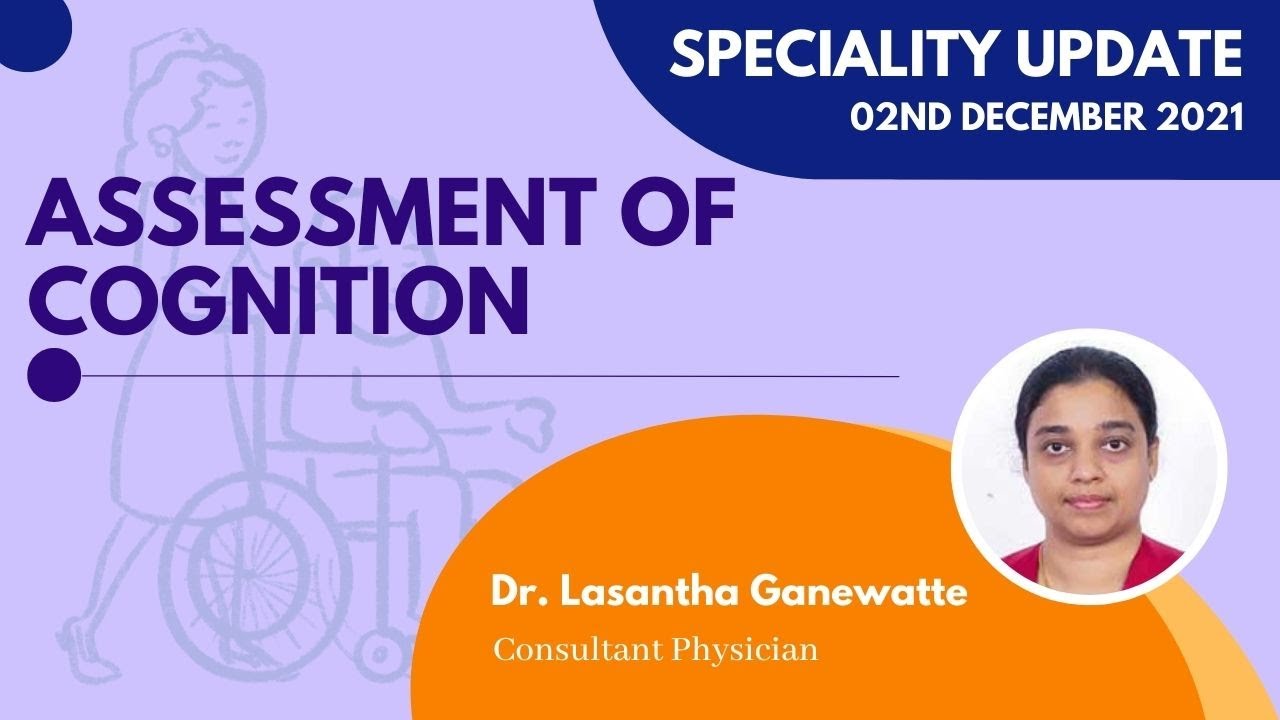










The Mini-Mental State Examination (MMSE) is a standardized cognitive screening tool consisting of 11 questions assessing orientation to time and place, attention/concentration, short-term memory, language skills, and visual-motor abilities, with a maximum score of 30 where scores of 25+ indicate normal cognition, 19-23 suggest mild impairment, 10-18 indicate moderate impairment, and ≤9 indicate severe cognitive impairment; however, the test has limitations including cultural bias, educational level effects, and language barriers that may affect accuracy in diverse populations.
Mini-Mental State Examination (MMSE): Clinical Guide
Added:Basic understanding of neuroanatomy and the primary cognitive domains, such as memory, attention, orientation, language, and visuospatial skills.
The clinical distinction between normal age-related cognitive decline, Mild Cognitive Impairment (MCI), and various forms of dementia.
Fundamentals of patient-provider communication, including how to build rapport and handle patient anxiety during clinical evaluations.
An understanding of psychometric principles, specifically the difference between a rapid screening tool and a comprehensive diagnostic assessment.
Critically evaluating the limitations of the MMSE, including its vulnerability to education levels, cultural bias, and the ceiling/floor effects.
Comparing the MMSE with alternative cognitive screening instruments, such as the Montreal Cognitive Assessment (MoCA), Mini-Cog, and SLUMS.
Integrating MMSE scores with comprehensive diagnostic pathways, including neuroimaging, biomarker testing, and detailed family histories.
Developing personalized care plans and ethical management strategies for patients identified with progressive cognitive impairment.
7.9K views157likes14:01Original Release: 2023-08-16
so let's talk about the many mental state exam grab your piece of paper and let's go [Music] hello and welcome to mk's Medical review series my name is Dr Moses kazebo this is a series on my YouTube channel look at Medical topics and depth today we're going to be looking at the many mental state exam if you haven't yet subscribed to the channel hit the Subscribe button hit the Bell notification icon to be receiving notifications of such amazing content every time I post grab a piece of paper and your pin and let's go so remember that this minimental state exam also referred to as the standardized mini mental exam is going to consist of 11 questions that are going to be asked by the practitioner in an attempt to assess the cognition of a patient it's going to be assessing cognitive impairments such that you may detect problems with the thinking the communication the understanding as well as the memory and we often use the minimental state exam in examining patients with head injury patients with CNS infections or other infections but most importantly it's used in patients with dementia so it's going to be used to assess the severity as well as the progress of the cognitive impairment in an individual over time so we can use it as a marker of progression of the condition we can also use it as a marker of how we're going to detect this person's response to treatment so the entire minimental state exam can actually take roughly about five to ten minutes to carry out and the questions are roughly and usually the same or very similar regardless of who is conducting the test so remember that the areas of assessment are going to include orientation to time and place attention and concentration short-term memory which is recall language skills visual spatial abilities visual spatial as well as visual Visual and special relationship between objects as well as the ability to understand and follow instructions so each of these is scored with maximum points when you talk about orientation to time we have a maximum score of five so we start off from a very the broadest perspective to the most narrow perspective and I'll explain what I mean by this when we look at the questionnaire and then we also look at the orientation to time that is generally correlated to the Future decline of this patient when it comes to orientation to place the maximum number of points one can get is a five so this is again from the broadest to the most narrow from let's say the country where this person is the province the area and even the hospital to even the flow of the hospital where they are where they are at if it's like applicable for that particular hospital and this is sometimes narrowed down to the streets and sometimes even the flow of the hospital like I said then you have registration which is out of three so repeating named uh prompt so give them about three different names like for example an apple a penny and maybe a chair then you have attention and calculation which is scored out to five so here we do the serial sevens and we also ask them to spell the word world backwards and it has actually been suggested that the serial sevens is much more appropriate for those that are in places where English is not a first language so this test actually has a lot of limitations especially in our setup then you also recall the three objects that you told them before so this is the registration recall the three objects you told them to keep in their mind then the language is scored out of two you tell them to name a pencil or to name a watch that's if you have a watch if you have a pencil you need tell them to name these objects you just simply pointed them and ask them what this is then repetition you tell them to say a phrase back to you I'll show you which phrase which we actually use in the minimental state exam and then for the complex commands it's given a score out of six so this one varies and can actually involve drawing a figure that is shown I will show you again with the questionnaire what figure we actually use so here's the exam so this is a sheet that you'll get so here you place the patient's name here you place the examiner's name your name and of course the date when you did the exam and remember the maximum score you get is out of five so you ask the patient what year do you think this is so obviously you're going to answer if they give you that it's 2003 and it didn't it is indeed 2003 we give them a one point you ask them what season it is if they tell you that it's summer and it actually is summer you give them a score of one you ask them what date it is today if they tell you the correct age you give them a score of one you ask them what day it is if they tell you the correct day you give them a score of one you ask them what month it is you get them a score of one so as you can see here the maximum number of points you can get from the orientation to time is a five out of five then you ask them where they are where we actually are the um State well if it's applicable in our case here at the old say the province where we are the country where we are the town where we are the hospital where we are in the floor where whether we're on the ground floor the second floor the third floor or the fourth floor and if they get each of these correct you give them a single point for each and every one of them then you come now to the registration so you name three objects and you give them one second to say each object for example Penny you tell them to say penny and to keep it in their mind and then you you tell them to say them one by one so you name each of them one by one then you ask the patient to name all three of them or the three objects that you have said then you give one point for each correct answer then you repeat them until the person actually is able to learn all the three objects then you should count in the the trials that you have repeated this with the patient to register these three objects in their mind and it should be simple objects that they can actually keep in mind for example if it's you're trying to get them to register a penny then they don't know what a penny is it may be a bit difficult especially in our setting so you name these three objects and you this is now getting registering it into their memory then now you come to attention and calculation here we use what is known as the serial sevens so now you ask them from a hundred you tell them to subtract seven each time so you're from 100 minus seven you go in 93 93 minus seven so on and so forth until you they give you about like five answers you give them a point for each correct answer now as you can see with this particular Point here it's very difficult if someone hasn't gone to school or if someone is not so good at math if the serial seven is actually a bit of a difficult you can actually use the serial threes to do this but of course this means that someone must have gone to school they must have at least reached somewhere around grade 8 to be able to actually do this so you should stop when you after they give you five answers and remember you shouldn't judge them based on the order that they have given you you should judge them based on the previous answer for example for the first answer if they got the first answer wrong and they gave you maybe an answer like 90 then they subtract 90 minus seven then they give you 83.
remember the second one will be correct with reference to the previous answer that you got so just keep that in mind then you also do ask them to spell the word world first you ask them just to spell out the word world as they write it w o r l d then you ask them to spell it backwards then you give them points based on that and then whichever one has higher points here that's the one that you're going to record then you ask them to record the three objects that you told them before to keep in mind and you give them a point of each of those three which they actually record then you come to the last section which is the language so you ask them to name a pencil and to name a watch you point at the watch you point to the pencil then you ask them to repeat the following sentence no ends or butts they should be able to repeat no ifs and so buts then the next stage is to follow a three-stage command so there are three things that you're going to be doing this to do to this patients you're going to tell this patient to take the paper there'll be a piece of paper in your hand then you you tell them to fold it in half and then to put it on the floor they should follow these exact um commands so they should take the paper they should fold it in half and they should place it on the flow then then after that you should they should read and obey the following things you write it on a piece of paper and you show them that close your eyes so once they read this they should be able to close the eyes and as you as you've seen it should be someone who's able to read and write then you can ask them to write a sentence out if they manage to do this you give them one point then of course you ask them to copy the design here at the bottom which is this inter intertwining pentagons then after that you add all the different scores that you get from this and you have a total there that you're going to put your total score so remember that the maximum score that you can get from the minimental state exam is 30 a score that's 25 or higher is considered normal a score that's below 24 is abnormal and could be possibly indicative of cognitive impairment this is of course a big possibility like with inverted commas so remember that any score that's less than or equal to 9 is going to be severe cognitive impairment between 10 to 18 is moderate cognitive impairment between 19 to 23's mild cognitive impairment then remember that the minimental state has some limitations if you get a high score it doesn't necessarily mean that you don't have cognitive impairment the opposite is true if you get a low score it doesn't mean that you necessarily have dementia so remember that this test is going to be pretty much based on certain things certain things like physical disabilities language speech education level even cultural differences can greatly affect how you're going to school on this test so for example if you get a highly educated person with dementia in the early stages they may still score a very high score on the Condit on the test but it doesn't mean that they don't have the condition or if you get a patient that has motor deficits and they have difficulties in writing and drawing skills you may get a lower score in this patient but that doesn't necessarily mean that they have dementia so you can do certain things to actually maximize the benefits of the many mental state exam so the tomberg as well as McIntyre in 1992 recommended the following things so number one we must use the Monumental state exam as a screening too to actually the screen for cognitive impairment and we should use it as a diagnostic adjunct for individuals that actually get low scores this can be actually need for them to be further evaluated we shouldn't just use the minimental state as a sole thing to diagnose the Dementia or to differentiate the different various forms of dementia then we also should use certain cutoff points 24 to 30 for non-cognitive impairment 19 to 23 for mild cognitive impairment 10 to 18 for moderate and anything that is nine or less considered a severe cognitive impairment that's the second recommendation the third recommendation is that we must use this in of course put into perspective the patient there should be a patient that has reached at least grade 8 education and they must be fluent in English because it's very difficult to translate this into home language and of course it may change the answers that you get on the test for example if someone has a low educational status this may actually increase the likelihood of them having a low score and actually you misclassifying this normal individual as cognitively impaired the third thing is because you should also consider doing the serial sevens and the worlds together and not consider them as separate entities because they are not equivalent so whichever one gets the higher of the two then that's the value that you're going to be recording so remember that in the scoring in scoring the serial sevens each number must be independently compared to the prime to the prior number as I already told you if they got the first one wrong and then they get the second one correct you still give them a point for the second one being correct because sometimes some individuals may not be so good at math and of course the word words must be spelled forward as well as backwards and you should correct them when they spend it forwards just that when they spell it backwards then you can judge them subjectively then the words Apple Penny and table can be used for the registration and the recall if necessary the words must be administered up to three times in order for you to actually obtain this perfect registration but the score is actually based on the first trial that the patient must actually be given so remember that the many mental state exam is going to help in differentiating different types of dementia and people that have Alzheimer's disease may actually score significantly lower on orientation to time and place as well as with the recall and compared to those that have dementia that is due to lower bodies as well as vascular dementia or Parkinson's disease dementia I really hope you enjoyed this video on the mini mental state exam if you did consider subscribing to the channel hit the Bell notification icon so you never miss such amazing content every time I post to zombie and beyond my name is Dr Moses kazevu until next time bye bye [Music] thank you [Music]
Up Next
2:26
Distinguishing Spasticity vs Rigidity: Stanford Bedside Exam
@StanfordMedicine25
358.6K views•2016-04-05

48:47
Graphic Medicine: Comics for Collaborative Healthcare Communication
@nationalpatientadvocate
189 views•2023-12-04

10:28
Neuroanatomy: Central and Peripheral Nervous System Divisions Explained
@AKLECTURES
136.2K views•2014-09-20
3:05
Stages of Labor and Vaginal Birth | Childbirth Animation
@nucleusmedicalmedia
52.1M views•2017-08-18
Related Study Plans & Knowledge Roadmaps
Structured learning paths in Medicine
medicine
Abnormal LFTs: Diagnostic Workup & Pathology
01Liver Anatomy and Basic Physiology
02Introduction to Liver Function Tests (LFTs)
03Hepatocellular vs. Cholestatic Patterns
+ 3 more learning modules
12h6 modules
Explore Roadmap
medicine
Analyzing Blood Smears: RBC, WBC & Platelets
01Introduction to Blood Components & Smear Preparation
02Normal Morphology of Blood Cells
03Erythrocyte Pathologies & Morphological Variants
+ 2 more learning modules
12h5 modules
Explore Roadmap
medicine
Mechanical Ventilation: Waveforms & Alarms
01Anatomy and Physiology of Breathing
02Introduction to Mechanical Ventilation & Core Modes
03Ventilator Settings and Waveform Interpretation
+ 2 more learning modules
12h5 modules
Explore Roadmap
medicine
Neuro Exam: Localization & Stroke Syndromes
01Foundations of Neuroanatomy and Vascular Supply
02The Neurological Examination: Step-by-Step
03Principles of Neurological Localization
+ 3 more learning modules
18h6 modules
Explore Roadmap