











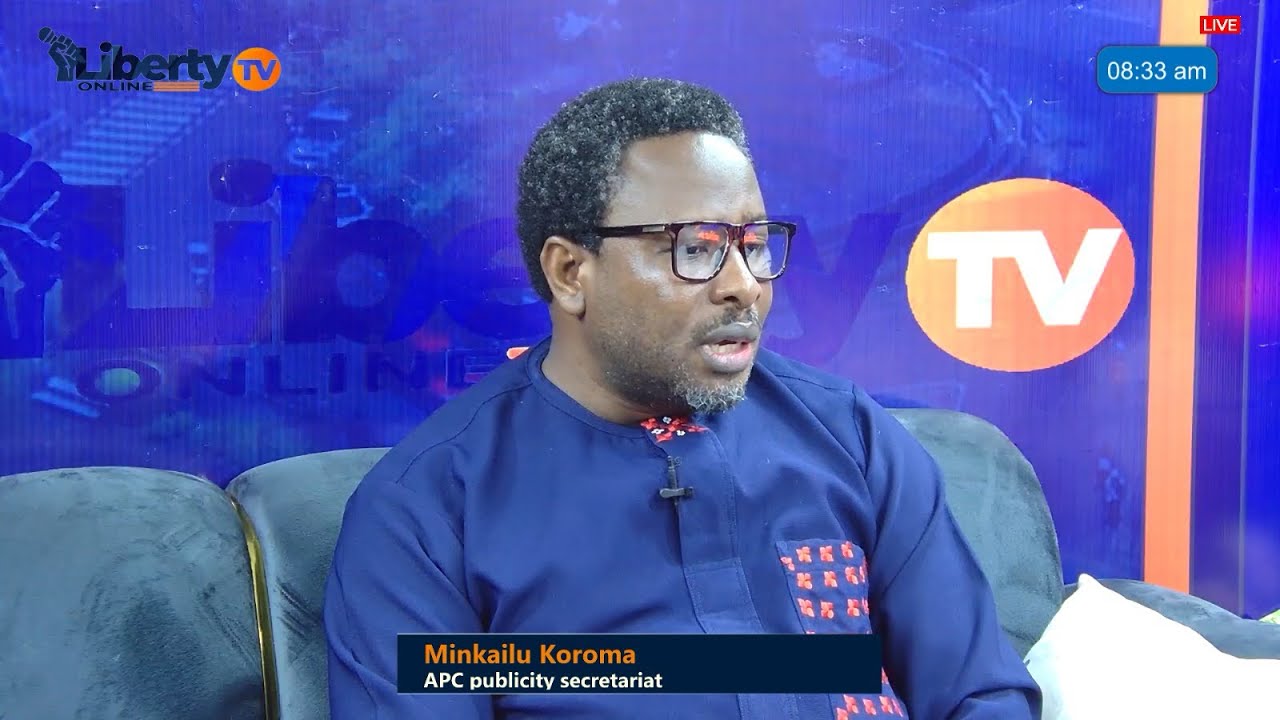






Sierra Leone President Julius Maada Bio outlines his nation's development strategy centered on three pillars: investing 22% of the national budget in education to prepare citizens for the Fourth Industrial Revolution, implementing the Gender Equality and Women's Empowerment Bill mandating 30% female representation in parliament and corporate governance to unlock women's potential in development, and strengthening democratic institutions including an independent National Electoral Commission to ensure free and fair elections; he emphasizes that true development requires unleashing the power of women and girls through education and economic opportunities, while maintaining that democratic principles and political freedoms are essential for sustainable progress.
Sierra Leone President on US Relations & Women's Empowerment
Added:Mr President thank you very much for having us uh this morning H how has your day been so far well today is better at Le um we don't have as a very wet day as yesterday so good um you you met President Biden as one of the sex heads of state from Africa who got a one-on-one meeting with him how did the meeting go and what were your takeaways from the meeting what I I would say it's a very constructive meeting because it's basically talking about resetting our relationship between the United States of America and Africa um there is a lot of history between the two and um uh there has been a drop in the relationship where why and um we think this is not good for for international relations it's not good for uh development multilateralism and the many things that we want to do at the highest levels so we came together uh to discuss um how we can re resuscitate this relationship and of course there are concerns about what is happening in Africa especially with regards to security threat security uh the economic crisis um the Resurgence of military CPS Etc and how we can help to deal with these challenges Global challenges so you attended the US Africa Leadership Summit a lot of bilateral agreements and business deals were done what was your impression um where your expectation met and what are you taking back to SAR Leon to help the people of Sarah Leon well I think that's one of the most important things for high level meetings of this nature a summit it is not just what we see in the house uh but what happens in the little rooms around uh I had the opportunity again to meet with MCC and to consolidate our our relationship with the MCC that is going to spend at least uh less than 350 million as Grant to seran um there are few hiccups with the um with a compact but of course we we amicably went through those and we are now on the same page uh we have met several other groups uh I just I'm just from a meeting with other groups that are interested in seron of course they are very mindful of the fact that we go to elections in about six months and a lot of companies are always a little git or careful mindful you know of the fact that elections can be quite disruptive but I've told them that we are going to keep the paace uh it's uh the stability and because we are paying more attention to development rather than politics we don't want any slowdown in activities once they concern development so there are quite a quite a lot of interesting uh discussions meetings that um I wouldn't say have come to fruition at this point in time but they are very promising and I'm happy that I had those meetings Mr President will Saron be ready or is seron ready for business especially investors those that you spoke with are there mechanisms or measures implemented to ensure that when they come in their business interest and their investments will be protected and will there be conflict resolution mechanisms if there's a conflict it could be resolved amicably you're talking about the business environment the climate right we have worked on that and we continue to pay Keen attention to the business environment uh my business is to make sure that I attract uh some of the most patient investors who we go there to invest for the mutual benefit of our country and also their own uh corporate um entities we have a few companies already from the US and other parts of the world operating in seran which means uh that uh we have a climate that permits uh the the the establishment and functioning so we we we of course we've had challenges or conflicts and we are able to resolve them especially uh as recent as I think two years ago we had a serious challenge with an American company mining iron o and um we were able to find a solution I'm just I just saw them as actually as a matter of fact so which means uh we are ready they are going in they are operating and where we've had challenges we find a way out that is a part of conflicts are part of human relationship and um our business is to make sure that we incorporate into our governance structure me isms that can always deal with them as and when they arise but we are ready we are we continue to work on the business climate we have put very Progressive uh policies in place and uh anything that will make us attractive uh as a as as a destination for foreign direct investment we will do because uh that is what uh caters for the needs of our people best Mr President a lot of Civil Society groups and even the first lady have have been expressing concern about gender based violence the first lady has championed the cause of hands of Our Girls campaign I understand there's a bill that is waiting for you to accend to it to sign the gender equality and women's empowerment Bill what entails in this bill because when you sign it it becomes law what do you want this to achieve and how would this protect victims of gender-based violence what is contained in the bill it's our goodies for women it actually lays the foundation for the liberation of our women to close the gender gap uh that is the best way to put it uh of course it took us a long time as a male Society uh dominantly to accept that it's been in uh Parliament for 8 months but uh we got it out and in the form and manner in which which we want it it basically gives uh 30% of uh representation in Parliament to women um and uh in all spheres of governance even in corporate governance uh so uh it is not incumbent upon us to really see how we can Implement that to make sure that um we start to close the gender gap it is the gender gap uh closing the gender Gap is what this bill is really about and that is what we have started um before today they did not have the chance uh women we are not uh considered equal Partners in development and what we are saying is that you cannot say you're serious about development and you lock up more than 50% of your energy in the kitchen or somewhere else and then expect to make progress for for me like I said we are a um development oriented government and therefore all the energy needed is what we want to unleash and the women power the the component of the women have been missing you know uh so we are given quite a lot of stone in fact uh before that in selon today because of my own policy in education all guys doing stem courses or discipline can actually go to school free from pre- primary to the end of University once you're doing stem courses and it will interest you to know that they have actually Vindicated us the girls and you know um they led the transition exam to University this year and in the past couple of years so guys are leading now and uh it is even more interesting to note that most of them actually applied for engineering because the girls because they know that we are ready to pay for them so quite a lot is happening in suran for women and girls and uh this bill is just a part of it you're talking about protection of women um I had to declare um a National Emergency on rape and uh we have toughened the laws on sexual and gender based violence we have even set up special uh courts to deal with them uh uh quickly as and when the is need for them and um the first lady is has embarked on a national campaign which is ongoing uh called the hands of our girls basically um uh advocating for uh for the GU child uh to give them chance to go to school instead of giving their hands uh in uh in marriage in very tender age uh teenage pregnancy um uh menr um um hygiene so she distributes um hygiene PS for for them quite a lot is happening under very difficult circumstances but I think the driving force has been the level of commitment genuine commitment to making sure that we actually prepare seran for the development it needs so that our people can be part of the 21st century which means you have to unleash the power of women and to un Unleash the Power of women in future you have to prepare the current generation of girls that are going to school Mr President with the a male dominated Society such as Saron and most African countries one would expect a little bit of resistance with this law or this policy that you're coming with how do you plan to surmount it or deal with it because obviously it will start from faes and then it will get to the National stage how do you plan to surmount those challenges well um that is natural um uh no one gives a power very easily uh it starts from me as the leader to convince my people that if we mean development we need to make progress in life we canot leave the women folk behind uh they are equally intellectually strong if we if we prepare the them if we Empower them and they can they are naturally Partners in development and if you are serious about anything you need a strong partner so you must prepare by empowering you know and also to understand that they are not um any inferior uh uh uh uh uh uh uh in in terms of how we consider ourselves you know the male the mat attitude so um gender equality is very much part of us and um to underscore the points you're trying to make it took eight months for this bill to go through so there has been a lot of discussion but I have also been very consistent uh to say that we cannot be talking about development and not consider the women as equal Partners in this process and uh we so we have started to get our way and we are going to continue to use the same tactics uh getting our main folk to understand that um we have Partners who are waiting they only need to be empowered they only need to be considered as partners and we can actually get what we want in Africa development progress and we have the partners in our homes as our sisters as our mothers we only need to give them the space so which means quite a lot of things uh empowering them through education empowerment through business opportunities access to you know Financial inclusion and uh we have gone even to the extent of talking about what we call radical inclusion you know the young girls can easily for pre to uh many manipulations and they can be pregnant before they get out of school and it has always been um a point where they drop out of school and they're not able and they become Li ability to society to themselves for the rest of their lives because of a singular mistake in their lives which we all make we make several mistakes in our lives but once a GU a girl makes that mistake it's being like almost um a punishment for the rest of her life we are say no uh radical inclusion part of radical inclusion means that that girl must be able to come back to school will support her to continue her education will support her to to continue education even after giving birth and of course another part of radical inclusion means wherever you are whoever you are whatever the state of your body whether um uh uh you are disabled you know physically whether you are in the village whether you are poor your color or whatever you look political pation education is made for all and there no one should be left behind so we it's difficult of course to implement such a policy but we have worked very hard because of genuine commitment to um progress to put everybody on board and um the men are beginning to understand they are grudgingly coming around but they will willingly come around as you get as you get on so Mr President let's talk about education because 22% of your budget is ear Mark for Education some of your critics are saying they are a unsustainable and two uh you will not have the resources to Target your priority areas uh and that it will not last long should you win reelection uh a new government comes in they might stop it so how do you react or how do you respond to S criticism and concerns that 22% is too much well it is an existential thing education in the 21st century and looming on the verge of um a fourth Industrial Revolution which is going to be completely digital it is even more comparing that you have an educated population to not do it means you are spelling your own Doom I cannot lead a country that does not take that seriously I am preparing this country seran for the future we have been at the reing end of the first second and third industrial revolutions the fourth is looming we cannot be the we have to be uh equal participants in that Revolution uh we have we cannot be at the receiving end and the best way is to make sure that everybody is part of the education process um expensive yes expensive but less expensive than ignorance than illiteracy in the 21st century it is even dangerous to talk about that because even for us who claim to be educated are becoming our skills and knowledge is becoming are becoming absolute we have to up upgrade we have to upscale otherwise the world is moving as such a space that you should keep upgrading so if you want to continue to exist as a nation it is better to spend now than to spare Doom uh for your country so um where there's a way there will always be a way and that is why I've been pushing very hard and we are dealing with um a crisis um already in financing and we are finding means to do that uh to find a way to finance because it is not a cosmetic uh move it is not meant to uh bring votes it is meant to um like I said it's an existential thing it is meant to keep us going to keep to make us a productive and useful part of the 21st century so for me um I'm working very hard to to win the election that is the first thing I'm doing and um seral unions are beginning to understand because the keys themselves that we we are catering for for Education have started to vindicate us by the quality and qualty uh uh uh quantitatively and qualitatively they are passing the transition exams in huge numbers and passing you know at one go uh um getting all the the the the the University requirements so people are also beginning to buy into this and um it will be a disaster National disaster uh much more than any other natural disaster to not want to continue should um we we are going to win the next election talking about the election Mr President the some of your critics are saying the political space has been narrowed the the government is using State institutions to suppress them um how do you respond to such criticisms that the political space has been narrowed just so Mr President will win reelection well I won the election when it was closed I have opened it up since I came by several actions and you can actually relate to those when we came in we had in our laws the death penalty right and that has been used notoriously in the past by ruling governments to actually suppress you know the dangle it you know you can be framed and it could easily be called treason and they will lock you up or you lose your life um I have taken that off the law books very few people not even the previous governments who claim to be Democratic had the audacity to do that that is one and that speaks clearly about who I am also this the udicious LI law which kept people like you cowled so you don't just say what you want to say you don't ask several questions as you asking today in Ser journalists are free there's no journalist in prison for the practice of Journalism except if you do something else and um that has been our law books also for more than half a century if you are doing this are you restricting the space so what we meant was representative democracy what I am doing is liberal democracy I have always LED when it comes to democracy in suran I came in 1996 and I said after nearly 30 years of no election of authority authoritarian role I conducted the first democratic election and that has continued up to today where I left off was just representative democracy now I'm have brought about liberal democracy the freedoms that go with that so we are opening up the space uh the the there the parliament is there it's a hong Parliament we debate issues and we convince even our strongest opponents to go along with us like in the gender bill that we just discussed and we voted that through so democracy is never easy but um uh the the anybody wanting to claim that we are closing the that space does not uh does so uh without any uh uh tangible uh uh reason but I have so many you know so um we haven't done anything to restrict to narrow the space we have even opened up and um we believe that we are doing good things for our people and quite a lot and uh we can win on on that credit Mr President will you assure the people of Saron that the independent National electoral commission would administer Free Fair transparent credible election that seral lonians themselves will freely go to the polls and choose who their next leader will be that is a given that body was created first in 1996 and I did it and it's existed it has a history of I wouldn't say checker we've had challenges with it but that is what has been um doing our elections that body has supervised our elections since 1996 uh nothing has been done to distort its uh governance structure and they have all the the the freeh hand to do what they can do so that we can have a free and credible election come June 2024 so I had democracy in serrian as my baby so I will do everything to nourish it I will not be the one to to to interfere into the workings of uh the national electoral commission for my um politica what I do is work very hard convince my people that I'm genuinely concerned about their future and the welfare and that should ear me votes that's how I've won uh uh my I won against a sitting government is the commission well resourced to carry out its mandate that is a problem because even the government is not wear resource to to run under the circumstances of what we have done and we appealing to Partners that you just can't sit and say no democracy democracy is quite expensive I mean getting putting everything together to make sure that we have a credible election means financial input technical input um so we Al also are asking for financial support technical support to make sure that uh the body is not found wanting uh in terms of those areas uh but we have provided everything that we possibly can Financial Resources to make sure they get the basics so far it's working before we go Mr President um recently there was a protest um several police officers were killed um some government officers were um burnt down attacked um but some of your critics are saying that your government use this protest as a pretext to clamp down on the opposition to intimidate and harass them arrest some people as a means so you will win reelection I'm sure you've heard some of these criticisms what's your response to that baseless because I've been there for over four years we never went after any opposition so um if we should go after them after that is not that was not a protest it was a riot that was T that targeted the very core of our Democratic existence which is the law enforcement if it was a protest we will not lose six policemen in just few hours that they came out it was organized and it was mostly uh supported and organized financed by the opposition but because it's such a shameful act in in today's world they were hiding behind their fingers but we could see them so we let the law go after those who were involved and who are involved in the organization that is all we did and I saw in Germany few last week I think they said there was a coup they red up quite a lot of people and they still rounding of people that is what happens when you have such an episodic eruption of violence where people needlessly lose their lives uh it's my responsibility as head of state to make sure that it is investigated and that time whoever if you in the opposition cannot use Democratic means then you are definitely not a part of uh the movement we are trying to to to to do which is democracy in s so all of those who nobody was unnecessarily invited or arrested or investigated it is those who were directly involved in that organization it was not a protest it was a riot Mr President before um your final words what will be your major takeaways after you've attended this us Africa Leadership Summit um I was informed that uh you had several bilateral and multilateral meetings with US government officials and some investors so what would be your major takeaways as you head back to Saron well I live with a pleasant feeling that the United States is returning to the continent um and that the continent is also prepared to welcome the United States uh be it both at the level of government uh corporate uh institutions and that uh we are prepared we also want to make sure that the goal with the knowledge that um we don't have it all we don't have all the infrastructure we are a developing democracy or our tees have not been crossed or eyes dotted and you go with such uh expectations and that if we walk together we can actually cross the teas and Dot the eyes together and we have um um um um a beautiful democracy uh where we will all live happily thereafter thank you very much Mr President thank you thank you
Up Next

Media Law vs Defamation: Analyzing Slander in Conan's Fresno Skit
@TeamCoco
233K views•2012-09-18

Triumph of Orthodoxy Icon: Byzantine Art & History Explained
@BenCallan
2.1K views•2024-08-06

FastAPI vs Flask vs Django: Choosing the Right Python Web Framework
@TechWithTim
302.5K views•2024-05-26

Game of Thrones Opening Credits: A Cinematic Analysis
@gameofthrones
46.3M views•2011-04-18
Related Study Plans & Knowledge Roadmaps
Structured learning paths in General & Interdisciplinary Studies