Enzymes are proteins that act as biological catalysts by lowering the activation energy of chemical reactions; they have a specific active site where substrates bind, and depending on the enzyme type, they either break apart substrates (like Milo) or fuse them together (like Larry), though enzymes themselves do not initiate reactions—they only accelerate the rate at which reactions occur.
How Enzymes Work: Catalysis and Activation Energy | Biology Animation
Added:Deep Dive
Basic chemical reactions, including the difference between reactants and products and how chemical bonds are formed and broken.

CBSE Class 10 Udaan Batch Chemical Reactions & Equations | Chemistry 1st Class Free | By Vibhuti Mam
1.8K
A chemical reaction is a process where substances (reactants) react to form new substances (products). Reactants are the starting materials, and products are the new substances formed. Matter is made of atoms, and in chemical reactions, bonds between atoms in reactants break while new bonds form between atoms to create products. For example, hydrogen and oxygen react to form water, where bonds between hydrogen atoms and between oxygen atoms break, and new bonds form between hydrogen and oxygen atoms.
Click to watch →
Chemical Reactions & Equations Class 10 | One Shot Lecture | Complete Chapter🔥 Board Exam 2025
479
A chemical reaction is a process of rearrangement of atoms where reactants convert to products with entirely different properties. Bonds between atoms in reactants break, and new bonds form in products. Reactants are substances that participate in the reaction, while products are substances formed as a result. For example, when hydrogen and iodine react to form hydrogen iodide (HI), bonds between hydrogen atoms and between iodine atoms break, while new bonds form between hydrogen and iodine atoms.
Click to watch →
Class 8:chapter 6:chemical reaction - intro
1.1K
A chemical reaction is the breaking of chemical bonds between atoms or groups of atoms of reacting substances and making new bonds to form a new substance. This process transforms one or more substances into another with different composition and properties. The substances that react together are called reactants, while the substances formed are called products. Chemical bonds are attractive forces that hold atoms together in molecules. During reactions, bonds break and new bonds form, resulting in different molecules with different compositions.
Click to watch →

CSEC Chemistry Crash Course - Last minute refresher
35.6K
A chemical reaction is a process where chemical substances are transformed into different chemical substances. Reactants are the starting materials that undergo change. Products are the new substances formed after the reaction. For a reaction to occur, old bonds must break and new bonds must form. Reactants and products must be chemically different for a true chemical reaction to have occurred.
Click to watch →

#01 Introduction with Chemical Reaction | Chemistry | By Ritesh Padihar
712
In a chemical reaction: (1) Reactants are the substances that take part in the reaction, (2) Products are the new substances formed as a result of the chemical change, (3) Old chemical bonds break and new bonds form, (4) Products have new chemical formulas different from the reactants. Example: Na + Cl → NaCl + H2O, where Na and Cl are reactants, NaCl and H2O are products.
Click to watch →
Deep Dive
The concept of energy changes in reactions, specifically distinguishing between exergonic (energy-releasing) and endergonic (energy-absorbing) processes.

endergonic and exergonic reactions
133.2K
Exergonic reactions release energy and are always spontaneous, while endergonic reactions absorb energy and are always non-spontaneous; unlike exothermic and endothermic reactions which only describe heat transfer, exergonic and endergonic reactions specifically describe changes in Gibbs free energy and are directly associated with reaction spontaneity.
Click to watch →

Biomolecules in 1 Shot | जैव अणु | UMMEED NEET हिंदी
165K
Reactions are classified based on energy changes: (1) Exergonic reactions - release energy (products have lower potential energy than substrates), (2) Endergonic reactions - absorb energy (products have higher potential energy than substrates). Enzymes can catalyze both types of reactions by lowering the activation energy barrier.
Click to watch →

Exergonic and Endergonic Reactions
95.3K
Chemical reactions can be classified as exergonic (releasing energy) or endergonic (absorbing energy); exergonic reactions release energy when bond-breaking energy is less than bond-forming energy, exemplified by exothermic reactions that give off heat (like hand warmers) or reactions producing light (like glow sticks), while endergonic reactions absorb energy when more energy is needed to break bonds than is released, such as endothermic reactions that absorb heat and cause cooling effects (like instant ice packs).
Click to watch →

ATP Metabolizma Ayıraçlar | 39 Günde TYT Biyoloji Kampı-10 | 9. Sınıf Biyoloji Kampı-10 | yks2024
101.4K
Metabolic reactions are classified as endergonic (requiring energy input) or exergonic (releasing energy). Endergonic reactions include active transport, muscle contraction, signal transduction, and biosynthesis (protein, fat, starch, DNA synthesis). Exergonic reactions include cellular respiration and fermentation. Basal metabolic rate (BMR) represents the minimum energy expenditure for basic body functions at rest. BMR is influenced by body size (smaller organisms have higher rates), age, sex, and body composition. BMR is measured under specific conditions: rest, thermoneutral environment, and post-absorptive state (12 hours after eating).
Click to watch →
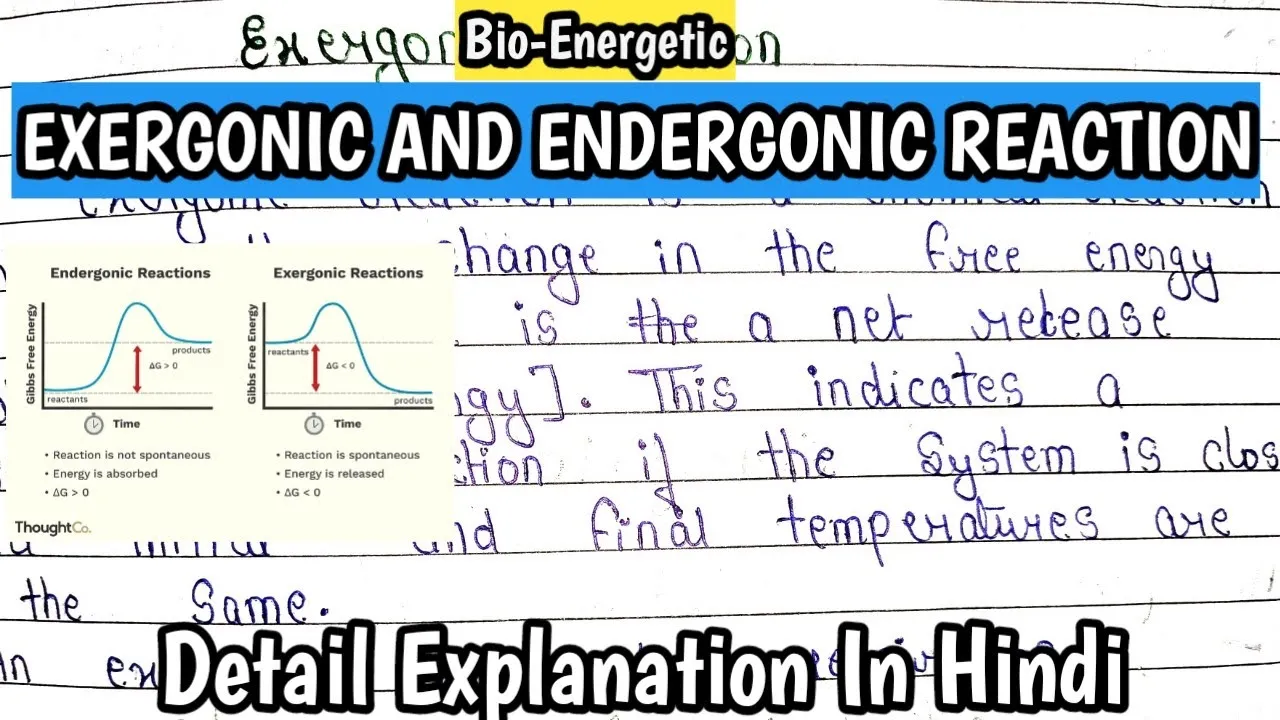
EXERGONIC AND ENDERGONIC REACTION | Bioenergetics | complete discussion + detail handmade notes|MSc.
30.6K
Exergonic reactions are spontaneous chemical processes where the change in Gibbs free energy (ΔG) is negative, meaning free energy is released from the system to the surroundings; conversely, endergonic reactions have a positive ΔG value, indicating that energy must be absorbed from the surroundings into the system for the reaction to occur. The progress of both reaction types can be visualized through energy diagrams showing activation energy barriers, with exergonic reactions releasing energy overall while endergonic reactions require energy input.
Click to watch →
Deep Dive
Fundamentals of protein structure, particularly how a protein's three-dimensional shape determines its biological function.

Protein Structure HL IB Biology
16.6K
Proteins are chains of amino acids that fold into complex three-dimensional shapes. Each amino acid has a central carbon atom bonded to an amino group (NH2), a carboxyl group (COOH), a hydrogen atom, and a variable R group. The R group determines the amino acid's properties—some are hydrophobic, some hydrophilic, some acidic or basic. The specific sequence of amino acids in a protein chain determines how it folds, and this three-dimensional shape is essential for the protein's function. For example, amylase (an enzyme in saliva that breaks down starch) has the exact same three-dimensional shape in every human being, allowing it to perform the same function regardless of source. Proteins serve diverse functions including enzymes, hormones, antibodies, and structural components, all dependent on their precise shape.
Click to watch →
Protein folding mechanism biochemistry
99.9K
The three-dimensional shape of a protein directly determines its biological function. For example, a globular protein with hydrophilic residues on the exterior can dissolve in water and transport molecules through blood, while a protein with hydrophobic residues facing outward would embed in cell membranes rather than being soluble.
Click to watch →
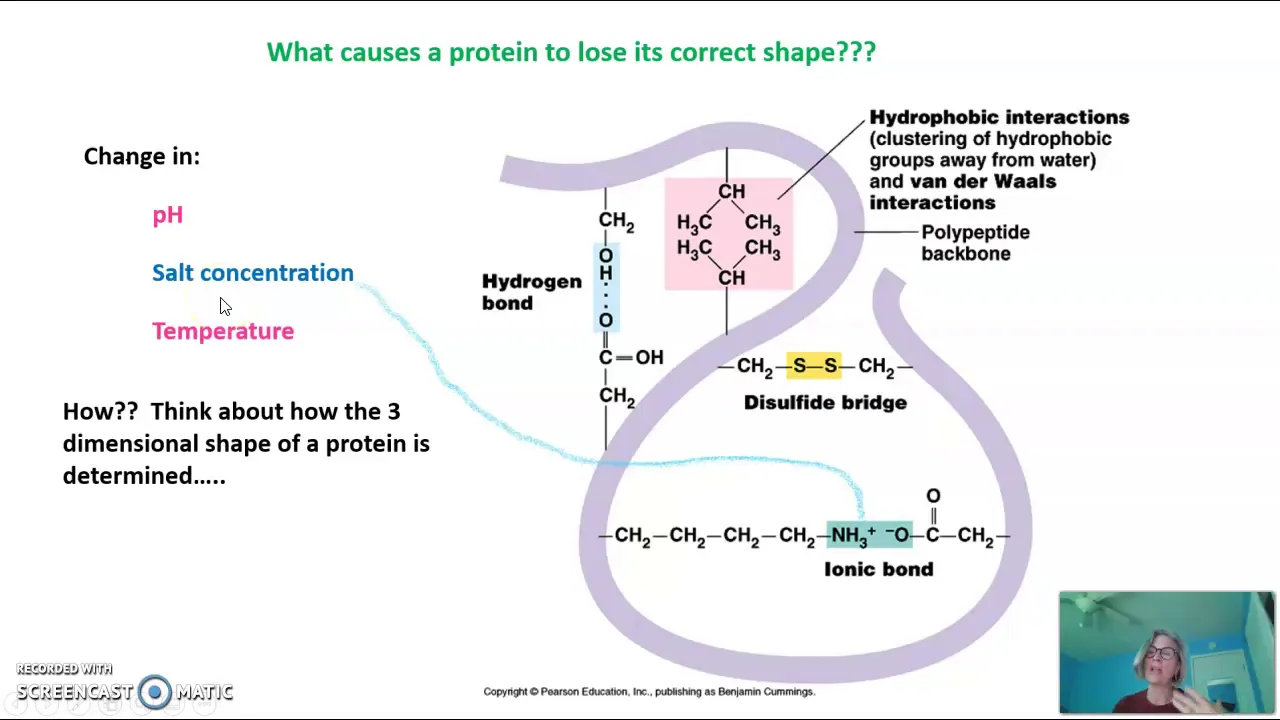
How protein shape determines function
984
Proteins perform their biological functions exclusively through their three-dimensional shape, which is determined by their tertiary structure; when proteins lose this correct shape due to changes in pH, salt concentration, or temperature, they become denatured and lose their function, as the specific interactions (hydrophobic, hydrogen, ionic, and disulfide bonds) that maintain the tertiary structure are disrupted.
Click to watch →

video rrueo
528
The three-dimensional shape of a protein determines its biological function. Proteins fold into specific shapes guided only by the laws of physics, and this folding process is essential for their proper functioning within cells.
Click to watch →
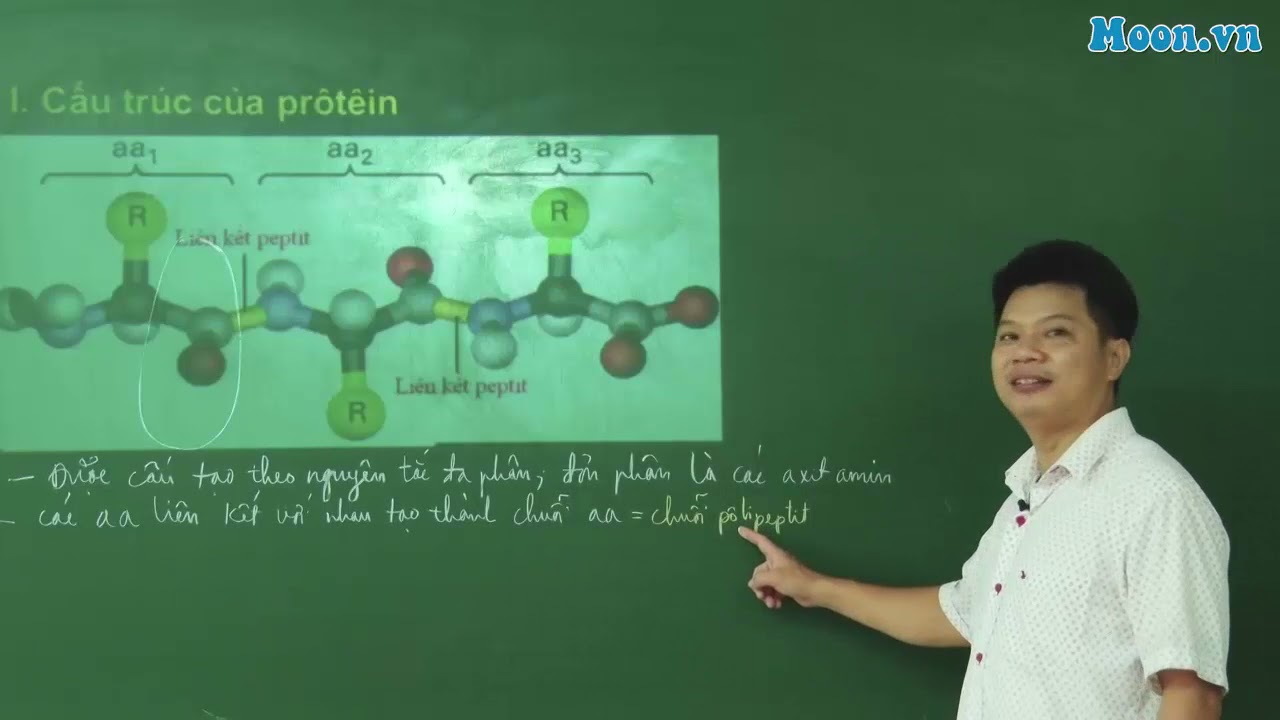
BÀI 5 PRÔTÊIN
101
The three-dimensional structure of a protein determines its biological function. When the structure of a protein changes, its function is altered or lost. This is a fundamental principle in biochemistry - the shape of a protein is directly related to what it can do in the body.
Click to watch →
Deep Dive
The kinetic molecular theory, especially the idea that molecules must collide with sufficient energy and correct orientation to react.

Chem 12A Chapter 6 Lecture 6 Reaction Progress Diagrams
205
The kinetic molecular theory of reactions states that chemical reactions occur when molecules collide with sufficient energy and proper orientation. For a reaction to happen, molecules must collide end-to-end (correct orientation) and have enough energy to overcome the bond energies being broken. This theory explains why not all molecular collisions result in reactions.
Click to watch →

Cinética Química (aula 01)
474
Collision theory explains how reactions occur at the molecular level. For reactions to happen, reactant molecules must: (1) have affinity for each other, (2) be in contact, and (3) collide with sufficient energy and proper orientation. Molecules are in constant chaotic motion depending on their phase—gas molecules move most freely, liquids less so, and solids least. Effective collisions result in product formation, while ineffective collisions (wrong orientation or insufficient energy) do not. This theory explains why not all molecular collisions lead to reactions.
Click to watch →
![QUÍMICA - Cinética Química [CICLO FREE]](https://i.ytimg.com/vi/-aKgBk445b0/maxresdefault.jpg)
QUÍMICA - Cinética Química [CICLO FREE]
14.8K
The Theory of Effective Collisions (Lewis, 1918-1920) states that for a reaction to occur, molecules must collide with proper orientation and sufficient kinetic energy. Using the analogy of throwing a stone at a board: insufficient force or improper angle results in no reaction. For effective collisions, molecules must have correct orientation (positive charges align with negative charges) and adequate energy. This explains why some molecular collisions fail while others succeed in producing products.
Click to watch →

(old version) CH 222 Chapter 12 - Part 2 of 2
269
For reactions to occur, molecules must collide with sufficient energy (to overcome activation barrier) and proper orientation. If molecules lack energy, they bounce apart. If they have energy but wrong orientation, no reaction occurs. The ozone + NO reaction demonstrates this: with correct energy but wrong orientation (O on NO hitting O on ozone), no reaction happens. Only when both energy and orientation are correct does the reaction proceed to form O₂ and NO₂.
Click to watch →
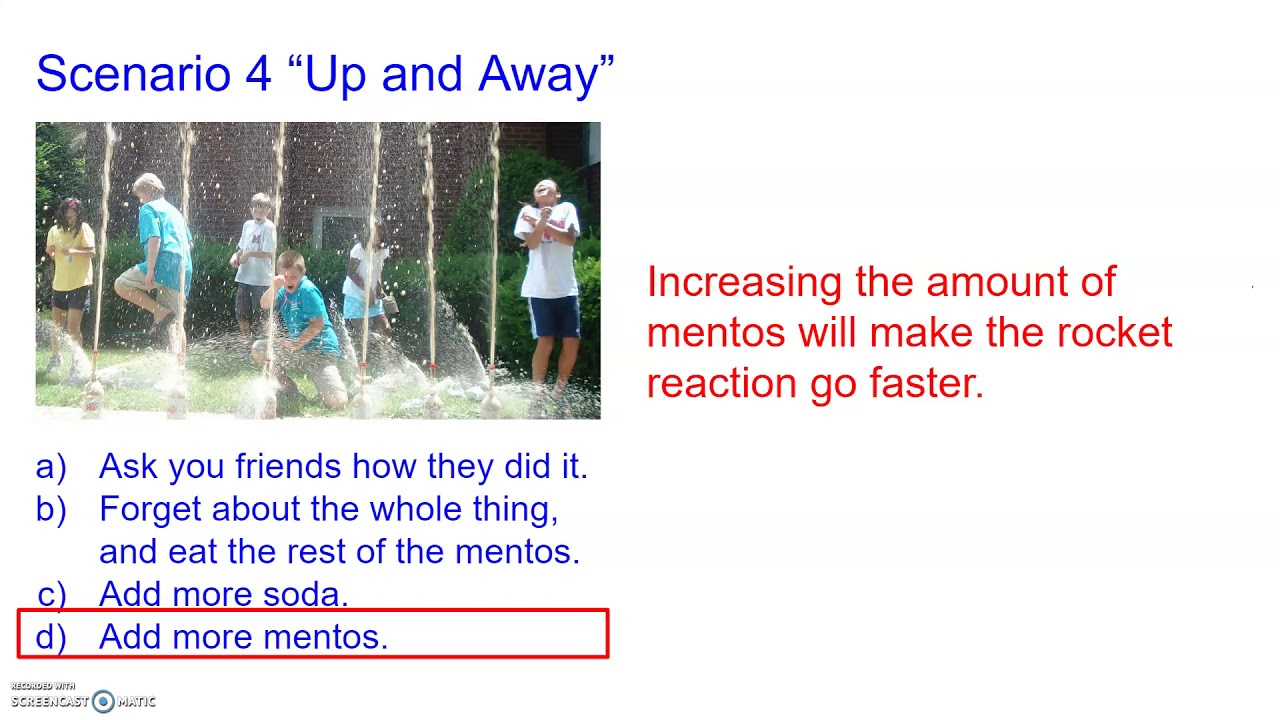
U5D3 P2 Kinetics Basics Full
523
According to collision theory, for a chemical reaction to occur, molecules must collide with both sufficient kinetic energy and correct orientation. Sufficient kinetic energy means particles must move fast enough to break existing bonds. Correct orientation means particles must collide in the proper alignment for the reaction to proceed. Factors like temperature and agitation increase kinetic energy, while concentration, surface area, and agitation increase collision frequency, thereby increasing the likelihood of successful collisions.
Click to watch →
Prerequisite Knowledge
- Concept 01Basic chemical reactions, including the difference between reactants and products and how chemical bonds are formed and broken.
- Concept 02The concept of energy changes in reactions, specifically distinguishing between exergonic (energy-releasing) and endergonic (energy-absorbing) processes.
- Concept 03Fundamentals of protein structure, particularly how a protein's three-dimensional shape determines its biological function.
- Concept 04The kinetic molecular theory, especially the idea that molecules must collide with sufficient energy and correct orientation to react.
Subsequent Learning
- Step 01Enzyme kinetics, including the Michaelis-Menten model, and how substrate concentration affects reaction rates (Vmax and Km).
- Step 02Mechanisms of enzyme regulation, such as competitive and non-competitive inhibition, allosteric regulation, and feedback loops.
- Step 03The effect of environmental factors (like temperature, pH, and salt concentration) on enzyme activity and the concept of denaturation.
- Step 04Industrial and medical applications of enzymes, including drug design (enzyme inhibitors) and biotechnology (e.g., PCR, food production).
Enzyme Basics
Enzyme Basics
0:01Playing Section
- 1
Enzymes are proteins that speed up reactions by lowering activation energy.
- 2
Active site binds specific substrates, leading to splitting or fusing.
- 3
Enzymes only accelerate reactions; they do not initiate them.
Quantum Tunneling and Dynamic Effects in Enzyme Catalysis
While classical biology teaches that enzymes speed up reactions solely by binding substrates and lowering the classical activation energy barrier (Transition State Theory), modern biophysics introduces quantum mechanics and protein dynamics as crucial alternative mechanisms. Quantum tunneling allows subatomic particles, such as protons and electrons, to pass directly through energy barriers rather than overcoming them classically. Additionally, the 'dynamicist' view argues that rapid, coordinated physical vibrations within the enzyme's structure actively drive the reaction, challenging the traditional view of enzymes as static scaffolds that merely stabilize the transition state.
Deep Dive
Enzyme kinetics, including the Michaelis-Menten model, and how substrate concentration affects reaction rates (Vmax and Km).

Michaelis-Menten Equation & Enzyme Kinetics - Biochemistry Series
219K
The Michaelis-Menten equation (V₀ = Vmax × [S] / (Km + [S])) describes the relationship between substrate concentration and reaction rate in enzyme-catalyzed reactions, where Vmax represents the maximum reaction velocity (theoretical maximum rate when all enzyme active sites are saturated), and Km (Michaelis constant) represents the substrate concentration at which the reaction rate is half of Vmax; higher enzyme affinity for its substrate results in a lower Km value, and shifts in the enzyme kinetics curve (upward/downward or left/right) indicate changes in enzyme quantity or affinity due to factors like gene expression, inhibition, or activation.
Click to watch →
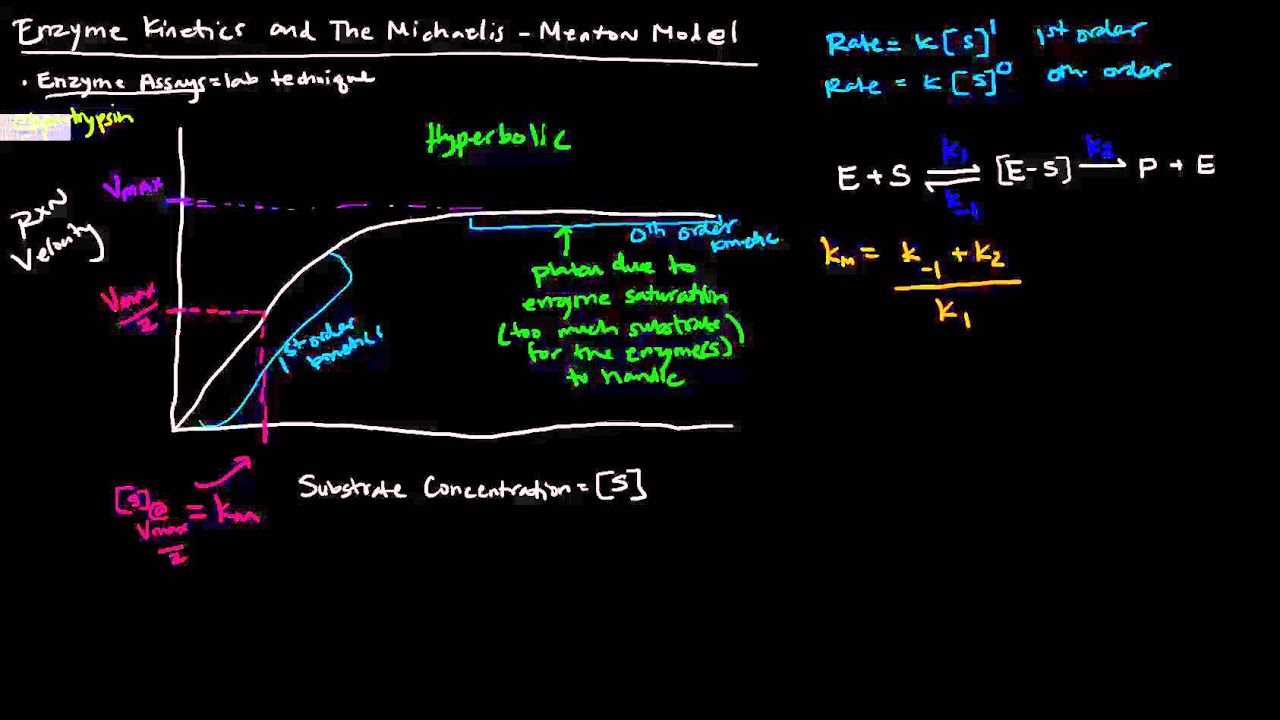
Enzyme Kinetics and the Michaelis-Menten Model Explained
333.9K
The Michaelis-Menten model describes enzyme kinetics through a hyperbolic relationship between reaction velocity and substrate concentration, where velocity increases with substrate concentration until reaching a plateau (Vmax) when all enzyme active sites are saturated; the Michaelis constant (Km) represents the substrate concentration at which the reaction velocity equals half of Vmax, and serves as a measure of enzyme-substrate affinity, with lower Km indicating higher affinity and higher Km indicating lower affinity.
Click to watch →
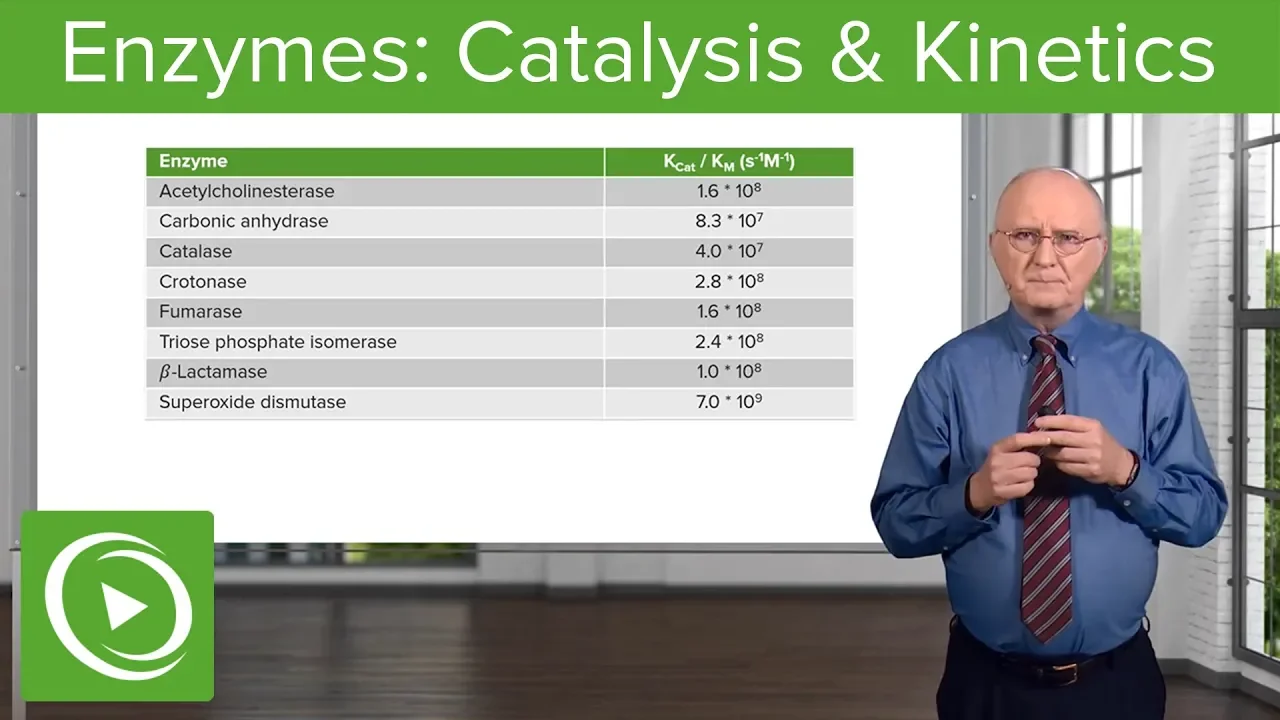
Enzymes: Catalysis, Kinetics & Classification – Biochemistry | Lecturio
174K
Michaelis-Menten kinetics describes the relationship between reaction velocity and substrate concentration using the equation vo = (Vmax × [S])/(Km + [S]). Vmax represents the maximum reaction velocity achieved when the enzyme is completely saturated with substrate, reflecting the turnover number—the number of substrate molecules converted per enzyme per second. Km (Michaelis constant) measures substrate concentration required to achieve half-maximal velocity and serves as an inverse measure of enzyme affinity for substrate. Lower Km indicates higher affinity.
Click to watch →

JRF Express - Complete Biochemistry - CSIR NET JRF Dec 2025 | Emotion 6.0 | Rapid Revision | IFAS
96.2K
Enzyme kinetics follows Michaelis-Menten equation: v = (Vmax[S])/(Km + [S]). Km represents substrate concentration at half Vmax. Km is inversely related to enzyme-substrate affinity (lower Km = higher affinity). Vmax is directly proportional to enzyme concentration. At low [S], reaction is first-order; at high [S], reaction is zero-order.
Click to watch →
Biomolecules l Lecture 16 l Biology l NEET
53.3K
Enzyme kinetics describes how substrate concentration affects reaction rate. As substrate concentration increases, reaction rate increases proportionally until enzyme saturation occurs. At saturation, all active sites are occupied, and further substrate increases cannot increase the reaction rate. The Michaelis-Menten constant (Km) represents the substrate concentration at which reaction velocity reaches half of Vmax. Km indicates enzyme-substrate affinity: low Km means high affinity (enzyme binds substrate tightly), while high Km means low affinity. Km values typically range from 10^-7 to 10^-1 M. This mathematical framework allows comparison of enzyme efficiency across different substrates and conditions.
Click to watch →
Deep Dive
Mechanisms of enzyme regulation, such as competitive and non-competitive inhibition, allosteric regulation, and feedback loops.

أقوى مراجعة لجميع الوحدات من الألف إلى الياء ( مراجعة ليلة الرعد )
111.8K
Enzyme activity is regulated through inhibition mechanisms: competitive inhibition (inhibitor competes with substrate for active site, can be overcome by increasing substrate concentration), non-competitive inhibition (inhibitor binds allosteric site, causes conformational change, cannot be overcome by substrate), and feedback inhibition (end product inhibits earlier enzyme in metabolic pathway). Feedback inhibition is a natural regulatory mechanism that prevents accumulation of excess products and maintains metabolic homeostasis. These regulatory mechanisms allow cells to efficiently control metabolic pathways based on their needs.
Click to watch →
![Enzymhemmung [kompetitive Hemmung + nicht-kompetitive Hemmung] [4/6] - [Biologie, Oberstufe]](https://i.ytimg.com/vi/O542SMPoWw0/sddefault.jpg)
Enzymhemmung [kompetitive Hemmung + nicht-kompetitive Hemmung] [4/6] - [Biologie, Oberstufe]
164.4K
Competitive inhibition occurs when inhibitors structurally resemble substrates and compete for binding at the enzyme's active site. While bound, inhibitors prevent substrate access without being processed by the enzyme. This inhibition is reversible and causes the apparent Km to increase while Vmax remains unchanged. Non-competitive (allosteric) inhibition involves binding at a separate allosteric site, inducing conformational changes that distort the active site. Unlike competitive inhibition, substrate and inhibitor don't compete for the same site. Both mechanisms reduce reaction rates but affect kinetic parameters differently, with competitive inhibition showing characteristic shifts in substrate requirement curves.
Click to watch →
![Allosterische Regulation + Endprodukthemmung - Enzymregulation [5/6] - [Biologie, Oberstufe]](https://i.ytimg.com/vi/F8ha1DXw4SU/sddefault.jpg)
Allosterische Regulation + Endprodukthemmung - Enzymregulation [5/6] - [Biologie, Oberstufe]
117.5K
Allosteric regulation is a mechanism where effector molecules bind to allosteric centers (regions separate from the active site) on enzymes, causing conformational changes that either activate or inhibit enzyme activity; end-product inhibition (feedback inhibition) specifically involves the end product of a metabolic pathway binding to the allosteric center of the rate-limiting enzyme, creating negative feedback that stops further synthesis when the product is abundant, thus conserving cellular energy.
Click to watch →

Metabolizm - powtórka przed maturą z biologii 2023
68.9K
Competitive inhibition occurs when inhibitors compete with substrates for the active site, reversible by increasing substrate concentration. Non-competitive inhibition involves binding to allosteric sites, changing enzyme shape and reducing activity regardless of substrate concentration. The methanol poisoning example demonstrates competitive inhibition: ethanol competes with methanol for alcohol dehydrogenase's active site. However, because ethanol binds 10,000 times more strongly than methanol, the inhibition is practically irreversible in the body.
Click to watch →

Unlock 17 Marks in FMGE Jan 2025 | Biochemistry LMR by Dr. Azam
230.3K
Competitive inhibition: Vmax remains the same, Km increases (inhibitor competes with substrate for active site). Non-competitive inhibition: Vmax decreases, Km remains the same (inhibitor binds to allosteric site). Uncompetitive inhibition: both Vmax and Km decrease (parallel lines on Lineweaver-Burk plot). Mixed inhibition: Km increases and Vmax decreases. These concepts are fundamental for understanding enzyme kinetics and drug action.
Click to watch →
Deep Dive
The effect of environmental factors (like temperature, pH, and salt concentration) on enzyme activity and the concept of denaturation.

Enzyme Activity & the effect of Temperature, pH, and Salinity | Biochemistry
32.5K
Enzyme activity is highly sensitive to environmental conditions: temperature and enzyme activity are directly related up to an optimal point (around 37°C for human enzymes), after which excessive heat causes denaturation and activity decreases; pH affects enzyme function with most enzymes working optimally at pH 7.4, though exceptions like pepsin function in acidic environments; and increased salinity raises the risk of enzyme denaturation, reducing activity. These principles are illustrated clinically through albinism (tyrosinase deficiency) and Siamese cat coloration (temperature-sensitive tyrosinase).
Click to watch →
الإنزيمات👻ثالثة ثانوي شعبة علوم تجريبية /شرح مميز باك2026/تخلص من شبح الإنزيمات👻👻🧟♀️
75.2K
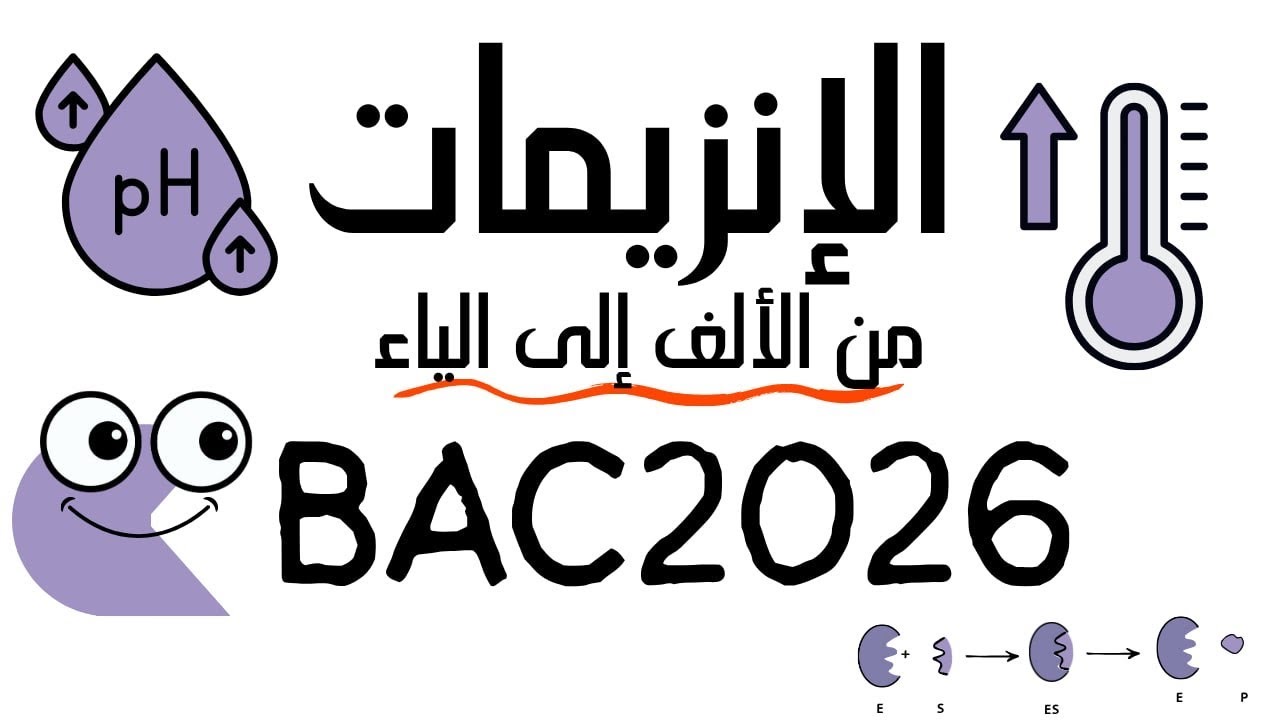
Enzyme activity is affected by environmental factors. Genetic mutations affecting amino acids in the active site, especially catalytic site amino acids, negatively affect enzyme activity by disrupting substrate binding and transition bond formation. Different organs have different pH levels (mouth pH 7, stomach pH 2, small intestine pH 7.2), and enzymes function optimally at specific pH levels. pH affects amino acid side chain ionization, changing charge distribution and disrupting ionic bonds maintaining protein structure. Each enzyme has an optimal pH where most acidic and basic groups are ionized, allowing proper substrate binding. Temperature also affects enzymes: high temperatures break bonds maintaining structure (potentially denaturing), while low temperatures reduce molecular motion. The effect of low temperature is reversible, but high temperature causes irreversible denaturation.
Click to watch →

مراجعة الوحدة الأولى/احياء/أ. هيثم القادري
23.6K
Four main factors affect enzyme activity: temperature, pH, substrate concentration, and enzyme concentration. Temperature affects enzyme activity in a bell-shaped curve: activity increases with temperature up to an optimal point (35-40°C for human enzymes), then decreases as high temperatures denature the enzyme. Denaturation changes the enzyme's shape, including the active site, preventing substrate binding. Different enzymes have different optimal pH levels: pepsin (stomach) works best at pH 1.5-2.0 (acidic), while trypsin (small intestine) works best at pH 8.0 (alkaline). Substrate concentration and reaction rate show a direct relationship at low concentrations but become constant at high concentrations when all active sites are occupied. Enzyme concentration and reaction rate are directly proportional, as more enzyme means more active sites available for substrate binding.
Click to watch →

🛑 حل موضوع الأول Bac 2021 شعبة علوم .
16.4K
Enzyme activity depends on environmental conditions: (1) pH - each enzyme has an optimal pH range (for ribonuclease, 7.3-8.5); deviation from optimum affects ionization of active site amino acids, disrupting catalysis, (2) Temperature - affects protein structure stability, (3) Chemical denaturants - beta-mercaptoethanol breaks disulfide bridges, urea breaks hydrogen bonds, causing reversible denaturation. When denaturants are removed, enzymes can refold and regain activity, demonstrating that structural information is encoded in the amino acid sequence.
Click to watch →

Denaturing By Enzymes | Organic Chemistry | Chemistry | FuseSchool
37.4K
Enzymes are protein molecules that catalyze specific reactions in living cells, and their three-dimensional shape (tertiary structure) is essential for their function; denaturation occurs when environmental changes such as temperature, pH, salt concentration, or solvent type disrupt the weak hydrogen bonds and dipole forces that maintain this shape, causing the enzyme to unravel and lose its catalytic activity.
Click to watch →
Deep Dive
Industrial and medical applications of enzymes, including drug design (enzyme inhibitors) and biotechnology (e.g., PCR, food production).

Was sind Enzyme? (aus: Gesprochene Wikipedia)
1.5K
Enzymes have diverse applications: in biotechnology (protein production, catalytic antibodies/abzymes, ribozymes), industry (detergents with lipases/proteases/amylases, cheese production with rennet, brewing, fruit juice processing with pectinases, leather processing, textile industry), and medicine (diagnostic tests for blood sugar, alcohol, organ damage markers; drugs like aspirin inhibiting cyclooxygenase). Enzymatic browning in fruits is prevented by ascorbic acid. Genetic modification enables enzyme production in microorganisms.
Click to watch →

Canlıların Temel Bileşenleri Vol.4 | Enzimler
203
Enzymes are widely used in food industry (cheese, bread, dairy processing), detergents (breaking down stains), and medicine (diagnostics, drug production, cancer therapy). They are obtained from microorganisms for easy cultivation and control. Enzyme deficiency diseases like phenylketonuria demonstrate their importance. Enzyme therapy makes cancer cells vulnerable to immune system attacks.
Click to watch →

Một số ứng dụng điển hình của Enzyme trong công nghiệp, Chế biến thực phẩm, Y khoa & Xử lý ô nhiễm
7K
Enzymes have diverse applications across industries and medicine. In industry, amylase removes starch in textiles; proteolytic enzymes break down collagen in leather and remove stains in detergents; cellulase removes lignin in paper production; natural enzymes tenderize meat; rennet and proteases improve cheese flavor; pectinase clarifies wine; invertase converts sucrose to glucose/fructose. In medicine, thrombolytic enzymes dissolve blood clots; trypsin limits surgical bleeding; digestive enzymes treat disorders; enzymes serve as diagnostic markers for diseases like hepatitis, liver cancer, and myocardial infarction.
Click to watch →

Fundamentos de Enzimologia 2 - História da Enzimologia e Aplicações
482
Enzymes have widespread applications: laundry detergents, fabric treatment, flour improvement, beverage production, and animal nutrition. In organic synthesis, enzymes are preferred for pharmaceutical production due to high specificity. Most clinical tests for hormones, metabolic markers, and proteins are based on enzymatic activity. Enzymes also have direct medical applications in treating metabolic disorders and developing drug inhibitors.
Click to watch →
Grade 11 Biology Unit 3: 3.9.1 Uses of enzyme application | Saquama
2.9K
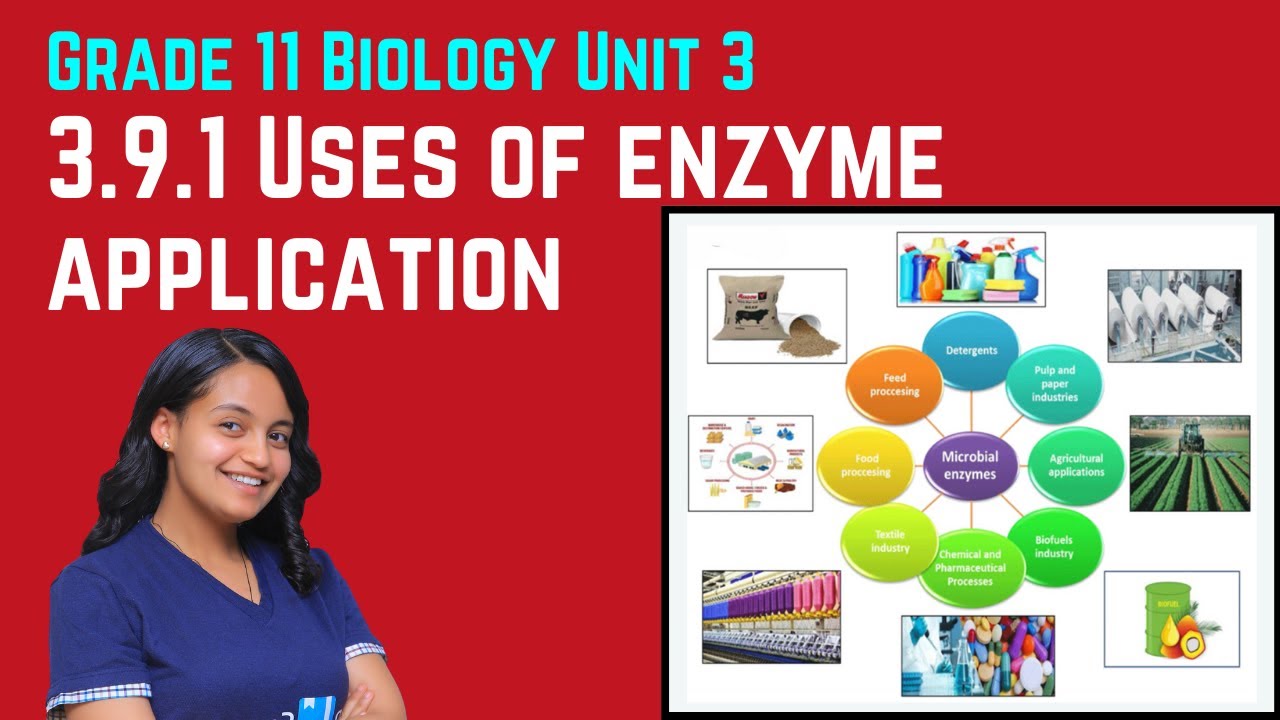
Enzymes are biological catalysts that accelerate chemical reactions in living organisms and have diverse industrial applications across food processing (amylase for brewing, rennet for cheese making, papain for meat tenderizing), detergents (protease, amylase, lipase for stain removal), biofuel production (cellulase, amylase), pharmaceuticals (papain for wound debridement), and molecular biology research (restriction enzymes for DNA cutting, DNA ligase for gene splicing).
Click to watch →
Enzyme Basics
Enzyme Basics
0:01- 1
Enzymes are proteins that speed up reactions by lowering activation energy.
- 2
Active site binds specific substrates, leading to splitting or fusing.
- 3
Enzymes only accelerate reactions; they do not initiate them.
Quantum Tunneling and Dynamic Effects in Enzyme Catalysis
While classical biology teaches that enzymes speed up reactions solely by binding substrates and lowering the classical activation energy barrier (Transition State Theory), modern biophysics introduces quantum mechanics and protein dynamics as crucial alternative mechanisms. Quantum tunneling allows subatomic particles, such as protons and electrons, to pass directly through energy barriers rather than overcoming them classically. Additionally, the 'dynamicist' view argues that rapid, coordinated physical vibrations within the enzyme's structure actively drive the reaction, challenging the traditional view of enzymes as static scaffolds that merely stabilize the transition state.
Basic chemical reactions, including the difference between reactants and products and how chemical bonds are formed and broken.
The concept of energy changes in reactions, specifically distinguishing between exergonic (energy-releasing) and endergonic (energy-absorbing) processes.
Fundamentals of protein structure, particularly how a protein's three-dimensional shape determines its biological function.
The kinetic molecular theory, especially the idea that molecules must collide with sufficient energy and correct orientation to react.
Enzyme kinetics, including the Michaelis-Menten model, and how substrate concentration affects reaction rates (Vmax and Km).
Mechanisms of enzyme regulation, such as competitive and non-competitive inhibition, allosteric regulation, and feedback loops.
The effect of environmental factors (like temperature, pH, and salt concentration) on enzyme activity and the concept of denaturation.
Industrial and medical applications of enzymes, including drug design (enzyme inhibitors) and biotechnology (e.g., PCR, food production).
405.9K views751likes2:01@HenmommaOriginal Release: 2009-03-12
enzymes Nature's microscopic workmen hi my name is Henry Godard and this is a presentation on how enzymes work an enzyme is a living protein inside our bodies that helps us speed up reactions it does this by lowering the activation energy of the reaction this is Milo Milo is an enzyme this is Milo's activation site this is where a substrate will bind on and cause a catalyzation however only a specific type of molecule will fit this site oh here comes one now this is earnest when he sits on Milo he will split into two separate molecules and as you can see now we have Pete and Bertrand who are pushed out of the enzyme Milo as you can plainly see is an enzyme designed to break apart substrates remember Milo didn't start this chemical reaction it would happen regardless of whether he was here or not he just speeds up the reaction now let's say we have another enzyme Larry the enzyme Larry will attract two separate substrates here they are Sylvester and Orlando like Milo Larry seats the two substrates in his active site however unlike Milo Larry fuses the two together now pushes one single molecule out Steve this animation was brought to you by
Up Next

8:20
IPTG Induction Using the lac Promoter: Recombinant Protein Expression
@thebumblingbiochemist
9K views•2023-07-20

39:12
Taste Matters: Why We Like the Food We Do | Professor John Prescott
@smagforlivet-video
409 views•2015-12-07

5:35
Enteric Nervous System Explained: The Gut's Brain | Neurobiology Lecture
@alumniu6029
438 views•2018-09-12

7:08
Bacteriophages: Earth's Deadliest Killers and Future Antibiotics
@kurzgesagt
34.6M views•2018-05-13
Related Study Plans & Knowledge Roadmaps
Structured learning paths in Biology
biology
Analyzing Animal Venoms: Genetics & Pharma
01Molecular Biology & Physiology Foundations
02Venom Evolution & Toxin Gene Recruitment
03Neurotoxins & Ion Channel Pharmacology
+ 2 more learning modules
18h5 modules
Explore Roadmap
biology
RNAi: Biogenesis, RISC & Gene Silencing
01Molecular Biology Foundations: DNA to Protein
02Introduction to RNA Interference (RNAi)
03Molecular Biogenesis of miRNA and siRNA
+ 2 more learning modules
10h5 modules
Explore Roadmap
biology
Mycorrhizae: Signaling, Biophysics & Ecology
01Foundations of Mycorrhizal Symbiosis
02Molecular Signaling and Root Colonization
03Biophysics and Bioenergetics of Nutrient Exchange
+ 1 more learning modules
11h4 modules
Explore Roadmap
biology
Circadian Clocks: TTFL, SCN & Periphery
01Foundations of Molecular Biology & Gene Expression
02Introduction to Chronobiology and Actograms
03The Core TTFL: Molecular Architecture of the Clock
+ 3 more learning modules
14h6 modules
Explore Roadmap