




















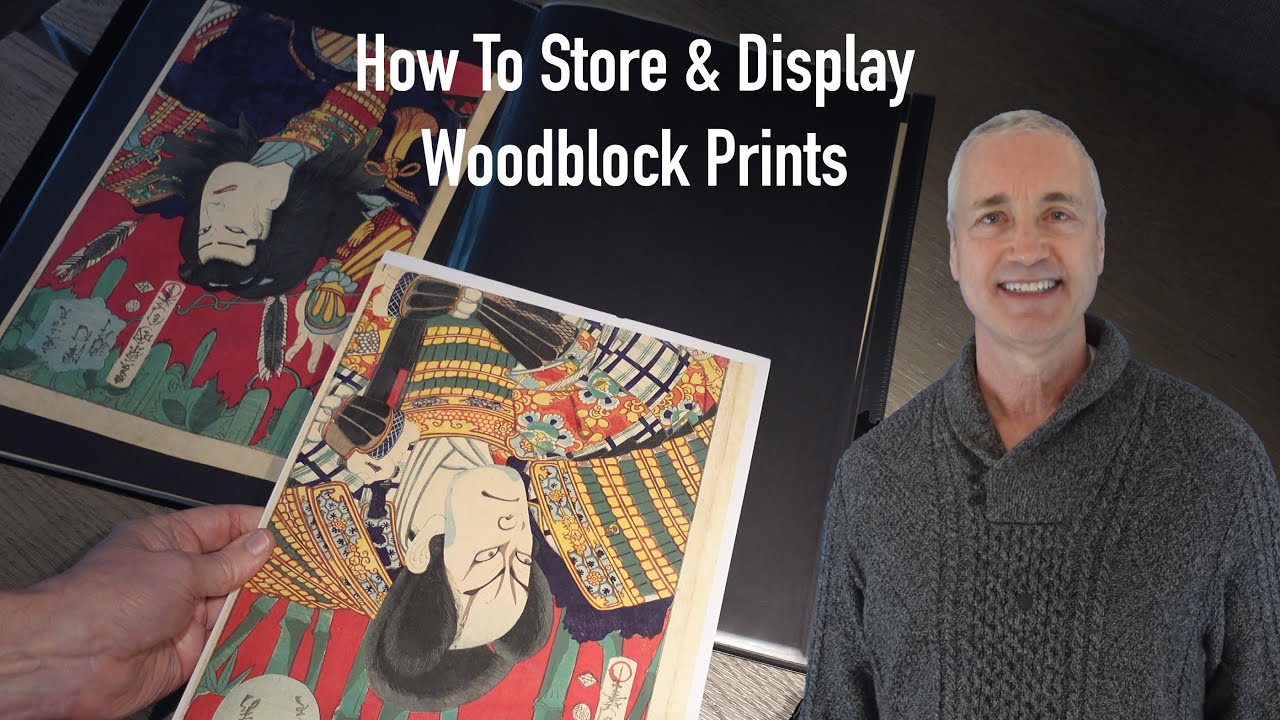


Japanese woodblock printing is a collaborative craft involving four specialists: a publisher, an artist, carvers, and printers, where the carver traces and carves the original artwork into multiple blocks, the printer mixes sumi ink with rice paste (nori) to achieve flat colors, and uses a traditional baron press made of bamboo and twisted thread to transfer the image onto paper with precise registration marks.
Japanese Woodblock Printing Process: Rebecca Salter RA Explains
Added:Basic principles of relief printmaking, where ink is applied to the raised surfaces of a carved matrix rather than recessed grooves.
An introductory understanding of Japanese art history, particularly the cultural significance of the Edo period and Ukiyo-e ('pictures of the floating world') prints.
Familiarity with manual carving tools (such as chisels, knives, and gouges) and how wood grain direction affects carving.
A foundational knowledge of paper properties, specifically the difference between Western wood-pulp papers and traditional Japanese handmade paper (washi).
Advanced multi-color registration techniques, specifically the traditional 'Kento' system used to perfectly align multiple carved blocks.
The chemistry and preparation of water-based pigments and natural binders (like rice starch paste or 'nori') unique to the Mokuhanga process.
An exploration of the collaborative print studio system (the division of labor between publisher, artist, carver, and printer) versus the modern Sosaku-hanga (creative print) movement.
Practical hands-on application: designing, carving, and printing a multi-layered color woodblock print using a traditional baren (hand-burnishing tool).
Conservation and preservation standards for archiving and displaying delicate, light-sensitive, water-based woodblock prints.
61.4K views728likes4:23Original Release: 2016-07-19
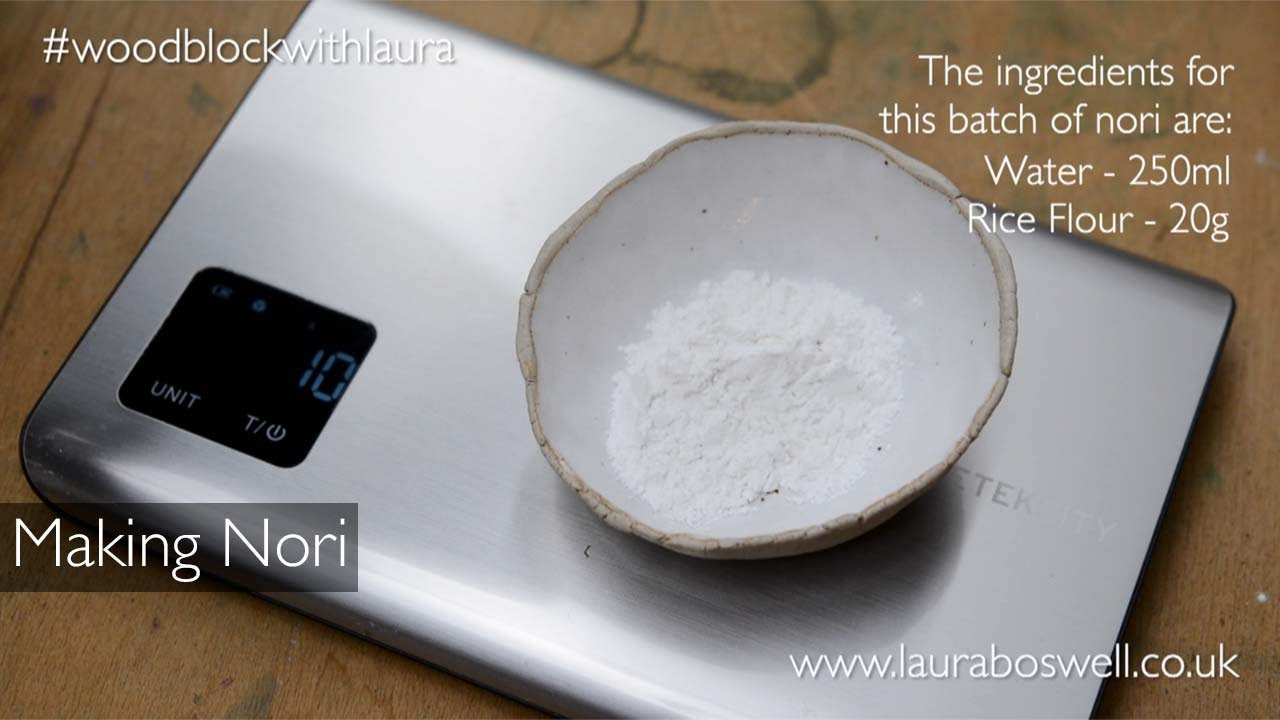
[Music] the traditional way Japanese prints were produced there was a group of four people involved um a publisher who was usually the person with the money um an artist and it's the artists whose names we know so that would have been hokai or Hiroshi or utamaro and then two separate workshops um Carvers and printers and that's more or less still the way these people work now and so they all come together they look at the original I send them and the Carver decides how many blocks he needs to reproduce it then he takes the original away and traces it minutely carves a complete set of blocks for the print takes those blocks to the printing workshop and that's where they start proofing and printing if we look at the carving tools first this is the most important one it's just a a flat blade beveled on one of one side and it's held a bit like a dagger and the aim of this initial line is to imitate the fluid line of the drawing um other tools you'll see them using is various semicircular chisels and that's for clearing away the excess wood around the the carved area and then a flat chisel which is used for sort of tidying up the The Ridges of the carved area now these tools that I'm using and the ones that the Carvers in Japan use are made by an ex samurai sword polisher in Tokyo um so it's very high quality steel and as you can see the blade goes all the way up into the handle and as you use it you can move the blade out so it'll last you a lifetime printing workshops largely are in people's houses because they're very modest Affairs they're sitting on the floor in the traditional fashion um for this series of prints he's using um Japanese ink which is called Sumi which has been thinned right down and then he's added a tiny bit of white and a little bit of blue as he transfers the color onto the block using a brush a separate brush like that which is called hobi in Japanese and then once he's transferred the color to the block you'll also see him adding Japanese rice paste or Nori and then he mixes those two on the Block using um a brush a bit like this one now the reason you add Nori to the block is it acts a bit like an extender if you don't add it to the color it's very speckled so by mixing the rice paste and the color on the Block you will get that very flat color which is characteristic of Japanese prints now the brushes used for mixing on the block are traditionally made from horse hair so anything which has got a bit of resistance to it like that and you'll see he brushes the block quite several you know many many times to get the ink spread evenly onto the block and then once the color is on the Block the paper is fixed into registration marks and then when the paper is on the Block he uses this it's hard to know what English word to use for this in Japanese it's called a baron and he uses this to print the image onto the paper now this is constructed um um of three parts one of which you can't see um there's a backing board um and then it's covered on the outside in this bamboo it's the bamboo sheath from the the bamboo when it first comes out of the ground the bamboo shoots and inside here is a coil of very very strong bamboo Twisted bamboo thread and that um is what gives the even spread of pressure on the back of the print la [Music]
Up Next

14:31
Debunking Adagio: Degas, Intentional Downtime, and Romantic Living
@TheDailyConnoisseur
13.3K views•2020-02-20

12:54
Triumph of Orthodoxy Icon: Byzantine Art & History Explained
@BenCallan
2.1K views•2024-08-06

9:49
FastAPI vs Flask vs Django: Choosing the Right Python Web Framework
@TechWithTim
302.5K views•2024-05-26

1:42
Game of Thrones Opening Credits: A Cinematic Analysis
@gameofthrones
46.3M views•2011-04-18
Related Study Plans & Knowledge Roadmaps
Structured learning paths in General & Interdisciplinary Studies
general-studies
Elevator Engineering: History, Physics & Cities
01From Hoists to Safety Brakes: The Dawn of Vertical Lift
02Hydraulic vs. Traction: The Engineering Physics of Elevators
03Modern Speed, Safety, and Algorithms
+ 2 more learning modules
12h5 modules
Explore Roadmap
general-studies
Rubber: Material Science, History & Geopolitics
01Origins of Natural Rubber & Mesoamerican History
02The Chemistry of Natural Rubber & Vulcanization
03The Geopolitics of the Rubber Boom & Colonization
+ 2 more learning modules
12h5 modules
Explore Roadmap
general-studies
Containerization: Evolution, Logistics & Trade
01Ancient Trade & Bulk Cargo: Amphorae to Barrels
02The Industrial Revolution & Cardboard Packaging
03The Containerization Revolution: Malcom McLean
+ 2 more learning modules
12h5 modules
Explore Roadmap
general-studies
Textile Tech: Evolution, Labor & Global Impact
01Pre-Industrial Textiles: Handloom & Cottage Industry
02Mechanization: The Spinning Jenny to the Power Loom
03The Factory System & Global Labor Transformation
+ 2 more learning modules
10h5 modules
Explore Roadmap