





![[본게임 108회] 미사일 잡는 요격 미사일 패트리어트](https://i.ytimg.com/vi_webp/mMPayyYuGz4/maxresdefault.webp)

!["혁명수비대 싹다 도망가는 중" 도살자 AH-64 뜨자 이란 초비상, 아파치가 이란 박살내고 있는 진짜 이유 [이슈임당]](https://i.ytimg.com/vi_webp/O5jkn_oOXkI/maxresdefault.webp)






















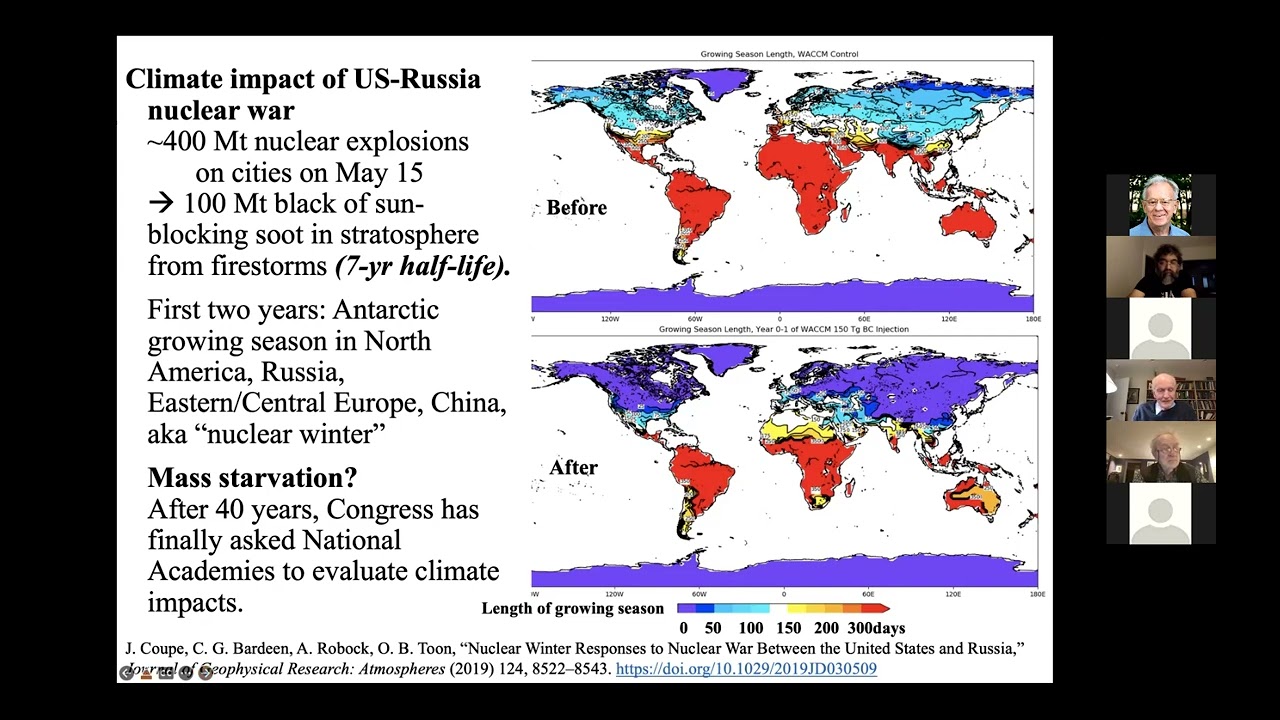
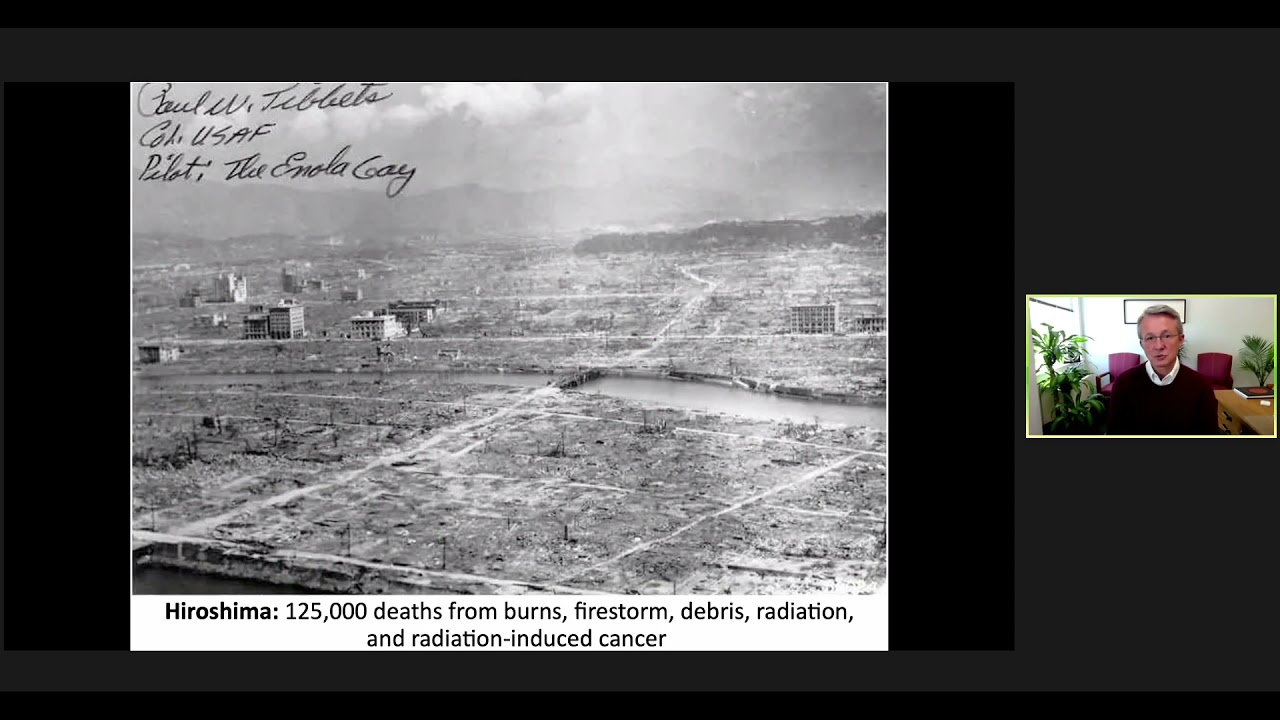
Missile defense systems face fundamental economic and strategic limitations when attempting to defend against peer adversaries, as the attacker can always scale up their offensive capabilities more cheaply than the defender can build redundant defensive systems; this explains why the United States has historically focused missile defense on limited objectives like defending against rogue states rather than attempting comprehensive protection against peer adversaries like Russia or China.
Golden Dome: Missile Defense Economics and Limits
Added:Fundamental concepts of Strategic Deterrence Theory, including Mutually Assured Destruction (MAD) and how defensive shields alter strategic stability.
The basic physics and operational phases of ballistic flight (boost, midcourse, and terminal phases) and how interception mechanisms target these stages.
The economic principle of 'cost-exchange ratio' in military strategy, specifically comparing the cost of defensive interceptors against the cost of offensive missiles.
An overview of existing missile defense systems (such as Iron Dome, THAAD, and Aegis) and their historical performance and operational limits.
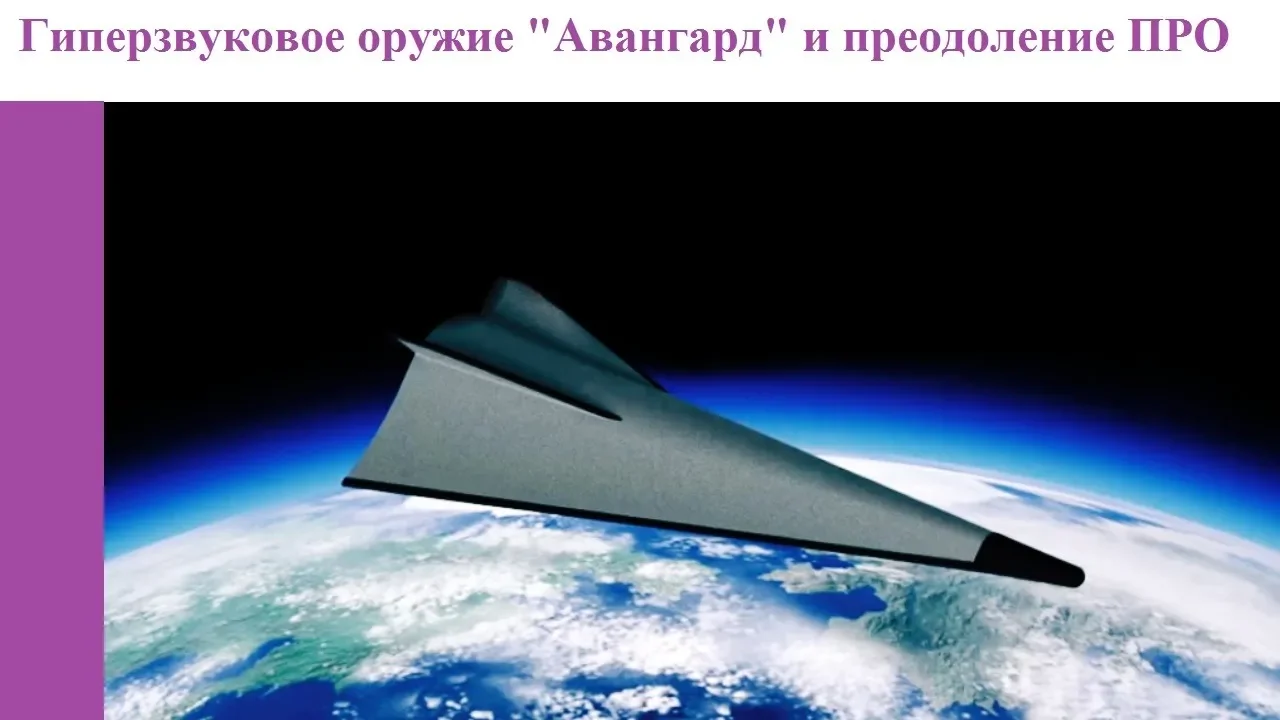
The physics and strategic impact of Hypersonic Glide Vehicles (HGVs) and how hypersonic weapons bypass traditional missile defense systems.
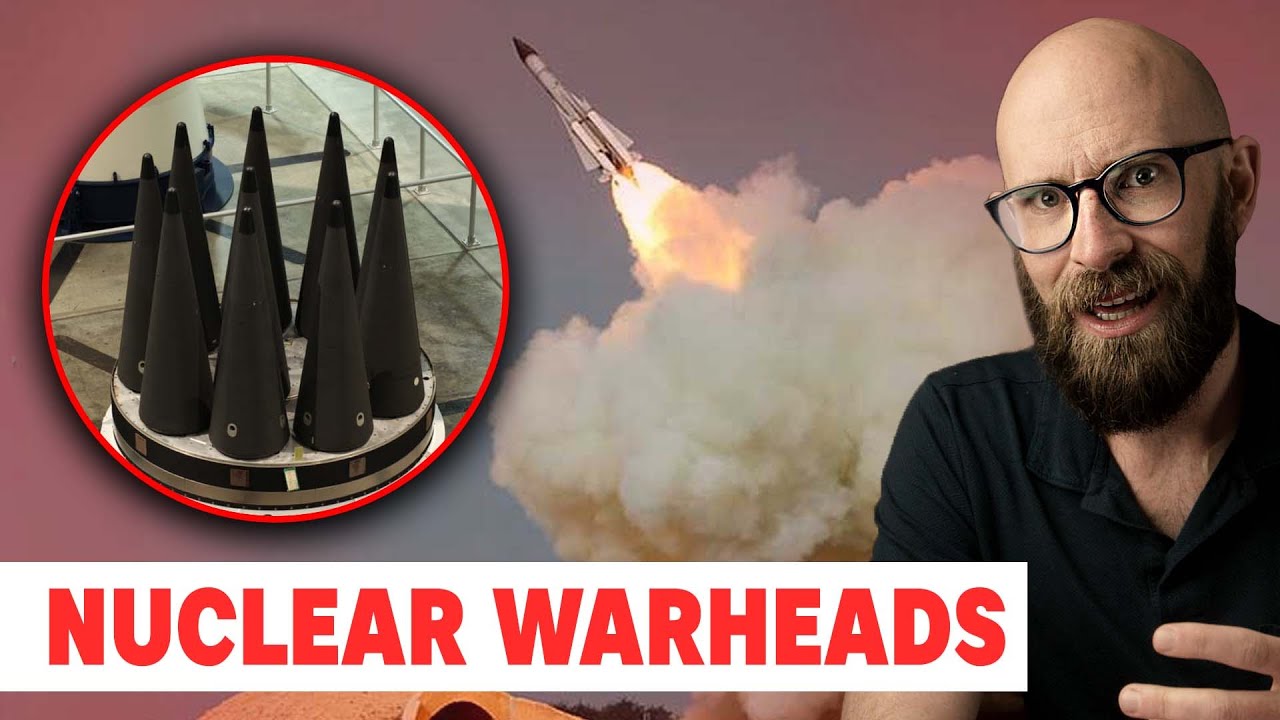
Advanced countermeasures used to defeat defense systems, such as multiple independently targetable reentry vehicles (MIRVs), decoys, and chaff.
The application of Game Theory to global arms races, specifically modeling how defensive investments prompt adversaries to expand their offensive arsenals.
Next-generation defense alternatives, such as Directed Energy Weapons (DEWs) and lasers, and their potential to solve the economic cost-per-shot dilemma.
320.7K views12.7Klikes1:05:47Original Release: 2025-05-25
I think it's fairly safe to assume that ever since early humans figured out how to throw a rock or a pointy stick, the question of how to avoid getting hit by enemy projectiles has been pretty front of mind for many military planners. For much of history, the threat was primarily a battlefield problem. But the combination of the invention of the nuclear warhead as well as means to deliver them over intercontinental distances using bombers or ICBMs turned the question of air and missile defense into a truly global problem. with most nuclear powers ultimately falling back on the maxim that the best defense is a good offense. Aiming to counter the opponent's nukes not with defense systems that could stop them, but with nukes of their own that could deter them. In 1983, though, US President Ronald Reagan announced an intention to pursue a different solution. Through the strategic defense initiative, which the public and press rapidly came to call Star Wars, Reagan wanted a space-based defense system capable of protecting the United States from nuclear missile threats, and called on the scientific community to quote, "Give us the means of rendering these nuclear weapons impotent and obsolete." End quote. The general consensus is that given the technology and resources at the time, a practical, reliable space-based missile shield was about as sci-fi as anything George Lucas ever came up with. But it did arguably serve to scare the out of the Soviets before almost all elements of the program were shelved soon after the Cold War. and US homeland missile defense policy was scaled down to focus instead on rogue nations or accidental and unauthorized launches until that is January 27th this year where the White House put out an executive order titled the Iron Dome for America calling for the development of a next generation missile shield capable of defending the United States against quote ballistic hypersonic advanced cruise missiles and other next generation aerial attacks from peer nearpeer and rogue adversaries end quote since renamed the Golden Dome for America This is likely to be an incredibly expensive project. Congress is already pushing to advance $25 billion. The White House suggests it'll cost $175 billion just over the next 3 years. And Congressional Budget Office estimates for just part of the system over the longer term run much, much higher than that. And so today, we're going to run through three broad questions in sequence. Firstly, what is Golden Dome? What parts of it have been funded? And how does it compare to the Israeli Iron Dome system that it's constantly compared to? Secondly, whether some of the more ambitious parts of the plan are actually likely to work, including a dive into everyone's favorite topic, the economics and mathematics of missile defense, and by extension, the many, many reasons that attempting to build a missile shield that can hold back a peer opponent might not work. And finally, the risks involved if somehow it actually all does work. Because if you tell Russia and China that you're just not going to do mutually assured destruction anymore, I think there's a massive question of what that does to global strategic stability and how those other powers might potentially respond. Before we jump into it though, a word from a sponsor. So, let me welcome back long-term sponsors and my chosen VPN, Private Incident Access. From allowing ever better access to Defense Economics PowerPoints to enabling almost real-time communication in adverse conditions, it's hard to ignore the remarkable way in which the internet and our modern worked environment has evolved. That said, it's also brought with it some rough edges from privacy concerns to greater international fragmentation. To protect your privacy in that kind of environment, you might want to layer different tools and practices.
Militaries don't camouflage their vehicles as an aesthetic choice. They do it because the hope is a vehicle won't be seen, targeted, and hit. But you're still probably going to armor it anyway just in case the green paint fails.
Layering online might mean smart browsing practices, good passwords, and if you're like me, a VPN. What those can allow you to do is change your publicly perceived IP address, reroute internet traffic, and also potentially change the way your activity is logged because private incident access advertises a no logs policy that has reportedly been independently audited and court tested.
They also have a wide-ranging network of servers in 91 countries worldwide, advertise cross-platform availability, compatibility with a range of streaming services, and unlike some of those streaming services, a single subscription here will cover an unlimited number of devices. So, if you're interested in adopting this as your VPN, there'll be a link in the description which gives you access to an 83% discount on a 2-year subscription plus four bonus months covering, as I said, an unlimited number of devices with a 30-day money back guarantee. And so, with my thanks to PIA as always, let's get back to it. Okay, so before we start breaking apart the budgets, the future of this system, and the math behind it, I want to start with what Golden Dome actually appears to be.
Partly because the name, the concern might be that people would expect this to be an American copy of the Israeli Iron Dome system. And indeed, before the name was changed to Golden Dome, Trump was talking about Iron Dome for America.
The confusion risk there, especially at a policymaker level, would be if people don't understand what they're buying or the potential costs and technical challenges involved. And it's been interesting to watch some of the hearings and commentary around these missile defense questions, which has sometimes seen the argument basically go, "Hey, wait a minute. Israel already has an Iron Dome system. Is there any reason the United States wouldn't be able to build something similar?" With the only honest answer to that exact question being, no. The technology for an Israeli style system already exists.
The US has cooperated on some of its components and the US Marine Corps has already purchased several Iron Dome batteries. The problem is implying you could build Golden Dome because you could build Iron Dome is kind of like implying that the factory that built Damo's 1990 Commodore could obviously turn out a Falcon 9 rocket because they're both means of transportation.
There are some similarities, of course.
Israel has an integrated air and missile defense system that consists of multiple tiers of interceptor that are intended to protect the country against various levels of threat. Golden Dome would also be an integrated system intended to protect, among other things, the continental United States against multiple tiers of threat. Beyond that top level similarity, though, the differences start to mount pretty quickly. When it comes to missile defense, two of the most important driving aspects of your requirement are going to be what you're trying to defend or how large an area and against what kind of threats. And in that respect, the Israeli American requirements are a world apart. The Israeli requirement is to defend a relatively small area. The country as a whole is roughly the size of New Jersey with the emphasis in terms of volume being on relatively low-end threats. Most of the interceptions the Israeli system has had to make are against things like you see on screen here, basic Casam rockets. Think in some cases literally homemade short-range artillery rocket equivalents fired on fairly flat trajectories from neighboring territories. That's where the actual Iron Dome part of the system comes in. And it gives us images like the one you see on the right here. A driving requirement for the Iron Dome system because the incoming projectiles were so incredibly cheap was the shot exchange problem. The interceptor had to be as cheap as possible. The result was the Tamil reportedly costing somewhere in the tens of thousands to $100,000 range. But the only way to get a cost that low on a missile like this, even in mass production, was to gate the capability level. The Tamila is only good against certain targets. out to a maximum range circumstances and target dependent of very roughly 70 km. Link a bunch of these units and sensors together to protect against these kind of kasam barages and you have the Iron Dome. As an interesting piece of historical trivia, there's actually an Israeli report going back to 2012 suggesting some Israelis originally proposed calling the system Golden Dome, but the name was rejected and Iron Dome was born. If it chose to do so, the United States would be absolutely capable of producing Iron Dome missiles, launches, sensors, etc. The issue from the homeland defense role is that it doesn't need them. Unless there's some angry Canadian moose out there with a secret rocket stockpile or the southern cartels decide to do something monumentally stupid, you can't hit the continental United States with short-range rockets or artillery routes.
And so, as far as the Homeland Defense Mission goes, a Golden Dome doesn't need an Iron Dome clone. The next level up in the Australia system is David Sling.
This is a two-stage interceptor capable of hitting tactical ballistic missiles at low altitude or cruise missile targets using a hit tokill system. So there's no explosive warhead. The interceptor just smashes into the target out to ranges measured in the low hundreds of kilome. Again, very much depending on the target and its profile.
Once again, for the American homeland defense role, you probably don't need to copy David Sling because once again, it's kind of difficult to hit the continental United States with a tactical ballistic missile, and the Air Force and Navy should be dealing with potential cruise missile carriers. And so, you probably don't need every city to have this sort of system defending it. If you did, America already has a system like this. Shot forshot Patriot interceptors are more expensive than their Israeli equivalent, but they've also proven in combat that they can do the job. Patriot is proven against rotary fixedwing and cruise missile targets and is capable of terminal defense against ballistic threats.
Meaning that as long as you're defending the area the ballistic missile in question is targeting, Patriot might provide an answer. Even in the case of Israel, which is quite compact, though, there's sometimes a need for wider area defense and also systems that can engage even more complex and demanding targets.
medium, intermediate, and intercontinental range ballistic missiles, for example, the kind that might be fired against Israel from Iran itself rather than surrounding territories, are going to come in on a much more demanding trajectory. They're going to lob all the way out of the atmosphere and come down almost vertical. And so at its top level, the Israeli system has a very complex interceptor capable of hitting those longer range missiles even outside the atmosphere. These are the Arrow series.
Arrow 2 capable of very high altitude intercepts and Arrow 3 reportedly capable of engaging targets out past the edge of space and according to the CSIS potentially up to500 miles from the launch site. This provides the Australia system an option for those higher end and longer range threats but it isn't a cheap option. We think of Iron Dome as cheap because of the Tamir that $100,000 or less rocket. But cost estimates for David Sling are about a million per round arrow 2 $3.5 million per round.
and Germany's AR3 purchase was reportedly valued at about $3.5 billion US. It's also worth noting that it's this higher end of the target complexity spectrum where on a number of occasions the Israelis have asked for backup from the United States. By the end of this year, the US should have eight active batteries at the terminal high altitude air defense system or THAAD which is a high capability high altitude intercept system for ballistic threats and reportedly the system has been sent to Israel to support their missile defenses. The US also contributed interceptions against some of Iran's ballistic missiles using SM3 interceptors fired by US Navy warships.
Again, SM3 is in that high complexity high altitude bracket to the point where you can make interceptions beyond the atmosphere and even use it as an anti-satellite weapon. It's at this level where you're doing high alitude terminal defense against incoming complex ballistic missiles where there might be some crossover between the Israeli system and what Golden Dome needs to do. But while the Israeli system basically tapers off at this point, the requirements for homeland defense in the United States and Golden Dome keep going. Part of this just comes back to basic requirements. If you only given 90 seconds to do an elevator pitch for a new integrated air and missile defense system, and you only had time to ask the client three or four questions before pitching them on a 100 plus billion dollar piece of work, some of the basic questions that shape a missile defense system are, what are you trying to defend? Is it a hard or a soft target? Is it a mobile or a static target? Is it an area target? And if so, how large? What are you trying to defend it against in terms of threat type, complexity, and quantity? Likely point of origin might help from a sensor design perspective. And if you're trying to shoot down very long range projectiles like intercontinental ballistic missiles, when you're trying to shoot it down also matters with the three magic windows being the boost phase when the missile is still burning hard and accelerating away from the Earth, midcourse after it's burnt out and is transiting potentially in space and finally a short terminal phase at the end when it is screeching down towards a target because it's just so far away from most likely potential foreign threats. Compared to the Israeli scenario, missile defense of the continental United States is much more focused on high complexity, long range targets like ICBMs. And at the same time, unless you're willing to pick a favorite state or two, defending a much, much wider area. To that end, compared to the Israeli system, the Americans already have a lot more midcourse interception options. Back in 2020, the Navy's SM3 Block 2A missile was tested against an ICBM type target during the so-called Stella Lance test. While the US also has a small inventory of even larger, more expensive rockets intended for midcourse interception as part of the so-called groundbased midcourse defense system. The total inventory there is only just north of 40 missiles overwhelmingly based at Fort Gley, Alaska. And if you assumed two interceptors would be fired against each incoming threat, that's perhaps enough to stop an attack made up of no more than 20 nuclear warheads against the continental United States. That scale probably gives you a clue as to the intended purpose. This isn't designed to hold off an all-out nuclear attack from the People's Republic of China or Russian Federation. It's intended more as an insurance policy, if you like, against a small-scale accidental launch by another nuclear power or a deliberate attack by a much weaker nuclear power, think North Korea. If you read America's missile defense reviews, this kind of system was never intended to deter a peer adversary, with the understanding being that the primary defense that America had against Chinese or Russian nukes was American nukes. and the implied promise that if any foreign actor ever decided they wanted to start playing in a Fallout game, the US would be able to make sure that it wasn't just set in the States. Recent US missile defense efforts have also been focused on a range of other potential threats and requirements including the ability to intercept hypersonic glide vehicles like China's DF7 and also some pretty big asks in terms of sensors and awareness with the US historically investing enormous amounts in making sure that they receive a warning when a missile is originally fired from anywhere in the world and have at least some ability to track, identify, and if necessary engage that threat. In short, American homeland missile defense efforts before Golden Dome looked very different to Israel's Iron Dome because the continental United States is not Israel and Russia, China, and North Korea are not Iran or Hamas. Notably, though, the assumption always seems to have been that missile defense could only go so far and was only intended for limited objectives. Golden Dome appears to have ambitions to change that. There are two major clues so far as to what the effort might be trying to achieve, especially in the short to medium term.
There was an executive order coming out of the Trump White House basically saying what they wanted from the system and also an opportunity to follow the money because as part of the $150 billion defense package contained in that reconciliation bill that's currently working its way through the US Congress. There's about $25 billion for space missile defense and things vaguely Golden Dome related. So I thought what we'd do quickly is work our way through what the executive order calls for and what Congress is looking to fund.
Splitting those potential changes into three subjective categories. The first two mostly relate to taking existing lines of effort, tying them together, and throwing additional funding at the problem. Those include the push for much better domain awareness, including space-based sensors that allow the US to be much more aware of potential threats because ultimately it's kind of hard to defend against something that you can't see. And secondly, improvements to their ability to take out those threats. Think new interceptors, counter measures, and defenses. And then there's the third category where things go that little bit farther. extremely ambitious, a little bit sci-fi, and any American taxpayers listening might start to get a bit nervous. Most of the funding so far, though, is focused on the more conservative stuff. So, let's start there. The first step is administrative, just putting a lot of this stuff under the command of a single four-star officer. In this case, the vice chief of space operations in the US Space Force, who happens to have a bachelor of science, mechanical aerospace engineering, and an MBA, which probably doesn't hurt when you're about to run a monumentally complex and expensive aerospace engineering and science program. In terms of actual funding, though, in the existing congressional effort, the largest chunk doesn't actually go to interceptors to shoot down missiles. It goes to sensors to identify and track them. The executive order out of the White House had at least one section relating to space-based sensors, calling for the quote acceleration of the deployment of the hypersonic and ballistic tracking space sensor layer, end quote.
Basically, what it says on the tin, a space-based system that would allow the US to track hypersonic and ballistic projectiles. In classic congressional style, though, what's being funded is actually a bit wider than that. There is $7.2 $2 billion for military space-based sensors, but there's also $2 billion each for both improved groundbased missile defense radars and air moving target indicator satellites. That one's interesting cuz it's not just about tracking missiles. It's about tracking aircraft. The push for MTI satellites has actually been ongoing for some time with reportedly part of the reason why the US is pushing so hard to get this space-based targeting capability into service is out of concern that against a peer opponent, classic sensor platforms like Awax aircraft might not be particularly survivable. And so if you want to maintain that awareness and the integrity of your overall kill web in a way that's less vulnerable to one or two wellplaced PL7s, for example, a network of small space-based sensors looking down might be the better option. The notable point here though is just the scale of the funding infusion. In 2024, Space Force requested about $243 million US for MTI and plan to spend about 1.2 billion over the next half decade, while this line item from Congress tops the effort up by a casual 2 billion. Also on the conservative side of the spectrum is a whole bunch of generic space superiority investment. $500 million for launch infrastructure, funding for testing equipment at ranges, a lot of the kinds of things you're going to want if you want to be a peer competitor in this domain. In other words, a lot of what we saw funded so far fits fairly well with US thinking before Golden Dome came around. Even if you're not planning to fight a nuclear war opponent, you're only considering conventional scenarios.
Being able to track missiles, hypersonics, aircraft from orbit is going to be useful. Being able to get target data from satellites is going to be useful. Being able to launch satellites faster because your launch infrastructure is there is going to be useful. And with the massive increase in global lift capacity and improvements in low Earth orbit constellations, it arguably makes sense to dial up investment in space-based sensors in order to hedge against the potential vulnerability of classical sensor platforms as well as sensors to help identify and track threats. Congress also included a lot of funding for interceptors to try and bring them down with again the vast majority of this being focused on programs and efforts that already exist. There's 2.4 4 billion for non-kinetic missile defense efforts, $250 million for directed energy weapons, and then a combined $3 billion to solve two separate defensive problems. The executive order requires that Golden Dome be able to defend the United States against ballistic advanced cruise missile and hypersonic threats.
And the congressional package includes $2.2 billion for hypersonic defenses.
While it's not 100% clear, one possibility is that this relates to the new hypersonic glidephase interceptor.
This is a missile that the US and Japan have been co-unding, which is meant to be able to hit hypersonic glide vehicles. And I'll link a previous video on hypersonics if you want to know more about those while they're still in their glide phase. That could potentially create an alternative to waiting until hypersonic projectiles are dangerously close to their target while also allow the effective defense of a wider area.
The reason I flag this is because if you're going to be investing heavily in a satellite system capable of detecting and tracking hypersonic missiles, it's not necessarily going to help you as much if you don't then develop an interceptor capable of using that information. The other program with 800 million in additional funding is the next generation interceptor. Or at least that's my best guess based on the congressional wording. This thing is basically meant to be America's new midcourse interception option. a better version of the existing groundbased interceptor, although it's meant to augment rather than replace them. Loheed Martin won the contract to build these things back in 2024, a year earlier than we expected that announcement to actually be made. And the additional funding might help speed that process that was originally intended to deliver at least an initial operating capability by the latter part of 2028. But that's enough of all that reasonable stuff. A number of mostly already existing programs with a bunch of utility outside outright nuclear war scenarios. I'm guessing what you really want to hear about are the items that go a bit further, the more Reagan approved kind of stuff. And for me, there are at least three items in that Iron Dome for Eric Order that very much push into that Star Warsesque territory. One of those hasn't directly been funded yet. It called for the quote deployment of under layer and terminal phase intercept capabilities posed to defeat a countervalue attack end quote. A countervalue attack, remember, is one that goes after your opponent's cities as opposed to their nuclear silos and military forces. So if the goal is to defeat a countervalue attack with under layer and terminal phase defenses on plane reading me that reads like every city in the United States with population above a certain value needing to have its own missile defense system unless it happened to be close enough to another city to gain the benefit of that same protection. That obviously wouldn't be possible overnight, of course. And so the order also calls for the creation of quote a prioritized set of locations to progressively defend against a countervalue attack by nuclear adversaries. End quote. Meaning it's presumably going to be someone's job to decide which cities are worth protecting against nuclear attack and which ones can be left hanging for the greater good. Presumably, one hopes they don't have any particularly strong sporting team loyalties. Both the Soviets and the United States did originally think about going down that road during the Cold War era. ran face first into some of the math involved that we'll go through in a bit and decided to fundamentally revise their efforts. The US by basically shelving the idea of terminal defense for American cities against missile attack and the Soviets and later the Russians being able to bring down the cost of the resulting system by deciding that only Moscow was really worth protecting anyway. In any case, this doesn't appear to have made it into the budget yet. So, if you are the resident of a small to medium-sized US city, maybe don't go scouting out locations for that new THAD battery just yet.
However, another form of missile defense did get funding, a lot of funding, and it involves that magic bord, the siren song of so many historical missile defense efforts, boost phase, intercept.
The congressional package includes 5.6 billion US for quote space-based and boostphase intercept end quote. The language there is admittedly kind of ambiguous. It's not entirely clear if it's relating to space-based intercept capabilities and separately boost phase intercept capabilities or something that's one and the same, a boost phase system in space. The executive order, however, is abundantly clear that what the White House wants is that spicy combination, calling for quote the development and deployment of proliferated space-based interceptors capable of boostphase intercept. It also separately and somewhat redundantly calls for the development and deployment of capabilities to defeat missile attacks prior to launch and in the boost phase. End quote. Now, some observers might argue that the prior to launch component already exists. It's called hitting the silo with a modernized trident missile with a superfuse. But let's focus on that magical line item three. Proliferated space-based interceptors capable of boostphase intercept. What does that mean? Why would you do it? And why hasn't anyone done it yet? If you go back to that diagram over the three phases of potential intercept, most early cold war concepts for nuclear missile defense were terminal stage solutions. Both the Soviets and the United States came up with nuclear tipped surfaceware missiles that would destroy warheads as they were screaming in towards Earth. Basically, because it was the Cold War, the solution to nuclear attack was to nuke the nukes.
There are a couple of challenges when it comes to terminal phase solutions, though. The first is that unless your interceptor has truly obscene levels of performance, you're going to need to have them positioned relatively close to the target. While you're almost invariably going to be dealing with targets that are coming in at high hypersonic speeds with a very narrow engagement window. Basically, the lower altitude you can engage at and the shorter the range of your interceptor missile. All else being equal, the more of them you're going to need to cover a given area of territory. The next step up in terms of thinking then might be to try and intercept the missiles or at least the warheads during the midcourse phase. This is how America's existing groundbased midcourse defense system is intended to work. Infrared satellites detect a missile being launched. Other sensors then track it and those big groundbased interceptor missiles in Alaska are fired against it. Once those GBIS exit the atmosphere, they release maneuvering kinetic kill vehicles. They have thrusters on them so they can maneuver. They also have their own sensors and can receive information from offboard sources that helps them to then hopefully identify their targets which would be the warheads from the missile.
at which point they then attempt to slam into the things at absolutely mindbending velocity. The advantage here is you can cover a lot of area. Sure, that means your intercept will probably need to be much much more powerful and more expensive, but can also cover a much greater area. And if your intercept is taking place outside the atmosphere, the targets themselves might actually be less maneuverable. There are such things as maneuvering re-entry vehicles, for example, that can change their course.
But given they rely on aerodynamics and control surfaces in order to do it, they need an atmosphere. catch the midcourse in space. And yes, you're still trying to hit an incredibly fastmoving, quite small object, but at least this time it's not maneuvering. Midcourse interception, though, still has a fairly massive problem. Most modern ICBMs don't carry a single warhead. They can carry multiple independent re-entry vehicles, each with their own nuclear warhead, and we've seen both Soviet and American designs that can carry low double-digit warhead counts. Along with those MVs, they can also potentially deploy all kinds of decoys. And so, as you can see in the graphic here, your interceptor missile might not be chasing an opposing missile so much as an opposing threat cloud. A bunch of different objects, some of which are dummies, some of which are warheads, with the task of the sensor systems being to try and determine what are warheads and what are decoys, and then make sure that the very limited supply of available interceptors only go after the real deal. That might be particularly difficult to do in a vacuum where you can't rely on aerodynamics to provide you any clues.
One piece I looked at, for example, explored the possibility of using radar reflecting myar balloons as decoys during the midcourse phase and then potentially putting balloons around the warheads as well. So, a visual system like a camera might struggle to tell the difference until the terminal phase began and the balloon could be discarded. While a lightweight decoy and heavyweight warhead would behave very differently if they were flying through an atmosphere and had to deal with air resistance, space provides a much less discerning playing field. Even if you want to take the gamble though that your sensors are absolutely excellent and will never mix up between a warhead and decoy just the existence of the actual warheads the MVs makes midcourse interception difficult from a defense economics perspective. If the Russians send over a single ICBM that releases 10 warheads at minimum that's going to require 10 interceptors. If you want to fire two interceptors per warhead in order to maximize the chance of hitting the thing then now you're talking about 20 interceptors per incoming ICBM. In that scenario, you would fire off almost the entire American stockpile of groundbased interceptors against an allout Russian nuclear attack consisting of two missiles with 10 MVs each.
Historically, missiles and warheads during the midcourse phase have also been more difficult to track because they're no longer burning and so you don't get the massive thermal plume of a rocket engine to try and point you in the right direction. And so the logic goes, maybe even midcourse is too late.
Maybe instead of trying to hit multiple small, hard to differentiate and resistant warheads during the midcourse phase, we should try and hit a single large, easy to identify and vulnerable target, the missile itself during the boost phase because at that point, all the warheads are still attached to the missile. So you have a single target.
It's very easy to find because massive rocket engine burning and also the whole projectile is still a giant stick of rocket fuel. Meaning if you so much as tap it, it's probably going to explode.
I mean, rockets explode often enough even when people are trying to make them safe. And so, you can imagine just about any external kinetic interference with the missile during that ascent phase is going to have the desired catastrophic effect. This is the idea of boost phase interception and has a lot of theoretical advantages and it's very, very hard. The US has historically toyed with terrestrial options for boost phase interception. Maybe put Navy warships with very high performance interceptors close to your opposing silos. Or in one case, they put a laser on a converted 747. This was the AL, the airborne laser, intended to identify opposing ICBMs during that boost phase, zap them with a laser, and cause them to explode.
With the technology available at the time, though, AL was never going to work. Although, of course, that didn't stop a couple of billion dollars being spent on the program anyway. To make any kind of terrestrial boostphase intercept concept work, you need a couple of things. You need a weapon system that is reactive enough that it can actually hit a missile before it finishes its burn.
Groundbased missiles struggle with that.
And while the laser is obviously an instant hit weapon, it did basically require that you circle an essentially defenseless 747 near your opposing missile silo until the time they were ready to launch. The laser had very limited range, meaning it would have to hang around near the launch site, which would have been very difficult in the case of opponents like North Korea, and essentially impossible in cases like Russia or China, who, for hopefully obvious reasons, have positioned a lot of their nuclear missile silos deep in the interior of their countries. It also wouldn't be a particularly promising solution against submarine launch ballistic missiles, for example, unless you happen to know where all of those boomers were at all time, in which case the circling 747 would probably give that particular piece of intelligence away. And thus, you can follow the logical chain of cold war missile defenders to its logical conclusion. If you need global coverage but can't put interceptors in adversary airspace, what about putting them above the airspace?
When Reagan announced the strategic defense initiative in the 1980s, this is what the world was told to expect. An American space-based system that would swap Soviet ICBMs out of the sky and render, in Reagan's ambitious view, nuclear weapons essentially obsolete.
The question then, obviously, is how, using Cold War era technology, do you set up a space-based missile defense system that could feasibly protect against the largest arsenal of nuclear weapons that the world has ever seen?
The boring answer is you don't.
especially not without bankrupting the United States. And so the vision of the strategic defense initiative was never realized at the time. But that certainly didn't stop them considering a number of options to a greater or lesser extent.
And because it is the Cold War and zany ideas are to be expected, I'll make this a multiple choice one. Which of the following ideas at various points did American missile defense advocates toy with? Man space fighters to shoot down Soviet missiles. Space-based battle stations with arsenals of missiles to gun down Soviet missiles as they flew by. nuclear bomb-powered lasers or a network of thousands upon thousands of space-based interceptor missiles, each contained in their own little housing until the time they were needed. The answer, of course, is E. All of the above, although to very unequal extents.
The orbital fighter concept was looked at and largely rejected well before Reagan Star Wars. because unless Luke Skywalker is willing to lend you the X-wing. From a technical perspective, the idea of a constant anti-orbital fighter patrol using cold warrior technology is just a complete non-starter. Come the 1980s, then most ideas were satellitebased rather than using fighters. Initially, some favored a concept that came to be known as smart rocks, derived from an old program from the 1960s known as Bambi, Ballistic Missile Boost Intercept. This was essentially a plan for a network of orbital battle stations in low Earth orbit. The potential advantages of this concept included magazine depth. Each station could potentially carry multiple missiles. And if you just ignore the cost associated with lifting and maintaining the battle station network, the actual interceptor missiles themselves might not have been that expensive compared to the ICBMs they were intended to shoot down. Of course, you couldn't ignore the cost of lifting all those chunky satellites into orbit, nor the risk the Soviets would simply blow a hole in the system using anti-satellite weapons. And ultimately the concept was shelved for being hideously expensive, the technology not really being there, and the concept being of doubtful viability. Project Excalibur, meanwhile, envisaged using nuclearped X-ray lasers to shoot down missiles. The idea here is you could have multiple lenses around a single nuclear device, potentially shooting down multiple missiles per detonation.
This too was shelved because it would have been hideously expensive. The technology wasn't really there, and the testing that was done suggested the concept wasn't particularly viable. The concept that was actually settled on then, and the one that's probably of the most relevance today, was brilliant pebbles. The idea here was that instead of having large battle stations with magazines of missiles that might be vulnerable to anti-satellite attack, you instead launched constellations of thousands of individual interceptors that would sit in low Earth orbit contained in a kind of life jacket.
Basically, a protective shell with a solar panel to keep them powered and maintained until they were finally ready to be used. And then if a Soviet missile launch was detected, an appropriately placed pebble could be directed to intercept it. Unlike smart rocks, Excalibur, or Space Fighters, pebbles actually survived the end of the Cold War, at least for a bit. Although, in a sense, the collapse of the Soviet Union and the 1991 Gulf War really only just gave one last opportunity for the bright idea ferry to come visiting. It was decided that without the Soviet Union, large-scale nuclear strikes weren't the threat anymore. It was shorter range ballistic missiles being used against US forces in the field like the Iraqi Scud.
So of course someone asked if the Pebble could be scaled up in terms of performance to engage not just high-flying ICBMs but much lower flying ballistic threats as well. Using pebbles in that kind of global protection against limited strike roll would have required a more capable and thus more expensive Pebble. And by 1993, with people perhaps realizing that an extremely expensive space-based interceptor probably wasn't the appropriate solution to short-range ballistic missiles that could be successfully engaged by things like Patriot, budget funding for Brilliant Pebbles, or rather what had become of it was finally killed off. Even if the Soviet threat had persisted, there were always going to be issues with the Pebble style approach. And I think it's worth looking at them because some, if not all of them, probably persist to this day. Using 21st century rather than 1980s technology probably does help with some of the underlying technical challenges. We now have much better sensors and a lot more computing power available in order to build an accurate munition that can sit in low Earth orbit and then successfully hit a missile during the boost phase. The old Cold War era problem of trying to hit a hypersonic rock with another hypersonic rock using less computing power than you'd find in an old Motorola flip phone is thankfully one that engineers no longer have to deal with. The cost of lifting stuff into orbit, one of the great bottlenecks to these programs during the 20th century, has also come down dramatically. And a report released by the Congressional Budget Office earlier this month does suggest that even compared to estimates run in 2004 and 2012, cheaper launch costs now would be enough to chop between 30 and 40% off the 20-year cost of a space-based anti-missile constellation. But those costs are still going to be massive because of the so-called absentee problem. the problem of the interceptor not being in the specific place in the sky that you need it to be when it's time to use it. Because this whole concept only really works if one of your pebbles is in pretty much exactly the right place at exactly the right time.
But because these things are orbiting, even if you set up that orbital path with a specific launch site in mind, they're going to spend the vast majority of their time not in a launch position.
The main solution to that problem is to put up lots and lots of interceptors. So at any given time, one's going to be in position to take the shot. That kind of approach makes these systems inherently global and it also likely makes them very resource inensive. In their report, the CBO looked at a number of scenarios relating to systems designed to counter one or two ICBMs being launched by North Korea in an attack on the United States with the smallest constellation being modeled to counter that threat being 1,000 space-based interceptors. I believe that modeling also assumed 0 seconds of decision time. So, as soon as the system was able to detect and get a solution to intercept a missile, an interceptor was immediately tasked. No arming and arring, no hesitation, which obviously meant there was a little bit more leeway in terms of optimum positioning. Introduced just a 30-second delay to determine whether or not a missile was a threat and should be shot down, and the number of required interceptors in the system doubled to 2,000. Other reports using different assumptions produced different figures, but they all tend to be high. Another report, for example, found that defending against a single North Korean Hasong 15 missile, even with a 0cond decision-making time between launch and an interceptor being fired, was 400 interceptors for a single North Korean missile and about 4,000 for 10. Even accounting for a much cheaper cost of lifting material into orbit at roughly $1,200 per pound compared to the more than 10,000 used in the original 2004 study, the CBO estimates that that sort of 2,000 interceptor constellation would cost more than 540 billion US over the course of 20 years. If that number is anywhere near accurate, that would put the program within the realm of extremely expensive but technically possible programs. Constellations have become much more common. Sensors have improved. lift capacity has increased and so putting 1 to 2,000 pebbles into low Earth orbit just isn't the task it would have been back in the 80s or 1990s. Assuming you stuck with the more conservative goal of US missile defense efforts over the last couple of decades where the intention was to provide defense against a small accidental launch or a smaller actor like North Korea or potentially Iran then assuming you could solve the technical challenges which is a big assumption and those adversaries didn't deploy any effective countermeasures to the system and we'll discuss some of those a little bit later on in the medium-term a space-based constellation of interceptors might potentially be viable and while those CBO cost estimates are certainly high they're not impossible possibly high.
You can also imagine scenarios where the United States potentially considers cost sharing with its allies, a possibility Canada is already publicly raised.
Because while a lot of the focus here is on that task of defending the American homeland, remember that a constellation of space-based interceptors is inherently global in nature. Because of the way orbits work and the fact that you're focusing here on intercepting missiles at their launch sites, not near their particular targets, the most important questions are who's launching and what are they launching, not what are they launching at. There's no reason to believe that a system that could detect a missile heading to the United States couldn't also detect a missile heading towards Europe. And an interceptor diving in after a North Korean ICBM during the boost phase isn't going to care what US ally that missile's targeted against. Likewise, all of the intelligence gathered by that network of satellites would be useful for allied missile defense efforts as well as American ones. And so you might be able to feed information on Russian hypersonic launches into a European missile defense system in a similar way as information on Chinese glide vehicles is directed to American forces in the Pacific. From a defense economic standpoint, then the core question here is whether the value you get from all of those kind of systems is worth the opportunity cost of that investment. You might say you definitely want the sensing layer and some of those next generation interceptors, but the question would be whether a constellation of boost phase interceptors that's only good to protect against a limited North Korean or Iranian attack is worth all the other programs you'd have to potentially give up or scale back to get it. Do you sacrifice your ammunition stockpiles, for example, or your submarine building program or your drone programs or your next generation fighters and bombers?
The big question for me wouldn't be whether with enough time and resources you could eventually do something like this. It would be whether doing so at the moment is the most efficient use of available resources. But of course, a limited defense against the likes of North Korea isn't what the Golden Dome executive order seeks to get. It appears to want something much, much more capable. As you can read, it seems to almost lament the fact that up to this point, United States Homeland Missile Defense Policy remained focused on that rogue nation threat and specifically calls out the need to defend against peer and nearer opponents. From a defense economic standpoint, that's where things start to get complicated as we move closer and closer to some very difficult missile math. While economics are obviously important in any field of military investment, when it comes to missile defense, specifically against targets like North Korea or Iran, countries like the US might be able to use economically inefficient options because they just have so much more economic heft to work with. Historically against peer and nearper opponents, the US has instead relied on options like deterrence or the nuclear sponge.
basically planning around the idea that by building a bunch of ICBM silos in the metaphorical middle of nowhere, in the event of a nuclear war, an opponent's likely to spend a lot of their warheads nuking the crap out of these areas rather than more densely populated major cities on the West or East Coast. In a sense, this forms a kind of interesting nuclear strategic bargain between Washington DC and states like Montana and North Dakota. They get plenty of federal dollars and economic activity during peace time in exchange for the understanding that if a full-scale nuclear war ever does break out, they're probably going to be getting into the glass export business in a serious way.
But if your goal is to actually try and shoot down missiles fired by an opposing peer or near peer adversary rather than just convince them to nuke Montana really, really hard, offense versus defense quickly becomes a numbers game.
And so to help understand some of the potential challenges with the Golden Dome vision when it comes to peer adversaries, let's break out some simplified missile defense mathematics.
The key points we're going to try and tease out here are the relative costs of being attacker and defender in these kind of scenarios versus the likely outcome and how different factors and assumptions can dramatically twist that.
And so we're going to operate in a very simplified world where there's an attacker who wants to destroy something or a group of things with their missile arsenal and the defender who doesn't want their stuff destroyed. We're interested in working out what kind of resources in terms of missiles the attacker is going to have to use in order to accomplish their goals. And to do that, we need to factor in your PK value, the odds that launching a missile will result in a destroyed target. This might factor in a range of elements. The chance that something technically goes wrong with the missile, that it misses a target, or the target was misidentified in the first place. Maybe the missile is intercepted by opposing air defenses, or maybe the missile nominally hits, but especially if you're talking about a bunker or an armored target, it potentially survives anyway. You bash all those together and you get a probability. If you fire one missile, you might have a 60% chance of destroying the target. The attacker might then decide how confident they actually want to be that they destroy the target in question. And from that, determine how many missiles they actually need to fire. If each missile has a probability of kill of 60% for example, and you want to be at least 90% sure, then a basic model would suggest firing three missiles. Assuming the odds of failure are independent between each missile, which is a massive assumption to make, three 60% shots should give you a probability of kill north of 93%. Of course, in reality, probabilities might not behave like that. If a target is defended by a Patriot launcher with four missiles, for example, it might have a 95% chance of shooting down each of the four cruise missiles you fire at it. But unless you give it time to reload, that intercept chance is going to drop to 0% against missile number five. If I take a thousand shots on goal in a row against the best goalkeeper in the world, they might be able to stop every single one of them. But if me and 20 mates all shoot at the same time, something's probably going through. In short, while we're going to use a lot of simple models in this section to demonstrate concepts, keep in mind that it's seldom actually that simple. It is, I think, though, a fairly safe assumption that outside of rare exotic scenarios like nuclear tip missiles, you would expect a launched interceptor to on average destroy less than one target. And so, especially in scenarios where the interceptor might cost more than the target that's being fired at, something we've seen time and time again in Ukraine, for example, or with US operations in the Red Sea, you might be tempted to think from a straight economics perspective that missile defense is stupid and the best approach in terms of value for money would just be to go all in on offense. Even if we leave aside for a moment the fact that the value of what you're protecting is also important in this particular calculus. Remember there are other factors that can work in the defender's favor. The first is intelligence and specifically defender ambiguity. The attacker might not know where the opposing air defenses are, how capable they are, or even if they do know where they are, how many missiles they have in stock. You can imagine this being particularly relevant in the context of something like the war in Ukraine where we've seen the Ukrainians run increasingly short on interceptors for all their S300 batteries, but they still have a lot of their launches. And so if you're a Russian planner trying to decide how many missiles and drones you need to send against a particular target to overwhelm the air defenses and actually destroy your objective, unless you have fantastic intelligence, how do you calculate your necessary salvo size to get the probability of success that you want? If you assume all those launches are empty, you're going to undercook your salvos and not actually destroy your objective, wasting the entire effort. But if you assume all those launches are full to capacity, you might end up massively overcooking the strike, slamming a bunch of valuable cruise missiles into a target you could have destroyed with one or two. The core point here is that just by existing air and missile defense units can make it much more difficult for an attacker to plan and to be efficient.
In these mathematical salvo models, things can get even harder for the attacker if you allow the defender to make a withhold decision. Basically, allow the defender to decide once they see the missiles in the air, whether they're going to try and shoot them down or not. If the Russians see a target with air defenses, for example, and decide to punch through them by throwing the proverbial kitchen sink at it, think crews and ballistic missiles, hypersonics, decoys, drones, etc., a capable air defense system might see it can't shoot all of that down, and decide to shoot none of it down. meaning you end up with the defending target destroyed, yes, but at a cost of far far more munitions than the attacker might otherwise have used. The basic point I'd make from a defense economic standpoint is that while in any given scenario, you might be able to define whether the attacker or the defender has the advantage, especially when it comes to the shot exchange problem, there is a very general rule as to which side tends to have it easier. with the advantage going to whichever side cares about the outcome less because getting okay outcomes can be relatively cheap but guaranteeing excellent outcomes incredibly expensive. To illustrate that concept, let's quickly look at a scenario where missile defense might make good economic sense. This is a graphic taken from an old RAND report of America's Kadina Air Force Base on Okinawa. Given how important this base is to American air operations in the Pacific, what this part of the report was considering was how effectively the Chinese People's Liberation Army rocket force, the PLA, could use its longer range missile assets to knock out the runways at this base to prevent fighters and larger aircraft from taking off.
That's potentially an attractive alternative to trying to hit aircraft that might be dispersed or in hardened shelters. And because if you knock out the runway, it doesn't matter how many aircraft are present, they're not going anywhere. But it also provides a great example of a situation where an attacker might really care about the outcome of a particular strike. Because given the length of the runways at Kadina, American fighters can take off using less than half the length. So unless you cut the runway in at least two carefully chosen locations, there isn't really a huge amount of payoff. And unless you cut both runways, so hit four aim points at the same time, the base is still going to be able to generate sordies or recover aircraft even if the rate might be slower. And so ideally, the attacker here really wants all four cuts at the same time. While the defender is probably annoyed, but okay with any other outcome, Rand assumed that Chinese medium-range ballistic missiles, specifically the DF-21, would have specialized runway busting warheads. And so, the odds of them missing or not doing adequate damage if they hit was comparatively low. What their modeling assumption spat out then was an assessment that a single missile had an 84% chance of cutting a runway at a particular aim point while two missiles fired at the same point increase the odds to 98% 3 to 99 and four to make it practically guaranteed. As we just pointed out though, one hit wouldn't be good enough. You need to hit all four at the same time ideally. And so in this case, assuming you want a 92% chance at least of knocking out all four points at the same time, you start by needing to fire at least eight missiles. Now, let's start introducing some more complex air defense risks. Let's assume the attacker knows that there are three Patriot batteries present on the island with one defending the air base and that thanks to that battery, the Americans have enough interceptor missiles to make 128 missile interceptions. At that point, the attacker would need to recalculate the number of missiles fired in order to get through those defenses, which would probably be far more than eight. In an absolute worst case scenario where the American defense system couldn't be overwhelmed, just exhausted, you could potentially fire 136 missiles at it in order to force the Americans to make those 128 interceptions and then still have eight missiles reach a target.
That's already a big ask, but what if your intelligence wasn't so clean? Let's assume the attacker still knows that there are up to three Patriot batteries on the island, but there are so many fake ones set up, they never know where the real ones are at any given time. How do you determine the salvo in that case?
Do you scale it up so it can punch through even if all three batteries are present? Or do you undercook your salvo, risk the chance that not enough ordinance gets through and the Americans are still able to fly missions and potentially disrupt your wider operations? In that scenario, even a battery that might be there, even if it isn't actually present, might lead to you as the attacker using more of your missiles. And if you do that, all else being equal, the number of targets you can hit in total, is going to come down.
It might also affect the way a force is able to behave in the first place. When the Ukrainians started using a mobile Patriot battery relatively close to the front lines, for example, and shot down a number of Russian aircraft, including an Awax, even though there was absolutely no way the Ukrainians had enough Patriot batteries to cover the entire front line, because the consequences of losing an aircraft are so great, the entire VKS had to be just that bit more cautious. Because even though that very dangerous air defense asset probably wasn't there, it might be. Going back to our Kadina example, intelligence might also be a difficulty for the attacker after their first salvo. In a world where both sides had perfect information, it might be possible for the attacker to make an informed choice about what to do next.
If they knew they cut the runway in three places, for example, they might only need to reattack the fourth one. If they knew the defender had fired all their interceptors in the first attack, they wouldn't have to fire as many missiles the second time. But there's no guarantee an attacker is going to have the same information the defender does.
The defender will probably know how much damage was done, how many incoming missiles they detected, how many interceptors they fired, and how many they have left. Meanwhile, depending on their satellite coverage and other intelligence, the attacker might only know how many targets were hit, not how many interceptors were fired or what the state of the air defenses is. They may have to launch their second salvo, making a bunch of assumptions about the state of the surviving defenses, or if they don't have good intelligence on the base at all, potentially reattack all four points because they don't know whether or not they hit them the first time. Using a relatively simplistic model, the RAND study demonstrates how small tweaks to these individual factors can dramatically change how many missiles you need to achieve a given amount of damage. In a scenario where even accounting for US missile defenses, 75% of those missiles hit and destroy their runway target, a massive 274 medium-range ballistic missiles is enough to keep Kadina offline for fighter operations for 43 days.
potentially more than enough to affect momentum of a wider operation. If the missile defenses cut the arrival rate down to 50% though, and the speed of runway repairs increases, suddenly that same 274 missile inventory, is only enough to keep the base offline for 10.6 days. And if good battle damage assessment information isn't available, so each salvo has to attack all four points, not just the ones that weren't previously destroyed, the number falls further to 2.3 days. Scenarios like that one, I'd argue, help to illustrate why missile defense, even when it's very expensive, can potentially still be worth it from a military perspective.
Even possessing just some of it against an opponent that doesn't have perfect information, can force them to make a hard choice between making assumptions, taking risks, or overexpending their resources. Maybe an air defense battery helps you destroy an incoming aircraft, or protect a sensitive target. But it may also cause your opponent to roll in with a massive salvo of decoys, cruise missiles, electronic warfare, and supporting SAD and DAD assets to suppress your air defense systems, only to find out there are actually no defensive assets there, and they just massively overkill their target. Ukraine doesn't have enough air and missile defense systems to effectively protect its entire territory. What it has is enough to force the Russians to respect them and largely stick to standoff attacks rather than committing their aircraft into Ukrainian airspace. So why then, when I've just given you an extended case on why air and missile defense might sometimes be efficient from a defense economics perspective, do I raise such an eyebrow about concepts like the strategic defense initiative and the idea of nuclear missile defense against a peer adversary? And the most basic answer I can give is that now it's the defender who almost certainly cares a lot more and needs those very high probabilities on their side. In the runway slicing scenario, the attacker arguably failed unless they got all four cuts. All the defender really had to do then was shift the probabilities slightly against them. Nuclear missile defense against a peer adversaries hard because nukes hit very hard. Cities are soft targets and the defender has an imperative to protect all of them to a high degree of probability. If a system means that in the events of an exchange you get to keep New York, Chicago, Phoenix, San Antonio, and Dallas, but lose Los Angeles, Houston, Philadelphia, San Diego, and Jacksonville. I'm not sure how many Americans would be willing to call the whole thing a win. To illustrate, let's consider a very basic scenario from a terminal, midcourse, and boost phase perspective. Let's assume the proud people of Kiwi land have 12 cities that they need to defend. While the nuclear saber rattling E-Mutopians in grand total have a force of 100 ICBMs, each carrying six MVs. If a terminal interceptor has a 90% chance of intercepting an incoming warhead, and you want to be more than 99% sure that nothing gets through, if you make some simplifying assumptions, the magic number that gets spat out is four interceptors per incoming warhead at each of those cities. That means Kiwi Land needs to build a grand total of 28,600 interceptor missiles to defend against 100 ICBMs. If you increase the number of cities to be defended to 36, which in population terms would be every city in the United States equal to or larger than Atlanta, the number of interceptors increases north of 90,000.
At $1.5 million per missile, that would be more than $350 billion in missiles alone. To say nothing of the launches, the sensors, the bases, the crews, and all the other costs that would go into a system like that. And even if you achieved and maintained those levels, there would still presumably be cities with lower population counts that your opponent could presumably target in order to still inflict mass casualties.
Or they could simply increase their warhead count. The point is, with the consequences so high and the number of targets so great, it's always going to be more economical for an attacker to build a force capable of musling through that terminal defense than it is for the defender to build the defense necessary to hold all of those warheads back.
Switch over to a focus on midcourse interception and you've only partly solved the problem. Sure. Now, the Kiwis don't have to individually defend every city because they're going after the warheads while they're still in space.
But, as we've seen with America's groundbased interceptors, the kind of missiles that can pull that off are going to be much larger and more expensive. And even if they were cheaper or at least cost competitive with the ICBMs they were meant to be countering, the attacker still has a way to dial up their force much more economically. They don't necessarily have to add more missiles if they can just add more mers.
An American peacekeeper missile could reportedly carry up to 12 warheads plus decoys. the Russian Sarmat 16. And if you're still expecting to fire, say, two interceptors per warhead, then by adding a single peacekeeper style ICBM, the emuse can force the Kiwis to build an additional 24 interceptors. There is potentially one anciliary benefit of this kind of midcourse defense system in that it might force the attacker to debust their warheads earlier in the process so they're not hit altogether, which might potentially reduce the accuracy of those warheads. But if you're concerned about potential city busting, that may not be enough of a consolation prize to overcome those raw economics. And so we're back to the math of the Golden Dome option, boost phase interception. Getting the missile before the merves and decoys eject, so the attacker can't just out build the defender. Now the number of hits the Kiwis potentially have to make comes way down. Now it's not 600 tiny targets, it's 100 big fat vulnerable targets with a massive thermal signature. But even if you've just brought down the number of targets you need to hit as a defender, you haven't necessarily brought down the number of interceptors you're going to need because you haven't solved that absentee issue we discussed earlier where you need your interceptor to be in the right place on the right orbit in order to make an interception at the right time. The number of space-based interceptors you'd actually need to launch is very sensitive to the assumptions you make. What's the time lag between a missile being launched and the order being given to fire off an interceptor? How long is the boost phase? And what's the probability of an interceptor, if it's launched, actually hitting its target. But the core problem I have is unless a lot of those factors point really far in the defender's favor. It's almost certainly always going to be cheaper for a peer or nearer adversary to improve their ability to punch through that network than it is for the defender to build that network up.
The report you can see on the right there, for example, suggested a scenario where even if you didn't model in any decision-making time, North Korea adding nine additional Hasong missiles to their force would force America to add 3,600 additional space-based interceptors, 400 interceptors for one North Korean missile, 4,000 interceptors for 10 North Korean missiles. And with that relationship between attacker and defender numbers in mind, here's a markedup satellite image of China's men ICBM field with more than 100 silos. So, I'd love to see the CBO rerun the numbers on that one. Now, admittedly, when Brilliant Pebbles was originally being considered, some of the estimates for how many of them you'd need per ICBM counted were much lower. One document from the 1990s, for example, estimated a 10:1 absentee ratio. You need 10 pebbles up at one time, so that one's going to be in the right place over the Soviet Union. That kind of ratio could potentially make this sort of situation more palatable for the defender. But even back then, critics were flagging issues with the concept. Even if you assume the attacker wouldn't just build more ICBMs, forcing you to scale up the network again and again and again to provide more and more redundancy at all locations at all times. Critics noted other ways that an opponent could break the economics of the system. One approach they flagged at the time was that if you're worried about your missiles being intercepted during the boost phase is just shortening the boost phase. That then shortens the window of opportunity for the interceptor before all the mers and decoys are released.
Meaning all else being equal, you need more interceptors. So you're more likely to have one in exactly the sweet spot for an interception. Per that report on the right, even North Korea is believed to have already done this. The liquid fueled 15 we've been talking about burns for 289 seconds. The solid fueled 18 only about 170 seconds. Depending on what other assumptions you make, just that difference in burn time can have a massive impact in how large your constellation of interceptors or pebbles needs to be. That report, for example, suggested that if you applied the same assumptions to both missiles, other than the burn time, you need a constellation of 4,000 to defend against 10 Wasang 15s, but 16,000 to defend against 10 Wasang 18s. And making the relatively safe assumption that engineers in China and Russia can accomplish more than the bleeding edge of North Korean industry, I think you'd have to assume that those kind of countries could field missiles with even lower burn times. Another option would be to use anti-satellite weapons, whether those are direct ascent or putting up your own constellation of satellite killing satellites, then only have to blow a hole through a small part of the overall network in order to get those ICBMs through. The natural response there for a defender would be to create even more redundancy, adding more and more layers of interceptors for more and more coverage at any particular point. But again, the options for the attacker are just so much cheaper than the options for the defender that against a peer adversary, it's not clear how you make this concept an economic winner. The challenge is to get that near 100% effectiveness that President Trump talked about, the defender needs to maintain perfect coverage, whereas the attacker just needs to poke a hole in it. Even if you could overcome all of those countermeasures, though, there's still a risk your opponent would find some other way to deliver strategic nuclear weapons. Keep many of your cities at risk and maintain their deterrent that way. Golden Dome, for example, wouldn't do anything against a nuclearpowered underwater drone, sailing into the harbor of a major American city and setting off a large nuclear warhead, which is a system the Russians have already developed. It's called Poseidon, which arguably highlights a bit of the irony of the current situation. Back in 2022, I criticized the Russian military for spending some of its sparse resources on a series of what seemed like exotic nuclear super weapons. With the criticism being that Russia was spending a lot of resources to build weapons designed to counter an American missile defense system that didn't exist and wasn't likely to exist, at least in the near to medium term. Now, it seems like there's a non-zero chance the United States is about to spend significant resources developing a defense system after Russia has already fielded a potential countermeasure to that system. And I don't think there's any reason to suspect that if Golden Dome went ahead with peer and near peer adversaries in mind that other potential US competitors like the People's Republic of China wouldn't follow suit with their own solutions. Now, of course, the giant caveat here is that all of this is based on certain assumptions with the big one being that for all technology has changed, nothing has fundamentally reversed the relative economy of effort between the missile attacker and the missile defender. And all of that brings us back to the same fundamental limitations of trying to build a missile shield to defend against a peer or near peer adversary that the US government itself was highlighting just a couple of years ago. What you're seeing on the right there, for example, is a fact sheet released by the US back in 2020, pretty much explicitly saying that America's homeland missile defenses are sized to stay ahead of rogue state actors, not the Chinese or Russian strategic nuclear arsenals, that those countries have more than enough missiles and capabilities to punch through US missile defenses. and that quote, "The United States continues to rely on its nuclear arsenal to deter Chinese and Russian strategic attack." End quote. It also said that quote, "Contrary to Russian claims, the United States is not seeking perfect security or freedom to attack, rather by providing a measure of defense and raising the cost of an adversary attack, missile defenses buy time for diplomatic solutions to emerging crisis." End quote. The core point I'm trying to get to is that while we may not know the details about the particular technology of Golden Dome, and there's always a chance of some sort of disruptive discovery, strategic missile defense of something as large as the continental United States against an actor as complex and capable as Russia or China might potentially, at significant cost, be able to achieve limited objectives. It might complicate target selection, change opponent decision-m, maybe even result in some targets not being hit if a full exchange plays out. But the idea of a near 100% effective defense against ballistic, hypersonic, or other nuclear attack by a peer opponent is, given our current technology level, an absolutely cisophant task. That may not be what the executive order actually meant when it talked about the ability to defend against any foreign aerial attack on the homeland or the need to defend the United States against attacks by peer, nearer, or rogue adversaries. But even if planners did happen to have more limited objectives in mind, when you start talking about things like protecting targets against countervalue attacks or claiming a system that specifically sites peer adversaries as a concern will have a near 100% success rate, as President Trump claimed, you can understand why some competitors might start to get a bit nervous because no genuine peer level competitor is ever going to readily give up on the idea of mutually assured destruction. And it is always going to be much much cheaper for them to put more missiles, more warheads, more exotic delivery systems, more anti-satellite weapons, more countermeasures, more risk into the system than it is for the defender to add the kind of redundancy they need in what is ultimately a no fail scenario.
Golden Dome thus might have the possibility of achieving some limited objectives. But at the funding levels announced, or any practical funding level, if the goal is a near 100% certain defense to the American homeland against an all-out missile attack by a peer opponent, the best data we have so far suggests it just can't work. And as a closing thought, I think it's worth raising one final consideration. What if it actually did work? What if US scientists and engineers were able to defend a boostphase intercept system so effective that the US was able to effectively defend the continental United States against ballistic, hypersonic, and other missile threats.
While that might sound immensely advantageous from Washington's point of view, I think it might raise some risks around strategic stability. There might be problems around ambiguity. Once you start putting a bunch of armed satellites in orbit, how are potential competitors going to be entirely confident that all of those missiles are for interceptor use only and they don't, for example, carry their own nuclear warheads and potentially pose a first strike risk? How do you respond to the dangers around the potential militarization of space when other powers start to deploy similar systems after seeing it can be done or start putting up massive satellite killing constellations of their own that would turn low Earth orbit into a debris choke mess if war ever broke out? How do you contain the perverse incentives for an opponent suddenly finding their nuclear arsenal much less effective? Maybe you incentivize an opponent to develop more exotic weapons of mass destruction, alternative delivery methods. Or perhaps in a high tension scenario, you incentivize them to attempt to first strike. Because if in a high tension scenario, they take the risk of allowing you to potentially strike first, the missiles they have left may not be enough to punch through your missile defense system. In which case, quite dangerously, the gang theory might push them towards firing first. Some thought would also need to be given to what the implications of the system might be for escalation management. The nature of these kind of systems is that they're probably going to be most effective against smaller or limited strikes. But if your opponent is convinced that a single or small salvo of missiles might not make it through, there might be incentives on them to jump more rungs on the escalation ladder than they would have ideally liked and launched a larger attack because they feel that's the only option to reestablish deterrence given the defense systems in play. The core point is that mutually assured destruction is a horrifying concept. It is essentially a balance of nuclear terror that prevents any nuclear armed power from pushing things too far against another. But as confronting as that concept is, and as much as there's been some close calls, it's mostly worked. And I'd suggest the idea of an all-out nuclear war being unwinable is one of the key reasons we haven't seen one fought. I'd argue that like Reagan Star Wars before it, the greatest challenge for Golden Dome isn't the technology, it's the ambition. Building a much more capable and integrated space-based sensor system so America is more aware of airborne missile targets seems entirely doable. Providing reliable missile defense against less capable actors like North Korea seems like a potentially very expensive task, but also potentially doable. And a majority of the funding we've seen dedicated so far appears to be dedicated to initiatives that were already in train and which might have a lot of value not just to US and allied nuclear deterrence, but also conventional deterrent scenarios as well. From better awareness to the ability to complicate an opponent's plans when it comes to strikes using conventional hypersonic weapons. And there might even be scope to move the needle somewhat when it comes to limited nuclear defense. But when it comes to ambition for what the system might practically be able to achieve, there are always going to be limits. And unless you're willing to add a couple of zeros to that already massive budget, those limits are probably going to fall well short of what would actually be needed to fully defend against everything a potential peer opponent could muster. And okay, brief channel update to close out.
Firstly, thank you very much for your patience with this release. I was meant to put a video out last week, but ultimately I was unwell. That didn't come together. And so I appreciate the patience for the delay. We should be back on a regular release schedule now, so unless there are any major intervening global events, we should be back on Ukraine next week. There are a number of other updates I could give, but since we've just dug through a bunch of missile mathematics together, perhaps I'll hold them off for next week. So, thank you very much again for your ongoing support and engagement, and I do hope I'll see you again then.
Up Next

8:18
Commodity Money vs Fiat Money: AP Macroeconomics Guide
@khanacademy
278.6K views•2016-06-20

5:07
Impact of Yuan in Indo-Russian Trade Amid Sanctions
@WION
261.9K views•2022-07-01

10:33
Behavioral Economics Explained: Rationality, Nudges, and Risk
@crashcourse
1.1M views•2016-03-12

113:18
The Age of Easy Money: Fed & Inflation | Full Documentary
@frontline
21.2M views•2023-03-15
Related Study Plans & Knowledge Roadmaps
Structured learning paths in Economics
economics
Sovereign Debt: Defaults, IMF & Restructuring
01Introduction to Sovereign Debt & Government Bonds
02Debt Sustainability & Credit Ratings
03Anatomy and History of Debt Crises
+ 2 more learning modules
12h5 modules
Explore Roadmap
economics
Market Design: Matching Theory & Gale-Shapley
01Introduction to Market Design and Price-Free Markets
02Two-Sided Matching & The Gale-Shapley Algorithm
03School Choice Systems and Mechanism Design
+ 2 more learning modules
10h5 modules
Explore Roadmap
economics
Impossible Trinity: Forex, Capital & Policy
01Introduction to Monetary Policy and Central Banking
02Exchange Rates and International Capital Flows
03The Mundell-Fleming Model
+ 2 more learning modules
8h5 modules
Explore Roadmap
economics
Healthcare Economics: Market Failures & Systems
01Introduction to Healthcare Markets and Market Failure
02Asymmetric Information and Adverse Selection
03Moral Hazard and Insurance Design
+ 2 more learning modules
12h5 modules
Explore Roadmap