



![(2026년 대예측) 주식 언제 사고 팔지 정확한 타이밍 알려드립니다 [이광수]](https://i.ytimg.com/vi/H7DJaDjl9M0/maxresdefault.jpg)


![[PODCAST] Đã Chốt Sổ Tứ Trụ Khóa 16: Nhiều Gương Mặt Sáng Giá Bất Ngờ Bị Gạch Tên](https://i.ytimg.com/vi/Tjr3PC5junM/maxresdefault.jpg)












![이준석을 오직 팩트로 조지는 이광수! [코너별 다시보기]](https://i.ytimg.com/vi/v4g65F-sx8E/hqdefault.jpg)



Money has evolved through three main forms: commodity money (where the currency itself has intrinsic value, like gold or silver coins), commodity-backed money (paper currency backed by stored commodities that can be redeemed), and fiat money (paper currency with no intrinsic value, deriving worth solely from government declaration and public trust); the key distinction lies in what gives the currency its value—physical substance versus legal authority and collective belief.
Commodity Money vs Fiat Money: AP Macroeconomics Guide
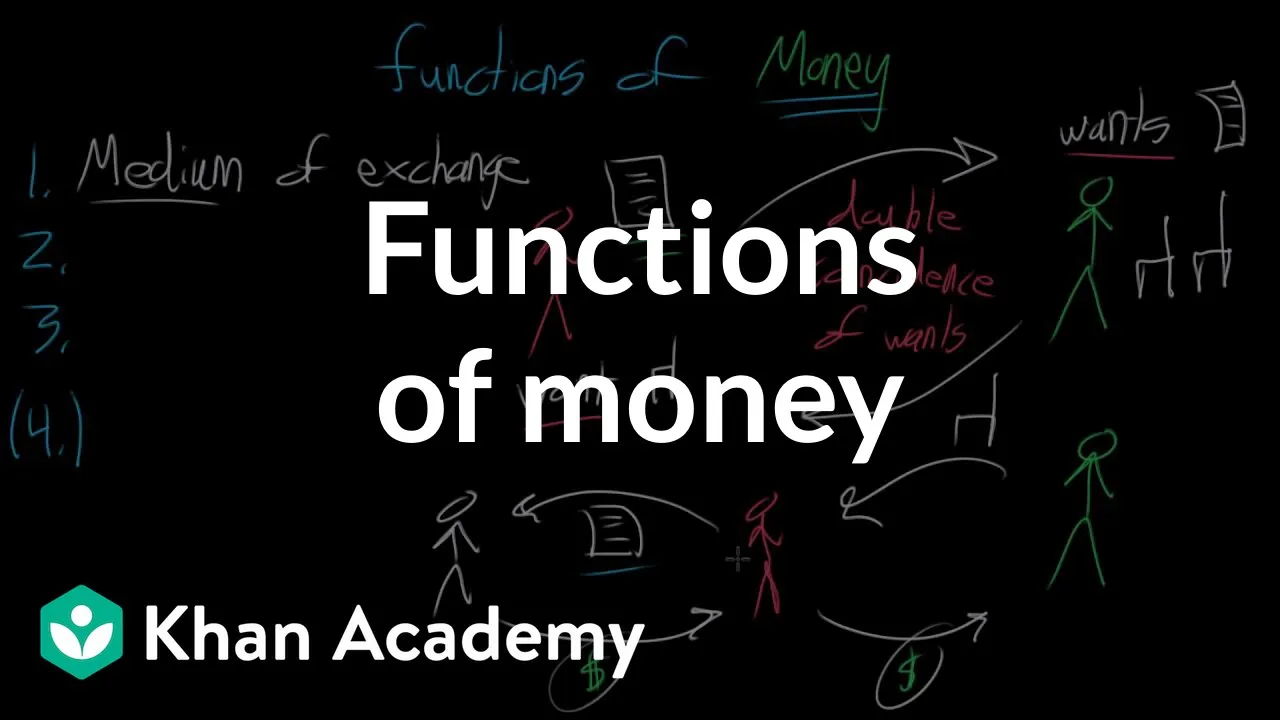
Added:The three fundamental functions of money: medium of exchange, unit of account, and store of value.
The limitations of the barter system and the concept of the 'double coincidence of wants'.
The distinction between intrinsic value and exchange value in economic assets.
Basic understanding of how trust and social consensus underpin financial systems.
The classification of money supply, specifically distinguishing between M1 and M2 monetary aggregates.
The mechanics of fractional reserve banking and the money creation process.
The role of central banks (such as the Federal Reserve) in controlling fiat money supply through monetary policy.
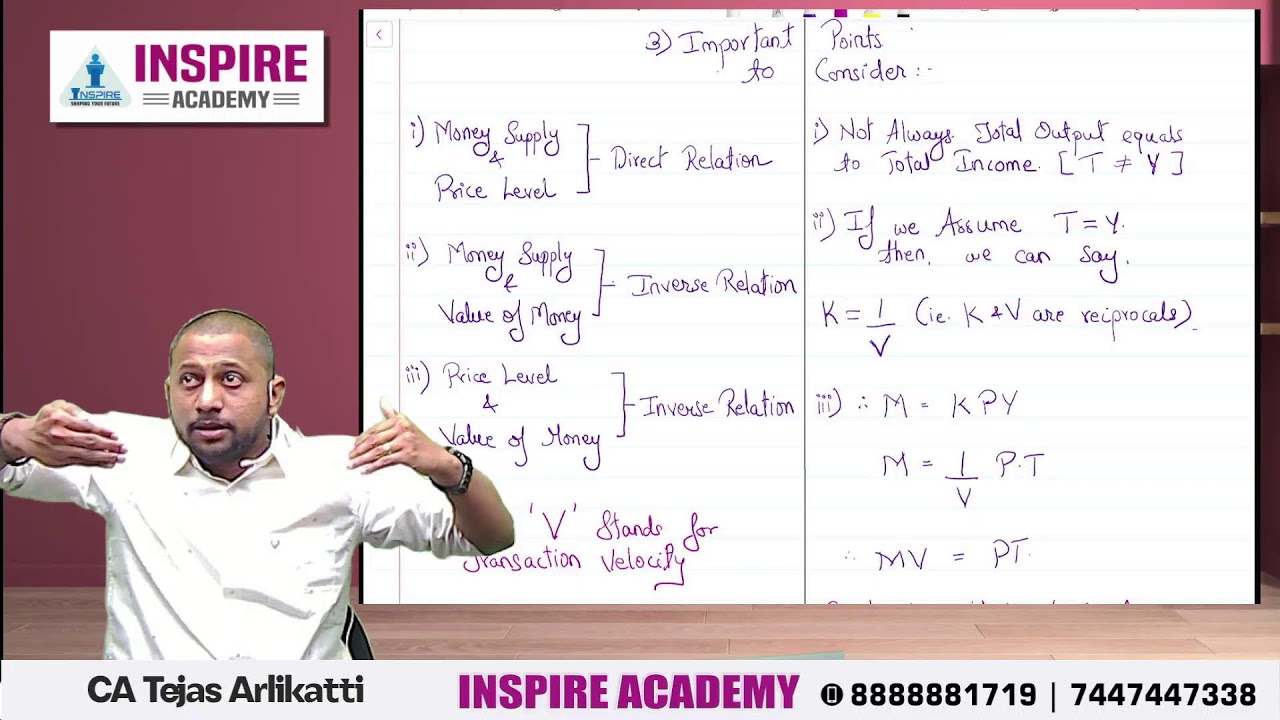
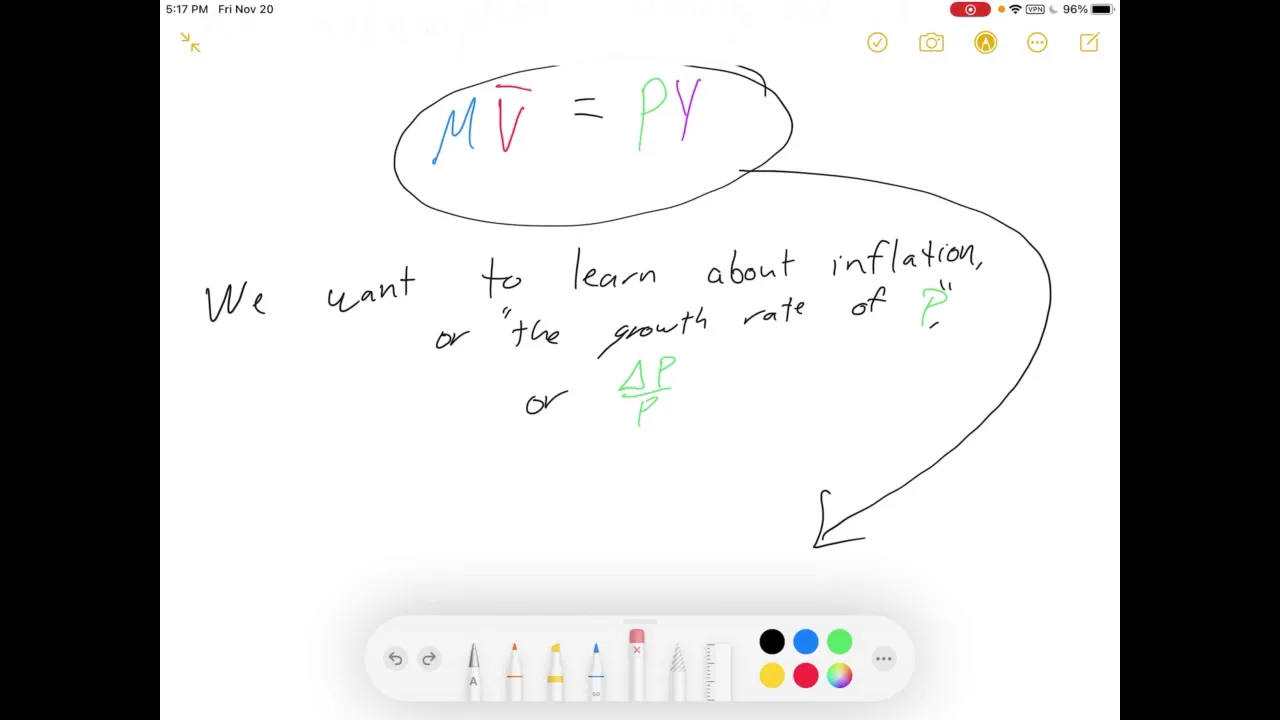
The economic impact of inflation, hyperinflation, and the Quantity Theory of Money (MV = PY).
The emergence of cryptocurrencies and digital currencies as the latest phase in the evolution of monetary systems.
278.6K views4.5Klikes8:18Original Release: 2016-06-20
- [Voiceover] Let's take a look at a United States one dollar bill.
What is it that gives this thing value?
You can give it to people and get back, ya know food that you can eat, or things that you can use, and things of hard value.
But what is it about this little piece of paper that makes it valuable?
Or I guess it's not paper, as it's cotton, something like that, right?
But the questions stands, right, like what makes this flimsy little thing, that doesn't seem to have any use in it's own right, valuable?
Well, one kind of interesting exercise is to step back in time a little bit and take a look at what the very, very first United States dollars looked liked.
So I have here one of the very first that was printed, and let's zoom in on it and kind of read some of the words associated with it.
So if we zoom in, let's just say towards the very top here.
Notice that it says silver certificate, silver certificate up at the top.
So what does that mean?
Well, if we zoom out a little bit, it says, it says that this certifies that there has been deposited in the treasury of the United States of America and then the sentence kind of continues in an awkward way below, one silver dollar payable to the bearer on demand.
So what that means, what this dollar originally represented was the fact that you were gonna be able to turn in this bill for a silver dollar.
This piece of paper in theory, could be turned in to the United States treasury, which guaranteed that it had in its deposits a silver dollar, an actual piece of silver, and I'll show what one of those looked like in just a moment, It would return to you for this bill.
So in a sense what gave it value was this guarantee that you could turn it into silver if you wanted.
So this way you could trade this with other people as if it were a piece of silver, 'cause if you gave it to someone that person, now being the bearer on demand, could then in theory, turn this in and get a silver dollar as a result.
And the reason for even having this paper money, and printing these bills is that it was pretty inconvenient to always lug around actual pieces of silver, and actual pieces of metal.
And this would be especially true in the case of even higher amounts.
So for example, here we have a 10,000 dollar bill.
Something you don't really see too often.
And if we zoom in and kind of see the guarantees that are written on this guy, it's actually very similar, but its this is instead in gold instead of silver.
It says that $10,000 in gold are payable to the bearer on demand, as authorized by law.
So kind of legally backing up the idea that this could be turned in for $10,000 worth of gold.
So that way people could actually treat this as if it was, ya know $10,000 worth of gold, without having to lug around that much money.
So what is it that you actually got when you turned in, ya know for one silver dollar or something like that.
What is it that was payable on demand?
Well you have, what's another form of money, what you can use in commerce and kind of trade with people as a medium of exchange.
Officially United States money, but the difference is that the piece of money itself, is the valuable metal.
It actually is the silver, so in theory if you ya know, didn't trust the United States Government anymore, you could melt it down for just the pure silver and maybe other countries still value that silver.
And similarly there was gold coins like this that people would use.
Like this right here is a gold coin worth two and a half dollars.
So, this is something where the value is held within it because presumably people value gold, and even if this didn't have a fancy you know, United States symbol all stamped onto it, it would be something valuable, because it's gold.
And this kind of money, this ya know gold coins or these silver coins has a special kind of name.
It's called commodity money.
Let's see, commodity money.
And basically what this means is that the thing that you're using for money, the thing that you're trading around, has some value in it's own right.
Even if it wasn't money, it would still be something valuable.
This word here, commodity, basically means just anything valuable, it could not only be ya know silver or gold, but things like food or furniture or livestock.
These are commodities.
And you know you could argue that silver and gold aren't valuable other than the fact that people just like using them for trading.
I mean they're kind of pretty and useful for jewelry, and there's some electronics that use them, but on the whole, the main reason that people value silver and gold is because they're used for trading.
It's kind of because other people value them.
So it's a little bit weird that these are the quintessential examples of commodity money, when in fact other commodities ya know like wheat or oranges feel much more real, hard valuable, something you can use in its own right, than the pieces of metal.
But never the less, these are, these are commodities.
And the other form of money here, where you have something that you could in theory exchange to a bank, and then the bank would return to you, ya know the actual silver that it represents, the commodity that it represents, ya know in this case silver.
These are called commodity-backed money.
Commodity-backed.
Because their value is being backed up by the value of whatever commodity they represent.
Another term that you might hear for them is representative money, because they are representing another good, representative.
In this case, silver or gold.
But in the early days of money, like thousands of years ago, you would have representative money like the shekel, which represented a certain weight of barley.
So it doesn't just have to be silver or gold, sometimes you have money that represents a different sort of commodity, so commodity-backed, representative.
This is the kind of old style United States, or other countries money.
A lot of people had commodity-backed money.
But in modern terms, it's common not to have either of those.
You can just have this bill that's not backed up by silver.
You could not turn this in and get silver as a result.
And this, this is termed fiat money.
Fiat money.
And this word fiat kind of means a decree or a declaration, so it's like the United States Government has declared that this is money.
And just by declaring that it's money, presumably that gives its value.
So it kind of feels much more hollow in comparison to commodity money, or commodity backed money.
But there's a couple, a couple hard things backing this up.
One of them, if we kind of zoom in on some of the words here.
If you go you see that it says this note is legal tender.
So here, I'll write that down.
This note is legal tender for all debts public and private.
And I talked about the idea of legal tender in the last video and how that actually ya know gives a little bit of clout to this being valuable as long as you trust that the government will enforce it's laws, as it claims that it will.
But for the most part, what makes this stuff valuable is the fact that other people trust it, right?
The reason that you value having a dollar bill is because you know you can give it to most people and they are willing to trade you valuable things for it.
And at the end of the day, that's what was making, ya know silver dollars or these $10,000 ya know gold notes valuable.
'Cause almost no one would actually trade it in for the silver, 'cause why would you?
It's just as good, and it's a little bit more convenient to just trade around the bill itself.
So once that's actually in the psychology of a society, and once everyone kind of is used to the idea of trading around this paper representative money in order to get things of value, it's not actually a huge leap to just have the paper that you're trading around as long as everyone else trusts it.
And it still serves those functions of money that I talked about in previous videos.
It's a medium of exchange, and you can store this for value, right?
The paper's not going to degrade, it's something you can store, and it does give a unit of value.
Assigning a number to various goods out there.
But it is, it is just something that was declared, it's not an actual hard good, and this is kind of an important distinction to recognize is that fiat money really does mean it's just trusted, it's just taken on faith that people will find this valuable.
But for that matter, that's also true of silver and gold, right?
Like, it's just taken on faith that if you melted down the silver other people would find that valuable.
And same goes for gold, and in fact in some, ya know even though a lot of western cultures valued gold a lot, there were other cultures that they might find like in Asia, that didn't value gold in the same way.
And just thought why is everyone getting all up in a fuss about this fancy metal?
So this idea of having money that we use basically because we trust that others will find it valuable, isn't actually that absurd, and as long as it serves the same three basic functions of money, you can have a working society.
Ya know barring things like hyperinflation, that makes it so that it no longer serves those functions of money.
See you next video!
Up Next

46:20
Money as Debt: A Documentary on Modern Monetary Theory
@EthanielRockX
283.4K views•2015-10-28
5:07
Impact of Yuan in Indo-Russian Trade Amid Sanctions
@WION
261.9K views•2022-07-01

10:27
Keynesian Cross & Multiplier: Fiscal Policy Effects
@khanacademy
218.5K views•2012-04-05

113:18
The Age of Easy Money: Fed & Inflation | Full Documentary
@frontline
21.2M views•2023-03-15
Related Study Plans & Knowledge Roadmaps
Structured learning paths in Economics
economics
Sovereign Debt: Defaults, IMF & Restructuring
01Introduction to Sovereign Debt & Government Bonds
02Debt Sustainability & Credit Ratings
03Anatomy and History of Debt Crises
+ 2 more learning modules
12h5 modules
Explore Roadmap
economics
Market Design: Matching Theory & Gale-Shapley
01Introduction to Market Design and Price-Free Markets
02Two-Sided Matching & The Gale-Shapley Algorithm
03School Choice Systems and Mechanism Design
+ 2 more learning modules
10h5 modules
Explore Roadmap
economics
Impossible Trinity: Forex, Capital & Policy
01Introduction to Monetary Policy and Central Banking
02Exchange Rates and International Capital Flows
03The Mundell-Fleming Model
+ 2 more learning modules
8h5 modules
Explore Roadmap
economics
Healthcare Economics: Market Failures & Systems
01Introduction to Healthcare Markets and Market Failure
02Asymmetric Information and Adverse Selection
03Moral Hazard and Insurance Design
+ 2 more learning modules
12h5 modules
Explore Roadmap