



![[JSConfEU 2011] Philip Tellis: Messing with JavaScript and the DOM](https://i.ytimg.com/vi/PXfwHAfCGoc/sddefault.jpg)








![[#SemanaCap 3] Curso “NTP e NTS”](https://i.ytimg.com/vi/UmkZQc6rF2k/maxresdefault.jpg)






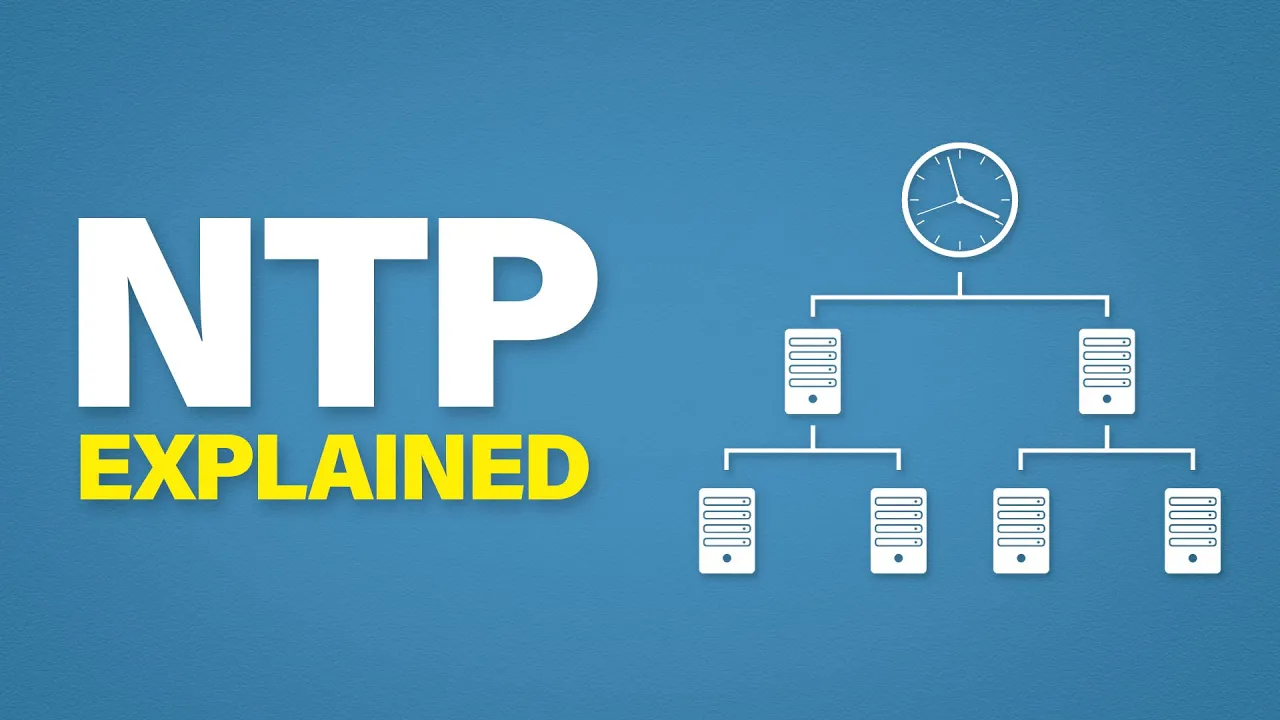
The Network Time Protocol (NTP) maintains global time synchronization through a hierarchical system where 19 stratum-zero atomic clocks (operated by government agencies in locations like Colorado, Germany, and Japan) serve as the ultimate time authorities, transmitting time data through stratum-one, stratum-two, and stratum-three servers to ensure all internet-connected devices remain synchronized within milliseconds, despite individual device clocks naturally drifting by seconds daily.
The Network Time Protocol: How Global Clock Synchronization Works
Added:Basic understanding of the TCP/IP protocol suite, specifically the UDP protocol which NTP utilizes on port 123.
The concept of network latency, jitter, and round-trip time (RTT), and how they introduce measurement errors.
The role of system clocks in computing, such as the hardware real-time clock (RTC) and software system time.
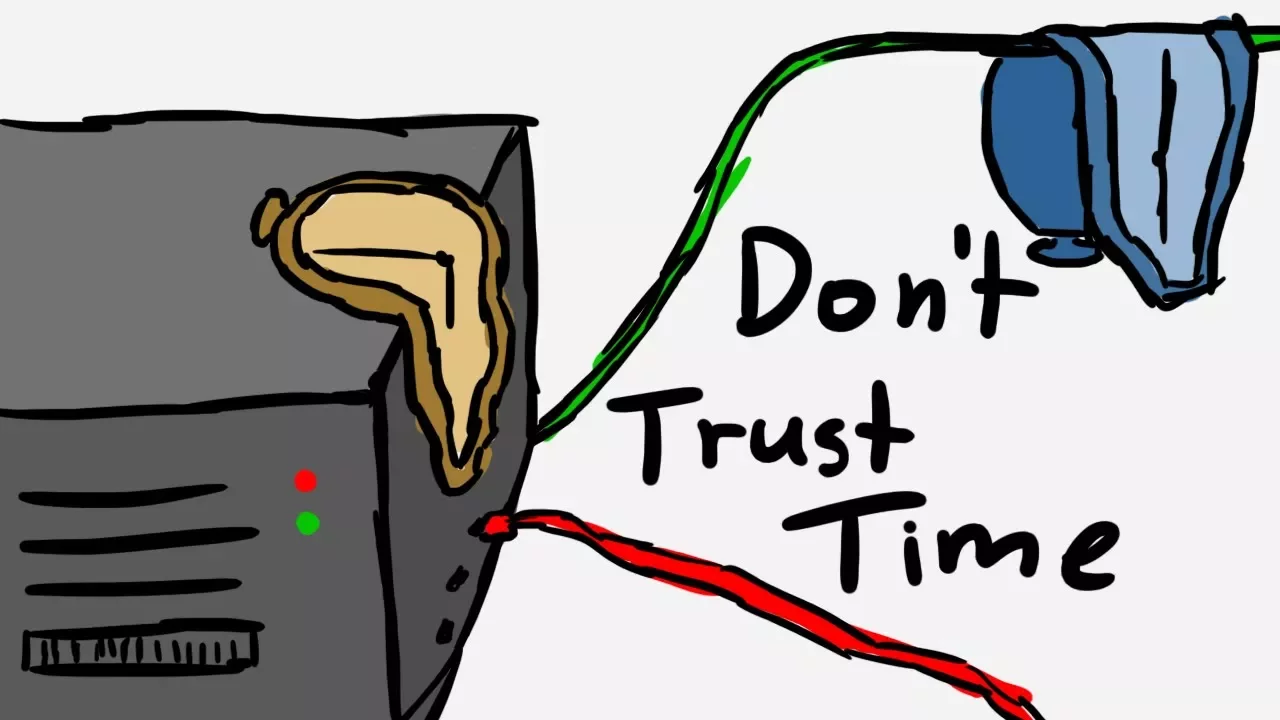
Why time synchronization is critical for modern computing, including log file correlation, cryptographic certificates, and transactional consistency.
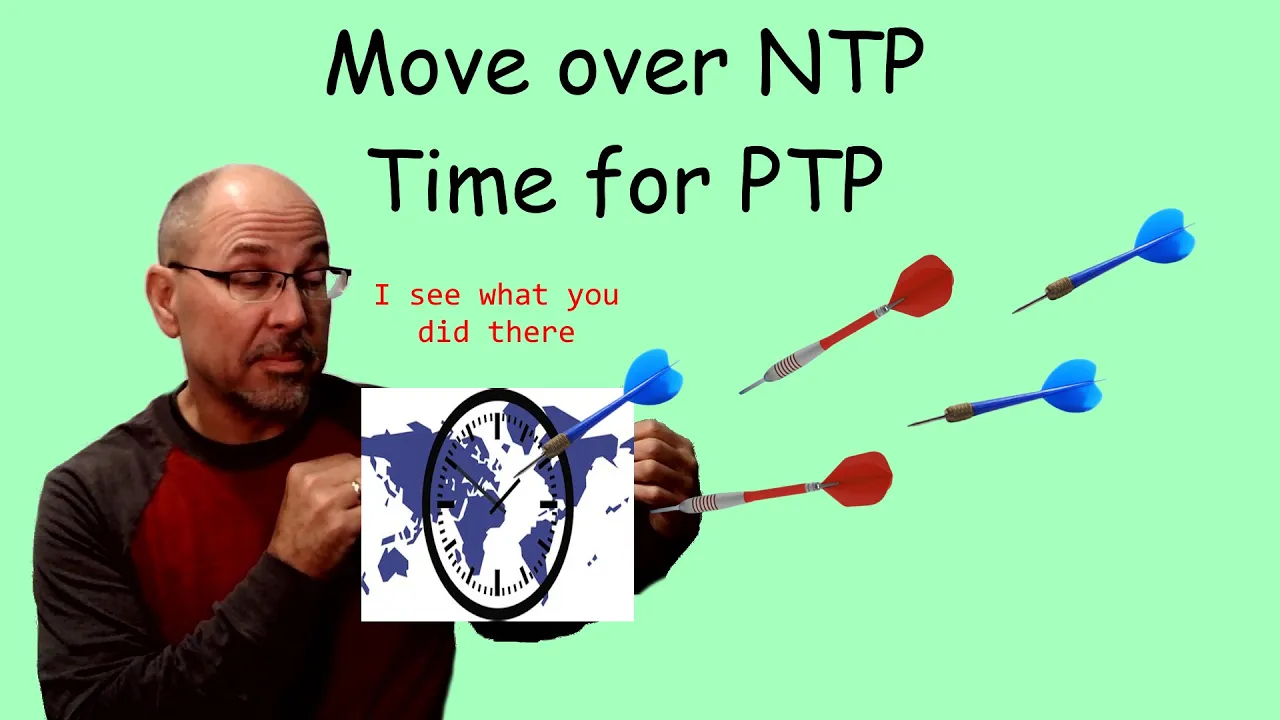
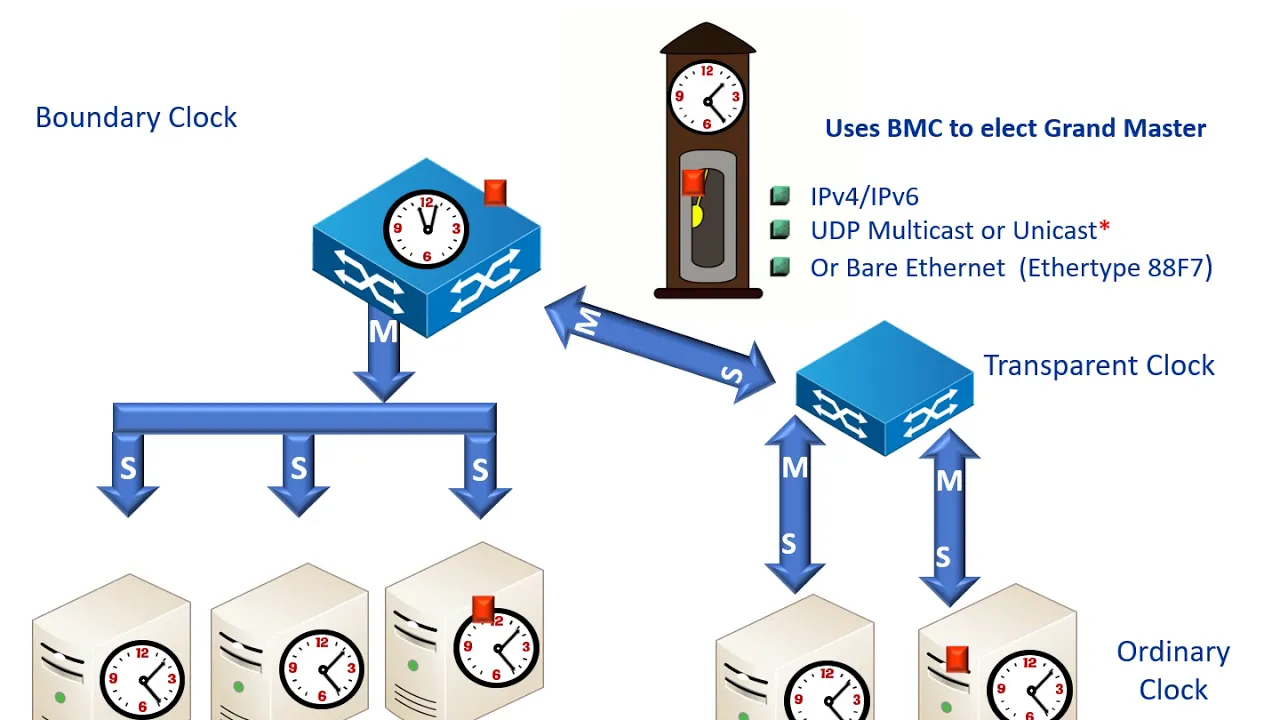
Precision Time Protocol (PTP / IEEE 1588) for sub-microsecond time synchronization in specialized, high-accuracy industries.
Network Time Security (NTS) and cryptographic methods used to prevent time-spoofing and man-in-the-middle attacks.
Distributed systems consensus and ordering mechanisms, such as Lamport Timestamps, Vector Clocks, and Google's TrueTime API.
How clock drift and synchronization failures impact database ACID compliance and security protocols like Kerberos.
958.7K views33.3Klikes7:59Original Release: 2024-04-23
almost every clock in the world is wrong the clock on your phone is wrong the clock on your laptop is wrong the clock on that old Nintendo DS in your closet that somehow still has batteries wrong but what's weirder is that they're all really bizarrely close to being right if you look at the time on your computer right now that time is probably only a few dozen milliseconds away from the most precise and advanced atomic clocks in the world and there's a good reason for that without this level of granular time synchronization any number of hugely important systems would fall apart we wouldn't be able to operate modern power grids financial markets would disintegrate and eBay bidding would get really unfair and like a lot of modern critical infrastructure the only thing keeping this all together is an invisible internet system that you probably didn't even know existed which was created 40 years ago by one guy in Delaware and only still exists because of a bunch of very nice nerds who have decided to let Society keep functioning first on aside it's worth pointing out that your computer can keep the time without the internet and it can even do that when off unpluged Door full of bees basically there's a small clock somewhere on your motherboard that's powered independently by a little battery that looks like this and it has enough juice to keep your computer's internal clock running on its own for somewhere between 5 and 20 years but in the world of big buff clocks this is not a particularly great clock it'll naturally drift by a few seconds each day and it's not up to date on the latest time news like whether or not the international earth rotation and reference system service has decided that this year's December 31st will be 86,4 seconds or 8641 seconds so all that is to say your computer needs to at least sometimes get its time from somewhere else a clock that actually hits the gym but getting the time from here to here with nearly 100% accuracy is easier said than done so here's how it's done it's called the network time protocol and it's one of the oldest sets of rules governing how the internet actually works you see the Internet only has 19 real sources for what time it is I know that sounds weird more that later so it needs a system to get the time from one of those clocks to every other device on the internet and you can't just have millions of computers all hooked up directly to those clocks so instead the internet is built on top of a secret clock hierarchy some computers have more accurate time than others it's fresher closer to the tee of a real clock but if you want to move your computer up in clock Society you'll need to understand how this hierarchy works the top layer of the network time protocol which is called stratum zero are the actual clock themselves these are generally some of the most accurate clocks in the world and they're the final Authority for what the time on Earth actually is at any given moment as of right now the internet is hooked up to 19 of these stratum zero clocks located in Germany Switzerland France the UK Japan Hawaii Ontario Colorado Maryland and space And as far as I can tell every single one of these time sources is owned or operated by some kind of government agency usually one of those really obscure government agencies that's just like three guys in the room who care a frightening amount out about calibrating clocks and absolutely nothing else their websites look like this their logos were designed in Microsoft Word 25 years ago and most of them seem to spend their free time organizing and attending what I would describe as a shocking number of different timekeeping and measurement conventions now not all of these time sources work the same way most of them are state-run time signal radio stations like this one in Fort Collins Colorado the signal broadcast by this station is used to calibrate pretty much any radio controlled clock in North America it operates its own set of czm atomic clocks on site don't worry about what that actually means just know that they're really good clocks and broadcast a constant time signal in perfect 60-second blocks that precisely denote the start of each minute stations like this cover most of the Earth but stratom zero also includes a few satellite systems like GPS and Galileo which have their own atomic clocks and can also throw some fresh numbers into the system when necessary so okay assuming you're watching this video in the United States which you are because that's the only country the clock your computer is actually syn is almost certainly located in this small one-story building in Northern Colorado but how does the time get from there to you well the short answer is time go through wire the slightly less short answer is that the data needs to travel through a few different servers before it reaches you this is where the other strata come in every stratum zero clock is connected directly to a stratum 1 Surfer there are a fairly limited number of these and they're as close to being perfectly accurate as a computer can be without literally being the clock itself stratum 2 servers then are the computer computers that get their time directly from stratum 1 servers since you can't really make your own stratom 1 server without direct access to an atomic clock stratum 2 servers are generally the most accurate computers available to the general public commercial time servers like say time. windows.com which is the default time source for Windows computers are usually in stratum 2 and that means that unless you've gone and done something weird the computer you're watching this video on is probably in stratum 3 and that's nothing to be ashamed about it's probably only a few milliseconds off from that atomic clock all the way over in Colorado which is only possible because the time travels down each one of these levels in a really clever way basically each clock at each level is counting time on its own and it only checks its daddy level every so often to see if it's wrong so it can adjust to the right time and keep counting from there but when a computer requests the time from the computer above it there's a bit of a physics problem it takes time for the question to get from one computer to another time for the computer to process the question and time for the answer to go back and by then who really knows what time it is so instead of just saying hey Daddy computer what time is it and rolling with whatever answer it sends back there's a way to get a much more accurate answer first the computer asking the question will record what time it thinks it is when it first asks the question that's t0 it will send t0 to the computer above it who will record the time that it actually is when it receives the question that's T1 then it'll record the time again when it sends the answer that's T2 and finally the first computer will record the time when it receives the answer that's T3 three using these four timestamps you can figure out what the difference is between the two computers's clocks that's just T1 minus t 0 but you can also figure out how much time it takes for the signals to travel between both computers using this formula here which I won't really explain but I promise make sense if you look at it for long enough and that allows you to adjust the first clock without worrying about the latency of the internet and physics and stuff so there you go the tiny number in the corner of your screen is an incredible feed of infrastructure physics and math and Frank this video was an equally incredible feat because my writer Ben went to college for something called literary arts and now he's using the last section of the script to beg me to not make him write another video involving numbers and blah blah blah blah blah it just keeps going on like that well I guess that's the end of the video then see you next time but actually before you go I me and Ben run the numbers on one last piece of convoluted math and his results were definitive you're paying too much for coffee I know it you know it we all know it everyone pays too much for coffee because honestly Kochi St coffee is usually pretty gross and the one other option is shelling out like eight bucks for a latte every morning but now you've got a third option thanks to our sponsor Trade coffee trade partners with over 55 of the best Indie Roasters in the country to deliver fresh delicious coffee beans right to your door and better yet they work with you to match you with the perfect roast that fits your palette before I started using trade I didn't really know anything about coffee I just take whatever was available and dump a bunch of sugar in it but now I can actually enjoy the coffee coffee itself and I actively look forward to trying new roasts that trade matches me with lately I've been enjoying orange Special Blend which trade determined works well over ice and is roasted to take cream both of which I enjoy because I drink my coffee like a tiny little baby so if you want to skip the coffee shop upgrade your morning routine with Trade coffee just visit drink trade.com to sign up and save $15 on select plans and better yet you'll get your first bag of coffee for free
Up Next

10:40
Network Time Protocol (NTP) Explained: Synchronizing Internet Clocks
@Computerphile
201.1K views•2022-11-04
87:26
Introduction to Secure Multiparty Computation with Yehuda Lindell
@fhe_org
7.7K views•2021-02-04
4:55
HTTP Requests Explained: GET, POST, PUT, DELETE
@codecademy
103.1K views•2021-10-07
19:25
Enigma Machine Mechanics: WWII Encryption Explained
@JaredOwen
13.2M views•2021-12-11
Related Study Plans & Knowledge Roadmaps
Structured learning paths in Computer Science
computer-science
Container Runtimes: Namespaces, Cgroups & Go
01Linux Systems & Go Programming Foundations
02The Core of Isolation: Chroot and Filesystems
03Linux Namespaces: Process Isolation
+ 3 more learning modules
32h6 modules
Explore Roadmap
computer-science
Building a CHIP-8 Emulator: Rust & CPU Basics
01Computer Architecture Foundations (Bits & Bytes)
02Rust Programming for Systems Development
03CHIP-8 Virtual Hardware Specifications
+ 2 more learning modules
32h5 modules
Explore Roadmap
computer-science
Building BitTorrent: Go, P2P & Concurrency
01Go Fundamentals & Concurrency
02Networking Foundations & P2P Architecture
03Bencode Parsing & Torrent Metadata
+ 3 more learning modules
26h6 modules
Explore Roadmap
computer-science
Actor Models (C++ Concurrency & Lock-Free)
01C++ Multi-Threading Foundations
02Thread Pools and Task Scheduling
03Atomics and Lock-Free Queue Design
+ 3 more learning modules
45h6 modules
Explore Roadmap