










![FÍSICA - Estática Parte 01 [CICLO FREE]](https://i.ytimg.com/vi/p4lOS1321Vc/maxresdefault.jpg)




![Özel Görelilik-1 [Temel Kavramlar]](https://i.ytimg.com/vi_webp/IHbW8sE8wu8/maxresdefault.webp)











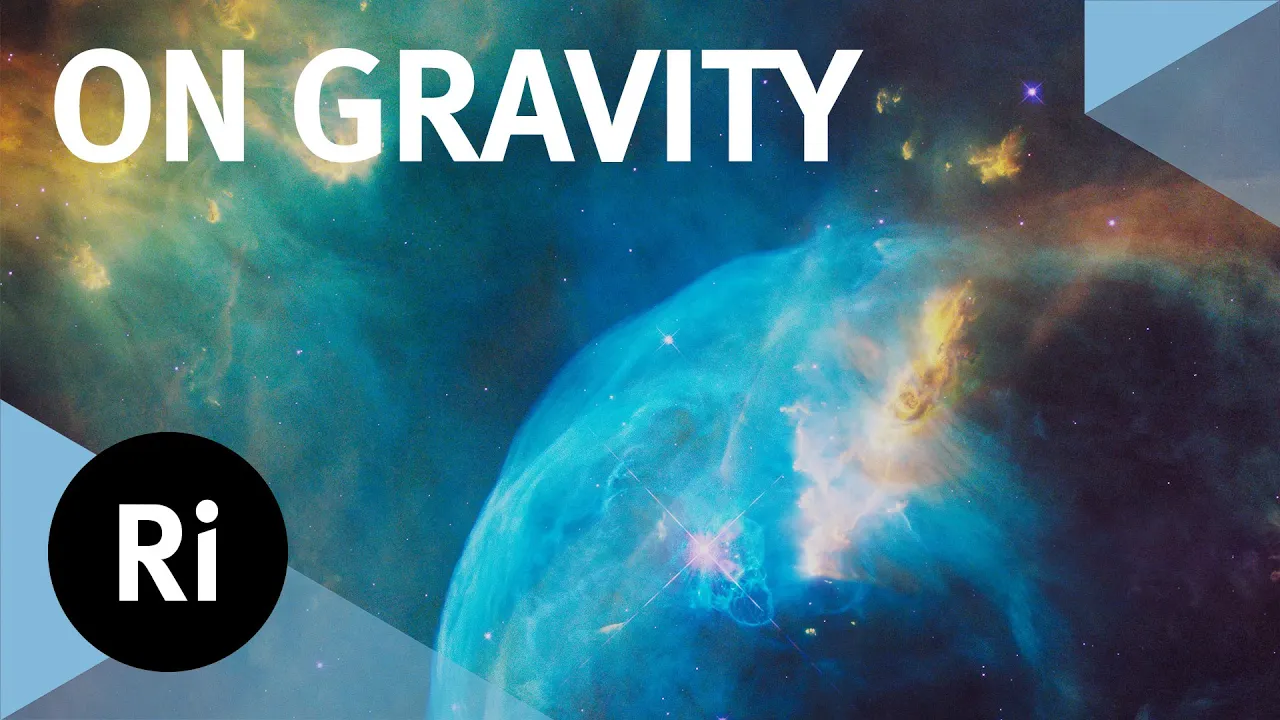


The gamma factor (γ = 1/√(1 - v²/c²)) in special relativity describes time dilation, where time appears to slow down for objects moving at speeds close to the speed of light; this can be derived using a light clock thought experiment where light bouncing between mirrors travels a longer diagonal path from a stationary observer's perspective, requiring Pythagoras's theorem to calculate the extended time interval.
Why Time Slows Down in Rockets: Deriving Gamma
Added:Understanding of basic algebra and coordinate geometry, specifically the Pythagorean theorem (a² + b² = c²).
Familiarity with classical kinematics, particularly the relationship between speed, distance, and time (d = v * t).
Einstein's second postulate of special relativity: that the speed of light (c) is constant in all inertial reference frames.
The concept of inertial frames of reference, specifically the distinction between an observer at rest and an observer in uniform motion.
Length Contraction: Exploring how space contracts in the direction of motion as a direct physical consequence of time dilation.
Relativistic Momentum and Energy: Investigating how relativistic mass changes with speed, leading to Einstein's famous equation, E = mc².
Minkowski Spacetime Diagrams: Visualizing relativistic effects and the constancy of the spacetime interval using graphical diagrams.
Experimental Proofs and Applications: Studying real-world evidence of time dilation, such as GPS satellite clock corrections and the decay rates of high-speed cosmic ray muons.
Introduction to General Relativity: Transitioning from special relativity (flat spacetime) to gravitational time dilation in curved spacetime.
625.9K views10.8Klikes9:07Original Release: 2013-12-24
so we got a symbol gamma and in fact this is the third pass we've made at Gamma we had a video on gamma and then we made another one which we un originally called gamma reloaded so I guess even more un originally we ought to call this one gamma revolutions gamma is this factor which comes up all over the place in special relativity it's to do with you know when you have distances being squashed when things are traveling at close to the speed of light the amount they're squashed by this factor of gamma when time becomes dilated so time becomes extended when something's traveling first close to the speed of light the amount is extended by is by this Factor gamma so it's a very sort of fundamental piece of physics so mathematically gamma this factor is equal to 1 / < TK 1 - V ^2 / c^2 so if you got an object or a reference frame which is moving at speed V then its gamma factor is this quantity here so it's equal to one when something's not moving if V is equal to zero this quantity comes out as one and as V goes up closest to gets closer and closer to the speed of light gamma gets bigger and bigger well one of the things I said in probably the first and the second video was actually if you want to derive why gamma has that particular form it's actually not that difficult to do and so when you do that then in the comments underneath the video quite a lot of people say well go on then do it do it go on um so that's what we'll do we'll do it are you going to do math not very hard so the hardest math here is Pythagoras's Theorem Square on the hypotenuse is equal to the sum of the squares on the other two side I promise no harder than that we need to back up a little bit and talk about special relativity to do this the fundamental principle in in special relativity is that all reference frames are the same and you can't tell if you're as long as you're not accelerating so if you're just moving at uniform speed or stationary the laws of physics are exactly the same so if you're think called an inertial reference frame you can't tell whether that reference frame is moving or whether it's still you'll end up you know if you were inside a closed box in there whatever experiment you could do you'll always end up with the same laws of physics you won't be able to tell I'm moving and that guy is still or that guy is moving and I'm still and everyone's sort of familiar with that right that basically you know if you're on an airplane the laws of physics don't change you know if you drop something it's you know if you spill your coffee it still ends up on your lap if you put something in the microwave the microwave oven still works on the airplane so the laws of physics are the same if you're moving at constant speed or if you're stationary if you start accelerating then obviously you can feel the effects of the acceleration but as long as you're moving at uniform speed it makes no difference to any laws of physics at all next part of the story is electromagnetism which is says that you know so going back to Maxwell at the end of the the 19th century figured out these laws of electromagnetism and from those he derived the speed of light the speed of light turns out has a very simple form that is not in some sense a fundamental constant if you know about electrostatics how charges attract each other if you know about magnetism how magnets attract each other then actually you can derive what the speed of light is so the speed of light just comes from simple physics it's not something that you know is just a made up number it's actually you can put in some simple physics and derive what the speed of light is that means that because it comes from simple physics that means that the speed of light has to be the same whatever reference frame you're in right because it's just come from some simple physics and the laws of physics are the same whatever reference frame you're in so whatever reference frame you're in you should always see the speed of light equal to the speed of light now to get to the how we actually get to gamma to do that we have to think about clocks because clocks are one of the things that get affected by you know traveling close to the speed of light that time slows down and of course if time's slowing down that means clocks going the speed at which clocks are going is going to change but everything's going to change you know the speed at which radioactive decay occurs the speed which you age everything is going to change just because if they didn't all change together then you'd know there was something funny going on that suddenly you know I'm only living 15 years instead of 75 years and therefore clearly something has changed with the laws of physics so any clock you choose to use all other clocks have to mimic Its Behavior so in special relativity when you want to derive this equation you can kind of set up a rather special kind of clock a thing called a light clock and so instead of having a pendulum that ticks backwards and forwards you know one tick per second you what you actually have is you imagine you have a light and a mirror and what you do is you fire out a burst of light that goes up hits the mirror bounces back comes back and then You' got a little detector next to the mirror which says whenever I detect some light I'm going to send out another burst of light so really you've just got the little burst of light going backwards and forwards and it's just like a pendulum clock in that sense that actually it's sort of ticking backwards and forwards between there and so you could use that to measure time it's not a very sensible way to measure time but it's a perfectly good way of measuring time and whatever time you measure with this light clock has to be the same as what You' measure with your pendulum clock or your radioactive decay or whatever it is all right so now we need to think about what happens to such a clock so let me draw a picture of it so here we've got our light source we've got a mirror up here and we've got a little detector here so in you know in simple terms all you're doing is you're firing some light up there it bounces back and gets detected and then you got a little thing that says okay whenever I detect some light I'll send another pulse up backwards and forwards between these two and we'll make this distance a distance H and if our clock's ticking supposing its period is tow so it does it takes a Time towel to go from there to there and a Time towel from there to to go from there to there so which that's analogist to like one second on a pendulum clock cuz a pendulum actually only completes a period every two seconds right each it goes one way for a second and then the other way for a second so this is going to be a clock it's probably if we make it you know the trouble is if we wanted it to be a second between ticks this thing would have to be 300,000 km long which is not terribly practical so it's probably going to have a shorter tick but we can write tow if we want that H in terms of the period is C * tow so basically it's tow to get from there their tow to come back again just like for on a pendulum clock one second to tick one way one second to talk and that's what would happen you know if I had one of these clocks sitting next to me or you know if I actually I was sitting in a rocket and I had one of these clocks along along for the ride with me that's what I'd see but now imagine I'm watching somebody in a rocket so I'm not moving the rocket is moving relative to me and they've got one of these clocks and so they're watching it going Tick Tock and and behaving in the way that we've just arrived here from the perspective of the person in the rocket they're just seeing the light going up and down but of course the rocket from our perspective is moving along which means that the mirror is mov moving along and the light source is moving along which means the light instead of going up and down like that is actually going like this from our perspective it's going up then coming down again so if I just draw that what's happening is from the you know the light's emitted at some point and from our perspective we're seeing this whole thing moving to the right so actually what we see the light doing is instead of going straight up we see the light heading off in this direction hitting the mirror cuz the mirror has moved to the right by the time it hits it and then coming back down again and of course by the time it gets back down to the detector again the detector's moved to the right again and so the light instead of going straight up and down follows a path like that so it has further to go from our perspective that light's gone further but also the speed of light is the same in every reference frame and so the light's got further to go and it's traveling at the same speed so therefore it takes longer to do it so one of those ticks in our reference frame takes longer than it did in the reference frame in which the Clock Was stationary just because the light's got further to go and therefore it's going to take longer to do it and we can fairly straightforwardly mathematically figure out how much longer it's going to take to do it so let's go back to the picture again for a second so this is still this distant H that hasn't changed which we've already said is equal to C * tow that hasn't changed that's our tick that it would be the light is now moving at the speed of light C we see it moving and it's going to take us some time T to get where it's going so the distance the lights traveled along here is the speed of light times how long it takes to get there C * t Okay and then remember this thing is moving to the right it's moving to the right at some speed V which means by the time the light has got to the top here this thing will have moved the distance over here how far will it will move well if it's moving at speed V and it's got a Time T to do it then the distance it travels is just V * T and this is just a right angle triangle we've got here and so we can apply Pythagoras's Theorem which says that the hypotenuse squared is equal to the sum of the squares on the other two sides so ct^ s is equal to c^ squ plus vt^ 2 so let's just write that down we've got c^ s t^ s cuz we squared the whole thing so it's squeeze squar to^ 2 plus v^2 t^2 now I need to do a little bit of magic to rearrange this formula t^2 is = to to^ 2 over 1 - V ^ 2/ c^2 and then I just take the square root of both sides that tells me that the time I measure in my reference frame is the time you measure in the reference frame in which the clock is stationary divided by I've going to take the square root of the bid on the bottom 1 - V ^ 2 / c^2 which is just gamma that we defined before times to so the factor of gamma is how much time gets changed by how much time gets multiplied by so this is saying that the time we measure T T is related to the time in the reference frame in which the the clock is stationary so think called the proper time by some factor it's longer by a factor of gamma so gamma is the amount by which the time gets stretched and as as promised nothing harder than Pythagoras's Theorem somebody approaching the tunnel if this happens it's not going to be such good news because from their perspective the train is longer than the tunnel which means either the front of the train gets chopped off or the back of the train gets chopped off or both
Up Next
11:22
Length Contraction Explained: Space & Time in Special Relativity
@fermilab
407.6K views•2018-04-25

12:53
21cm Hyperfine Transition in Neutral Hydrogen: Radio Astronomy Basics
@AaronRobertParsons
12.4K views•2011-10-13

8:31
Quarks Explained: Evidence, History & Types | Physics
@sixtysymbols
389.7K views•2010-05-28

27:14
Entropy and the Second Law of Thermodynamics Explained
@veritasium
27.5M views•2023-07-01
Related Study Plans & Knowledge Roadmaps
Structured learning paths in Physics
physics
Nuclear Physics (Decay, Fission & Reactors)
01Atomic Structure and the Binding Force
02Radioactive Decay and Half-Life
03Nuclear Fission Mechanics and Chain Reactions
+ 2 more learning modules
12h5 modules
Explore Roadmap
physics
Soft Matter (Polymers, Colloids & Rheology)
01Foundations of Soft Matter & Thermal Forces
02Polymer Physics and Macromolecules
03Colloids, Surfactants, and Self-Assembly
+ 2 more learning modules
38h5 modules
Explore Roadmap
physics
Analytical Mechanics: Lagrangian & Hamiltonian
01Mathematical Foundations: Calculus of Variations
02From Newtonian Mechanics to Constraint Dynamics
03The Principle of Least Action & Lagrangian Mechanics
+ 3 more learning modules
28h6 modules
Explore Roadmap
physics
General Relativity (Spacetime & Cosmology)
01Foundations of Relativity: Special Relativity
02The Geometry of Spacetime: Equivalence Principle & Curvature
03Einstein's Field Equations: The Mathematics of Gravity
+ 2 more learning modules
55h5 modules
Explore Roadmap