















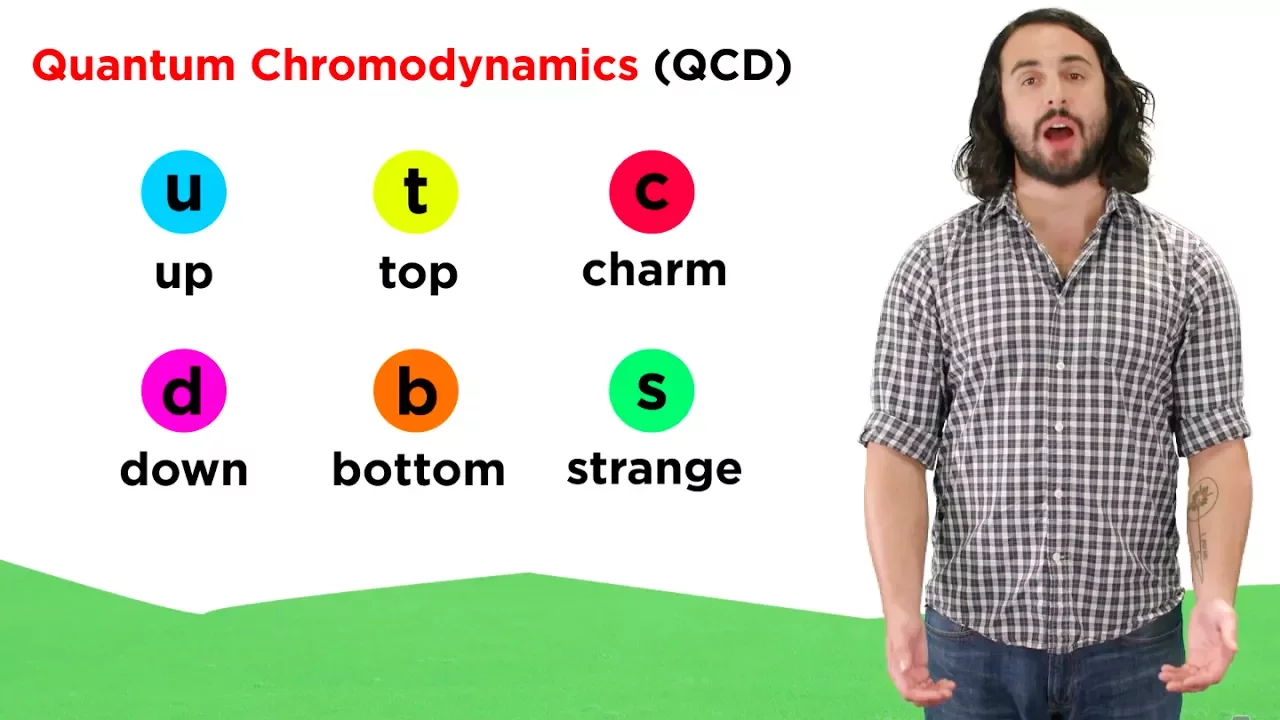
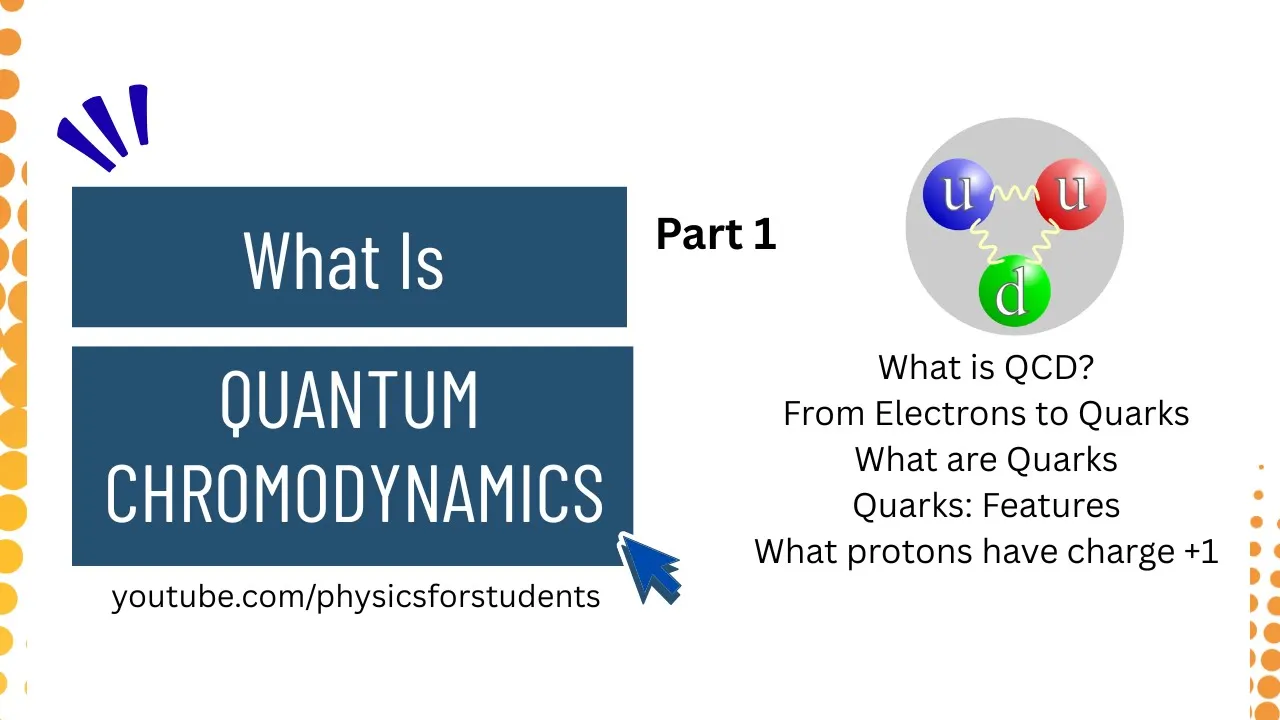








Quarks are fundamental particles that make up protons and neutrons; originally proposed in 1964 by Murray Gell-Mann (who named them after James Joyce's 'Finnegans Wake') and independently by George Zweig, quarks were initially met with skepticism because their strong binding forces made direct observation impossible. However, Richard Feynman provided experimental evidence through electron scattering experiments, revealing three distinct 'blobs' within protons. Modern physics recognizes six quark flavors organized into three generations: up/down (first generation), charm/strange (second), and top/bottom (third), with masses increasing significantly across generations, where the top quark is approximately 100,000 times more massive than the up quark.
Quarks Explained: Evidence, History & Types | Physics
Added:today I'm going to talk about quarks you've probably heard about quarks as Elementary particles but I'd like to introduce you to a simpler quar here it is it is a central European cheese it's a kurd cheese very popular in Germany so this is my version of quarks I'm going to talk about what the evidence is for quarks because you've never seen one apart from this that's the first time you've seen it in fact the theory of quarks was invented by two different people at the same time one of the big things that we try and do in uh physics is to work out the building blocks of nature what are the the Lego bricks from which everything else emerges you know whether it be the chairs and the room the the doors you and I before the 60s we just thought about elementary particles as being protons and neutrons with electrons whizzing around them and the protons and the neutrons were the smallest known particles and they seem to be Elementary but um gradually as more and more experiments were being done in the turn of the century and into the 1920s we began to realize there were other phenomena occurring which you wouldn't have expected if the neutrons and the protons were the basic building blocks now in 1964 independently two guys came up with the idea that the protons the neutrons weren't Elementary they were made up of three other little particles whizzing around each other these particles were called Aces by George Zig but history has forgotten him more or less the other person marale man called them quarks apparently it's to do it came from he from the Quark came from the quack of a duck okay so that's where he he knew he wanted something like that and originally he thought about the sound of a quacking duck and he wanted it be called Quark quk quar um I know that the name so the name quark was uh came from murel man I mean he's a very special man Mur galman one of the brightest people I've ever come across and um he he invented the name and he had read work by James Joyce an Irishman a poet somebody who was a really wonderful writer and there was this quotation in his work finegan wake which is almost unreadable three quarks on Mr Mark three quarks for um um and he used this idea of Quark as the basis of a very aidite particle must muster Mark three quarks for muster Mark and I think it was simply that the three was there and the quarks were there and that sounded like Quack and he wanted the three because if you remember he thought there was the up the down and the strange and it all fitted beautifully so you had these two different things and Aces is is much simpler but quarks well that's what we've ended up with now the trouble with this picture of quarks is that normally when you want to find out what something is made of you build a bit of Lego and you want to find how it's done you smash it to pieces and put it together again well you try to do the same things with protons and neutrons to see if it's made of three particles and they stick together with such strong forces the more you pull them away the more they want to stick together so it seemed impossible to get any experimental evidence for the existence of these particles at all and they fell into disrepute the third stage of the story is a a famous scientist called Richard fryan A theoretician goes and sees the people doing experiments in which electrons AB bashing into protons and he looks at the results and realizes that he's got a way of thinking about it that will give evidence for the existence of these particles within the proton and the way he imagines it it involves relativity which is a weird subject but if you could imagine sitting on the electron and traveling at near the speed of light any object you see instead of being round becomes squashed like a pancake and as such it becomes a two-dimensional object and they call it pancakes inside this two-dimensional object there are three different blobs that are visible to the electrons and they smash into one blob another blob or another blob and you can analyze the results of the electron scattering and how it bashes into this and scatters off just by imagining there are three parts to this which will scatter that was The Smoking Gun with that they had actually seen quarks separate entities but he didn't want to call it Quark straight away because he was a bit more devilish than than uh most people highly intelligent but but he had a wicked sense of humor and didn't like to be bested so he imagined there were three parts in this and instead of calling them quarks he called them partons and probably did that to wind his colleague mariale man up because they were Polar Opposites in character whereas dick fan will wear shirt sleeves and dressed like this marel man would wear tweed and uh really be resplendent whereas Mari Gil man would go to The Faculty Club and have nice lunches on perfect plates he would go down to the greasy spoon and have a hamburger they were complete opposite characters and didn't get along at all and both are absolute Geniuses and um they shared the same secretary they lived they had their two offices and then in between them they had the secretary and both had a door into her office and uh people didn't know how to talk to these two guys in the same Department because they were using different names and it might get confusing but eventually marale man W out and everybody has called them quarks the proton is made it's not as simple as the original picture was because in the original picture excuse me I'm going to take this bit slice of apricot off and divide this up into three so let's have three quarks there's one bit of Quark over there look how easy they are to separate in this model and there's another one and there's a third so in the original model put forward by Mari girl man there were just these three which have different flavors so this flavor is just a word and this one is called up the next one is called down and the next one is called strange because it was totally unexpected when it turned up and originally Gman thought they were just these three later on people found that a more consistent picture would come if we divided these into two and imagine that were six of them so now we get to the stage where there are six quarks there's an up on a down and this is called the first generation because they're the low energy ones this is the second generation their higher energy and they took longer to appear this is a strange and a charm quark and then later on there was a bottom and a top quark and this was found in 1995 quite recently in my lifetime it seems just the other day and that is the current standing on the quarks that there are these six quarks they coming three families or Generations uh you have the up and the down form one you have the charm and the um uh strange form the second one and you have the top and the bottom form the third and they have very similar properties uh except basically as you go from uh right to left from the up and then to the charm and then to the top the masses of these particles increase and in fact the top Quark is something like uh let's see it's 170 oh what a stupid thing about about to try and do the the up Quark is about 2 million electron volts and the top Quark is about 170 billion electron volts so it's roughly 10 to the 5 10 100,000 times more massive than the up so now we believe there are just these six quarks but who knows if they go to higher energy oh that tastes good there could be others up
Up Next
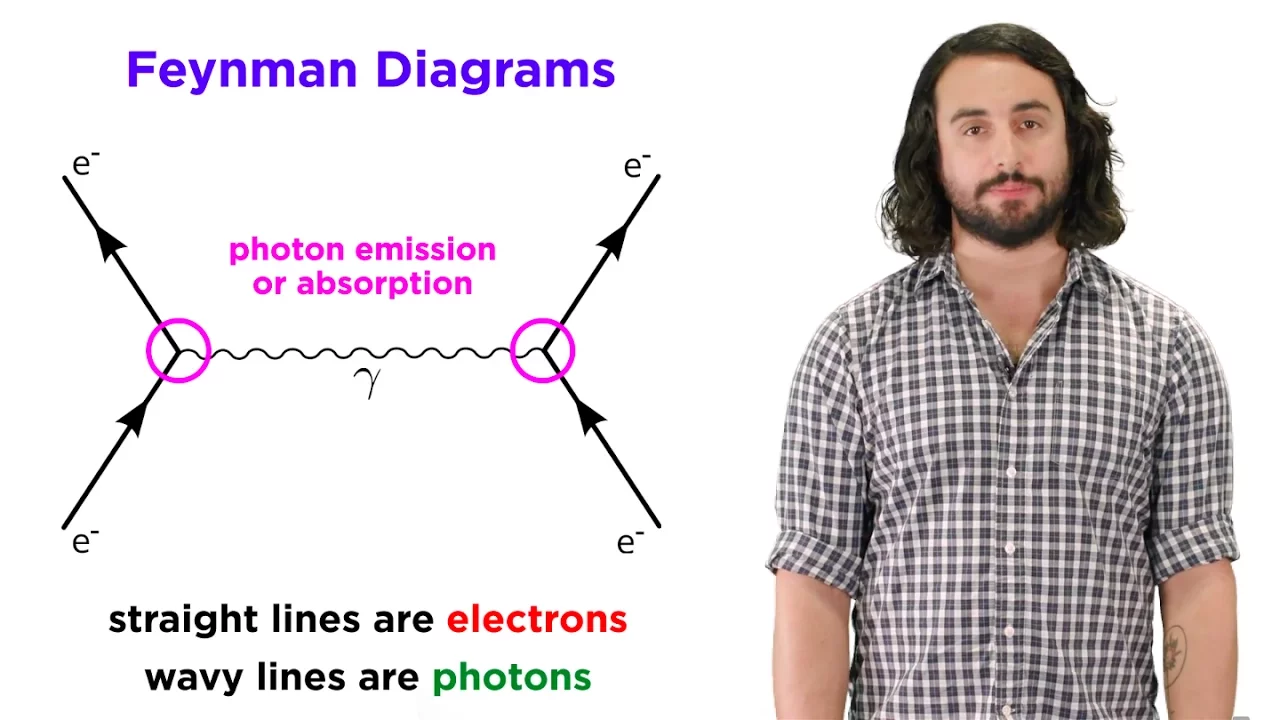
Quantum Electrodynamics Explained: QED & Feynman Diagrams
@ProfessorDaveExplains
118.8K views•2017-05-29

21cm Hyperfine Transition in Neutral Hydrogen: Radio Astronomy Basics
@AaronRobertParsons
12.4K views•2011-10-13

Understanding the Wave Function in Quantum Mechanics
@sixtysymbols
576K views•2009-08-08

Entropy and the Second Law of Thermodynamics Explained
@veritasium
27.5M views•2023-07-01
Related Study Plans & Knowledge Roadmaps
Structured learning paths in Physics