![量子力學導論 - Lec03 - [CH2] 波動力學 (一):波粒二象性與不確定性原理 Wave Mechanics(I): Wave-Particle Duality & Uncertain...](https://i.ytimg.com/vi/O8O2TcGL6WM/maxresdefault.jpg)







![شرح [ ظاهرة كومتون ]/ فيزياء ٣ث ٢٠٢٦م/ الفصل الخامس / الدرس (٢)](https://i.ytimg.com/vi/edTjDC3A3a4/maxresdefault.jpg)











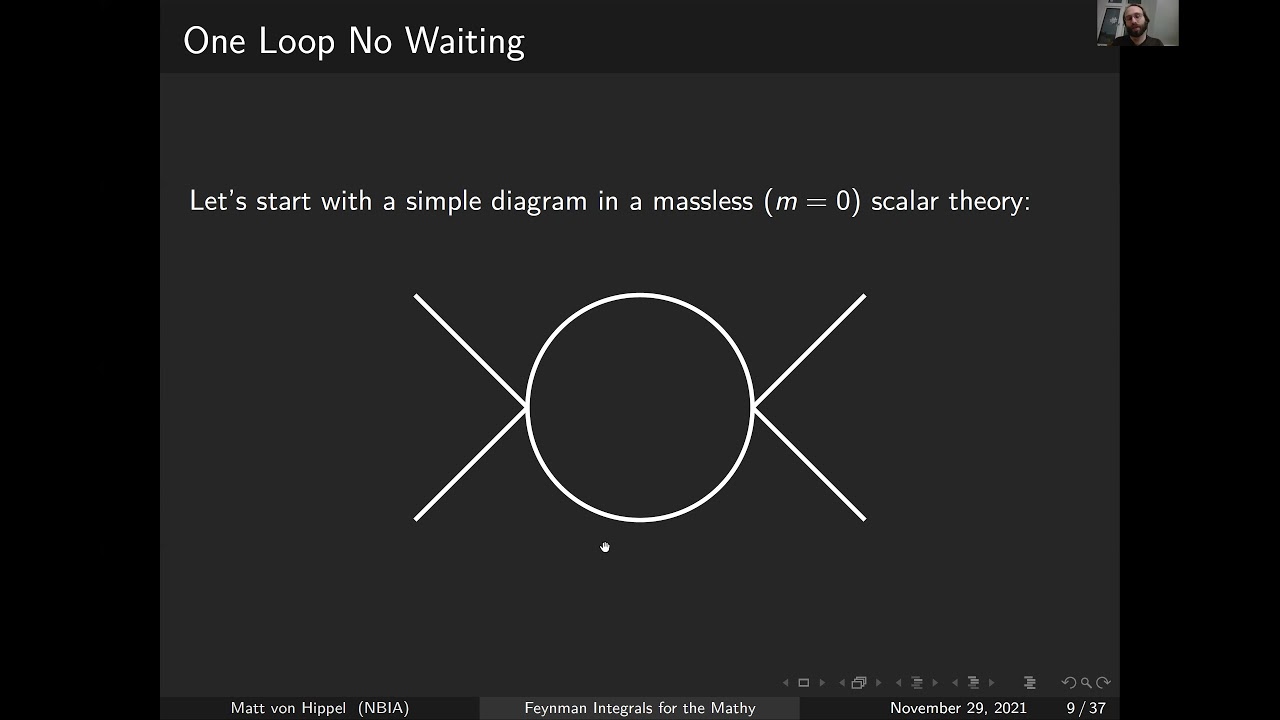
Quantum electrodynamics (QED) explains the electromagnetic force not through classical electromagnetic fields, but through the exchange of virtual photons between charged particles like electrons and protons; this revolutionary theory, developed by Richard Feynman building on Dirac's work, uses Feynman diagrams to visually represent particle interactions where straight lines denote electrons and wavy lines denote photons, demonstrating how quantum mechanical principles successfully merge with special relativity to explain electromagnetic phenomena at the quantum level.
Quantum Electrodynamics Explained: QED & Feynman Diagrams
Added:Basic principles of Quantum Mechanics, including wave-particle duality and the concept of quantization.
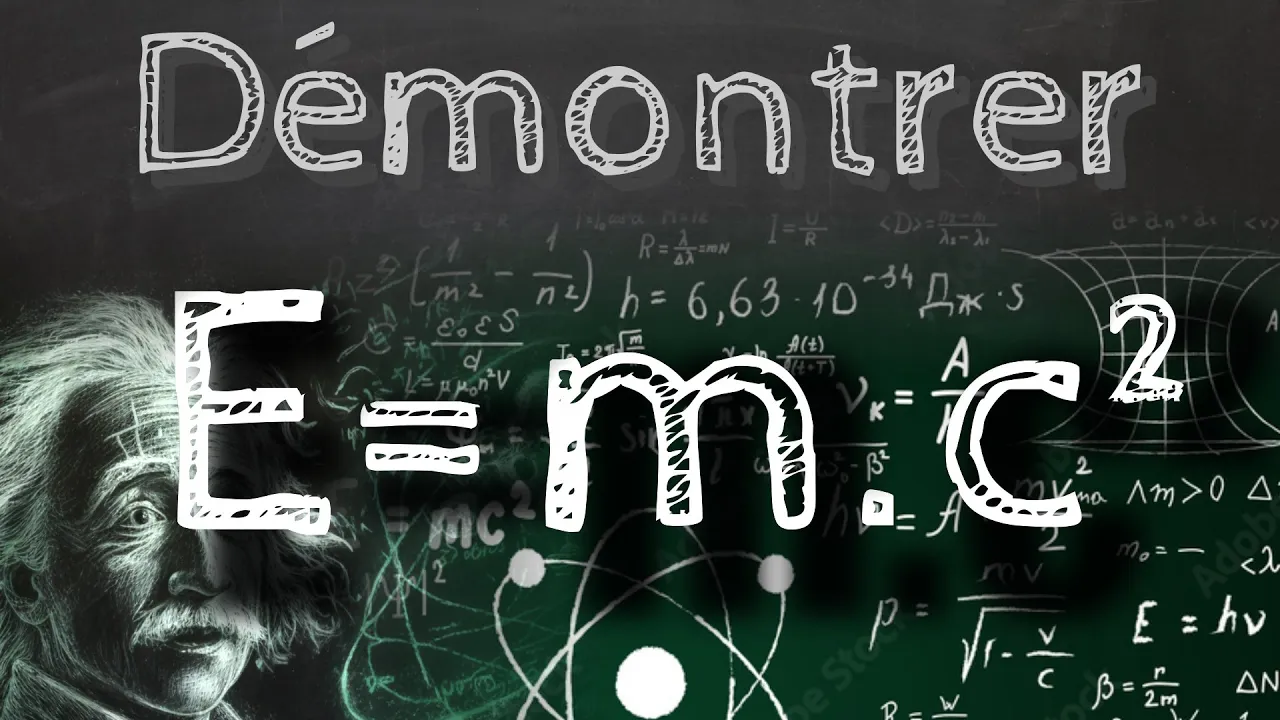
Einstein's Special Theory of Relativity, specifically mass-energy equivalence (E=mc²) and spacetime intervals.
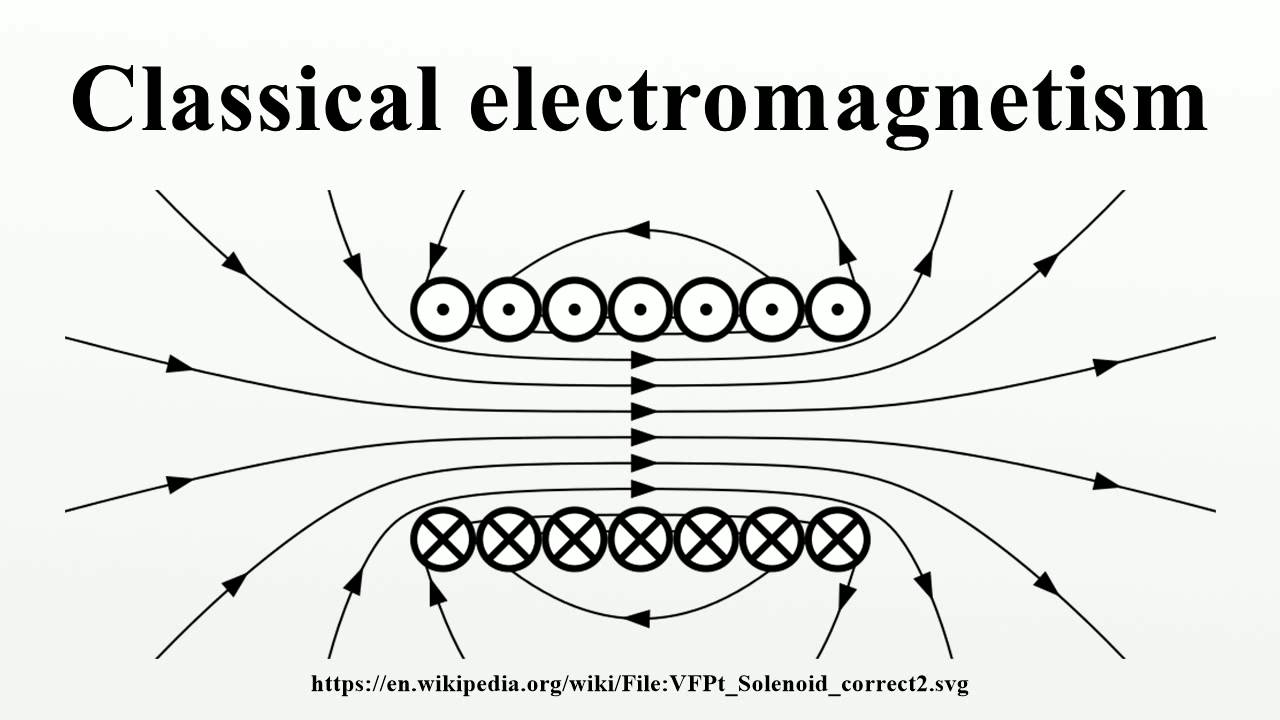
Classical Electromagnetism, particularly how electric and magnetic fields propagate and interact with charged particles.
An introductory understanding of particle physics, specifically the fundamental roles of electrons and photons.
Advanced Quantum Field Theory (QFT), exploring how particles are represented as excitations of underlying fields.
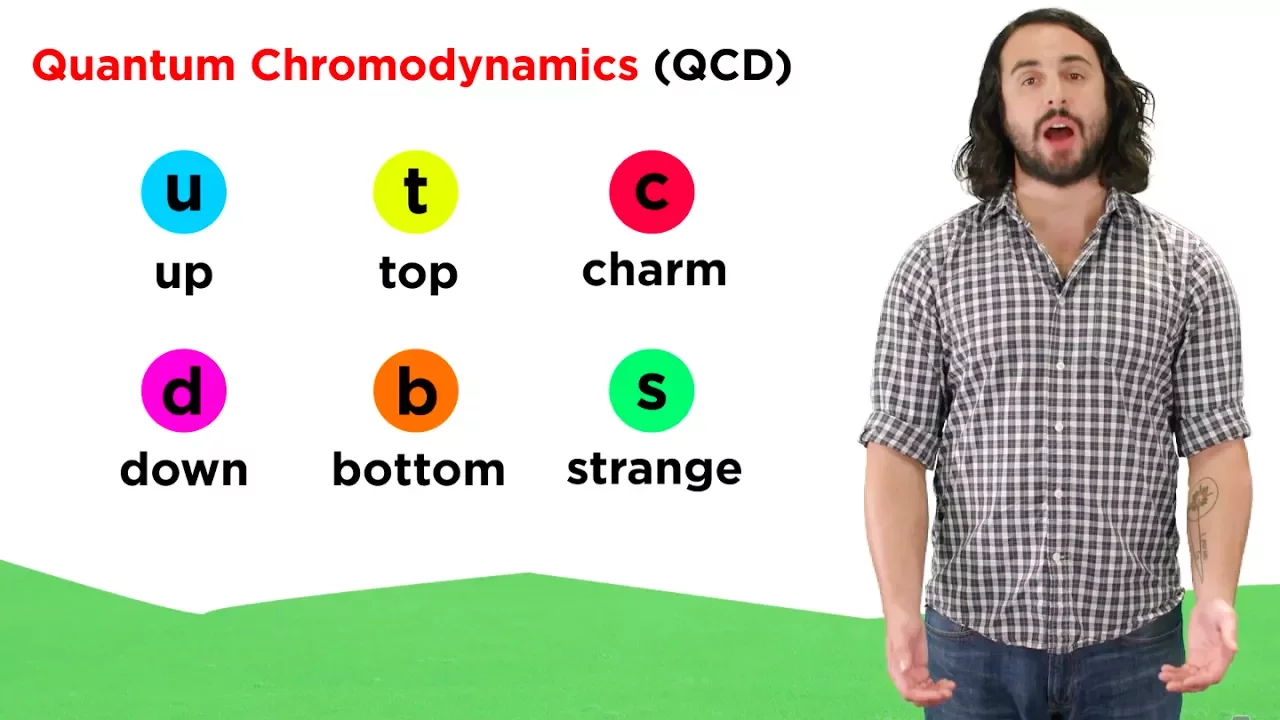
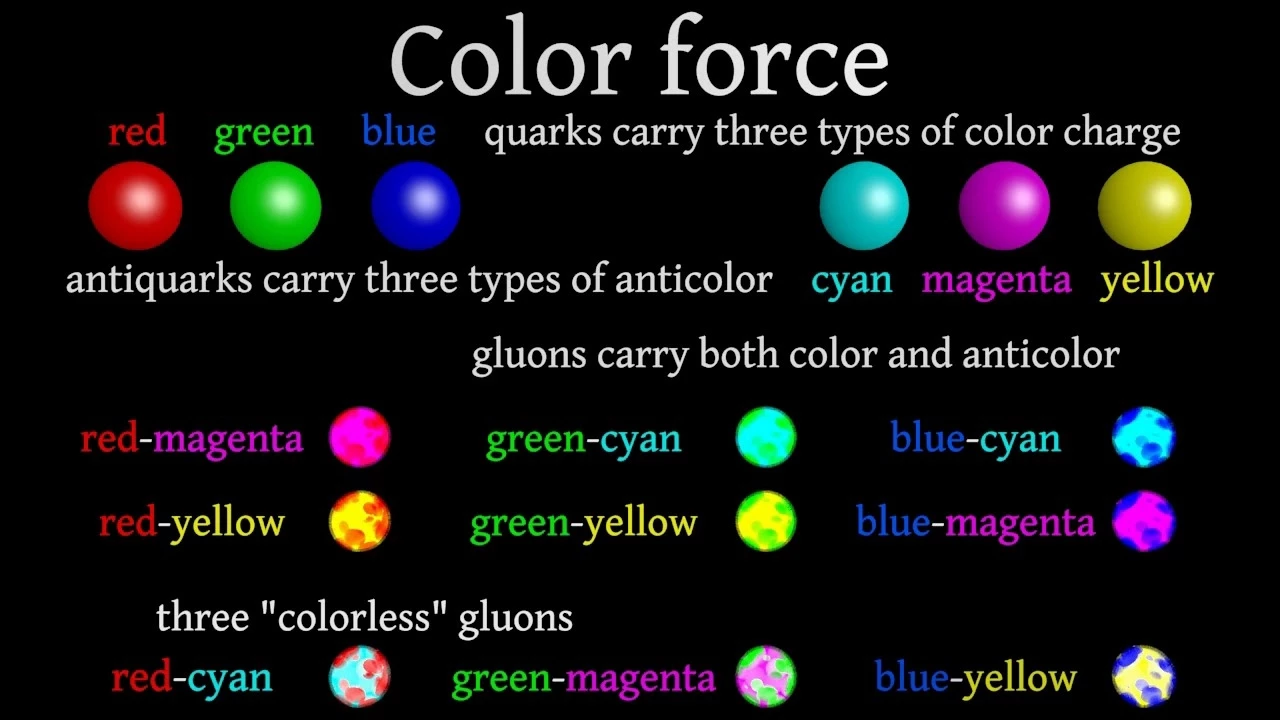
Quantum Chromodynamics (QCD), which applies similar quantum field principles to the strong force governing quarks and gluons.
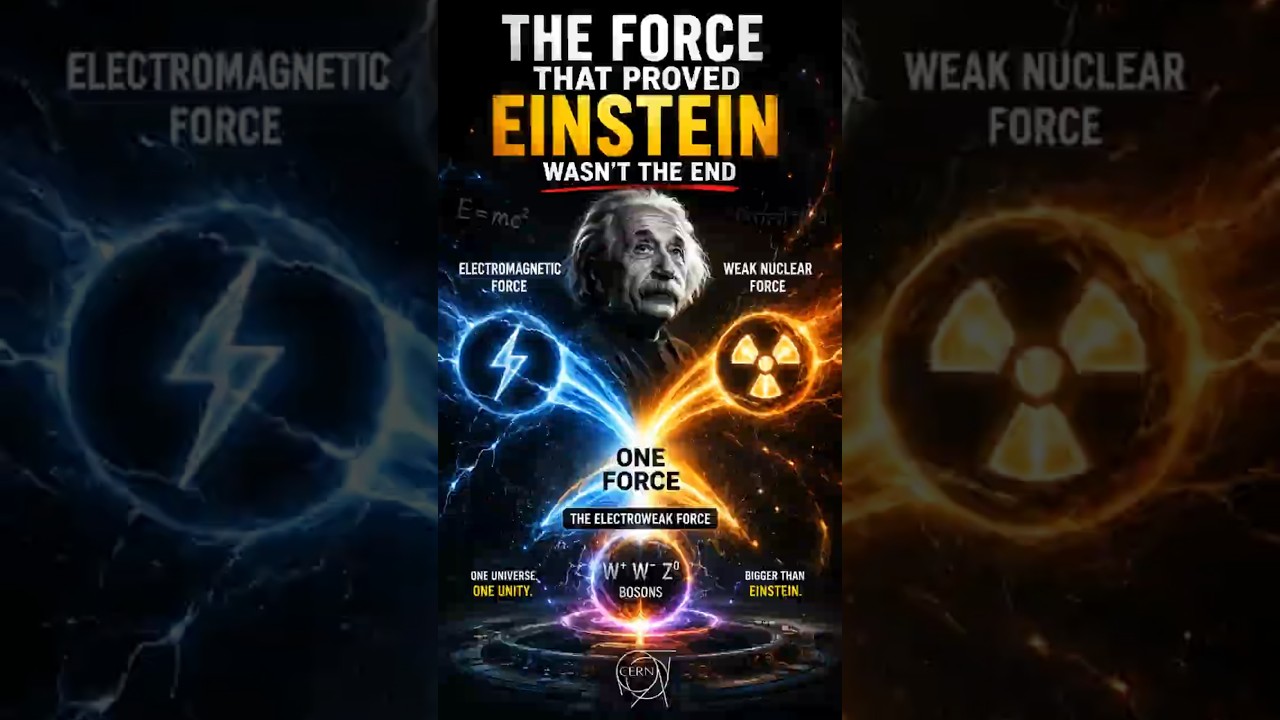
Electroweak Unification, studying how the electromagnetic force (QED) merges with the weak nuclear force at high energies.
Mathematical evaluation of Feynman diagrams, including the study of loop diagrams, self-energy, and renormalization techniques to resolve infinities.
118.8K views2.9Klikes4:21Original Release: 2017-05-29
Professor Dave here, let's talk about quantum electrodynamics.
After spending some time with Einstein looking at the nature of space and time, we have to go back to the quantum realm and pay some attention to particles. In classical physics we became aware of field forces like gravity and electromagnetism. These are forces whereby a gravitational or electromagnetic field imparts force onto some object, which generates an acceleration in that object, like a rock falling to the earth, or the attraction and repulsion between charged particles.
But as quantum theory progressed, it began to find a way to redefine these field forces, and show that the idea of a field becomes obsolete if we are instead able to explain these forces as the interaction between certain kinds of particles. The first complete step in this direction came from Richard Feynman, an American physicist and all-around peculiar man. Building upon prior work by Dirac and others, Feynman and his colleagues worked under the assumption that the electromagnetic force was not actually mediated by electromagnetic fields, but rather by interactions between virtual photons. Let's recall from our discussion of the Heisenberg uncertainty principle that tiny particles of different varieties are actually able to manifest from nothing because of the uncertainty associated with time and energy, and particles that do this are called virtual particles, because they do not exist with the same sense of permanence as other particles that make up ordinary matter. But if it were the case that charged particles like protons and electrons were able to manifest these virtual photons, then the attraction and repulsion between charged particles could be explained by the exchange in momentum that occurs during collisions between virtual photons and regular particles. No electromagnetic field would have to be referenced. This means that classical electrodynamics can be explained by quanta, and therefore quantum mechanical principles, and since light is a subject of special relativity, this makes QED a successful merging between special relativity and quantum theory. To illustrate the exchange of virtual particles, Feynman developed a system for representing quantum phenomena called Feynman diagrams.
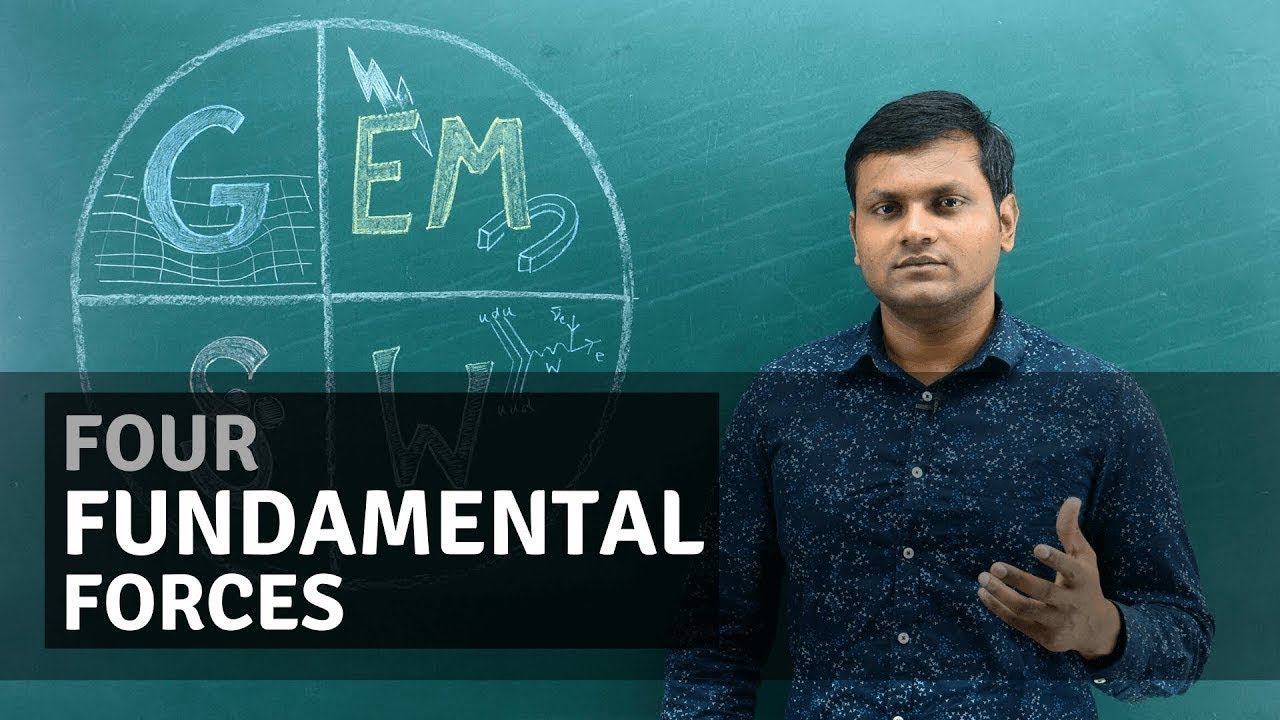
In these surprisingly simplistic representations, a straight line signifies an electron, which we know has both mass and charge. A wavy line signifies a photon, which has neither mass nor charge. And when there is a junction between a straight line and a wavy line, this means that the electron has either absorbed or emitted a virtual photon. These diagrams are mere reductions of reality. They do not contain all the information that could be pertinent to a system of one or more electrons. But they illustrate in a basic way that two electrons could approach one another, and then have their paths deflected due to the exchange of one or more virtual photons that carry some momentum. Given that this is quantum mechanics, there is a ton of math we are glossing over, but the main takeaway is that the electromagnetic force has been demonstrated to be the result of particle exchange or quanta, rather than an electromagnetic field. Quantum field theories such as QED seek to explain all four fundamental forces in this regard, and they have been largely successful, so let's move forward and see which force was to be updated next.
Thanks for watching, guys. Subscribe to my channel for more tutorials, support me on patreon so I can keep making content, and as always feel free to email me:
Up Next
12:39
Quarks, Gluons, and the Strong Nuclear Force: QCD Explained
@EugeneKhutoryansky
478K views•2018-07-07

12:53
21cm Hyperfine Transition in Neutral Hydrogen: Radio Astronomy Basics
@AaronRobertParsons
12.4K views•2011-10-13

4:00
Radioactive Half-Life Practice Problem: Decay Constant & Fraction Remaining
@ProfessorDaveExplains
70.5K views•2019-10-29

27:14
Entropy and the Second Law of Thermodynamics Explained
@veritasium
27.5M views•2023-07-01
Related Study Plans & Knowledge Roadmaps
Structured learning paths in Physics
physics
Nuclear Physics (Decay, Fission & Reactors)
01Atomic Structure and the Binding Force
02Radioactive Decay and Half-Life
03Nuclear Fission Mechanics and Chain Reactions
+ 2 more learning modules
12h5 modules
Explore Roadmap
physics
Soft Matter (Polymers, Colloids & Rheology)
01Foundations of Soft Matter & Thermal Forces
02Polymer Physics and Macromolecules
03Colloids, Surfactants, and Self-Assembly
+ 2 more learning modules
38h5 modules
Explore Roadmap
physics
Analytical Mechanics: Lagrangian & Hamiltonian
01Mathematical Foundations: Calculus of Variations
02From Newtonian Mechanics to Constraint Dynamics
03The Principle of Least Action & Lagrangian Mechanics
+ 3 more learning modules
28h6 modules
Explore Roadmap
physics
General Relativity (Spacetime & Cosmology)
01Foundations of Relativity: Special Relativity
02The Geometry of Spacetime: Equivalence Principle & Curvature
03Einstein's Field Equations: The Mathematics of Gravity
+ 2 more learning modules
55h5 modules
Explore Roadmap