




















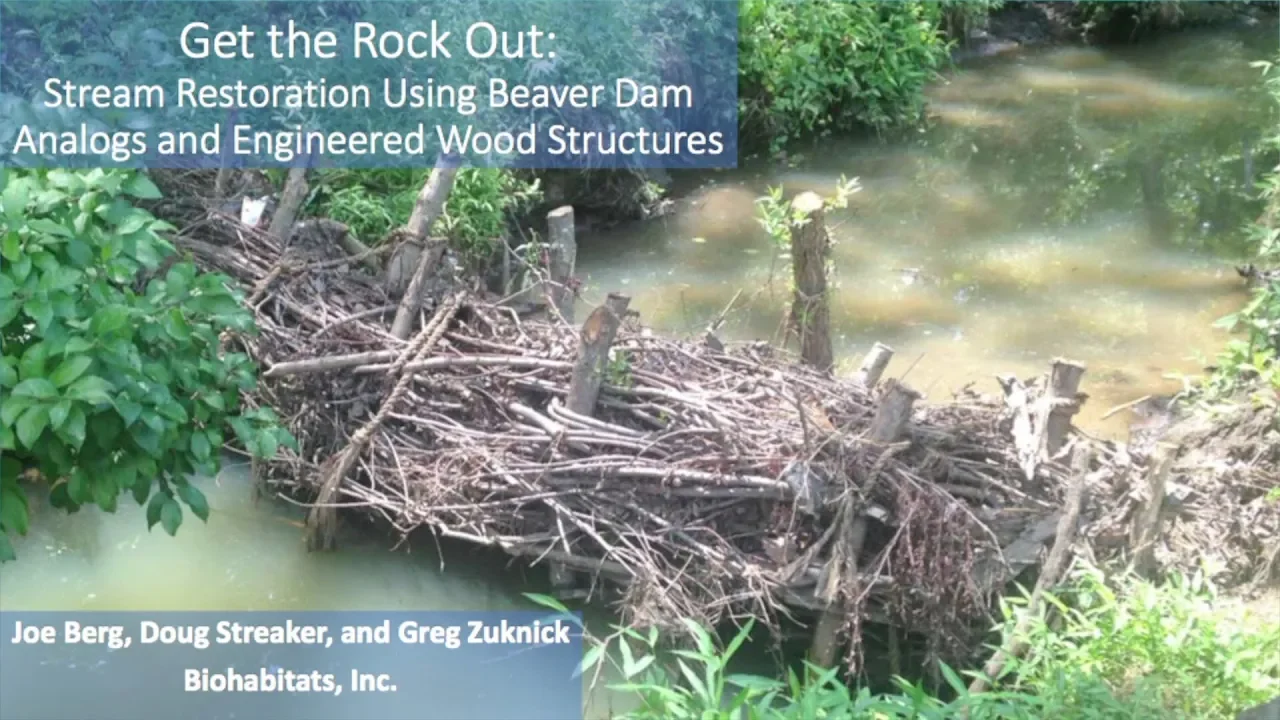


Live staking is an affordable and accessible method for restoring eroding stream banks by planting dormant tree branches (live stakes) directly into the soil; the process involves selecting appropriate tree species such as black willow, red osier dogwood, or silky dogwood, cutting branches 1/2 to 1 inch in diameter at nodes, storing them in water to prevent drying, and planting them at a 90-degree angle to the bank with the angled cut facing downward, spaced 1-3 feet apart in a zigzag pattern to ensure root development and soil stabilization.
Live Staking for Stream Bank Restoration: A How-To Guide
Added:Understanding of basic stream hydrology and the physical mechanics of soil erosion along riparian zones.
Basic knowledge of plant biology, specifically vegetative propagation and how dormant woody cuttings develop adventitious roots.
Familiarity with the ecological functions of riparian buffer zones and their importance to water quality and local wildlife habitats.
Ability to identify common native pioneer plant species, such as willows and dogwoods, during their dormant winter states.
Advanced soil bioengineering methods, including the design and installation of live fascines, brush mattresses, and joint planting.
Strategies for long-term monitoring, adaptive management, and controlling invasive species in newly restored stream banks.
Hydrologic modeling and shear-stress analysis to determine when bioengineering needs to be paired with structural engineering or hard armoring.
Designing comprehensive watershed-scale restoration plans that integrate bioengineering with instream habitat structures like root wads and log vanes.
10.2K views80likes12:56Original Release: 2016-08-24
(dull crash) (mouse click) - [Voiceover] Hi, I'm Jennifer Fetter and I'm here to talk to you today about live staking.
Live staking is an easy and affordable method of restoring stream banks.
I'll guide you through using the practice so that you can plan a restoration project using this method.
Before we get started, it's important to discuss the causes of bank erosion and why the practice of live staking might be needed.
The causes for bank erosion can be broken down into two main categories.
Historical land uses and storm water runoff.
Here we see an example of a historical land use.
You see the cows are walking through the stream and pushing more and more dirt into the stream.
The area where the cows tend to hang out, in the shade of the tree, has stream banks that are suffering from much more erosion than the other surrounding areas.
Another historical land use that has caused increased stream bank erosion is the use of mills along streams.
These mills created ponds where sediment would build up.
This sediment is much finer than what we find in a typical stream bank.
So when dams are no longer in use or they've been removed, the streams can easily carve their way back through this fine sediment, leading to the creation of very steep and eroding stream banks.
Conversion of land from trees and forests to lawns, pastures, and crop lands is another common example of historical land use that leads to stream bank erosion.
Grasses grown in lawns and pastures don't have the extensive root system that the forest trees and shrubs did.
These roots are important for holding soil in place.
In addition to historical land use, another major cause of bank erosion is storm water runoff.
Heavy rainfall events, coupled with paved and built surfaces can lead to increased volumes of water and increased rates of flow.
Increased water volume and speed both cause rapid soil erosion.
Here, you can see grass growing in the middle of the stream.
That grass was originally growing on the top of the stream bank.
But it caved into the stream during a storm event when an increased flow wore away at the soils below the thin layer of turf on top.
Eroding stream banks are an important issue.
All of the soil that erodes from the banks enters our streams.
Much of that soil becomes stream bottom sediment that makes it hard for fish and other aquatic life to survive.
Stream bank erosion also disconnects the stream from its flood plain.
That means great volumes of water stay in the stream channel during storms, instead of gently spilling into the absorbent flood plains.
This results in destructive flooding and damage downstream.
Eroded stream banks also don't look very nice and they cause property loss for the land owner.
The trees seen here were once growing on solid ground that has now been washed downstream.
There are a variety of different methods that can be used to reduce stream bank erosion.
But many of those practices are expensive, time consuming, and require technical training and expertise.
As a contrast, live staking is an option that is low cost and can even be free, other than the time it takes to implement.
The practice is also very easy to learn how to do and can be enjoyable.
Live stakes start growing very quickly.
And because they're used right in the eroding stream banks, they start to do their jobs almost instantly.
Live stakes are branches of trees that are cut while the trees are dormant and then planted directly in the soil.
These branches are able to develop roots and grow into new trees.
This is a process that should be done in late winter and early spring while the trees are still dormant, but after the ground has thawed enough to insert the live stakes.
In south central Pennsylvania, this is generally the last few weeks of March and the first few weeks of April.
The first step in the process of live staking is to choose a good location.
This practice works best to restore banks with no vegetation, or possibly just grasses that are draped over the edge.
Choose an area where disturbance is minimal and if livestock are present, they've been excluded from the stream.
Live staking is a great second practice to add where riparian buffers or livestock fencing have already been implemented.
The bank in this picture is a great example of a bank in need of live staking.
If you aren't working on your own property, be sure you have land owner permission.
While purchasing live stakes is an option, it's often possible to identify local, mature plants that can be used as source material.
In the best case, a source of life stakes can be identified right at your restoration site.
The trees you use to cut your live stakes should be trees that will grow well in wet conditions.
They should be healthy and mature plants that are easy to access.
The three species most commonly used for live staking in the north east United States are black willow, red osier dogwood, and silky dogwood.
All of these trees are relatively easy to identify.
They grow well in wet soils and are commonly found along stream banks.
Black willow, seen here, are generally solitary trees and not found in dense stands.
One of the easiest ways to identify a black willow while it's dormant is to look up into the crown.
The tips of the newest growth look very yellow and whip-like.
Mature black willow trees have relatively rough bark and often have broken limbs after the winter season.
Red osier and silky dogwoods stand out due to their bright red stems of new growth.
These trees are more shrub-like, occurring in dense clusters, and generally do not have a well defined main trunk.
Both red osier and silky dogwood grow well in wet conditions and root relatively easily.
However, if you have a preference between the two, the easiest way to tell the difference in the winter is to look at a cross section.
The red osier dogwood will have a white center, while the silky dogwood will have a tan center.
If you're uncomfortable with winter identification of these trees, you can also find and mark potential sources during the summer.
Cutting live stakes from the branches of these trees is not very complicated.
Use pruners to cut branches that are roughly 1/2 to an inch in diameter.
A good rule of thumb in the field is a branch between the sizes of your pinky and your thumb.
Cuts should be made at a node, which is the point where leaves or other branches grow.
Remember to only take five to 10% of the source plant so that the damage to the source doesn't result in the death of your source plant.
As you cut each stake from the source tree, recut their bottoms at a 45 degree angle.
This makes it easier to remember which side is the bottom later, allowing you to plant the stakes in the right direction.
The angled cut also makes sliding this stake into the ground easier.
The top of each stake should be cut flat across.
As you are harvesting live stakes, drop them in a bucket with a few inches of water to keep them from drying out.
Remove all of the side branches from the main stem of each live stake.
If the side branches are large enough, they can be used as additional live stakes.
Removing these side branches reduces the amount of energy the live stake would lose trying to grow leaves rather than focusing on growing roots.
In some cases, branches that are removed from the live stake that are slightly smaller than pinky size can also be planted.
These are called whips and can be used to fill in holes between larger live stakes as they are planted.
Live stakes should be cut in one to three foot lengths, ensuring that each stake has several nodes.
Segments shorter than one foot won't be large enough to reach the proper depth in the stream bank.
Segments three feet or larger can be cut into multiple live stakes.
It's important to have a sufficient amount of nodes on each live stake because this is the point where the roots will grow once they're planted.
If you need to cut your stakes at a secondary site, choose a site that's close by your restoration project.
Transporting live stakes too long or too far will decrease their survival rate.
It's important to keep the stakes from drying out.
Transport and store them in a few inches of water in a bucket or wrap them in wet burlap or newspaper.
You also want to keep the stakes cool and dark.
This is important cause you're cutting the stakes while they're dormant.
Heat and light might trigger the start of the budding process before you plant your live stakes.
The best plan is to plant your live stakes the same day that you harvest them.
The first step for planting a live stake is to drill a pilot hole.
This might not be necessary in some areas where the soil is very soft.
But it's important to ensure that you are not damaging the live stake when you push it into the ground.
Keep the pilot hole roughly the same size or slightly smaller in diameter than the live stakes.
You don't want a pilot hole to be larger than the live stake.
A short piece of rebar or a dandelion weeding tool works well for drilling a pilot hole.
Live stakes should be planted at a 90 degree angle to the bank.
This means if the bank is vertical, the stake should be horizontal.
However, if the bank is angled, the stake should also be on an angle.
This position promotes root growth along the length of the bank and helps to ensure that the plants are able to get water from the water table.
Remember to plant the live stake with the angle cut side down.
Planting your live stakes upside down will decrease their survival.
Make sure that there are nodes both underground and above ground, allowing for root growth and leaf growth.
Try to plant the stakes so more of the length is underground than above ground.
Stakes should be planted one to three feet apart.
This may seem dense, but you want to ensure full bank coverage and account for potential mortality.
Not every stake will grow.
Plant the stakes in a zig zag or triangular pattern to cover the bank vertically as well as horizontally.
The stakes need to be planted in soil that is routinely wet.
Depending on the height of the bank, it might not be suitable to plant the stakes near the very top.
There are several conditions that can make live staking more challenging.
Clay soils can be hard to push stakes into, even with a pilot hole.
Alternatively, soils that are too soft won't be sturdy enough for the live stakes to stay in place.
You might want to test your soil with one or two live stakes before taking the time to harvest a lot of stakes you won't be able to use.
Don't attempt to live stake during high water.
This is not only dangerous, but the water also hides the areas that are in most need of live stakes.
Dangerous terrain can also be an issue.
The absence of an easy entry point due to vegetation or very silty stream bottoms can make working in a stream difficult.
It's always smart to pack an extra pair of clothes when working around water in the cooler months of the year.
The survival rates of live stake plantings are roughly 50%.
For your best chances of survival, remember these key live staking tips.
Soil contact is important for the nodes.
So make sure pilot holes aren't too wide.
The moisture of the area is important as well.
Make sure that you don't plant the stakes above the water table.
Starting with a healthy stock is also key.
Only harvest from healthy source trees.
The weather can also play a major part in the success of live staking.
Dramatic swings in temperature just before or after live staking can negatively affect the stake's ability to succeed.
Heavy rains that flood your restoration site soon after planting can also decrease survival.
After a flooding event, it's important to check the stakes to make sure they aren't covered with debris.
You may also need to replant stakes that have washed out of the bank during the flood.
By following these simple steps for cutting and planting live stakes, you should be able to see results within just a few short months.
These pictures were taken in May, after a late March planting in south central Pennsylvania.
Within a few years, the live stakes will look just like a naturally occurring tree or shrub.
You'll be able to see that the roots of the live stakes are holding soil in place.
And other vegetation will begin to fill in on the now stable stream bank.
Start planning your live stake stream restoration project today.
Up Next
60:29
Streambank Bioengineering: Riparian Zone Restoration Techniques
@YakimaBasin
398 views•2020-12-03

15:54
Life in Biosphere 2: Sustainable Ecosystems & Human Survival
@TED
334.9K views•2009-06-16

14:30
Microplastics Everywhere: How Plastic Impacts Our Lives
@TEDx
100.9K views•2018-05-08
10:28
Ice Stupa Artificial Glaciers: Solving Ladakh's Water Crisis
@SonamWangchuk66
3.2M views•2015-05-03
Related Study Plans & Knowledge Roadmaps
Structured learning paths in Environmental Science
environmental-science
Ocean Noise: Cetacean Impacts & Mitigation
01Fundamentals of Underwater Acoustics
02Marine Mammal Bioacoustics
03Anthropogenic Noise: Shipping & Seismic Surveying
+ 2 more learning modules
16h5 modules
Explore Roadmap
environmental-science
Road Ecology: Corridors, Overpasses & Fencing
01Foundations of Habitat Fragmentation and Carnivore Ecology
02The Road Barrier: Ecological Impacts of Transport Infrastructure
03Principles of Ecological Corridors and Connectivity Mapping
+ 3 more learning modules
14h6 modules
Explore Roadmap
environmental-science
Ocean Acidification: Kelp Buffering & Shellfish
01Fundamentals of Ocean Chemistry & pH
02Chemical Pathways of Coastal Acidification
03Bivalve Physiology & Calcification Under Stress
+ 2 more learning modules
18h5 modules
Explore Roadmap
environmental-science
Ice Stupas: Glacial Retreat & Water Security
01Foundations of Glaciology & Mountain Hydrology
02Climate Change and Glacial Retreat Dynamics
03The Science of Ice Stupas & Artificial Glaciers
+ 2 more learning modules
14h5 modules
Explore Roadmap