
![Climate Change and Linguistic Diversity [EN] - Audrius Sabunas at the Polyglot Gathering 2016](https://i.ytimg.com/vi_webp/8Dmijx37p4k/maxresdefault.webp)

![A. François – [#1] La diversité linguistique – cours “Linguistique historique et Typologie”](https://i.ytimg.com/vi/YYahk7tjMzk/hqdefault.jpg)








![[UFMS Digital] (Multi)Letramentos Decoloniais Translíngues - Módulo 3](https://i.ytimg.com/vi_webp/zdaFiRY_270/maxresdefault.webp)








Humanity is experiencing a rapid extinction of languages at rates comparable to the dinosaur mass extinction, with half of the world's 7,000 languages projected to disappear by the end of this century due to globalization, climate change, and urbanization; this linguistic extinction threatens not only cultural diversity but also the loss of unique knowledge systems, cognitive frameworks, and traditional ecological wisdom encoded in unwritten languages that vanish without trace, making urgent documentation efforts essential for preserving human cultural heritage.
Why Endangered Languages Matter | TEDx Talk by Linguist Mandana Seyfeddinipur
Added:The concept of linguistic diversity, including the estimated distribution and density of the world's approximately 7,000 languages.
Basic principles of sociolinguistics, specifically how language intersects with cultural identity, social status, and political power.
The Sapir-Whorf hypothesis (linguistic relativity), which posits that the structure of a language influences its speakers' worldview and cognition.
The historical impact of colonialism, globalization, and national standardization policies on minority and indigenous languages.
Methods and technologies used in language documentation and linguistic archiving, such as digital databases and field linguistics.
Language revitalization and reclamation strategies, including immersion programs, 'language nests,' and community-led pedagogical initiatives.
The link between linguistic diversity and biodiversity, specifically how Traditional Ecological Knowledge (TEK) is encoded within endangered languages.
Language policy and planning, exploring how governments and international bodies (like UNESCO) legislate and support linguistic human rights.
124.1K views1.8Klikes17:13Original Release: 2015-11-09
[Music] I'm a linguist I am one of these people that is fascinated by the human faculty of language by the fact that we can take sounds like the r and c and combine it into Soundstream that express our emotions our feelings simple Concepts like a tree or a tree of life or a kinship tree it's impressive to us linguists that if people are deaf they create these complex systems with their hands they develop sign languages this incredible faculty that humans have that make us different from every species is what we study I study how we communicate or not how languages Express and shape our identities and how around the world the creativity of the human mind has resulted in an incredible linguistic diversity namely we think that today in the world there are 7,000 languages spoken now what does 7,000 languages than mean well half the population of the planet speaks 50 languages and the other half of the population speaks the other 6,950 languages now when I meet people on the tube or in an airplane and I tell them that I'm a linguist the first question I get is how many languages do you speak and I'm like what but the second thing I get is they pour are their hearts to me about how in the olden days everything was so much better how our children were using language right how they spoke grammatically and how they were able to express themselves and that today they use these strange words like to Google something or to Twitter and that this is the downfall of our culture and our society now I'm a mother I have a 10-year-old son and I often don't understand what he's trying to tell me but some point he said to me oh I'm just going to Whatsapp it and I had really no idea what he was talking about now the fact that we can use language in this way that languages change all the time that we are able to adapt to our changing social environment at all times by changing language by introducing new words new lexical items new phrases new Expressions borrow from other languages that then become part of the grammatical structure over you know decades and centuries it's actually part of the beauty of this living medium it's something that we study it's something that we are fascinated by how we learn these languages and how people in other environments and other places speak six languages at the age of 40 there's another phenomenon other than language change that's reflecting this beautiful medium that is actually a bit different and it's what we call language shift now what is language shift language shift is when people switch to another language and it's usually a major language and give up the Heritage language this happens when people are displaced when they're refugees when they adapt to their violent environment but what we are observing today in the world is unprecedented namely the speed at which people shift from their languages give up their languages to another language is happening at an incredible speed we estimate that by the end of this very Century half of the 7,000 languages will have fallen silent this is at the speed of the fifth mass extinction when the dinosaurs went and I have a 10-year-old I know everything about the demise of dinosaurs now why is this happening well we often think we know that our biological diversity is under horrible threat we know we have you know eradicated species we have destroyed natural habitats we have destroyed the natural equilibrium at a speed that nature can't catch up right we have we're doing things to save species creatures all over the world plants but we often think that language and culture is different because it's man-made but it is not the way that our environment changes influences dramatically the way people live and so what happens is that globalization climate change and urbanization makes people give up their languages they give up their traditional ways of life they move to cities and they ensure that their children we speak the language that will give them a better future that will give them social and economic Mobility now as I said before half of the Lang half of the population of the world speaks 6,9 these are estimates 6,950 languages and this means that we have speaker communities which are 300 speakers or a 10,000 speakers or 5,000 speakers or even 100,000 speakers those are small groups of people and they are influenced in dramatic ways and what is the worst about it is that these languages are not written they haven't been recorded they are Vanishing Without a Trace in front of our eyes now we have incredible cultural in institutions like the British museums where millions of people go to understand our cultural heritage our past to understand our future to understand how people in other places live these incredible institutions are full of artifacts that reflect traditional ways of life in papon New guine in Africa in South America or even here now the knowledge about these artifacts is restricted to the person who took it out of the place and BR it here while at the same time the communities from where they came are still there but have never given their account so these languages are Vanishing and we're losing this knowledge that is encoded in the practices of these communities all over the world but also if you think about the language that we are speaking structures the world in a particular way and influences how we think about things and how we perceive our environment so our cognition is influenced by the way that our language helps us to express meaning now our theories about universality and variability of the human mind of the creativity of the human mind of the linguistic structures that exist out in the world are based on a very very small subset of languages so we have not even a broad understanding of how variable linguistic structures can be expressed that reflect how humans adapt to their environment now what can we do about this right so at soas what we have been trying to do over the past 12 years is that we have supported linguists anthropologists historian ethn biologists to go out into these places and to record and work with the communities to record on audio and on video their traditional knowledge their views of the past their myths their knowledge systems their transmission system how they transmit knowledge and to bring this back into the endangered languages digital archive that is housed at so us we train them we provide them with equipment they go out they do this incredible work in all of these areas and they bring the materials back into this digital archive now everything is digital and there we have the digital Humanities and all these things but if you think about this this digital archive is a resource that gives these people a voice that makes them visible that gives their account about how happened when the new religion was introduced what happened when you know the new rule came and how they built their boats and how they used these kinds of plans for medicinal treatments this archive with these resources also allows something that we call true inclusion researchers around the world can use these materials in order to understand better what the variability the universality of the human mind is researchers that can't just come to London and get a grand and then sit in the archives for ages but that don't have the possibility can now use these resources and hopefully it will be researchers that are actually local that broaden our perspective from a Western View on these objects on this knowledge to one that is embedded in the local culture and in the local understanding of the history so this is a map the map that you see here shows you the projects we have so supported so far over the past 12 years and what you see is these are all projects of different scales where people have gone out to work with communities speakers to document this incredible knowledge all you see here is a DOT on the map but let me give you a face what these dots on the map mean I want to introduce you to Petro miloff who speaks hunti he lives in Siberia and what you see on the right is the road to his village what you see on the left is the tiny little house that he still lives in Petro miloff was 83 at the time of this recording and he endured what happened into his tiny little village during World War II when the men were drafted and didn't come back oil industry Timber industry Russian education and what happened in his community was that his children his grandchildren his nieces and nephews didn't speak didn't learn hunti he speaks Russian all these people are multilinguals but he has basically now no one left in this Village to talk to in his n native language [Music] he was excited about the linguist that would come and sit down with him to record this language and to talk to him because he was hoping that maybe at some point someone is interested in this language now what is also interesting about this language is they have what we call an evidentiality system and what that means is that he has to Mark in his grammar whether he witness something himself or whether it's hear say right so in his memory he has to pay attention really if he has witnessed it if he has seen it himself so it's a different account of reality that he has to provide for I want to introduce you to another speaker we're going to Australia and this is Elizabeth bingi Ellis she's a NADA daata speaker jna speaker from the Western desert in Australia an Aboriginal language and these speakers have a verbal art form where they relay their myths and their stories how they went fishing or hunting through a combination of speaking gesturing using signs from sign languages and drawing in the sand [Music] two this is not only an incredibly complex form of verbal art but this these sand drawings these retellings contain important traditional ecological knowledge how these people relate to their land how they use plants how they find water how they hunt Guana and how they prepare them all this knowledge is being lost and all this knowledge is not being made available to our bi biologists to our healthc care people to have an understanding how these people relate which might help in order to develop good policies I want to introduce you to the last speaker of Yu this is BOA senior and she's a speaker of Yu or also Bo which is spoken in the great andon islands in the Indian Ocean researchers believe that this island is the first settlement from Africa coming over there and that the language they're speaking is 70,000 years old during the project this documentation project of anvita ABI there this last speaker died in 2010 and with her the language and the knowledge encoded in it vanished [Music] we have only scratched the surface so far we have supported 350 projects over a period of 12 years now you do the math we're running Against Time to understand what the variability is and we don't even know for many places where these languages are spoken we can like biologists we discover languages still in places that haven't been described where we don't know what their ways of life is and where this knowledge is not documented preserved or recorded anywhere else so we are running against time to document these language is and to begin to truly understand the creativity of the human mind [Applause] [Music] [Applause]
Up Next
67:51
Reclaiming Indigenous Languages: Master-Apprentice Learning Program
@ANUchannel
4.6K views•2012-04-19
36:52
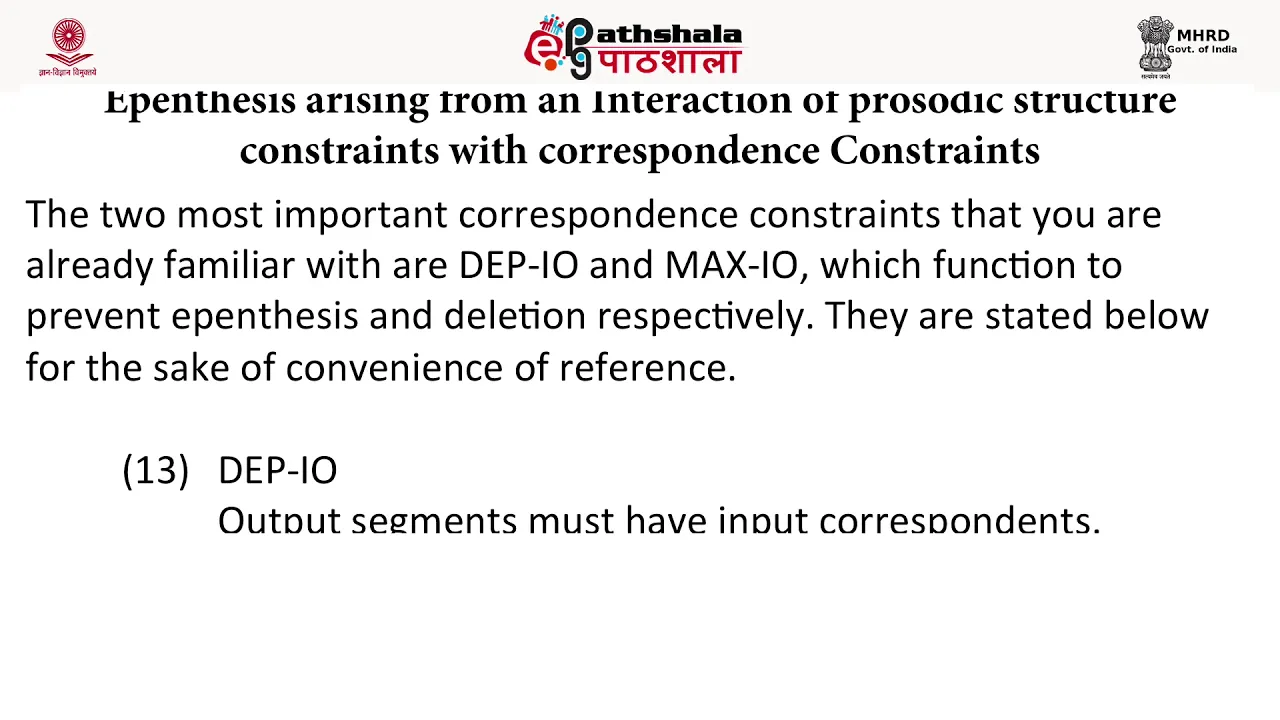
Constraint Interaction in Optimality Theory: Epenthesis & Deletion
@Vidyamitra
180 views•2018-08-20

19:08
Raising Bilingual Children: Overcoming the Monolingual Myth | Kim Potowski TEDx
@TEDx
124.6K views•2013-05-03

21:32
Accent Expert Explains U.S. Regional Dialects | Part 1
@WIRED
9.3M views•2021-01-21
Related Study Plans & Knowledge Roadmaps
Structured learning paths in Linguistics
linguistics
Optimality Theory: Tableaux & Constraints
01Phonological Basics: Sounds, Syllables & Rules
02Foundations of Optimality Theory: GEN, CON, and EVAL
03The Constraint Inventory: Markedness vs. Faithfulness
+ 2 more learning modules
15h5 modules
Explore Roadmap
linguistics
Morphosyntactic Alignment: S, A & P Systems
01Foundations of Syntax: Transitivity and Arguments
02The Linguistic Variables: Mapping S, A, and P
03Nominative-Accusative Alignment
+ 3 more learning modules
12h6 modules
Explore Roadmap
linguistics
Analyzing Sign Language: Phonology & Syntax
01Foundations of Sign Language Linguistics
02Phonology: The Five Parameters of a Sign
03Morphology: Word Formation and Classifiers
+ 2 more learning modules
14h5 modules
Explore Roadmap
linguistics
Pragmatics: Speech Acts, Grice & Politeness
01Introduction to Pragmatics: Meaning in Context
02Grice’s Cooperative Principle & Implicature
03Speech Act Theory
+ 2 more learning modules
14h5 modules
Explore Roadmap