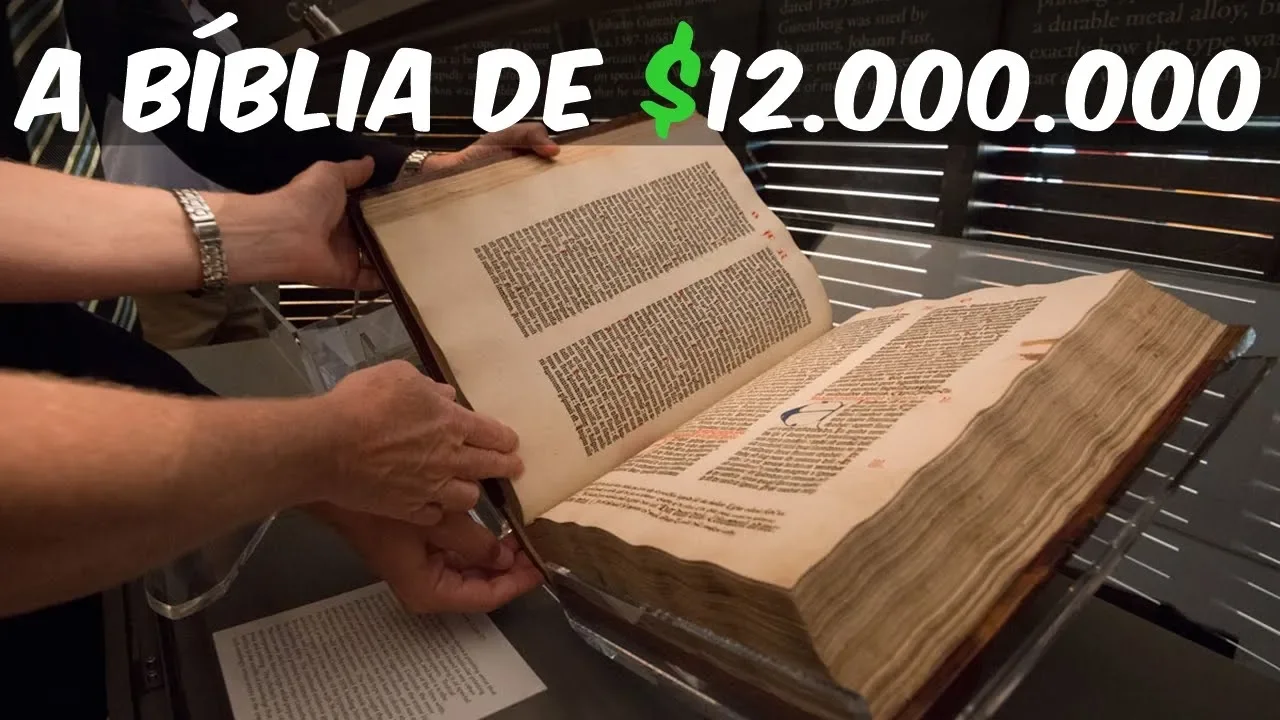




















The Gutenberg printing press revolutionized book production by using movable lead type (individual letters) instead of solid plates, allowing multiple copies of text to be printed efficiently; the process involves applying ink evenly to the type, placing paper over it, and pressing with approximately 2,000 pounds of force to transfer the inked letters onto the paper, creating uniform, justified columns that were impossible to achieve with hand-copied manuscripts.
Gutenberg Printing Press Mechanism Explained | 1450s History
Added:The manuscript culture of medieval Europe, including the role of scribes, scriptoriums, and the high cost of hand-copied books.
The history of early printing techniques, such as woodblock printing developed in East Asia (China and Korea).
The basic mechanical principles of the screw press, traditionally used in Europe for winemaking and olive pressing.
An understanding of 15th-century materials, specifically the transition from parchment/vellum to early rag paper and the properties of oil-based inks.
The Protestant Reformation and the Scientific Revolution: How mass communication fueled rapid social, religious, and intellectual movements.
The technological evolution of printing, from the manual hand press to steam-powered, rotary, and modern digital printing.
The rise of censorship, early copyright laws, and intellectual property concepts in response to the democratization of information.
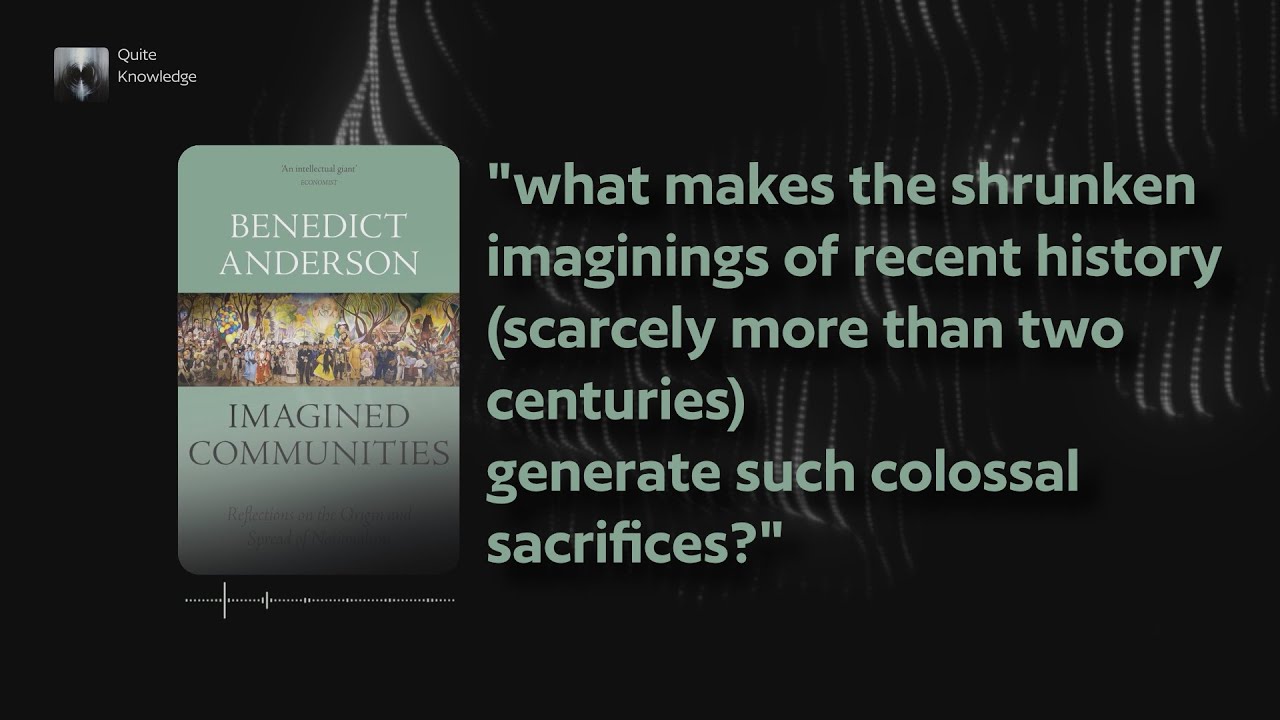
The concept of 'print capitalism' and its role in the standardization of vernacular languages and the rise of nation-states.
57K views711likes5:23Original Release: 2022-12-12
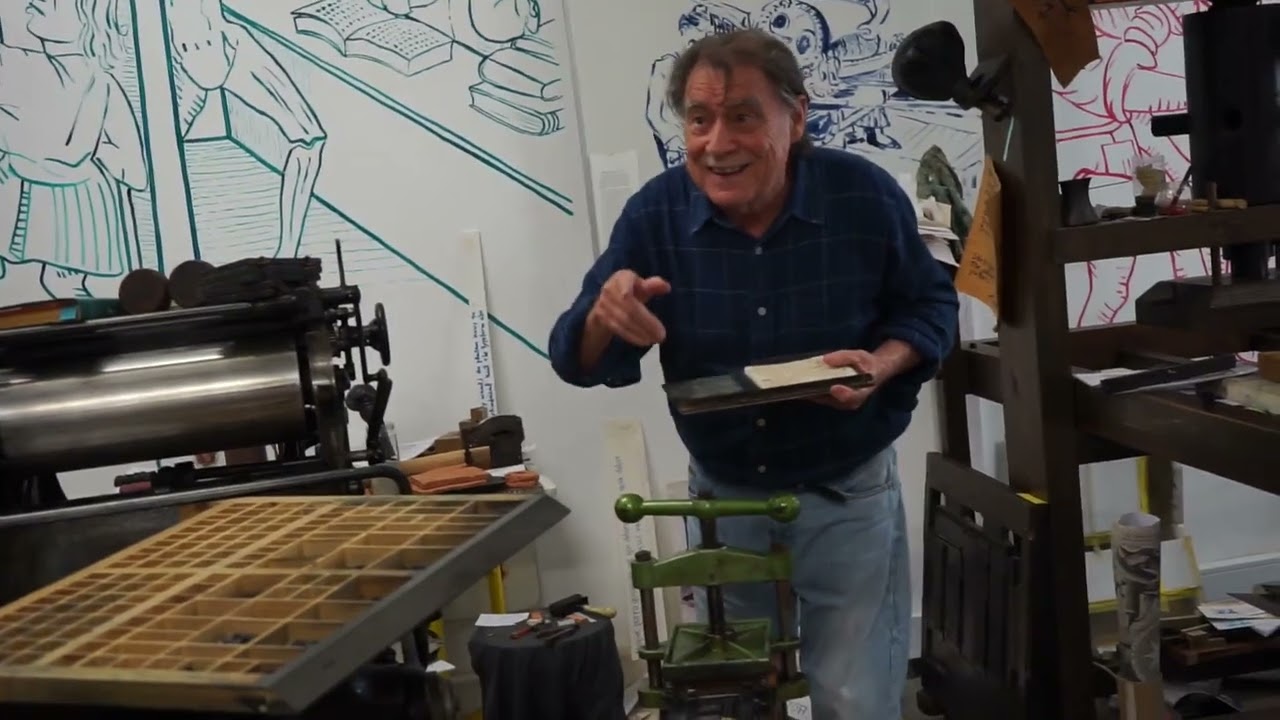
hello my name is John slife we're going to talk about the Gutenberg Press and Johann gutenberg's innovation of movable type this is a reproduction of gutenberg's printing press Circa 1450s and we're going to print a page of the Bible this is first Samuel chapters 25 and 26 we're going to print so let's get into the printing what we're going to do is we have these these are called ink balls or ink blotters we're going to pick up just a little bit of ink just just a tiny bit we work that around on here so we have a nice even layer of ink so there's no blops and Globs and we get that spread around nice and even we'll apply it to the text now this text that's in here is a solid plate because we travel with this gutenberg's Innovation was individual letters individual type so we're going to put the ink on here we just roll this on gently nice and even the goal is a thin layer of ink evenly across the type this carries the paper stack of paper in here this protects the paper from any excess ink okay we're going to push this in bring this bar around this puts about 2 000 pounds of pressure on the paper and we have a page from the Gutenberg Bible okay so that's kind of a short version of it Johann Gutenberg grew up in a family of metal workers his father was the manager of the city mint and Mainz Germany Gutenberg grew up with familiarity around working with Metals engraving this sort of thing Gutenberg had the idea of movable type somewhere in the 1440s he spent several years developing his project getting the type right the manuscript Bibles the manuscript anything at that time was very expensive scribes were the highest paid profession of their day the scribes in today's economy would be the equivalent of maybe a high-priced lawyer if you needed a copy of the Bible a copy of a single page a scribe would take 8 to 10 hours to copy that page so the cost was extraordinary if you wanted a copy of the Bible the cost would just be way beyond the reach of most any person so written materials were out of the reach of most people so the common people that spoke German spoke English those types of things those language just didn't have much of a written form at this time the scribes when they would make a copy of the Bible was typically under contract when Gutenberg had the idea of movable type he used a manuscript Bible and his engravers that he hired from his father's shop pick the best letters from the page the best letter F the best letter p m whatever and when they engraved it and they got it exactly the way they wanted it that's the one they cast and they printed that over and over that was a big step forward the scribes as good as they were they'd still make mistakes they would still have variations in their writing so when Gutenberg was able to create the perfect letter and then replicate it over and over that improved the text to the materials the next thing that he wanted to do was when a manuscript page was done the left hand margin was straight and solid the right hand Edge would end where it ends just like when you ride on a page paper and you write a paragraph the words don't always align on the end Gutenberg used wedges that would push the words out and space them so we had a perfect right and left hand Justified column so when the product was done every letter was perfect every time every column was perfect every time the scribes could not match that and they knew that their days of copying manuscripts was coming to an end Gutenberg was not the first inventor to come up with movable type there was a Chinese inventor about 800 years before Gutenberg that had invented movable type the problem was there was over 3 500 characters and of course they were in porcelain so it was just unwielding not practical about 400 years later there was a Korean inventor that had invented the movable type but he was dealing with about 1400 characters again it was just impractical when Gutenberg had the idea of movable type using lead and dealing with 26 characters it was much more practical people when the characters flattened out he could simply melt the lead and recast new letters
Up Next

86:12
Michael Hart Keynote: Ebooks to Break Down Illiteracy (HOPE 2006) | FULL TALK
@HackerVideo
197 views•2013-07-08

12:54
Triumph of Orthodoxy Icon: Byzantine Art & History Explained
@BenCallan
2.1K views•2024-08-06

9:49
FastAPI vs Flask vs Django: Choosing the Right Python Web Framework
@TechWithTim
302.5K views•2024-05-26

1:42
Game of Thrones Opening Credits: A Cinematic Analysis
@gameofthrones
46.3M views•2011-04-18
Related Study Plans & Knowledge Roadmaps
Structured learning paths in General & Interdisciplinary Studies
general-studies
Elevator Engineering: History, Physics & Cities
01From Hoists to Safety Brakes: The Dawn of Vertical Lift
02Hydraulic vs. Traction: The Engineering Physics of Elevators
03Modern Speed, Safety, and Algorithms
+ 2 more learning modules
12h5 modules
Explore Roadmap
general-studies
Rubber: Material Science, History & Geopolitics
01Origins of Natural Rubber & Mesoamerican History
02The Chemistry of Natural Rubber & Vulcanization
03The Geopolitics of the Rubber Boom & Colonization
+ 2 more learning modules
12h5 modules
Explore Roadmap
general-studies
Containerization: Evolution, Logistics & Trade
01Ancient Trade & Bulk Cargo: Amphorae to Barrels
02The Industrial Revolution & Cardboard Packaging
03The Containerization Revolution: Malcom McLean
+ 2 more learning modules
12h5 modules
Explore Roadmap
general-studies
Textile Tech: Evolution, Labor & Global Impact
01Pre-Industrial Textiles: Handloom & Cottage Industry
02Mechanization: The Spinning Jenny to the Power Loom
03The Factory System & Global Labor Transformation
+ 2 more learning modules
10h5 modules
Explore Roadmap