







![Year 4 Science Interactive Learning : Unit 5 : Reflection Of Light [How Do Light Reflect?]](https://i.ytimg.com/vi/b5QljhTkk60/maxresdefault.jpg)









Parabolic mirrors, shaped as parts of a parabola, can focus all parallel rays of light to a single point, while spherical mirrors, being parts of a sphere, cannot focus parallel rays perfectly due to spherical aberration; however, small spherical mirrors can approximate parabolic behavior and are easier and cheaper to manufacture, making them suitable for educational purposes, whereas parabolic mirrors are preferred for high-precision applications like astronomical telescopes.
Parabolic vs Spherical Mirrors: Optics Explained
Added:The Law of Reflection (angle of incidence equals angle of reflection) and how it applies to curved surfaces.
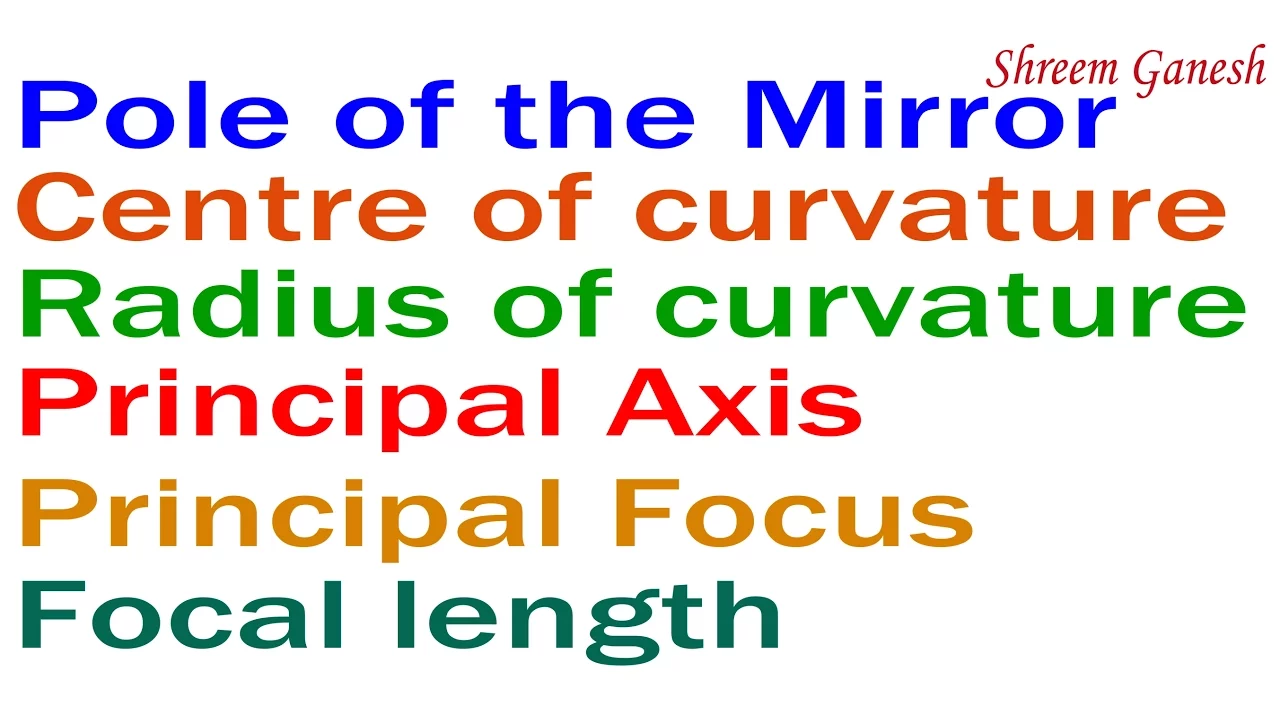
Basic terminology of curved mirrors, including principal axis, focal point, focal length, and center of curvature.
Elementary geometric differences between circular (spherical) arcs and parabolic curves.
The concept of ray tracing and how to graphically represent light paths reflecting off surfaces.
The concept of spherical aberration, its mathematical definition, and methods of minimization.
Real-world applications of parabolic reflectors, such as Newtonian reflecting telescopes, satellite dishes, and solar thermal collectors.
Aspheric lenses in refractive optics, drawing parallels to how non-spherical shapes correct lens aberrations.
Optical instrument design, specifically catadioptric systems like Schmidt-Cassegrain telescopes that combine lenses and mirrors.
160 views4likes5:31Original Release: 2024-11-22
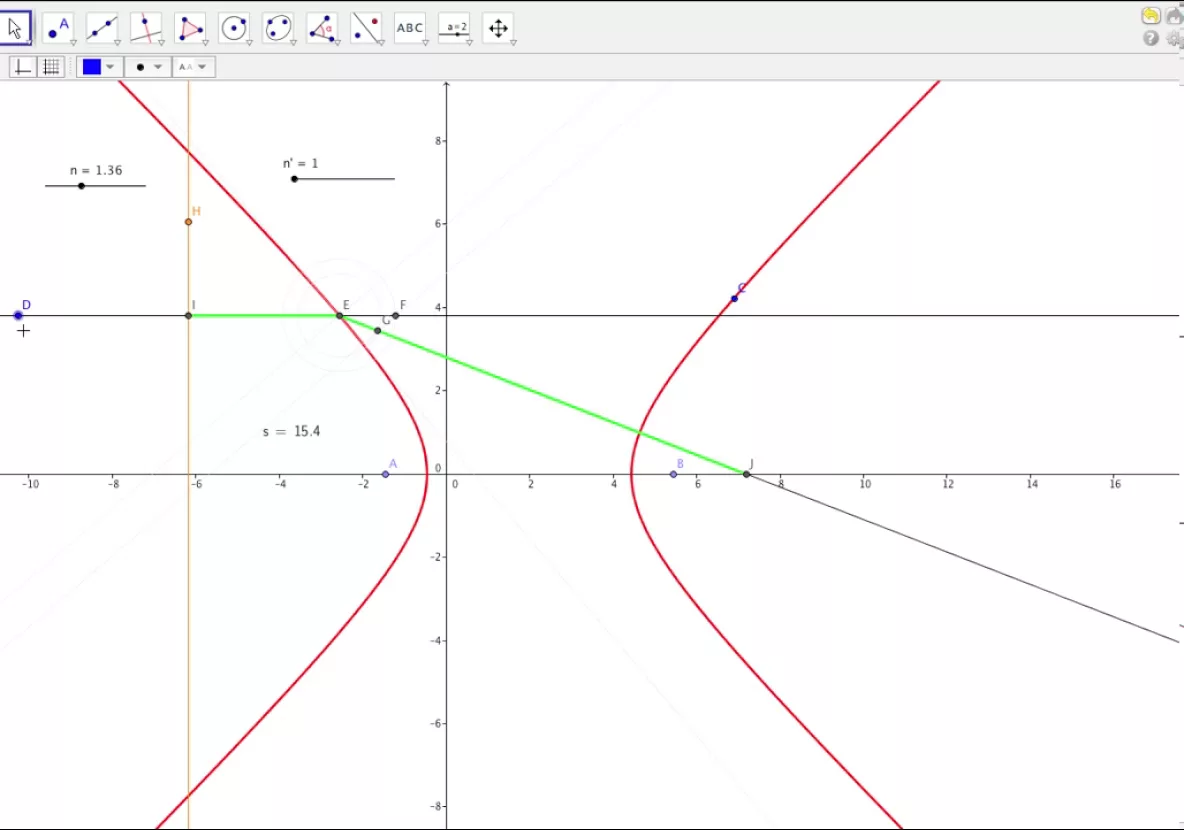
in previous videos you've seen the properties of concave and convex mirrors and their applications but based on their shape people usually talk about two types of mirrors parabolic mirrors and spherical mirrors so in this video we'll explore what these are and where they are used so if you want to build say a concave mirror which can focus all the parall Rays of light to a single point then the shape needed is called as a parabola and such mirrors are called as parabolic mirrors and if you're not too sure about what this Parabola means don't worry too much about that it's just a name that we give to this particular shape so in general parabolic mirrors are mirrors which are part of a parabola you can make it a big part of a parabola or you can make it a small part of a parabola but it has to be a part of a parabola and by the way we're seeing a concave mirror here but the same thing applies even for convex mirrors now here's the thing building this parabolic shape is a little bit hard because you see if you look at this shape carefully notice right at this point we can call this as the tip of the parabola not right at this point you can see that we have a nice curve over here but as you go farther and farther away from this tip for example if you look at this part it's pretty flat over here can you see that as you go farther away so close to the tip it has to be curved and then you farther you go the more flat it should should become that's a peculiar shape and getting that shape exact is pretty hard but do you know which is the easiest shape to build accurately I'm pretty sure you can guess it a circle but to be more accurate in three dimensions a sphere or a round ball and that brings us to spherical mirrors spherical mirrors are mirrors which are parts of a sphere so spherical mirrors these are called as spherical mirrors and they are parts of a sphere and since spheres are the easiest to build spherical mirrors are also easy to build but here's the thing we just saw that parabolic shape is what is needed to focus all parall rays of light to a single point so what happens over here well let's throw parall rays and see what happens we clearly see that the Rays of light are not getting focused at a single point and that shouldn't be too surprising because we've already discussed that the only shape that can do that are parabolas so obviously anything other than Parabola like a sphere will not be able to focus the parall of light to a single point so a valid question could be then why do we build this because they're not focusing rays of light to a single point well here's the reason why if you look at these Rays carefully then you see it's these extreme rays of light the Rays of Light which are very far away near the edge over here it's these rays of Light which are the culprit for not being able to focus at a single point here let me let me change the color of that and you can see it better there it is you can see it's these extreme rays of Light which are actually making that spot spread and so one solution is just get rid of these rays of light and the way we can do that is just by chopping this part of the mirror so let's chop that mirror and see what happens and now we see that that spot has become sharper than before because we got rid of those extra r face sure now that we are receiving less amount of light it is not as bright as before but it's sharper than before and we can now guess to make it even more sharp well we have to chop more part of that mirror so let's do that and you clearly see that now almost almost the Rays of light are clearly being focused at a single point so we can conclude that as long as we build a spherical mirror such that it forms a very tiny part of a sphere then it will be approxim imately able to focus all parall Rays to a single point and if you're wondering why is this working out so well for us well that's because when you take a small part of this sphere then it nicely matches up with the small part of a parabola let me just keep this on top of that and show you so if we take this tiny spherical mirror and we try to keep it on this Parabola notice that it pretty much matches up this curve this tiny part pretty much matches up with the parabola and that's why it's able to behave like a parabola and able to focus all paray of light but if you take the large part of a sphere then you can see and by the way this is not so accurate but you can pretty much see that the two shapes now don't line up anymore and so long story short if we don't care too much about the accuracy and we are fine with having tiny mirrors then we can use spherical mirrors mirrors which are parts of a sphere they are easier to build and as a result they are cheaper and more readily available which is perfect for educational purposes and that's why you probably use them in Labs on the other hand if we want to build a giant astronomical telescope for scientific purposes where we want to look at extremely far away galaxies and stars then we would want a mirror which is as accurate as possible and a large piece of a mirror in such cases if the budget is not an issue money is not an issue then we'll go for parabolic mirrors
Up Next

16:59
Refractive Index Explained | Class 10 Physics | CBSE & ICSE
@DeltaStep
268.4K views•2015-09-07

12:53
21cm Hyperfine Transition in Neutral Hydrogen: Radio Astronomy Basics
@AaronRobertParsons
12.4K views•2011-10-13

32:32
NMR Spin Physics I: Zeeman Effect, Resonance Condition & Larmor Frequency
@nptel-indianinstituteofsci8064
2.3K views•2024-01-17

27:14
Entropy and the Second Law of Thermodynamics Explained
@veritasium
27.5M views•2023-07-01
Related Study Plans & Knowledge Roadmaps
Structured learning paths in Physics
physics
Nuclear Physics (Decay, Fission & Reactors)
01Atomic Structure and the Binding Force
02Radioactive Decay and Half-Life
03Nuclear Fission Mechanics and Chain Reactions
+ 2 more learning modules
12h5 modules
Explore Roadmap
physics
Soft Matter (Polymers, Colloids & Rheology)
01Foundations of Soft Matter & Thermal Forces
02Polymer Physics and Macromolecules
03Colloids, Surfactants, and Self-Assembly
+ 2 more learning modules
38h5 modules
Explore Roadmap
physics
Analytical Mechanics: Lagrangian & Hamiltonian
01Mathematical Foundations: Calculus of Variations
02From Newtonian Mechanics to Constraint Dynamics
03The Principle of Least Action & Lagrangian Mechanics
+ 3 more learning modules
28h6 modules
Explore Roadmap
physics
General Relativity (Spacetime & Cosmology)
01Foundations of Relativity: Special Relativity
02The Geometry of Spacetime: Equivalence Principle & Curvature
03Einstein's Field Equations: The Mathematics of Gravity
+ 2 more learning modules
55h5 modules
Explore Roadmap