




















Antibiotics selectively target bacteria by exploiting structural and metabolic differences between prokaryotic and eukaryotic cells, including cell wall synthesis (beta-lactams, glycopeptides), ribosome function (tetracycline, macrolides), nucleotide synthesis (sulfonamides, trimethoprim), and DNA replication (quinolones), with Gram-positive bacteria having thick peptidoglycan layers and Gram-negative bacteria possessing an outer membrane that limits antibiotic penetration.
Antibiotics Explained: Prokaryotic vs Eukaryotic Targets | Microbiology Basics
Added:Fundamental structural differences between prokaryotic cells (bacteria) and eukaryotic cells (animals/humans).
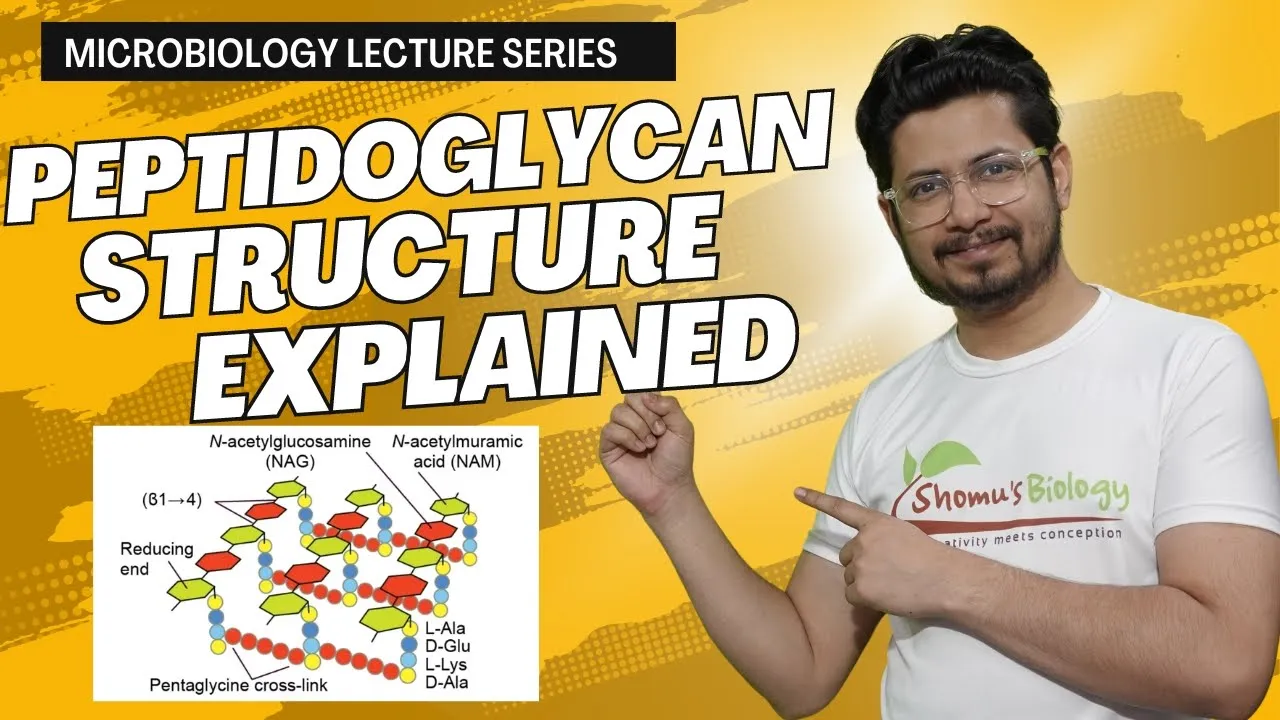
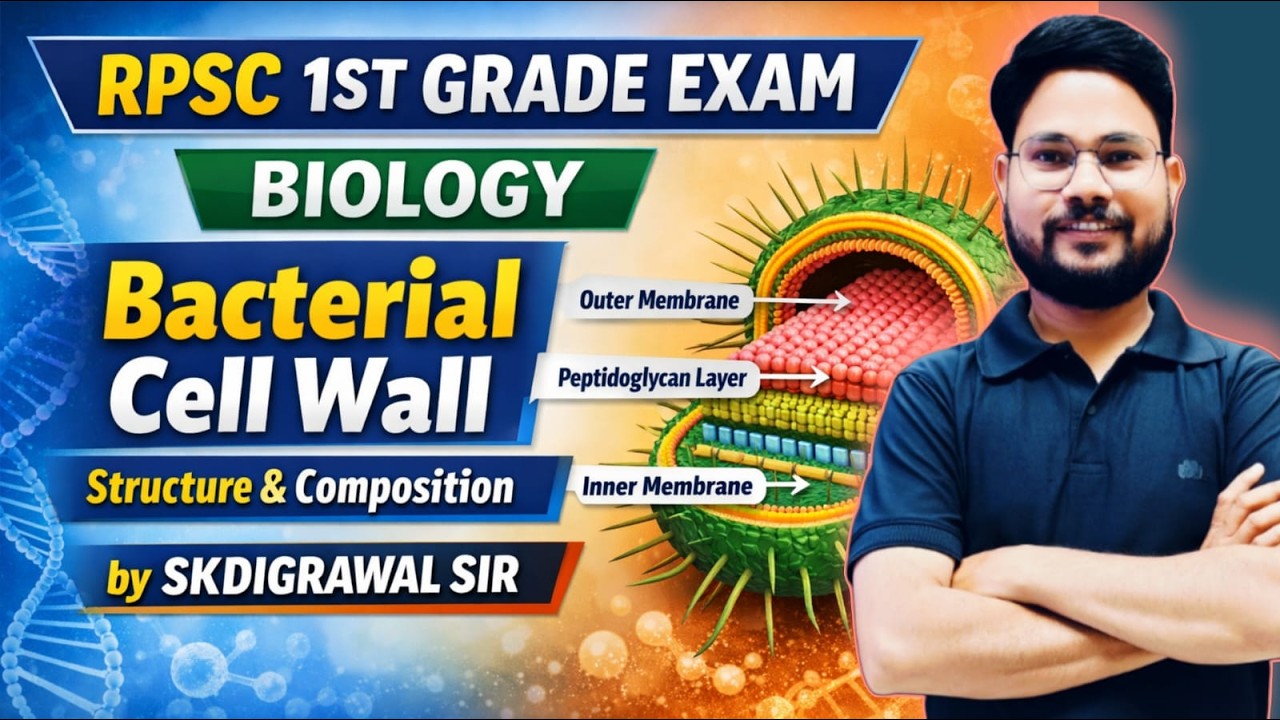
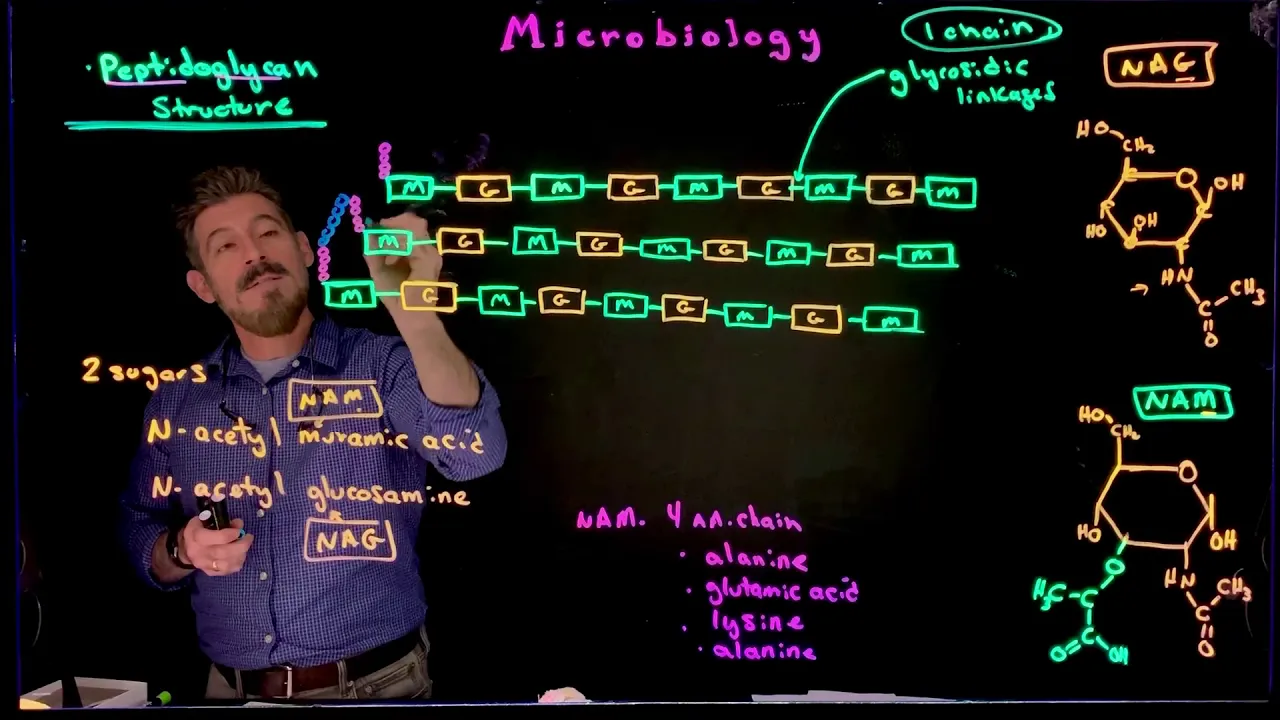
The basic structure of the bacterial cell wall, specifically the composition and role of peptidoglycan.
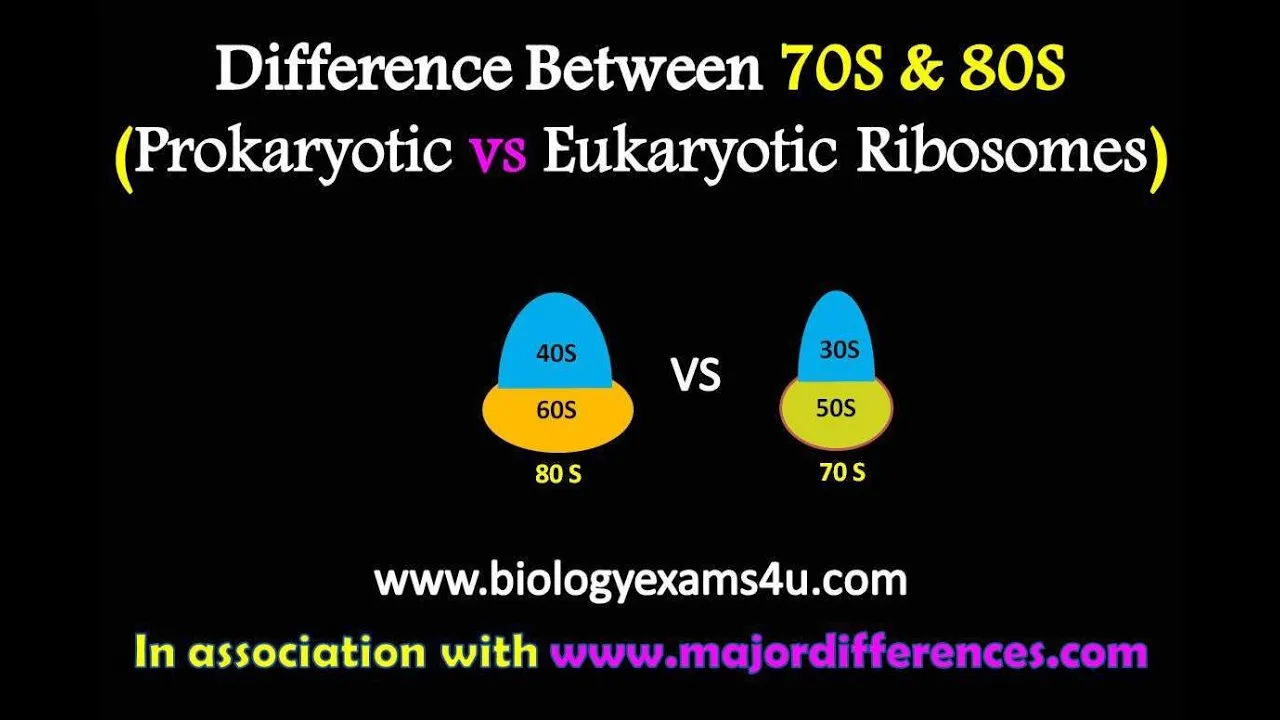
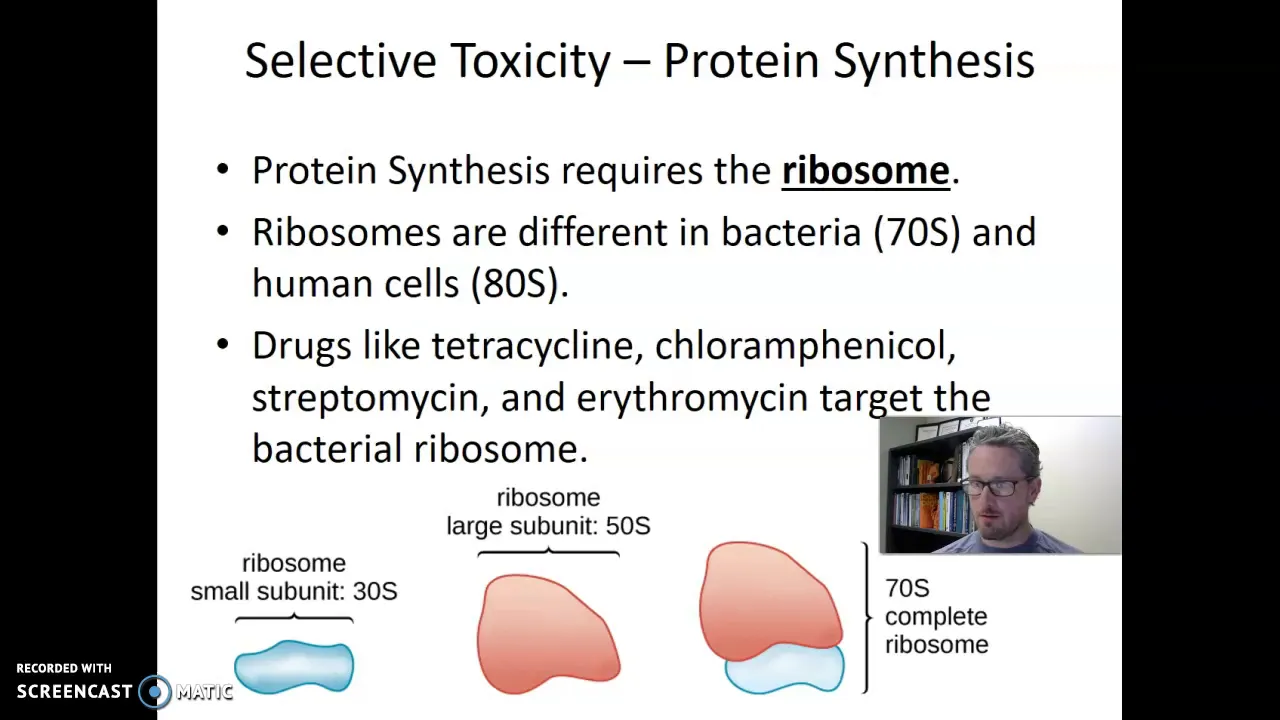
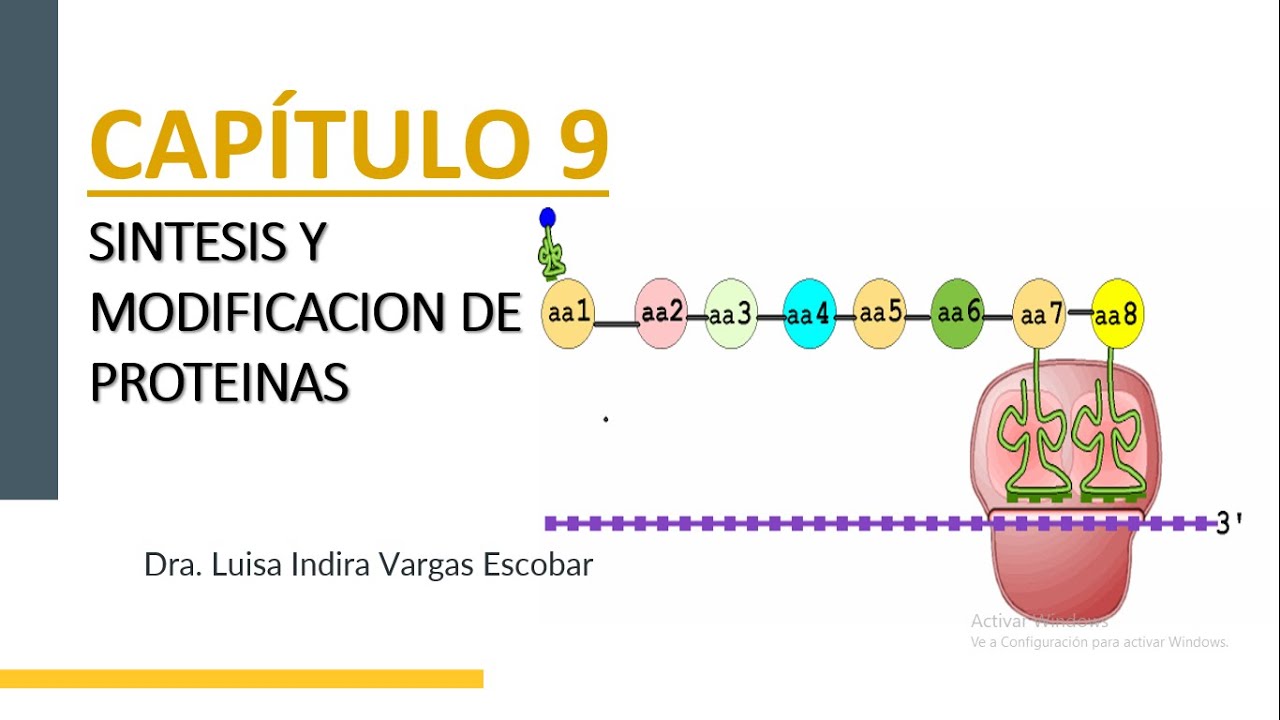
The process of protein translation and the structural differences between prokaryotic (70S) and eukaryotic (80S) ribosomes.
An introductory understanding of DNA replication and transcription, including the role of key enzymes like DNA gyrase.
The concept of 'selective toxicity'—the ability of a drug to target a microbe without harming the host organism.
Mechanisms of bacterial resistance, such as target modification, enzymatic degradation (e.g., beta-lactamases), and drug efflux pumps.
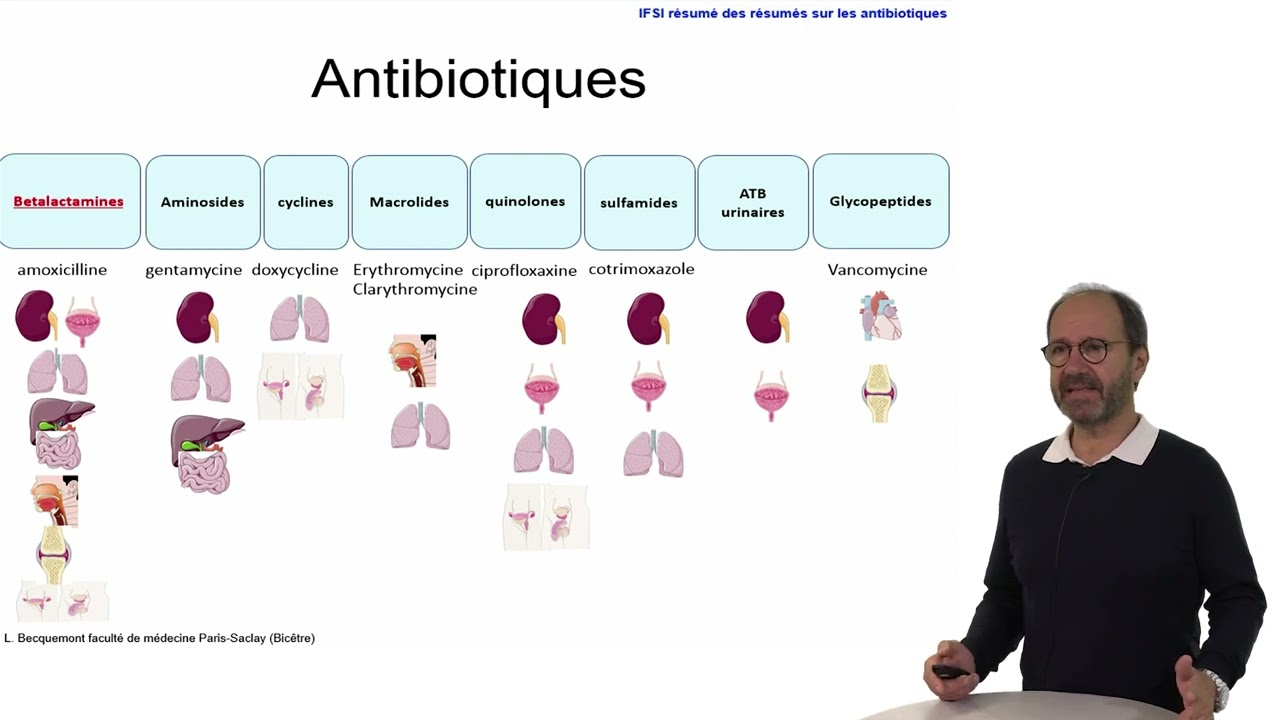
Classification of major antibiotic families (such as beta-lactams, aminoglycosides, and fluoroquinolones) and their clinical applications.
The cellular basis of antibiotic side effects in humans, such as why targeting bacterial ribosomes can sometimes affect human mitochondria.
The biological challenges of developing selective therapies for eukaryotic pathogens (like fungi and protozoa) and viruses.
Practical pharmacology concepts including Minimum Inhibitory Concentration (MIC) and the distinction between bactericidal and bacteriostatic agents.
16.3K views233likes10:09Original Release: 2015-05-21
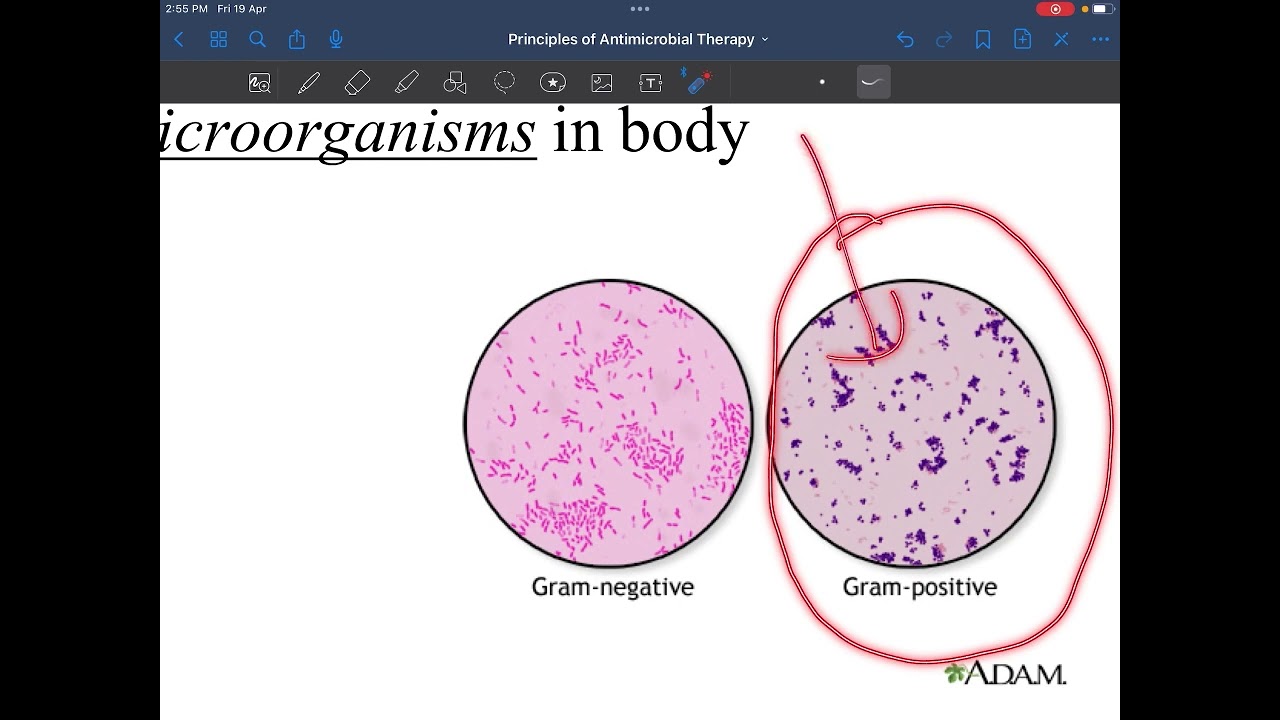
so in this video I want to talk about antibiotics and give you a broad introduction so what do antibiotics do they target bacteria they either kill them or they inhibit their growth so this is in huge contrast to other drugs that we see on a daytoday basis because antibiotics do not modulate our own body function most drugs Target receptors in our body they modulate our own body function like the blockers they block better receptors in the heart and in the kidney but for the antibiotics it's different we actually don't want to even touch our own body cells we only want to Target bacteria so if you want to develop an antibiotic it makes sense to First think about what are the major characteristics of bacterial cells so of procaryotic cells and then contrast them to the eukariotic cells to our human cells and figure out what are the difference because in the end you have to find something that is specific bacteria and that you don't see in human cells so I've listed here the major differences between procaryotic and eukaryotic cells and these are also the major targets so first of all bacteria have a cell wall we don't have cell walls and this makes it a perfect Target the osmotic pressure in bacteria is very high and therefore they require an ADD additional cell wall to make sure that they don't burst procaryotic and eukariotic cells both have cell membranes but they are slightly different so there are some targets that arise from these differences then another very good Target are the ribosomes as you know the ribosomes are the workbench for protein synthesis and eukariotic cells have ribosomes and procaryotic cells of ribosomes but they different in their chemical composition and size and and that makes them as an ideal Target eukaryotic cells have 80s ribosomes and the procaryotic have 70s ribosomes another very good Target is nucleotide and DNA synthesis so if a s wies it has first to make nucleotides and out of these nucleotides it can make DNA and there are slight differences first of all if you want to make nucleotides you need folic acid and eukariotic cells can just take folic acid from the diet so we take it from our diet however bacteria cannot therefore they need to make their own folic acid and so they synthesize folic acid from scratch and obviously the enzymes that are responsible to make the folic acid can be targeted by bacteria because we don't have them another step in DNA synthesis that we can Target is the enzyme topoisomer 2 so the topoisomer 2 is an enzyme that is required to remove the super caes that are always going to be ahead of the replication fork when DNA is transcribed so now we have eukariotic cells topoisomer 2 this enzyme bacteria have this also however there are slight differences and they can be targeted in bacteria the enzyme tupo isomerous 2 is also often called DNA gyus and the name already reflects that this enzyme is slightly different and therefore can be used as a target for antibiotics so here I have drawn a bacterial cell and you can see the cell wall here then the cell membrane and if a cell divides it first makes nucleotides then it makes a DNA the DNA get gets transcribed into RNA and then in a process called translation which happens on the ribosome you make the protein and so in this simple drawing you can add now all the different antibiotics that we have because as we mentioned before we want to just Target differences characteristics of procaryotic cells that are that are not present in UK carotic cells so let's just put in the major classes of antibiotics with their target so as we have already mentioned the cell wall is an ideal Target because eukariotic cells don't even have one so we can inhibit cell wall synthesis and we do this with also so called cell wall synthesis Inhibitors the most famous group the betal lactum antibiotics where are penicillin and sephos sporin belong to there's also another group which are called the glycopeptides for example wyin which also inhibit cell wall synthesis just in a slightly different way than the penicillins and sephos sporin another Target is the cell membrane the cell membrane is slightly different and we have one drug the dapt toyin which intercalates into specifically the cell membrane of bacteria and therefore can be used as an antibiotic to destroy bacteria then a big class of drugs are protein synthesis Inhibitors as I mentioned in the beginning the ribosomes are an ideal Target because they differ in chemical composition and size so by interfering with these ribosomes at different spots we can actually interfere with any step of protein synthesis so we have a ton of different drugs that all target the ribosome this are tetracyclin macres chlorum finical strap gramins and the aminoglycoside antibiotics further we can Target DNA synthesis in a way that we just interfere with this enzyme topoisomer 2 which is important to release the super cause and this is done with the quinol lons the Inhibitors of DNA replication another way to interfere with DNA synthesis is even before that we just block the nucleotide synthesis and here sulfonamides and trimethoprim fall into this category so I want to finish up this introduction with just looking at grum positive versus grum negative bacteria because their specific characteristics are very important to understand which antibiotics work against which kind of bacteria and so as you probably have figured out most of the bacteria fall into these categories gram positive and gram negative so the ground stain which this refers to is just reflecting different characteristics of the cell wall of bacteria the cell wall of gr positive bacteria shows up blue on the gr stain you can remember this with I'm positively blue over you the cell W of CH negative bacteria shows up red and you can just think about it like red is something negative just a warning so how does a cell wall of gr positive versus gr negative bacteria differ so what I have drawn here is a cell membrane and that's kind of similar for both of these um bacteria and that's what harvest the organal and the cytool so then we see the cell wall this is a cell wall of grum positive bacteria and so the the major constituent of the cell wall in general is peptidoglycan for both gr negative and gr positive bacteria so the name already tells us how that's building up so the cly can refers just to chains of sugar molecules that you can see here which have drawn in dark blue but as you can imagine I mean if you just have chains of sugar molecules that's not going to give you any rigidity that you want to have for a cell wall so what bacteria do they hook up this sugar molecules this sugar change with peptide bonds so they Crosslink this sugar change and that gives the Sal than the rigidity and so as you can see here for the grum positive bacteria they have really a lot of layers of this peptido glycan in contrast the gr negative bacteria have just a thin layer of peptido glycin maybe one or two layers but it's similarly composed we have again the sugar change and they are cross-link with peptide bonds to give it more idity so now the big difference is that gram negative bacteria have in addition another outer membrane this is just a lipid by layer similar to the inner membrane the cell membrane and this outer membrane just surrounds the peptidoglycan layer so the composition of the cell ball of gr positive and gr negative bacteria is very important to understand understand which bacteria are going to Target them because what you need to know is that this peptidoglycan layer although that looks looks pretty thick is actually not a really good barrier for drugs so if a drug comes here it can easily penetrate and get to the cell membrane for example in contrast the gr negative bacteria have this outer membrane and this is a lipid Bay as I've mentioned and so this is very difficult for drugs to get through so the only way to get drugs into the inside of the bacteria and do stuff is whilea a so-called porin ganel so these are little channels that let in solutes and more hydrophilic molecules and also our drugs can get in there these poring channels let only in very small substances and if you're going to see structures of antibiotics and you see a very bulky huge structure you're going to know that it's never going to get into a grum negative bacteria I and it's going to help you to predict the spectrum of activity of the antibiotic this concludes a general introduction to antibiotics
Up Next
16:05
Antibiotics: Cell Wall & Membrane Inhibitors Explained
@SpeedPharmacology
842.7K views•2018-03-26

48:47
Graphic Medicine: Comics for Collaborative Healthcare Communication
@nationalpatientadvocate
189 views•2023-12-04

10:28
Neuroanatomy: Central and Peripheral Nervous System Divisions Explained
@AKLECTURES
136.2K views•2014-09-20
3:05
Stages of Labor and Vaginal Birth | Childbirth Animation
@nucleusmedicalmedia
52.1M views•2017-08-18
Related Study Plans & Knowledge Roadmaps
Structured learning paths in Medicine
medicine
Abnormal LFTs: Diagnostic Workup & Pathology
01Liver Anatomy and Basic Physiology
02Introduction to Liver Function Tests (LFTs)
03Hepatocellular vs. Cholestatic Patterns
+ 3 more learning modules
12h6 modules
Explore Roadmap
medicine
Analyzing Blood Smears: RBC, WBC & Platelets
01Introduction to Blood Components & Smear Preparation
02Normal Morphology of Blood Cells
03Erythrocyte Pathologies & Morphological Variants
+ 2 more learning modules
12h5 modules
Explore Roadmap
medicine
Mechanical Ventilation: Waveforms & Alarms
01Anatomy and Physiology of Breathing
02Introduction to Mechanical Ventilation & Core Modes
03Ventilator Settings and Waveform Interpretation
+ 2 more learning modules
12h5 modules
Explore Roadmap
medicine
Neuro Exam: Localization & Stroke Syndromes
01Foundations of Neuroanatomy and Vascular Supply
02The Neurological Examination: Step-by-Step
03Principles of Neurological Localization
+ 3 more learning modules
18h6 modules
Explore Roadmap